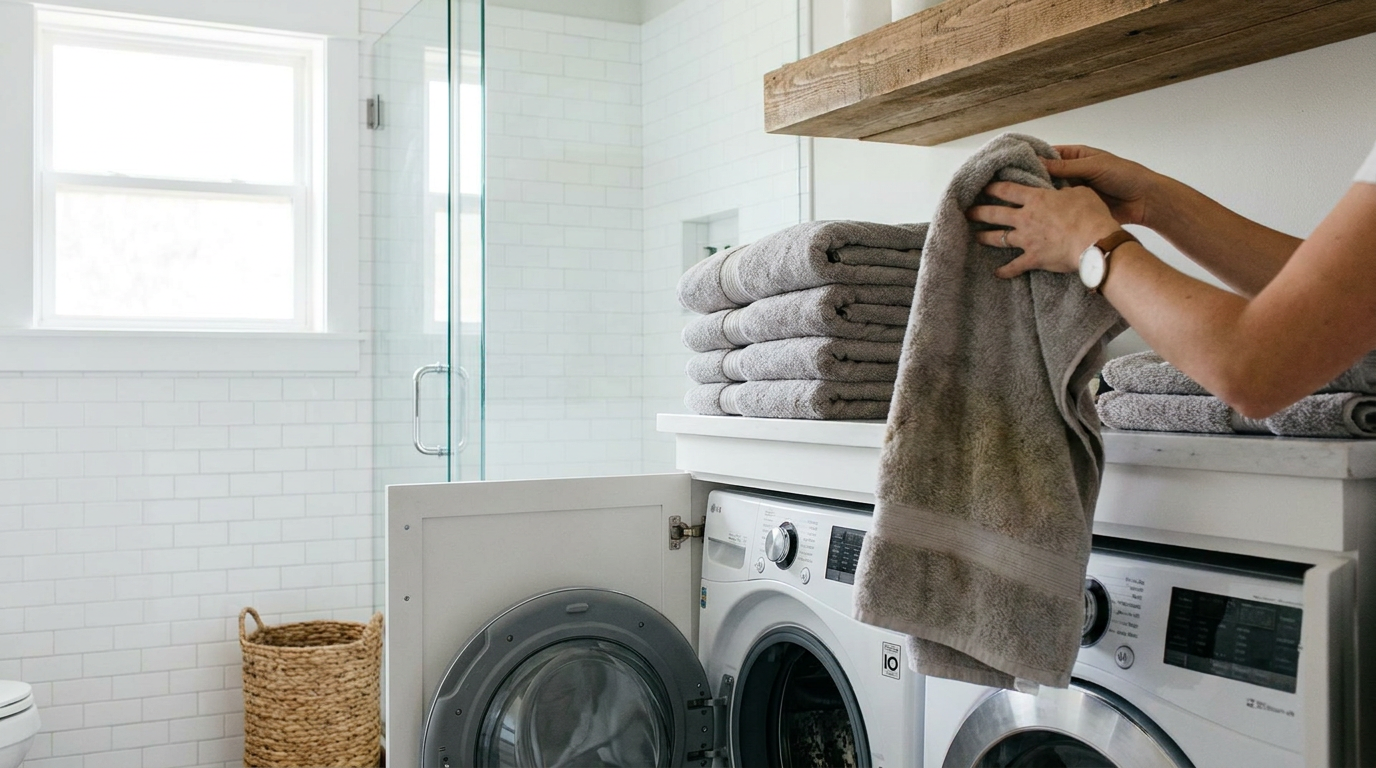
- Leaving Them in the Washer: Even a few hours sitting wet gives mildew a head start.
- Using Too Much Detergent: Extra soap doesn’t rinse out clean. It builds up and holds onto dirt and moisture.
- Using Fabric Softener: It leaves a waxy, water-repellent coating that wrecks absorbency and traps odors.
- Washing in Cold Water: Fine for some clothes, sure, but cold water doesn’t do much against body oils and bacteria on towels.
- A Dirty Washing Machine: Your washer can grow its own biofilm and mold, then pass it right along to your laundry. Run a cleaning cycle with a washing machine cleaner tablet or vinegar/baking soda once a month.
Published October 11, 2026Last updated October 11, 2026
Tools & materials you'll need
Affiliate linksAs an Amazon Associate FixlyGuide earns from qualifying purchases — at no extra cost to you. Prices and availability are accurate as of publication and subject to change.
Quick Answer
If your towels keep coming out with that musty, sour stink even after a fresh wash and dry, you’re usually dealing with a buildup of bacteria, body soils, and detergent residue that plain old laundering doesn’t knock loose. That gunk turns into a biofilm that holds moisture and gives mildew a place to grow. The fix is to strip the towels with a hot water wash using vinegar and baking soda so you break down the residue, kill off the bacteria, and get the towels back to being fresh and absorbent. I’ve seen this plenty, especially in humid climates, and no, you don’t need to toss the towels.
The Problem
You grab a “clean” towel from the linen closet, stick your nose in it, and there it is — that funky, mildew-like odor. Doesn’t smell clean at all. Sometimes it comes out of the dryer smelling okay, then the second it gets damp again, the stink shows back up like it never left. You’ve swapped detergents, tried fabric softeners, tossed in dryer sheets, and still no dice. The problem isn’t just irritating; it’s a sign those towels aren’t truly clean. They’re holding onto bacteria and mildew that can bug your skin and just plain gross you out. That once-fluffy towel is now less absorbent, kind of damp-feeling all the time, and the smell is the giveaway.
How It Works
Think of a towel like a sponge. Those fibers, especially in thick 100% cotton towels, are built to soak up water like crazy. Problem is, they don’t just soak up water — they also grab body oils, dead skin cells, soap residue, and minerals from your water. After a while, all that junk builds up deep in the fibers.
Regular laundry detergent, especially if you’re overdoing it or washing in cold water, can’t always cut through that greasy, waxy mess. Sometimes the detergent itself gets trapped in there too, which just piles on. What you end up with is a kind of waterproof biofilm on the cotton fibers. It’s like a microscopic raincoat. Moisture gets trapped, and the towel never really dries out between uses, especially if the bathroom’s humid. That damp, nutrient-rich setup is a perfect little home for mildew and bacteria. They feed on the oils and skin cells, and the byproduct is that sour, musty smell everybody knows and hates. Fabric softener makes it worse by coating the fibers with another water-repellent layer, which locks in the stink and kills absorbency. Handy, right? Not.
Step-by-Step Fix: How to Strip Your Towels
This’ll strip out the residue and kill the mildew so your towels smell fresh again and actually work like they should. Don’t mix them with other laundry. This is a towels-only job.
-
Gather Your Supplies. Nothing fancy here. You just need the smelly towels, one cup of white vinegar, and a half-cup of baking soda. Do NOT mix the vinegar and baking soda together in the same step — all you’ll do is make a fizzy mess that cancels both out. They work one after the other.
-
First Wash Cycle: Vinegar. Load the musty towels into the washer. Don’t pack it tight; they need room to move around. Set the machine to the hottest water setting your towels can handle (check the care tag, but for most cotton towels, “Hot” is what you want). Add one cup of distilled white vinegar straight into the wash drum. Don’t add any detergent or fabric softener.
-
Run the Hot Wash. Let it finish a full wash and rinse cycle. The hot water helps open the towel fibers, while the acetic acid in the vinegar starts breaking down mineral buildup from hard water and loosening the oily, stinky biofilm. It’s a solid disinfectant, and it helps kill mold and bacteria on contact.
-
Second Wash Cycle: Baking Soda. Once that first cycle’s done, leave the towels in the machine. Now add a half-cup of baking soda right onto the towels. Again, no detergent or softener. Baking soda is alkaline, so it helps attack any leftover oily residue and knocks down odors the vinegar didn’t finish off.
-
Run the Second Hot Wash. Run another full wash and rinse cycle, again on the hottest setting. The baking soda gets after the last of the grime and leaves the fibers cleaner. By the end, your towels should be stripped of the gunk that was making them stink.
-
The Sniff Test. Before you toss them in the dryer, grab one and smell it. It should smell like nothing — just clean, wet cotton. If you still catch a little mustiness, the biofilm was stubborn. You can run the vinegar and baking soda cycles one more time, but that’s usually overkill.
-
Dry Immediately and Thoroughly. This part matters. Move the towels to the dryer right away. Don’t let them sit wet in the washer, or mildew can start back up within hours. Set the dryer on medium-high heat and run it until the towels are completely dry. Bone dry. Check the thickest part of the towel to make sure. Any leftover dampness is just asking for the funk to come back.
-
Check Your Dryer Vent. If the dryer seems to take forever, the vent could be clogged. A blocked vent traps moist air, and then your towels never dry right. Pull the dryer duct off and clean out the lint buildup. I pulled a washer out in Frisco last month for a customer who thought the towels were the problem — turned out the dryer vent was half packed with lint and the laundry never had a chance. It’s a fire hazard too, so don’t ignore it.
Common Causes
- Leaving Them in the Washer: Even a few hours sitting wet gives mildew a head start.
- Using Too Much Detergent: Extra soap doesn’t rinse out clean. It builds up and holds onto dirt and moisture.
- Using Fabric Softener: It leaves a waxy, water-repellent coating that wrecks absorbency and traps odors.
- Washing in Cold Water: Fine for some clothes, sure, but cold water doesn’t do much against body oils and bacteria on towels.
- A Dirty Washing Machine: Your washer can grow its own biofilm and mold, then pass it right along to your laundry. Run a cleaning cycle with a washing machine cleaner tablet or vinegar/baking soda once a month.
- Not Drying Completely: Even a little dampness can let mildew take hold in a dark linen closet.
- Humid Environment: Tossing a damp towel in a poorly ventilated bathroom is basically asking for stink.
Common Mistakes
- Masking the Smell with Fragrance. Scented detergents, fabric softeners, and dryer sheets just cover the odor. They don’t fix the bacteria underneath.
- Washing with Too Many Items. Overloading the machine keeps the towels from agitating and rinsing properly, so they stay dirty and hold onto soap.
- Ignoring the "Clean Washer" Cycle. You wouldn’t wash dishes in a dirty sink. If the washer smells musty, it’s going to transfer that smell to everything else. Clean it on a regular basis.
- Re-using Bath Towels Too Many Times. In a perfect world, you’d wash a bath towel after every use. Realistically, no more than three uses, and it needs to dry fully between each one. Hang it spread out on a bar, not bunched up on a hook.
- Putting Towels Away Warm. Don’t fold and stash towels straight from the dryer while they’re still warm. That can trap a little leftover moisture deep in the fibers. Let them cool to room temperature first.
Cost & Time Breakdown
This is about as cheap as home fixes get. The cost is low, and most of the work is just waiting around.
| Task | DIY Cost | Pro Cost | Time |
|---|---|---|---|
| Gather Supplies | $5–$10 (if you need to buy vinegar/baking soda) | N/A | 5 minutes |
| Run First Wash Cycle (Vinegar) | < $1 | N/A | 45–75 minutes (machine time) |
| Run Second Wash Cycle (Baking Soda) | < $1 | N/A | 45–75 minutes (machine time) |
| Dry Towels Completely | ~$0.50 in electricity/gas | N/A | 50–80 minutes (machine time) |
| Total | ~$7 | N/A | ~3–4 hours (mostly passive) |
Tips & Prevention
- Wash New Towels First. Always wash brand-new towels before you use them. A lot of them come with a factory finish that hurts absorbency. A hot wash with a cup of vinegar will strip that coating off.
- Hang It Right. Spread towels out over a towel bar after use. Don’t toss them on a hook or leave them in a heap on the floor. Airflow’s the whole game here.
- Half the Detergent. Try using half the amount the bottle calls for. Modern detergents are strong, and you probably don’t need nearly as much as you think. More soap doesn’t mean cleaner.
- Switch to Wool Dryer Balls. Skip the chemical-heavy dryer sheets. Wool dryer balls cut static, soften fabrics, and can shave drying time by up to 25% by moving air better.
- Routine Stripping. For most households, stripping towels every 2-3 months is enough. If you live where it’s humid or you’ve got a big family, you might do it every 4-6 weeks to stay ahead of the smell.
- Wash Towels Separately. Don’t throw towels in with your delicate clothes. Towels need a hot, aggressive wash, and a lot of other fabrics just can’t take that.
When to Call a Professional
Honestly, this is a 100% DIY job. I can’t think of a real reason you’d call a pro just to fix smelly towels. That said, if your washing machine itself has a bad, stubborn mold problem that regular cleaning cycles won’t touch — say you’ve got black mold built up on the gasket that won’t come off — or if your dryer vent is tucked away where you can’t get to it and you think it’s badly clogged, call an appliance repair technician. They’ve got the tools to clean the internal parts of the washer or the full length of the dryer vent run safely.
Related Articles
Keep troubleshooting with these hand-picked guides from FixlyGuide:
- The Mystery Smell: Why Your Fridge Stinks (Even After Cleaning It) — That persistent, foul odor in your refrigerator isn't just gross; it's often a sign of hidden issues. Learn the real culprits behind linger…
- The Invisible Film Making Your Bathroom Mirror Streaky – And How to See Clearly — Discover why your bathroom mirror always looks streaky, even after cleaning, and learn the pro trick to get a perfectly clear, fog-free ref…
- Why Your Kitchen Sink Drain Stinks (Even After You've Cleaned It) — Don't just mask that foul odor from your kitchen sink; get rid of the gunk causing it with this pro-level cleaning method.
- The Grimy Cloud: Why Your Range Hood Filter Stays Greasy — Is your range hood filter constantly caked with grease, even after a wash? I'll show you why it happens and the pro-level trick to get it t…
- The Invisible Scum on Your Bathtub: How to Make It Gleam Again — Is your bathtub losing its luster, even after scrubbing? That invisible layer of soap scum and mineral deposits is the culprit. Learn how t…
- That Funky Smell in Your Washing Machine — Tired of your washing machine making your 'clean' clothes smell musty? We'll show you how often you should actually deep clean your washi…
What should this project cost?
Enter your project details for a realistic cost range before you call anyone.
Cost depends heavily on which system turns out to be the source.
- Regional adjustment
- National average
- Labor share (typical)
- ~$1,620
- Quotes to collect
- 3 written estimates
Educational estimate based on national averages — not a binding quote. Always confirm with written local estimates.
Get the print-ready PDF of this guide
A clean, ad-free, printable version you can keep on your phone or pin to the workshop wall. Free with a FixlyGuide account.
- Print-optimized layout
- Tools, materials & every step included
- Saved to your account
Frequently asked questions
Why do my towels smell even after I wash them?+
The musty smell is caused by a biofilm of bacteria, body oil, and detergent residue trapped in the fibers. Regular washing, especially in cold water, doesn't break this down, allowing mildew to grow when the towel gets damp.
Is it safe to use vinegar and baking soda in my washing machine?+
Yes, it's perfectly safe for almost all modern washing machines, both top-load and front-load. Just be sure to run them in separate cycles as instructed and don't mix them together. It's a great way to clean both your towels and the machine itself.
How often should I strip my towels?+
For most households, stripping your towels every two to three months is sufficient to prevent odor buildup. If you have hard water or live in a very humid climate, you might find doing it monthly keeps them feeling fresher.
Will this process ruin my colored towels?+
No, this process is generally safe for colored towels. Both white vinegar and baking soda are mild enough not to cause fading, unlike chlorine bleach. The hot water can cause some fading over many, many washes, but a periodic stripping is unlikely to have a noticeable effect.
Can I use this method on other laundry, like gym clothes?+
Absolutely! This stripping method is fantastic for synthetic workout clothes that hold onto sweat odors. It's also great for bed sheets and pillowcases to remove body oils and keep them fresh.
Should I stop using fabric softener on my towels forever?+
Yes. Fabric softener works by coating fibers with a water-resistant layer, which is the exact opposite of what you want for an absorbent towel. It builds up, traps odors, and reduces absorbency. It's best to stop using it on towels completely.
My towels feel stiff and crunchy. Will stripping help?+
Yes, stiffness is a classic sign of detergent and mineral buildup. The vinegar wash is particularly effective at dissolving the mineral deposits from hard water that cause that crunchy feeling, restoring the towel's natural softness.
What if my towels still smell after stripping them twice?+
If two full stripping cycles don't work, the towels might be at the end of their life, with the cotton fibers themselves breaking down. Alternatively, check your washing machine for a serious mold issue, as it could be re-contaminating the towels in the final rinse.
Discussion
Loading comments…