- Empty and Unplug — Start fresh, stay safe
- First move, pull everything out of your fridge and freezer. Toss anything that's clearly spoiled. Put the good stuff in a cooler with ice packs so it doesn't warm up while you're working.
- Safety first! Unplug the refrigerator from the wall outlet. You'll be dealing with moisture and moving the appliance, so cutting the power isn't optional. Don't skip this step, ever.
Published August 26, 2026Last updated August 26, 2026
Tools & materials you'll need
Affiliate linksAs an Amazon Associate FixlyGuide earns from qualifying purchases — at no extra cost to you. Prices and availability are accurate as of publication and subject to change.
Quick Answer
I've heard it a hundred times: "My fridge stinks, but I just cleaned it!" Truth is, that stubborn funky smell in your refrigerator usually isn't just from the old broccoli you forgot in the back. It's usually hiding deeper — stuff like crud in the drain pan, a clogged defrost drain, or even gunk growing in the ice maker. A fast wipe-down won't do it. You've gotta get in there, find the real source, and knock it out if you want that smell gone for good.
The Problem
There's nothing worse than opening the fridge door and getting walloped by a nasty smell. You scrubbed it last week, tossed the old leftovers, and it still smells like... well, something died in there. Frustrating, right? Food lives in there, so it ought to smell clean. But when that odor won't quit, you're missing something. It usually isn't a surface issue; it's some hidden mess that a casual cleaning just doesn't touch. We're talking about bacteria, mold, or food bits getting trapped in places you'd never think to check.
How It Works
Your refrigerator, believe it or not, is a pretty complicated machine. Its job is simple: pull heat out of the box and dump it outside. But there are a few systems that can make smells worse if they get dirty or start acting up.
First, you've got the cooling coils and fan. Air moves over those coils, carrying heat and moisture away. If that air's loaded with food odors, those smells can cling to the interior surfaces — even the plastic itself, especially if it's the cheap porous stuff. Ever notice how a bargain container never really lets go of garlic? Same idea.
Then there's the defrost system. Most modern fridges are "frost-free," which means they heat the evaporator coils every so often for about 20-30 minutes to melt ice buildup. That water, plus normal condensation, drains through a small hole in the back wall of the fridge compartment. That defrost drain runs down to a drain pan (or drip pan) underneath the fridge, usually near the compressor. The compressor's heat helps evaporate it. Sounds fine, right? Here's the catch: if food particles, mold, or bacteria get into that drain hole or sit in the pan, they'll rot in place. That warm, damp spot under the fridge is basically a five-star hotel for odor-causing microbes. You won't see it, but you'll sure smell it. I had a call in Glendale where a guy was convinced his fridge was haunted — turned out a chunk of ground beef had slipped into the defrost drain and was slowly cooking itself in the pan for weeks. That smell about knocked me over.
Finally, the ice maker and water dispenser can be trouble too. Lines, filters, and trays can grow mold or mildew, especially if they don't get used much or nobody's cleaned them in a while. And even a sealed container of spoiled food can off-gas enough stink to take over the whole refrigerator. Doesn't matter if you can't see it. Your nose knows.
Step-by-Step Fix
Ready to get rid of that mystery stench? Roll up your sleeves — we're going in.
-
Empty and Unplug — Start fresh, stay safe
- First move, pull everything out of your fridge and freezer. Toss anything that's clearly spoiled. Put the good stuff in a cooler with ice packs so it doesn't warm up while you're working.
- Safety first! Unplug the refrigerator from the wall outlet. You'll be dealing with moisture and moving the appliance, so cutting the power isn't optional. Don't skip this step, ever.
-
Initial Wipe-Down — Surface attack
- Using a spray bottle with a solution of 1 tablespoon of baking soda per quart of warm water (or a mild dish soap solution), spray down all interior surfaces. Wipe with a clean microfiber cloth. Hit the door gaskets, shelves, and drawers. Pull out every removable shelf and drawer and clean it in the sink.
-
Inspect the Defrost Drain — The hidden culprit
- Look for a small hole, usually at the bottom back wall inside the fridge compartment. That's your defrost drain. If it's clogged, water and crud can back up and go stale. Use a turkey baster or syringe with warm water mixed with a little bleach (1 teaspoon per cup of water) to flush it. If it's stubborn, a thin, flexible wire (like a straightened coat hanger, but take it easy!) can help loosen the blockage. Just don't puncture the liner.
-
Locate and Clean the Drain Pan — The real stink-spot
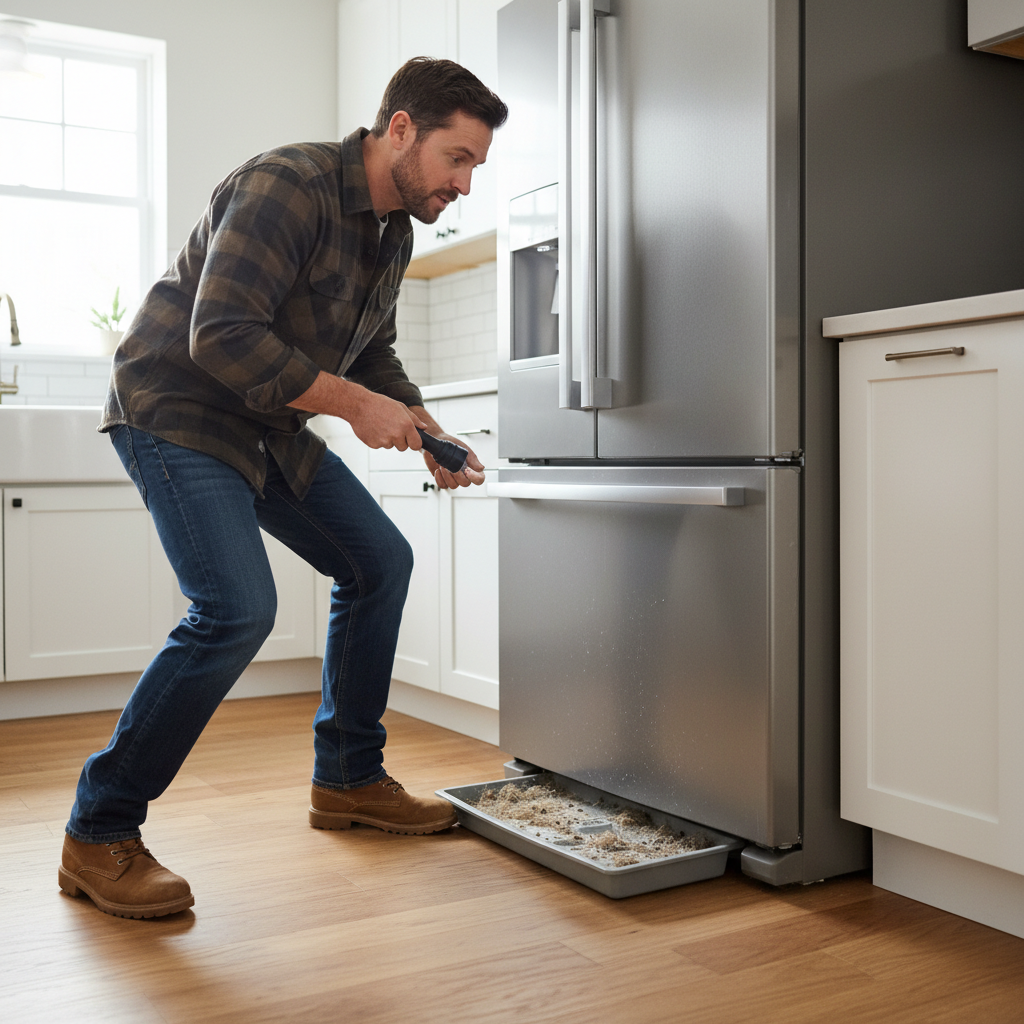
- This is often where the real smell lives. Carefully pull the refrigerator away from the wall — maybe about 12 to 18 inches is enough, just enough to see what you're doing. You'll need access to the back or bottom. Most drain pans sit at the very bottom, near the compressor. Some units need a back access panel removed first, usually with a few Phillips head screws. Slide the pan out carefully — it might be full of nasty, smelly water. Be ready for that.
- Dump it, scrub it with warm, soapy water and a stiff brush, then rinse it with a bleach solution (1 part bleach to 10 parts water) to kill off any bacteria or mold. Let it air dry all the way before you put it back.
-
Check the Ice Maker and Water Dispenser — Don't forget the water
- If your fridge has an ice maker, empty the ice bin and wash it with warm, soapy water. Run a few cycles of ice through, then toss the first few batches. For water dispensers, if the water flow is slow or tastes off, swap the water filter. Some models have a separate cleaning cycle for the water lines — check your owner's manual.
-
Deodorize with Absorbents — Ongoing odor control
- Once everything's clean and dry, set an open box of baking soda in the fridge. For stronger odors, a bowl of fresh coffee grounds or activated charcoal can work pretty well for a few days. Don't forget to replace them every month or two.
-
Re-stock Smart — Prevention is key
- Before you put food back, wipe down containers. Make sure everything seals tight. Plastic wrap, airtight containers — use 'em. Shelf liners can help catch future spills and make cleanup easier.
-
Power On and Monitor — Make sure it's working
- Plug the fridge back in and give it time to cool down. Check the temperature after a few hours — it should be around 37-40°F (3-4°C) for the fridge compartment and 0°F (-18°C) for the freezer. If the smell's still hanging around after all this, you may be looking at a bigger issue, like a sealed system leak, and that's a pro-level repair.
Common Causes
- Spoiled Food in Hidden Corners: That half-empty sour cream container or old fruit hiding behind the milk jug. Simple stuff, but it gets missed all the time.
- Clogged Defrost Drain: Food particles or mold block the drain, water sits there, bacteria grows, and now you've got a stink bomb. This is usually the biggest culprit in a "clean" fridge that still smells.
- Dirty Drain Pan: The tray under the fridge that catches defrost water. If crud gets in there and rots, it'll stink up the whole kitchen.
- Mold/Mildew in Gaskets: The rubber seals around the doors can trap moisture and food bits, and that turns into a breeding ground fast.
- Porosity of Plastic: The plastic walls and shelves can soak up odors over time, especially if strong-smelling foods like onions or garlic are left uncovered.
- Old Water Filter/Ice Maker Slime: Water lines and ice maker parts can grow mold or bacterial film if nobody's keeping up with them.
Common Mistakes
- Only Cleaning What You See: A quick wipe of the shelves isn't enough. The real funk usually hides behind panels or under the unit.
- Not Unplugging the Fridge: Big safety hazard. You're working around water and moving a heavy appliance. Always unplug it before any deep cleaning or shifting it around.
- Ignoring the Drain Pan: Probably the number one miss. Homeowners don't even know it's there, much less how much stink it can hold. Don't be that guy.
- Using Harsh Cleaners: Abrasive cleaners or strong chemical sprays can ruin plastic, leave residue that messes with food, or throw fumes into the cabinet. Stick with mild soap, baking soda, or white vinegar.
- Putting Food Back Before It's Dry: Trapping moisture invites mold and mildew. Make sure everything's bone dry before reloading it.
- Not Sealing Smelly Foods: Leaving onions, garlic, or other strong foods uncovered lets the odors spread through the whole fridge and soak into the plastic.
Cost & Time Breakdown
| Task | DIY Cost | Pro Cost | Time |
|---|---|---|---|
| Basic Interior Clean | $5-$10 | N/A | 30-45 mins |
| Defrost Drain Clear & Pan Clean | $0-$5 | $100-$250 | 1-2 hours |
| Gasket Cleaning & Sanitizing | $0-$5 | N/A | 15-30 mins |
| Water Filter Replacement (if needed) | $20-$50 | $50-$100 | 10-15 mins |
| Deep Odor Removal (Ozone/Specialists) | N/A | $200-$500 | 2-4 hours |
Tips & Prevention
- Regular Wipes: Don't wait for the smell. Give the shelves and door bins a quick wipe every week or two. Catch spills before they set up.
- Baking Soda is Your Best Friend: Keep an open box of baking soda in the fridge all the time. Swap it out every month or two for best results. That little trick grabs a ton of everyday odors.
- Seal Everything Tight: Use airtight containers for leftovers and strong-smelling foods. Plastic wrap alone doesn't always cut it.
- Check Expiration Dates: Get ruthless. Every week, scan for anything past its prime and toss it. Don't let stuff turn into a science project.
- Clean the Drain Pan Annually: Make it a yearly habit. Pull the fridge out, clean that drain pan. It'll save you a headache — and a nose-ache — later.
- Replace Water Filter: If you've got an ice maker/water dispenser, follow the manufacturer's recommendation for replacing the water filter, typically every 6 months.
When to Call a Professional
Look, I'm all for DIY, but some jobs are better left to the folks who do this every day. If you've gone through all these steps — cleaned the drain, scrubbed the pan, aired it out, and you're still getting a foul odor — you may have a bigger problem. Sometimes that smell comes from a sealed system refrigerant leak, and that takes a licensed appliance technician. You can't fix that yourself. Same goes if you find mold that's spread deep into the insulation, or if you're not comfortable pulling the fridge out, dealing with the electrical, or taking panels off. A pro can track down deeper mechanical problems, like a failing fan motor or damaged insulation, that might be causing the smell and hurting the fridge's performance. A service call for a diagnostic might run you $80-$150, but that's a lot cheaper than buying a new fridge because you made things worse.
Related Articles
Keep troubleshooting with these hand-picked guides from FixlyGuide:
- The Secret to Banishing Old Pet Odors (Even When You Can't Find the Stain) — Don't let hidden pet accidents ruin your home's fresh scent; this guide reveals how to find and eliminate old pet odors and their invisible…
- The Grimy Secret Under Your Oven: Why Your Kitchen Never Feels Truly Clean — Your oven and range hood are silent culprits in your kitchen's battle against persistent grease and grime. This guide tackles how to deep c…
- That Mystery Haze on Your Dishware? Your Dishwasher's the Culprit — If your 'clean' dishes come out looking cloudy, streaky, or gritty, it's not you – it's your dishwasher, and I'll show you how to fix it.
- The 'Triple Lift' Trick for Erasing Set-In Couch Stains — Don't despair over that old, set-in stain on your white sofa. Our guide reveals a powerful, three-phase cleaning method using targeted chem…
- Pet Urine's Hidden Crystals: The Real Cleaning Trick — Permanently eliminate stubborn pet urine odors by using a specific cleaner that dissolves the hidden uric acid crystals that typical carpet…
- The Surprising Reason Your Ceiling Fan Wobbles (It’s Not Always What You Think) — A wobbling ceiling fan isn't just annoying; it can be a safety concern. Learn the real culprits behind the shake and how to fix them.
What should this project cost?
Enter your project details for a realistic cost range before you call anyone.
Common repairs run $150–$650; repipes and water-heater replacements reach $1,500–$4,500.
- Regional adjustment
- National average
- Labor share (typical)
- ~$754
- Quotes to collect
- 3 written estimates
Educational estimate based on national averages — not a binding quote. Always confirm with written local estimates.
Fixly Project Decision Box
- DIY difficulty
- Moderate
- Estimated time
- 30 minutes – half a day
- Cost level
- Moderate
Main tools / materials
- Adjustable wrench
- Plunger or drain auger
- Bucket and towels
- Thread tape
When to stop and call a pro
- Water you cannot shut off at the fixture or main
- Sewage backing up into more than one fixture
- Water near electrical panels or outlets
- Gas water heater work beyond relighting a pilot
Need professional help?
Get a Licensed PlumberGet the print-ready PDF of this guide
A clean, ad-free, printable version you can keep on your phone or pin to the workshop wall. Free with a FixlyGuide account.
- Print-optimized layout
- Tools, materials & every step included
- Saved to your account
Frequently asked questions
How do I find the defrost drain in my refrigerator?+
The defrost drain is typically a small hole located on the back wall inside your refrigerator compartment, usually near the bottom. It allows melted frost water to flow to the drain pan underneath the unit. Look for a small plastic funnel or opening.
How often should I clean the refrigerator drain pan?+
I recommend cleaning your refrigerator drain pan at least once a year. If you notice persistent odors, or if you regularly spill food, you might want to check it every six months. It's a key spot for odor-causing bacteria.
Can food odors really get absorbed into the plastic of my fridge?+
Absolutely, yes. The plastic liners and shelves in your refrigerator can be porous, absorbing strong odors from foods like onions, garlic, or spoiled items over time. This is why thorough cleaning and using odor absorbents are so important.
What's the best natural deodorizer for a smelly fridge?+
An open box of baking soda is a classic for a reason – it's incredibly effective at absorbing odors. For really tough smells, a bowl of fresh coffee grounds or activated charcoal can also work wonders for a few days to a week.
Is it safe to use bleach inside my refrigerator?+
You should use bleach sparingly and diluted. A solution of 1 part bleach to 10 parts water is safe for sanitizing the drain pan or flushing the defrost drain, but avoid spraying it directly on interior food-contact surfaces. Always rinse thoroughly afterward.
Why does my fridge still smell after I've removed all the food and cleaned it?+
If you've cleaned the visible areas and removed all food, the smell is almost certainly coming from a hidden source. The most common culprits are a clogged defrost drain, a dirty drain pan underneath the fridge, or mold/mildew in the door gaskets.
Can a bad refrigerator smell be a sign of a mechanical problem?+
Yes, it can be. While most smells come from food or drain issues, a very unusual or chemical smell could indicate a refrigerant leak or an electrical problem like a burning motor. If the odor is truly strange and persistent after cleaning, call a technician.
Should I replace my refrigerator door gaskets if they smell?+
If your door gaskets have developed an unremovable mold or mildew smell, even after thorough cleaning with a bleach solution, replacing them might be the best option. New gaskets ensure a better seal, too, improving efficiency.
How do I prevent future refrigerator odors?+
Prevention is all about consistency. Keep an open box of baking soda inside, seal all strong-smelling foods in airtight containers, wipe up spills immediately, and regularly check for expired food. A yearly deep clean, including the drain pan, goes a long way.

Discussion
Loading comments…