
- Check Your Drain Hose (Advanced) — This one’s less common, but sometimes it’s the fix. If the smell still hangs around after you’ve done everything else, the drain hose may be the problem. It can collect slimy buildup.
- Safety: Turn off power to the dishwasher at the breaker.
- Tools: Screwdriver, bucket, old towels, wire brush.
Published September 22, 2026Last updated September 22, 2026
Tools & materials you'll need
Affiliate linksAs an Amazon Associate FixlyGuide earns from qualifying purchases — at no extra cost to you. Prices and availability are accurate as of publication and subject to change.
Quick Answer
That funky smell coming out of your dishwasher? It’s usually not your dirty dishes, believe it or not. Most of the time, it’s tiny food bits that didn’t get rinsed away, sitting in the filter, spray arms, or those sneaky little corners around the door seal. Or maybe it’s mold and mildew throwing a little party in there because the machine stays damp. A solid, thorough cleaning with stuff you probably already have—vinegar, baking soda, or a dedicated dishwasher cleaner—will usually knock that smell right out and keep your machine, and your dishes, smelling fresh.
The Problem
Alright, let’s talk dishwashers. You run a cycle, crack the door open, and instead of that clean, steamy smell, you get hit with something… not so fresh. We’ve all been there. It’s annoying, right? You load in clean soap, sparkling dishes, and somehow the machine smells like a forgotten lunchbox. That’s no fun.
This isn’t just a nuisance either. It can keep your dishes from getting truly clean, and sometimes you’ll even get a film or a faint odor left behind. I hear this from homeowners all the time, and trust me, it’s almost never a sign your dishwasher is toast. Usually, it just needs a little TLC and a proper cleaning.
Why Your Dishwasher Smells
So what’s causing it? Most often, it’s trapped food debris. Tiny bits of last night’s dinner—pasta, rice, grease—can sneak past the rinse cycle and get stuck in the filter at the bottom or in the spray arm nozzles. After a while, that stuff starts to break down. Then you’ve got a stink.
Mold and mildew are another big one. Dishwashers are dark, warm, and wet—pretty much a five-star resort for fungus. They love hanging out in the door gasket, the corners of the tub, and sometimes even inside the drain hose. Hard water deposits can make things worse too, because they trap food bits and soap scum.
How It Works
Your dishwasher might look like a simple box that sprays water, but there’s a lot going on under the hood that can lead to smells. When you hit "start," water comes into the machine and gets heated, usually to around 130-150°F (54-66°C). That hot water, mixed with detergent, gets blasted through the spray arms—those spinning arms with holes in them—to clean your dishes. Then the water drains out, often through a filter system that’s supposed to catch larger food particles before they clog up your plumbing. After the wash and rinse cycles, a heating element or fan usually dries everything out.
Here’s where the odor problem creeps in. The filter does a decent job, but it isn’t perfect. Small food scraps, grease, and even bits of paper from food labels can get past it or build up in the filter itself. If you’ve got a self-cleaning filter, it tries to grind that junk up, but some of it still hangs around. Manual filters just collect the gunk. Either way, that organic stuff starts to rot.
I pulled a dishwasher in Frisco last month that smelled like a gym locker and a swamp got together. Sure enough, the filter was loaded, and the drain area had a mess you could smell before you even opened the door. That’s the kind of thing that’ll do it.
Think about the tiny particles caught in the filter, the grime building up on the bottom of the spray arms, or even the drain hose itself. All that decaying organic material gives off foul-smelling gases. Add in the dark, damp environment that helps mold and mildew grow—especially in the door gasket where water likes to sit—and you’ve got a perfect recipe for a funky odor. It’s a balancing act of water pressure, heat, detergent, and drainage that keeps everything clean, and when one part gets gummed up, the smells start brewing.
Step-by-Step Fix
Alright, let’s get that dishwasher smelling fresh again. This isn’t rocket science, but it does take a little elbow grease and knowing where to look.
-
Clear the Lower Rack and Inspect the Drain — Get everything out of the bottom rack. Pull it all the way out. Then look down into the drain area. Sometimes a spoon, a cherry pit, or a plastic lid gets in there and blocks things up or just rattles around causing a fuss. Pull out anything obvious. If you’re seeing standing water that won’t drain, you’ve got a bigger clog on your hands, and that’s a different animal.
-
Clean the Filter — This is the biggest smell-maker, hands down. I’ve seen filters so packed with gunk you wouldn’t believe it. Most dishwashers have a removable cylindrical filter down in the bottom of the tub. Twist it counter-clockwise to unlock it, then lift it out. Some models have a flat filter underneath too. If you can’t find it, crack open the owner’s manual and have a look.
- Tools: Old toothbrush, dish soap, warm water.
- Safety: Always make sure the dishwasher is off before reaching inside.
- Instructions: Take the filter to the sink. Rinse it really well under hot running water. Use an old toothbrush and a little dish soap to scrub off all the trapped food particles, grease, and slime. Don’t be shy—get in there. If it’s nasty, let it soak in hot soapy water for 10-15 minutes first. Rinse until the water runs clear and there’s no gunk left.
-
Scrub the Spray Arms — Those spinning arms with the little holes? They clog up too. Food bits and hard water scale can block the jets, which means water isn’t spraying right and some areas don’t get cleaned.
- Tools: Toothpick or small wire, old toothbrush.
- Instructions: Check all the small holes on both the upper and lower spray arms. Use a toothpick, a small piece of wire, or even a straightened paper clip to poke out any debris you find. Wipe the whole arm with a damp cloth or toothbrush to get rid of surface grime. Sometimes you can unclip and remove the spray arms for a better cleaning—check your manual first.
-
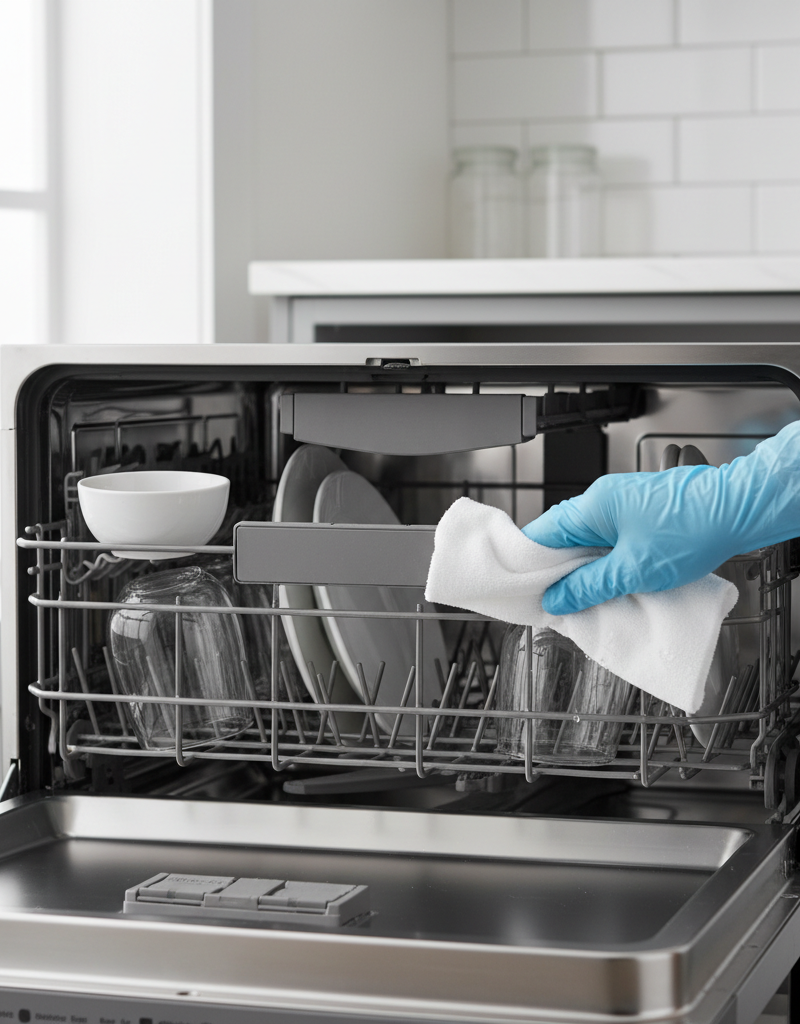
Wipe Down the Door Gasket/Seal — This is another prime spot for mold and mildew because it stays damp and out of sight.
- Tools: Damp cloth, white vinegar or mild all-purpose cleaner.
- Instructions: Open the dishwasher door wide. Carefully pull back the rubber gasket, the seal around the edge of the door opening, and wipe underneath it with a damp cloth soaked in white vinegar or a mild cleaner. You’ll probably find black or brown gunk and grime. Don’t skip the bottom edge of the door either. Clean until all visible mold and mildew are gone. That’s often where a lot of the musty smell comes from.
-
Run a Vinegar Cycle — Now it’s time for a deep clean to break down grease and mineral deposits.
- Materials: 1-2 cups of white distilled vinegar.
- Instructions: Put an open, heat-safe bowl or mug with 1-2 cups of white distilled vinegar on the top rack of an empty dishwasher. Do NOT add detergent. Run the dishwasher on the hottest, longest cycle available. The vinegar helps cut through grease, deodorize, and knock out hard water spots. I tell folks to do this once a month if they use the dishwasher every day.
-
Try a Baking Soda Boost — If the vinegar didn’t quite take care of the last bit of odor, baking soda is your next move.
- Materials: 1 cup of baking soda.
- Instructions: After the vinegar cycle is finished and the dishwasher has cooled, sprinkle 1 cup of baking soda across the bottom of the empty dishwasher. Run a short, hot wash cycle. Baking soda’s a great natural deodorizer and will soak up any lingering smells.
-
Consider a Commercial Dishwasher Cleaner — For really stubborn grime or smells that just won’t quit, a commercial cleaner can do the trick.
- Materials: Dishwasher cleaner (e.g., Finish Dishwasher Cleaner, Affresh).
- Instructions: Follow the product’s directions carefully. These usually mean placing a bottle upside down in the rack or a tablet in the detergent dispenser and running an empty hot cycle. They’re built to break down tough grease, limescale, and food residue.
-
Check Your Drain Hose (Advanced) — This one’s less common, but sometimes it’s the fix. If the smell still hangs around after you’ve done everything else, the drain hose may be the problem. It can collect slimy buildup.
- Safety: Turn off power to the dishwasher at the breaker.
- Tools: Screwdriver, bucket, old towels, wire brush.
- Instructions: This is a bit more involved. You’ll need to pull the dishwasher out from under the counter to get to the drain hose, which hooks to your sink’s drain or garbage disposal. Disconnect it—have a bucket ready for leftover water—and inspect it for clogs or heavy slime buildup. You might need to clean it out with a wire brush or replace it if it’s too far gone. That’s where I’d usually tell homeowners to call it a day and ring a pro if they’re not comfortable—it
Related Articles
Keep troubleshooting with these hand-picked guides from FixlyGuide:
- Why Your Kitchen Sink Drain Stinks (Even After You've Cleaned It) — Don't just mask that foul odor from your kitchen sink; get rid of the gunk causing it with this pro-level cleaning method.
- The Grimy Secret Under Your Kitchen Sink: Why That Smell Won't Go Away — Uncover the real reason for that persistent kitchen sink odor and how to banish it for good with simple DIY steps and materials.
- The Mystery Smell: Why Your Fridge Stinks (Even After Cleaning It) — That persistent, foul odor in your refrigerator isn't just gross; it's often a sign of hidden issues. Learn the real culprits behind linger…
- The Invisible Scum on Your Bathtub: How to Make It Gleam Again — Is your bathtub losing its luster, even after scrubbing? That invisible layer of soap scum and mineral deposits is the culprit. Learn how t…
- That Mystery Haze on Your Dishware? Your Dishwasher's the Culprit — If your 'clean' dishes come out looking cloudy, streaky, or gritty, it's not you – it's your dishwasher, and I'll show you how to fix it.
- The Real Reason Your Dishwasher Stinks (And It's Not Just Old Food) — Don't let a stinky dishwasher ruin your kitchen. Often, the problem isn't just old food; it's a buildup of grime and bacteria in hidden spo…
What should this project cost?
Enter your project details for a realistic cost range before you call anyone.
Cost depends heavily on which system turns out to be the source.
- Regional adjustment
- National average
- Labor share (typical)
- ~$1,620
- Quotes to collect
- 3 written estimates
Educational estimate based on national averages — not a binding quote. Always confirm with written local estimates.
Get the print-ready PDF of this guide
A clean, ad-free, printable version you can keep on your phone or pin to the workshop wall. Free with a FixlyGuide account.
- Print-optimized layout
- Tools, materials & every step included
- Saved to your account
Frequently asked questions
Why does my dishwasher smell like rotten eggs?+
A rotten egg smell usually indicates hydrogen sulfide gas, which often comes from decaying food particles, especially in the filter or drain hose. A thorough cleaning of these components, followed by a vinegar and baking soda wash, can typically resolve it.
How often should I clean my dishwasher to prevent odors?+
I recommend cleaning the filter monthly, wiping down the door gasket weekly, and running a vinegar or commercial cleaner cycle every 1-2 months. This routine keeps food debris and mildew at bay.
Can I use bleach to clean my dishwasher?+
Using bleach with stainless steel interiors can cause discoloration or pitting. It's also dangerous if mixed with certain dishwasher cleaners or detergents. Stick to vinegar, baking soda, or cleaners specifically designed for dishwashers.
Why do my dishes still smell after washing?+
If your dishes smell, it means the source of the odor in the dishwasher isn't fully gone. Re-clean the filter, spray arms, and door gasket thoroughly, then run another deep cleaning cycle with vinegar or a commercial product.
Does leaving dirty dishes in the dishwasher cause smells?+
Yes, absolutely! Food scraps left on dishes, especially for extended periods, will start to decompose and create odors within the warm, moist environment of the dishwasher, contributing to the overall stink.
My dishwasher smells even after cleaning, what else could it be?+
If the smell persists after a deep clean, check the drain hose for clogs or buildup – it's often overlooked. Also, make sure your garbage disposal (if connected) is clean, as odors can back up from there.
Can hard water cause dishwasher odors?+
Hard water leaves mineral deposits that can trap food particles and soap scum, creating a breeding ground for bacteria and mold. Using a descaler or regular vinegar washes helps combat this.
Is it normal for a new dishwasher to smell?+
A new dishwasher might have a slight 'new plastic' or factory smell that usually dissipates after a few cycles. If it's a strong, foul odor, it could be residual manufacturing lubricants or trapped debris from initial test runs – try a vinegar cycle.

Discussion
Loading comments…