- Keep relative indoor humidity between 35% and 55% — A whole-home dehumidifier or a running air conditioner helps keep the boards tight, which cuts down on seam gaps where pet urine can sneak through to the subfloor.
- Deploy waterproof barrier pads under every rug — Standard woven rugs let liquids pass right through. Put 100% waterproof, closed-cell rug pads under all decorative runners, especially in entryways and under pet feeding stations.
- Trim dog nails every 3 to 4 weeks — Sharp claws scratch micro-grooves into the clear topcoat. Those scratches give standing moisture a path to get through the protective finish.
- Inspect suspected areas bi-monthly with your UV light — Pets are creatures of habit. Scanning baseboards, floor vents, and corners every 60 days catches accidents you might’ve missed before the urine has months to eat at the wood tannins.
Published October 21, 2026Last updated October 21, 2026
Tools & materials you'll need
Affiliate links- AmazonBio-enzymatic urine cleaner32 oz · fragrance-free floor-safe formula
- Amazon3% hydrogen peroxide16 oz · standard brown bottle, do not use 30% hair developer
- AmazonPlastic cling wrap1 roll · to prevent poultice premature drying
- AmazonWhite cotton cloths or rags4-6 · must be uncolored to prevent dye transfer
- AmazonBlue painter's tape1 roll · delicate surface grade
- AmazonDistilled white vinegar16 oz · 5% acidity for initial pH balance
- AmazonMatching polyurethane finish1/2 pint · satin or semi-gloss to match existing floor
As an Amazon Associate FixlyGuide earns from qualifying purchases — at no extra cost to you. Prices and availability are accurate as of publication and subject to change.
Quick Answer
To get old dog urine stains out and knock down that lingering ammonia stink on hardwood, start by pulling up any rugs and blotting up surface moisture before you touch the dark ring. I’d use a 3% hydrogen peroxide poultice under plastic wrap for 8 to 12 hours to lift the black oxidation, scrub along the wood grain with an enzymatic cleaner to break down dried uric acid crystals, and finish with a dilute white vinegar rinse to help rebalance pH. If the wood’s rotted or gone soft past 1/8 inch deep, you’re better off sanding and refinishing that section instead. No sense chasing your tail.
The Problem
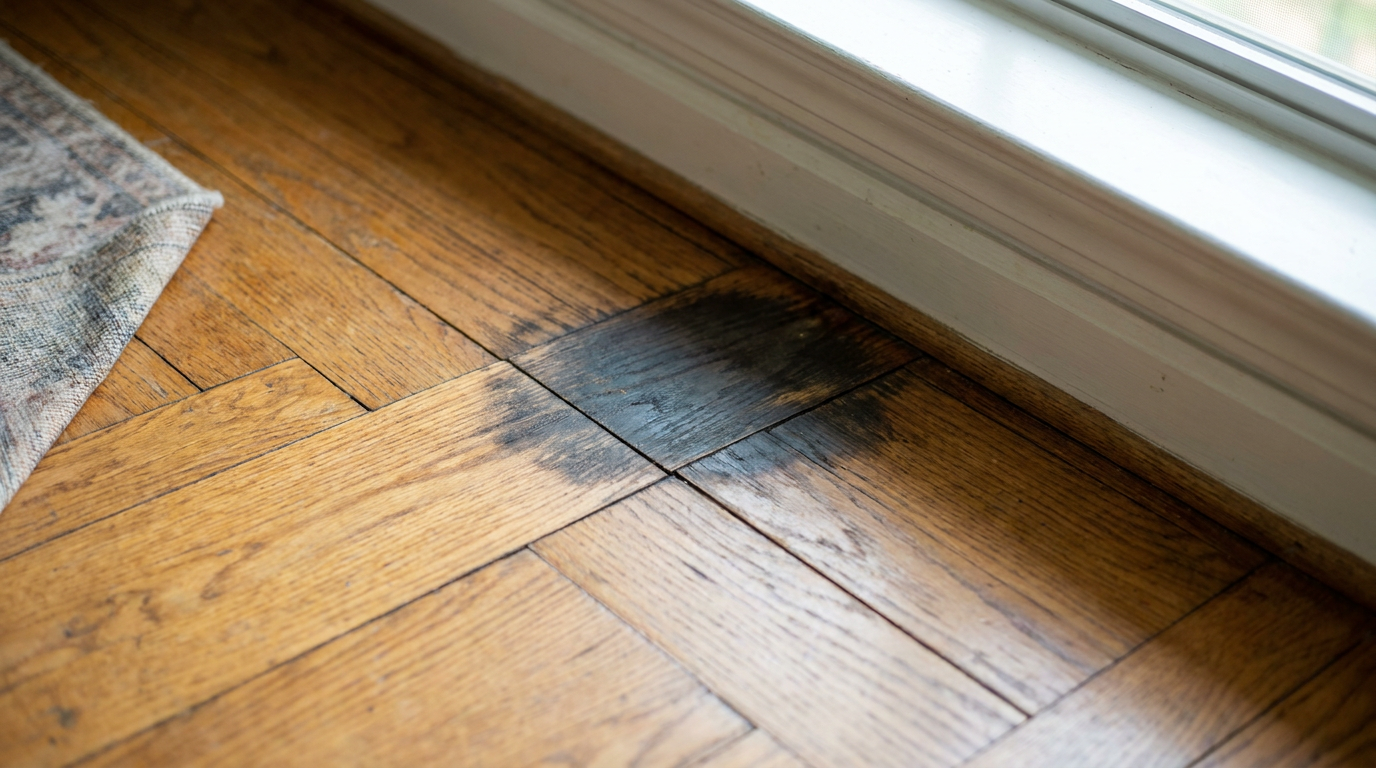
Dog urine on finished oak, maple, or engineered planks gives you a nasty two-part mess: a dark water ring and a sharp, stale odor that smacks you right in the face when the AC kicks on. I’ve seen homeowners scrub the top with floor polish, mop with pine oil, or drown the board in scented spray. Two days later, the smell comes back like it owns the place, and the black spot looks even uglier.
Why? Urine doesn’t just sit on top of polyurethane. It finds the micro-cracks between plank joints, screw pops, and worn traffic paths.
Once it slips past the topcoat, the liquid soaks into the raw cellulose fibers of the wood. The moisture feeds native bacteria, which quickly turn urea into gaseous ammonia. Even after the puddle dries, microscopic uric acid crystals stay stuck deep in the grain. Worse, the alkaline pH of dog urine reacts with the natural tannins in hardwood—especially white and red oak—and turns the wood a nasty dark gray or charcoal black. Wiping the surface gets you nowhere. Zero.
How It Works
Hardwood flooring is porous organic material protected by a finish shell, usually an oil-modified or waterborne polyurethane running 2 to 4 mils thick. When dog urine sits for even twenty minutes, surface tension pulls it sideways into unsealed tongue-and-groove seams.
From there, gravity takes it into the subfloor—either 3/4-inch plywood or an older plank subfloor. The urine starts changing chemistry. Fresh dog urine is slightly acidic (pH 6.0 to 7.0), but as bacteria work on the urea, it turns into ammonia salts with an alkaline pH topping 9.0 to 10.0. That sharp alkaline spike reacts with the wood’s tannic acid. That’s what makes the black iron-tannate-style stain; it isn’t dirt, and it isn’t mold. It’s a chemical burn inside the timber.
The odor comes from three different compounds: urea, urochrome (pigment), and uric acid. Standard soaps and floor cleaners wash off the urea and urochrome. They leave the insoluble uric acid crystals behind.
Anytime your home’s relative humidity climbs above 50%—pretty standard during hot North Texas summers—those dormant crystals pull in moisture from the air. The bacteria wake back up, and the ammonia gas vents right into your living room. The only real fix is a two-phase chemical process: break down the uric acid crystals with biological enzymes, and oxidize the tannin burn with concentrated hydrogen peroxide.
Step-by-Step Fix
Follow these steps in exact sequence. Rush the drying phase or seal wet timber, and you’ll trap moisture and invite cupping or rot. That’s a bad day.
-
Map the contaminated zone with ultraviolet light — Wait until sundown, shut the blinds, and kill your overhead lights. Sweep a 395nm blacklight flashlight slowly across the wood, keeping the beam 6 to 8 inches off the floor. Dried urine shows up as a dull greenish-yellow glow. Mark the perimeter with low-tack blue painter's tape about 3 inches wider than the glow ring so you know exactly where the liquid pooled under the planks.
- Tools required: 395nm ultraviolet LED flashlight, blue painter's tape.
- Inspection check: If the edges glow bright blue instead of greenish-yellow, you’re probably looking at carpet cleaner residue or old optical brighteners from a previous tenant, not fresh urine.
-
Scrape away failing polyurethane surface sealers — Check whether the finish above the dark stain has blistered, turned milky, or peeled. Take a sharp 1-inch utility scraper or a piece of 150-grit sandpaper and gently scrape the peeling topcoat inside the taped perimeter until you hit bare timber. Don’t gouge the oak. You only want to open the surface so the treatment can get into the grain where the mess lives.
- Caution: Wear an N95 dust mask. Dried urine dust and old polyurethane particles will irritate your lungs.
- Skip this step if: The existing polyurethane is still solid and the liquid got in strictly through the side seams between planks.
-
Neutralize surface alkaline crusts with a mild acid wipe — Mix 1 part distilled white vinegar (5% acetic acid) to 3 parts warm distilled water (around 100°F). Lightly dampen a microfiber cloth—don’t soak it—and wipe the affected floorboards well. This knocks back dried alkaline salts and lowers the surface pH, setting the wood up so the enzyme treatment won’t get knocked flat by heavy residue.
- Dry time: Let the floor sit for 20 minutes to air dry completely before you move on.
-
Saturate the seams with a bio-enzymatic digester — Pour an unfragranced, bio-enzymatic urine treatment straight along the board joints inside the taped boundary. Don’t flood the room; just use enough so the liquid sinks into the seams where the urine traveled. The live bacterial enzymes need time to find and digest the insoluble uric acid crystals trapped in the tongue-and-groove joints.
- Pro tip: Cover the wet area with a sheet of plastic cling wrap. That keeps the enzyme from flashing off over the next 4 to 6 hours and gives the bio-agents time to do their job.
- Timing: Keep the cling wrap in place for a minimum of 6 hours; 12 hours is better for stains older than a month.
-
Wick away the digested residue with paper towels — Peel back the plastic wrap. Lay down four layers of plain white, unprinted paper towels right over the wet wood. Set a flat, heavy object—like a clean 12-inch ceramic tile or a stack of thick books wrapped in plastic bags—on top of the towels to apply even downward pressure. The capillary action will pull the suspended liquid and digested urine salts out of the porous wood fibers and into the paper towels.
- Replacement: Swap the towels every 2 hours until they come up bone dry.
-
Apply an oxidizing hydrogen peroxide poultice to clear black stains — Once the odor’s gone, handle the dark tannin burn. Soak a plain white washcloth or cotton rag in standard household 3% hydrogen peroxide. Lay the saturated cloth flat against the dark black or gray stain. Make sure it covers the exact shape of the discolored wood.
- Safety: Use regular 3% peroxide from the medicine cabinet first. Don’t jump straight to industrial 30% developer peroxide unless the 3% fails after two rounds; high concentrations can bleach the natural wood fibers stark white, and that’s a worse cosmetic headache.
- Covering: Tape plastic wrap over the peroxide cloth to keep it damp. Let it work for 8 to 12 hours. The peroxide breaks the chemical bonds of the oxidized tannins and turns the wood back toward its natural pale color.
-
Inspect, lift, and assess the wood tone — Pull the poultice and check the grain. If the stain’s lightened by 70%, remove the cloth and let the timber dry. If it’s still noticeably darker than the surrounding floor, re-saturate the washcloth with fresh 3% hydrogen peroxide and leave it covered for another 6 hours.
- Warning: Check the wood every two hours during the second round. As soon as the stain matches the unstained surrounding floorboards, yank the rag off right away so you don’t get halo bleaching.
-
Rebalance the wood fibers with distilled water — Wipe the treated section down with a cloth lightly dampened with distilled water. This clears out lingering peroxide salts and stops the oxidation process cold. Rub briskly with a dry terrycloth towel to get rid of every bit of surface moisture.
-
Dehydrate the subfloor with directed airflow — Set a high-velocity air mover or a standard box fan angled downward at 45 degrees right onto the wet floorboards. Run the fan continuously for 24 to 36 hours.
- Moisture verification: If you’ve got a pinless moisture meter, scan the treated planks and compare the reading to an untreated board across the room. Don’t seal the floor until the moisture content drops below 12% (ideally matching the baseline reading within 2% to 4%).
-
Blend and reseal the bare wood patches — If you scraped finish away in Step 2, smooth the edges of the spot with 220-grit sandpaper, feathering outward into the sound finish by 1/2 inch. Wipe away all sanding dust with a dry tack cloth. Using a 1-inch foam brush, apply a razor-thin coat of matching polyurethane (oil-based ambering poly or clear waterborne poly, depending on your existing floor's finish) straight over the bare grain. Let it cure for 24 hours before you let anybody walk on it.
Common Causes
- Rugs acting as moisture traps — Folks toss a synthetic-backed throw rug over an accident and figure the carpet will catch it. Trouble is, the latex or rubber backing acts like an airtight vapor barrier. The urine stays pinned against the hardwood for days or weeks, works its way into the subfloor, and starts rotting the tongue-and-groove joints.
- Micro-gaps from seasonal humidity swings — During dry winter heating cycles, hardwood shrinks and opens 1/16-inch to 1/8-inch gaps between boards. Pets naturally aim for baseboards and plank seams. The urine runs down those gaps instead of sitting on top of the poly finish, so it skips the topcoat altogether.
- Inappropriate floor cleaners fixing the stain — Cleaning urine with steam mops is a mess. High-temperature steam drives uric acid salts deeper into the wood pores and cooks the protein, which sets the stain for good. Ammonia-based floor cleaners are just as bad; since ammonia is already part of urine, using it can trigger territorial marking instincts in pets.
- Aging, worn polyurethane traffic lanes — Polyurethane doesn’t last forever. Heavy-traffic hallways and doorways wear through the mil-thickness just from foot traffic. When dog urine hits raw, worn oak, the liquid absorbs right away, and that means a full chemical poultice instead of a simple wipe-down.
Common Mistakes
- Reaching for pure chlorine bleach — Pouring sodium hypochlorite (laundry bleach) on pet stains breaks down the lignin holding wood fibers together, leaving the timber pulpy and frayed. Worse, bleach won’t destroy uric acid crystals and can produce toxic chloramine gas when it mixes with the ammonia in urine. Stick with hydrogen peroxide for wood lightening.
- Using baking soda and vinegar paste simultaneously — DIYers love mixing vinegar and baking soda because it foams like crazy. That foam is just carbon dioxide gas bubbling off into the room. The acid and base cancel each other out, leaving you with water and sodium acetate, which won’t touch stubborn uric acid crystals. Use vinegar and enzymes as separate, isolated steps.
- Saturating the floor with gallons of liquid — Flooding the boards with gallons of cleaner to chase the smell will warp the floor. Solid hardwood expands sideways when it gets soaked, crushing the tongue-and-groove profiles in a failure called cupping. Controlled poultices and targeted seam applications are the only safe way.
- Applying a topcoat sealer over an active odor — Painting polyurethane, shellac, or varnish over an un-neutralized pet stain seals the stink inside the timber. The first humid summer day shows up, the urine salts swell, blister the fresh finish right off the wood, and send the smell right back out. Kill the biological mess first; seal last.
- Skipping the moisture check before refinishing — Applying finish to wood that’s above 12% moisture traps water in the grain. That gives you a milky, cloudy discoloration under the polyurethane called blushing. Let the fans run for at least a full day before you even think about any sealer.
Cost & Time Breakdown
| Task | DIY Cost | Pro Cost | Time |
|---|---|---|---|
| UV Blacklight Detection & Surface Prep | $12–$25 | $100–$150 | 30 minutes |
| Enzyme Digestion & Cling Wrap Poultice | $15–$30 | $150–$250 | 8–12 hours (mostly dwell time) |
| Tannin Oxidation (3% Peroxide Poultice) | $5–$10 | $200–$350 | 8–16 hours (intermittent checks) |
| Wood Dehydration & Moisture Testing | $0–$35 | $150–$200 | 24–36 hours (fan run time) |
| Spot Sanding and Polyurethane Touch-Up | $15–$40 | $250–$450 | 1–2 hours hands-on |
| Total Board Replacement (if wood is rotted) | $50–$90 | $400–$900 | 4–6 hours active labor |
Tips & Prevention
- Keep relative indoor humidity between 35% and 55% — A whole-home dehumidifier or a running air conditioner helps keep the boards tight, which cuts down on seam gaps where pet urine can sneak through to the subfloor.
- Deploy waterproof barrier pads under every rug — Standard woven rugs let liquids pass right through. Put 100% waterproof, closed-cell rug pads under all decorative runners, especially in entryways and under pet feeding stations.
- Trim dog nails every 3 to 4 weeks — Sharp claws scratch micro-grooves into the clear topcoat. Those scratches give standing moisture a path to get through the protective finish.
- Inspect suspected areas bi-monthly with your UV light — Pets are creatures of habit. Scanning baseboards, floor vents, and corners every 60 days catches accidents you might’ve missed before the urine has months to eat at the wood tannins.
- Keep a dedicated enzyme spray bottle within arm's reach — Hit fresh puddles within five minutes by blotting straight up with microfiber towels, spraying with bio-enzymes, and staying away from aggressive scrubbing that just pushes the liquid into plank seams.
When to Call a Professional
If you’ve run two complete 12-hour peroxide poultice cycles and the boards are still jet-black, the chemical burn has gone through the full thickness of the plank. That wood isn’t coming back with chemicals.
Take the blade of a flathead screwdriver and press it firmly into the dark wood grain. If the wood feels spongy, gives under light thumb pressure, or flakes off in rotten fibers, the timber’s structural integrity has collapsed. The urine and ambient moisture have rotted the board down to the tongue.
At that point, stop putting more liquid on it. You need a hardwood flooring pro to weave in new unfinished planks, blind-nail them to the subfloor, sand the surrounding floor flat, and custom-stain the repair to match your existing boards. I pulled a water heater in Frisco last month that had exactly this kind of urine damage bleeding under a hallway run—once the subfloor was soft, there just wasn’t any cleaning product in the world that was going to save it.
If the smell still hangs around after deep enzyme cleaning, the liquid probably soaked into the structural plywood subfloor, the felt underlayment, or the bottom plates of nearby drywall framing. A remediation pro will need to pull the top boards and seal the raw subfloor with a shellac-based odor-blocking primer before they install fresh timber.
Frequently Asked Questions
Can I use laundry bleach to remove black urine stains from hardwood?
No, don’t put chlorine bleach on hardwood flooring. Sodium hypochlorite chemically destroys wood lignin, weakens the fibers, and leaves the timber pulpy and fragile without lifting deep tannin stains. Bleach also won’t neutralize uric acid crystals and can produce hazardous chloramine vapors when it reacts with the ammonia in pet urine. Household 3% hydrogen peroxide is the right chemical for clearing tannin burns safely.
Why does the urine smell return every time it rains or gets humid?
Uric acid crystals left behind by dried dog urine are hygroscopic, which means they pull moisture right out of the air around them. When indoor relative humidity climbs past 50% on rainy or humid days, those dormant salt crystals dissolve a bit and reactivate the bacteria feeding on the organic proteins. That biological activity off-gasses fresh ammonia vapors, and the smell comes right back until an enzymatic cleaner breaks down the crystals all the way.
How long does an enzyme cleaner need to stay wet on wood floors?
Enzyme cleaners need to stay moist for at least 4 to 8 hours to work well; 12 hours is better for older, heavy stains. The living biological enzymes need water to move through the wood grain and digest uric acid crystals. If the liquid dries out in 20 minutes, the enzyme action stops cold. Always cover the treated boards with plastic cling wrap to trap moisture and stretch the dwell time.
Will hydrogen peroxide ruin the natural finish of my hardwood floor?
Standard 3% medical-grade hydrogen peroxide won’t strip intact polyurethane, but it can bleach bare wood fibers if you leave it on too long. Oil-based finishes may soften a little if they’re soaked for long stretches. To keep from doing damage, keep the poultice tight to the blackened timber, check the color change every two hours, and wipe the area clean as soon as the stain lightens to match the surrounding grain.
Can I use an iron or a steam mop to lift the stain faster?
Don’t use steam or direct heat on a pet-stained hardwood floor. High heat cooks the organic proteins in urine, which binds the stain and odor into the timber’s cellular structure for good. Steam mops also blast moisture past the polyurethane wear layer, forcing urine salts deeper into the subfloor and making the planks warp, cup, and buckle along the edges.
What should I do if the wood has turned completely gray or black?
A dark gray or black color means alkaline urine has chemically reacted with the wood’s natural tannins and made an iron-tannate stain. Treat it by applying a poultice soaked in 3% hydrogen peroxide, covered with plastic wrap, for 8 to 12 hours. If the wood stays dark after two full treatments, the oxidation goes all the way through the board, and the damaged planks have to come out and be replaced.
Is baking soda effective for absorbing pet odors out of hardwood?
Baking soda only handles superficial, surface-level acidic odors; it can’t reach the wood grain to get at dried uric acid crystals trapped in seams and tongue-and-groove joints. Leaving baking soda on finished hardwood can also dull the polyurethane topcoat through micro-abrasions when you wipe it away. Bio-enzymatic liquids that penetrate the actual grain structure are a lot more effective for total odor removal.
How do I know if the pet urine has soaked through to the subfloor?
If you’ve done two rounds of surface enzyme digestion and the ammonia smell still hits hard when you put your nose near the floor seams, the urine has reached the subfloor. Another clear sign is visible cupping or crowning along the board edges, which happens when the underside of the floor takes on more moisture than the top. In those cases, a section of floor has to be lifted so the subfloor can be treated or sealed.
What should this project cost?
Enter your project details for a realistic cost range before you call anyone.
Cost depends heavily on which system turns out to be the source.
- Regional adjustment
- National average
- Labor share (typical)
- ~$1,620
- Quotes to collect
- 3 written estimates
Educational estimate based on national averages — not a binding quote. Always confirm with written local estimates.
Get the print-ready PDF of this guide
A clean, ad-free, printable version you can keep on your phone or pin to the workshop wall. Free with a FixlyGuide account.
- Print-optimized layout
- Tools, materials & every step included
- Saved to your account
Frequently asked questions
Can I use laundry bleach to remove black urine stains from hardwood?+
No, never put chlorine bleach on hardwood flooring. Sodium hypochlorite chemically destroys wood lignin, weakening the fibers and turning the timber pulpy and fragile without lifting deep tannin stains. Bleach also fails to neutralize uric acid crystals and produces hazardous chloramine vapors when reacting with the ammonia in pet urine. Household 3% hydrogen peroxide is the correct chemical agent for clearing tannin burns safely.
Why does the urine smell return every time it rains or gets humid?+
Uric acid crystals left behind by dried dog urine are hygroscopic, meaning they pull moisture directly out of the surrounding air. When indoor relative humidity climbs past 50% on rainy or humid days, these dormant salt crystals dissolve slightly and reactivate the bacteria feeding on the organic proteins. This biological activity off-gasses fresh ammonia vapors, bringing the smell back until an enzymatic cleaner completely breaks down the crystals.
How long does an enzyme cleaner need to stay wet on wood floors?+
Enzyme cleaners must stay moist for at least 4 to 8 hours to work effectively; 12 hours is recommended for older, heavy stains. The living biological enzymes require water to migrate through wood grain and digest uric acid crystals. If the liquid dries out in 20 minutes, the enzyme action halts completely. Always cover the treated boards with plastic cling wrap to trap moisture and extend contact dwell time.
Will hydrogen peroxide ruin the natural finish of my hardwood floor?+
Standard 3% medical-grade hydrogen peroxide will not strip intact polyurethane, but it can bleach bare wood fibers if left on too long. Oil-based finishes may experience minor temporary softening if soaked for extended hours. To prevent damage, keep the poultice localized strictly to the blackened timber, inspect the color change every two hours, and wipe the area clean as soon as the stain lightens to match the surrounding grain.
Can I use an iron or a steam mop to lift the stain faster?+
Never use steam or direct heat on a pet-stained hardwood floor. High heat cooks the organic proteins found in urine, permanently binding the stain and the odor into the cellular structure of the timber. Steam mops also blast high-pressure moisture past the polyurethane wear layer, directly forcing urine salts deeper into the subfloor and causing the wood planks to warp, cup, and buckle along their edges.
What should I do if the wood has turned completely gray or black?+
A dark gray or black color indicates that alkaline urine has chemically reacted with the natural tannins in the wood, creating an iron-tannate stain. Treat this by applying a poultice soaked in 3% hydrogen peroxide, covered with plastic wrap, for 8 to 12 hours. If the wood remains dark after two full treatments, the oxidation extends all the way through the board, and the damaged planks must be surgically removed and replaced.
Is baking soda effective for absorbing pet odors out of hardwood?+
Baking soda only neutralizes superficial, surface-level acidic odors; it cannot penetrate the wood grain to reach dried uric acid crystals trapped inside seams and tongue-and-groove joints. Leaving baking soda on finished hardwood can also dull the polyurethane topcoat through micro-abrasions when wiped away. Bio-enzymatic liquids that penetrate the actual grain structure are far more effective for total odor eradication.
How do I know if the pet urine has soaked through to the subfloor?+
If you have performed two rounds of surface enzyme digestion and the ammonia smell remains strong when you put your nose to the floor seams, the urine has reached the subfloor. Another clear indicator is visible cupping or crowning along the board edges, which happens when the underside of the floor absorbs more moisture than the top. In these cases, a section of floor must be lifted so the subfloor can be treated or sealed.
Discussion
Loading comments…