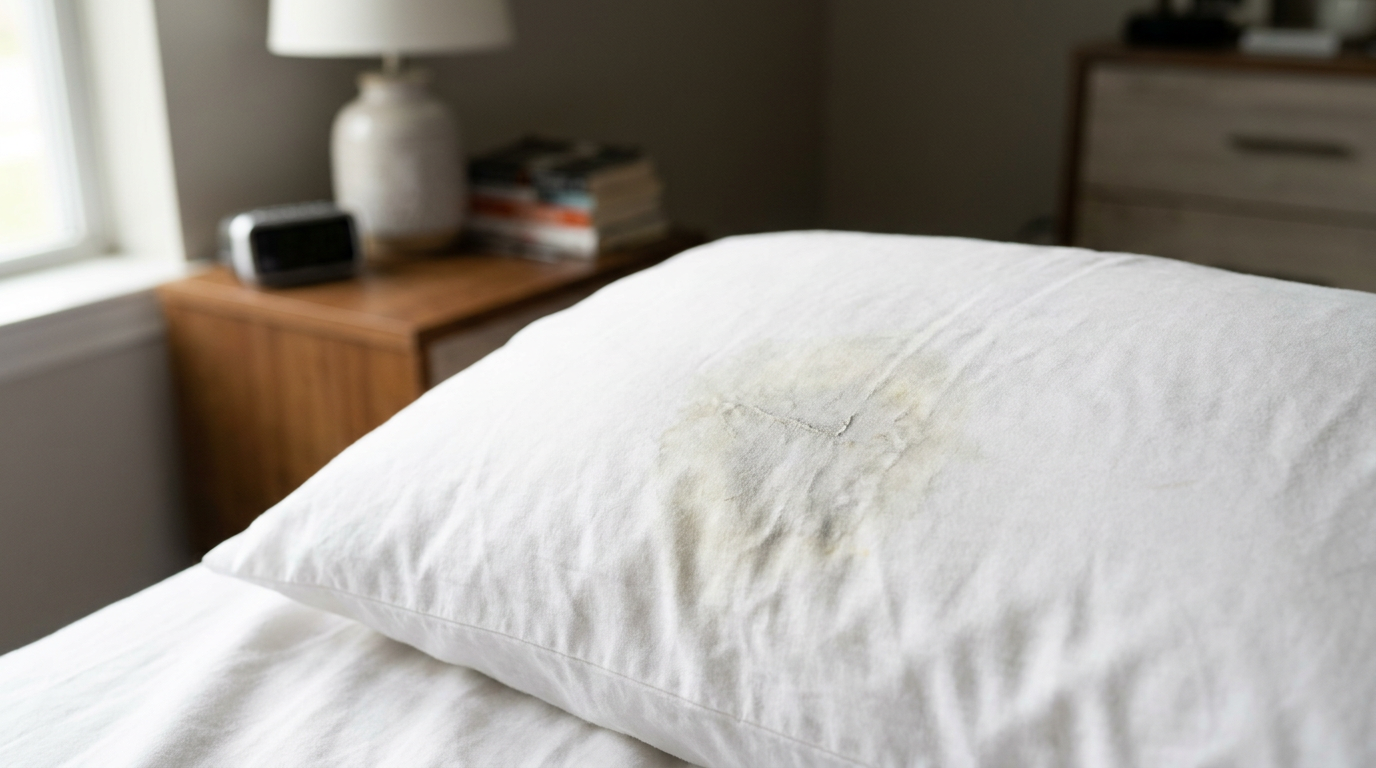
- Apply a Degreaser. You’ve got two solid options here.
- Tools: Degreasing dish soap (like original blue Dawn) OR a laundry enzyme spray.
- Squeeze a generous amount of dish soap right onto the stained area. Work it in with your fingers or a small laundry brush, gently, so it gets down into the fibers. You want the whole greasy patch covered.
- Alternative: If you’re using an enzyme cleaner, spray it heavy over the stain so it’s fully soaked.
Published October 1, 2026Last updated October 1, 2026
Tools & materials you'll need
Affiliate links- AmazonLaundry brushoptional, an old toothbrush also works
As an Amazon Associate FixlyGuide earns from qualifying purchases — at no extra cost to you. Prices and availability are accurate as of publication and subject to change.
Quick Answer
Those gray, greasy-looking stains on your pillowcases come from body oils, sweat, and hair products building up and oxidizing over time. A regular wash usually won’t touch that stubborn oily grime. To get rid of it, I’d pretreat the stain with a strong degreasing dish soap, like original blue Dawn, or a laundry enzyme spray made for this sort of mess. Let it sit for at least an hour so it can break down the oils, then wash the pillowcases in the hottest water the fabric can safely take. Toss in a good detergent and a scoop of powdered oxygen bleach, like OxiClean, and that’ll usually finish the job and brighten things back up.
The Problem
You pull the pillowcases off for laundry and there it is—a gray or yellowish-brown greasy shadow right where your head’s been resting. Feels a little stiff, maybe even waxy. And it sure doesn’t smell fresh. You know you washed it last week, but somehow the stain keeps coming back darker every time. Sometimes it survives the wash and leaves a faint outline behind, just to mock you. That’s maddening. And no, you’re not being gross. This is just what happens when natural body oils and everyday products slowly load up on fabric.
How It Works
Think of your pillowcase like a sponge that gets soaked for eight hours a night. The usual culprits are sebum, which is the oil your skin makes, sweat, and leftover hair products like leave-in conditioner, pomade, or oil. Once that stuff gets on the fabric, it doesn’t just sit there on top. It works its way into the cotton or microfiber threads.
Give it a few days or weeks, and that oily mix oxidizes—it reacts with air—and starts turning darker and more yellow. It also polymerizes, which is just a fancy way of saying the oil molecules link up and form a tough, water-resistant film. That’s why a normal wash often comes up short. Regular detergent is built for everyday dirt, but it can’t always cut through old, concentrated grease. And hot water alone won’t melt it all out, so the stain hangs on and gets worse every time you use the case.
I pulled a water heater in Frisco last month that had exactly this kind of layered buildup—different job, same story. Once grime gets a hard shell on it, you’ve got to break that barrier first.
To really remove it, you need to attack the stain before it goes into the main wash. That means two parts: a degreaser to loosen the oils and an oxidizer in the wash to knock out whatever discoloration’s left and freshen the fabric.
Step-by-Step Fix
This method is safe for most white or colorfast cotton, linen, or polyester pillowcases. If you’re not sure, test a hidden spot first. Saves you a headache.
-
Prep the Area. Lay the dry, stained pillowcase flat on a surface, like the bottom of a washtub or an old towel you don’t care about. Don’t wet it first. The degreaser needs to hit that concentrated oil directly.
-
Apply a Degreaser. You’ve got two solid options here.
- Tools: Degreasing dish soap (like original blue Dawn) OR a laundry enzyme spray.
- Squeeze a generous amount of dish soap right onto the stained area. Work it in with your fingers or a small laundry brush, gently, so it gets down into the fibers. You want the whole greasy patch covered.
- Alternative: If you’re using an enzyme cleaner, spray it heavy over the stain so it’s fully soaked.
-
Let It Penetrate. This is the part folks skip, and then they wonder why the stain’s still there. Let the pretreated pillowcase sit for at least one hour. If it’s an old dark stain, give it several hours or even overnight. That gives the soap or enzymes time to break down the hardened oils.
-
Rinse with Hot Water. After it’s had time to sit, take the pillowcase to a sink and rinse the treated area under the hottest tap water the fabric can handle. You should feel that greasy, waxy texture start to loosen up. Rub the fabric lightly against itself under the running water to help flush the residue out.
-
Prepare the Wash Load. Put the pretreated pillowcases in the washing machine. You can wash them with other white or light-colored linens, like sheets and towels. Don’t pack the machine too full. The stuff needs room to move.
-
Add Detergent and Oxygen Bleach.
- Tools: High-quality laundry detergent, powdered oxygen bleach.
- Add your normal amount of a good liquid or powder detergent. For stains like this, better detergent really does help.
- Add one full scoop of powdered oxygen bleach, like OxiClean or a generic equivalent, straight into the wash drum. Oxygen bleach is a color-safe alternative to chlorine bleach that helps break down stains and brighten fabrics.
-
Select the Right Wash Cycle. Choose the "Whites" or "Heavy Duty" cycle and use the hottest water temperature that’s safe for your pillowcases, based on the care tag. For most cotton or cotton/poly blends, "Hot" is the sweet spot. Heat matters here. It helps loosen and remove what’s left of that oily residue.
-
Dry and Inspect. Once the cycle’s done, move the pillowcases straight to the dryer or hang them on a line. Before they’re fully dry, check the old stain area in bright light. If you still see a faint trace, do NOT machine dry it on high heat, because that can lock the stain in for good. Go back and repeat steps 2-7. If it’s gone, dry it like normal.
Common Causes
Knowing where the stain comes from makes it easier to keep it from coming back so fast.
- Body Oil (Sebum): Everybody makes sebum. If you’ve got oilier skin or hair, you’re going to leave more of it on your bedding.
- Hair Products: Leave-in conditioners, serums, pomades, waxes, and oils are big offenders. They’re supposed to be oily or waxy, so they transfer easily to fabric.
- Sweat: Mostly water, sure. But it still carries trace oils and compounds that can stain, especially when it mixes with sebum.
- Skincare Products: Heavy night creams, lotions, and even some acne meds can rub off on the pillowcase overnight and oxidize.
- Infrequent Washing: The longer oils sit, the more they oxidize and polymerize, and the tougher they get. Washing pillowcases at least once a week helps a lot.
Common Mistakes
These are the mistakes I see all the time, and they’ll either make the problem worse or waste your time.
- Using Chlorine Bleach First. Dumping chlorine bleach on an oily stain can actually make it yellower and harder to remove. Degrease first. Then use oxygen bleach in the wash.
- Not Using Hot Enough Water. Cold or warm water usually won’t melt and flush out heavy body oils that’ve set in. Use the hottest setting your fabric can take.
- Scrubbing Too Hard. Going at pillowcase fabric with a stiff brush can beat up the fibers, cause pilling, and weaken the material without cleaning it any better.
- Drying a Stained Item. If you tumble dry a pillowcase with even a faint greasy stain left on it, you’ll bake that oil into the fibers. After that? Good luck. Air dry until you know the stain’s gone.
- Using Fabric Softener. Liquid softeners and dryer sheets coat fibers with a waxy, water-resistant layer. That can trap oils underneath and make the next stain even harder to deal with.
Cost & Time Breakdown
This is a cheap DIY fix, plain and simple, and it mostly uses stuff a lot of folks already have under the sink.
| Task | DIY Cost | Pro Cost | Time |
|---|---|---|---|
| Pretreating with Dish Soap | <$1 | N/A | 5 minutes |
| Soaking Time | $0 | N/A | 1–2 hours |
| Washing & Drying | $1–$2 (detergent/OxiClean) | $20–$40 (laundry service) | 1.5–2 hours |
| Total | $1–$3 | $20–$40 | ~3 hours (mostly inactive) |
Tips & Prevention
- Wash Pillowcases Weekly. Best thing you can do. Make it part of your normal sheet day and call it a day.
- Shower Before Bed. If you rinse off the day’s sweat, oils, and hair products before bed, way less of it ends up on the pillowcase.
- Use a Silk or Satin Pillowcase. They’re not magic, but they don’t soak up oils like cotton does, and they can be easier on hair and skin too.
- Go Light on Hair Products. If these stains keep showing up, try using heavy hair oils or creams in the morning instead of right before bed.
- Add a Preventative Booster. For every wash, toss in half a scoop of oxygen bleach or 1/2 cup of borax. That helps keep oils from building up.
- Use a Pillow Protector. A zippered pillow protector gives you another layer between the pillowcase and the pillow itself, which keeps the pillow cleaner and absorbs some of the mess.
When to Call a Professional
Honestly, this is about as straightforward a DIY laundry job as it gets, and there’s almost no reason to call in a pro. That said, if the stain’s on a delicate decorative pillow that isn’t washable—silk, velvet, or anything else dry-clean-only—don’t mess with this method. Take it to a professional dry cleaner and point out the stain so they know exactly what they’re dealing with.
Related Articles
Keep troubleshooting with these hand-picked guides from FixlyGuide:
- The Caulk Stain That Won't Quit: Why Your Shower Stays Grimy — Is that stubborn, discolored caulk making your clean shower look perpetually dirty? It's not just surface grime; it's often mold or mildew,…
- Why Your Kitchen Sink Drain Stinks (Even After You've Cleaned It) — Don't just mask that foul odor from your kitchen sink; get rid of the gunk causing it with this pro-level cleaning method.
- The Deep Carpet Divots: Your Secret Weapon Against Furniture Marks — Tired of stubborn furniture indentations marring your carpet? Discover why they form and a surprisingly effective, simple method to restore…
- The Secret to Sparkling Grout Lines: Why Yours Stay Grimy — Tired of scrubbing your grout only to have it look dirty again? I'll show you the real reason your grout lines stay grimy and how to get th…
- The Ugly Orange Stain in Your Bathroom Toilet: What Bleach Won't Tell You — Discover the real cause of stubborn orange rust stains in your toilet bowl and learn how to banish them for good, even when bleach fails.
- The 4-Step Drywall Patch Secret That Makes Large Holes Vanish — Discover how to flawlessly repair a large hole in drywall using a simple, effective method that makes the damage disappear without a trace.
Should you do this yourself?
Answer five quick questions before you start. Safety outranks savings every time.
Your experience with work like this
How high do you have to work?
Does the job involve any of these?
Will it need a permit?
Specialty tools
Free and instant. Educational guidance only — not a quote, inspection, or professional diagnosis.
What should this project cost?
Enter your project details for a realistic cost range before you call anyone.
Cost depends heavily on which system turns out to be the source.
- Regional adjustment
- National average
- Labor share (typical)
- ~$1,620
- Quotes to collect
- 3 written estimates
Educational estimate based on national averages — not a binding quote. Always confirm with written local estimates.
Before you start
Check the difficulty, permits, and safety risk — then decide whether to call a pro.
- Estimate this projectGet a cost range for your scope and ZIP before you call anyone.Open
- Get local estimatesSend one request and compare written estimates from vetted pros.Open
Free, no signup required. Estimates are educational guidance, not a quote or an inspection.
Get the print-ready PDF of this guide
A clean, ad-free, printable version you can keep on your phone or pin to the workshop wall. Free with a FixlyGuide account.
- Print-optimized layout
- Tools, materials & every step included
- Saved to your account
Frequently asked questions
Can I use chlorine bleach to remove the gray stains?+
It's best not to. Chlorine bleach can react with the oils and proteins in the stain, sometimes making it more yellow and permanent. First, use a degreaser like dish soap, then wash with an oxygen-based bleach (like OxiClean) which is much more effective and safer for this type of stain.
Why do my pillowcases get stained but my sheets don't?+
It's a matter of concentration. Your head and hair have a much higher density of oil glands and are often covered in products compared to your legs or arms. All that oil gets concentrated in one small area on the pillowcase night after night.
Will this method work on colored pillowcases?+
Yes, this method is generally safe for colorfast fabrics. Both degreasing dish soap and oxygen bleach are color-safe. However, it's always wise to test a small, inconspicuous area (like an inside seam) first to ensure there's no color lift.
How can I prevent these pillowcase stains from happening in the first place?+
The best prevention is washing your pillowcases weekly in hot water. Showering before bed to wash off hair products and body oil also helps tremendously. You can also use a zippered pillow protector under the pillowcase as an extra barrier.
Is it the pillow itself that's causing the stain?+
Not usually, but the pillow can become a reservoir for oils. If your pillow is old and yellowed, it's holding onto years of sweat and oil. Even with a clean case, those oils can slowly wick back through. It's a good idea to wash your pillows themselves every 3-6 months if the material allows.
What if the stain is really old and dark?+
For very stubborn stains, you may need a longer soaking time. Apply the dish soap and let the pillowcase sit overnight before washing. You might also need to repeat the wash process two or three times to fully remove years of buildup.
Can I use vinegar or baking soda for these stains?+
Vinegar and baking soda are great for general freshening, but they aren't effective degreasers for this specific problem. You need a surfactant, like dish soap, to break down and lift the heavy, polymerized oils that cause these greasy gray stains.
Does the type of fabric make a difference?+
Yes, natural fibers like cotton and linen are more absorbent and tend to show oily stains more than synthetic fibers like polyester or microfiber. However, the oil buildup can happen on any type of fabric. The cleaning method described works well on all of them.
Discussion
Loading comments…