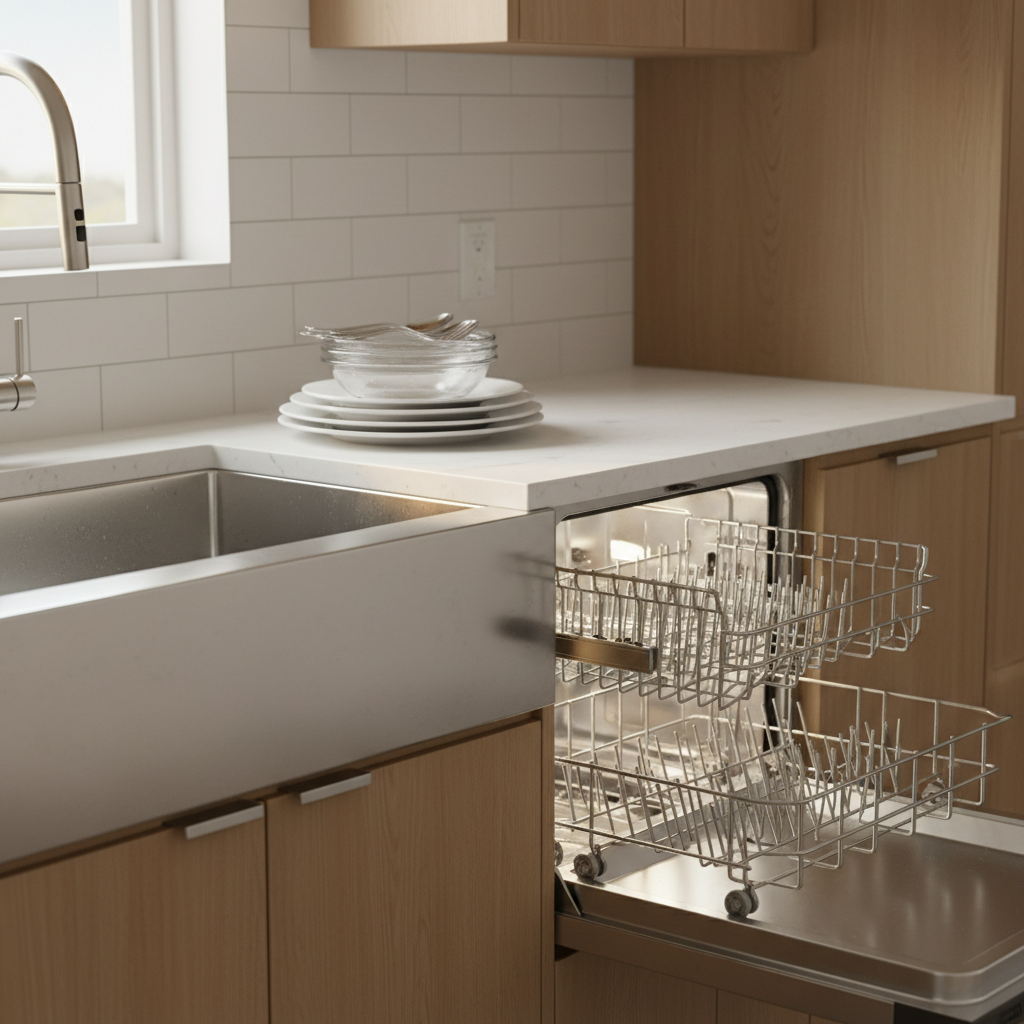
- Descale with Vinegar — This is your best friend for hard water.
- Safety First: Make sure the dishwasher is empty. Don’t add detergent.
- Put a large, dishwasher-safe bowl or mug with about two cups of white vinegar on the top rack.
- Run a full hot water cycle on the heaviest setting. The vinegar helps break down mineral deposits inside the dishwasher, on the heating element, and even in the spray arms. You’ll notice the difference.
Published August 25, 2026Last updated August 25, 2026
Tools & materials you'll need
Affiliate linksAs an Amazon Associate FixlyGuide earns from qualifying purchases — at no extra cost to you. Prices and availability are accurate as of publication and subject to change.
Quick Answer
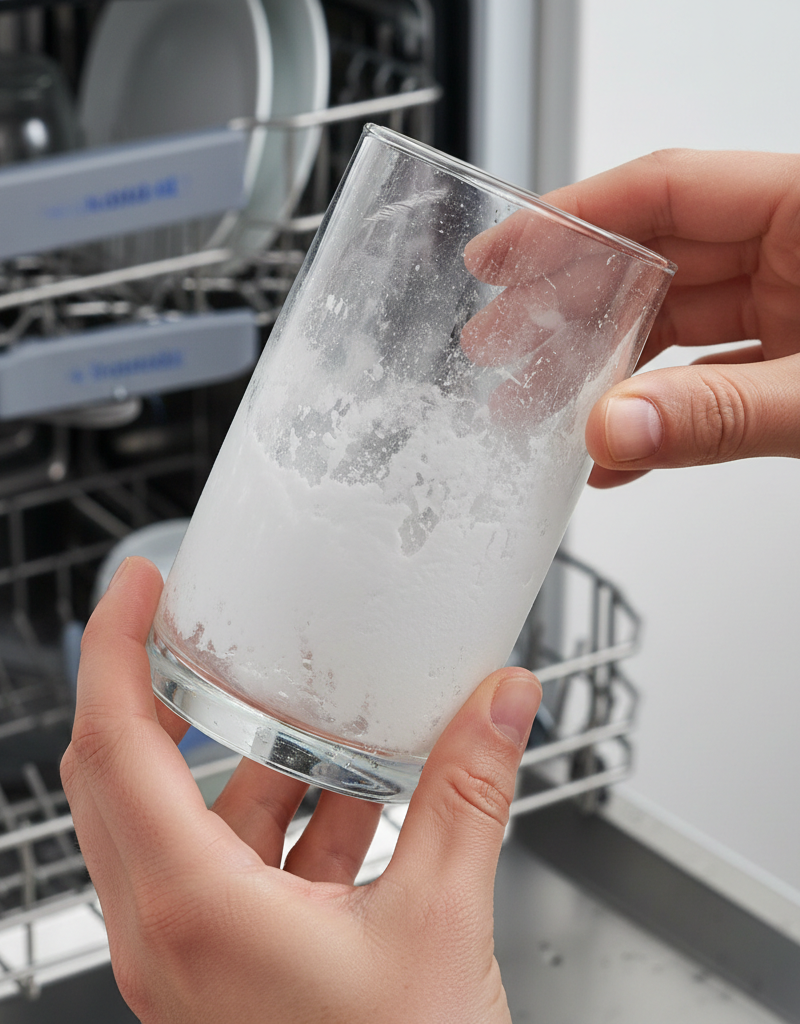
You know the drill. You unload the dishwasher, expecting sparkling clean dishes, and instead you get that ghostly white film, streaks, or a gritty residue. Maddening, right? Most of the time, this isn’t dirty-dish syndrome — it’s the machine, or the way it’s being used. Usually, you’re looking at mineral buildup from hard water or a detergent problem. And no, it’s not some big-ticket disaster. Most times you can knock it out yourself without calling a pro or spending a pile of cash.
The Problem
I’ve been doing this for over two and a half decades, and I can’t count how many times a homeowner’s told me their dishwasher is dying because the dishes come out looking worse than they went in. White chalky film. A rainbow sheen. Gritty little specks. They’ve swapped detergents, rewashed by hand, and still no dice. That’s not just annoying — it’ll make you wonder if the dishes are even sanitary. And the thing is, it’s not just about looks. Those minerals can build up inside the machine and start messing with efficiency and lifespan. I pulled a water heater in Frisco last month that had exactly this kind of scale issue, and it was coating everything it touched. Same story, different appliance. You want to catch it early before it turns into a bigger, pricier mess.
How It Works
Let’s talk dishwashers for a minute. It’s not just a box that sprays water around. There’s a whole chain reaction going on in there. First, the tub fills with water, then the heating element kicks on and gets that water up to around 130-140°F — hot enough to cut grease and sanitize. The detergent dispenser opens up, the spray arms fire, and those little jets spin from water pressure so every surface gets hit.
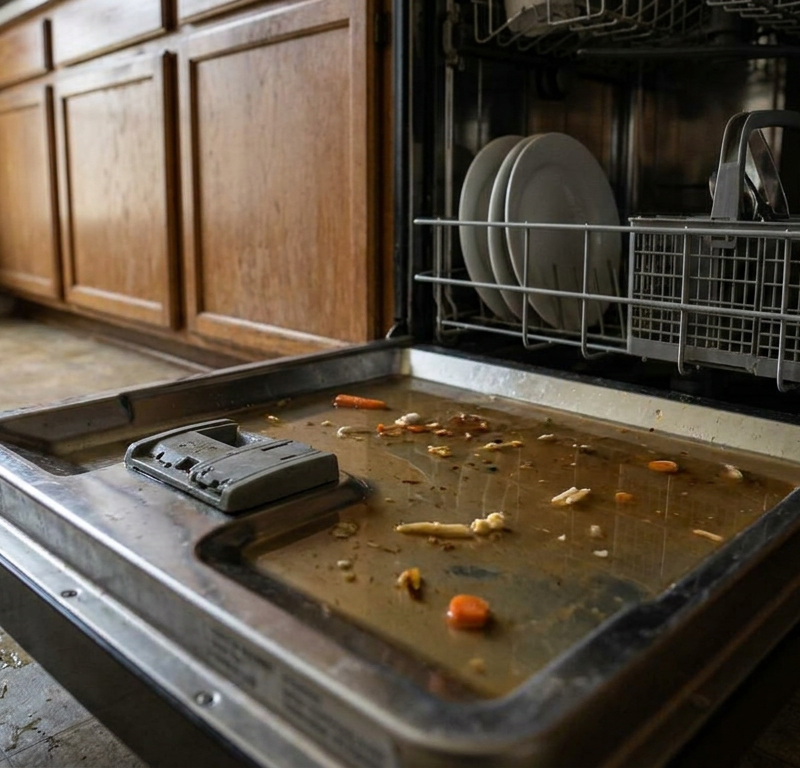
Then the water, food bits, and detergent run down through a filter system. That filter catches the big chunks before the water gets pumped out.
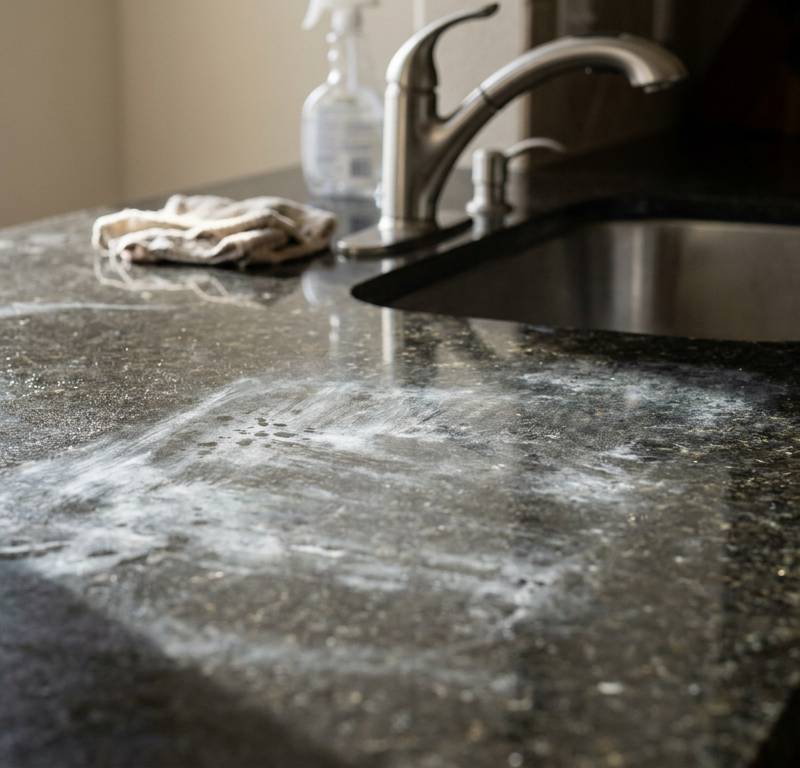
Here’s where the haze shows up. If you’ve got hard water — and a lot of us do — it’s loaded with calcium and magnesium. When that hot water dries off your dishes, those minerals stay behind. That’s your white film. If the detergent isn’t matched to your water hardness, or you’re using too little — or too much, which happens more than you’d think — it won’t break those minerals down well. And if the spray arms are clogged or the filter’s packed with junk, water pressure drops and dirty water gets thrown right back on the dishes. That’s where the streaks and grit come from. One weak link, and the whole wash goes sideways.
Step-by-Step Fix
This isn’t rocket science, but it does take a little elbow grease and a sharp eye. I’ve torn into dishwashers in houses from Cranbrook to Bloomfield Hills, and nine times out of ten it comes down to simple stuff.
-
Empty the Dishwasher Completely — Don’t leave a load in there. You need full access.
-
Inspect the Spray Arms — Check the upper and lower arms closely. Any tiny holes plugged with food bits or mineral crust? Use a toothpick, pipe cleaner, or small wire and clear them gently. You’d be shocked how much gunk hides in there.
-
Clean the Filter — This one gets missed a lot. Most dishwashers have a removable filter at the bottom of the tub. Twist it out — some take a quarter-turn, some just lift. You’ll probably find grease, food particles, and all sorts of nasty stuff. Rinse it under hot running water, and if it’s caked up, hit it with an old toothbrush or stiff brush.
-
Descale with Vinegar — This is your best friend for hard water.
- Safety First: Make sure the dishwasher is empty. Don’t add detergent.
- Put a large, dishwasher-safe bowl or mug with about two cups of white vinegar on the top rack.
- Run a full hot water cycle on the heaviest setting. The vinegar helps break down mineral deposits inside the dishwasher, on the heating element, and even in the spray arms. You’ll notice the difference.
-
Hit it with Baking Soda (Optional but Recommended) — If you’ve got lingering smells or stubborn stains, follow the vinegar cycle.
- Sprinkle about a cup of baking soda across the bottom of the dishwasher.
- Run another short hot water cycle. It helps absorb odors and freshen up the tub.
-
Check Your Detergent Dispenser — Sometimes that little door gets gunked up and won’t release detergent properly. Make sure it opens and closes freely.
-
Evaluate Your Detergent and Rinse Aid — This part matters a lot.
- Detergent: For hard water, you usually need a good enzyme-based detergent. Powder, gel, or pods — pick your poison, just make sure it’s fresh. Old detergent gets weak on you.
- Rinse Aid: This helps prevent spots and gets dishes dry faster. Fill the rinse aid dispenser — usually a small reservoir near the detergent compartment — and keep it topped off. I tell homeowners in Novi that if they’re not using rinse aid, they’re probably fighting an uphill battle with streaks.
-
Proper Loading Techniques — Overloading a dishwasher is a rookie move, and blocking the spray arms is another one.
- Make sure water can reach everything. Don’t nest bowls or jam stuff against the spray arm path.
- Face dirty surfaces toward the spray arms.
- Don’t block the detergent dispenser. That one’s easy to miss.
-
Test a Load — Run a normal cycle with the cleaned-out machine, properly loaded dishes, and the right detergent and rinse aid. You should see a real improvement. If not, run the vinegar and baking soda steps again, or bring in a pro for a deeper cleaning.
Common Causes
- Hard Water: The king of cloudy dishes. Calcium and magnesium cling to the dishes and the machine itself.
- Too Little Detergent: If you’re underdosing, especially with hard water, the detergent can’t do its job.
- Incorrect Detergent Type: Some detergents just don’t hold up in hard-water conditions.
- No Rinse Aid: Without it, water beads up and leaves spots as it dries.
- Clogged Spray Arms or Filter: Food debris or mineral buildup chokes off water flow and leads to poor cleaning.
- Low Water Temperature: If your water heater isn’t set high enough — aim for at least 120°F, ideally 130°F for dishwashers — the detergent won’t activate like it should.
- Overloading the Dishwasher: Too many dishes block water and detergent, so you end up with spots and missed spots.
Common Mistakes
- Using Dish Soap: Never, ever dump regular dish soap in a dishwasher. You’ll have a sudsy mess on the floor in short order, trust me.
- Ignoring the Filter: A lot of homeowners don’t even know there’s a filter in there, let alone that it needs cleaning. That’s probably the biggest reason I get calls about poor wash results.
- Skipping Rinse Aid: People think it’s optional. It isn’t. It helps with spotting and drying, especially if you’ve got hard water.
- Over-prerinsing: Scrape off the big stuff, sure, but you don’t need to hand-wash everything before it goes in. Modern detergents need some food soil to bite into.
- Under-dosing Detergent: Trying to save a buck by using less detergent usually backfires. You’ll get worse cleaning and more headaches later.
- Setting Water Heater Too Low: If the water isn’t hot enough, the detergent won’t activate and grease won’t break down right. Your heater should be at least 120°F, and 130-140°F is ideal for dishwashers if you want them to really clean.
Cost & Time Breakdown
Here’s a rough idea of what you’re looking at, whether you DIY or call in a pro. Most of the time, this is a DIY job, plain and simple.
| Task | DIY Cost | Pro Cost | Time |
|---|---|---|---|
| Descale Dishwasher (Vinegar/B. Soda) | $5 - $10 | $100 - $150 (as part of a general tune-up) | 1-2 hours |
| Clean Filter & Spray Arms | $0 (existing tools) | $50 - $75 (as part of a general tune-up) | 15-30 minutes |
| New Detergent & Rinse Aid (Month Supply) | $15 - $30 | N/A | N/A |
| Water Hardness Test Kit | $10 - $20 | N/A | 5 minutes |
| Potential New Dishwasher | $600 - $1200+ | $750 - $1500+ | N/A (if truly broken) |
Tips & Prevention
- Regular Descaling: Even if the dishes look fine, run a vinegar cycle once a month, especially with hard water. It helps keep the machine running right.
- Clean the Filter Weekly/Bi-Weekly: Easy habit, big payoff. A minute or two here can save you a pile of trouble. If you’ve got a busy family like mine, that filter fills up fast.
- Always Use Rinse Aid: Keep that reservoir topped up. It does more than people think.
- Scrape, Don't Rinse: Knock off the big chunks, but don’t pre-rinse everything. The enzymes in the detergent need something to work on.
- Check Water Heater Temperature: Make sure your hot water heater is at least 120°F. If it’s too low, the dishwasher won’t get hot enough to clean well. If you can bump it to 130°F, even better — it really helps with sanitation and cleaning power.
- Don't Overload: Give the dishes room. Water’s got to circulate.
- Use Quality Detergent: Don’t cheap out. Good detergent is an investment in clean dishes and a healthier dishwasher.
When to Call a Professional
Look, most of the time you can handle this haze issue yourself with a little elbow grease and common sense. But sometimes it’s past DIY territory. If you’ve worked through all these steps — repeated descaling, cleaned the filter and spray arms, used the right detergent and rinse aid, loaded it properly — and the dishes still come out hazy or dirty, there may be something deeper going on. That could mean a failing water pump, a bad heating element, a busted soap dispenser, or even a water-pressure problem in the house. If the dishwasher’s throwing error codes or you see actual leaks, that’s definitely a
Related Articles
Keep troubleshooting with these hand-picked guides from FixlyGuide:
- The 'Triple Lift' Trick for Erasing Set-In Couch Stains — Don't despair over that old, set-in stain on your white sofa. Our guide reveals a powerful, three-phase cleaning method using targeted chem…
- The 48-Hour Plan for a Shockingly Clean Home — Forget marathon cleaning sessions; this strategic 48-hour plan breaks down a whole-house deep clean into manageable zones for pro-level res…
- The Secret to Dissolving Stubborn Kitchen Grease Buildup — Learn the chemistry-backed method to safely dissolve years of baked-on grease from your range hood and baffle filters, restoring performanc…
- Your Shower Glass Isn't Etched, It's Hiding a Mineral Secret — Stop scrubbing endlessly; the secret to dissolving stubborn hard water stains on your shower glass lies in using the right acidic cleaner t…
- Pet Urine's Hidden Crystals: The Real Cleaning Trick — Permanently eliminate stubborn pet urine odors by using a specific cleaner that dissolves the hidden uric acid crystals that typical carpet…
- Chalky dishes? It’s not always hard water. — If you're seeing a chalky white film on your glassware, the cause is likely hard water minerals, but using the wrong detergent or a malfunc…
What should this project cost?
Enter your project details for a realistic cost range before you call anyone.
Cost depends heavily on which system turns out to be the source.
- Regional adjustment
- National average
- Labor share (typical)
- ~$1,620
- Quotes to collect
- 3 written estimates
Educational estimate based on national averages — not a binding quote. Always confirm with written local estimates.
Get the print-ready PDF of this guide
A clean, ad-free, printable version you can keep on your phone or pin to the workshop wall. Free with a FixlyGuide account.
- Print-optimized layout
- Tools, materials & every step included
- Saved to your account
Frequently asked questions
Why are my dishes still wet after the dishwasher cycle?+
This can be caused by not using rinse aid, an inefficient drying cycle, or overloading the dishwasher. Rinse aid breaks the surface tension of water, allowing it to sheet off dishes, and ensures more effective drying.
Can I use too much detergent in my dishwasher?+
Yes, using too much detergent can lead to an oversudsing problem, which can leave a film or residue on your dishes. It can also cause problems with your dishwasher's internal components over time. Always follow the manufacturer's recommendations for your specific water hardness.
Is dishwasher salt necessary?+
Dishwasher salt is used in areas with very hard water to regenerate the dishwasher's built-in water softener. If your dishwasher has a salt dispenser and you have hard water, using it is crucial to prevent mineral buildup and ensure optimal cleaning performance.
How often should I clean my dishwasher filter?+
I recommend cleaning your dishwasher filter at least once a week, especially if you use your dishwasher frequently. This prevents food particles from redepositing on dishes and ensures efficient drainage and spray arm performance.
Why does my dishwasher smell bad even after cleaning?+
A persistent bad smell often points to food debris trapped in the filter, spray arms, or drain hose. Run a hot cycle with a cup of white vinegar or a specialized dishwasher cleaner to eliminate lingering odors and clean hidden areas.
Can hard water damage my dishwasher?+
Absolutely. Hard water minerals can build up on heating elements, spray arms, and hoses, reducing efficiency and potentially shortening the lifespan of your appliance. Regular descaling is key to protecting your investment.
What's the difference between water spots and etching?+
Water spots are usually a white, chalky film caused by mineral deposits and can often be removed. Etching is a permanent cloudy or iridescent damage to glass, caused by a combination of soft water and too much detergent, or consistently very hot water. It looks similar to hard water film but can't be removed.
Should I pre-rinse my dishes before loading them?+
No, generally you shouldn't pre-rinse your dishes. Modern detergents are formulated with enzymes that need food particles to cling to in order to work effectively. Just scrape off large food scraps before loading to prevent filter clogs.
Discussion
Loading comments…