- That Annoying Haze on Your Stainless Steel Sink? Here's How I Get It Out — I've seen it a hundred times: a cloudy, hazy film clinging to a stainless steel sink that just won't come clean. It's usually from hard wat…
- The Mystery Smell: Why Your Fridge Stinks (Even After Cleaning It) — That persistent, foul odor in your refrigerator isn't just gross; it's often a sign of hidden issues. Learn the real culprits behind linger…
- The Rusty Ring In Your Toilet? It's Not Just Ugly, It's a Symptom. — Stubborn rust rings in your toilet bowl are an eyesore and a sign of hard water or corroded pipes, but you can remove them with the right a…
- The Grimy Cloud: Why Your Glass Shower Doors Won't Sparkle — Tired of scrubbing your glass shower doors only for them to remain cloudy and grimy? I'll show you why those hard water stains and soap scu…
- The Hard Water Horror on Your Bathroom Faucet — And How to Make It Gleam — Stubborn white crust on your bathroom faucet? It's likely hard water mineral buildup. Learn how to safely and effectively remove it and res…
Kitchen · Kitchen remodel
| Project category | Kitchen |
|---|---|
| Problem type | Kitchen remodel |
| Trade required | General contracting |
| Urgency | Planned project |
| Safety risk | Low safety risk |
| DIY suitability | Pro recommended |
| Cost category | Major investment |
| Typical timeline | Design and cabinet lead time 8–16 weeks; build 4–8 weeks |
| Contractor type | Kitchen remodeler or general contractor |
Repair option
Refacing, new counters, or hardware for a fraction of a gut remodel.
Replacement option
Full remodel when layout, plumbing, or electrical needs to change.
Common causes
- Dated layout
- Failing cabinets or counters
- Adding function or resale value
Relevant tools:project cost estimatorcompare quoteshome improvement material prices
Published October 4, 2026Last updated October 4, 2026
Tools & materials you'll need
Affiliate linksAs an Amazon Associate FixlyGuide earns from qualifying purchases — at no extra cost to you. Prices and availability are accurate as of publication and subject to change.
Quick Answer
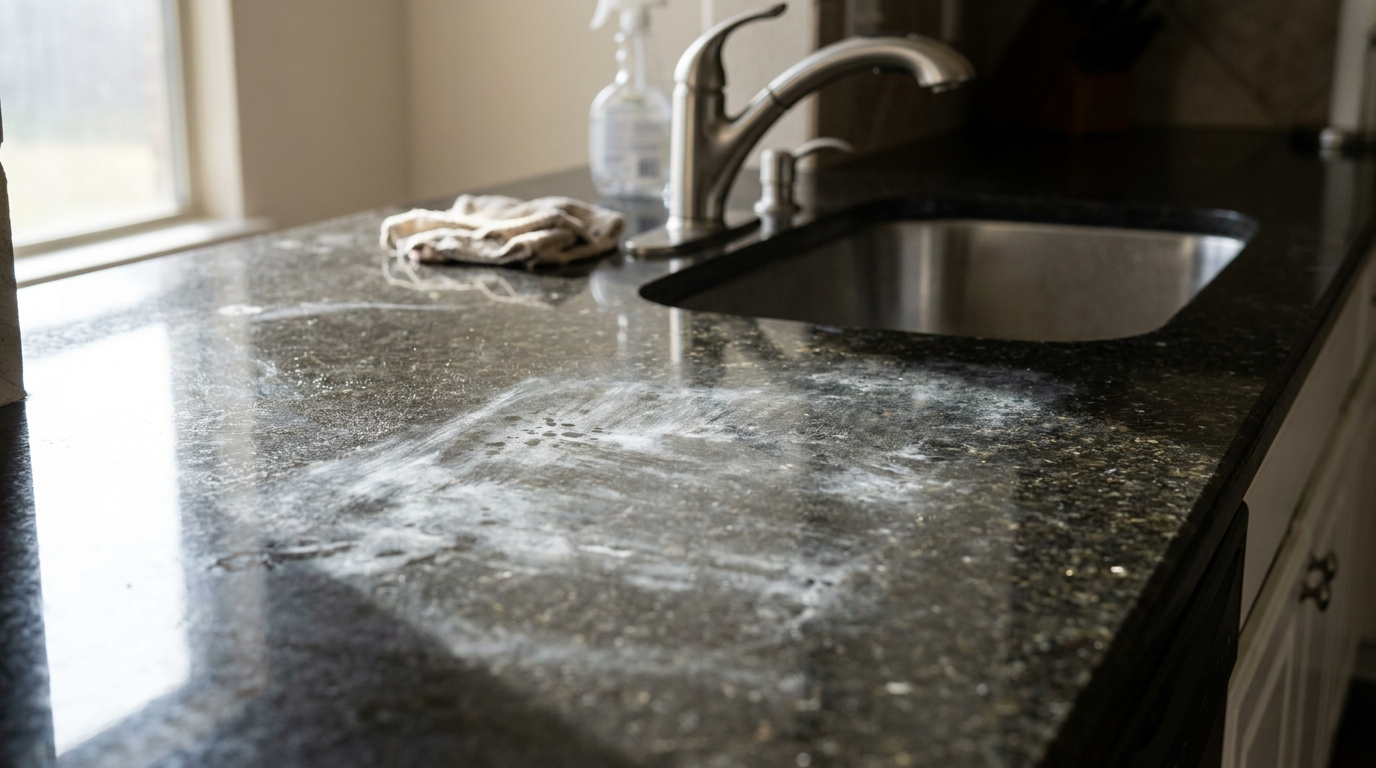
That stubborn white haze on your counters is usually one of three things: hard-water mineral deposits, cleaner residue, or soap scum. Around North Texas, hard water’s a regular pain in the neck—when water evaporates, it leaves calcium and magnesium behind, and that turns into a chalky film. I’ve seen all-purpose sprays do the same thing, too. Sometimes they leave a dull residue, and on softer stone like marble, they can actually etch the surface. To get it off, you’ve gotta break down the buildup with a mild acid like white vinegar on non-stone counters, or use a pH-neutral cleaner on stone, then rinse it like you mean it. Keeping it from coming back is the easy part: dry the counter all the way and use the right cleaner for the material.
The Problem
You wipe the kitchen down every day, but that cloudy white film keeps showing back up—especially on darker granite, quartz, or laminate. It looks streaky, hazy, and no amount of elbow grease seems to touch it. You usually notice it around the sink first, where water splashes, sits, and dries. That thing’s not just dirt. It’s a real buildup, and the wrong cleaner can make it worse. Your counters end up looking dull and tired even right after you’ve cleaned them. Not exactly the “fresh kitchen” feeling you were going for, right?
How It Works
You’ve gotta understand what’s actually sitting on the surface. Most of the time, the culprit is limescale. North Texas water’s hard, plain and simple, which means it carries dissolved minerals like calcium carbonate and magnesium. When a drop of water lands on your counter and dries, the water goes away and the minerals stay put. Do that day after day, and those tiny deposits stack up into a visible white film. It’s a little like the scale that builds up in a kettle—same idea, different spot. Since it’s mineral buildup, a regular wipe-down won’t cut it. You’ve gotta dissolve it.
The other common problem is cleaner residue. A lot of all-purpose cleaners leave behind surfactants, waxes, or shine agents that’re supposed to make things look polished. On some surfaces, especially dark polished ones, they don’t fully disappear. They hang around as a thin haze that looks like fog on the counter. And then there’s the real bad move: using the wrong pH. Strong acidic cleaners and strong alkaline ones can etch natural stone like marble, travertine, or limestone. That leaves a dull spot that looks like white haze, but it’s actually damage. I pulled a kitchen in Frisco last month where somebody had used the wrong bathroom spray on marble, and it looked like they’d sanded a thumbprint into the slab. No dice. That’s why you don’t just grab whatever bottle’s under the sink.
Step-by-Step Fix
This’ll safely remove haze from the usual suspects—granite, quartz, and laminate. Warning: If you’ve got marble, travertine, or concrete countertops, skip straight to the material-specific section below, since vinegar can mess them up.
-
Clear and Prep the Surface.
- Pull everything off the counter. Wipe away crumbs and dust with a dry microfiber cloth. You want a clean, open surface to work on.
-
Mix Your Cleaning Solution.
- For granite, quartz, or laminate, mix a 50/50 solution of distilled white vinegar and warm water in a spray bottle. That mild acidity does a nice job on mineral deposits without getting too rough.
-
Saturate the Hazy Area.
- Spray the solution generously over the white film. Don’t be stingy—you want it wet enough to sit there and work. Let it dwell for 3-5 minutes. That gives the acetic acid time to loosen the calcium and magnesium buildup. Don’t let it dry out.
-
Scrub Gently.
- Grab a non-abrasive scrub sponge or a soft-bristled brush. Dip it in the spray mix and work the hazy area in a circular motion. You should feel the film start to give up. Keep the pressure light. You’re cleaning, not sanding.
-
Rinse Thoroughly.
- This is the step folks rush, and it comes back to bite them. Fill a bowl with clean, plain water and get a fresh microfiber cloth. Wipe the whole area down several times, rinsing the cloth often. You’ve gotta get every bit of vinegar and loosened mineral junk off the surface. Leave residue behind and you’ll just chase the problem all over again.
-
Add a Drop of Dish Soap (Optional).
- If the counter still feels a little greasy or filmy—which usually means soap scum was part of the mess—put one single drop of blue Dawn dish soap into your rinse water. Wipe the surface again. Dish soap’s great at cutting grease and leftover soap residue.
-
Final Rinse.
- Now rinse the soap off. Use another bowl of plain water and a fresh cloth. Wipe everything one last time so you’re left with a truly clean surface.
-
Dry and Buff.
- Dry the countertop completely with a clean microfiber towel. Once it’s dry, switch to a separate fresh microfiber cloth and buff it in wide circular motions. That final pass knocks down the last streaks and brings the shine back. The surface ought to look clear and reflective again.
Material-Specific Instructions
- For Marble, Travertine, or Concrete: DO NOT use vinegar. Use a pH-neutral cleaner specifically formulated for stone or a few drops of dish soap in warm water. If that doesn
Related Articles
Keep troubleshooting with these hand-picked guides from FixlyGuide:
- That Annoying Haze on Your Stainless Steel Sink? Here's How I Get It Out — I've seen it a hundred times: a cloudy, hazy film clinging to a stainless steel sink that just won't come clean. It's usually from hard wat…
- The Mystery Smell: Why Your Fridge Stinks (Even After Cleaning It) — That persistent, foul odor in your refrigerator isn't just gross; it's often a sign of hidden issues. Learn the real culprits behind linger…
- The Rusty Ring In Your Toilet? It's Not Just Ugly, It's a Symptom. — Stubborn rust rings in your toilet bowl are an eyesore and a sign of hard water or corroded pipes, but you can remove them with the right a…
- The Grimy Cloud: Why Your Glass Shower Doors Won't Sparkle — Tired of scrubbing your glass shower doors only for them to remain cloudy and grimy? I'll show you why those hard water stains and soap scu…
- The Hard Water Horror on Your Bathroom Faucet — And How to Make It Gleam — Stubborn white crust on your bathroom faucet? It's likely hard water mineral buildup. Learn how to safely and effectively remove it and res…
- That Chalky Film on Your Dishes? It's Not Soap Scum — If your dishwasher is leaving a cloudy white film on your glassware and dishes, the culprit is likely hard water mineral deposits, not left…
Should you do this yourself?
Answer five quick questions before you start. Safety outranks savings every time.
Your experience with work like this
How high do you have to work?
Does the job involve any of these?
Will it need a permit?
Specialty tools
Free and instant. Educational guidance only — not a quote, inspection, or professional diagnosis.
What should this project cost?
Enter your project details for a realistic cost range before you call anyone.
Cosmetic refreshes start near $5,000; full remodels commonly $25,000–$45,000.
- Regional adjustment
- National average
- Labor share (typical)
- ~$8,550
- Quotes to collect
- 3 written estimates
Educational estimate based on national averages — not a binding quote. Always confirm with written local estimates.
Before you start
Check the difficulty, permits, and safety risk — then decide whether to call a pro.
- Estimate this projectGet a cost range for your scope and ZIP before you call anyone.Open
- Get local estimatesSend one request and compare written estimates from vetted pros.Open
Free, no signup required. Estimates are educational guidance, not a quote or an inspection.
Get the print-ready PDF of this guide
A clean, ad-free, printable version you can keep on your phone or pin to the workshop wall. Free with a FixlyGuide account.
- Print-optimized layout
- Tools, materials & every step included
- Saved to your account
Frequently asked questions
Can I use bleach to remove the white haze from my countertops?+
No, you should avoid using straight bleach. It's a harsh alkaline cleaner that can damage the sealant on granite and quartz and may not even remove mineral deposits effectively. It's better to use a mild acid like vinegar or a pH-neutral cleaner.
Why does the white haze come back so quickly after cleaning?+
If the haze returns quickly, it's likely because the underlying cause hasn't been addressed. This is usually due to very hard water or not rinsing and drying the counter thoroughly after cleaning, which leaves behind new mineral or cleaner residue.
Is it safe to use a magic eraser on my quartz countertops?+
It's best to avoid it. Magic erasers are a form of micro-abrasive and can dull the polished finish of quartz and sealed granite over time. Stick to non-abrasive sponges and microfiber cloths for cleaning.
My black granite looks cloudy. Is it ruined?+
Probably not! Black and dark countertops show mineral and soap scum haze more dramatically than lighter colors. Following the deep cleaning steps with a vinegar solution or a dedicated cleaner and buffing it dry should restore its deep color and shine.
How can I prevent hard water spots around my sink?+
The best prevention is diligence. Keep a dedicated microfiber cloth near the sink and make a habit of wiping the area completely dry after doing dishes or washing your hands. This prevents water from evaporating and leaving minerals behind.
Can I use a commercial limescale remover on my granite?+
You must be extremely careful. Many commercial bathroom limescale removers are highly acidic and can etch natural stone in seconds. Only use one if it explicitly states it is safe for sealed natural stone like granite.
What's the best daily cleaner for countertops to avoid haze?+
The best choice is a pH-neutral cleaner specifically made for your countertop material. Alternatively, a simple solution of a few drops of dish soap in a spray bottle of warm water works great for daily cleaning without leaving a film.
Why does my counter feel rough where the white haze is?+
That rough texture is the mineral deposit itself. You're feeling the buildup of crystallized calcium and magnesium (limescale). Once you dissolve it chemically, the surface should feel smooth again.
Discussion
Loading comments…