- Prep your staging area outdoors — Move this job outside to an open patio, driveway, or well-ventilated porch. Ammonia vapors are sharp, noxious, and not something you want trapped in a kitchen.
- Tools: Heavy-duty 3 mil contractor trash bag or a plastic storage tote with a tight snap lid.
- Safety: Put on thick nitrile gloves and eye protection.
Published November 1, 2026Last updated November 1, 2026
Tools & materials you'll need
Affiliate linksAs an Amazon Associate FixlyGuide earns from qualifying purchases — at no extra cost to you. Prices and availability are accurate as of publication and subject to change.
Quick Answer
To clean sticky, burnt-on grease from cast iron stove grates, I strip them in a heavy-duty contractor trash bag using 1/2 cup of pure household ammonia. Seal the bag airtight for 8 to 12 hours outdoors; those trapped ammonia vapors break down the polymerised oil without me having to attack it with a bunch of hard scrubbing. After that, I wash the grates with hot water, rinse them well, dry them right away on a warm burner, and wipe on a drop of mineral or canola oil so they don’t flash rust on you.
The Problem
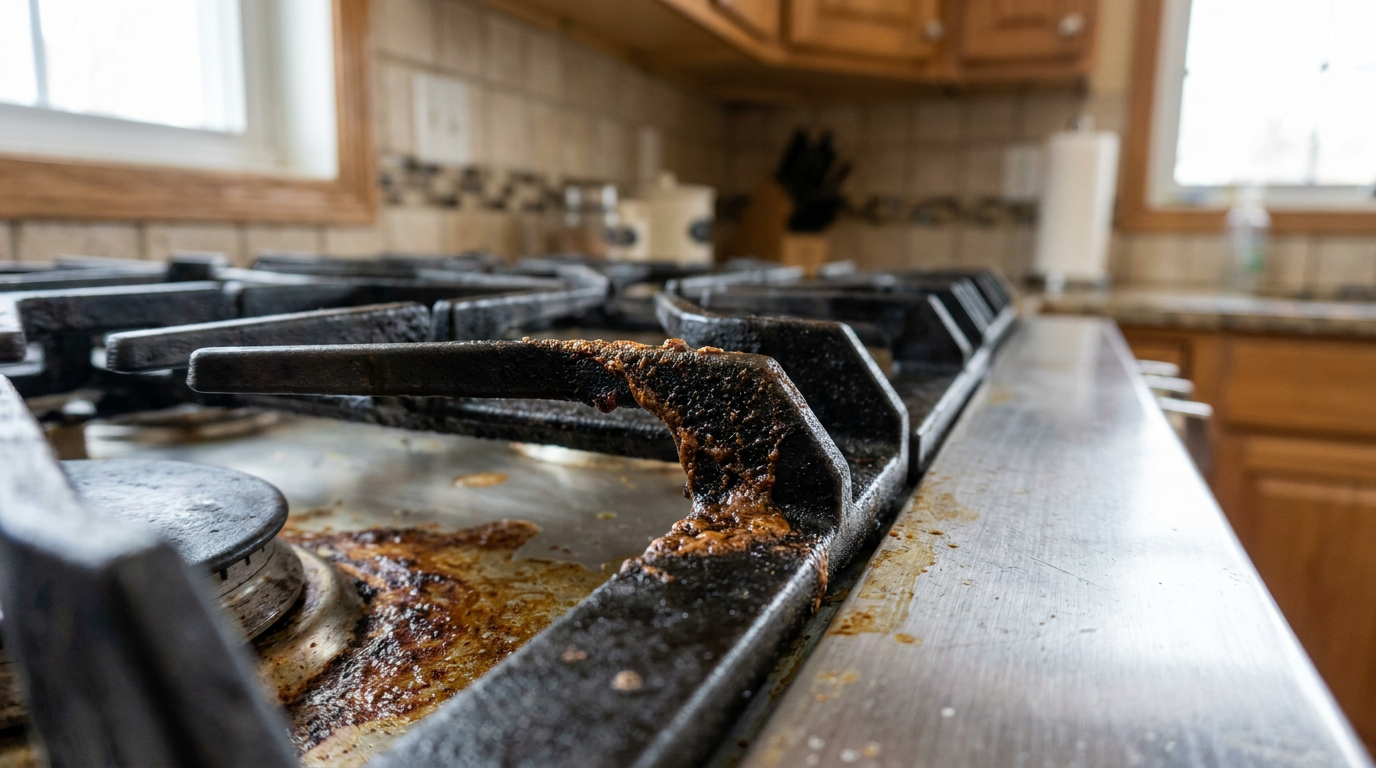
Cast iron gas stove grates take the worst of everything you cook. High-heat splatters of lard, butter, and olive oil hit the hot iron and oxidize into a tough, gummy varnish. Spill some pasta water or tomato sauce on top of that, and the sugars caramelize right into the textured pores of the metal.
I’ve seen folks hit these with ordinary dish soap and a sponge, and all they do is smear the mess around. Citrus sprays and multi-surface cleaners leave a tacky film that grabs pet hair and dust. After awhile, that sticky brown buildup bakes under 15,000 BTU burners until it turns into carbonized crust. If you’ve ever taken a steel wire brush to your grates until your forearms burned—only to find the grates still look dull, gray, and patchy—you’re fighting chemistry with muscle. Muscle loses every time.
How It Works
Cast iron isn’t smooth glass or sealed enamel. It’s a porous alloy of iron and 2% to 4% carbon with microscopic peaks, valleys, and fissures. When cooking fats hit those hot valleys, they undergo polymerization—the same chemical cross-linking that happens when you season a skillet. The difference? Stove grate buildup isn’t a nice, hard layer of polymerized flaxseed oil; it’s a rancid cocktail of half-burned animal fats, starches, salts, and dust.
Standard dish soaps fail because surfactant molecules can’t get deep into cross-linked polymers once they’ve set. Water rolls off the hydrophobic grease. Abrasive scouring pads, on the other hand, just shave off the surface peaks while grinding black sludge deeper into the metal’s valleys.
To strip the grate down to raw metal without chewing up the factory finish, you need alkaline saponification or gas-phase penetration. Concentrated ammonia ($NH_3$) works unusually well because it vaporizes quickly at room temperature. In an enclosed container, the gas gets into microscopic crevices that liquid sprays can’t touch. The ammonia hydrolyzes the ester bonds in the fats, converting stubborn, sticky triglycerides into water-soluble soap molecules and glycerol. After a few hours of vapor exposure, the crust turns into loose sludge that rinses off under a regular kitchen faucet. I pulled a stove apart in Frisco last month that had exactly this kind of tar-like buildup—looked like the thing had been baptized in fryer grease—and this method broke it loose without me having to sandblast the iron.
Step-by-Step Fix
Follow these steps to dissolve heavy carbon buildup and re-protect the raw iron surface safely.
-
Let the cooktop cool completely — Never put warm grates into plastic bags or cold wash water. Thermal shock cracks cast iron right down the center casting seam, and hot iron speeds up chemical fumes in a hurry.
- Safety: Make sure all range burners have been off for at least 45 minutes.
-
Prep your staging area outdoors — Move this job outside to an open patio, driveway, or well-ventilated porch. Ammonia vapors are sharp, noxious, and not something you want trapped in a kitchen.
- Tools: Heavy-duty 3 mil contractor trash bag or a plastic storage tote with a tight snap lid.
- Safety: Put on thick nitrile gloves and eye protection.
-
Bag the dry grates — Slide your dirty, dry grates flat into the bottom of the contractor bag. Don’t rinse or soak them first; water dilutes the chemical vapors and slows the reaction down.
- If the grates have delicate rubber anti-vibration feet pressed into the underside, pop them out with your fingers or a flathead screwdriver so the ammonia doesn’t dry-rot the rubber.
-
Add the ammonia charge — Pour 1/2 cup of standard household ammonia (clear, non-sudsing, roughly 5% to 10% concentration) directly into the bag. You do not need to drown the grates; 4 ounces of liquid generates enough saturated vapor to fill an entire 30-gallon bag.
- Material: Standard unscented household ammonia ($1.50–$3.00 at any grocery store).
-
Seal the bag completely airtight — Squeeze out excess air, spin the bag’s neck tightly, and clamp it with a heavy zip-tie or wrap it tightly with duct tape.
- If using a storage bin instead of a bag, stretch plastic wrap across the top rim before clicking the lid down to trap the vapors.
-
Let the fumes do the work — Lay the sealed bag flat on the ground and leave it alone for 8 to 12 hours. Overnight is ideal. Keep the bag out of direct sun so it doesn’t over-pressurize and balloon.
- Branch: If your grates only have mild, recent grease, 3 to 4 hours is plenty. For 5 years of baked-on crust, let them sit a full 24 hours.
-
Ventilate and open the bag outdoors — Stand upwind, slice the top of the bag open with utility shears, and step back immediately for 30 seconds to let the concentrated vapor plume blow away safely.
- Safety: Do not lean your face directly over the bag opening.
-
Scrub the liquefied sludge — Pull the grates out onto a wash surface. Take a medium nylon bristle utility brush or a non-scratch nylon scrubbing pad and wash the grates under running warm water. The crust will wipe off like wet oatmeal.
- Tools: Stiff nylon brush and 2 tablespoons of blue Dawn dish soap to emulsify leftover residue.
- Branch: If a stubborn patch of burnt milk or sugar clings to a burner ring, apply a paste of baking soda and hydrogen peroxide, let it fizz for 10 minutes, and scrub with a brass-wire brush (avoid stiff steel wire, which gouges cast iron).
-
Dry thoroughly to prevent flash rust — Bare, stripped cast iron develops orange flash rust in less than 15 minutes if left to air-dry. Immediately towel-dry the grates with an old shop rag, then place them on your stove burners over low heat (approx. 200°F) for 3 minutes to vaporize trapped moisture.
-
Recondition the bare iron — Dip a lint-free cloth or paper towel into a high-smoke-point oil (like canola, grapeseed, or food-grade mineral oil) and wipe down every facet of the grates. Buff it off with a dry towel until the iron looks matte, not wet or shiny.
- If you leave excess oil on the surface, it will smoke and turn sticky the next time you light the range.
Common Causes
Why do grates get so bad in the first place? It usually comes down to three factors:
- Sautéing with high-smoke-point oils at high heat: Aerosolized peanut, canola, and avocado oil particles drift onto adjacent cool grates, settling into porous iron where ambient cooktop heat partially bakes them into varnish.
- Boil-overs left to cure: Starch-heavy water from pasta or potatoes forms a tough glue. When reheated during later cooking sessions, those starches carbonize into stubborn black lumps.
- Cleaning with the wrong detergents: Acidic vinegar cleans mineral scale, but it does almost nothing to heavy grease. Dishwasher pods, on the other hand, contain harsh salts and caustic bases that strip iron seasoning without dissolving heavy carbon, leaving the metal chalky, pitted, and open to rust.
Common Mistakes
- Running grates through the dishwasher cycle: The high heat (140°F–160°F), harsh phosphates, and prolonged moisture of a dishwasher cycle strip protective oils off the cast iron, turn the metal a chalky gray, and spark rapid oxidation. Never put cast iron grates in the dishwasher.
- Using oven self-clean mode on grates: Homeowners often leave grates inside the oven during a 900°F self-clean cycle. That extreme thermal load can warp the flat cast iron castings, snap thin crossbars, and make the metal brittle.
- Scrubbing with heavy steel wool: Aggressive steel wire leaves micro-scratches across the casting surface. Those scratches create more surface area for grease to cling to next week. Stick to stiff nylon or soft brass bristles.
- Soaking submerged in plain soapy water overnight: Cast iron absorbs water into its micro-pores. A long soak causes deep structural rust that bubbles up beneath the surface, pitting the metal and ruining the burner level.
- Over-oiling after the wash: Trying to "season" stove grates like a Dutch oven with thick coats of oil backfires. The moment you strike a 12,000 BTU burner, that heavy oil burns, smokes up your kitchen, and leaves behind the exact sticky film you just worked to remove. A microscopic, buffed-dry layer is all you need.
Cost & Time Breakdown
| Task | DIY Cost | Pro Cost | Time |
|---|---|---|---|
| Ammonia Vapor Deep Strip | $3–$6 | $120–$180 (Appliance cleaner) | 20 mins hands-on (8 hrs dwell) |
| Baking Soda & Degreaser Touch-Up | $5–$10 | $75–$120 (House cleaner) | 30–45 mins |
| Replacing Ruined Rubber Feet (Set of 4) | $8–$14 | $45–$65 | 5 mins |
| Replacing Warped/Cracked Grate (Single) | $45–$110 | $120–$190 | 5 mins |
Tips & Prevention
- Wipe grates while lukewarm: At the end of every evening’s cooking, while the cast iron is barely warm to the touch (around 100°F), wipe the top fingers down with a damp microfiber cloth. Fresh grease wipes off instantly; baked grease needs chemicals.
- Catch boil-overs immediately: If a pot of starchy water or acidic tomato sauce bubbles over, lift the pot and wipe the spill off the grate with a damp rag before you fire the burner up again.
- Inspect the rubber foot pads every 6 months: The small rubber bumpers on the bottom corners protect your stainless steel or porcelain cooktop from deep gouges. Replace them the moment they crack or melt.
- Condition monthly with mineral oil: Wipe the clean grates with a drop of food-grade mineral oil once a month. Unlike cooking oils, pure mineral oil doesn’t spoil or turn tacky over time.
When to Call a Professional
Cleaning stove grates is almost always a DIY job, but some cooktop problems call for a pro. If your grates are warped, rocking unevenly, or cracked through the crossbars, they’re a safety hazard—pots can slide off a tilted grate and spill boiling liquid. Replacement grates can be ordered directly from your appliance manufacturer’s parts department using your range’s model number.
If removing your grates reveals yellow burner flames, heavy soot deposits on the underside of the grates, or the faint scent of raw natural gas when the stove is off, stop cleaning. Call a licensed plumber or gas technician. Soot means incomplete combustion—usually a blocked burner orifice or an off fuel-to-air mix—which creates dangerous carbon monoxide indoors.
Related Articles
Keep troubleshooting with these hand-picked guides from FixlyGuide:
- The Grimy Secret Under Your Stove — And How to Scrape It Clean — Discover the hidden culprit behind kitchen odors and pests: the neglected grease and food debris under your stove. Learn my proven method t…
- The Invisible Scum on Your Bathtub: How to Make It Gleam Again — Is your bathtub losing its luster, even after scrubbing? That invisible layer of soap scum and mineral deposits is the culprit. Learn how t…
- Why Your Kitchen Sink Drain Stinks (Even After You've Cleaned It) — Don't just mask that foul odor from your kitchen sink; get rid of the gunk causing it with this pro-level cleaning method.
- The Grimy Secret Under Your Oven: Why Your Kitchen Never Feels Truly Clean — Your oven and range hood are silent culprits in your kitchen's battle against persistent grease and grime. This guide tackles how to deep c…
- The Grimy Cloud: Why Your Range Hood Filter Stays Greasy — Is your range hood filter constantly caked with grease, even after a wash? I'll show you why it happens and the pro-level trick to get it t…
- Glass Cooktop Burnt? 10 Steps to Remove Baked-On Rings Without Scratching — Struggling to clean burnt food rings off your glass cooktop? Learn the proper razor technique and soaking fix to restore your stove without…
What should this project cost?
Enter your project details for a realistic cost range before you call anyone.
Cost depends heavily on which system turns out to be the source.
- Regional adjustment
- National average
- Labor share (typical)
- ~$1,620
- Quotes to collect
- 3 written estimates
Educational estimate based on national averages — not a binding quote. Always confirm with written local estimates.
Get the print-ready PDF of this guide
A clean, ad-free, printable version you can keep on your phone or pin to the workshop wall. Free with a FixlyGuide account.
- Print-optimized layout
- Tools, materials & every step included
- Saved to your account
Frequently asked questions
Can I put cast iron stove grates in the dishwasher?},{answer:+
Never put cast iron stove grates in the dishwasher. Dishwasher detergents are heavily alkaline and abrasive, which strips the protective seasoning, turns the iron an ugly chalky gray, and leaves bare iron exposed to water, causing rapid surface rust.
Discussion
Loading comments…