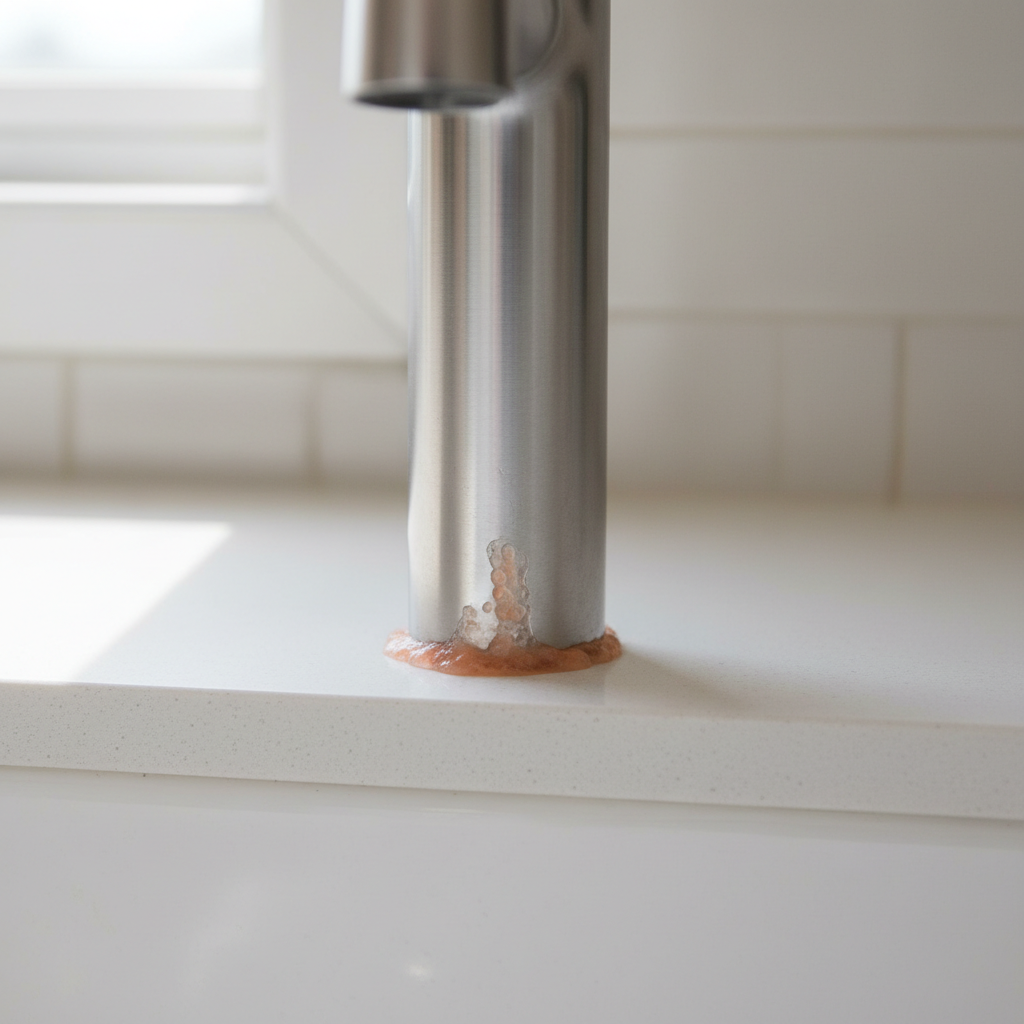
- Apply a Bleach Solution — Kill the bacteria at its source.
- Safety: Always ventilate the area well when using bleach. Open a window, turn on the fan. Never mix bleach with ammonia-based cleaners; it creates dangerous toxic fumes. Seriously, don’t do it.
- Alternative: If you don’t like bleach or you’ve got sensitive surfaces, a strong white vinegar solution (undiluted) or a vinegar-baking soda paste (1:1 ratio) can also work. Let it sit for 30 minutes, then scrub.
Kitchen · Kitchen remodel
| Project category | Kitchen |
|---|---|
| Problem type | Kitchen remodel |
| Trade required | General contracting |
| Urgency | Planned project |
| Safety risk | Low safety risk |
| DIY suitability | Pro recommended |
| Cost category | Major investment |
| Typical timeline | Design and cabinet lead time 8–16 weeks; build 4–8 weeks |
| Contractor type | Kitchen remodeler or general contractor |
Repair option
Refacing, new counters, or hardware for a fraction of a gut remodel.
Replacement option
Full remodel when layout, plumbing, or electrical needs to change.
Common causes
- Dated layout
- Failing cabinets or counters
- Adding function or resale value
Relevant tools:project cost estimatorcompare quoteshome improvement material prices
Published September 3, 2026Last updated September 3, 2026
Tools & materials you'll need
Affiliate linksAs an Amazon Associate FixlyGuide earns from qualifying purchases — at no extra cost to you. Prices and availability are accurate as of publication and subject to change.
Quick Answer
Alright, let’s talk about that funky pink or orange gunk you’re seeing around your kitchen faucet — maybe in the shower, too. Most folks think it’s mold, but it ain’t. It’s usually a bacteria called Serratia marcescens. That stuff loves moisture and soap scum, and once it gets a foothold, it’ll spread fast. The fix is simple enough: hit it hard with a disinfectant, then keep the area dry and clean so it doesn’t come back. I’ve done this job for plenty of homeowners around Phoenix, especially when monsoon season rolls in and the humidity goes up. That’s when the phone starts ringing.
The Problem
You’ve seen it, right? That slimy, reddish-pink or orange film that seems to show up out of nowhere around the base of your kitchen faucet, in the grout lines, or even in the overflow drain of your sink. You scrub it, it disappears, and then BAM! It’s back a few days later. That’s not just an eyesore; it’s a living colony of bacteria. We’re talking Serratia marcescens, a common airborne bacteria that thrives in damp, nutrient-rich spots. Think about your kitchen sink — constant moisture from splashing water, soap residue, food particles, skin cells — it’s basically a five-star hotel for this bug.
It’s usually harmless to healthy folks, but it can cause trouble for people with compromised immune systems. And yeah, it looks nasty. I remember one house in Scottsdale, nice place, brushed nickel faucet, fancy counters — and the client was convinced they had some exotic mold problem. Nope. Just good old Serratia having a party right around the faucet base.
How It Works
So how does this pink menace show up? Pretty simple. Serratia marcescens is naturally found in soil, water, and even in some human and animal guts. It’s opportunistic, which means it sits back until the conditions are right, then it takes off.
In your kitchen, those conditions are easy: moisture and a food source. Every time you wash your hands, do dishes, or wipe down the counter, you’re leaving behind a thin film of soap, oils, and tiny food particles. This bacteria likes fatty substances and phosphates, both of which show up in soaps and detergents. It multiplies fast and makes that reddish pigment as it grows — that’s the giveaway.
It’s not like black mold (Stachybotrys chartarum), which needs serious water damage. Serratia just wants steady dampness. Think of your faucet base as a tiny wet ecosystem, and Serratia is the one that moves in and starts running the place. Got a leaky faucet, even a slow drip? That constant moisture will supercharge the growth. A single drop of water, barely visible, can keep a whole colony going if there’s soap or food residue mixed in.
Step-by-Step Fix
Here’s how I tackle that pink stuff. Hit it hard, then keep it from coming back.
-
Prep the Area Safely — Clear the decks and protect yourself. Before you start spraying or scrubbing, clear everything off the counter around the sink. Move the dish soap, sponges, decor, all of it. You don’t want cleaner splashing on stuff it shouldn’t hit. And grab your gloves — protect those hands, especially if you’re using bleach. A good chemical-resistant pair is what you want, not the flimsy dishwashing kind.
-
Initial Scrub & Rinse — Get the loose junk off first. Use a non-abrasive scrub brush or an old toothbrush and give the area a good scrub with warm water. You’re not chasing perfection here. You’re just knocking off the surface slime so your cleaner can actually do its job. Rinse it well with clean water.
-
Apply a Bleach Solution — Kill the bacteria at its source. Mix 1 part household bleach with 10 parts water in a spray bottle. Spray the affected areas liberally. Let it sit for at least 10-15 minutes. Bleach is a strong disinfectant, and it needs time to break down the bacterial cells. For stubborn spots, you can make a paste with a little baking soda and bleach, apply it, and let it sit for 20 minutes. Just be careful with colored grout — bleach can lighten it. For sealed granite or marble, use a very dilute solution and don’t let it sit too long, or go with the vinegar method below.
- Safety: Always ventilate the area well when using bleach. Open a window, turn on the fan. Never mix bleach with ammonia-based cleaners; it creates dangerous toxic fumes. Seriously, don’t do it.
- Alternative: If you don’t like bleach or you’ve got sensitive surfaces, a strong white vinegar solution (undiluted) or a vinegar-baking soda paste (1:1 ratio) can also work. Let it sit for 30 minutes, then scrub.
-
Scrub and Rinse Thoroughly — Wash it all away. After the solution has had time to work, scrub the area again with your brush or toothbrush. You should see the pink grime lift off a lot easier now. Rinse the area very thoroughly with clean water so you get rid of every bit of cleaner and dead bacteria. Don’t leave bleach residue behind.
-
Target the Faucet Aerator (If Applicable) — Don’t forget the spout. Sometimes that pink stuff builds up inside the aerator — the little screen on the end of your faucet spout. Unscrew it carefully. You might need pliers wrapped in a cloth so you don’t scratch anything. Soak the aerator in a small bowl of the bleach solution or undiluted white vinegar for about 30 minutes. Scrub it with an old toothbrush, rinse it well, and put it back on. This one gets overlooked all the time, and it’s a prime hiding spot for bacteria.
- Tool Tip: A small crescent wrench or channel locks can come in handy for aerators, but wrap the jaws with electrical tape or a rag so you don’t scar up chrome finishes.
-
Dry Everything Completely — Stop future growth. This step matters more than people think. After cleaning, dry the whole area around your faucet, sink rim, and any nearby grout lines completely with a clean, dry cloth. Serratia marcescens needs moisture to thrive. Kill the water, and you kill its happy place. Get into the little corners. Bone dry. I tell my clients in Mesa, Arizona — where it’s dry as a bone — they rarely see this problem, but one small leak and it’s showtime for the pink stuff.
-
Regular Maintenance — Keep it gone. If you want to keep the slime from coming back, make daily drying a habit. After you’re done with the sink at night, give the faucet and surrounding area a quick wipe with a dry cloth. Once or twice a week, spray with a diluted vinegar solution (1:1 vinegar to water) and wipe it down. That makes the surface acidic, and bacteria don’t love that. Regular cleaning, say every other week, with a disinfectant wipe or diluted bleach solution will help keep it in check.
Common Causes
- Constant Moisture: This is the big one. Any spot that stays damp — a leaky faucet, standing water around the base, splash from the sink — is basically an invitation.
- Soap Scum & Food Residue: Serratia feeds on organic matter. Hand soap, dish soap, shampoo, tiny food particles — all of it helps it grow.
- Warmth: Kitchens are usually warmer than other parts of the house, which speeds up bacterial growth.
- Airborne Bacteria: The bacteria are floating around in the air. When they land on a moist, nutrient-rich surface, they get right to work.
- Lack of Air Circulation: Tight spaces or areas without good airflow stay damp longer, and that encourages growth.
Common Mistakes
- Thinking It’s Mold: It’s not. If you treat it like mold with just any cleaner, you usually won’t get to the root of the bacterial problem, and it comes right back.
- Not Drying Thoroughly: This is the number one reason it returns. Clean it and leave it damp, and you’ve just reset the clock.
- Ignoring the Aerator: That little mesh screen on your faucet is a perfect hiding spot. Leave it dirty, and you’re spreading bacteria every time you use the sink.
- Using Abrasive Cleaners: Steel wool or harsh scrubbing pads can scratch your faucet finish or grout, and those tiny scratches give bacteria places to hide. Makes future cleaning harder, too.
- Mixing Bleach with Other Cleaners: Big safety no-no. Never, ever mix bleach with ammonia or acid-based cleaners. You’ll make toxic gases. Read the labels.
- Infrequent Cleaning: Letting it get out of hand makes the job harder. Regular, light cleaning works a whole lot better than random heavy-duty scrubbing.
Cost & Time Breakdown
Here’s what you’re looking at to banish that pink stuff:
| Task | DIY Cost | Pro Cost | Time |
|---|---|---|---|
| Initial Cleaning (1-time) | $5–$15 | $75–$150 | 20–45 minutes |
| Regular Maintenance (weekly) | $0–$5 | N/A | 5–10 minutes |
| Faucet Aerator Cleaning | $0 | $25–$50 | 10–15 minutes |
| Addressing Leaky Faucet (DIY) | $5–$20 (parts) | $100–$250+ | 30–60 minutes |
| Addressing Leaky Faucet (Pro) | N/A | $150–$350+ | 1–2 hours |
Tips & Prevention
- Wipe it Down Daily: After the last person uses the sink at night, a quick wipe with a dry cloth around the faucet and sink edge takes literally 10 seconds. It’s the simplest, best prevention. I’ve had clients tell me this one tip changed everything.
- Use a Squeegee/Wipe: Keep a small squeegee or a dedicated cleaning cloth near the sink. A quick swipe after each use helps a lot.
- Check for Leaks: Look over your faucet now and then for small drips or leaks. Even a slow leak gives Serratia the moisture it wants. A drip every 10 seconds can add up to over 500 gallons a year — that’s a lot of water hanging around.
- Clean Underneath: Don’t skip the underside of the faucet base if you can reach it, and get any gaps between the faucet and the countertop. Bacteria loves dark, damp, hidden spots.
- Consider Hard Water: If you’re in a hard water area, mineral buildup can leave a rough surface that traps moisture and organic matter, which gives bacteria more places to hang on. Regular descaling helps.
- Good Ventilation: In bathrooms especially, but in kitchens too, good airflow helps surfaces dry faster. Run the exhaust fan for 15-20 minutes after heavy water use.
- Replace Sponges Regularly: Sponges are breeding grounds for bacteria. Swap them out weekly, or disinfect them daily by microwaving a damp sponge for 1-2 minutes — watch for sparking.
When to Call a Professional
Look, dealing with a little pink slime isn’t rocket science, but there are times you’ve gotta know when to wave the white flag and call in a pro. If the stuff keeps coming back within a day or two despite your best cleaning efforts, you may have a deeper moisture issue. That could mean a slow leak inside the wall or under the sink that you can’t see, keeping everything wet all the time.
If you’ve got heavy discoloration on grout that won’t budge with bleach, or if you’re dealing with what looks like real mold — black, fuzzy, spreading patches — a remediation specialist needs to take a look. And if the problem comes with a noticeable drip or leak from the faucet itself that you can’t fix with a new O-ring, don’t mess around; call a licensed plumber. They can track down the plumbing issue and fix it before it turns into a bigger, pricier water damage mess.
Related Articles
Keep troubleshooting with these hand-picked guides from FixlyGuide:
- The Mystery Smell: Why Your Fridge Stinks (Even After Cleaning It) — That persistent, foul odor in your refrigerator isn't just gross; it's often a sign of hidden issues. Learn the real culprits behind linger…
- The Grimy Secret Behind Your Dull Bathroom Faucet — And How to Make It Shine — Discover the real culprit behind your bathroom faucet's dull, grimy appearance and how to quickly restore its shine with a few common house…
- The Caulk Stain That Won't Quit: Why Your Shower Stays Grimy — Is that stubborn, discolored caulk making your clean shower look perpetually dirty? It's not just surface grime; it's often mold or mildew,…
- The Invisible Scum on Your Bathtub: How to Make It Gleam Again — Is your bathtub losing its luster, even after scrubbing? That invisible layer of soap scum and mineral deposits is the culprit. Learn how t…
- The Rusty Ring In Your Toilet? It's Not Just Ugly, It's a Symptom. — Stubborn rust rings in your toilet bowl are an eyesore and a sign of hard water or corroded pipes, but you can remove them with the right a…
- The Hidden Cause of Squeaky Hardwood Floors & The Real Fix — That persistent squeak from your hardwood floors isn't just an annoyance; it's a sign of movement. We'll uncover the hidden causes, from hu…
Should you do this yourself?
Answer five quick questions before you start. Safety outranks savings every time.
Your experience with work like this
How high do you have to work?
Does the job involve any of these?
Will it need a permit?
Specialty tools
Free and instant. Educational guidance only — not a quote, inspection, or professional diagnosis.
What should this project cost?
Enter your project details for a realistic cost range before you call anyone.
Cosmetic refreshes start near $5,000; full remodels commonly $25,000–$45,000.
- Regional adjustment
- National average
- Labor share (typical)
- ~$8,550
- Quotes to collect
- 3 written estimates
Educational estimate based on national averages — not a binding quote. Always confirm with written local estimates.
Fixly Project Decision Box
- DIY difficulty
- Moderate
- Estimated time
- 30 minutes – half a day
- Cost level
- Moderate
Main tools / materials
- Adjustable wrench
- Plunger or drain auger
- Bucket and towels
- Thread tape
When to stop and call a pro
- Water you cannot shut off at the fixture or main
- Sewage backing up into more than one fixture
- Water near electrical panels or outlets
- Gas water heater work beyond relighting a pilot
Need professional help?
Get a Licensed PlumberGet the print-ready PDF of this guide
A clean, ad-free, printable version you can keep on your phone or pin to the workshop wall. Free with a FixlyGuide account.
- Print-optimized layout
- Tools, materials & every step included
- Saved to your account
Frequently asked questions
What is the pink/orange slime around my kitchen faucet?+
That pinkish-orange slime isn't mold, but usually a common airborne bacteria called Serratia marcescens. It thrives in moist, nutrient-rich environments like your kitchen faucet area, feeding on soap scum and organic residue.
Is the pink slime harmful?+
For most healthy individuals, Serratia marcescens is generally harmless. However, it can potentially cause infections in people with weakened immune systems, so it's always best to eliminate it, especially in areas where food is prepared.
Why does the pink slime keep coming back?+
The slime keeps returning because the conditions that allowed it to grow are still present – primarily consistent moisture and a food source (like soap residue). If surfaces aren't dried thoroughly after cleaning, the bacteria will quickly recolonize.
Can I use vinegar instead of bleach to clean the slime?+
Yes, undiluted white vinegar is an effective alternative to bleach for killing Serratia marcescens. Apply it, let it sit for 30 minutes, then scrub and rinse. It's safer for sensitive surfaces like natural stone, but always test in an inconspicuous area first.
How often should I clean my faucet to prevent this slime?+
To prevent the pink slime, aim for daily drying of your faucet area. A thorough cleaning with a disinfectant should be done weekly or bi-weekly, making sure to hit the faucet aerator as well.
What's the best way to keep the area dry?+
After using the sink, simply wipe down the faucet, sink rim, and surrounding countertop with a clean, dry cloth. Good ventilation and fixing any small drips or leaks also significantly reduce moisture.
Does hard water contribute to the problem?+
Yes, hard water can contribute. Mineral deposits from hard water can create a rougher surface on your fixtures and countertops, providing more nooks and crannies for bacteria to cling to and making it harder to keep the area completely dry.
Should I clean the faucet aerator?+
Absolutely. The faucet aerator is a prime spot for bacteria to accumulate due to constant moisture and trapped particles. Unscrew it, soak it in a bleach or vinegar solution, scrub, and rinse thoroughly before reattaching it.
Can I use abrasive scrubbers to remove the slime?+
It's best to avoid abrasive scrubbers like steel wool. They can scratch your faucet's finish or damage grout, creating tiny imperfections where bacteria can hide and making future cleaning more difficult. A soft-bristled brush or old toothbrush is sufficient.
What if the slime is also in my shower or toilet?+
The same principles apply. Serratia marcescens loves any consistently moist environment. Use the same cleaning methods – disinfectant, thorough scrubbing, and diligent drying – in your shower, toilet bowl (especially around the water line), or anywhere else you see it.
Could it be something else if it's not pink or orange?+
If the growth is black, green, or fuzzy, it might be a different type of mold or mildew, which can indicate more significant moisture problems. While some cleaning methods overlap, true mold often requires more aggressive remediation and could point to hidden leaks. Consult a professional if unsure.
Does the type of faucet material matter?+
Not really for the growth of Serratia marcescens itself, as it's attracted to moisture and organic residue, not the faucet material. However, different materials (like chrome, brushed nickel, or natural stone) might require specific cleaning products or methods to avoid damage to their finish.
Discussion
Loading comments…