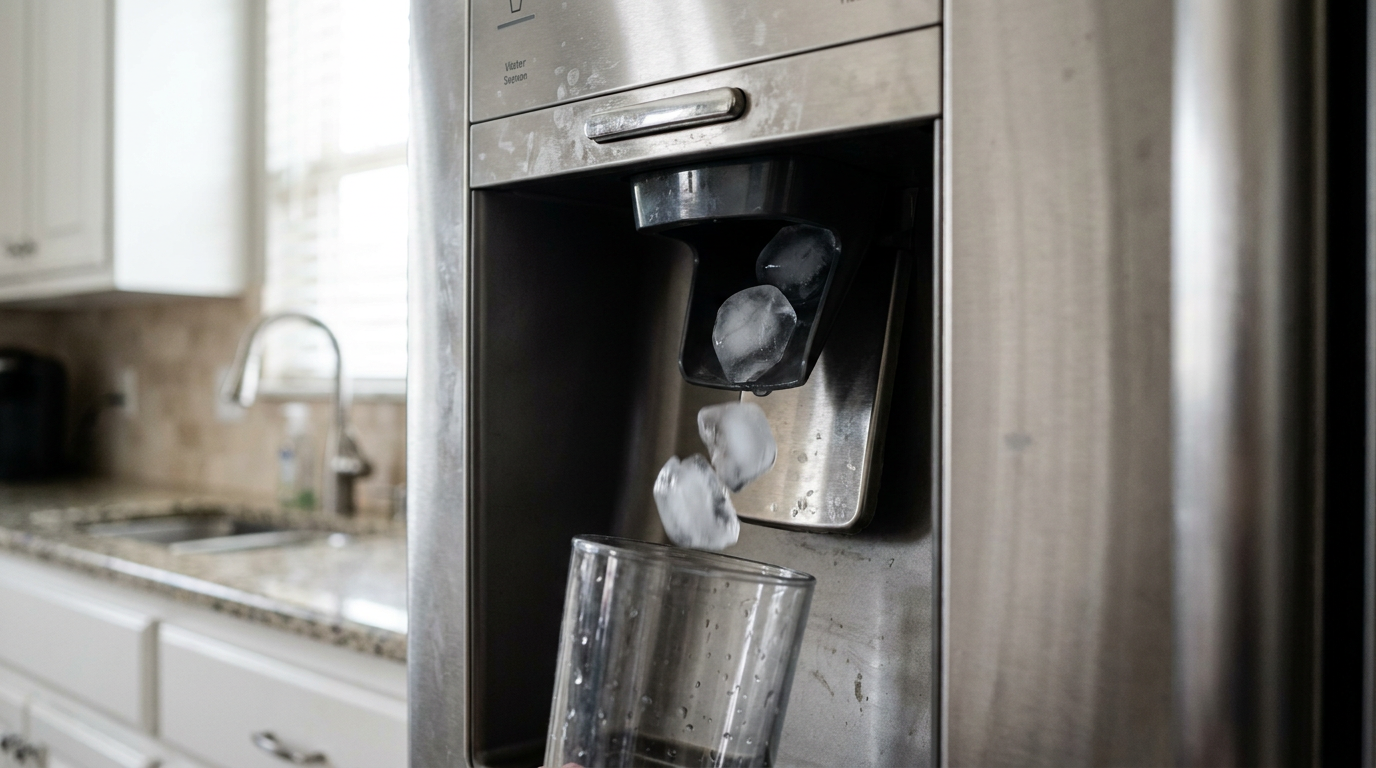
- Food Odors: Most common by a mile. Ice acts like an odor sponge. Uncovered leftovers, especially onions, garlic, or fish, are usually the culprits.
- Expired Water Filter: The filter’s saturated and can’t do its job anymore, so chlorine, sulfur, and other minerals end up in the ice.
- Stale Ice: If you don’t use ice much, the cubes sit there for weeks or months, slowly grabbing freezer smells and shrinking through sublimation, which can make mineral taste worse.
- Hard Water Deposits: Your home’s water may be loaded with minerals like calcium and magnesium. Those build up in the ice maker and supply lines and leave a chalky or mineral taste.
- Dirty Ice Bin or Maker: The storage bin or mold can pick up residue, and sometimes mold, if you don’t clean it now and then.
Published October 18, 2026Last updated October 18, 2026
Tools & materials you'll need
Affiliate linksAs an Amazon Associate FixlyGuide earns from qualifying purchases — at no extra cost to you. Prices and availability are accurate as of publication and subject to change.
Quick Answer
Your ice probably tastes bad for one of three big reasons: food odors from your fridge or freezer are getting pulled into the ice, your water filter’s old and needs swapping out, or your home’s water’s got a high mineral load that leaves a taste behind. Less often, you’re looking at plumbing trouble or mold in the ice maker’s supply line. Start with cleaning out the fridge and changing the filter — those two steps fix the issue more than 80% of the time.
The Problem
You grab a glass, load it with ice from the dispenser, top it off with your favorite drink, and take a sip. Yikes. Whole thing’s ruined. The ice tastes musty, stale, or just plain off. Maybe it’s got a chemical bite to it, maybe it tastes like that leftover garlic pasta you shoved in the fridge three days ago. Bad-tasting ice is one of those homeowner complaints I hear all the time, and it can turn a decent drink into a mess. Ice is porous. It soaks up whatever’s around it — freezer air, odors, little bits in the water, you name it.
How It Works
Modern refrigerator ice makers are simple, but they do the job just fine. Here’s the basic rundown. A water line, usually a 1/4-inch plastic or copper tube, runs from your home’s cold water supply — often tapped off under the kitchen sink — to the back of the fridge. That line goes through a water inlet valve, which is basically an electric gate that opens and lets water in. Before the water ever hits the ice maker, it almost always goes through a built-in filter meant to catch chlorine, sediment, and other junk.
Inside the freezer, the ice maker has a mold, usually with half-moon or crescent-shaped cavities. When it’s ready for another batch, the inlet valve opens for about 7-9 seconds, just long enough to fill the mold. A little thermostat inside keeps an eye on the water temp. Once it freezes solid — usually around 10-15°F — the thermostat kicks off the next part: a small heating element warms the bottom of the mold just enough to loosen the cubes. Then a motorized ejector arm or twisting mechanism pushes the finished cubes out, and they drop into the bin below. Over and over again. Any junk in that water line, filter, or freezer air can end up frozen right into the cubes.
Step-by-Step Fix
Let’s go through fixing foul-tasting ice, easiest stuff first and then the heavier lifting. Don’t skip around.
-
Bold-Step-Title: Dump the old ice.
- Tools: None
- Safety: None
- First thing, ditch all the ice already in there. That batch has soaked up the bad flavor, and keeping it around just drags the problem out. Pull the whole bin out of the freezer and dump it in the sink. Wash the bin with warm, soapy water, rinse it good, and dry it all the way before you slide it back in. That clears out any funky frost or residue stuck to the bin.
-
Bold-Step-Title: Clean and deodorize the fridge and freezer.
- Tools: Sponge, towels, bowl.
- Spoiled or uncovered food is the #1 reason ice tastes bad. Empty the fridge and freezer. Toss old leftovers, expired condiments, and anything that smells like it’s got no business being there. Wipe down every inside surface — walls, shelves, drawers — with a mix of one tablespoon of baking soda in one quart of warm water. Baking soda’s a solid deodorizer. I keep an open box of it in both the fridge and freezer on a lot of service calls, and it works. Not magic. Just works.
-
Bold-Step-Title: Check your food storage habits.
- Tools: Airtight containers.
- Going forward, keep everything sealed tight. This matters a lot with onions, garlic, fish, and strong cheeses. Even cut fruit and leftovers need a lid on them. Plastic wrap’ll do in a pinch, but glass or hard plastic containers with locking lids do a way better job keeping smells locked down where they belong.
-
Bold-Step-Title: Replace the water filter.
- Tools: New water filter (correct model for your fridge).
- This is the other main troublemaker. Refrigerator filters aren’t built to last forever. They clog up with sediment, and the activated carbon inside gets saturated, so it quits pulling out impurities like chlorine. Most manufacturers want you changing it every six months. Some fridges have a little status light to remind you. Find the filter — usually in the top-right corner, in the grille at the bottom, or behind a pop-out cover — and put in the right replacement for your model. After that, run and dump about two gallons of water to flush the new filter. I pulled a water heater in Frisco last month that had exactly this kind of stale-mineral smell in the line; same story, different appliance.
-
Bold-Step-Title: Let the system make fresh ice.
- Tools: None
- Once you’ve cleaned everything and swapped the filter, let the ice maker run a few cycles. It can take up to 24 hours to fill the bin. Toss the first one or two full batches. That gets the leftover taste out of the water line. Taste the third batch. For most folks, that’s the end of it.
-
Bold-Step-Title: Clean the ice maker mold and mechanism.
- Tools: Soft cloth, vinegar or diluted bleach solution.
- If the taste is still hanging around, now you’re cleaning the ice maker itself. Turn it off — there’s usually a switch or a little metal arm you lift. Unplug the refrigerator first, because no one needs a surprise. Wipe down the ice mold, ejector arm, and nearby surfaces with a soft cloth dampened in a 50/50 mix of water and white vinegar. Vinegar’s good for breaking loose mineral scale. If you see mildew, use one tablespoon of bleach to one gallon of water, then “rinse” with a water-dampened cloth. Let the whole thing air dry before you fire it back up.
-
Bold-Step-Title: Inspect the water supply line.
- Tools: Flashlight.
- Carefully pull the fridge away from the wall. Take a look at the thin water line feeding it. Plastic or copper? Kinked? Discolored at the connections? Old plastic tubing, especially the cheap stuff, can put a chemical or plastic taste into the water over time — especially if water sits in the line a while. If the tubing looks beat up, replace it.
-
Bold-Step-Title: Flush the water supply line.
- Tools: Bucket, wrench.
- This one’s a little more advanced. Shut off the water supply valve to the fridge — usually under the sink or down in the basement. Use a wrench to disconnect the 1/4-inch line from the back of the refrigerator. Stick the end of the line into a bucket, then have somebody turn the water back on for 30-60 seconds to flush it hard. If the water comes out cloudy or has debris in it, you’ve likely found part of the problem. Hook it back up tight and make sure there aren’t any leaks.
Common Causes
- Food Odors: Most common by a mile. Ice acts like an odor sponge. Uncovered leftovers, especially onions, garlic, or fish, are usually the culprits.
- Expired Water Filter: The filter’s saturated and can’t do its job anymore, so chlorine, sulfur, and other minerals end up in the ice.
- Stale Ice: If you don’t use ice much, the cubes sit there for weeks or months, slowly grabbing freezer smells and shrinking through sublimation, which can make mineral taste worse.
- Hard Water Deposits: Your home’s water may be loaded with minerals like calcium and magnesium. Those build up in the ice maker and supply lines and leave a chalky or mineral taste.
- Dirty Ice Bin or Maker: The storage bin or mold can pick up residue, and sometimes mold, if you don’t clean it now and then.
- Plumbing Issues: Old plumbing, especially galvanized pipes, can dump rust or metallic taste into the water. A failing water heater can toss sediment into the lines too.
Common Mistakes
- Ignoring the Filter Light: That little red light isn’t there for decoration. An old filter isn’t just useless — it can turn into a breeding ground for bacteria.
- Only Emptying the Bin: Dumping the old ice helps, sure, but it won’t fix the whole issue. You’ve got to scrub the bin itself or that flavored film stays put.
- Using Harsh Chemicals: Don’t blast household cleaner straight into the ice maker. The residue can be toxic, and your ice’ll taste terrible. Stick with vinegar, diluted bleach, or plain soap and water.
- Storing Food Uncovered: Thinking freezer temps keep odors trapped is a bad bet. Smells move around pretty easy, even at 0°F.
- Forgetting to Flush: After you install a new filter or reconnect a water line, you must flush it by running a couple of gallons through the dispenser. That clears loose carbon dust from the new filter and pushes air out of the line.
Cost & Time Breakdown
| Task | DIY Cost | Pro Cost | Time |
|---|---|---|---|
| Cleaning Fridge & Ice Bin | $0-$5 (for baking soda) | N/A | 30-45 minutes |
| Replacing Water Filter | $30–$70 (for the filter) | $100–$150 | 5 minutes |
| Cleaning Ice Maker Assembly | $0-$5 (for vinegar) | $120–$200 | 20-30 minutes |
| Replacing Water Supply Line | $15–$30 (for tubing kit) | $150–$250 | 30-60 minutes |
| Installing Whole-Home Filter | $500–$2,000+ | $800–$3,000+ | 2-4 hours |
Tips & Prevention
- Cycle Your Ice: If you don’t burn through ice very often, dump the bin once a month so the supply stays fresh.
- Use a Fridge Deodorizer: An open box of baking soda is cheap and it does the trick. Swap it out every 2-3 months.
- Consider a Water Test: If you think the water itself is the problem, grab a home test kit or send a sample to a lab. That’ll tell you what minerals or chemicals you’re dealing with.
- Pre-chill with Water: When you’re making a drink, fill the glass with ice, add a little water, swirl it for a few seconds, then dump the water out. That “rinses” the outside of the cubes and can knock down off-tastes.
- Check the Date on Your Filter: When you install a new water filter, write the date on it with a permanent marker. That way you know exactly how old it is, even if the indicator light gives up on you.
When to Call a Professional
If you’ve worked through all the cleaning and replacement steps and the ice still tastes bad, it’s time to bring in a pro. If you think the issue’s in your home’s plumbing — like a metallic taste showing up in your tap water too — call a plumber. If you’ve cleaned the water line and the ice maker but the problem won’t quit, or the ice maker’s stopped working altogether, call an appliance repair tech. They can test the inlet valve, thermostat, or the ice maker’s internal electronics — stuff that’s past the usual DIY fix.
Related Articles
Keep troubleshooting with these hand-picked guides from FixlyGuide:
- That Annoying Haze on Your Stainless Steel Sink? Here's How I Get It Out — I've seen it a hundred times: a cloudy, hazy film clinging to a stainless steel sink that just won't come clean. It's usually from hard wat…
- The Invisible Scum on Your Bathtub: How to Make It Gleam Again — Is your bathtub losing its luster, even after scrubbing? That invisible layer of soap scum and mineral deposits is the culprit. Learn how t…
- The Rusty Ring In Your Toilet? It's Not Just Ugly, It's a Symptom. — Stubborn rust rings in your toilet bowl are an eyesore and a sign of hard water or corroded pipes, but you can remove them with the right a…
- The Mystery of the Sprouting Carpet Tuft (And How to Stop It) — Ever noticed little loops or long strands sticking up from your carpet after cleaning or heavy use? That's called sprouting, and it's not j…
- Dishwasher Not Draining? 6 Reasons for Standing Water (and How to Fix It) — Seeing a puddle of dirty water in your dishwasher after a cycle is a common, fixable problem—here's how to diagnose and clear the clog, fro…
- That Chalky Film on Your Dishes? It's Not Soap Scum — If your dishwasher is leaving a cloudy white film on your glassware and dishes, the culprit is likely hard water mineral deposits, not left…
What should this project cost?
Enter your project details for a realistic cost range before you call anyone.
Cost depends heavily on which system turns out to be the source.
- Regional adjustment
- National average
- Labor share (typical)
- ~$1,620
- Quotes to collect
- 3 written estimates
Educational estimate based on national averages — not a binding quote. Always confirm with written local estimates.
Get the print-ready PDF of this guide
A clean, ad-free, printable version you can keep on your phone or pin to the workshop wall. Free with a FixlyGuide account.
- Print-optimized layout
- Tools, materials & every step included
- Saved to your account
Frequently asked questions
How often should I change my refrigerator's water filter?+
You should replace it every six months, or more often if you have hard water or your fridge manufacturer recommends it. An old filter is one of the most common reasons for bad-tasting ice and water.
Can I use a generic brand water filter for my fridge?+
Yes, in many cases you can use a high-quality third-party filter, often at a lower cost. Just make sure it is certified by NSF/ANSI to remove the same contaminants as the manufacturer's original filter and is compatible with your specific refrigerator model.
Why does my ice taste bad even after changing the filter?+
If a new filter didn't fix it, the most likely cause is food odors. Clean your fridge and freezer thoroughly with a baking soda solution and make sure all food, especially pungent items, is stored in airtight containers.
Is it safe to clean my ice maker with bleach?+
Yes, it is safe if done correctly. Use a highly diluted solution—about one tablespoon of bleach per gallon of water—to wipe down the components. Afterward, wipe the area with a clean, water-dampened cloth to remove any residue and let it air dry completely.
My ice is cloudy. Is that related to the bad taste?+
Cloudy ice is usually caused by dissolved gases and minerals in the water freezing quickly. While not necessarily the source of a bad *taste*, water with high mineral content can contribute to both cloudiness and a 'chalky' or 'mineral' flavor.
Why does my ice taste like plastic or chemicals?+
A plastic taste often comes from a new or aging plastic water supply line. Flushing the line thoroughly can help. If the fridge is new, it can take a few weeks for the 'new plastic' smell to dissipate. A chemical taste often points to an exhausted water filter that is no longer removing chlorine.
How long does it take for ice to absorb odors?+
It happens faster than you'd think. Ice can start absorbing ambient odors from your freezer in just a few hours. That's why it's so important to keep strong-smelling foods like onions, garlic, and fish sealed in airtight containers.
Could my city's water supply be the problem?+
Absolutely. Sometimes a city will temporarily change its water treatment process, such as by increasing the amount of chlorine, which you'll notice in your ice. If the taste from your tap water also changes, this is likely the cause. The issue usually resolves itself in a few days.
Discussion
Loading comments…