- Manufacturing Defects: Sometimes the carpet just leaves the factory with a loose tuft or a bad spot where the adhesive didn’t grab right. It happens.
- Heavy Foot Traffic: Hallways, entryways, and those little turn points where people pivot all take a beating. That friction works fibers loose over time.
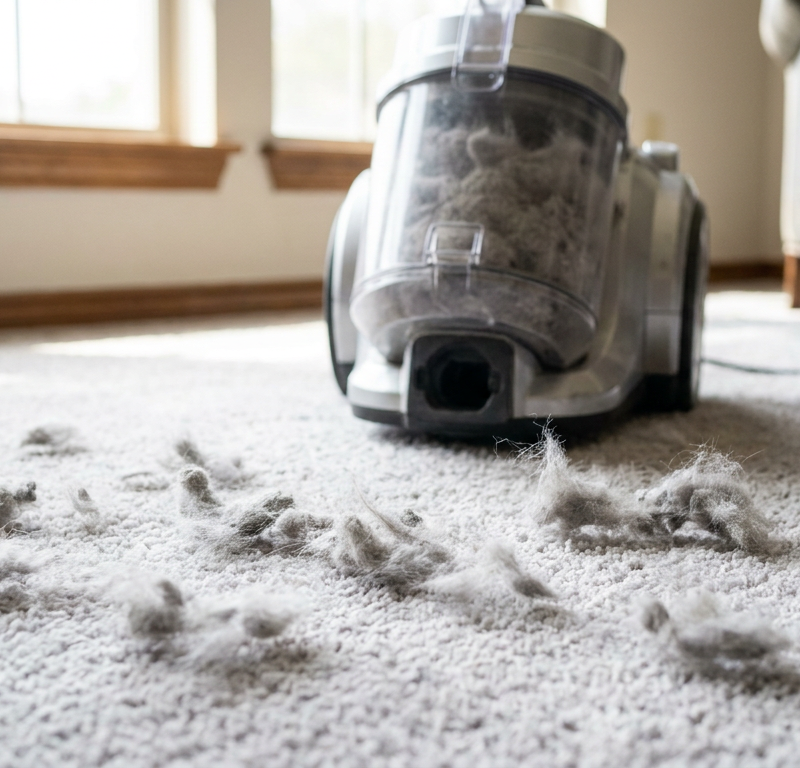
- Aggressive Vacuuming: A beater bar set too low can snag loops and yank them up. Those brushes are meant to agitate, but too much of a good thing turns into damage.
- Snags from Furniture/Pets: Moving heavy furniture without sliders is asking for trouble. Pet claws can catch a loop in a heartbeat too. I’ve seen more than a few sprouts caused by an excited puppy tearing across a room.
- Poor Installation: If the carpet wasn’t stretched right, or the tack strips weren’t set correctly, the carpet can stay loose in spots and sprout more easily.
Published August 31, 2026Last updated August 31, 2026
Tools & materials you'll need
Affiliate links- AmazonSmall piece of tape1 · Optional, to mark the sprout
As an Amazon Associate FixlyGuide earns from qualifying purchases — at no extra cost to you. Prices and availability are accurate as of publication and subject to change.
Quick Answer
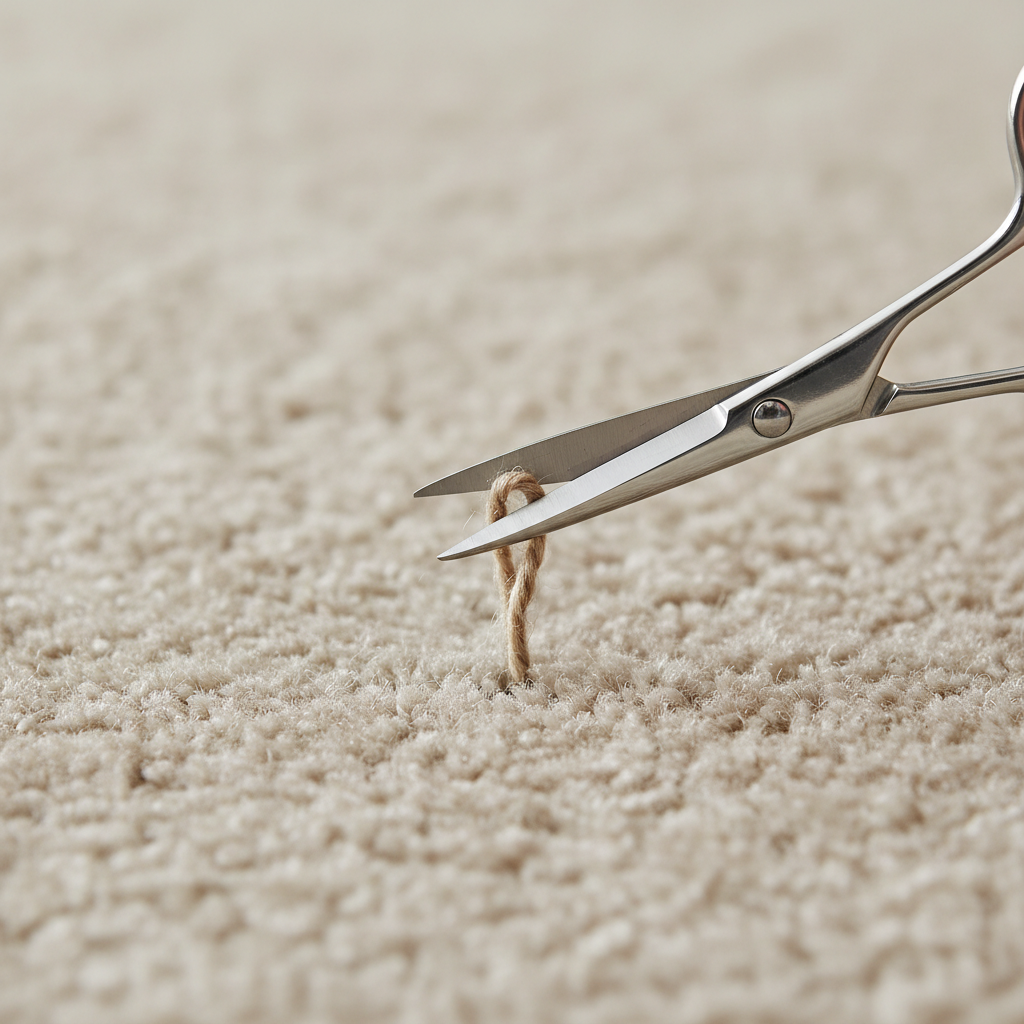
Those little loops or long, unruly strands popping up from your carpet? We call that "sprouting" in the trade. It’s not just ugly; if you leave it alone, those loose fibers can catch on shoes, pets, or a vacuum and start unraveling the whole mess. The fix is usually simple: grab a sharp pair of scissors and snip those sprouts flush with the rest of the carpet. Just don’t pull them. Seriously. That’s how you turn a small annoyance into a bigger headache.
The Problem
I’ve walked into hundreds of homes, and carpet sprouting’s a pretty common sight. A lot of folks don’t think much of it, or they try to yank it out because it looks like one loose strand. You’ll usually see an individual yarn loop that’s popped up, or sometimes a single strand that’s longer than the rest, standing there like it owns the place. It shows up more in high-traffic spots, or after a rough vacuuming session—especially if the beater bar’s set too low.
It’s not just a cosmetic thing. That loose tuft is begging to get snagged by a shoe, a pet’s claw, or another pass of the vacuum. Once it starts pulling, you can get a run, just like a stocking. Then you’ve got a bare spot where a perfectly decent tuft used to be. I had a job in Frisco last month where somebody pulled one little sprout and ended up with a bald patch about the size of a golf ball. No joke. That’s why I always tell people: leave it alone and cut it right.
How It Works
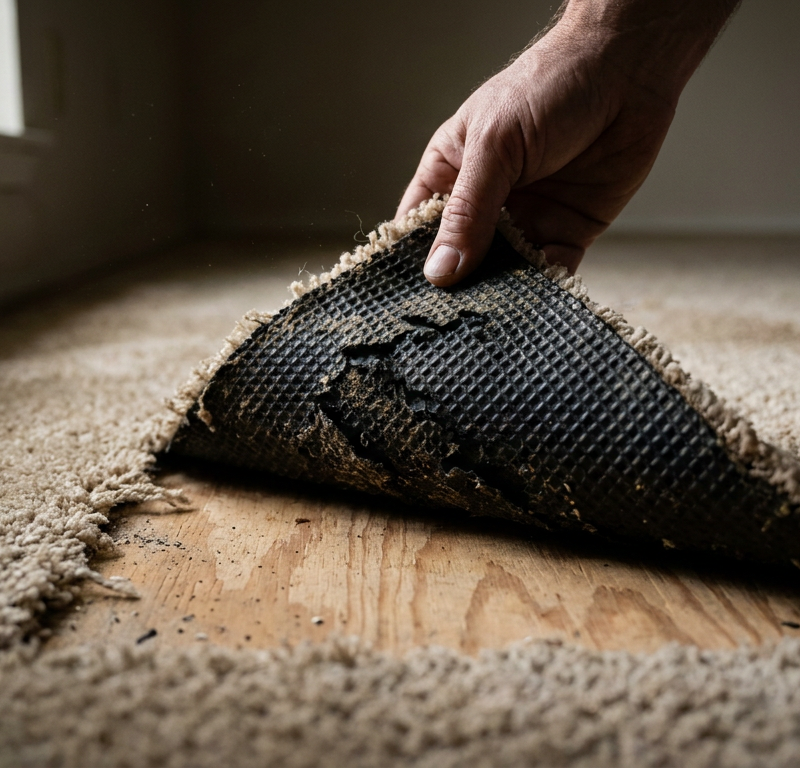
To get why carpet sprouts happen, you’ve gotta know a little about carpet construction. Most residential carpet is tufted. Picture a giant sewing machine with a row of needles punching yarn through a primary backing. That forms loops. Then the manufacturer puts latex adhesive on the back of that primary backing to lock the loops in place. After that, they add a secondary backing, usually jute or polypropylene, for stability and cushioning.
There are two main types of tufted carpet you’ll run into: loop pile and cut pile. Loop pile keeps all those yarn loops intact, which gives you a tight, durable surface—think Berber. If one of those loops isn’t held well by the latex, or it gets a lot of friction, it can pop free from the primary backing and sprout. Cut pile is different. Those loops get cut at the top so you’ve got individual strands, and that softer look comes with a little more forgiveness. If a cut pile sprouts, it’s usually a loose strand that got cut unevenly at the factory or came partly unanchored.
Heavy foot traffic grinds and twists the fibers, and that slowly weakens the latex grip. Aggressive vacuuming can do the same thing, especially with a rotating brush set too low. That brush can snag a tuft and haul it right out. So yeah, it’s a tug-of-war between the yarn, the adhesive, and everyday life. Carpet loses some rounds.
Step-by-Step Fix
This isn’t rocket science, but you do want a steady hand and the right tool. You’re not reweaving the whole carpet—you’re just giving one ugly strand a haircut.
-
Gather Your Tools — Get the Right Gear
- You’ll need a good pair of sharp scissors. Don’t grab those dull kitchen shears that can’t cut a tomato without a fight. Small, pointed scissors—embroidery scissors or even sharp nail scissors—work best. The sharper the blade, the cleaner the cut, and the less chance you’ve got of fraying the surrounding fibers. A flashlight can help too if you’re working in a dim hallway or under furniture.
-
Locate the Culprit — Find That Pesky Loop
- Take a close look at the area. Sometimes the sprout jumps right out at you. Other times it’s hiding in plain sight. Run your hand over the carpet pile and feel for anything uneven. If it’s loop pile, you’re looking for a loop sitting taller than the rest. If it’s cut pile, you’re after one strand sticking up too far. Mark it with a tiny piece of tape if you need to, so you don’t lose track of it.
-
DO NOT PULL! — Seriously, Don't Do It
- This is the big rule. Pulling a sprout—even a small one—can loosen the backing’s grip on the nearby tufts and leave you with a bigger bare spot or a long run. It’s like tugging one thread on a sweater. You already know how that goes.
-
Isolate the Sprout — Prep for the Snip
- Gently press down the surrounding fibers with one hand so you can isolate the bad loop or strand. You want to cut only the problem fiber, not nick the good stuff around it. This is where those little sharp scissors really earn their keep.
-
Trim Carefully — The Big Moment
- With your sharp scissors, snip the sprout flush with the surrounding pile. Don’t cut it shorter than the rest—just even with it. Take your time. A careful cut disappears a whole lot better than a rushed one. For loop pile, you’re cutting the top of the rogue loop. For cut pile, you’re trimming the excess length.
- Safety First: Always cut away from your body and fingers. Those scissors are sharp.
-
Fluff and Blend — Make It Disappear
- After you’ve trimmed it, ruffle the fibers a little with your fingers so the area blends in with the rest of the carpet. You shouldn’t be able to spot where the sprout was. If it still looks a hair off, you can do one tiny follow-up trim, but usually one clean snip does the job.
-
Inspect — Double-Check Your Work
- Step back and look at it from a standing position. Does it blend? Run your hand over it again. If this keeps happening in the same area, ask yourself why. Is furniture rubbing there? Is the vacuum set wrong? Fixing the cause saves you from seeing the same sprout pop back up next week.
Common Causes
- Manufacturing Defects: Sometimes the carpet just leaves the factory with a loose tuft or a bad spot where the adhesive didn’t grab right. It happens.
- Heavy Foot Traffic: Hallways, entryways, and those little turn points where people pivot all take a beating. That friction works fibers loose over time.
- Aggressive Vacuuming: A beater bar set too low can snag loops and yank them up. Those brushes are meant to agitate, but too much of a good thing turns into damage.
- Snags from Furniture/Pets: Moving heavy furniture without sliders is asking for trouble. Pet claws can catch a loop in a heartbeat too. I’ve seen more than a few sprouts caused by an excited puppy tearing across a room.
- Poor Installation: If the carpet wasn’t stretched right, or the tack strips weren’t set correctly, the carpet can stay loose in spots and sprout more easily.
Common Mistakes
- Pulling the Sprout: This is the big no-no. It’s the fastest way to make a small issue a whole lot worse.
- Using Dull Scissors: A dull blade chews the fibers instead of cutting them. That leaves a fuzzy, ugly edge that sticks out like a sore thumb.
- Cutting Too Short: If you cut below the surrounding pile, you’ll make a tiny bald spot. Flush is the target.
- Ignoring the Problem: Small sprouts don’t usually fix themselves. Leave them long enough and you can end up with a bigger repair.
- Aggressive Scrubbing: Scrubbing a spot hard can loosen fibers and start sprouting. Blot it gently instead.
- Incorrect Vacuum Settings: Running the beater bar too low for your carpet type can tear up fibers over time. Set it right for the pile you’ve got.
Cost & Time Breakdown
Here’s what you’re looking at for this simple fix, or if you call someone out for it. Truth is, this is almost always a DIY job.
| Task | DIY Cost | Pro Cost | Time |
|---|---|---|---|
| Basic Sprout Trimming | $0–$15 | N/A (too small) | 2–5 minutes |
| New Scissors (if needed) | $5–$15 | N/A | N/A |
| Total for minor sprouting | $0–$15 | N/A | 2–5 minutes |
| Extensive Sprouting (multiple areas) | $0–$15 | $75–$150+ | 10–30 minutes |
| Total for significant issues | $0–$15 | $75–$150+ | 10–30 minutes |
Note: "Pro Cost" for extensive sprouting would likely fall under a general carpet repair service call, which typically has a minimum charge.
Tips & Prevention
- Vacuum Regularly, Correctly: Set the beater bar for the carpet pile you’ve got. You want it to glide, not dig. For cut pile, a higher setting usually works better. For delicate loop piles like Berber, I’d often turn the beater bar off altogether or use suction only.
- Use Furniture Sliders: Moving heavy furniture, even just a few inches, can snag carpet fast. Lift it or use felt sliders underneath.
- Trim Pet Claws: Keep your dog or cat’s nails trimmed so they’re less likely to catch a loop. Easy win.
- Address Sprouting Promptly: Don’t let a tiny sprout turn into a bigger headache. One minute with scissors now can save you a repair later.
- Rotate Furniture: If you can, change things around once in a while so the same paths aren’t getting hammered every day.
- Consider Carpet Type: If you’ve got kids or pets running around, a cut pile or a low, dense loop pile usually holds up better than a delicate high-loop Berber.
When to Call a Professional
Look, trimming a sprout is squarely in the DIY camp for most homeowners. But there are times when you need to call it. If you’ve got extensive sprouting over a big section of carpet, especially if it looks like it’s unraveling from the backing, that points to a bigger issue—maybe a manufacturing defect or a rough install. If you’re seeing actual bare spots where tufts have come out, or runs that stretch into long missing lines, you’re past simple trimming.
A professional carpet repair tech can re-tuft or patch those areas and do a pretty good job matching pile and color. Don’t try to glue down large sections yourself. You’ll usually end up with a permanent mess, and that thing’s hard to hide. If the problem looks tied to the whole carpet construction—like widespread delamination where the primary and secondary backings are separating—then it’s time to bring in a pro and find out whether it can be repaired or if replacement is the only real option.
Related Articles
Keep troubleshooting with these hand-picked guides from FixlyGuide:
- The Mystery Smell: Why Your Fridge Stinks (Even After Cleaning It) — That persistent, foul odor in your refrigerator isn't just gross; it's often a sign of hidden issues. Learn the real culprits behind linger…
- The Invisible Film Making Your Bathroom Mirror Streaky – And How to See Clearly — Discover why your bathroom mirror always looks streaky, even after cleaning, and learn the pro trick to get a perfectly clear, fog-free ref…
- Why Your Kitchen Sink Drain Stinks (Even After You've Cleaned It) — Don't just mask that foul odor from your kitchen sink; get rid of the gunk causing it with this pro-level cleaning method.
- The 3 Lies Your Carpet Cleaner Tells You (And Why Your Carpet Stinks) — Ever notice those 'cleaned' carpet stains pop right back up, or a lingering funk that just won't quit? It's not bad luck; it's bad science.
- That Mystery Haze on Your Dishware? Your Dishwasher's the Culprit — If your 'clean' dishes come out looking cloudy, streaky, or gritty, it's not you – it's your dishwasher, and I'll show you how to fix it.
- The #1 Gutter Mistake That Causes Overflow (It's Not Clogs!) — Discover the often-overlooked culprit behind overflowing gutters during heavy rain and learn the surprising, easy fix most homeowners miss.
Should you do this yourself?
Answer five quick questions before you start. Safety outranks savings every time.
Your experience with work like this
How high do you have to work?
Does the job involve any of these?
Will it need a permit?
Specialty tools
Free and instant. Educational guidance only — not a quote, inspection, or professional diagnosis.
Estimate your own project cost
National averages are a starting point. Enter your details for a range that fits your house.
Flooring cost estimator
- Material$498 – $1,095
- Installation labor$360 – $720
Tile installs and stairs increase labor cost. Get 2–3 quotes for jobs over 200 sq ft.
Educational estimate only — always confirm with written local bids.
What should this project cost?
Enter your project details for a realistic cost range before you call anyone.
Cost depends heavily on which system turns out to be the source.
- Regional adjustment
- National average
- Labor share (typical)
- ~$1,620
- Quotes to collect
- 3 written estimates
Educational estimate based on national averages — not a binding quote. Always confirm with written local estimates.
Before you start
Check the difficulty, permits, and safety risk — then decide whether to call a pro.
Free, no signup required. Estimates are educational guidance, not a quote or an inspection.
Get the print-ready PDF of this guide
A clean, ad-free, printable version you can keep on your phone or pin to the workshop wall. Free with a FixlyGuide account.
- Print-optimized layout
- Tools, materials & every step included
- Saved to your account
Frequently asked questions
What exactly is carpet sprouting?+
Carpet sprouting refers to individual yarn tufts or loops that become loose and protrude above the normal carpet pile. It can happen in both loop pile and cut pile carpets and is usually caused by wear, manufacturing flaws, or aggressive cleaning.
Can I just pull out a carpet sprout?+
Absolutely not! Pulling a sprout can lead to a 'run' or unraveling of the carpet backing, causing a much larger and more noticeable bare spot. Always trim it carefully with scissors.
Why does my carpet keep sprouting in the same spot?+
If sprouting is reoccurring in the same area, it might be due to consistent heavy foot traffic, furniture rubbing, or an incorrect vacuum setting that's repeatedly snagging the fibers. Check for any external factors contributing to the issue.
What kind of scissors should I use to fix carpet sprouting?+
You should use a small, very sharp pair of scissors, like embroidery scissors or sharp nail scissors. Dull scissors will fray the fibers and make the problem worse.
Is carpet sprouting a sign of a low-quality carpet?+
Not necessarily. While manufacturing defects can contribute, even high-quality carpets can sprout due to heavy wear, aggressive vacuuming, or snags from pets or furniture. It's more about how the carpet is used and maintained.
Can my vacuum cleaner cause carpet sprouting?+
Yes, an aggressive vacuum with a beater bar set too low for your carpet type can snag and pull individual tufts, leading to sprouting. Adjust your vacuum's height setting or consider turning off the beater bar for delicate carpets.
Will fixing a sprout leave a noticeable bald spot?+
If you trim the sprout carefully, flush with the surrounding pile, it should not leave a bald spot. The goal is to make the trimmed fiber blend seamlessly with the rest of the carpet. Cutting too short is the mistake that leads to bald spots.
When should I call a professional for carpet sprouting?+
You should call a pro if you have widespread sprouting across a large area, actual bare spots, or visible runs where the carpet is unraveling from its backing. These indicate a more significant problem beyond a simple trim.
Can pets cause carpet sprouting?+
Yes, pet claws can easily snag on loose carpet loops or fibers, pulling them up and causing sprouts. Keeping your pet's nails trimmed can help prevent this.
Discussion
Loading comments…