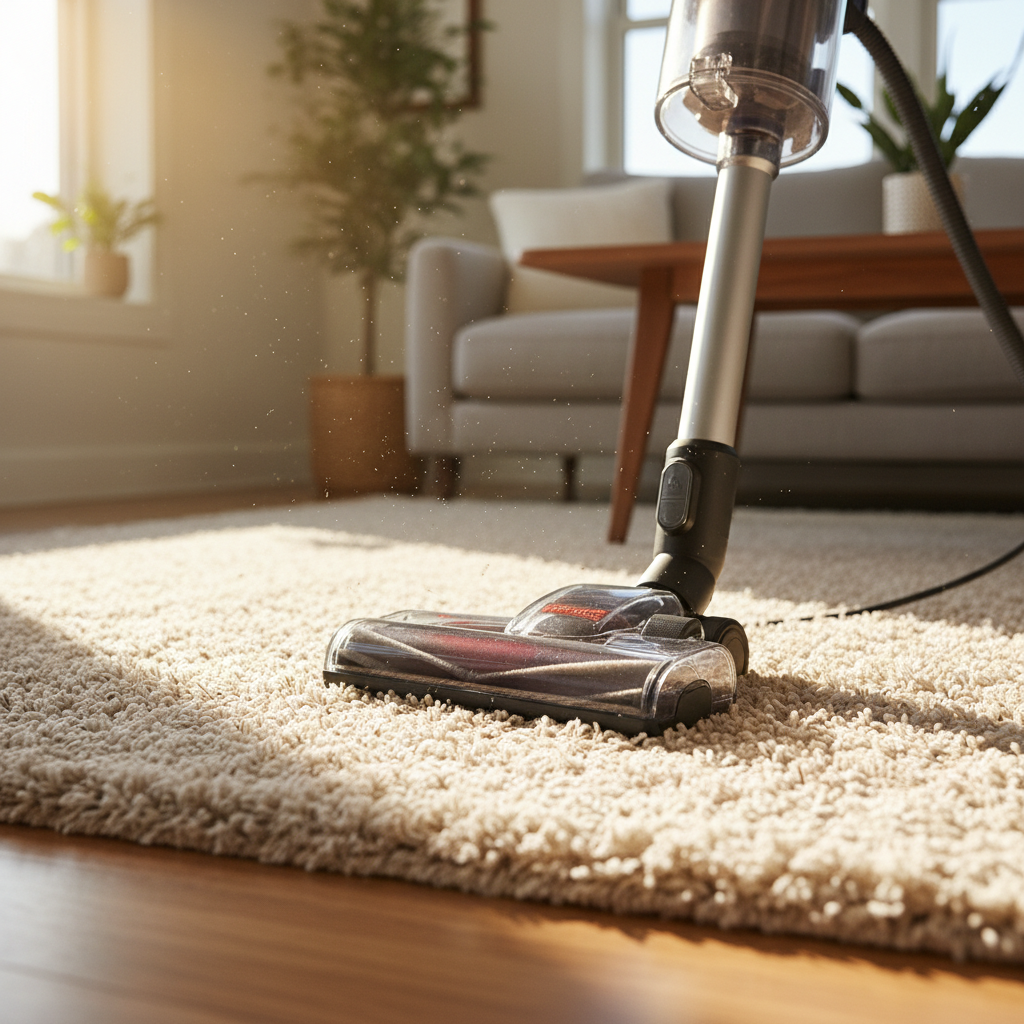
- The "Lower is Better" Myth: It's an intuitive but incorrect assumption that a lower setting provides a more powerful or deeper clean.
- Lack of Awareness: Many people simply don't know the height adjustment feature exists, what it's for, or how significantly it impacts performance.
- Default Settings: The vacuum is often used on the setting it had out of the box or the one the previous user left it on.
- Unreliable Auto-Adjustment: While some vacuums feature automatic height adjustment, these sensors can become dirty or fail over time, or they may not be sophisticated enough to differentiate between subtle pile variations.
- Surface Transitions: A homeowner vacuums their hardwood floor (correctly, on a "Bare Floor" or high setting) and moves directly onto a plush carpet without stopping to make the crucial adjustment.
Published June 11, 2026Last updated August 17, 2026
Tools & materials you'll need
Affiliate links- AmazonReplacement Vacuum FiltersAs needed, according to manufacturer's instructions
As an Amazon Associate FixlyGuide earns from qualifying purchases — at no extra cost to you. Prices and availability are accurate as of publication and subject to change.
'''
Quick Answer
Most homeowners use a vacuum setting that's too low, believing it cleans deeper. In reality, the optimal vacuum setting for carpet requires setting the brush roll high enough so it barely "ticks" the carpet fibers. This crucial adjustment creates the perfect balance of agitation and airflow, allowing the vacuum to lift embedded dirt, dust, and allergens effectively without damaging the carpet pile.
The Problem
The common wisdom seems to be that a lower vacuum cleaner setting equals a deeper clean. It feels logical: pushing the spinning beater bar (or brush roll) as deep as possible into the carpet must mean you're attacking dirt at its source. Unfortunately, this is one of the most widespread and damaging mistakes in home maintenance. It's the primary reason your carpets might still feel gritty or look dull even after a thorough vacuuming.
When you set the cleaning head too low, you're essentially "choking" your vacuum cleaner. The head forms a tight seal against the carpet surface, drastically reducing the airflow needed to transport dirt from the floor into the canister or bag. The beater bar, instead of lightly agitating the fibers to release trapped particles, becomes a destructive force. It digs in aggressively, "mowing" down the delicate carpet tufts. This leads to several problems:
- Poor Dirt Removal: Without sufficient airflow, the vacuum can't lift the heavy, abrasive grit (sand, soil) that settles deep in the pile. It might pick up surface-level lint and hair, but the most damaging particles are left behind to grind away at your carpet fibers like sandpaper.
- Carpet Damage: The aggressive, low-set brush action causes premature fuzzing, fraying, and matting. It can snag loops in Berber carpets, creating irreversible runs, and it shreds the twisted yarns of a frieze or plush carpet, reducing its lifespan and making it look worn out years before its time.
- Vacuum Strain: Forcing the brush roll through the dense carpet pile puts immense strain on the vacuum's motor. You might hear the motor pitch change to a lower, struggling groan. This can lead to overheating, thrown belts, and a significantly shorter operational life for your appliance.
- Allergen Entrapment: The same airflow that lifts dirt also removes microscopic allergens like dust mites, pollen, and pet dander. When you use the wrong vacuum setting for carpet, you're leaving these irritants behind, which can impact your home's indoor air quality.
Essentially, setting your vacuum too low makes you work harder for a worse result, all while actively damaging your expensive flooring.
How It Works
Understanding the mechanics of your vacuum cleaner reveals why the pile-height setting is so critical. A vacuum doesn't just work by suction alone; it's a precise partnership between three elements: agitation, airflow, and suction.
-
Agitation: The beater bar, or brush roll, is designed to gently vibrate and sweep the carpet fibers. This action loosens embedded dirt, hair, and grit, "flicking" them up from deep within the pile so they can be captured by the stream of air.
-
Airflow: This is the real workhorse of the cleaning process. The vacuum's motor creates a powerful, continuous stream of air that travels from the cleaning head, through the hose, and into the bag or canister. This moving air is what actually carries the loosened dirt away from the carpet.
-
Suction: Suction is the force that creates the airflow. It's the pressure differential between the air inside the vacuum and the air outside. Strong suction is necessary, but it's useless without a path for air to flow.
Now, let's see how the pile-height setting affects this trio:
-
Setting is Too Low: The vacuum head presses down hard, sealing off the intake opening. This creates a "suction lock." While the suction force might be high right at the surface, airflow drops to nearly zero because no air can get in. The beater bar is buried deep in the pile, unable to effectively flick dirt upwards. It just grinds it around while simultaneously damaging the fibers. You're getting high friction and low dirt removal.
-
Setting is Too High: The vacuum head floats too far above the carpet. The beater bar barely makes contact, or doesn't touch the fibers at all. While you have excellent, unrestricted airflow, there is no agitation to loosen the embedded dirt. The vacuum only picks up the lightest surface dust and debris, leaving the heavy, abrasive grit at the base of the pile.
-
Setting is "Just Right": This is the sweet spot. The head is positioned so the beater bar's bristles reach just the top of the carpet pile. You might hear it making a light "ticking" or "grooming" sound as it passes over the fibers. In this position, the brush provides optimal agitation, loosening deep-down dirt. Crucially, a small gap is maintained between the head and the carpet, allowing for maximum, high-velocity airflow. This powerful air stream immediately captures the dislodged particles and whisks them away. This is the setting that delivers a true deep clean without causing harm.
Step-by-Step Fix
Finding the perfect vacuum setting for your carpet is a quick adjustment that will revolutionize your cleaning routine. Follow this diagnostic process, known as the "tick test," for each type of carpet in your home.
-
Step 1: Start with Safety — First and foremost, unplug your vacuum cleaner before performing any inspections or adjustments to the underside of the cleaning head. This prevents any accidental starts.
-
Step 2: Clear a Test Area — Move any furniture, toys, or rugs to create a clear, 5x5 foot patch of a single type of carpet. This gives you enough space to properly test the machine's feel and sound.
-
Step 3: Identify Your Carpet Pile — Look closely at your carpet. Is it a low-pile, dense style like Berber or a commercial carpet where the loops are tight and short? Is it a medium-pile plush, the most common residential type? Or is it a high-pile carpet like a shag or frieze, with long, loose fibers? A simple trick is the "coin test": place a quarter on the carpet. If you can see most of Lincoln's head, it's low pile. If the fibers come up to his chin, it's medium pile. If the coin sinks and almost disappears, you have high pile.
-
Step 4: Locate the Height Adjustment — Find the pile-height control on your vacuum. On most uprights, it's a dial or lever on the cleaning head itself, often numbered or with labels like "Bare Floor," "Low Pile," and "High Pile." Some models use a foot-activated pedal. Canister vacuums may have the adjustment on the powerhead. Newer, high-end vacuums may claim to have an "automatic" adjustment, but it's still wise to test it.
-
Step 5: Begin at the Highest Setting — Turn the dial or press the lever to the absolute highest setting available. This is a critical starting point to prevent any damage. If you start too low, you risk fraying the carpet fibers on your first pass.
-
Step 6: Power On and Position — Plug in the vacuum and turn it on. If possible, start the vacuum on a hard surface adjacent to the carpet and then roll it onto the test area. Starting directly on a plush carpet can sometimes strain the motor.
-
Step 7: Lower and Listen (The "Tick Test") — While keeping the vacuum stationary, lower the height adjustment one notch at a time. Listen very carefully. You are listening for the exact moment the beater bar bristles begin to make contact with the carpet fibers. The sound is a subtle but distinct, light "ticking" or "grazing" noise. This is the sound of the bristles doing their job correctly.
-
Step 8: Feel the Push Resistance — Push the vacuum forward about 3-4 feet. It should feel easy to moderate to push. If it feels very difficult and you have to fight to move it forward, the setting is still too low. This resistance is a clear sign that the suction is choked off and the brush is digging in too deep. Raise the height by one notch and try again.
-
Step 9: Test the Debris Pickup — Go back one notch from where it felt difficult to push. You should be in that "sweet spot" where you hear the bristles lightly ticking and the machine is movable with one hand. Vacuum your entire 5x5 test patch slowly. Turn off the machine and check the canister or bag. You may be surprised to see a large amount of fine dust, sand, and deep-down grit that your old setting was leaving behind.
-
Step 10: Inspect the Carpet's Appearance — Look at the lines left by the vacuum. The pile should look groomed, fluffy, and uniform. It should not look crushed, flattened, or "scraped." The fibers should be standing upright, not torn or fuzzy.
-
Step 11: Mark Your Setting — Once you've found the perfect setting for your primary carpet, consider making a small, non-permanent mark (like with a silver permanent marker) on the dial next to the correct number or icon. This saves you from having to re-test every time.
-
Step 12: Repeat for Other Surfaces — If you have different types of carpet or large area rugs in your home, repeat this entire process for each one. A low-pile basement carpet will require a very different setting than a high-pile bedroom shag.
Common Causes
Most homeowners use the wrong setting for simple, understandable reasons:
- The "Lower is Better" Myth: It's an intuitive but incorrect assumption that a lower setting provides a more powerful or deeper clean.
- Lack of Awareness: Many people simply don't know the height adjustment feature exists, what it's for, or how significantly it impacts performance.
- Default Settings: The vacuum is often used on the setting it had out of the box or the one the previous user left it on.
- Unreliable Auto-Adjustment: While some vacuums feature automatic height adjustment, these sensors can become dirty or fail over time, or they may not be sophisticated enough to differentiate between subtle pile variations.
- Surface Transitions: A homeowner vacuums their hardwood floor (correctly, on a "Bare Floor" or high setting) and moves directly onto a plush carpet without stopping to make the crucial adjustment.
Common Mistakes
Beyond just picking the wrong initial setting, several other habits can undermine a perfect vacuuming job:
- Slamming to the Lowest Setting: Many users, in a rush, will immediately set the vacuum to its lowest "plush" or "high pile" setting, which is often still too low for their actual carpet.
- Ignoring a Snag-Prone Carpet: Using a beater bar at all on certain carpets is a mistake. For delicate, continuous-loop Berber or antique woven rugs, the spinning brush can catch a loop and pull a long, damaging "zipper" or run. Use a suction-only tool or a vacuum with a "stop brush roll" feature for these.
- Vacuuming Too Quickly: Deep cleaning requires a slow, deliberate pace. Rushing across the room only cleans the surface. A pace of about 2-3 feet per second allows the agitation and airflow time to work on the deep-down grit.
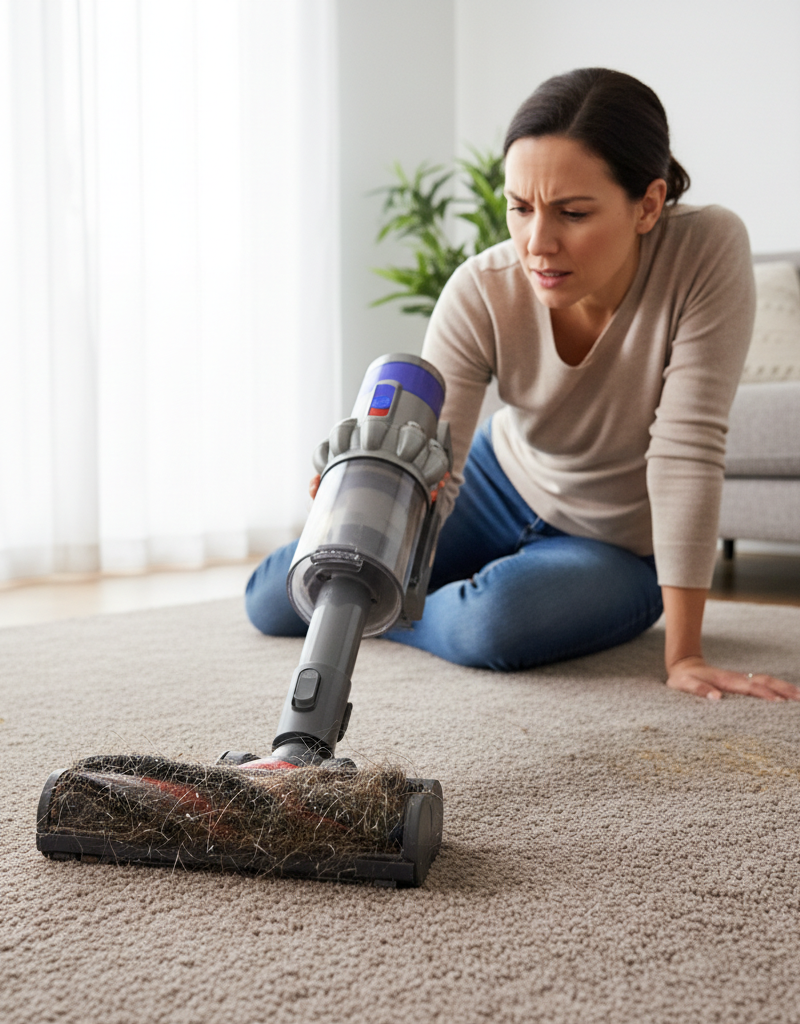
- Forgetting to Clean the Machine: A clogged filter, full bag/canister, or a beater bar tangled with hair will destroy your vacuum's performance, no matter how perfect your height setting is. Airflow is impossible through a clogged filter.
- Neglecting Different Rugs: People often forget that an area rug on top of a wall-to-wall carpet has its own pile height and may require a different setting than the carpet underneath it.
Cost & Time Breakdown
Diagnosing and fixing your vacuum setting is one of the highest-impact home maintenance tasks with virtually no cost.
| Task | DIY Cost | Pro Cost | Time |
|---|---|---|---|
| Diagnostic "Tick Test" | $0 | N/A | 5 minutes |
| Adjusting Vacuum Height | $0 | N/A | 1 minute per carpet type |
| Full-Room Deep Vacuum | $0 | N/A | 20-30 minutes per room |
| Beater Bar & Filter Cleaning | $0 - $30 (for new filter) | $50 (part of a repair call) | 15 minutes |
| Professional Carpet Cleaning | N/A | $180 - $350 (3-4 rooms) | 2-4 hours |
Tips & Prevention
- Safety Note: Always unplug your vacuum before performing maintenance like cleaning the beater bar or changing filters. Never mix cleaning solutions, especially ammonia and bleach, when spot-cleaning your carpet, as this creates toxic gas.
- The Two-Pass Method: For a truly deep clean in high-traffic areas, make one slow pass forward and one slow pass backward over the same strip of carpet before moving on.
- Go Against the "Lean": Identify the natural direction your carpet pile leans (you can see this by brushing it with your hand). For one of your passes, vacuum against this lean to help lift the fibers and release trapped dirt.
- Clean Your Machine Religiously: The best vacuum setting in the world is useless if the machine is clogged. Empty the canister after every use. Check and clean or replace your filters (pre-motor and post-motor/HEPA) every 1-3 months, per your manual's instructions. Once a month, flip the vacuum over and use scissors or a seam ripper to cut away hair and string wrapped around the beater bar.
- Frequency is Key: It is far more effective to vacuum twice a week with the correct setting than it is to do one "marathon" session once a month. Frequent vacuuming removes abrasive grit before it has a chance to get ground deep into the carpet's foundation.
- Utilize Attachments: Use the crevice tool along all baseboards and the upholstery tool on stairs before you vacuum the main floor area. This pulls dirt out from the edges into the open, where the main vacuum can then pick it up.
When to Call a Professional
You've mastered the pile-height setting, you're vacuuming slowly and frequently, but your carpet still looks flat, dull, or dirty. This is the point where a DIY approach reaches its limit and it's time to call in a certified carpet cleaning professional.
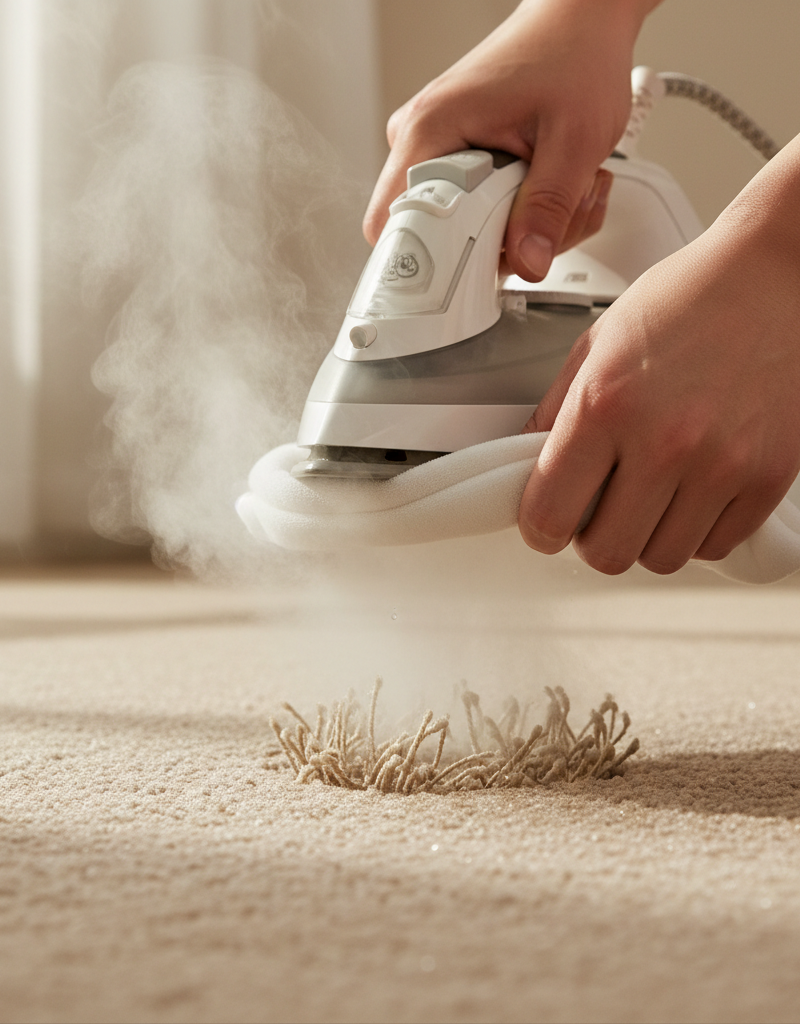
Consumer-grade vacuums, even when used perfectly, can't compete with the power of commercial equipment. If your carpet is heavily matted in traffic lanes (a common issue in hallways and living rooms), the fibers have been crushed and dirt has been ground in over months or years. A professional cleaner using hot water extraction (often called steam cleaning) can often restore this pile. Their machines use high-pressure jets of hot water and specialized cleaning solutions to break down oily residues and caked-on soil that a dry vacuum can't touch. Their incredibly powerful vacuum systems then extract the water and a shocking amount of deep-set dirt.
Call a professional if:
- Adjusting your vacuum technique yields no improvement.
- You have significant staining or discoloration.
- The carpet has a persistent odor.
- Traffic areas are severely matted and flat.
Think of it this way: your vacuum is for weekly maintenance, but professional cleaning is for periodic restoration. A pro service can remove the deeply embedded soil that your home vacuum—no matter how well-adjusted—was never designed to handle. '''
What should this project cost?
Enter your project details for a realistic cost range before you call anyone.
Cost depends heavily on which system turns out to be the source.
- Regional adjustment
- National average
- Labor share (typical)
- ~$1,620
- Quotes to collect
- 3 written estimates
Educational estimate based on national averages — not a binding quote. Always confirm with written local estimates.
Get the print-ready PDF of this guide
A clean, ad-free, printable version you can keep on your phone or pin to the workshop wall. Free with a FixlyGuide account.
- Print-optimized layout
- Tools, materials & every step included
- Saved to your account
Frequently asked questions
Is a higher or lower vacuum setting better for carpet?+
Neither. The best setting is the 'just right' spot. Start at the highest setting and lower it one notch at a time until you hear the brush bristles lightly 'ticking' the top of the carpet fibers. Too low chokes airflow and damages carpet; too high doesn't agitate the fibers enough to dislodge dirt.
How do I know if my vacuum cleaner is damaging my carpet?+
There are two clear signs. First, if you see an unusual amount of 'fuzz' in your vacuum canister that matches your carpet color, the brush is too low and aggressively shearing the fibers. Second, if the vacuum is very difficult to push forward, it's a sign the suction is sealed and the machine is grinding into the pile instead of gliding over it.
Can you over-vacuum a carpet?+
You can't over-vacuum in terms of frequency, but you can absolutely cause damage by vacuuming with the wrong technique. Using a setting that's too low, a stiff-bristled beater bar on a delicate loop carpet, or just letting the beater bar get tangled with hair can all cause excessive wear. Correct settings and maintenance are key.
Should the beater bar be on for all carpets?+
No. For thick, high-pile shag carpets or any continuous-loop carpet (like most Berber styles), the spinning beater bar can be damaging. It can snag and pull the loops, creating permanent runs. For these carpet types, it's best to use a vacuum that allows you to turn off the brush roll and clean with suction only.

Discussion
Loading comments…