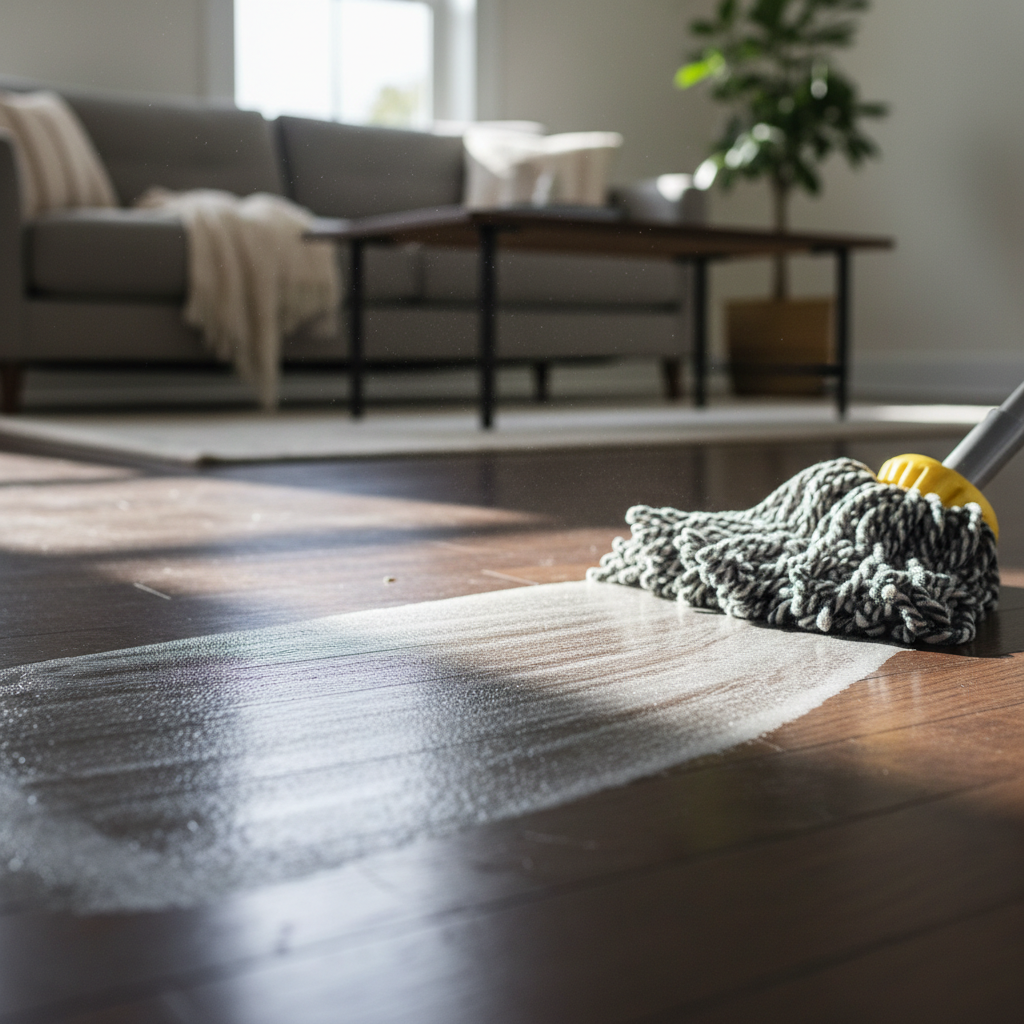
- Never Use a Soaking Wet Mop: Excess water is hardwood's worst enemy. It can seep into the wood, cause swelling and staining, and damage the subfloor over time. Your mop should always be wrung out until it is only damp.
- Avoid All Abrasives: Never use steel wool, scouring pads, or abrasive powders (like Comet). These will permanently scratch and dull your floor’s finish, requiring professional repair.
- Don't Use Furniture Polish: Never spray or use furniture polish (like Pledge) on your floors. They contain silicones that make floors dangerously slippery and create a stubborn, hazy buildup that is extremely difficult to remove.
- Don't Mix Cleaning Products: Never mix different cleaning chemicals, especially ammonia and bleach, which can create toxic chloramine gas. Stick to one dedicated cleaning system.
- Skipping the Rinse After a Deep Clean: When performing the stripping process described above, rinsing with clean water is non-negotiable. It's the only way to physically remove the dissolved residue from the floor.
Published June 11, 2026Last updated August 17, 2026
Tools & materials you'll need
Affiliate links- AmazonMicrofiber Mop1 · Essential for its cleaning ability and low water retention. Have at least two mop heads.
- AmazonBuckets2 · Two are needed: one for the solution, one for clean rinse water.
- AmazonMicrofiber TowelsSeveral · For immediate drying of sections.
- AmazonVacuum Cleaner1 · Must have a hardwood floor setting or attachment (no beater bar).
- AmazonSoft-Bristled Brush1 · Optional, for agitating stubborn buildup. Must be soft.
As an Amazon Associate FixlyGuide earns from qualifying purchases — at no extra cost to you. Prices and availability are accurate as of publication and subject to change.
Quick Answer
The hazy, milky, or cloudy film on your hardwood floors after mopping is almost always a buildup of cleaning residue. This happens when you use products not meant for modern floor finishes (like dish soap, oil soap, or all-purpose cleaners), use too much concentrate, or spread dirt around with a dirty mop. The solution is to strip this residue off with a specific cleaning process, then adopt a maintenance routine that prevents it from returning.
The Problem
You spent an hour meticulously cleaning. You vacuumed every speck of dust, you got out the mop and bucket, and you carefully washed the entire hardwood floor. But when the light hits it just right, the depressing truth reveals itself: the floor is covered in a hazy, cloudy film. It looks dirtier than when you started. You might see streaks, mop marks, and even faint footprints ghosting across the surface. This frustrating phenomenon is one of the most common complaints for homeowners with hardwood, turning a satisfying chore into a perplexing puzzle. The floor feels clean to the touch, but its luster and clarity are gone, replaced by a dull, milky sheen that undermines the beauty of the wood.
How It Works
To understand why your floors are cloudy, you first need to understand what you're actually cleaning. Over 95% of modern hardwood floors (and all engineered hardwood) are sealed with a durable surface finish, typically multiple layers of polyurethane or a similar urethane-acrylic blend. This is a critical point: you are not cleaning the wood itself, but this protective topcoat.
This finish is like a thin, non-porous sheet of plastic bonded to the wood. Its job is to repel water and resist scratches. The problem arises when we use cleaners that aren't compatible with this specific surface. Cleaners containing soaps, oils, waxes, or silicones (like many popular "all-purpose" floor cleaners, dish soaps, or products advertised to "rejuvenate" or "shine") are the primary culprits.
These products are not formulated to rinse cleanly from a non-porous urethane surface. Instead of lifting dirt and evaporating, they leave behind an incredibly thin, sticky film. The first time you use it, you might not notice. But each subsequent mopping adds another microscopic layer to the last. Over weeks and months, this buildup accumulates, becoming thick enough to refract light, which our eyes perceive as a cloudy, hazy mess. You're no longer cleaning the floor; you're just smearing around the sticky, dirt-attracting residue you previously applied.
Step-by-Step Fix: Removing the Cloudy Residue
This process is designed to chemically strip the built-up cleaning residue without harming your floor's polyurethane finish. Always work in a well-ventilated area.
-
Thoroughly Dry Clean the Floor — First, remove all loose debris. Use a vacuum with a hardwood floor attachment (turn off the beater bar/brush roll to prevent scratching). Pay extra attention along baseboards and in corners. This step prevents you from turning dry grit into an abrasive slurry during the wet-cleaning phase.
-
Prepare a Mild Acidic Solution — Start with the mildest effective stripping agent. Mix 1 cup of plain white vinegar into 1 gallon of warm (not hot) water in a bucket. Vinegar's mild acidity is excellent at breaking down the alkaline films left by many soap-based cleaners. Do NOT use apple cider vinegar or other colored vinegars.
-
Test in an Inconspicuous Area — Before mopping your entire floor, test your solution. Choose a hidden spot, like inside a closet or under a large piece of furniture you rarely move. Apply a small amount of the solution with a cloth, gently scrub, and wipe it dry. Check for any discoloration or softening of the finish. Assuming the finish is intact, this should be perfectly safe, but this test is non-negotiable.
-
Damp-Mop a Small Section — Work in manageable 4x4 foot sections. Submerge a clean microfiber mop head in the vinegar solution and wring it out until it is just damp. It should not be dripping at all. You want to use just enough liquid to loosen the residue, not flood the floor.
-
Let it Dwell (Briefly) — Mop the section and allow the solution to sit on the surface for 30-60 seconds. This gives the vinegar time to work on breaking down the residue film. Do not let it begin to dry on its own.
-
Agitate if Necessary — For stubborn buildup, you may need gentle agitation. A long-handled, soft-bristled brush is ideal for this. Apply light pressure and scrub the area you just mopped. Never use stiff bristles or abrasive pads, which will scratch the polyurethane finish.
-
Execute the Critical Rinse Step — Fill a second bucket with clean, plain water. Using a separate, completely clean microfiber mop head, go over the section you just cleaned. This step is crucial for lifting the dissolved residue off the floor. Wring this rinse mop out well before use. If you skip this, you're just leaving dissolved residue behind to dry again.
-
Immediately Dry the Section — Using a clean, dry microfiber towel (by hand or attached to your mop pole), immediately buff the rinsed section completely dry. This prevents water spots and protects the wood seams from moisture penetration.
-
Assess and Repeat — Move on to the next 4-foot section, slightly overlapping the one you just finished. Change your rinse water frequently, as soon as it starts to look cloudy. If it's dirty, you're just putting residue back onto the floor.
-
Escalate if Unsuccessful — If the vinegar solution doesn't cut through the haze, the buildup is likely more severe, possibly from acrylic wax-based "shine" products. Purchase a commercial hardwood floor "residue remover" or "deep cleaner" specifically formulated for polyurethane finishes. Follow the manufacturer's dilution and application instructions precisely, but use the same section-by-section, rinse, and dry methodology described above.
Common Causes
Understanding the root cause is key to preventing a relapse of cloudy floors.
- Incorrect Cleaner Type: This is the #1 cause. Using dish soap, oil soap (like Murphy), pine-based cleaners, bleach, ammonia, or all-purpose cleaners will almost certainly leave a film. They are not pH-neutral and contain ingredients that bond with the floor's finish.
- Using Too Much Cleaner: Even if you have the right pH-neutral hardwood floor cleaner, using more than the recommended amount can leave a residue. The instructions often call for just 1-2 ounces per gallon of water. More is not better.
- Acrylic "Restorer" or "Polish" Products: Products that promise to add shine or fill scratches often contain acrylic polymers. These are essentially a soft, temporary floor finish. Applying them over a dirty floor or without proper prep traps dirt and creates a cloudy, soft layer that is very difficult to remove.
- Reusing Dirty Mop Water: As you mop, the dirt and dissolved residue transfer into your bucket. If you keep dipping your mop back into this contaminated water, you are essentially applying a thin layer of grime across the entire floor.
- Natural Oil or Hardwax Oil Finishes: While less common, some floors have penetrating oil finishes, not surface polyurethane. Using water-based cleaners on these can cause a reaction with the oil, leading to cloudiness. These floors require special soaps and maintenance oils.
Common Mistakes to Avoid
To protect your floors and keep them clear, avoid these common but damaging practices.
- Never Use a Steam Mop: The combination of high heat and pressure can force moisture into the seams between boards, potentially causing the wood to swell, cup, or warp. It can also prematurely break down the polyurethane finish, leading to a permanently cloudy appearance.
- Never Use a Soaking Wet Mop: Excess water is hardwood's worst enemy. It can seep into the wood, cause swelling and staining, and damage the subfloor over time. Your mop should always be wrung out until it is only damp.
- Avoid All Abrasives: Never use steel wool, scouring pads, or abrasive powders (like Comet). These will permanently scratch and dull your floor’s finish, requiring professional repair.
- Don't Use Furniture Polish: Never spray or use furniture polish (like Pledge) on your floors. They contain silicones that make floors dangerously slippery and create a stubborn, hazy buildup that is extremely difficult to remove.
- Don't Mix Cleaning Products: Never mix different cleaning chemicals, especially ammonia and bleach, which can create toxic chloramine gas. Stick to one dedicated cleaning system.
- Skipping the Rinse After a Deep Clean: When performing the stripping process described above, rinsing with clean water is non-negotiable. It's the only way to physically remove the dissolved residue from the floor.
Cost & Time Breakdown
Here is a realistic breakdown of what to expect when tackling cloudy floor residue, from a simple DIY approach to professional intervention.
| Task | DIY Cost | Pro Cost | Time Estimate |
|---|---|---|---|
| Basic Cleaning Supplies (Microfiber Mops, Buckets) | $30 - $70 | Included in Service | N/A |
| DIY Residue Stripping (Vinegar or Floor Deep Cleaner) | $0 - $40 | N/A | 3-5 hours for 500 sq ft |
| Professional Deep Cleaning & Residue Removal | N/A | $0.75 - $1.50 / sq ft | 2-4 hours for 500 sq ft |
| Professional Screen & Recoat (for damaged finish) | N/A | $1.50 - $3.00 / sq ft | 1-2 Days (includes drying time) |
Tips & Prevention
Once your floors are clean and clear, keep them that way with a proper maintenance routine.
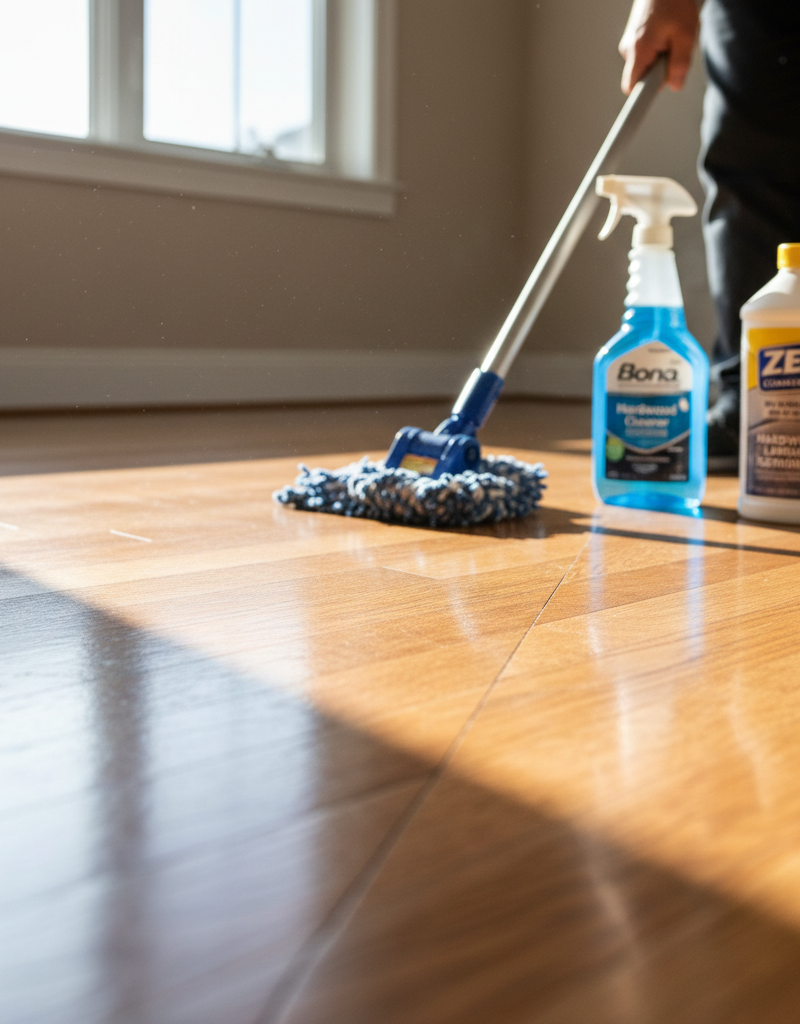
- Use the Right Cleaner: Purchase a pH-neutral cleaner specifically formulated for hardwood floors with a polyurethane finish. These are available at any home improvement store.
- Implement the Two-Bucket Method: For routine mopping, use two buckets. One for your cleaning solution and one with clean rinse water. Mop a section, then rinse the dirty mop head in the plain water bucket (wringing it out) before putting it back in the cleaning solution. This keeps your cleaner pure.
- Dust is the Enemy: The primary purpose of mopping is to remove what a vacuum or dust mop can't. Dry clean your floors regularly (2-3 times a week in high-traffic homes) with a microfiber dust mop or vacuum to reduce the frequency of wet cleaning.
- Damp-Mop Only When Necessary: For a 1,500 sq ft home, you should only need about a half-gallon of water total to clean the floors. Your mop should be damp, not wet. If the floor isn't dry within a minute of mopping over it, you're using too much water.
- Use Mats at Entrances: Place high-quality mats both outside and inside every exterior door to trap grit, moisture, and oils from shoes before they get tracked onto your floor.
When to Call a Professional
The method above will remove residue buildup. However, sometimes the cloudiness is a sign of a more serious problem with the finish itself. You should call a professional hardwood flooring specialist if:
- After thoroughly stripping the floor as described, the cloudiness persists. This likely means the polyurethane finish itself is abraded and scratched, not just dirty. The millions of tiny scratches diffuse light, creating a hazy look.
- The cloudiness is concentrated in high-traffic paths (e.g., a "lane" from the kitchen to the living room) and can't be removed.
- You see areas where the finish has worn away completely, and the bare wood is exposed.
In these cases, a simple cleaning won't work. You'll likely need what's called a "screen and recoat" (also known as a "buff and coat"). A professional will use a machine to lightly abrade the top layer of the existing finish and then apply a fresh coat of polyurethane. This restores the clarity and protection without the dust and expense of a full sand and refinish job. If the damage is down to bare wood, a full refinishing is your only option.
What should this project cost?
Enter your project details for a realistic cost range before you call anyone.
Cost depends heavily on which system turns out to be the source.
- Regional adjustment
- National average
- Labor share (typical)
- ~$1,620
- Quotes to collect
- 3 written estimates
Educational estimate based on national averages — not a binding quote. Always confirm with written local estimates.
Get the print-ready PDF of this guide
A clean, ad-free, printable version you can keep on your phone or pin to the workshop wall. Free with a FixlyGuide account.
- Print-optimized layout
- Tools, materials & every step included
- Saved to your account
Frequently asked questions
Can I use vinegar and water to clean my hardwood floors regularly?+
While a diluted vinegar solution is effective for a one-time deep clean to remove alkaline residue, it is not recommended for regular, weekly cleaning. Vinegar is an acid, and repeated use can potentially begin to dull or break down the polyurethane finish over a long period. For routine mopping, a pH-neutral cleaner specifically designed for hardwood is the safest choice.
How can I tell if my floor has an oil-based finish instead of polyurethane?+
To test your finish, find an inconspicuous spot and put a single drop of water on it. If the drop beads up and stays on the surface, you have a surface sealer like polyurethane. If the water slowly soaks in and darkens the wood, you likely have a penetrating oil or wax finish, which requires a different cleaning protocol.
Why can't I use a steam mop on my sealed hardwood floors?+
Steam mops force hot, high-pressure vapor between the boards and into any microscopic cracks in the finish. This moisture can cause the wood to swell, cup, and lead to permanent damage. The high heat can also compromise the integrity of the polyurethane finish, causing it to become cloudy or peel over time.
How often should I deep clean my hardwood floors to remove residue?+
If you are using the correct cleaning products (a pH-neutral hardwood floor cleaner) and techniques (damp mopping, regular dusting), you should almost never have to perform a deep stripping clean. This process is a corrective measure, not routine maintenance. You should mop with a proper cleaner as needed (from weekly to monthly, depending on traffic) to prevent any buildup from ever starting.

Discussion
Loading comments…