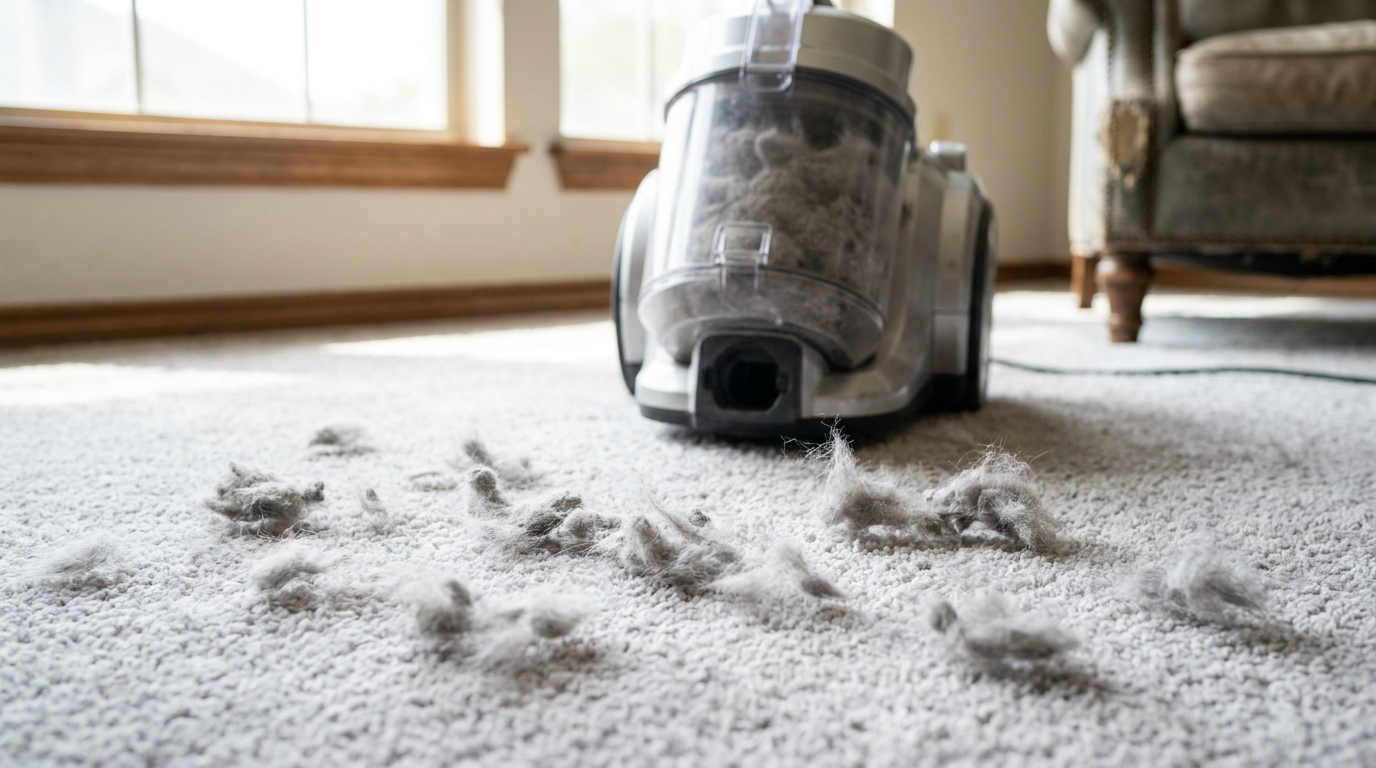
- Adjust Your Vacuuming Routine.
- Frequency: Vacuum your new carpet 2-3 times per week for the first few months. You’re trying to remove the loose fibers as they come up, not mash them back down into the pile.
- Technique: Slow down. Use deliberate passes—one forward, one back—over each section. That gives the suction a real shot at lifting the fibers.
Published October 9, 2026Last updated October 9, 2026
Tools & materials you'll need
Affiliate links- AmazonWalk-off doormats2 · To reduce abrasive dirt that can cause long-term fiber breakdown.
As an Amazon Associate FixlyGuide earns from qualifying purchases — at no extra cost to you. Prices and availability are accurate as of publication and subject to change.
The Problem
You just spent real money on brand-new carpeting. Installation day, it looked sharp. Clean lines. Soft pile. Then a few days later, your floors are wearing a coat of fuzz like the thing’s shedding on purpose. You vacuum, and the canister fills up with fibers that look exactly like your new rug. So now you’re standing there wondering if you bought junk.
It can make you nervous fast. I get it. You start second-guessing every step across the room, like you’re somehow making it worse. Is this normal? Or did you end up with a bad carpet?
How It Works
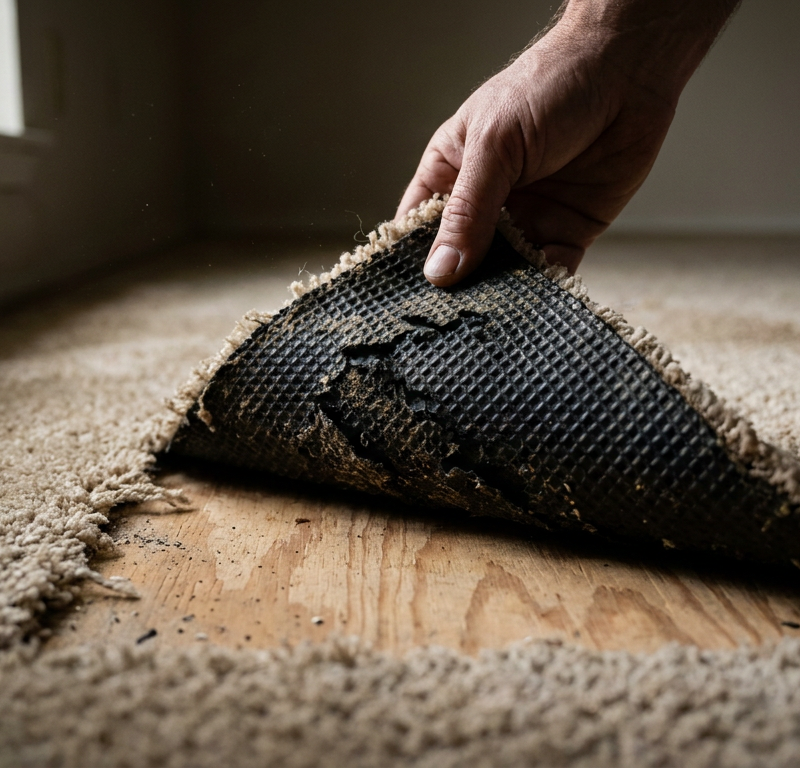
To figure out why carpet sheds, you’ve got to know a little about how it’s built. Most residential carpet is "tufted" carpet. Picture a giant sewing machine with a whole row of needles. It punches loops of yarn (the "tufts") through a primary backing material. Then the back gets coated with a heavy layer of latex adhesive, and a secondary backing is pressed into it so the whole thing stays put.
During manufacturing, those yarn bundles are often sheared down to make the pile look even, especially on cut-pile styles like plush or saxony. That shearing leaves behind a bunch of tiny loose fibers trapped in the carpet. That’s not a defect by itself. It’s just part of the process. Once that carpet’s in your house and people start walking on it, the foot traffic plus the vibration from a vacuum starts shaking those stray fibers loose. They work their way up to the surface and show up as fuzz or shedding. Folks also call that "sprouting" or "fluffing." For most carpets, it runs a few weeks to a few months, then tapers off as the loose stuff gets cleared out.
Common Causes
Most of the time, shedding is just a temporary phase with a new carpet. Still, a few things control how much fuzz you’ll see and how long it hangs around.
-
Carpet Style (Cut Pile vs. Loop Pile): The build of the carpet matters more than anything else. Cut-pile carpets are the ones that usually shed. Plush, Saxony, and Frieze all have yarn cut at the top, so you’re left with exposed fiber ends. The factory process leaves behind a bunch of those sheared bits. Loop-pile carpets, like Berber, are different. The yarn loops back into the backing, so the fibers aren’t cut at the surface. That means almost no initial shedding.
-
Fiber Material (Wool vs. Synthetics): Yarn type makes a big difference. Wool is a natural staple fiber, which means it’s made from shorter strands twisted together into yarn. Because of that, wool carpets are known for shedding. A lot. That’s just how they are, and you can expect a wool carpet to shed noticeably for up to a year. Synthetic fibers like nylon, polyester, and olefin are made as one long continuous filament. That setup, called "bulk continuous filament" or BCF, makes them a lot less likely to shed. If a synthetic carpet is shedding, it’s usually leftover fuzz from factory shearing, and it ought to calm down within a few months.
-
Manufacturing Quality: Sometimes heavy shedding points to a real problem. If the latex adhesive on the backing didn’t cure right or got applied unevenly, the carpet can end up with weak "tuft bind." That means the yarn isn’t locked into the backing the way it should be. Instead of just dropping loose fuzz, the carpet is losing actual structural fibers. That’s a manufacturing defect, plain and simple. You can check it by trying to pull a single tuft with your fingers. If it comes out easy with a gentle tug, you may have trouble.
-
Improper Vacuuming: The wrong vacuum, or the wrong setting, can make shedding worse. I’ve seen vacuums with aggressive beater bars—especially ones with stiff, worn bristles—grab the carpet and yank fibers loose. For new plush carpet, I usually tell people to use suction only, no beater bar, for the first month or so. If your vacuum has an adjustable height, set it as high as it’ll go while still giving you suction. That way it can pick up the loose fuzz without beating the pile to death.
-
Installation Issues: This one’s less common, but rough installation can damage fibers along seams or transition strips. If the shedding is only happening in a couple spots—say, along a fresh seam in a big room—take a close look. Bad seaming can fray the edges, and that can look a lot like normal shedding. I pulled a carpet seam apart in Frisco last month that had exactly this problem: looked like fuzz at first, turned out the edge was chewing itself up.
Step-by-Step Fix
If you’re staring at a snowstorm of carpet fuzz, don’t panic. Work through this stuff in order and you’ll usually figure out whether it’s normal or something you need to push on.
-
Identify Your Carpet Type.
- Is it cut-pile, like plush or frieze, or is it loop-pile, like Berber? If it’s loop pile and it’s shedding, that’s not normal. Is it wool or a synthetic like nylon or polyester? If it’s wool, settle in—you’re going to be vacuuming up fuzz for a while, and that’s just the nature of the beast.
-
Adjust Your Vacuuming Routine.
- Frequency: Vacuum your new carpet 2-3 times per week for the first few months. You’re trying to remove the loose fibers as they come up, not mash them back down into the pile.
- Technique: Slow down. Use deliberate passes—one forward, one back—over each section. That gives the suction a real shot at lifting the fibers.
-
Check Your Vacuum Settings.
- Turn Off the Beater Bar: If your vacuum lets you, shut off the brush roller for the first month. Go suction only. On a lot of machines, that’s the "hard floor" setting.
- Adjust the Height: If the beater bar won’t turn off, raise the vacuum all the way up. The brush ought to barely kiss the tips of the fibers, not dig into the pile. Set it too low and you’ll tear out new fibers.
- Empty the Canister/Bag: A full vacuum loses suction, and fast. Empty the canister or swap the bag when it’s about two-thirds full. New carpet can fill it up quicker than you’d think.
-
Perform the "Tuft Pull" Test.
- Pick an out-of-the-way spot, like inside a closet, and grab one carpet tuft between your thumb and forefinger. Give it a steady pull. It should stay put. If it slides out with barely any resistance, you may have weak tuft bind, which points to a defect.
-
Wait and Document.
- For most synthetic carpets, shedding should drop off hard after 2-3 months and be pretty minor by 6 months. Wool can take 6-12 months.
- Keep a simple log. Write down the date and about how much fuzz you collect each week. If you end up filing a warranty claim, that little record can help you a lot.
-
Review Your Warranty.
- Pull out the paperwork from the carpet purchase. Read the manufacturer’s warranty, especially anything about "texture retention," "wear," and "manufacturing defects." Know how to file, and know the deadline for reporting a problem.
-
Contact Your Retailer.
- If shedding keeps going hard past the 6-month mark for synthetics, or it’s clearly excessive and the tufts pull out too easy, call the company that sold and installed the carpet. Hand them your documentation. That’s your starting point for a warranty claim.
Common Mistakes
- Scrubbing at the Fuzz: Don’t try to attack the fuzz with a stiff brush or by scrubbing it down. That just frays the fibers and makes the whole mess worse. Let the vacuum do its job.
- Using a Carpet Rake Aggressively: A carpet rake can help bring life back to a matted pile, sure. But on a new carpet that’s already shedding, a heavy hand can snag and pull fibers that would’ve stayed put. Stick with the vacuum.
- Ignoring the Problem: A lot of folks figure it’ll stop on its own and just live with it. Maybe it will. Maybe it won’t. If it’s a defect, though, you can miss your window to file a warranty claim. Keep an eye on the timeline.
- Blaming the Installers Immediately: Installation can cause some issues, no question. But 99% of shedding is tied to how the carpet was made. Don’t jump straight to blaming the crew unless you’ve got clear proof, like a fraying seam.
- Getting a Professional Cleaning Too Soon: Don’t hire a pro to steam clean a brand-new carpet just to try to stop the shedding. Most manufacturers want you waiting 12-18 months before the first professional cleaning. Hot water extraction won’t stop shedding, and if you do it too early, you could void the warranty.
Cost & Time Breakdown
Managing carpet shedding is mostly about time and technique, not cash. The money only shows up if you find a defect.
| Task | DIY Cost | Pro Cost (if defective) | Time Investment |
|---|---|---|---|
| Initial Shedding Management | $0 | N/A | 20-30 minutes, 2-3 times/week |
| New Vacuum (if needed) | $150 - $400+ | N/A | 1 hour for research/purchase |
| Contacting Retailer/Warranty | $0 | $0 | 1-2 hours for calls and emails |
| Independent Inspection | N/A | $250 - $500 | 2-3 hours (for meeting inspector) |
| Carpet Replacement (defect) | $0 (under warranty) | Covered by manufacturer | 1-2 days for removal/installation |
Tips & Prevention
- Buy BCF Carpet: When you’re shopping, look for synthetic carpet labeled "BCF" (Bulk Continuous Filament). It sheds a whole lot less than staple fiber carpet.
- Know What You’re Buying: If you go with wool, understand that shedding comes with the territory. A decent salesperson ought to tell you that up front. That’s a natural trait, not a flaw.
- Read the Warranty Before You Buy: Check what the warranty says about wear and texture retention. A stronger warranty usually tells you something about the product.
- Use Walk-Off Mats: Put good mats at every entrance. That catches grit and dirt before it gets ground into the fibers and starts breaking them down over time.
- Check Your HVAC Filter: All that new carpet fuzz ends up floating around. Plan on changing your furnace or air conditioner filter more often for the first few months. Check it after 30 days; you might be surprised.
When to Call a Professional
Normal new-carpet fuzz is usually a DIY problem, handled with a vacuum and some patience. You don’t need a carpet cleaner or repair tech for everyday shedding. What you do need, if the signs point that way, is the carpet retailer where you bought it.
Call your retailer if you run into any of these red flags:
- You can pull out whole tufts of yarn with your fingers pretty easily.
- The shedding on a synthetic carpet is still heavy and hasn’t really slowed after six months.
- You’re seeing bald spots, or the pile looks a lot thinner in high-traffic areas within the first year.
- You spot "sprouting" where one tuft is way longer than the rest. Don’t yank it—just snip it level with scissors. But if you’re seeing a bunch of them, that could point to a defect.
Your retailer is the one who’ll get the warranty claim moving with the manufacturer if it comes to that. They may send out an inspector to check things over. Don’t hire an independent carpet inspector before you’ve gone through the retailer first.
Related Articles
Keep troubleshooting with these hand-picked guides from FixlyGuide:
- Why Does My Carpet Smell Like Corn Chips? The 4 Main Causes—and What to Do — If your carpet has a persistent corn chip or Fritos-like smell, it's usually caused by the chemical breakdown of the latex backing, not dir…
- The Deep Carpet Divots: Your Secret Weapon Against Furniture Marks — Tired of stubborn furniture indentations marring your carpet? Discover why they form and a surprisingly effective, simple method to restore…
- The Mystery of That Dark Water Stain on Your Ceiling — Discover the real reasons behind that ominous dark water stain on your ceiling and how to tackle it, from identifying the source to making…
- The Mystery of the Returning Carpet Stain: What Your Cleaner Misses — Ever cleaned a carpet stain only for it to mysteriously reappear days later? You're not alone. This guide reveals the real reason why and h…
- Dishwasher Not Draining? 6 Reasons for Standing Water (and How to Fix It) — Seeing a puddle of dirty water in your dishwasher after a cycle is a common, fixable problem—here's how to diagnose and clear the clog, fro…
- The One Weed Killer Mistake That Makes Your Weeds Grow Back Stronger — You've sprayed and pulled, but those persistent weeds keep popping up. The real problem isn't the weed itself; it's a common mistake in how…
What should this project cost?
Enter your project details for a realistic cost range before you call anyone.
Cost depends heavily on which system turns out to be the source.
- Regional adjustment
- National average
- Labor share (typical)
- ~$1,620
- Quotes to collect
- 3 written estimates
Educational estimate based on national averages — not a binding quote. Always confirm with written local estimates.
Get the print-ready PDF of this guide
A clean, ad-free, printable version you can keep on your phone or pin to the workshop wall. Free with a FixlyGuide account.
- Print-optimized layout
- Tools, materials & every step included
- Saved to your account
Frequently asked questions
How long is it normal for a new carpet to shed?+
For most synthetic carpets (nylon, polyester), shedding is most noticeable for 2-3 months and should be gone by the 6-month mark. For natural wool carpets, shedding is more significant and can easily last for 6 to 12 months before tapering off.
Does vacuuming make new carpet shed more?+
No, regular vacuuming is the best way to remove the loose fibers. However, using a vacuum with a very aggressive or low-set beater bar can physically damage the yarn and pull out fibers, so be sure to use the right settings.
Is there a way to stop a new carpet from shedding completely?+
Unfortunately, no. The initial shedding of loose fibers from the manufacturing process is unavoidable for most cut-pile carpets. The only 'fix' is to patiently and regularly vacuum them up until they are all gone.
Should I be worried if my Berber carpet is shedding?+
Yes. A true loop-pile carpet like Berber should not shed at all, as the fibers aren't cut at the surface. If you're seeing more than just a few stray fuzz balls, it could indicate a snag or a manufacturing flaw and you should contact your retailer.
Can I just use a carpet rake to get all the fuzz out at once?+
It's not recommended on a new carpet. While a rake can fluff up a pile, aggressive raking can snag and pull out fibers, potentially causing damage. Gentle, regular vacuuming is a much safer approach for removing fuzz.
Does the amount of shedding indicate carpet quality?+
Not necessarily, especially at first. A high-quality, dense wool carpet will shed tremendously, while a lower-grade BCF polyester carpet may shed very little. Excessive shedding that continues for many months on a synthetic carpet, however, can be a sign of a low-quality product or a defect.
Why is my vacuum canister filling up so fast with new carpet?+
The sheer volume of loose fibers created during the shearing phase of manufacturing is massive. A new carpet can easily shed enough fuzz to fill a vacuum canister in a single session for the first few weeks. This is normal and a sign your vacuum is doing its job.
Will professional cleaning stop my carpet from shedding?+
No, and you shouldn't do it. Professional hot water extraction is meant to remove embedded soil, not loose factory fibers. Cleaning a new carpet too soon (before 12-18 months) can void the warranty and won't solve the shedding issue.
Discussion
Loading comments…