- Dog Urine Stains on Hardwood? 10 Steps to Remove the Dark Spots and Odor — Erase stubborn black dog urine stains and kill lingering ammonia smells on hardwood floors using an enzyme-and-peroxide protocol that actua…
- Sticky Kitchen Cabinets? 5 Causes and the Step-by-Step Deep Clean Fix — Sticky, dust-grabbing kitchen cabinets are caused by polymerized cooking grease and soap residue. Here is how to dissolve the grime safely…
- The Rusty Ring In Your Toilet? It's Not Just Ugly, It's a Symptom. — Stubborn rust rings in your toilet bowl are an eyesore and a sign of hard water or corroded pipes, but you can remove them with the right a…
- That Gray, Greasy Stain on Your Pillowcase? Here's What It Is—and How to Get Rid of It — Tired of those stubborn, greasy gray stains on your pillowcases? We'll show you what causes them and a simple, effective method to make the…
- Carpet Buckling or Rippling? 4 Causes and How to Stretch It Back Flat — Is your carpet developing unsightly waves or ripples? Learn the four main reasons it happens—from humidity to installation issues—and how t…
Published November 5, 2026Last updated November 5, 2026
Tools & materials you'll need
Affiliate links- AmazonStiff-bristle carpet detail brush1 · 3-inch or stair edge detail brush
- AmazonShop vacuum or canister vacuum1 · Must have narrow crevice wand
- AmazonCarpet extractor or rental spot cleaner1 · With handheld stair or crevice tool
- AmazonHeavy-duty caulking gun1
- AmazonStiff putty knife1 · 3-inch to 4-inch wide for tucking carpet
- AmazonFiltration soil pre-spray cleaner1 quart · Alkaline surfactant formulated for draft lines
- AmazonAcidic carpet neutralizer rinse1 quart · pH 3.0 to 4.5 liquid rinse
- AmazonPaintable acrylic latex caulk2 tubes · For sealing drywall-to-subfloor gap
- AmazonPainter's tape1 roll · 1.5-inch delicate surface tape
As an Amazon Associate FixlyGuide earns from qualifying purchases — at no extra cost to you. Prices and availability are accurate as of publication and subject to change.
Quick Answer
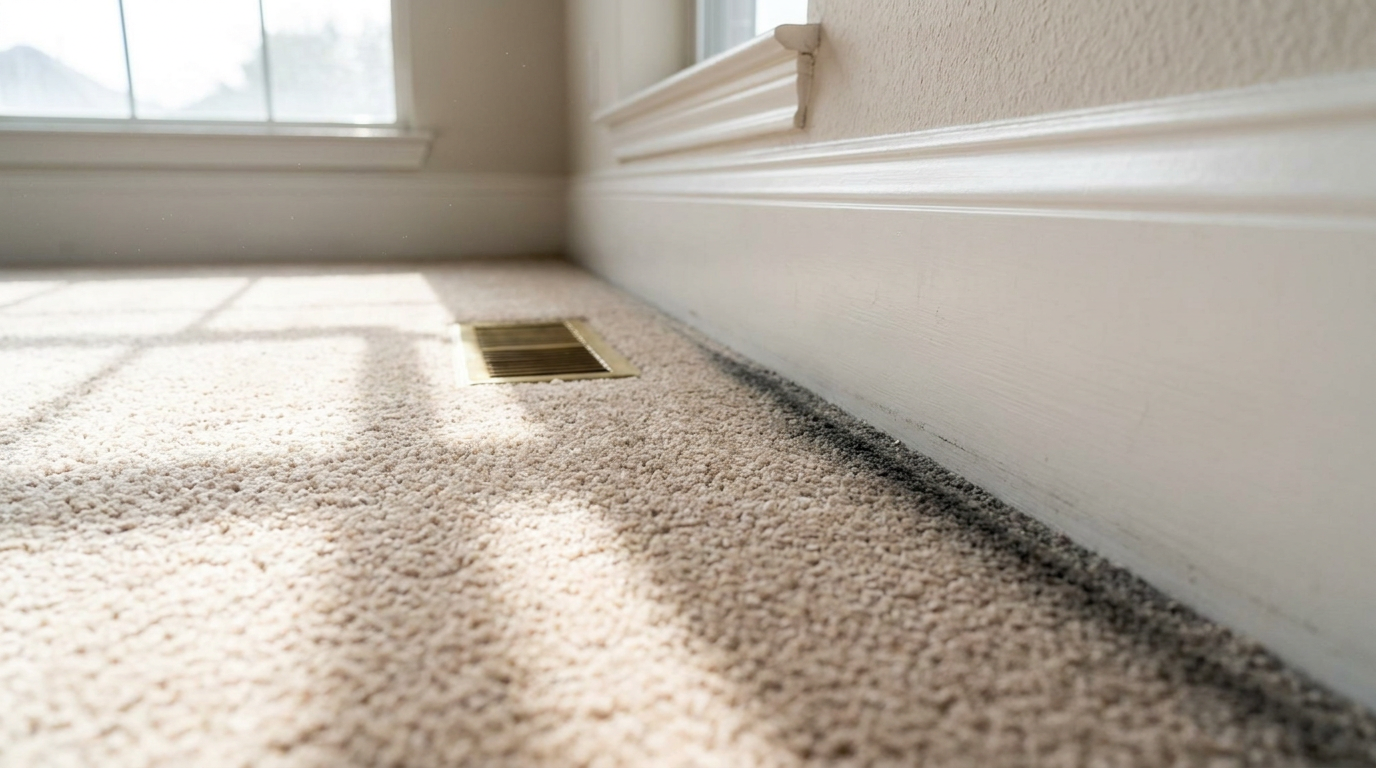
Black edges along carpet baseboards—what we call filtration soiling or draft lines in the flooring trade—show up when air sneaks under the baseboards, through gaps in the subfloor, or out of wall cavities, and the carpet winds up acting like a microscopic furnace filter. The soot, fine dust, and carbon particles stick to nylon or polyester yarn because they’ve got an electrical charge and they’re tiny enough to bury themselves in the pile. To get rid of it, you’ve gotta hit it with an alkaline-surfactant draft-line cleaning solution, scrub it with a 3-inch stiff hand brush, give it a 10-minute dwell, then rinse-extract with hot water mixed with an acidic neutralizing rinse. After that, seal the bottom plate gap behind the carpet tack strip with acrylic latex caulk so the air quit running through there.
The Problem
Walk the perimeter of a carpeted room, especially along exterior walls, closed-off bedrooms, or HVAC return registers, and you’ll usually spot a nasty dark gray or soot-black band hugging the baseboards.
Vacuuming won’t touch it. A regular spot cleaner usually just smears it around and turns it into a muddy mess.
This isn’t normal foot traffic soil. It’s filtration soiling—folks also call it "draft marking" or "carpet edge soiling." When the heat or AC kicks on, pressure differences in the house pull air through tiny gaps between the baseboard trim, drywall, and subfloor. The carpet fibers act like a big ol’ air filter. Over time, that fine carbon debris, cooking oils, furnace soot, and microscopic dust get jammed into the pile. And once those particles get into the carpet, they don’t just sit there nice and pretty. They’re less than 2.5 microns across, they carry a charge, and they bond right to synthetic fibers. No dice with just brute-force vacuuming.
How It Works
Your house breathes whether you like it or not. When the HVAC blower pushes 1,200 cubic feet of air per minute (CFM) through the ducts, little pressure swings happen in every room. Air goes where the pressure’s lower. It slips under baseboards, cuts through drywall gaps behind the trim, and sneaks past the space between the plywood subfloor and the exterior sill plates.
Carpet is made up of thousands of packed synthetic yarns—usually nylon, polyester, or triexta. When pressurized air forces its way through that narrow 1/4-inch space between the tack strip and the drywall, the carpet pile works like an ultra-fine filter. Synthetic fibers build up friction and static electricity.
Carbon-based junk—vehicle exhaust drifting in, paraffin from candles, gas stove byproducts, and plain old skin flakes—is microscopic. A lot of it sits between 0.1 and 1.0 microns. Those particles don’t just float on top; they work down into the micro-crevices of the fiber core. That’s why a standard upright with a spinning brush won’t really solve it. You need a high-pH surfactant to loosen the carbon, physical agitation to work the edge, and hot water extraction with an acid rinse to pull it out and balance the pH. I pulled a water heater in Frisco last month where the living room carpet had exactly this kind of black line, and the homeowner thought it was just bad vacuuming. It wasn’t. Air was sneaking through the wall like it owned the place.
Step-by-Step Fix
Getting filtration soil out takes patience. Rush it, and you’ll leave residue behind that’ll attract dirt like crazy.
-
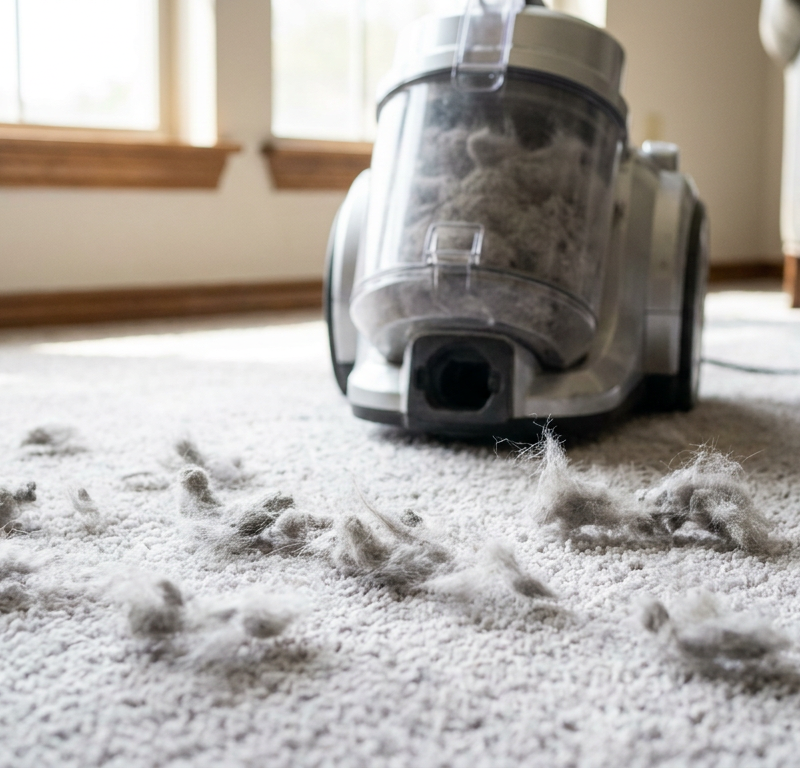
Dry-vacuum the perimeter with a crevice tool — Hook up a narrow, stiff crevice attachment to a high-suction shop vac or canister vacuum. Run it right along the seam where the carpet meets the baseboard trim. Don’t use a rotating brush roller here; you want straight suction to pull loose lint, pet hair, and bigger debris away from the tack strip before you add liquid and make a paste.
- Tool: High-suction shop vac or sealed-HEPA canister with a rigid plastic crevice wand.
- Safety: Wear a basic N95 dust mask if allergies get you; once you disturb that edge, it’ll kick up whatever’s been sitting there.
-
Protect the baseboard paint and wood finish — Stick a strip of 1.5-inch delicate-surface painter's tape along the bottom edge of the wooden baseboards. Professional filtration cleaners usually run alkaline, somewhere between 9.5 and 11.5 pH, and that can dull semi-gloss latex trim paint or strip clear polyurethane off stained trim.
- If the paint’s already chalky or peeling, hold a wide plastic drywall taping knife against the wood while you apply the cleaner.
-
Mix the specialized filtration soil pre-spray — Regular carpet shampoo won’t cut through that fine carbon soot. In a clean pump sprayer, mix a filtration soiling pre-spray, or a blend of citrus-solvent degreaser and high-pH synthetic traffic-lane cleaner, following the label. Usually that’s 4 ounces of chemical per gallon of warm tap water (roughly 110°F to 120°F).
- Don’t dump vinegar or anything acidic into this first step; acid can lock carbon soot onto nylon fibers for good.
-
Apply the pre-spray with surgical accuracy — Set the brass nozzle on your pump sprayer to a tight, needle-sharp stream instead of a wide fan. Mist the solution straight onto the dark 1-to-2-inch perimeter band. Get the fibers wet, but don’t soak the backing or flood the tack strip underneath.
- Keep a clean cotton terry cloth nearby to catch any drips that jump onto the baseboard or hardwood transition.
-
Let the chemical dwell for 8 to 10 minutes — The chemistry needs time to break the bond holding the carbon to the yarn. Let it sit on the carpet edge for at least 8 minutes, but don’t let it dry out completely.
- If the room’s dry in winter and the solution starts flashing off in 5 minutes, give the edge a light mist to keep it working.
-
Agitate the pile with an edge brush — Use a 3-inch stiff-bristle edge detail brush, a stair-groove brush, or a dense nylon detail brush. Work the bristles down into the pile right where it folds behind the tack strip. Scrub back and forth parallel to the wall, then use small circles to loosen the matted fibers.
- You’ll see the foam go dingy gray-black—that’s the carbon soot breaking loose from the fiber shafts.
-
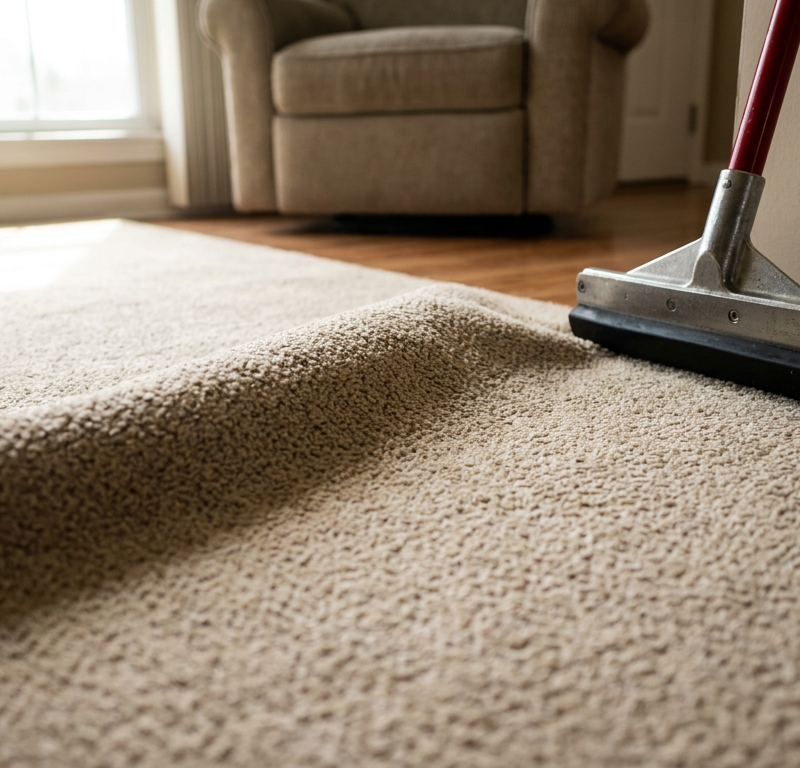
Flush-extract with an acidic rinse agent — Fill your carpet extractor or rental upholstery cleaner with clean water heated to 130°F–140°F and mix in an acidic neutralizer rinse (pH 3.0 to 4.5) at 1 to 2 ounces per gallon. Hold the stair/crevice tool tight over the treated line, trigger the hot solution, and pull back slow. Follow every wet pass with two dry vacuum passes so you pull the dirty emulsion out of the backing.
- If you don’t own an extractor, press thick microfiber towels or clean cotton terry bar-mops hard into the baseboard edge, then stand on them with your full weight to wick the soot out. Keep repeating with clean damp towels until nothing black transfers.
-
Evaluate and spot-treat stubborn patches — Filtration lines that’ve baked in for five or ten years may still leave a shadow after the first round. If you still see darkness, dab isopropyl alcohol (91%) or a non-volatile dry solvent spotter onto a clean white rag and blot the edge firmly to break up oily hydrocarbon binders.
- Never pour raw solvents straight down at the baseboard edge—solvents can melt the latex adhesives that hold carpet backing and seam tape together.
-
Speed-dry the baseboard edges — Set a high-velocity air mover or a regular oscillating fan on high and point it down the wall. Fast drying matters. If that damp carpet takes 12 to 24 hours to dry, leftover soot down in the backing can wick right back up to the tips by capillary action.
- Aim for full dryness within two to three hours.
-
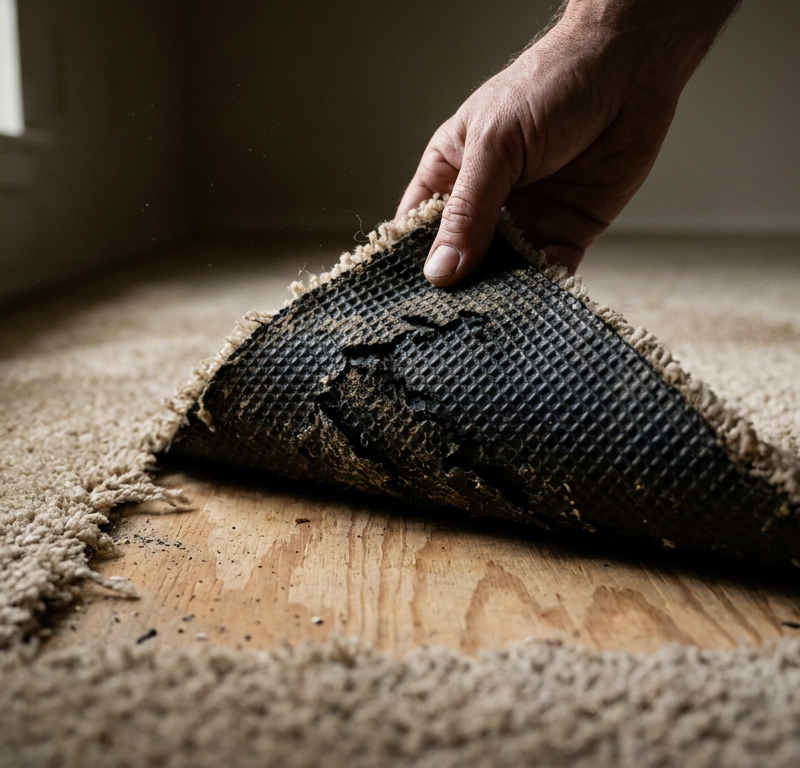
Seal the airflow gap behind the carpet — If you want those black lines to stay gone more than six months, stop the airflow. Carefully pull the carpet edge back from the perimeter tack strip with a small stiff putty knife. Use a caulk gun loaded with clear or white paintable acrylic latex caulk to run a continuous bead where the drywall meets the subfloor.
- Press the carpet edge back down onto the sharp tack-strip pins using a clean wooden block, then tuck it neatly back into the gap with a wide-blade putty knife.
Common Causes
Filtration soiling doesn’t come from bad housekeeping. It’s an air-movement problem, plain and simple, and there are five usual suspects:
- HVAC duct balance and interior door closure: When bedroom doors stay shut while the HVAC runs and there aren’t dedicated return air registers in every room, the supply vents pressurize the bedroom. That trapped air looks for a way out, so it gets forced through the subfloor gap and right through the carpet edge.
- Leaky exterior wall sole plates: In homes on slabs or over unconditioned crawlspaces, the wood framing plate (the 2x4 sill plate) often has little gaps against the subfloor. Outside air pulls in through the siding, moves through the wall cavity, and bleeds out under the baseboard.
- Frequent candle and incense burning: Paraffin wax candles are petroleum byproducts. Burn ’em enough and you’ll load the indoor air with microscopic soot. Those particles drift around until edge drafts pull them into the carpet fibers.
- Gas-fired appliances and furnace draft leaks: A poorly vented gas water heater, gas range, or older furnace can make combustion soot. That soot is extremely fine—often under 0.5 micron—so standard 1-inch MERV 4 furnace filters won’t catch it, and the carpet pile winds up collecting the mess.
- Missing or unsealed drywall gaps during construction: Drywallers often hang sheetrock 1/2 inch to 1 inch above the subfloor so floor spills don’t wick into the drywall. If nobody seals that void before the tack strips and baseboards go in, you’ve got a straight-up chimney running down from the wall.
Common Mistakes
- Treating the soot with high-sudsing laundry or dish detergents: Squirt dish soap on filtration soot and you’ll just make it worse. High-foaming detergents leave sticky residue that grabs new dust like a magnet, and that black edge comes right back inside of two weeks.
- Using heavy bleach or oxidizers on nylon fibers: Don’t grab bleach pens or strong chlorine solutions. Chlorine wrecks the acid dyes in synthetic nylon carpets and leaves permanent white, yellow, or pinkish blotches next to the dark line.
- Over-saturating the edge with liquid: Flood the perimeter with a pump sprayer and you’ll soak the particleboard or plywood subfloor and rot the tack strip. Tack strip wood is untreated fir, and the steel pins can rust and leave deep orange iron stains on the carpet edge.
- Scrubbing hard with an abrasive wire brush: Wire grill brushes or rough brass bristles will fuzz and “blossom” the carpet yarn tips. Once you fray synthetic carpet fiber with too much muscle, the surface can look permanently dirty even after the soil’s gone.
- Skipping the air-sealing step: Cleaning the line without caulking the gap under the baseboard is wasted time. If air’s still moving through that subfloor crack, you’ll be back on your knees cleaning the same gray line again within a single heating season.
Cost & Time Breakdown
| Task | DIY Cost | Pro Cost | Time |
|---|---|---|---|
| Deep cleaning 50 linear ft of edges | $35–$65 (chemicals & brush) | $150–$275 (carpet cleaning pro) | 2–3 hours |
| Tool rental (commercial extractor) | $35–$50 per day | Included in pro service | 1 hour (pickup/return) |
| Air-sealing gap (caulk & gun) | $12–$25 | $200–$400 (handyman service) | 2–4 hours |
| Whole-house MERV filter upgrade | $20–$45 | $50–$90 (HVAC service) | 15 minutes |
| Baseboard touch-up painting | $15–$30 | $150–$300 | 1–2 hours |
Tips & Prevention
- Swap your cheap furnace filters for pleated MERV 11 or 13 filters: Thin fiberglass "rock-catcher" furnace filters let microscopic carbon and dust sail right through. A tight pleated filter traps particles down to 0.3 microns before they reach the room edges.
- Trim candle wicks to 1/4 inch or switch to electric warmers: Keep open flames from making extra smoke by trimming wicks before you light them. Better yet, switch to flameless wax warmers or reed diffusers and keep soot out of the air.
- Keep interior bedroom doors open or undercut them: If your bedrooms don’t have dedicated cold-air return grilles, leave the bedroom doors open 2 to 3 inches when the blower runs. Or undercut the doors by 1 inch above the carpet pile so air heads toward the hallway returns instead of sneaking under the baseboards.
- Perform biannual crevice vacuuming: Every six months when daylight saving time changes, snap the narrow crevice wand onto your vacuum. Run it hard along the perimeter of every carpeted room and clear out dust before static pressure packs it in.
- Seal around HVAC floor and wall registers: Pop off the metal register covers on the floor. If you find an unsealed gap between the metal duct boot and the subfloor cut-out, shoot expanding foam or brush mastic along the seam. That keeps basement or subfloor air from dumping straight into the carpet edge.
When to Call a Professional
Some filtration soiling problems go past normal DIY cleanup. If you pull back the carpet edge and find mold on the tack strip or subfloor instead of dry carbon soot, put the sprayer down. Black mold needs moisture remediation, leak detection, and maybe containment that a household carpet extractor just can’t handle safely.
Call an IICRC-certified carpet cleaning professional (look for a firm holding the Carpet Cleaning Technician or Master Textile Cleaner certification) if your home has wool, silk, or high-end sisal carpeting. Natural fibers get damaged easily by alkaline cleaners, and aggressive brushing can permanently distort wool pile.
You should also bring in an HVAC technician if you notice big pressure differences between rooms—like doors slamming shut when the blower starts, or whistling at the baseboards. That usually means major ductwork disconnects in the attic or crawlspace that need to be sealed up so the house balances right.
       Airflow Path Causing Filtration Soiling

          [ Wall Cavity / Drywall ]
                     │  ▲
                     │  │ Leaky air pulls
                     │  │ through wall gap
                     │  │
 [Baseboard] ────────┘  │
     │                  │
     │   Dark Line      ▼
     │   ┌─────┐    [Carpet Pile Traps Carbon]
     └───┤ ••• ├───────────────────────
         └─────┘
       [Tack Strip]  [Subfloor / Slab]
            ▲
            └─── Air escapes through unsealed
                 gap between floor and drywall
Related Articles
Keep troubleshooting with these hand-picked guides from FixlyGuide:
- Dog Urine Stains on Hardwood? 10 Steps to Remove the Dark Spots and Odor — Erase stubborn black dog urine stains and kill lingering ammonia smells on hardwood floors using an enzyme-and-peroxide protocol that actua…
- Sticky Kitchen Cabinets? 5 Causes and the Step-by-Step Deep Clean Fix — Sticky, dust-grabbing kitchen cabinets are caused by polymerized cooking grease and soap residue. Here is how to dissolve the grime safely…
- The Rusty Ring In Your Toilet? It's Not Just Ugly, It's a Symptom. — Stubborn rust rings in your toilet bowl are an eyesore and a sign of hard water or corroded pipes, but you can remove them with the right a…
- That Gray, Greasy Stain on Your Pillowcase? Here's What It Is—and How to Get Rid of It — Tired of those stubborn, greasy gray stains on your pillowcases? We'll show you what causes them and a simple, effective method to make the…
- Carpet Buckling or Rippling? 4 Causes and How to Stretch It Back Flat — Is your carpet developing unsightly waves or ripples? Learn the four main reasons it happens—from humidity to installation issues—and how t…
- Deck Screws Pulling Out? 5 Causes and the Step-by-Step Fix — Stop tripping on loose deck screws. Here is why fasteners pop out of deck boards, how to test for joist rot, and the step-by-step fix to an…
Should you do this yourself?
Answer five quick questions before you start. Safety outranks savings every time.
Your experience with work like this
How high do you have to work?
Does the job involve any of these?
Will it need a permit?
Specialty tools
Free and instant. Educational guidance only — not a quote, inspection, or professional diagnosis.
Estimate your own project cost
National averages are a starting point. Enter your details for a range that fits your house.
Flooring cost estimator
- Material$498 – $1,095
- Installation labor$360 – $720
Tile installs and stairs increase labor cost. Get 2–3 quotes for jobs over 200 sq ft.
Educational estimate only — always confirm with written local bids.
What should this project cost?
Enter your project details for a realistic cost range before you call anyone.
Cost depends heavily on which system turns out to be the source.
- Regional adjustment
- National average
- Labor share (typical)
- ~$1,620
- Quotes to collect
- 3 written estimates
Educational estimate based on national averages — not a binding quote. Always confirm with written local estimates.
Get the print-ready PDF of this guide
A clean, ad-free, printable version you can keep on your phone or pin to the workshop wall. Free with a FixlyGuide account.
- Print-optimized layout
- Tools, materials & every step included
- Saved to your account
Frequently asked questions
Why won't my standard vacuum remove these dark edges?+
Filtration lines consist of sub-micron carbon particles, airborne oils, and fine soot bonded electrostatically to the carpet yarn. Normal vacuums cannot reach deep into the baseboard crevice or break the static bond holding those tiny particles to synthetic fibers.
Will regular carpet shampoo make filtration soiling worse?+
Yes. Ordinary laundry detergents or aggressive carpet spotters leave behind sticky, soapy chemical residues. Those residues act like glue, attracting new airborne dust and carbon rapidly, which usually makes the black lines reappear darker within a few weeks.
Does filtration soiling mean my carpet is permanently ruined?+
No, you do not have to replace the carpet. With an alkaline filtration soil pre-spray, manual agitation, and hot-water extraction combined with an acid rinse, roughly 85% to 95% of the dark staining can be completely removed from synthetic carpets.
Can burning scented candles cause these black carpet lines?+
Candles release unburned petroleum hydrocarbons and microscopic carbon soot directly into indoor air. These microscopic particles stay airborne until air drafts pull them against the carpet perimeter, drastically accelerating the formation of dark filtration lines.
How do I tell the difference between filtration soil and black mold?+
Filtration soiling is dry carbon dust, soot, and soil trapped by escaping air drafts. Mold appears in damp environments, produces a distinct musty odor, feels slimy or powdery, and turns tack strips dark with wood rot. If the carpet tack strip is dry and light-colored, it is almost certainly filtration soil.
Can I use baking soda and vinegar to clear baseboard lines?+
No, baking soda and vinegar should be avoided here. Baking soda creates a powdery residue that resists vacuum extraction along tack strips, while acidic vinegar applied directly to raw carbon soot can set the black particles permanently into synthetic fibers.
Why do I need to caulk behind the carpet edge after cleaning?+
Caulking the bottom edge where the drywall meets the subfloor cuts off the air drafts feeding the carpet filter. If you clean the fibers without sealing this underlying crack, the HVAC system will continue forcing soot particles through the carpet, and the dark lines will return.
Is the cleaning process the same for wool carpets?+
Not necessarily. Wool carpet fibers are sensitive to high-pH chemicals. While nylon handles an alkaline pH of 10 safely, wool should never be treated with chemicals above an 8.5 pH. Always check your fiber type; wool requires neutral wool-safe chemistry and gentle blotting rather than aggressive scrubbing.
Discussion
Loading comments…