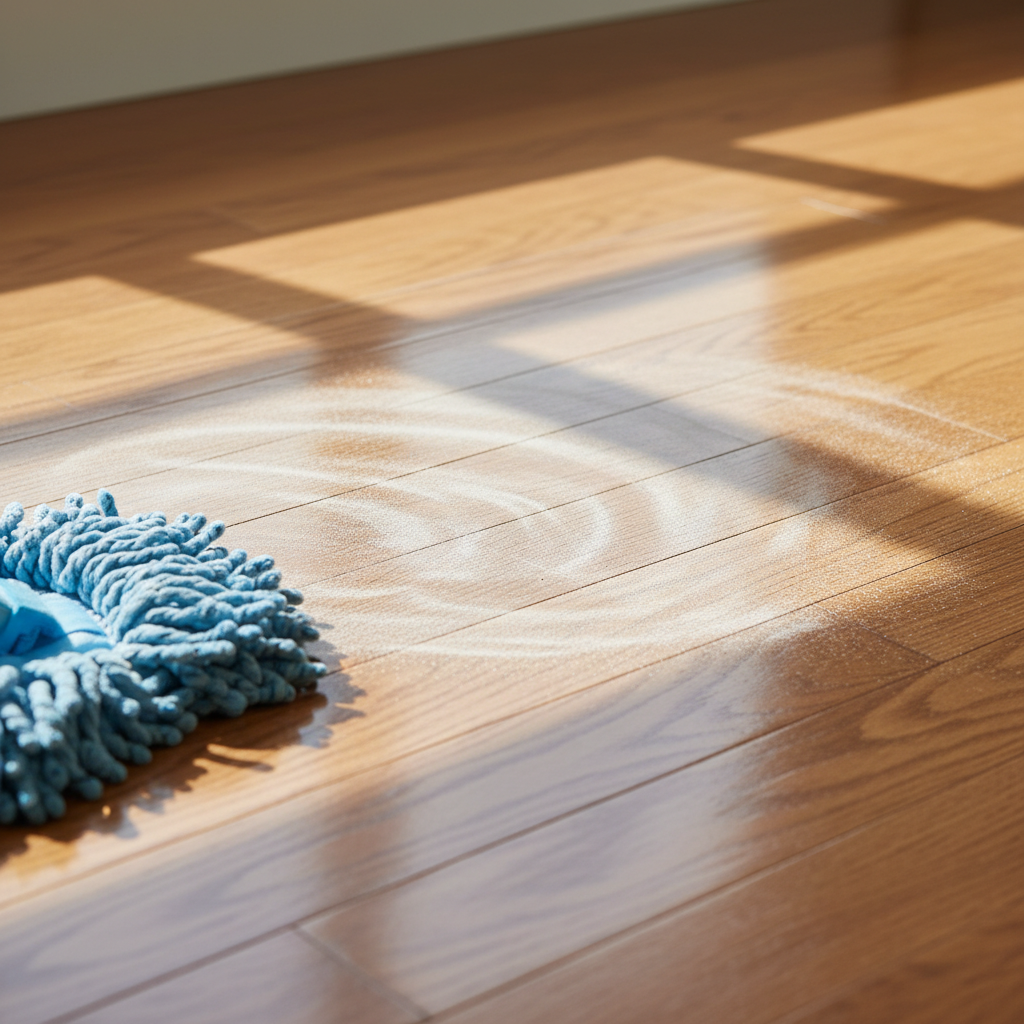
- Hard Water: The minerals in your tap water crystalize as the water evaporates.
- Over-application of Cleaner: Using too much cleaning solution leaves excess product on the surface.
- Improper Rinsing: Not fully rinsing off cleaning agents, especially soap-based ones, allows them to dry as a film.
- Wrong Cleaning Products: Using generic floor cleaners, oil soaps, or polish on polyurethane-finished hardwood can leave residues.
- Air Drying: Allowing the floor to air dry instead of wiping it dry actively ensures minerals and product residues are left behind.
Published September 20, 2026Last updated September 20, 2026
Tools & materials you'll need
Affiliate linksAs an Amazon Associate FixlyGuide earns from qualifying purchases — at no extra cost to you. Prices and availability are accurate as of publication and subject to change.
Quick Answer
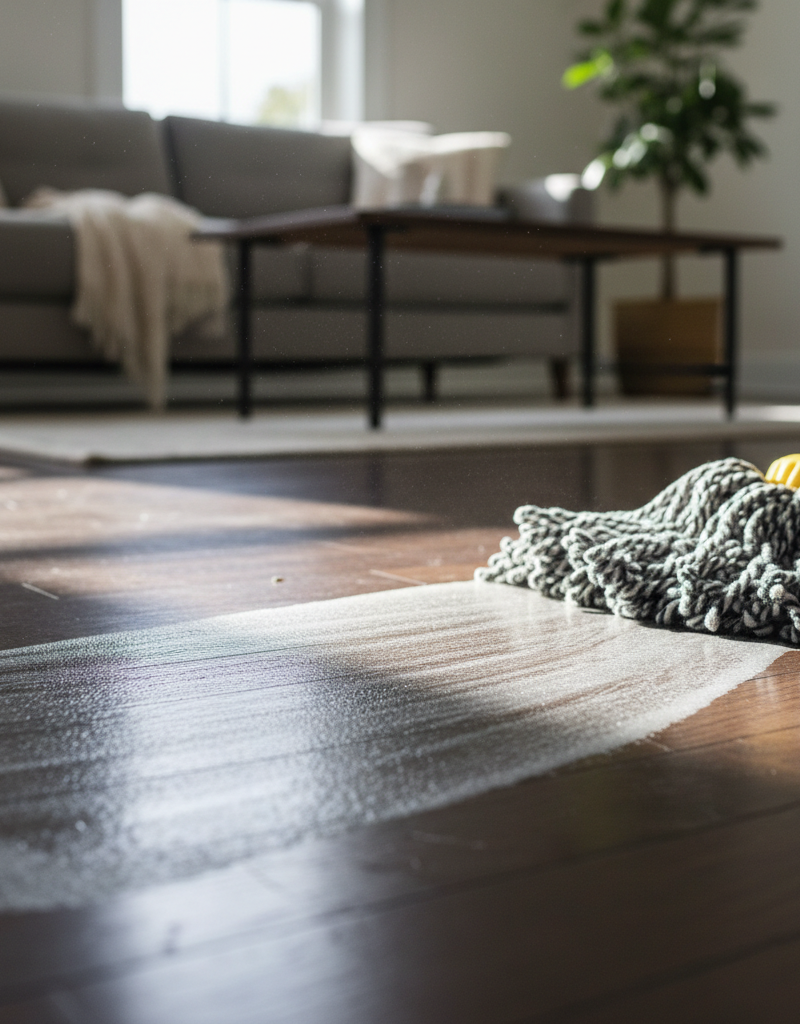
Listen, if you’ve ever spent an afternoon making your hardwood floors shine, only to walk back in an hour later and spot a fine white powder all over ’em, you’re not the first. I’ve seen that exact mess plenty of times. Usually, it’s not dirt blowing in from outside. It’s either mineral left behind from hard water, or residue from the cleaner itself — maybe you used too much, maybe it never got rinsed right. It dries white and fluffy, kind of like somebody shook powdered sugar across the boards, and yeah, it’s a nuisance.
The Problem
There’s nothing more aggravating than putting in the elbow grease to clean your hardwood floors, only to have them look worse than when you started. You mop, they gleam, you step away, and then BAM — a ghostly white film or powdery residue shows up like it owns the place. It’s not just ugly. It can make the floor feel gritty underfoot, and it’ll grab onto more dirt as time goes on. Folks see it and think “dust,” so they clean again, which usually just makes the whole thing worse. I’ve watched that cycle play out in all kinds of homes, from older Victorians in Northborough to brand new builds out in Westford. I pulled a water heater in Frisco last month that had exactly this kind of white mess on the adjacent wood floor — same story, different house.
How It Works
If you want to fix it for good, you’ve gotta know why it’s happening. Think of your hardwood floor as a big, pretty sponge — or more accurately, the finish on top of it. When you clean, you’re adding moisture and a cleaning agent to that surface. The usual white powder comes from one of two places, or sometimes a nasty mix of both.
First is hard water. Most people don’t think twice about it, but tap water isn’t just H2O. It’s loaded with dissolved minerals — calcium, magnesium, all that stuff. When the water evaporates off the floor, especially if you let it air dry, those minerals don’t vanish. They stay behind and crystalize into a fine white powder. Same junk that crusts up showerheads and coffee makers, just spread thin across your floorboards.
Second, and I’d say this is the one I run into more often, is cleaner residue. Folks figure more cleaner means cleaner floors. Not on hardwood. A lot of cleaners have waxes, oils, or soaps that aren’t meant to sit there after the job’s done. Use too much, or skip the rinse and dry step, and that cleaner dries into a hazy film. Some products can even react with the finish — especially older urethane or wax-based coatings — and leave behind an actual powdery by-product. I’ve pulled up floors that looked like they’d been dusted with flour because somebody kept using the wrong cleaner, or just poured it on like they were pressure-washing the place.
And then there’s finish breakdown. Older floors, especially ones that’ve been hit with harsh chemicals or too much moisture, can start to powder as the finish wears out. That one’s a bigger repair. But nine times out of ten, it’s water or cleaner causing the grief.
Step-by-Step Fix
Alright, let’s get that powder off the floor. This isn’t rocket science, but you do need to stay on it. The goal is to lift the residue without chewing up the finish.
-
Prep the Area – Clear the decks. Move furniture, rugs, anything in your way. You want open access to the whole floor. Grab a dust mop or soft-bristle broom and get rid of loose dirt and dust first. Don’t skip that step; otherwise you’ll just turn dust into mud.
-
Mix Your Cleaning Solution – The right recipe. For this, I’d go with a simple mix: distilled white vinegar and distilled water. Why distilled? No minerals. Nothing extra to leave behind. Mix equal parts vinegar and distilled water in a clean spray bottle. If the residue’s stubborn, you can go 1 part vinegar to 2 parts water, but start mild. You can also add a couple of drops of a mild, pH-neutral dish soap – like Dawn – to a gallon of solution if you’re dealing with greasy buildup, but don’t get carried away.
- Safety First: Always test the mix in an out-of-the-way spot, like a closet or under a rug, so you know it won’t mess with the finish. Give it 5-10 minutes, let it dry, and look for dulling or discoloration.
-
Section by Section Cleaning – Divide and conquer. Don’t try to hit the whole room in one shot. Work a small area, maybe 3-foot by 3-foot. Lightly mist that section with your vinegar solution. You’re not soaking it; just enough to loosen the residue.
-
Wipe Down Immediately – No puddles allowed. Using a clean, soft microfiber mop or a stack of microfiber cloths, wipe the section right after you mist it. Keep the pressure easy and even. You should see the white stuff coming up onto the cloth. You’ll probably need to rinse and wring out the mop head or swap in fresh cloths a few times. That’s a good sign — means you’re actually pulling the junk off the floor.
-
Dry Thoroughly – The critical step. This is where a lot of people blow it. IMMEDIATELY after wiping with your damp mop or cloth, follow up with a completely dry microfiber cloth or mop head. Buff that section until it’s bone dry and smooth to the touch. If moisture hangs around, you can still get streaks or redeposit minerals. No shortcuts here if you want streak-free, powder-free floors.
-
Repeat and Overlap – Work your way across. Move to the next 3x3 foot section and overlap a little with the part you just cleaned. Keep misting, wiping, and drying until the whole floor’s done. Fresh cloths matter. A dirty one just drags the problem around.
-
Final Inspection – See what you’ve got. Once the floor’s finished, let it sit for about an hour, then check it over. If you still spot any faint residue, hit those areas again and pay extra attention to drying. Sometimes it takes two passes to knock off years of buildup.
-
Regular Maintenance Shift – Prevent future trouble. After you get the floors clean, change the way you maintain them. Use a pH-neutral hardwood cleaner and dilute it the right way — read the label. Better yet, use the distilled water/vinegar mix for routine cleaning. And dry the floor every time. A good dry microfiber mop matters just as much as the wet one.
Common Causes
- Hard Water: The minerals in your tap water crystalize as the water evaporates.
- Over-application of Cleaner: Using too much cleaning solution leaves excess product on the surface.
- Improper Rinsing: Not fully rinsing off cleaning agents, especially soap-based ones, allows them to dry as a film.
- Wrong Cleaning Products: Using generic floor cleaners, oil soaps, or polish on polyurethane-finished hardwood can leave residues.
- Air Drying: Allowing the floor to air dry instead of wiping it dry actively ensures minerals and product residues are left behind.
- Dirty Mop Water/Pads: Reusing dirty water or pads just spreads the existing residue around.
Common Mistakes
- Using too much cleaner. You’d be shocked how little you actually need. Less is usually better on hardwood. Dousing the floor with cleaner all but guarantees residue.
- Ignoring the directions. Those dilution ratios on the label are there for a reason. Don’t eyeball it; measure it. I’ve seen folks dump a whole capful into a tiny bucket and then wonder why the floor feels sticky.
- Not rinsing or drying properly. This is the big one. If you leave moisture on the floor, you’re asking for residue. Always follow with a dry mop or towel. Every time.
- Using multi-surface or oil-based cleaners. Hardwood isn’t linoleum. A lot of all-purpose cleaners have waxes or oils that build up on hardwood and turn it hazy, then powdery. Stick with cleaners made for hardwood.
- Hot water. Some people think hotter water cleans better. Sometimes, sure. But very hot water can make evaporation happen faster, which leaves minerals behind sooner, and it can be rough on some finishes.
- Over-saturating the mop. Your mop head should be damp, not dripping. Wring it out hard. Standing water is a hardwood floor’s enemy, plain and simple, and it feeds residue.
Cost & Time Breakdown
| Task | DIY cost | Pro cost | Time |
|---|---|---|---|
| Initial Prep & Vacuuming | $0 | $0 | 10-15 min |
| Purchase Materials | $5–$20 | N/A | 15-30 min |
| Sectional Cleaning & Drying | $0 | N/A | 1–2 hours |
| Repeated Passes (if needed) | $0 | N/A | 30-60 min |
| Pro Hardwood Floor Cleaning | N/A | $200–$500 | 2–4 hours |
| Total (DIY) | $5–$20 | N/A | 1.5–3.5 hours |
Tips & Prevention
- Use distilled water: If your tap water runs hard, switch to distilled water for cleaning. It costs a little more, but it keeps mineral deposits out of the picture.
- Less cleaner is more: Dilute hardwood cleaner the way the maker says to. If you’re unsure, go lighter, not heavier.
- Frequent dry mopping: Run a dry microfiber mop daily or every other day to pick up surface dust before it mixes with leftover cleaner.
- Immediate spill cleanup: Don’t let spills sit. Wipe them up quick with a dry or slightly damp cloth so they don’t dry into marks.
- Invest in good microfiber: Good microfiber cloths and mop pads do a better job and dry cleaner. Wash them often, and skip the fabric softener.
- Walk-off mats: Put mats at every entry to catch dirt and moisture before it gets tracked onto the hardwood. That cuts down on deep cleaning.
When to Call a Professional
Look, most of this white powder stuff is something you can handle yourself. But there are times when it’s smarter to bring in a pro. If you’ve used the vinegar and distilled water method exactly like you should and that powder keeps coming back, or the floor looks dull and powdery all the time even when you haven’t cleaned it, you may be looking at finish failure. At that point, a hardwood floor specialist needs to check the finish itself — maybe it needs a deep clean, a screen and recoat, or even a full refinish. If you’re seeing swelling, cupping, or buckling along with the powder, that’s a moisture problem, and that’s pro territory. Don’t play around with that one; the damage can get expensive fast if somebody doesn’t know what they’re doing.
Related Articles
Keep troubleshooting with these hand-picked guides from FixlyGuide:
- The Mystery Smell: Why Your Fridge Stinks (Even After Cleaning It) — That persistent, foul odor in your refrigerator isn't just gross; it's often a sign of hidden issues. Learn the real culprits behind linger…
- The Mystery of the Returning Carpet Stain: What Your Cleaner Misses — Ever cleaned a carpet stain only for it to mysteriously reappear days later? You're not alone. This guide reveals the real reason why and h…
- The Grimy Secret Behind Your Dull Bathroom Faucet — And How to Make It Shine — Discover the real culprit behind your bathroom faucet's dull, grimy appearance and how to quickly restore its shine with a few common house…
- The Mystery of the Sprouting Carpet Tuft (And How to Stop It) — Ever noticed little loops or long strands sticking up from your carpet after cleaning or heavy use? That's called sprouting, and it's not j…
- The Grime That Hides: Why Your Baseboards Always Look Dirty — Even after a thorough cleaning, baseboards can quickly look dingy, often due to overlooked deep-seated dirt, static attraction, and imprope…
- The Weird White Powder Killing Your Lawn (And How to Stop It Fast) — Battling mysterious white powder on your grass? It's likely powdery mildew or white mold. Learn how to identify, treat, and prevent this co…
What should this project cost?
Enter your project details for a realistic cost range before you call anyone.
Cost depends heavily on which system turns out to be the source.
- Regional adjustment
- National average
- Labor share (typical)
- ~$1,620
- Quotes to collect
- 3 written estimates
Educational estimate based on national averages — not a binding quote. Always confirm with written local estimates.
Get the print-ready PDF of this guide
A clean, ad-free, printable version you can keep on your phone or pin to the workshop wall. Free with a FixlyGuide account.
- Print-optimized layout
- Tools, materials & every step included
- Saved to your account
Frequently asked questions
Why do my hardwood floors look powdery after I clean them?+
This usually happens because of hard water minerals left behind after evaporation, or from residue left by cleaning solutions, especially if too much product was used or the floor wasn't rinsed and dried thoroughly. It's a common issue that makes floors appear hazy or dusty.
Can hard water cause white residue on hardwood floors?+
Absolutely. Hard water contains dissolved minerals like calcium and magnesium. When this water evaporates from your floor's surface, these minerals don't disappear; they crystalize, forming a fine, white, powdery film.
What kind of cleaning solution should I use to remove white powder from hardwood?+
A simple solution of equal parts distilled white vinegar and distilled water is highly effective. Distilled water ensures no new mineral deposits, and vinegar helps break down existing residues. For heavy buildup, a drop or two of mild, pH-neutral dish soap can be added to a gallon of solution.
Is it safe to use vinegar on hardwood floors?+
Yes, diluted white vinegar is generally safe for sealed hardwood floors. However, always test it in an inconspicuous area first. Avoid using undiluted vinegar, as its acidity can potentially dull some finishes over time if used excessively.
How do I prevent white residue from coming back after cleaning?+
To prevent it, always use distilled water for cleaning, dilute your cleaning solutions properly, and most importantly, dry your floors immediately and thoroughly with a clean, dry microfiber cloth or mop after any wet cleaning. Avoid air-drying.
What cleaning products should I avoid on hardwood floors?+
Steer clear of oil-based soaps, wax-based cleaners, multi-surface cleaners not specifically formulated for hardwood, and harsh chemical products. These can leave behind sticky or hazy residues that contribute to the powdery look.
Why is drying the floor so important?+
Drying the floor immediately and completely is crucial because it prevents both hard water minerals and cleaning product residues from having a chance to dry and form that white, powdery film. Any moisture left on the floor is an opportunity for residue to appear.
When should I call a professional for this problem?+
If you've diligently followed the cleaning steps and the white powder persists, or if you suspect the issue is due to a degrading finish rather than cleaning residue, it's time to call a professional hardwood floor specialist. They can assess the finish and recommend appropriate treatments like a deep cleaning, screen and recoat, or refinishing.
Can I use a steam mop to clean hardwood floors?+
I generally advise against steam mops for most hardwood floors. While they clean well, the high heat and moisture can potentially damage the finish, warp the wood, or push moisture into the seams, leading to bigger problems down the road. Stick to damp mopping with proper drying.
My floors just feel sticky after cleaning, is that the same problem?+
While related to residue, sticky floors usually mean you've left behind a sugary or soapy film. White powder is often mineral or dried cleaner. The fix is similar – thorough rinsing and drying with a proper, diluted cleaner – but the feel is different. For stickiness, you might need an even stronger vinegar solution or a specific residue remover.

Discussion
Loading comments…