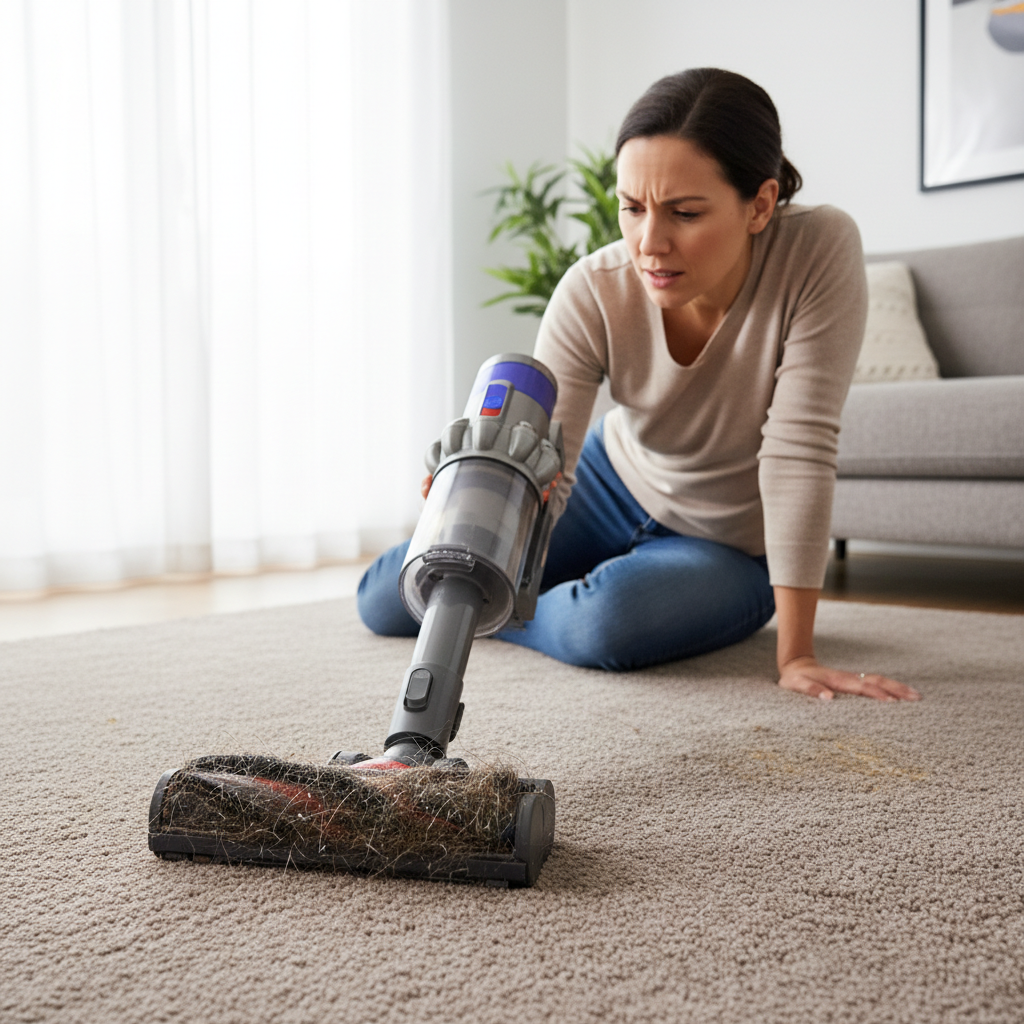
- Incorrect Height Setting: The most common culprit. If the brush roll isn’t making proper contact with the carpet, it can’t agitate and loosen dirt like it should.
- Clogged Brush Roll: Hair, string, and carpet fibers wrap around the brush and keep it from spinning freely. That thing’s toast until you clean it.
- Blocked Hose/Airway: Any obstruction in the hose, internal ducts, or at the intake/exhaust ports cuts suction way down.
- Full Bag/Canister: A vacuum bag or dustbin jammed full of debris chokes airflow and causes a big drop in suction.
- Clogged/Dirty Filters: Filters are there to trap fine particles. If they’re caked with dust, they block air movement and the vacuum loses power.
Published September 14, 2026Last updated September 14, 2026
Tools & materials you'll need
Affiliate linksAs an Amazon Associate FixlyGuide earns from qualifying purchases — at no extra cost to you. Prices and availability are accurate as of publication and subject to change.
Quick Answer
Your carpet might still look and feel dirty after vacuuming for a few common reasons. Most of the time, it’s the vacuum itself—wrong settings, a clog somewhere, or a machine that just isn’t built to yank up fine grit and pet hair from deep in the pile. Get those things sorted, and you’ll usually get stronger suction and a cleaner carpet. Simple as that.
The Problem
I hear this one all the time from folks: "My carpet just never looks truly clean, even after I vacuum it a bunch." They'll say they’ve gone over the same spot three, four, five times, and it still feels gritty underfoot or looks dull. Frustrating? You bet. You put in the work, you hear the vacuum doing its thing, and the results still stink. It’s like there’s a thin coat of junk down in the fibers that the machine won’t grab, no matter how many passes you make. You’re not crazy; there’s usually a real reason your vacuum’s dropping the ball, and nine times out of ten it comes down to a few basic adjustments or some plain old maintenance.
How It Works
Alright, let’s talk about how your vacuum should work and why it sometimes doesn’t. Most upright and canister vacuums lean on a couple of things to clean carpet. First, there’s suction—a motor creates a low-pressure area that pulls air, and hopefully dirt, into the machine. Then there’s agitation, usually from a spinning brush roll with bristles. That brush roll beats and sweeps the carpet fibers, loosening embedded dirt, pet hair, and crumbs so the suction can pick them up.
Think of your carpet like a thick patch of weeds. Fine dirt, dust, and pet dander don’t just sit on top; they get worked down into that mess. If your vacuum’s brush roll isn’t set right, it’s either skimming the surface with no real bite or digging in too hard, bogging itself down and losing cleaning power. A common vacuum cleaner motor can generate between 100 to 250 air watts of suction, but if airflow gets choked off—say, by a clogged hose or a bag that’s packed full—that power falls off fast. The brush roll, especially on an upright, typically spins at around 3,000 to 6,500 RPMs. If a belt’s slipping or hair’s wrapped around the brush, it won’t spin like it should. When any part of that system—suction, airflow, or agitation—isn’t pulling its weight, you leave behind a surprising amount of crud that you won’t notice until sunlight hits it or your socks start telling the truth.
Step-by-Step Fix
I’ve seen carpets go from tired and gray to looking halfway decent again just by homeowners checking these few things. Don’t skip the basics; they’re usually the whole ballgame.
-
Check the Vacuum Height Setting — Your first line of defense
- Most vacuums have a height adjustment dial or lever. If it’s too high, the brush roll won’t really work the carpet fibers. Too low, and it’ll mash down on the pile, make the vacuum hard to push, and bog down the motor so the brush spins slower. You want the brush just barely touching the carpet, with a little bit of pull as you go—not a wrestling match.
- If this doesn't work: Drop it one notch at a time until you get solid agitation without making the machine fight you.
-
Inspect and Clean the Brush Roll — The unsung hero of agitation
- Unplug your vacuum! Flip it over and look at the brush roll. I can’t count how many times I’ve pulled out hair, thread, and even a kid’s shoelace from one of these things. Grab scissors (carefully!) and cut away the tangled mess. A utility knife works too, but don’t nick the bristles or slice the belt while you’re in there.
- Tools: Scissors or utility knife, gloves (optional, but nice if you hate grime).
-
Clear the Hose and Air Path — Blockages kill suction
- Pull the hose off both ends if the design lets you. Shine a flashlight through it and look for clogs. A broom handle or a long flexible brush can knock loose most blockages. Don’t forget the intake port where the hose connects to the vacuum body, and check the exhaust port too. Pet hair, dryer lint, and little toys get wedged in there all the time.
- Safety: Always unplug the vacuum before poking anything into the hose or ports. You don’t want that motor firing up on you.
-
Empty or Replace the Bag/Canister — The simplest fix
- If your vacuum has a bag, swap it out when it’s about two-thirds full, not when it’s bulging like a pillow. A packed bag chokes airflow and drops suction hard. For bagless models, empty the canister after every use, and check the cyclone assembly for dust and debris buildup. People miss this one a lot.
-
Clean or Replace the Filters — Critical for airflow
- Most modern vacuums have at least one filter, sometimes washable HEPA filters. Check your owner's manual for where they’re hiding and how the manufacturer wants them cleaned. Washable filters need to dry all the way through—give them at least 24 hours—before you put them back. Disposable filters need regular replacement, and don’t cheap out here; a clogged filter strangles the machine.
- Frequency: Check filters monthly, wash/replace as recommended by the manufacturer (usually every 3-6 months).
-
Check the Belt — A common point of failure
- The belt connects the motor to the brush roll. Unplug the vacuum, flip it over, and pull off the plate covering the brush roll. If the belt’s loose, stretched, or broken, the brush roll won’t spin right—or at all. Belts are usually cheap and easy to change. My old neighbor, Mrs. Henderson from Roseville, called me out once swearing her vacuum was "kaput." Turned out, it was just a stretched belt on her old Hoover Tempo Widepath. Fifteen bucks and five minutes later, it was sucking like new.
- Materials: Replacement vacuum belt (specific to your model).
-
Consider Your Vacuum Type — Sometimes the tool isn't right for the job
- If you’ve got thick pile carpet and an old stick vacuum, it might just not have the muscle or the right brush roll setup for deep cleaning. For dense carpet, a stout upright with good agitation and strong suction usually does the trick. For low-pile or hard floors, canister vacuums or stick vacuums can work just fine. Don’t try to make a lightweight machine do heavy-duty work—it usually ends with you frustrated and the carpet still dirty.
Common Causes
- Incorrect Height Setting: The most common culprit. If the brush roll isn’t making proper contact with the carpet, it can’t agitate and loosen dirt like it should.
- Clogged Brush Roll: Hair, string, and carpet fibers wrap around the brush and keep it from spinning freely. That thing’s toast until you clean it.
- Blocked Hose/Airway: Any obstruction in the hose, internal ducts, or at the intake/exhaust ports cuts suction way down.
- Full Bag/Canister: A vacuum bag or dustbin jammed full of debris chokes airflow and causes a big drop in suction.
- Clogged/Dirty Filters: Filters are there to trap fine particles. If they’re caked with dust, they block air movement and the vacuum loses power.
- Worn or Broken Belt: The belt connects the motor to the brush roll. If it’s stretched or snapped, the brush roll won’t spin, or it’ll spin too slowly, and agitation suffers.
Common Mistakes
- Vacuuming Too Fast: If you race across the carpet, the brush roll doesn’t have enough time to stir up the dirt, and the suction doesn’t get a fair shot at pulling it in. Slow down—about one foot per second—and make a couple passes.
- Ignoring the Manual: Seriously, read the owner’s manual. I know, nobody gets excited about that little booklet, but it tells you filter schedules, height settings, and fixes that are specific to your machine.
- Not Checking the Brush Roll: Plenty of people forget to flip the vacuum over and clean out the brush roll. That’s a big miss.
- Using the Wrong Vacuum for the Job: Trying to deep clean plush carpet with a lightweight stick vacuum is like using a butter knife to chop firewood—you’re not getting far.
- Neglecting Filters: Filters matter. Letting them get filthy chokes your vacuum and can even blow fine dust back into the air.
- Overfilling Bags/Canisters: You might think you’re saving a few bucks by squeezing every last bit out of a bag, but all you’re really doing is hobbling the vacuum.
Cost & Time Breakdown
Sometimes, a little maintenance is all it takes. Other times, a new part makes all the difference.
| Task | DIY Cost | Pro Cost (if applicable) | Time |
|---|---|---|---|
| Clean brush roll | $0 | N/A | 5-10 minutes |
| Clear hose/air path | $0 | N/A | 5-15 minutes |
| Replace vacuum bag | $3–$10 per bag | N/A | 2 minutes |
| Clean/replace filters | $0–$30 | N/A | 5-30 minutes |
| Replace drive belt | $5–$20 | N/A | 10-20 minutes |
| Professional Vacuum Repair | N/A | $50–$150 | N/A |
| Upgrade Vacuum | $100–$500+ | N/A | N/A |
Tips & Prevention
- Slow Down Your Passes: Make slow, overlapping passes when you vacuum. That gives the brush roll time to work and the suction time to pull up the dirt. I’d do 2-3 passes over high-traffic spots without even thinking twice.
- Regular Brush Roll Checks: Every few vacuuming sessions, unplug the machine and take a look at that brush roll for tangled hair and debris. Two minutes now beats a headache later.
- Don't Wait for a Full Bag: Replace bags or empty canisters when they’re two-thirds full, not stuffed to the top. You’ll keep the airflow steady and the suction stronger.
- Maintain Filters: Clean or replace filters the way your vacuum’s manufacturer says to. Small job, big payoff.
- Vacuum High-Traffic Areas More Often: Hallways and living rooms get hammered compared to the guest room. Hit those 2-3 times a week, while less-used rooms can go longer.
- Use the Right Attachments: Don’t forget the crevice tool for edges and the upholstery tool for furniture. That’s where a lot of dust bunnies hide, sneaky little things.
When to Call a Professional
Look, if you’ve gone through all these steps and your vacuum still isn’t performing, or if you hear grinding noises or smell something burning, it might be time to call in a pro for vacuum repair. A good appliance repair tech can track down motor trouble, electrical issues, or internal blockages you can’t reach without tearing half the machine apart. Also, if you’re dealing with really filthy carpets—after a flood or a big renovation, say—professional carpet cleaning might make more sense than fighting it with your home vacuum. Those crews have industrial-strength extractors and cleaning solutions that go way past what your trusty machine can do, and they’ll pull out dirt and allergens you didn’t even know were there.
Related Articles
Keep troubleshooting with these hand-picked guides from FixlyGuide:
- The Grimy Secret Behind Your Dull Bathroom Faucet — And How to Make It Shine — Discover the real culprit behind your bathroom faucet's dull, grimy appearance and how to quickly restore its shine with a few common house…
- The 3 Lies Your Carpet Cleaner Tells You (And Why Your Carpet Stinks) — Ever notice those 'cleaned' carpet stains pop right back up, or a lingering funk that just won't quit? It's not bad luck; it's bad science.
- The Invisible Film Making Your Bathroom Mirror Streaky – And How to See Clearly — Discover why your bathroom mirror always looks streaky, even after cleaning, and learn the pro trick to get a perfectly clear, fog-free ref…
- That Mystery Haze on Your Dishware? Your Dishwasher's the Culprit — If your 'clean' dishes come out looking cloudy, streaky, or gritty, it's not you – it's your dishwasher, and I'll show you how to fix it.
- The Secret to Banishing Old Pet Odors (Even When You Can't Find the Stain) — Don't let hidden pet accidents ruin your home's fresh scent; this guide reveals how to find and eliminate old pet odors and their invisible…
- The 3 Hidden Reasons Your Sprinkler Head Won't Pop Up (And How to Fix It FAST) — Discover the most common reasons your sprinkler head isn't popping up and follow our step-by-step guide to quickly diagnose and fix the iss…
What should this project cost?
Enter your project details for a realistic cost range before you call anyone.
Cost depends heavily on which system turns out to be the source.
- Regional adjustment
- National average
- Labor share (typical)
- ~$1,620
- Quotes to collect
- 3 written estimates
Educational estimate based on national averages — not a binding quote. Always confirm with written local estimates.
Get the print-ready PDF of this guide
A clean, ad-free, printable version you can keep on your phone or pin to the workshop wall. Free with a FixlyGuide account.
- Print-optimized layout
- Tools, materials & every step included
- Saved to your account
Frequently asked questions
Why does my carpet still feel gritty after I vacuum?+
This usually means your vacuum isn't effectively pulling up embedded dirt. Check your vacuum's height setting, brush roll for clogs, and filters, as any of these can reduce agitation and suction.
How often should I clean my vacuum cleaner's brush roll?+
I tell folks to check it every few vacuuming sessions, especially if you have pets or long hair in the household. Cut away any tangled hair or fibers to ensure it spins freely.
Does a full vacuum bag really affect cleaning performance?+
Absolutely. A full bag restricts airflow significantly, which in turn reduces your vacuum's suction power. Always replace or empty the bag/canister when it's about two-thirds full for optimal performance.
Can dirty filters make my vacuum less effective?+
You bet they can. Filters trap fine dust and allergens, but if they get clogged, they prevent proper airflow. This chokes your vacuum's motor and drastically lowers its suction.
How do I know if my vacuum belt is broken?+
If your vacuum's brush roll isn't spinning, or it's spinning very slowly, even when the motor is running, chances are the belt is either broken or stretched out. Unplug it and check under the brush roll plate.
Is vacuuming fast a bad idea?+
Yeah, it is. Rushing over the carpet doesn't give the brush roll enough time to agitate and loosen dirt, nor does it give the suction enough time to pull it up. Slow down and make overlapping passes for a truly clean carpet.
My vacuum smells bad, even after I empty it. What's up?+
A persistent smell often means there's old dirt, pet dander, or even mold spores trapped in the filters, hose, or deep within the brush roll. Give everything a thorough cleaning and replace the filters.
What's the best vacuum height setting for carpet?+
You want the brush roll to just barely touch the carpet fibers, creating a slight


Discussion
Loading comments…