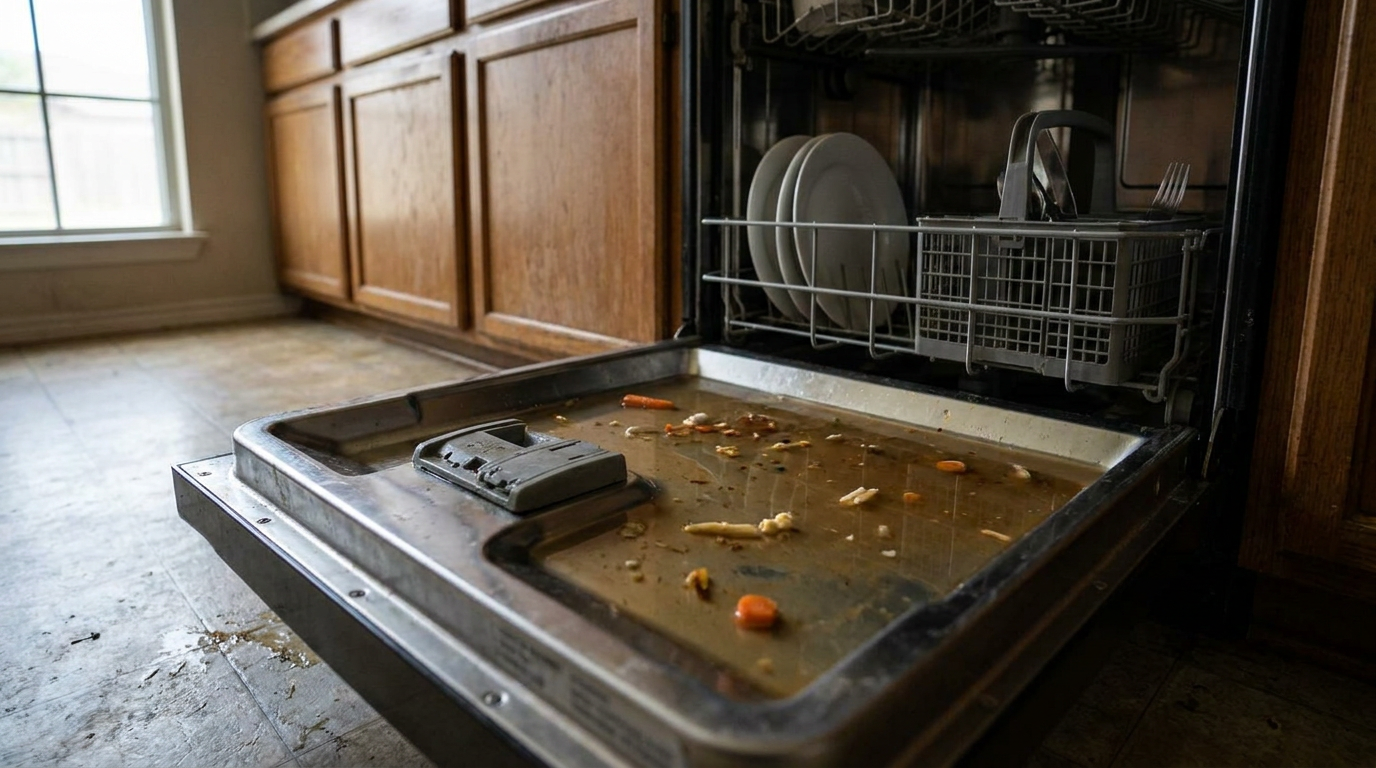
- Clogged Filter: By far the most common cause. Food bits like rice, pasta, labels from jars, and pieces of plastic get trapped in the main filter or fine mesh screen, and water never makes it to the pump.
- Blocked Drain Hose: Grease, soap scum, and food debris can build up in the hose over time, especially at the connection to the garbage disposal. Kinks are a big problem too.
- Full or Clogged Garbage Disposal: The dishwasher drains into the disposal. If the disposal’s packed with food, there’s nowhere for the water to go, so it backs up into the dishwasher.
- Jammed Drain Pump: A small hard object like a piece of glass, a fruit pit, a nut, or a chicken bone can get past the filter and stop the impeller from spinning. You’ll usually hear a humming or grinding noise if that’s the case.
- Clogged Air Gap: If your sink has an air gap, it’s a common bottleneck for debris. It’s built to be easy to clean for exactly this reason.
Plumbing · Clog
| Project category | Plumbing |
|---|---|
| Problem type | Clog |
| Trade required | Plumbing |
| Urgency | Soon — within weeks |
| Safety risk | Low safety risk |
| DIY suitability | DIY friendly |
| Cost category | Low cost |
| Typical timeline | Same-day DIY attempt; pro visit within a day or two |
| Contractor type | Licensed plumber |
Repair option
Plunger, hand auger, or trap cleanout before chemicals.
Replacement option
Line replacement when clogs return in the same spot repeatedly.
Common causes
- Hair and soap buildup in the trap
- Grease cooling in the branch line
- Flushed wipes or foreign objects
Relevant tools:diy difficultydiy or hire a pro
Published October 8, 2026Last updated October 8, 2026
Tools & materials you'll need
Affiliate links- AmazonBucketTo catch water from the dishwasher and drain hose.
- AmazonOld towels
- AmazonFlashlight
- AmazonPliersFor removing the spring clamp on the drain hose.
- AmazonScrewdriverFlathead or Phillips, depending on your hose clamp.
- AmazonOld toothbrush or small bottle brushFor scrubbing the filter and clearing the drain inlet.
No materials required.
As an Amazon Associate FixlyGuide earns from qualifying purchases — at no extra cost to you. Prices and availability are accurate as of publication and subject to change.
Quick Answer
If your dishwasher isn't draining, the usual culprit is a clogged filter or a blocked drain hose. I’d start right there. Pull the filter, clean the screen inside the tub, and see if that clears things up. If it doesn’t, check the drain hose for kinks or a clog where it hooks up under the sink. Nine times out of ten, clearing food junk from those two spots fixes it.
The Problem
You run a full cycle, figure you’ll be pulling out spotless dishes, and instead there’s a nasty little pool of greasy water sitting in the bottom of the tub. Not a great smell, either. That standing water means something’s stopping the dishwasher from pumping out the wash and rinse water.
This is one of the most common dishwasher complaints I run into. Usually, it’s a simple clog you can knock out yourself in under an hour. Start with the easy stuff and work your way down the list before you call anybody out — why pay for a service call if it’s just a wad of food at the filter? Don’t run another cycle hoping it’ll magically clear itself. It won’t. You’ve got to find the blockage and get it out of there.
How It Works
Your dishwasher doesn’t just spray water around; it’s a timed system for getting water in and, just as important, getting it back out. After the wash and rinse cycles, the drain pump motor kicks on. That pump is the heart of the drain system. It forces the dirty water out of the tub, through filters and hoses, and into your home’s main drain line, usually through the garbage disposal or an air gap at the sink.
Here’s the path that water takes:
- Sump & Filter: Water settles in the low spot at the bottom of the tub called the sump. Before it heads anywhere, it passes through a filter system made to catch big food bits, broken glass, and other debris. That’s your first defense against clogs.
- Drain Pump: An impeller inside the pump spins fast, building pressure that pushes the water out of the sump and into the drain hose.
- Drain Hose: This flexible, usually corrugated plastic hose runs from the dishwasher to your sink plumbing. It’s installed with a high loop — either physically tied up high under the counter or routed through an air gap — so dirty sink water doesn’t flow back into the machine.
- Plumbing Connection: Last stop, the hose connects to a nipple on the side of your garbage disposal or right into the sink drain. There’s usually a little knockout plug in that nipple that has to be removed during installation. If nobody popped it out, the dishwasher won’t drain. Simple as that.
If you find standing water, the blockage is somewhere along that path. Food in the filter, a kinked hose, a clogged disposal connection — that’s the game.
Step-by-Step Fix
Before you start, shut off power to the dishwasher at the circuit breaker. No dice skipping that step. You’re dealing with water and electricity in a tight space.
-
Bail Out the Water — You can’t work in a puddle. Use a plastic cup to scoop most of the standing water into a bucket or the sink. Then grab old towels and mop up what’s left in the bottom.
-
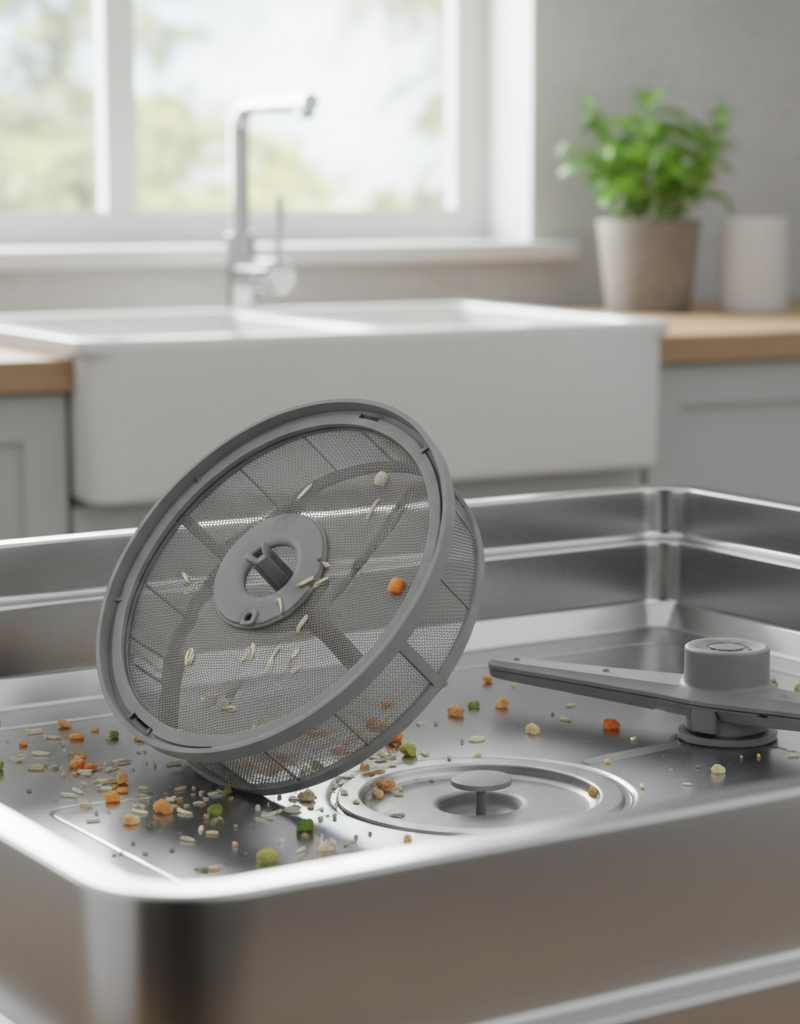
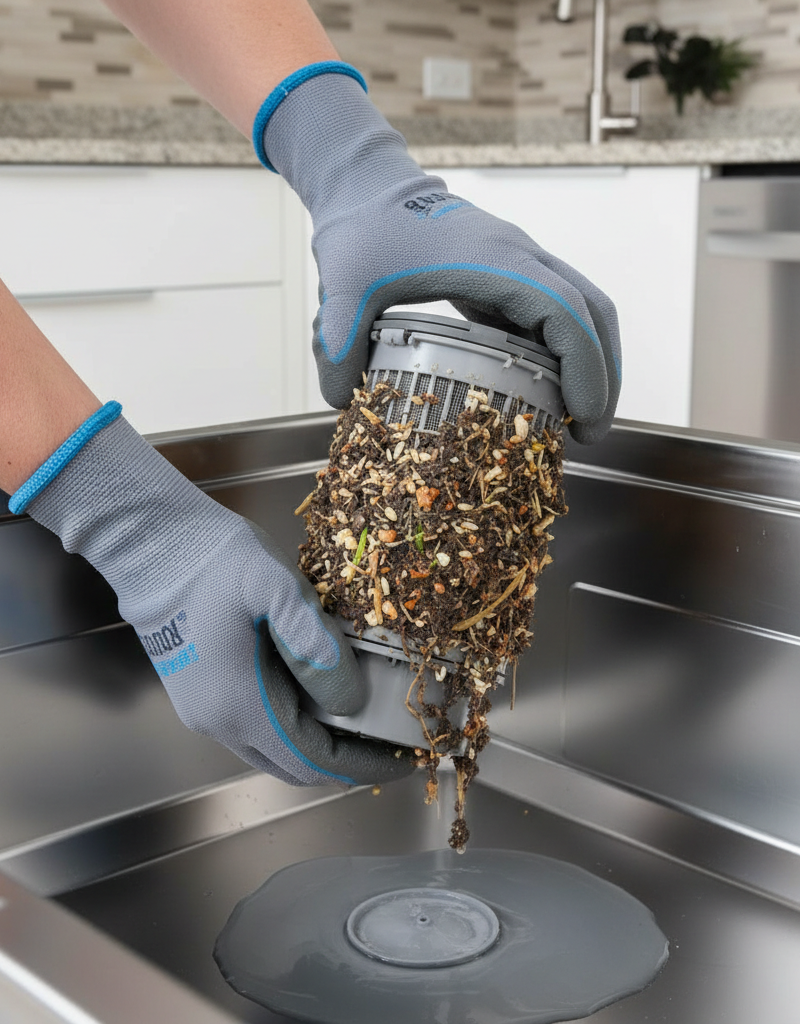
Clean the Filter and Screen — This is the #1 culprit, and I mean that. Look at the bottom of the tub. You’ll usually see a cylindrical filter with a coarse mesh screen around it.
- Tools: Your hands, maybe an old toothbrush.
- How: Twist the filter, usually counter-clockwise, and lift it straight out. Some models have a flat screen held in by tabs or another lock, so pull that out too. Wash both pieces in the sink with warm, soapy water. Scrub the mesh with a brush and get the gunk out. While they’re out, reach into the sump housing and feel around for debris. I’ve pulled everything from shrimp tails to broken glass out of there. One time I pulled a water heater in Frisco last month that had exactly this kind of junk packed into the drain path — same story, different appliance.
-
Check for a Kinked Drain Hose — The drain hose is the ribbed plastic tube running from the back of the dishwasher to the plumbing under your sink.
- Tools: Flashlight.
- How: Pull the dishwasher out a few inches if you can, or at least get a good look behind it and under the sink. The hose needs a smooth route. If it’s pinched, kinked, crushed behind the unit, or tangled under the sink, water’s not getting through. Straighten it gently.
-
Inspect the Drain Hose Connection at the Sink — This is another common choke point. The hose from the dishwasher hooks to a small inlet nipple on the garbage disposal or sink drain.
- Tools: Pliers or a flathead screwdriver (to loosen the hose clamp), a bucket, a small bottle brush or wire.
- How: Put a bucket under the connection to catch whatever water’s left in the hose. Use pliers to squeeze the spring clamp or a screwdriver to loosen the screw clamp holding the hose on. Work the hose off the nipple. Check the end for greasy sludge and clean it out. Then stick your finger or a small brush into the nipple on the disposal itself. It’s a skinny opening — about 5/8 of an inch — and it clogs up with food waste and grease all the time. Scrape it clean.
-
Verify the Garbage Disposal Knockout Plug — If this is a new dishwasher install, or you just swapped in a new disposal, this is a prime suspect. Inside that nipple where the drain hose connects, there’s a small plastic plug that has to be knocked out for the dishwasher to drain.
- Tools: Screwdriver, hammer.
- How: With the hose disconnected, stick a screwdriver into the inlet nipple. If you hit a solid wall just inside the opening, the plug’s still there. Use the screwdriver and a hammer to tap it out gently — it’ll drop into the disposal, and you can grind it up or fish it out.
-
Run the Garbage Disposal — A packed disposal can stop dishwasher water from draining the way it should. Before you hook the hose back up, make sure the disposal is clear. Run cold water and let the disposal run for 30 seconds to flush it out.
-
Clear the Air Gap (If You Have One) — The air gap is the little chrome cylinder on the sink deck next to the faucet. It’s a backflow device.
- Tools: Your hands.
- How: Unscrew the chrome cap. Under that, you’ll see a smaller plastic cap — pop it off. Now you can see the two hose connections. Gunk builds up in there fast and turns into a blockage. Clean out anything you find. I like to run a small bottle brush down the larger side that goes to the disposal just to make sure it’s clear.
-
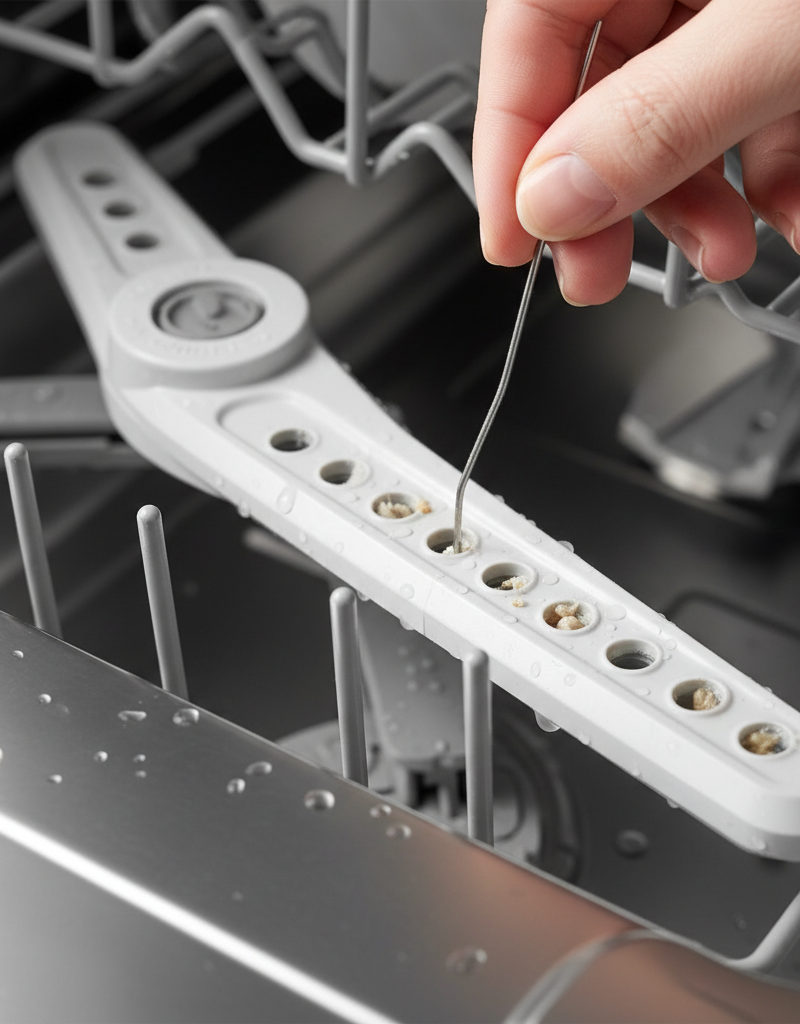
Check the Drain Pump Impeller — This one’s a little more advanced. If you’ve done everything else and it still won’t drain, a piece of glass or a hard pit may be jamming the impeller. The pump sits at the very bottom of the dishwasher, usually after you pull the lower spray arm and filter assembly. You might see a small plastic cover over the impeller. Remove it carefully and see if the blade spins freely. If it doesn’t, use needle-nose pliers to remove the obstruction.
-
Reconnect and Test — Put the filter back in, tighten the drain hose clamp, and slide the dishwasher back into place without pinching the hose. Restore power at the breaker. Run a short "Rinse Only" or "Drain" cycle and see what happens. If it drains, you’re done.
Common Causes
The reason your dishwasher holds water usually isn’t some big mystery. It almost always comes down to one of these culprits:
- Clogged Filter: By far the most common cause. Food bits like rice, pasta, labels from jars, and pieces of plastic get trapped in the main filter or fine mesh screen, and water never makes it to the pump.
- Blocked Drain Hose: Grease, soap scum, and food debris can build up in the hose over time, especially at the connection to the garbage disposal. Kinks are a big problem too.
- Full or Clogged Garbage Disposal: The dishwasher drains into the disposal. If the disposal’s packed with food, there’s nowhere for the water to go, so it backs up into the dishwasher.
- Jammed Drain Pump: A small hard object like a piece of glass, a fruit pit, a nut, or a chicken bone can get past the filter and stop the impeller from spinning. You’ll usually hear a humming or grinding noise if that’s the case.
- Clogged Air Gap: If your sink has an air gap, it’s a common bottleneck for debris. It’s built to be easy to clean for exactly this reason.
- Faulty Drain Pump: Like any motor, the drain pump can fail. If you’ve checked all the clogs and the dishwasher goes quiet when it should be draining, the pump itself might be toast.
Common Mistakes
I’ve seen homeowners turn a small problem into a bigger headache. Avoid these:
- Forgetting to Kill the Power: Don’t skip this. You’re working with water and electricity in a cramped spot. Go to the main panel and flip the dishwasher breaker to the "OFF" position.
- Running Another Cycle: This is the first thing people try, and it never fixes a real clog. If the water can’t get out, forcing more into the machine just leaves you with a bigger mess and a higher chance of a leak on the kitchen floor.
- Using Chemical Drain Cleaners: Never pour Drano or any other caustic cleaner into a dishwasher. Those chemicals aren’t made for appliances. They can wreck plastic and rubber parts like seals, gaskets, and hoses, and then you’re into expensive repairs. Bad idea.
- Not Checking the Garbage Disposal First: Before you start pulling hoses apart, run the disposal with plenty of cold water. Takes 10 seconds, and it solves the problem more often than folks expect.
- Creating a New Leak: When you disconnect the drain hose, have a bucket and towels ready. When you hook it back up, make sure the clamp is snug. A slow drip from a loose clamp can hide for a long time and damage the cabinets before you spot it.
Cost & Time Breakdown
Fixing a dishwasher clog is usually a cheap, quick DIY job. The costs only climb if a part has gone bad.
| Task | DIY Cost | Pro Cost | Time |
|---|---|---|---|
| Cleaning Filter & Air Gap | $0 | $100–$150 (trip charge) | 15–20 minutes |
| Clearing Drain Hose Clog | $0–$5 | $125–$175 | 30–45 minutes |
| Clearing Disposal Connection | $0 | $125–$175 | 20–30 minutes |
| Replacing Drain Hose | $15–$30 (for a new hose) | $150–$225 | 45–60 minutes |
| Replacing Drain Pump | $50–$150 (for the part) | $250–$400+ | 1–2 hours (advanced) |
Tips & Prevention
A little maintenance goes a long way. If you want the dishwasher to keep draining like it should, make it part of your routine.
- Scrape Your Plates: You don’t need to pre-rinse dishes — modern detergent needs some food to work on — but you should scrape off big food chunks, bones, and paper labels before loading.
- Clean Your Filter Weekly: Don’t wait until it plugs up. Make it a weekly or bi-weekly habit to twist out the filter and rinse it under hot water. Takes less than 60 seconds.
- Run Hot Water Before Starting: Before you kick off a cycle, run the kitchen sink hot water until it’s actually hot. That way the dishwasher fills with hot water right away, and hot water does a better job cutting grease and breaking down detergent residue that can cause clogs.
- Use a Dishwasher Cleaner Monthly: Products like Affresh or Finish Dishwasher Cleaner are made to break down grease and limescale in the whole system, including the hoses and pump. Run one once a month and you’ll keep things moving.
- Always Run the Disposal Before a Wash: Make it a house rule. Before anyone hits start on the dishwasher, run the garbage disposal for 15 seconds with cold water so the drain path stays clear.
When to Call a Professional
You can handle most drainage problems yourself. But it’s time to call a licensed appliance repair technician if you run into one of these:
- You’ve done the whole routine — cleaned the filter, checked the hose for kinks and clogs, cleared the air gap and disposal connection — and there’s still water in the bottom. That points to something deeper in the machine.
- You hear a loud humming, grinding, or buzzing sound during the drain cycle, but no water comes out. That usually means the drain pump motor’s failed and needs to be replaced.
- The dishwasher is dead and won’t start, or the control panel is flashing an error code you can’t clear. That could be an electrical issue with the control board or a bad sensor, not just a simple clog.
- You see water leaking from underneath the dishwasher itself. Don’t mess around with that — a steady leak can chew up the floor and cabinets fast. Shut off the water and call for service.
Related Articles
Keep troubleshooting with these hand-picked guides from FixlyGuide:
- The Invisible Film Making Your Bathroom Mirror Streaky – And How to See Clearly — Discover why your bathroom mirror always looks streaky, even after cleaning, and learn the pro trick to get a perfectly clear, fog-free ref…
- Why Your Kitchen Sink Drain Stinks (Even After You've Cleaned It) — Don't just mask that foul odor from your kitchen sink; get rid of the gunk causing it with this pro-level cleaning method.
- That Mystery Haze on Your Dishware? Your Dishwasher's the Culprit — If your 'clean' dishes come out looking cloudy, streaky, or gritty, it's not you – it's your dishwasher, and I'll show you how to fix it.
- The Mystery of the Sprouting Carpet Tuft (And How to Stop It) — Ever noticed little loops or long strands sticking up from your carpet after cleaning or heavy use? That's called sprouting, and it's not j…
- The Mystery of That Dark Water Stain on Your Ceiling — Discover the real reasons behind that ominous dark water stain on your ceiling and how to tackle it, from identifying the source to making…
- The 30-Minute Trick When Your Dishwasher Won't Drain (Plumbers Keep Secret) — Discover the real reasons your dishwasher isn't draining and how to fix it in under an hour, without calling a plumber.
Should you do this yourself?
Answer five quick questions before you start. Safety outranks savings every time.
Your experience with work like this
How high do you have to work?
Does the job involve any of these?
Will it need a permit?
Specialty tools
Free and instant. Educational guidance only — not a quote, inspection, or professional diagnosis.
What should this project cost?
Enter your project details for a realistic cost range before you call anyone.
Common repairs run $150–$650; repipes and water-heater replacements reach $1,500–$4,500.
- Regional adjustment
- National average
- Labor share (typical)
- ~$754
- Quotes to collect
- 3 written estimates
Educational estimate based on national averages — not a binding quote. Always confirm with written local estimates.
Fixly Project Decision Box
- DIY difficulty
- Moderate
- Estimated time
- 30 minutes – half a day
- Cost level
- Moderate
Main tools / materials
- Adjustable wrench
- Plunger or drain auger
- Bucket and towels
- Thread tape
When to stop and call a pro
- Water you cannot shut off at the fixture or main
- Sewage backing up into more than one fixture
- Water near electrical panels or outlets
- Gas water heater work beyond relighting a pilot
Need professional help?
Get a Licensed PlumberBefore you start
Check the difficulty, permits, and safety risk — then decide whether to call a pro.
- Estimate this projectGet a cost range for your scope and ZIP before you call anyone.Open
- Get local estimatesSend one request and compare written estimates from vetted pros.Open
Free, no signup required. Estimates are educational guidance, not a quote or an inspection.
Get the print-ready PDF of this guide
A clean, ad-free, printable version you can keep on your phone or pin to the workshop wall. Free with a FixlyGuide account.
- Print-optimized layout
- Tools, materials & every step included
- Saved to your account
Frequently asked questions
Why is there standing water in the bottom of my brand new dishwasher?+
This is almost always because the knockout plug in the garbage disposal's drain inlet was never removed. The installer must knock out a small plastic plug where the dishwasher drain hose connects. If they forget, no water can get out.
Can I use Drano or other chemical drain cleaners in my dishwasher?+
No, absolutely not. Chemical drain openers are too corrosive for the plastic and rubber parts inside a dishwasher. They can damage the drain hose, seals, and pump, leading to much more expensive repairs.
How much water at the bottom of a dishwasher is normal?+
A very small amount of water—maybe a cup or two—can be normal, as it keeps seals from drying out. However, if you see a noticeable pool of water covering the entire bottom of the tub, you have a drainage problem.
My dishwasher drains into the sink, not a disposal. What should I check?+
If your drain hose connects directly to the sink's P-trap, that connection point can still get clogged with grease and debris. Disconnect the hose (with a bucket underneath) and clean out both the hose end and the pipe's inlet.
Is it better to pre-rinse my dishes or not?+
You should scrape all solid food off your plates, but you don't need to rinse them. Modern dishwasher detergents are designed with enzymes that need food particles to cling to in order to work effectively. Scraping prevents clogs; over-rinsing can make your dishes less clean.
I hear a humming noise but the dishwasher won't drain. What does that mean?+
A humming or buzzing noise during the drain cycle usually means the drain pump motor is receiving power but cannot spin. This is often caused by a hard object like glass or a bone jamming the impeller. If it's not jammed, the motor itself has likely failed.
What is the 'high loop' for a dishwasher drain hose?+
The drain hose must be looped up to the underside of the countertop before it connects to the drain. This 'high loop' uses gravity to prevent dirty water from the sink or garbage disposal from flowing back into your dishwasher. An air gap serves the same purpose.
How often should I clean my dishwasher filter?+
For best performance and to prevent clogs, you should inspect and rinse your dishwasher filter at least once a week. If you wash a lot of greasy pots or dishes with baked-on food, you might even check it every few days. It only takes a minute.
Discussion
Loading comments…