- If no change after 2 hours: Reapply the vinegar or move to a stronger acidic cleaner like a commercial descaler. Just follow the manufacturer’s directions on those products.
- What if it's still stuck? Reapply the cleaner and let it sit longer. Sometimes a couple of shorter soaks and scrubs work better than one long one.
- Rinse Thoroughly — Once you’ve scrubbed it, rinse the faucet completely with clean water. Get every bit of cleaner and loosened mineral off there. You don’t want acidic residue hanging around.
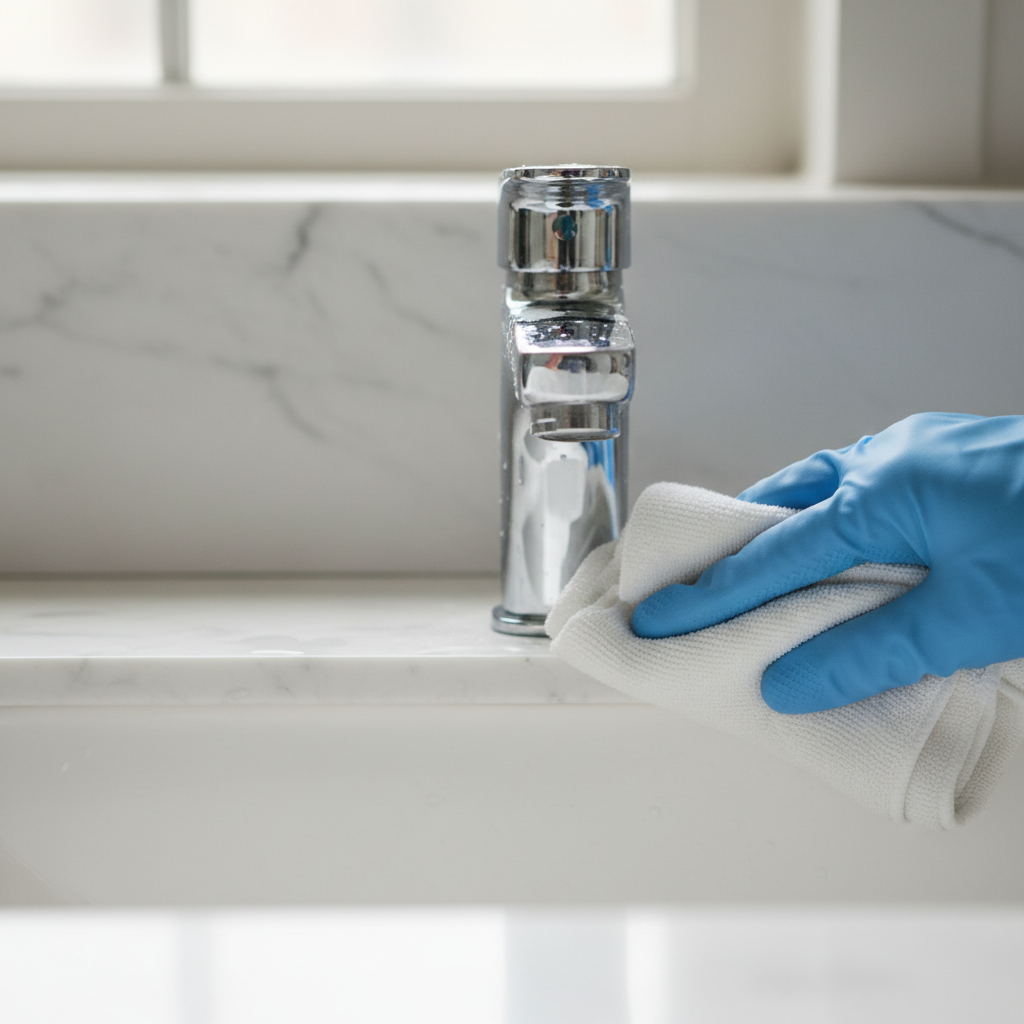
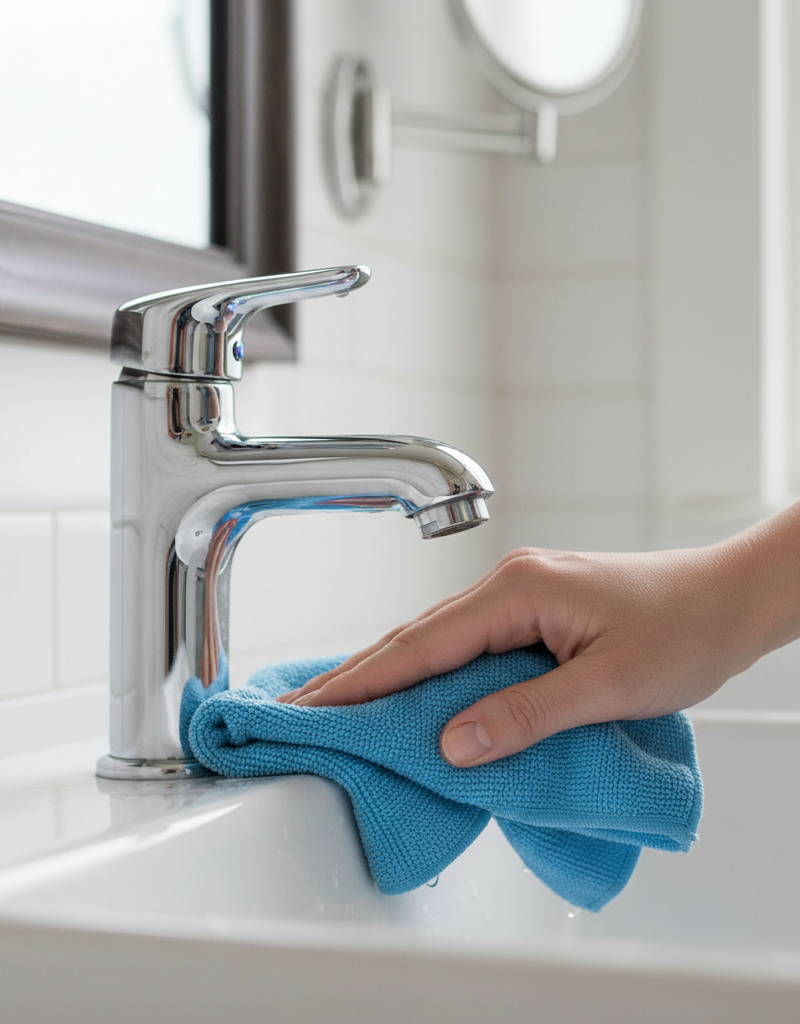
- Dry and Polish — Grab a clean microfiber cloth and dry the faucet off. That clears the water spots and brings the shine back. If you dry it after each use going forward, you’ll stay ahead of most of the buildup.
Bathroom · Bathroom remodel
| Project category | Bathroom |
|---|---|
| Problem type | Bathroom remodel |
| Trade required | General contracting |
| Urgency | Planned project |
| Safety risk | Low safety risk |
| DIY suitability | Pro recommended |
| Cost category | High cost |
| Typical timeline | Typically 2–4 weeks on site |
| Contractor type | Bathroom remodeler or licensed plumber |
Repair option
Refresh fixtures, grout, and vanity without moving plumbing.
Replacement option
Gut remodel when the pan leaks or the layout changes.
Common causes
- Dated finishes
- Failing tile or pan
- Accessibility needs
Relevant tools:project cost estimatorcompare quotes
Published September 21, 2026Last updated September 21, 2026
Tools & materials you'll need
Affiliate linksAs an Amazon Associate FixlyGuide earns from qualifying purchases — at no extra cost to you. Prices and availability are accurate as of publication and subject to change.
Quick Answer
That crusty white film hanging on your bathroom faucet? Yep, that’s hard water buildup, plain and simple. It’s mostly calcium and magnesium deposits left behind after the water evaporates. You don’t need harsh chemicals to knock it off, either. A good soak with something acidic like white vinegar or lemon juice will usually break it down and bring the shine back without much fuss.
The Problem
I’ve been in a lot of bathrooms over my 25+ years in this trade, and I can’t count how many times I’ve seen good fixtures buried under a thick white crust, sometimes with a little green mixed in. Homeowners figure the faucet’s just old, or maybe etched beyond saving. Nine times out of ten, it’s mineral buildup from hard water. Your tap water carries dissolved minerals — calcium and magnesium, mostly — and when that water splashes on the faucet and dries, the water leaves and the minerals stay put. Layer after layer, that junk stacks up and turns a clean fixture into a rough-looking mess that makes shiny chrome look tired.
And it’s not just about looks, either. That buildup can mess with how the faucet actually works. I’ve pulled aerators that were packed solid, and the water went from a decent stream to a sad little dribble — or it sprayed every which way but the sink. Around handles, it can get stiff too. Sometimes they’ll even seize up if you let it go long enough. No dice on that.
How It Works
To beat hard water, you’ve got to know why it leaves that junk behind. Think of your water like a tiny delivery truck hauling dissolved rock — mainly calcium carbonate and magnesium carbonate — from the ground through your pipes and out to the faucet. Once that “hard” water hits the air and dries, the water molecules leave as vapor, but those mineral particles? They stick around. They don’t evaporate.
What you’re left with is dried mineral sediment, like scale packed on in thin layers. Then more water splashes, dries, and leaves more scale on top. Pretty soon you’ve got that crusty coating. Regular soap and water won’t do much because soap is made for grease and everyday grime, not minerals. You need acid to break those bonds. Vinegar or citric acid reacts with the calcium carbonate and turns it into water-soluble stuff you can rinse away. Acid plus base — the mineral deposit — gives you salt, water, and carbon dioxide. That’s why you’ll sometimes see little bubbles when you put a strong acid on heavy buildup. That’s the gas escaping. Makes a lot more sense once you’ve seen it in person, doesn’t it?
Step-by-Step Fix
Alright, let’s get that faucet cleaned up. This isn’t fancy work, but a little patience sure helps. Get your supplies together first so you’re not hunting around mid-job.
- Prep the Area — Before you start slinging cleaner around, lay some old towels or rags in the sink and around the base of the faucet. You don’t want acid dripping onto the countertop, especially if it’s marble or granite. I’ve seen folks learn that lesson the hard way, and that’s a headache nobody wants.
- Safety First — Don’t skip this. Put on rubber gloves and eye protection. Even mild acids like vinegar can bug your skin and eyes. If you’re using a stronger cleaner, make sure the room’s got some airflow. Crack a window, flip on the fan — don’t sit there breathing it in.
- Choose Your Weapon (Cleaner) — For most hard water stains, plain distilled white vinegar is your best bet. Lemon juice works too, but vinegar’s usually cheaper and odds are you already have it. For real stubborn, years-old buildup, you may need a descaler like CLR or Lime-A-Way, but I’d start with vinegar. You’d be surprised what that stuff handles.
- Pro Tip: If you’re dealing with vertical surfaces or a thick crust, soak a rag or paper towels in vinegar and wrap them around the faucet. That keeps the acid in contact with the minerals longer. A rubber band helps hold it in place if you need it.
- Soak it Good — This is where the cleanup starts happening. Whether you’re spraying, wiping, or wrapping a vinegar-soaked rag, get the problem areas fully wet. Let it sit. Light staining might come loose in 15-30 minutes. Heavy buildup could need an hour or two, or even overnight. I remember a rental in Scottsdale where the faucet was almost unrecognizable — looked like somebody had dipped it in chalk. I wrapped it in vinegar-soaked cloths, left it overnight, and came back to a much easier job the next morning. Don’t rush it. The acid needs time to do its thing.
- If no change after 2 hours: Reapply the vinegar or move to a stronger acidic cleaner like a commercial descaler. Just follow the manufacturer’s directions on those products.
- Scrub Away — After it’s soaked, grab a soft-bristled brush. An old toothbrush is great for tight spots, or use a non-scratch scrub pad. Scrub gently. You should see the mineral deposits loosen and start breaking apart. Don’t use steel wool or anything abrasive — you’ll scratch the finish and end up making the faucet look worse than before.
- What if it's still stuck? Reapply the cleaner and let it sit longer. Sometimes a couple of shorter soaks and scrubs work better than one long one.
- Rinse Thoroughly — Once you’ve scrubbed it, rinse the faucet completely with clean water. Get every bit of cleaner and loosened mineral off there. You don’t want acidic residue hanging around.
- Dry and Polish — Grab a clean microfiber cloth and dry the faucet off. That clears the water spots and brings the shine back. If you dry it after each use going forward, you’ll stay ahead of most of the buildup.
- Tackle the Aerator — That little screen on the end of the spout is a common choke point for mineral buildup, and it’ll cut your water flow down quick. Unscrew it — usually by hand, or with channel-lock pliers if it’s stuck hard (wrap it with a rag to protect the finish). Soak the aerator in a small bowl of white vinegar for 30 minutes to an hour. Use an old toothbrush or a small pick to clear out the leftovers. Rinse it well and screw it back on. You’ll usually notice a big difference in pressure right away.
Common Causes
- Hard Water Itself: This is the main culprit. If your area has a high mineral load in the water, you’re fighting hard water, period. Check your local water report or use a test strip if you want proof.
- Infrequent Cleaning: The longer those minerals sit there, the tougher they get. A quick wipe every few days saves you a lot of grief.
- Splashing & Drying: Every time water splashes on the faucet and dries on its own, it leaves minerals behind. Those little droplets may not look like much, but they add up fast.
- Leaky Faucets: Even a slow drip, drip, drip can keep putting mineral-rich water on the same spot, and that’s how you get crusty rings over time. Fix the leak.
- Hot Water: Hot water evaporates quicker and can carry more dissolved minerals, so sometimes it builds up faster than cold water does.
Common Mistakes
- Using Abrasive Scrubbers: Steel wool and rough scouring pads will chew up the finish faster than you can blink. Once it’s scratched, it’s harder to keep clean and can even start corroding. Stick with soft brushes or cloths.
- Ignoring the Aerator: A lot of folks clean the shiny part and forget the aerator. If your water flow’s weak, that little screen is usually packed full of minerals. Easy fix to miss.
- Not Letting Cleaners Soak Long Enough: Patience matters here. You can’t just spray vinegar and wipe it right away if the buildup’s heavy. The acid needs time to react and loosen the mineral deposits. Give it at least 15-30 minutes, or longer if it’s bad.
- Using the Wrong Cleaners: Bleach and ammonia-based cleaners aren’t made for mineral deposits, and they can damage some faucet finishes. Stick with acids for limescale.
- Skipping the Rinse & Dry: If you leave acidic residue on the faucet, you can wind up with discoloration or damage over time. And if you don’t dry it after cleaning — or after normal use — you’re basically inviting new spots right back.
Cost & Time Breakdown
Here
Related Articles
Keep troubleshooting with these hand-picked guides from FixlyGuide:
- The Grimy Secret Behind Your Dull Bathroom Faucet — And How to Make It Shine — Discover the real culprit behind your bathroom faucet's dull, grimy appearance and how to quickly restore its shine with a few common house…
- The Invisible Scum on Your Bathtub: How to Make It Gleam Again — Is your bathtub losing its luster, even after scrubbing? That invisible layer of soap scum and mineral deposits is the culprit. Learn how t…
- The Rusty Ring In Your Toilet? It's Not Just Ugly, It's a Symptom. — Stubborn rust rings in your toilet bowl are an eyesore and a sign of hard water or corroded pipes, but you can remove them with the right a…
- The Grimy Cloud: Why Your Glass Shower Doors Won't Sparkle — Tired of scrubbing your glass shower doors only for them to remain cloudy and grimy? I'll show you why those hard water stains and soap scu…
- That Annoying Haze on Your Stainless Steel Sink? Here's How I Get It Out — I've seen it a hundred times: a cloudy, hazy film clinging to a stainless steel sink that just won't come clean. It's usually from hard wat…
- Why Your Shower Doors Still Look Grimy After Scrubbing (It's Not You) — Tired of scrubbing shower doors only to find them still coated in a stubborn, cloudy film? It’s almost certainly hard water mineral buildup…
Should you do this yourself?
Answer five quick questions before you start. Safety outranks savings every time.
Your experience with work like this
How high do you have to work?
Does the job involve any of these?
Will it need a permit?
Specialty tools
Free and instant. Educational guidance only — not a quote, inspection, or professional diagnosis.
What should this project cost?
Enter your project details for a realistic cost range before you call anyone.
Mid-range remodels commonly $12,000–$22,000; small repairs often under $600.
- Regional adjustment
- National average
- Labor share (typical)
- ~$5,603
- Quotes to collect
- 3 written estimates
Educational estimate based on national averages — not a binding quote. Always confirm with written local estimates.
Before you start
Check the difficulty, permits, and safety risk — then decide whether to call a pro.
- Estimate this projectGet a cost range for your scope and ZIP before you call anyone.Open
- Get local estimatesSend one request and compare written estimates from vetted pros.Open
Free, no signup required. Estimates are educational guidance, not a quote or an inspection.
Get the print-ready PDF of this guide
A clean, ad-free, printable version you can keep on your phone or pin to the workshop wall. Free with a FixlyGuide account.
- Print-optimized layout
- Tools, materials & every step included
- Saved to your account
Frequently asked questions
What exactly are hard water stains on a faucet?+
Hard water stains are mineral deposits, primarily calcium and magnesium, left behind when water evaporates. These minerals are naturally dissolved in "hard" water and accumulate as a white, crusty film on surfaces like your faucet.
Can hard water stains permanently damage my faucet?+
While typically not permanent if addressed, heavy or prolonged hard water buildup can lead to corrosion or etching of certain finishes over many years. It can also clog the aerator and affect water flow.
Is vinegar safe to use on all faucet finishes?+
For most common finishes like chrome, stainless steel, and brushed nickel, white vinegar is safe. However, always test on an inconspicuous area first, especially for specialty finishes or plated fixtures, as prolonged exposure could potentially dull some finishes. Rinse thoroughly.
How often should I clean my faucet for hard water stains?+
If you have very hard water, a quick wipe-down with a vinegar solution weekly can prevent major buildup. For moderate hard water, a thorough cleaning every 2-4 weeks is usually sufficient. Drying the faucet after each use helps a lot.
What if vinegar isn't strong enough for my hard water stains?+
For extremely stubborn, thick hard water buildup, you might need a commercial descaling product like CLR or Lime-A-Way. Always read and follow the manufacturer's instructions carefully, ensure good ventilation, and wear protective gear.
Can I prevent hard water stains from forming?+
Yes, prevention is key! Wiping down your faucet with a dry cloth immediately after each use dramatically reduces buildup. Installing a whole-house water softener is the most effective long-term solution if you have very hard water throughout your home.
Will cleaning hard water stains remove the shine from my faucet?+
No, if done correctly, cleaning hard water stains with appropriate methods (like vinegar and soft cloths) should restore your faucet's original shine. Abrasive cleaners or harsh scrubbing, however, can scratch and dull the finish.
What's an aerator and why should I clean it?+
The aerator is the small mesh screen at the tip of your faucet spout. It mixes air with water to create a steady, splash-free stream. Hard water minerals frequently clog aerators, reducing water pressure and causing erratic spray. Cleaning it is crucial for proper faucet function.
Can I use lemon juice instead of vinegar?+
Yes, lemon juice is another natural acidic option that can be effective for dissolving mineral deposits. It works similarly to vinegar, though it might be slightly less potent for very tough stains and often more expensive than white vinegar.
My faucet is still dull after cleaning. What gives?+
If your faucet is still dull after thoroughly removing hard water stains, it might be due to actual wear on the finish, etching, or micro-scratches. Sometimes, a metal polish designed for your specific faucet material can help restore some luster, but deep damage may require replacement.
Does hot water make hard water stains worse?+
Hot water can sometimes exacerbate hard water stains because it tends to evaporate faster than cold water, leaving minerals behind more quickly. Also, higher temperatures can increase the solubility of certain minerals, potentially leading to faster deposit formation in some cases.
Discussion
Loading comments…