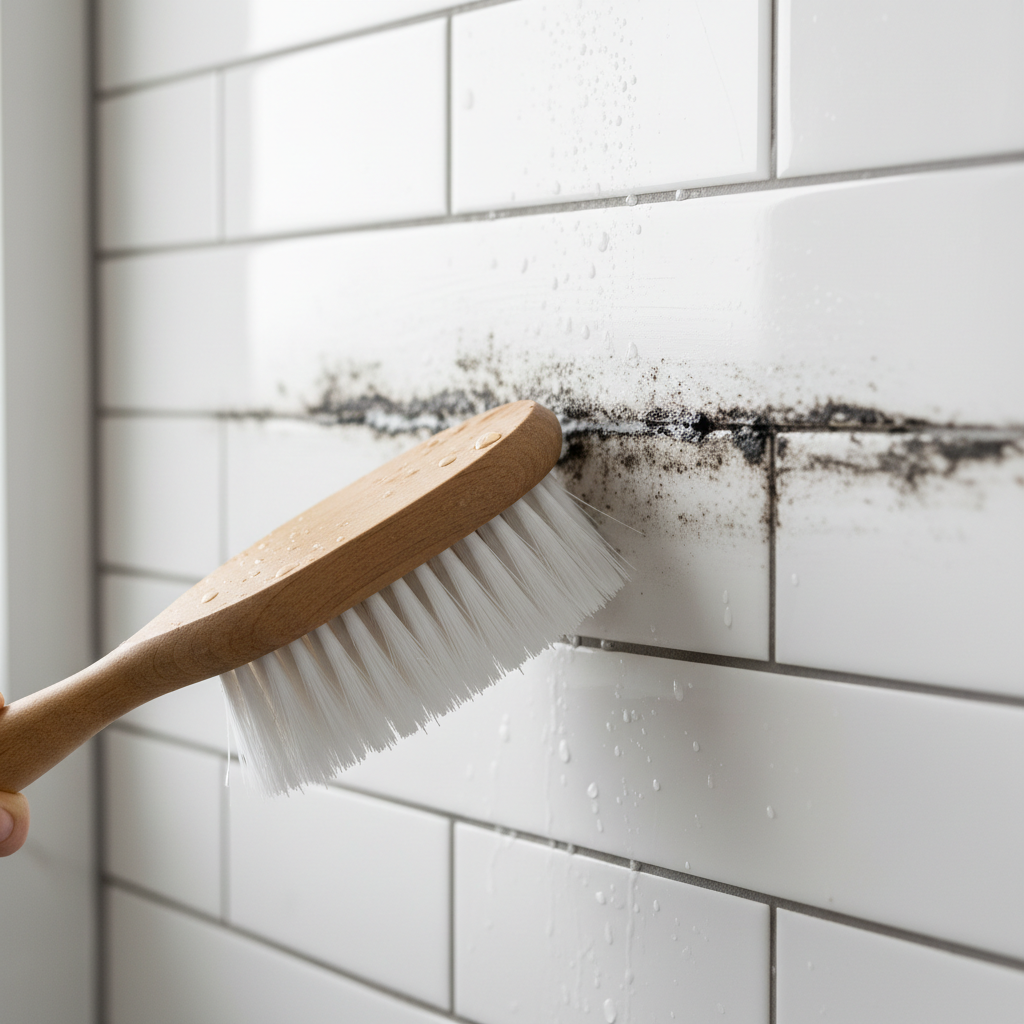
- Prep Your Area and Yourself — Safety first, always.
- Put on rubber gloves and eye protection. Seriously. Splashback happens fast.
- Pull out bath mats, towels, or anything else sitting close by.
Published August 30, 2026Last updated August 30, 2026
Tools & materials you'll need
Affiliate linksAs an Amazon Associate FixlyGuide earns from qualifying purchases — at no extra cost to you. Prices and availability are accurate as of publication and subject to change.
Quick Answer
That black gunk hanging on your bathroom grout isn’t just regular dirt; nine times out of ten, it’s mold or mildew taking advantage of a wet, warm shower area or floor. If you really want it gone, don’t just hit it with a scrub brush and call it a day. You need a cleaner that’ll kill the spores and work its way into the porous grout. Bleach-based cleaner, hydrogen peroxide, or a good grout cleaner will do the job, then you’ve got to scrub it out and, just as important, keep it from coming back.
The Problem
Alright, let’s talk about that ugly black stuff. You’ve scrubbed it, probably muttered at it, and it still shows back up, right? Most homeowners figure it’s just dirt that’s stuck in there, but that’s usually not what’s going on, especially in a bathroom. What you’re almost certainly looking at is mold or mildew. It loves steady moisture, the steam from hot showers, and all the soap scum and skin cells that hang up in grout lines — basically, a little buffet for fungus.
Grout’s porous. Think tiny sponge, only meaner. Every time you shower, water, soap, and whatever else is coming off you slips into those little holes. If the area doesn’t dry out like it should, mold and mildew spores — they’re always floating around — land in that damp spot, take hold, and start spreading. That black staining? That’s the colony showing itself. It’s not just ugly, either. It can add to that musty bathroom smell, and honestly, it makes the whole room look grubby even if the tile is spotless.
I’ve seen this in all kinds of homes, from shiny new builds to houses older than some of the people living in them. Doesn’t matter if the tile costs a fortune; if the grout’s neglected, it’ll rat you out every time. I pulled a shower pan in Frisco last month that had exactly this leak-and-mildew combo — looked clean from across the room, but up close? No dice. It’s one of those problems that screams “deep clean me” whether you like it or not.
How It Works
So how does this black gunk, usually mold or mildew, get such a grip on your grout? Simple. It’s a perfect setup. Grout is cement-based and porous, which means it’s got tiny channels and holes all through it. Think of it like raw concrete with better manners. When water, humidity, and organic junk — soap residue, shampoo, dead skin cells, plain old dirt — get into those pores, they make a great home for microbial growth.
Mold and mildew spores are everywhere; they’re airborne. They just need three things to grow: moisture, warmth, and something to feed on. Bathrooms hand them all three without even trying. Tile is non-porous, so it wipes clean pretty easy, but grout lines act like little gutters, catching water and debris. If the room doesn’t breathe well, that moisture can hang around for hours, sometimes days, and that gives the spores time to germinate and send out microscopic root-like structures — hyphae — into the grout’s pores. As those colonies spread, they produce pigments, and that’s what you see as black, green, or even pink discoloration. It isn’t just sitting on top. It’s worked into the grout, which is why wiping it with water alone usually doesn’t get you very far. You’re cleaning the face of it, not killing what’s underneath.
Step-by-Step Fix
Alright, let’s get after it and save that grout. This isn’t brain surgery, but it does take some elbow grease and the right tools.
-
Prep Your Area and Yourself — Safety first, always.
- Crack a window and turn on the exhaust fan. You’re about to use some strong cleaner, and you don’t want to breathe that stuff in. I’ve been hit with industrial cleaner fumes in a cramped bath in West Hartford, Connecticut, and I felt sideways for an hour. Learn from that mess. Good airflow isn’t optional.
- Put on rubber gloves and eye protection. Seriously. Splashback happens fast.
- Pull out bath mats, towels, or anything else sitting close by.
-
Initial Rinse and Scrub — Knock off the loose stuff.
- Spray the grout lines with plain water. That helps loosen the top layer of grime.
- Use a stiff nylon brush — not metal, because that’ll chew up your tile — or an old toothbrush and give it a quick scrub. You’re not chasing perfection yet, just removing the loose junk. That helps the cleaner work better.
-
Apply Your Chosen Cleaner — Let the chemicals do the heavy lifting.
- Option 1: Bleach-based Grout Cleaner: My go-to for ugly, stubborn black mold. Spray it right on the grout lines. Don’t dilute it unless the label tells you to. Let it sit for 5-10 minutes. For really bad spots, you can leave it on for up to 30 minutes, but don’t let it dry out completely. Test it in a hidden spot first so you don’t end up with weird discoloration, especially on colored grout.
- Option 2: Hydrogen Peroxide: Good if you want a milder approach, especially if bleach fumes bug you or you’ve got colored grout. Mix a 3% hydrogen peroxide solution with baking soda into a paste. Smear that onto the grout lines. Let it sit for 10-15 minutes. It’ll foam a little — that means it’s working.
- Option 3: Commercial Grout Cleaner: There are plenty of decent ones out there. Follow the label exactly. Most of them need about the same dwell time.
-
Deep Scrubbing — Now for the muscle work.
- Grab your stiff nylon brush or old toothbrush and scrub the grout lines hard. You should see the black gunk start to release. For floor grout, a long-handled grout brush can save your back — and your mood.
- Work small sections at a time so the cleaner doesn’t dry out on you.
-
Rinse Thoroughly — Wash away the grime and cleaner.
- Rinse everything with plenty of clean water. Use a spray bottle, a wet sponge, or even the showerhead if you’re working in the shower. Make sure all the residue is gone. Leftover cleaner can attract dirt or wear down grout over time.
- Wipe it down with a clean, dry towel so you’re not leaving extra moisture behind.
-
Inspect and Repeat (If Necessary) — Sometimes one pass isn’t enough.
- Once it dries, check the grout. If there are still stubborn black spots, don’t panic. You may need to run steps 3-5 again on those areas. For deep stains, you might need to apply the cleaner, cover it with plastic wrap so it doesn’t dry out, and let it sit for a few hours or even overnight before scrubbing.
-
Consider Grout Sealing — Your best defense against future growth.
- Once your grout is clean and fully dry — give it 24-48 hours — think about putting on a good grout sealer. This is a big deal. Sealer helps keep water, dirt, and mold spores from soaking into the porous grout. It won’t fix everything, but it makes cleaning way easier and cuts down mold growth a lot. It’s basically a raincoat for your grout.
- Brush it on or use an applicator, wipe the extra off the tile, and let it cure per the product directions. Reapply every 1-3 years depending on use and moisture.
Common Causes
- Poor Ventilation: This is the main offender. If you’re not running the bathroom fan for at least 15-20 minutes after every shower, or you don’t even have one, moisture hangs around. That damp air is mold heaven. A window crack helps, sure, but in humid climates it often isn’t enough.
- Lack of Regular Cleaning: Plain and simple, if soap scum, skin cells, and dirt keep building up, you’re feeding mold and mildew. A quick wipe after each shower goes a long way.
- Unsealed or Poorly Sealed Grout: Like I said, grout is porous. If it’s not sealed, or the sealer wore off long ago, moisture and spores can move right in inside the grout.
- Leaky Plumbing: Sometimes the problem isn’t just surface moisture. A slow leak behind the wall or under the floor can keep grout wet all the time, and that leads to ugly, stubborn mold problems. If you’re cleaning it regularly and it keeps coming back fast, start looking for leaks.
- Specific Grout Type: Some older, sandier grouts are more porous than newer epoxy-based or polymer-modified grouts, so they stain easier and grow mold faster if you don’t stay on top of them.
Common Mistakes
- Using Metal Brushes: Don’t use a wire brush or anything metallic on grout or tile. You’ll scratch the tile glaze and beat up the grout, which just makes it more porous and more likely to cause trouble later.
- Ignoring Ventilation: Thinking a quick fan blast is enough — or skipping it altogether. You’ve got to move that moisture out after every shower. Don’t be shy with the fan.
- Not Letting Cleaners Dwell: Spraying cleaner and scrubbing right away wastes time and product. The cleaner needs a little runway to get into the grout and break down the mold or mildew. Give it those 5-10 minutes, or more if the spot’s nasty.
- Skipping the Sealer: Cleaning is only half the fight. If you don’t seal the grout, or reseal it once it’s worn off, you’re basically rolling out the welcome mat for the next mold patch. That’s a key prevention step.
- Mixing Cleaning Chemicals: Never mix bleach with ammonia-based cleaners (like Windex or some bathroom sprays), or with acids (like vinegar). That can make toxic gases, and that’s serious business. Stick with one cleaner and rinse well before you try anything else.
- Over-Saturating with Water: You do need to rinse, but letting water sit on grout for too long, especially after cleaning, pushes moisture right back into those pores. Dry the area as much as you can after rinsing.
Cost & Time Breakdown
Here
Related Articles
Keep troubleshooting with these hand-picked guides from FixlyGuide:
- The Caulk Stain That Won't Quit: Why Your Shower Stays Grimy — Is that stubborn, discolored caulk making your clean shower look perpetually dirty? It's not just surface grime; it's often mold or mildew,…
- The Mystery Smell: Why Your Fridge Stinks (Even After Cleaning It) — That persistent, foul odor in your refrigerator isn't just gross; it's often a sign of hidden issues. Learn the real culprits behind linger…
- The Grimy Cloud: Why Your Glass Shower Doors Won't Sparkle — Tired of scrubbing your glass shower doors only for them to remain cloudy and grimy? I'll show you why those hard water stains and soap scu…
- The Invisible Scum on Your Bathtub: How to Make It Gleam Again — Is your bathtub losing its luster, even after scrubbing? That invisible layer of soap scum and mineral deposits is the culprit. Learn how t…
- The Rusty Ring In Your Toilet? It's Not Just Ugly, It's a Symptom. — Stubborn rust rings in your toilet bowl are an eyesore and a sign of hard water or corroded pipes, but you can remove them with the right a…
- That Funky Smell in Your Washing Machine — Tired of your washing machine making your 'clean' clothes smell musty? We'll show you how often you should actually deep clean your washi…
Should you do this yourself?
Answer five quick questions before you start. Safety outranks savings every time.
Your experience with work like this
How high do you have to work?
Does the job involve any of these?
Will it need a permit?
Specialty tools
Free and instant. Educational guidance only — not a quote, inspection, or professional diagnosis.
What should this project cost?
Enter your project details for a realistic cost range before you call anyone.
Mid-range remodels commonly $12,000–$22,000; small repairs often under $600.
- Regional adjustment
- National average
- Labor share (typical)
- ~$5,603
- Quotes to collect
- 3 written estimates
Educational estimate based on national averages — not a binding quote. Always confirm with written local estimates.
Before you start
Check the difficulty, permits, and safety risk — then decide whether to call a pro.
- Estimate this projectGet a cost range for your scope and ZIP before you call anyone.Open
- Get local estimatesSend one request and compare written estimates from vetted pros.Open
Free, no signup required. Estimates are educational guidance, not a quote or an inspection.
Get the print-ready PDF of this guide
A clean, ad-free, printable version you can keep on your phone or pin to the workshop wall. Free with a FixlyGuide account.
- Print-optimized layout
- Tools, materials & every step included
- Saved to your account
Frequently asked questions
What is the black gunk in my grout?+
The black gunk in your bathroom grout is almost always mold or mildew, a type of fungus that thrives in damp, warm environments with organic matter like soap scum.
Is bleach safe to use on grout?+
Yes, bleach is very effective for killing mold and mildew on white or light-colored grout. Always test in an inconspicuous area first, and ensure good ventilation. Avoid using it on colored grout unless you test it, as it can cause discoloration.
Can I use vinegar to clean moldy grout?+
While vinegar can kill some types of mold, it's generally less effective on embedded mold in porous grout compared to bleach or hydrogen peroxide. Also, be careful using vinegar on natural stone tiles, as it can etch them.
Why does the black gunk keep coming back after I clean it?+
It keeps coming back because the underlying cause – persistent moisture and poor ventilation – hasn't been addressed, or the mold spores weren't completely killed. Sealing your grout and improving air circulation are key preventative measures.
How often should I seal my grout?+
For shower areas and high-traffic floors, I usually tell homeowners to re-seal their grout every 1-3 years. For less-used areas, you might get away with 3-5 years. A simple water droplet test can tell you if it's still repelling water.
What kind of brush should I use to clean grout?+
Always use a stiff nylon brush or a dedicated grout brush. Avoid metal brushes, as they can scratch your tiles and damage the grout itself, making future cleaning harder and promoting more mold growth.
Can black grout mold affect my health?+
For most healthy individuals, a small amount of bathroom mold isn't a huge health risk, but it can trigger allergies or respiratory issues in sensitive people. It's always best to remove it to keep your home healthy.
What's the best way to prevent mold in grout?+
The best prevention involves three things: using an exhaust fan during and after showers for at least 15-20 minutes, wiping down surfaces after use, and ensuring your grout is properly sealed and periodically re-sealed.

Discussion
Loading comments…