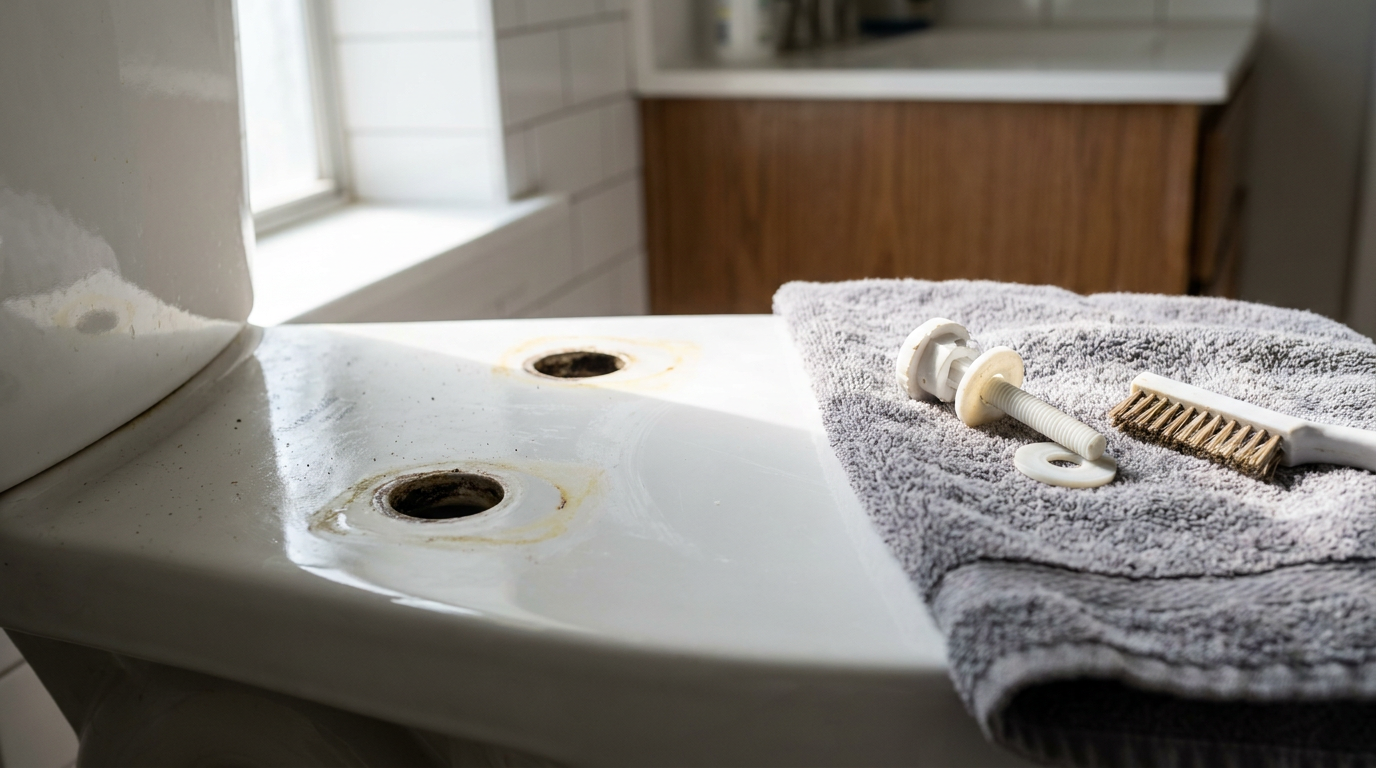
- Loosen and remove the underside mounting nuts — Reach beneath the rear underside of the bowl to locate the plastic or brass nuts securing the hinge bolts. Turn counterclockwise to loosen them completely.
- Tools needed: 10-inch adjustable pliers or a dedicated plastic toilet bolt socket.
- If the bolt spins in place: Hold the top bolt head still using a wide-blade flathead screwdriver while you spin the bottom nut with pliers.
Published October 23, 2026Last updated October 23, 2026
Tools & materials you'll need
Affiliate linksAs an Amazon Associate FixlyGuide earns from qualifying purchases — at no extra cost to you. Prices and availability are accurate as of publication and subject to change.
Quick Answer
To clean yellowed, urine-stained toilet seat hinges, don’t just hit the top with spray and call it a day. Pop open the hinge caps, unthread the plastic mounting bolts from beneath the bowl, and soak the hardware in a 50/50 mix of warm water and white distilled vinegar for 20 minutes. Scrub the recessed mounting holes on the porcelain with an enzyme cleaner and an old stiff-bristle toothbrush to knock out the uric acid crystals that keep holding that stink.
The Problem
You scrub your toilet every Saturday. The bowl shines, the tank’s dust-free, and you wipe the seat until it squeaks. Then twenty minutes later, that faint ammonia smell creeps right back into the bathroom. And if you look close at the plastic caps anchoring the seat to the bowl, there’s usually that ugly amber sludge working out of the seam.
Wiping it with an all-purpose spray just pushes the mess deeper into the hinge mechanism. That discoloration isn’t simple surface grime—it’s dried uric acid crystals mixed with body oils, hair, and hard water scale. The seat bolts clamp down against the porcelain with around 15 to 20 inch-pounds of torque, so liquid gets pulled straight under the hinge plate by capillary action. Standard cleaning never reaches it. Every time somebody sits down, the seat flexes just enough to pump foul-smelling liquid back out of those little crevices.
I pulled a toilet seat in Frisco last month that had exactly this leak pattern under both hinges. Looked clean from five feet away. Get up close, though, and it was a different story.
How It Works
A standard toilet seat attaches to the porcelain bowl using two through-holes drilled 5-1/2 inches apart on center. A threaded bolt (usually 3/8-inch nylon or stainless steel) drops through a molded plastic hinge plate on top, passes through the porcelain deck, and secures underneath with a wing nut or friction washer.
Whenever liquid splashes or mists near the rear of the bowl, capillary draw pulls that moisture beneath the flat plastic hinge base. The porcelain surface underneath is unglazed or roughly cast, which means it’s got microscopic pores. Liquid evaporates under the ambient bathroom air—typically running at 70°F to 78°F with high post-shower humidity—leaving behind insoluble uric acid salts.
Bleach won’t dissolve these crystals; it just brightens the color for a bit while the ammonia salts stay embedded in the plastic’s microscopic pores. Over time, uric acid can chemically degrade polypropylene and ABS plastics, permanently staining the nylon bolts and hinge covers yellow. If you want the smell gone and the buildup cleared, you’ve got to break the clamping seal, dissolve the alkaline crystals with an acid or targeted enzymatic agent, and clean the unglazed porcelain seat deck all the way through.
Step-by-Step Fix
Follow these steps to pull the assembly apart, get rid of the deep odor, and put the hardware back clean.
-
Protect your floor and clear the zone — Lay an old towel or rag directly beneath the underside of the toilet tank and bowl. You’ll be working under the porcelain deck, and drops of cleaning solution, loose grime, or old plastic washers are going to fall.
- Tools needed: Thick cleaning rag or drop cloth, nitrile gloves.
- Safety check: Wear nitrile gloves; old hinge assemblies can hold concentrated coliform bacteria and dried urine salts.
-
Pop the hinge bolt caps — Pry open the snap-down cosmetic covers located at the back of the toilet seat hinges. Most modern seats (Bemis, Kohler, American Standard) have a small fingernail slot at the rear or side; slip a flathead screwdriver gently into the slot and pry upward.
- If it doesn't budge: Don’t muscle brittle plastic. Wrap the tip of your flathead screwdriver in masking tape so you don’t gouge the plastic or chip porcelain, then twist the blade sideways rather than prying up.
- Quick-release seats: If your seat features quick-release push buttons at the center posts, press them in, pull the seat straight up off the mounting posts, and flip open the post covers instead.
-
Loosen and remove the underside mounting nuts — Reach beneath the rear underside of the bowl to locate the plastic or brass nuts securing the hinge bolts. Turn counterclockwise to loosen them completely.
- Tools needed: 10-inch adjustable pliers or a dedicated plastic toilet bolt socket.
- If the bolt spins in place: Hold the top bolt head still using a wide-blade flathead screwdriver while you spin the bottom nut with pliers.
- If metal bolts are rusted solid: Spray the threads with penetrating oil (like PB Blaster) and let it dwell for 15 minutes. If rust has welded the fastener in place, cut through the bolt shaft under the bowl using a mini-hacksaw with a bi-metal blade, and don’t nick the porcelain.
-
Lift the seat assembly away from the bowl — Pull the toilet seat and hinges straight up and off the toilet. Set the seat inside a bathtub or deep utility sink for containment.
- Inspect the bottom of the hinge base. You’ll probably see a greasy, dark yellow ring of calcified uric scale trapped against the rubber or plastic anti-slip gaskets.
-
Disassemble the hinge pins and washers — Separate the mounting bolts, rubber friction washers, and top hinge covers from the seat brackets.
- Keep left and right hinge parts grouped together if they feature directional tension dampeners (common on soft-close models).
-
Soak the hardware in an acidic descaling bath — Fill a small plastic bucket or bowl with 2 cups of white distilled vinegar (5% acidity) heated to approximately 120°F, mixed with 1 tablespoon of grease-cutting liquid dish soap. Submerge the plastic bolts, nuts, and hinge caps for 20 to 30 minutes.
- Why this works: The mild acetic acid breaks the chemical bond of the alkaline uric crystals and dissolves calcified hard water deposits without melting or crazing the plastic.
- Caution: Never use boiling water on plastic hinges; temperatures above 140°F can warp soft-close hinge cartridges and warp nylon mounting bolts.
-
Treat the unglazed porcelain mounting deck — While hardware soaks, focus on the flat surface of the toilet bowl where the hinges sat. Spray the two 1/2-inch bolt holes generously with an enzymatic urine cleaner.
- Let the enzymatic foam sit for 10 to 15 minutes. Enzymes need dwell time to eat through the organic protein and uric acid molecules trapped inside the unglazed interior rims of the bolt holes.
-
Scrub the hinge wells and bolt cavities — Take a stiff-bristle utility detail brush or an old toothbrush and scrub the porcelain mounting holes thoroughly, pushing the bristles all the way through to the underside.
- Apply a small dab of baking soda to the brush head for mild, non-scratching abrasive action against baked-on mineral stains.
- Wipe the area dry with microfiber towels until no yellow pigment transfers to the cloth.
-
Scrub the soaked hinge hardware — Pull the soaking bolts and caps from your vinegar bath. Use the detail brush to scour the threads of the bolts, the undersides of the hinge flaps, and the seams of the hinge housing.
- Rinse thoroughly with cold tap water.
- If plastic parts still hold a stubborn yellow tint after the grime is gone, the plastic has oxidized. You can brighten white plastic by applying a coat of 12% hydrogen peroxide cream (Volume 40 developer from a beauty supply store) and setting the pieces in direct sunlight for 2 hours before rinsing.
-
Clean and sanitize the seat body — Wash the entire toilet seat, focusing on the crevices between the seat ring and the lid hinge barrels, using warm water and a neutral pH disinfectant.
- Dry every inch with clean towels. Reassembling components while damp traps moisture, and that’s just asking for mildew under the hinge plates.
-
Reinstall and align the seat — Place the rubber anti-slip gaskets onto the clean porcelain deck, drop the hinge bolts down through the seat brackets and through the bowl holes, and thread the nuts from below.
- Align the toilet seat so the front edge and sides sit perfectly flush with the rim of the bowl.
- Hand-tighten the nuts until snug.
-
Torque the hardware evenly and snap caps shut — Tighten the nuts an additional 1/2 to 3/4 turn using your pliers or socket wrench until the seat does not shift laterally when nudged.
- Do not overtighten: Cranking down too hard can snap nylon threads or crack the vitreous china bowl deck. You’re looking for roughly 15 to 20 inch-pounds of torque—firm, but not strained.
- Snap the decorative hinge covers down until you hear a distinct click.
Common Causes
- Capillary action underneath hinge bases — Liquid spills or cleaning sprays sneak beneath the flat hinge mounting plates, where surface tension hangs onto the moisture against the porcelain.
- Aerosolized micro-droplets from flushing — Flushing an open toilet bowl throws a fine aerosol plume right onto the rear hinge deck, and it builds up daily even if nobody’s spilling anything.
- Using bleach instead of enzymatic or acidic cleaners — Bleach sanitizes surfaces and removes color, but it can’t dissolve crystallized uric acid salts; the dried crystal matrix stays behind and keeps pulling in grime.
- Loose mounting bolts — When plastic bolts stretch or back off by even 1/16 of an inch, the seat shifts during use, breaks the gasket seal, and lets fluids get sucked underneath the bracket.
- Porous, unglazed bolt pass-through holes — A lot of toilet manufacturers don’t fully glaze the interior walls of the mounting holes, so that raw vitreous ceramic acts like a sponge for odors.
Common Mistakes
- Soaking metal hardware in straight bleach — Bleach pits and corrodes chrome, brass, and stainless steel hardware fast, and then your hinge pins rust solid or snap. Use vinegar or mild enzymatic soap instead.
- Overtightening mounting bolts with a full-size ratchet — Vitreous china has huge compressive strength but very low tensile strength. Cranking down on hinge bolts with heavy leverage can snap the porcelain corner clean off the bowl, and then you’re looking at a whole toilet replacement. Hand-tighten plus a half-turn is plenty.
- Spraying liquid cleaners directly at the hinges — Dousing the hinge covers with spray bottles drives cleaner down into the bolt cavities where it pools and won’t dry out. Spray your rag or microfiber cloth first, then wipe down the hinge surfaces.
- Reusing degraded rubber washers — Once the black rubber friction gaskets under the hinges soften, tear, or turn gummy, they don’t seal out liquids anymore. Replace them with fresh neoprene or silicone washers whenever you pull the seat.
- Using abrasive scouring pads on plastic — Green Scotch-Brite pads or pumice sticks will micro-scratch the smooth gloss finish of plastic toilet seats and hinge covers. Those tiny scratches trap future urine splatter, which speeds up yellowing and odor absorption.
Cost & Time Breakdown
| Task | DIY Cost | Pro Cost | Time |
|---|---|---|---|
| Deep cleaning & descaling existing hinges | $5–$12 (cleaners & brushes) | $90–$150 (handyman minimum) | 45–60 minutes |
| Replacing mounting bolts & rubber washers | $6–$10 (hardware kit) | $90–$150 | 20–30 minutes |
| Installing quick-release replacement seat | $30–$65 (new seat) | $120–$180 (plumber install) | 25–35 minutes |
| Cutting & extracting rusted metal bolts | $12–$18 (hacksaw blade & oil) | $125–$200 | 40–60 minutes |
Tips & Prevention
- Flush with the lid down every single time — Keeping the lid closed during every flush cuts the spread of airborne droplets by over 80%, which keeps uric moisture off the back deck and hinge covers.
- Upgrade to a quick-release toilet seat — Modern seats with dual push-button releases pop off the porcelain posts in two seconds without any tools, so regular deep cleaning around hinge bases gets a whole lot easier.
- Apply a thin bead of paste wax around the base plate — Buffing a light coat of carnauba wax or marine sealant around the base of the hinge plate helps stop capillary action from pulling liquids underneath the plastic.
- Clean with enzymatic sprays every two weeks — Work a pet-grade or plumbing-grade enzyme cleaner into your bi-weekly routine to digest uric acid crystals before they harden into yellow scale.
- Inspect bolt tightness every six months — Grab the front of the seat twice a year and give it a firm wiggle; if the hinge bases slide against the porcelain, snug down the nuts before liquids slip past the seal.
When to Call a Professional
Most dirty or stuck toilet seat hinges can be handled with standard hand tools and cleaning agents. But call a licensed plumber or handy professional if your toilet has metal hinge bolts that have rusted into an immovable solid mass and you’re not comfortable using a reciprocating saw or hacksaw next to fragile porcelain—one bad slip can crack the bowl and cause thousands of dollars in water damage.
You should also reach out to a professional if the porcelain around the bolt holes is already fractured, cracked, or crumbling. Hairline cracks in the bowl deck weaken the whole thing and can suddenly give way under body weight, leaving sharp edges and a nasty structural failure.
Related Articles
Keep troubleshooting with these hand-picked guides from FixlyGuide:
- Dog Urine Stains on Hardwood? 10 Steps to Remove the Dark Spots and Odor — Erase stubborn black dog urine stains and kill lingering ammonia smells on hardwood floors using an enzyme-and-peroxide protocol that actua…
- The Grimy Gunk Under Your Washer: Why Your Laundry Still Smells — If your laundry comes out smelling less than fresh, the culprit might be hidden gunk and mildew in your washing machine. I'll show you how…
- The Grimy Secret Under Your Oven: Why Your Kitchen Never Feels Truly Clean — Your oven and range hood are silent culprits in your kitchen's battle against persistent grease and grime. This guide tackles how to deep c…
- Window Tracks Full of Gunk? How to Get the Grime Out for Good — Your windows won't glide smoothly if the tracks are packed with dust, dead bugs, and sticky grime. Here's how to deep clean them with simpl…
- Vents Blowing Dust? 10 Steps to Deep Clean Registers and When to Call a Pro — Stop furniture dust and dark ceiling streaks at the source. Here is how to deep clean HVAC registers, degrease duct boots, and know when to…
- That Mildew Smell in Your Washer? Here's the Real Fix. — Tired of 'clean' laundry smelling musty? The problem isn't your detergent; it's trapped bacteria and mold inside your washing machine. We'l…
What should this project cost?
Enter your project details for a realistic cost range before you call anyone.
Common repairs run $150–$650; repipes and water-heater replacements reach $1,500–$4,500.
- Regional adjustment
- National average
- Labor share (typical)
- ~$754
- Quotes to collect
- 3 written estimates
Educational estimate based on national averages — not a binding quote. Always confirm with written local estimates.
Get the print-ready PDF of this guide
A clean, ad-free, printable version you can keep on your phone or pin to the workshop wall. Free with a FixlyGuide account.
- Print-optimized layout
- Tools, materials & every step included
- Saved to your account
Frequently asked questions
Why doesn't bleach remove the urine smell from my toilet hinges?+
Bleach only bleaches the color out of stains—it doesn't break down alkaline uric acid crystals. In fact, mixing bleach with high-ammonia urine residues can release dangerous chloramine gas. An enzymatic cleaner or mild acid like distilled vinegar actually digests and dissolves the uric salt matrix.
Can permanently yellowed plastic toilet seat hinges be whitened?+
If the yellowing is surface scale, vinegar and enzymatic scrubs will remove it. However, if the urine sat undisturbed for years, uric acid can permanently alter and oxidize the composition of cheap polypropylene plastic. In that case, soaking in 12% hydrogen peroxide can lighten it, or you may simply need to spend $30 on a replacement seat.
What is a quick-release toilet seat and is it worth installing?+
A quick-release toilet seat features one or two buttons that detach the seat and lid from the mounting posts instantly. This lets you thoroughly clean and wipe the flat porcelain deck around the hinges in seconds without having to unscrew nuts from beneath the bowl every time.
How do I remove toilet seat bolts that are completely rusted stuck?+
Spray penetrating oil (like PB Blaster) onto the exposed threads and let it soak for 15 to 20 minutes. If the bolt head spins, grip the bolt shaft with locking pliers under the bowl while turning the nut. If it still won't budge, slide a thin hacksaw blade between the nut and the washer to cut the fastener without touching the porcelain.
Is it safe to soak plastic toilet hinges in vinegar?+
Yes, white vinegar (around 5% acetic acid) safely cleans modern plastic, nylon, and polypropylene toilet seat components without weakening them. Avoid soaking plastic hinges in boiling water or harsh industrial solvents like acetone, which will melt or warp the plastic.
How often should I remove my toilet seat for deep cleaning?+
Every 3 to 6 months is plenty for a full disassembly and deep soak, provided you wipe the exterior weekly. If you have young kids in the house or multiple family members using the bathroom, pulling the seat every 2 to 3 months will prevent uric buildup from solidifying.
Should I caulk around the toilet seat hinge bases to keep dirt out?+
No. While silicone can seal out moisture initially, toilet seats flex under weight. That flex will shear the silicone bond within weeks, creating an uneven lip that traps even more urine, grime, and moisture while making future cleaning much harder. Use snug rubber mounting washers instead.
Why does my toilet seat keep sliding around even after tightening the hinges?+
Check the rubber friction washers. Over time, rubber washers disintegrate, harden, or slip out of alignment, creating empty space inside the 1/2-inch porcelain hole. Replacing your old hardware with a universal expanding rubber top-mount bolt kit will lock the seat firmly in place.
Discussion
Loading comments…