- Gather Your Arsenal — This isn’t a one-tool fix. You’ll need a few pantry basics and maybe a store run.
- Tools: Sponge or soft cloth, old toothbrush, measuring cups.
- Materials: Distilled white vinegar, baking soda, dishwasher detergent booster (like Lemi Shine or Glisten), rinse aid.
General remodeling · Renovation planning
| Project category | General remodeling |
|---|---|
| Problem type | Renovation planning |
| Trade required | General contracting |
| Urgency | Planned project |
| Safety risk | Low safety risk |
| DIY suitability | Pro recommended |
| Cost category | Major investment |
| Typical timeline | Design and permitting often 2–4 months before work starts |
| Contractor type | General contractor |
Repair option
Phase the work and fix the building envelope first.
Replacement option
Full renovation with permits, design, and a general contractor.
Common causes
- Space no longer fits how the household lives
- Resale preparation
- Deferred maintenance stacking up
Relevant tools:project cost estimatorcompare quoteshome improvement material prices
Published September 2, 2026Last updated September 2, 2026
Tools & materials you'll need
Affiliate linksAs an Amazon Associate FixlyGuide earns from qualifying purchases — at no extra cost to you. Prices and availability are accurate as of publication and subject to change.
Quick Answer
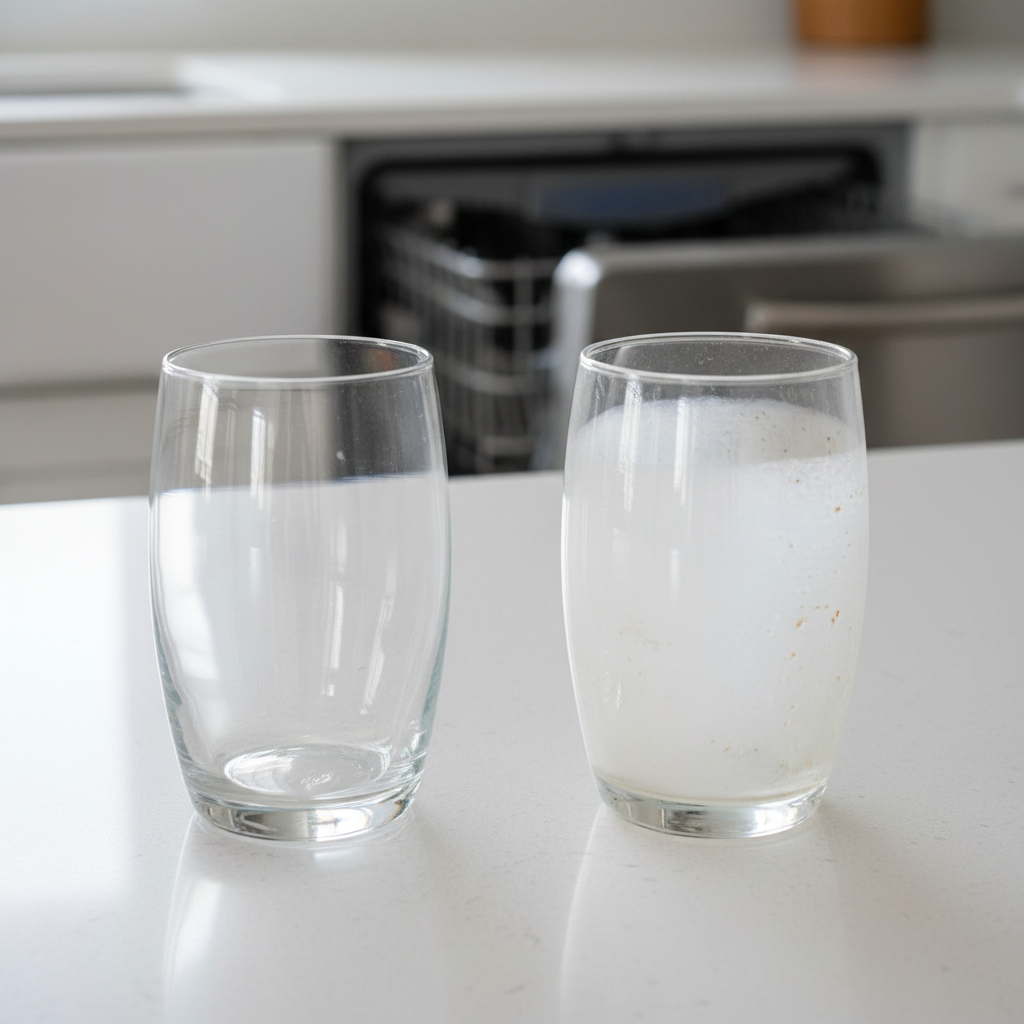
That milky film on your glassware coming out of the dishwasher? Most folks point straight at hard water, and sure, sometimes that’s exactly the problem. Calcium and magnesium can ride along in the water, stick to the glass, and leave that cloudy haze behind. But that ain’t the whole story. If you’ve got soft water, or you’re dumping in way too much detergent, you might be looking at etching instead — and that’s permanent damage to the glass surface itself. First thing’s first: figure out which one you’ve got, then you can hit it with the right fix.
The Problem
There’s nothing more aggravating than opening the dishwasher and pulling out a full load of what you thought were clean dishes, only to see your nice glasses — wine glasses, tumblers, whatever — looking like they got dipped in chalk water. That cloudy, sometimes almost rainbow-like film isn’t just ugly; it makes you wonder if anything in the kitchen is actually clean. I’ve been seeing this mess on homes and commercial jobs for years. This isn’t leftover food. It’s chemistry. Or minerals. Or both, and if you don’t deal with it the right way, it just keeps coming back. Feels like you’re fighting the machine itself, doesn’t it?
How It Works
Alright, let’s crack it open and see what’s really going on, because once you know the enemy, you’ve got a much better shot at knocking it out. There are two main culprits here: mineral deposits and glass etching. They can look pretty similar, but they’re not the same animal.
Mineral Deposits (Hard Water Film): A lot of the country’s got hard water, which means your tap water is carrying dissolved minerals like calcium and magnesium. Once that water gets hot in the dishwasher, those minerals stop behaving and fall out of solution. Same deal as the white scale you get in a kettle. In the dishwasher, those tiny mineral particles don’t rinse away clean — they stick to surfaces, especially glass. The hotter the water, the more concentrated those minerals get as the water evaporates, and that leaves behind the familiar white, chalky residue. This film sits on the surface of the glass, not in the glass itself. That means it can usually be removed, either chemically or with a little elbow grease.
Glass Etching (Soft Water or Detergent Damage): This one trips people up all the time, and I see them chasing hard water fixes that don’t do a dang thing. Etching is permanent damage to the glass itself. It happens when the surface gets eaten away by harsh conditions. If your water’s very soft — either naturally or because of a softener — there aren’t enough minerals in it to buffer the alkalinity in dishwasher detergent. Combine that super-soft, hot water with a high-alkaline detergent, and the glass can start dissolving at a microscopic level. It’s like sandblasting, just tiny enough to hide from the eye until it’s done the damage. High water temps above 140°F or 60°C and too much detergent make it worse. The result is a dull, pitted, or iridescent look that’s in the glass, not on it. Once it’s etched, that thing’s toast. No fixing it.
So the big diagnostic step is this: figure out which problem you’re actually dealing with. If white vinegar or a mild abrasive wipes the film off, you’re probably looking at hard water buildup. If nothing changes, etching’s the likely culprit. I’ve seen plenty of homeowners in places like Phoenix, Arizona, battling hard-water film like it’s a second job. Then you get folks in Seattle, where the water’s naturally soft, and they’re fighting etching because they’re using a heavy-duty detergent built for hard water. Go figure.
Step-by-Step Fix
Before you jump in, you’ve gotta know whether you’re dealing with mineral deposits or etching. Here’s a quick test:
-
The Vinegar Test — Grab a cloudy glass. Dampen a paper towel with plain white vinegar (5% acidity). Wrap it around a section of the glass or just rub it hard. If the cloudiness clears up, even a little, you’ve got mineral deposits. If nothing changes, or the glass looks duller, you’re probably dealing with etching. For this guide, I’m mainly talking about removable mineral deposits, but I’ll toss in some prevention tips for etching too.
-
Gather Your Arsenal — This isn’t a one-tool fix. You’ll need a few pantry basics and maybe a store run.
- Tools: Sponge or soft cloth, old toothbrush, measuring cups.
- Materials: Distilled white vinegar, baking soda, dishwasher detergent booster (like Lemi Shine or Glisten), rinse aid.
-
Clear the Decks — Empty that dishwasher all the way. You want a clean slate for this one. Check the filter — yep, that filter — and clean out any gunk. A clogged filter just drags the whole machine down.
-
The Vinegar Wash (for Mineral Deposits) — This is your first swing at it. Simple. Cheap. Works better than folks expect.
- Load a Dishwasher-Safe Bowl: Put a heat-safe bowl (about 2 cups capacity) filled with 1-2 cups of white vinegar on the top rack of your empty dishwasher. Don’t add detergent.
- Run a Hot Cycle: Run the dishwasher on its hottest setting. The vinegar vapor mixes with the wash water and helps dissolve mineral buildup on the dishwasher’s interior and any glasses left in there — though I’d rather you do this without dishes if you’re descaling the machine itself.
- If this doesn't work: The buildup might be too stubborn. You may need a dedicated dishwasher cleaner or another pass.
-
Baking Soda Scrub (for Stubborn Spots) — If a few glasses still have that cloudy haze after the vinegar wash, baking soda’s your friend.
- Create a Paste: Mix a few tablespoons of baking soda with just enough water to make a thick paste.
- Gentle Scrub: With a soft cloth or sponge, rub the paste onto the cloudy areas of your glasses. Baking soda’s mild abrasive action, plus its alkaline properties, can help lift mineral deposits. Rinse them well.
- Safety First: Don’t use abrasive scrubbers or harsh scouring pads. Those’ll scratch the glass and make a bad day worse.
-
Detergent Booster Power-Up — If you live in a hard water area, and I mean really hard water, like above 10 grains per gallon, you’ll probably need a booster. I pulled a water heater in Frisco last month that had exactly this kind of mineral junk caked everywhere — same story in the dishwasher, just on glass instead of plumbing. A booster won’t cure everything, but it sure helps.
- Add to Detergent Dispenser: For future loads, add a dedicated dishwasher detergent booster (like Lemi Shine, Glisten, or citric acid powder) to the main detergent dispenser with your regular detergent. Follow the product instructions for the right amount — usually 1-2 tablespoons.
- Why it helps: These boosters use citric acid or other chelating agents to grab onto hard water minerals so they don’t land on your dishes.
-
Rinse Aid is a Must — This isn’t just about spot-free drying; it’s a big deal for keeping film off, especially with hard water.
- Fill the Dispenser: Keep the dishwasher’s rinse aid dispenser full. Check it monthly. Most dishwashers have an indicator light when it’s low.
- How it works: Rinse aid lowers the surface tension of water so it sheets off glasses better, carrying minerals with it and helping things dry faster without spots.
-
Adjust Water Temperature — This one’s a balancing act. For hard water deposits, hotter water can sometimes make the problem worse by concentrating minerals faster. But you still need hot water for cleaning and sanitation.
- Optimal Range: Aim for your hot water heater to be set between 120°F (49°C) and 140°F (60°C). Anything much higher than 140°F can contribute to both etching and mineral deposition, especially if you have very hard water or soft water.
- Check your manual: Some newer dishwashers have internal heaters that can bump the temperature up, so you might not need to set your home water heater as high.
-
Proper Loading Techniques — You wouldn’t believe how many problems come from people just cramming the dishwasher full.
- Avoid Overcrowding: Give the dishes room. Water and detergent need to reach every surface. If things are overlapping, some spots won’t get cleaned or rinsed properly.
- Glass Placement: Put glasses on the top rack, facing down, not tilted. Make sure they’re stable and not touching other dishes or the spray arms. That way the water can circulate and drain like it should.
-
Choose the Right Detergent (and amount!) — This matters for both hard water film and etching prevention.
- For Hard Water: Look for detergents made for hard water or ones with phosphates where they’re allowed by law, or other water-softening agents. Pods are often a solid choice because they give you a consistent, concentrated dose.
- For Soft Water/Etching Prevention: Use less detergent than the label says, especially with powder or gel. In very soft water, some manufacturers say to use only half the suggested amount. Skip detergents loaded with harsh phosphates if etching is a concern.
-
Consider a Water Softener (Long-term Solution) — If hard water film is driving you nuts all the time, a whole-house water softener is the real long-haul fix. It strips the minerals before they ever get into your plumbing.
- Cost vs. Benefit: It’s an investment, no doubt. But it helps protect your appliances, your plumbing, and it makes cleaning easier across the board. A good system can run anywhere from $800 to $3,000 installed, and between detergent savings, better appliance life, and just plain less aggravation, it often pays for itself.
Common Causes
Alright, so we’ve covered the “what.” Here’s the “why,” plain and simple:
- Hard Water: The big one. Dissolved calcium and magnesium carbonates fall out as white film when heated. Basic chemistry, annoying as sin.
- Too Much Detergent: Sounds backwards, I know. But too much soap can leave residue behind, especially if your water isn’t soft enough to rinse it clean. In soft water, too much detergent is a fast track to etching.
- Too Little Detergent: On the flip side, not enough detergent — especially in hard water — means the soap can’t suspend and wash away food soils and minerals properly, so film sticks around.
- Low Water Temperature: If your hot water isn’t hot enough, below 120°F or 49°C, the detergent won’t activate right and minerals won’t dissolve as well, which leaves deposits.
- No Rinse Aid/Empty Dispenser: Rinse aid helps sheet water off the glass. Without it, water beads up and dries in spots, leaving film behind.
- Overloading the Dishwasher: If the spray arms can’t reach everything, you’ll get poor cleaning and poor rinsing. That leaves residue. Simple as that.
- Clogged Filter/Spray Arms: A gunked-up filter or blocked spray arm holes cuts down water circulation and pressure, which means lousy washing and rinsing.
- Using Non-Dishwasher Safe Items: Some plastics or old glass don’t like dishwasher heat and can break down or leach chemicals, which can leave film on other items.
- Extremely Soft Water: Like I said earlier, for glass etching, naturally very soft water combined with high heat and alkaline detergents can be the main culprit.
Common Mistakes
I’ve seen a pile of homeowners make the same mistakes trying to fix this:
- Assuming it's always hard water: Hard water is common, sure, but if you treat etching like it’s mineral buildup, you’re wasting time. Test with vinegar first.
- Using too much detergent (especially with soft water): Folks think more soap means cleaner dishes. Not always. With soft water, it’s a recipe for etching and residue. Cut back — you’ll probably be surprised.
- Ignoring the rinse aid dispenser: “Oh, I don’t need that.” Yeah, you do. It’s not optional if you want spotless, film-free dishes.
- Overloading the dishwasher: It’s not a storage bin. Give the dishes some breathing room, or you’re just washing them badly.
- Not cleaning the dishwasher itself: The dishwasher needs cleaning too. Food scraps, grease, and mineral deposits build up in the filter and spray arms, and that drags performance down.
- Using abrasive cleaners on etched glass: Once glass is etched, it’s etched. Scrubbing harder or reaching for harsh chemicals won’t fix it; it’ll just make it worse or scratch it. Best move is to accept the damage and focus on preventing the next batch.
Cost & Time Breakdown
Here
Related Articles
Keep troubleshooting with these hand-picked guides from FixlyGuide:
- That White Crust On Your Faucet? It's A Big Problem — That chalky, white buildup on your fixtures isn't just ugly—it's limescale from hard water, and it's actively clogging, corroding, and ruin…
- Your Dishwasher Smells? The Filter You Forgot Exists — Frustrated by a dishwasher that still stinks after a cleaning cycle? The culprit is likely a hidden, secondary filter trapping rotten food…
- The Silent Rot: What Your Soffits and Fascia Tell You About a Deeper Problem — Ignoring damaged soffit and fascia boards isn't just an aesthetic issue; it's a flashing warning sign your home could be facing serious, ex…
- The #1 Mistake Homeowners Make When Diagnosing Low Water Pressure — Discover the most overlooked cause of frustrating low water pressure impacting your entire home and how to fix it yourself, saving hundreds…
- Your Windows Are Crying? The Hidden Cause of Condensation — Window condensation isn't just a harmless annoyance; it's a clear signal that your home's indoor humidity is too high, potentially leading…
- That Chalky Film on Your Dishes? It's Not Soap Scum — If your dishwasher is leaving a cloudy white film on your glassware and dishes, the culprit is likely hard water mineral deposits, not left…
What should this project cost?
Enter your project details for a realistic cost range before you call anyone.
Cost depends heavily on which system turns out to be the source.
- Regional adjustment
- National average
- Labor share (typical)
- ~$1,620
- Quotes to collect
- 3 written estimates
Educational estimate based on national averages — not a binding quote. Always confirm with written local estimates.
Get the print-ready PDF of this guide
A clean, ad-free, printable version you can keep on your phone or pin to the workshop wall. Free with a FixlyGuide account.
- Print-optimized layout
- Tools, materials & every step included
- Saved to your account
Recommended for DIYers & woodworkers
Sponsored
The Top 20 Tools for Workshops of Any Budget
No stationary machines or power tools required — plus 3 fundamental tools that can't be bought at any price.
Get the free guide
Ted's Woodworking — The #1 Woodworking Resource
Detailed instructions, dimensioned drawings, materials & cutting lists, and 3D schematics for every skill level.
See the plansSponsored: links above are affiliate links. FixlyGuide may earn a commission on qualifying purchases — at no extra cost to you.
Frequently asked questions
Why do my glasses get cloudy in the dishwasher?+
Cloudiness is typically due to hard water mineral deposits (calcium, magnesium) or glass etching. Hard water leaves a removable film, while etching is permanent damage to the glass surface itself, often caused by soft water, high heat, and too much detergent.
How can I tell if my glasses are etched or just have hard water film?+
Try the vinegar test: rub a cloudy spot with a vinegar-soaked paper towel. If the cloudiness clears up, it's hard water film. If it remains or looks duller, it's likely etching, which is permanent damage.
Can cloudy glasses be made clear again?+
If the cloudiness is due to hard water mineral deposits, yes! White vinegar, baking soda paste, or a dishwasher booster can dissolve the film. If the glasses are etched, the damage is permanent, and they cannot be restored.
What is glass etching?+
Glass etching is permanent damage where the surface of the glass is microscopically eroded. It often occurs in soft water areas when hot water and alkaline detergents aggressively react with the silica in the glass, leaving a dull or iridescent finish.
How do I prevent future cloudiness on my glasses?+
Use a good rinse aid, avoid overcrowding the dishwasher, ensure proper water temperature (120-140°F), use the correct amount of detergent for your water hardness, and regularly clean your dishwasher filter. Consider a water softener for severe hard water.
Is it safe to put white vinegar in my dishwasher?+
Yes, distilled white vinegar (5% acidity) is safe for most dishwashers. Run an empty cycle with 1-2 cups of vinegar in a bowl on the top rack to descale and remove odors. Avoid mixing vinegar with bleach, as it creates toxic fumes.
Do I need a rinse aid if I have soft water?+
Yes, even with soft water, rinse aid is beneficial. It helps water sheet off surfaces, preventing water spots and promoting faster drying, which can also help mitigate the conditions that contribute to etching.
My dishwasher is relatively new; why are my glasses still cloudy?+
Even new dishwashers can't magically overcome water chemistry or improper usage. The problem is almost always related to your water hardness, detergent use, rinse aid levels, loading habits, or water temperature, regardless of the dishwasher's age.
Should I pre-rinse dishes before putting them in the dishwasher?+
No, most modern detergents are designed to work by clinging to food particles. Excessive pre-rinsing can cause detergents to become too aggressive, especially in soft water, potentially contributing to etching on your glassware. Just scrape off large food scraps.
Discussion
Loading comments…