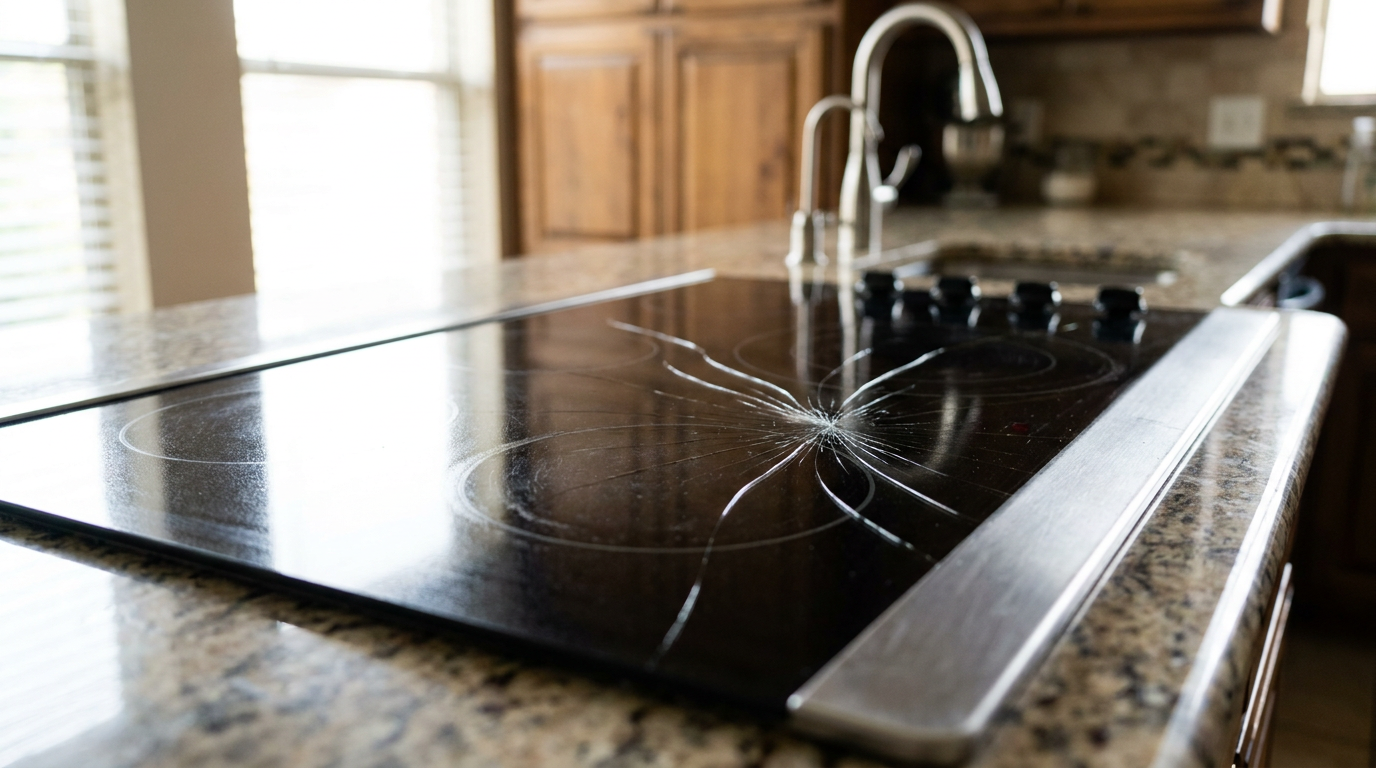
- Impact Damage: This is the one I see most. Drop a heavy pan, a spice jar from an overhead cabinet, or even a full salt shaker, and you can chip an edge or crack the top. Corners and edges take the hit first.
- Scratches and Scuffs: Deep scratches from dragging cast iron or rough-bottom cookware across the surface don’t just look ugly. They weaken the glass, and over time those weak spots can turn into a real crack during repeated heat cycles.
- Improper Installation: If a drop-in cooktop sits on a countertop that isn’t flat and level, it creates stress points. Overtightened screws or brackets can do the same thing. That steady pressure can eventually split the glass.
- High Heat with Empty Cookware: Cranking a burner on high with an empty pan on it—especially a thin, light one—can send the temperature way higher than it should go. That puts stress on the glass in a hurry.
HVAC · High energy usage
| Project category | HVAC |
|---|---|
| Problem type | High energy usage |
| Trade required | HVAC |
| Urgency | Planned project |
| Safety risk | Low safety risk |
| DIY suitability | DIY for experienced homeowners |
| Cost category | High cost |
| Typical timeline | Assessment within weeks; replacement planned off-season |
| Contractor type | Licensed HVAC technician |
Repair option
Duct sealing, insulation, and a tune-up before touching the equipment.
Replacement option
High-efficiency replacement sized by a load calculation, not a rule of thumb.
Common causes
- Aging, low-efficiency equipment
- Leaking ducts losing conditioned air
- Insufficient attic insulation
- Oversized system short-cycling
Relevant tools:project cost estimatorrepair or replace
Published October 17, 2026Last updated October 17, 2026
Tools & materials you'll need
Affiliate linksAs an Amazon Associate FixlyGuide earns from qualifying purchases — at no extra cost to you. Prices and availability are accurate as of publication and subject to change.
Quick Answer
If your glass cooktop has a crack, quit using it right now and shut off the circuit breaker. Don’t try to nurse it along. The usual culprits are a fast temperature swing (thermal shock), a hard hit from a dropped pan, or a stress fracture you never saw coming. Small chips on the edge might be fixable, but most cracks—especially the ones running across a heating element—call for a full glass-ceramic top replacement if you want to stay clear of fire or electric shock.
The Problem
That smooth, shiny glass-ceramic top looks great right up until it splits. Then it’s a different story. I’ve seen tiny hairline cracks starting from a burner, chips along the edge, and full spiderweb breaks after one bad drop. Either way, it’s not just a cosmetics issue; that thing’s a safety hazard.
Moisture from a boil-over can slip through the crack and hit the high-voltage parts underneath. That can mean shock, a short, or a fire. Even a little fissure can weaken the whole top, and under normal heat it can give up completely. I pulled a water heater in Frisco last month that had exactly this kind of “eh, it’s fine” damage around a nearby appliance, and the homeowner was shocked at how fast a small issue turned into a bigger mess. Same story here. Ignoring it? No dice.
How It Works
A glass-ceramic cooktop looks like a flat sheet of glass, but it’s a lot more than that. It’s not tempered glass like a car window. It’s a special glass-ceramic blend (brands like Ceran or Schott) made to expand very little when it gets hot. That matters because the burner under it can hit 600°F or more, and the glass right over the element gets blazing hot while the area a few inches away stays much cooler.
That material is built to take that kind of sharp temperature difference without cracking apart. The burners themselves are usually radiant ribbon coils or halogen lamps that send infrared heat up through the glass and into your pan. An electronic control board, tied to knobs or a touch panel, meters the power to each element. Once a crack shows up, spills—water, grease, sauce, all of it—get a straight shot past the protective surface and right into those sensitive parts below.
Step-by-Step Fix
For most cracks, the only safe "fix" is a full replacement of the glass-ceramic panel. This isn’t a casual Saturday project. It takes patience and a steady hand. If wiring and appliance tear-down aren’t your thing, this is where you call a pro. A sloppy repair can wreck the cooktop or mess up your home.
-
Safety First: Kill the Power. This is the big one. Go to your main electrical panel and flip the breaker feeding the stove. It’s usually a double-pole breaker marked "Range," "Stove," or "Oven." If you want to be extra sure, try a burner—if it stays dead, you’re in the clear. I like to tape the breaker off so nobody flips it back on while I’m elbow-deep in the job.
-
Access the Cooktop. This part changes by model. On a lot of ranges, you’ll need to pull the stove away from the wall. For drop-in cooktops, you’ll usually work from underneath the counter. You’re looking for the screws or brackets holding the top to the frame. They’re often tucked just under the front lip or along the sides. Sometimes you’ve gotta open the oven door just to see them.
-
Lift the Old Top. Once the fasteners are out, the whole top assembly—cracked glass and burner elements attached—should hinge up or lift off. Go slow. There’ll be wires still connected to the controls. Have a helper hold the top, or prop it up safely. Don’t just let it flop back. That’s how things get bent or broken.
-
Document and Disconnect. Before you pull a single wire, take a bunch of clear photos with your phone. Get the wire colors and where each one lands on every burner. Masking tape helps—label stuff like "Right Front - Red" if you need to. That’s your map for getting it back together. After that, disconnect the burner elements and any ground wires from the old top. They’re usually held on with clips or spring retainers.
-
Transfer the Burners. Lay the new glass cooktop panel upside down on something soft, like a thick towel or blanket. Move each burner element over from the old top and secure it with the original clips or retainers. Make sure everything seats right and sits flush. If a burner’s cockeyed, it won’t heat evenly, and you can end up with a hot spot that cracks the new glass. That’d be a real kick in the pants.
-
Reconnect the Wiring. Use your photos and hook every wire back to the right terminal on the burner elements. Double-check it. Then check it again. A wrong connection is a fire hazard, and odds are good that burner won’t work right anyway. Every connection needs to be snug.
-
Re-seat the Cooktop. Carefully lower the rebuilt top back into place on the range or countertop. Make sure no wires get pinched between the frame and the top. Put the screws or brackets back where they came from in step 2. Don’t crank them down hard—just snug is fine. Over-tightening can create a stress point in the new glass, and that’s asking for trouble.
-
Power Up and Test. Clear off all the tools. Head back to the panel and turn the breaker on. Test each burner one at a time on low. You should see the soft glow of the element under the glass. Let each one run for about 30 seconds, then shut it off and move to the next. If everything checks out, slide the range back into place carefully.
Common Causes
- Impact Damage: This is the one I see most. Drop a heavy pan, a spice jar from an overhead cabinet, or even a full salt shaker, and you can chip an edge or crack the top. Corners and edges take the hit first.
- Thermal Shock: Glass-ceramic can handle heat, just not a sudden shock. Set a hot lid from a boiling pot on a cool section of the cooktop and you might hear that awful little snap. Same deal if you wipe a hot burner area with a cold, wet sponge. And no, frozen food doesn’t belong on a warm cooktop either.
- Scratches and Scuffs: Deep scratches from dragging cast iron or rough-bottom cookware across the surface don’t just look ugly. They weaken the glass, and over time those weak spots can turn into a real crack during repeated heat cycles.
- Improper Installation: If a drop-in cooktop sits on a countertop that isn’t flat and level, it creates stress points. Overtightened screws or brackets can do the same thing. That steady pressure can eventually split the glass.
- High Heat with Empty Cookware: Cranking a burner on high with an empty pan on it—especially a thin, light one—can send the temperature way higher than it should go. That puts stress on the glass in a hurry.
Common Mistakes
- Continuing to Cook on It: "It's just a small crack, I'll be careful." I hear that line plenty, and it’s a bad gamble. Any liquid can get inside and cause a short or a shock. Heat cycling will keep working that crack open.
- Using the Wrong Cleaner: Abrasive cleaners, scouring pads, and steel wool will scratch the surface for good. Those scratches become weak points later. Stick with cleaners made for glass cooktops.
- Sliding Heavy Cookware: Lift it. Don’t drag it. Sliding a heavy cast-iron skillet or a big pot full of water across the glass is a classic way to leave scratches that turn into cracks.
- Using a "Repair Kit" on a Major Crack: Epoxy kits are for tiny chips, usually near the edge and away from a heating element. They are NOT a real fix for a crack that crosses a burner or runs a long stretch across the cooktop. The epoxy can’t handle burner heat, so it’ll fail—and you’re right back where you started, only worse.
Cost & Time Breakdown
Replacing a glass cooktop is one of the more expensive appliance repairs.
| Task | DIY Cost | Pro Cost (Installed) | Time |
|---|---|---|---|
| New Glass-Ceramic Top | $200 – $500+ (part only) | $450 – $800+ | 1–2 hours |
| Edge Chip Repair (Epoxy) | $15 – $30 (kit) | N/A | 30 minutes |
| Appliance Pro Diagnostic | N/A | $100 – $150 | 30 minutes |
| Full Cooktop Replacement | $500 – $1,500+ (new unit) | $700 – $1,800+ | 1-3 hours |
Tips & Prevention
- Lift, Don't Slide: Make it a kitchen habit. Pick pots and pans up when you move them, especially cast iron.
- Use the Right Cookware: Skip warped or rounded-bottom pans. A flat-bottom pan sits better, heats more evenly, and feels a lot more stable. Check older pans for rough spots underneath, too.
- Clean Gently: Once the cooktop’s cooled all the way down, use a scraper blade at a 30-degree angle for burnt-on messes, then finish with a soft cloth and a proper cooktop cream cleaner.
- No Heavy Items Above: Move the heavy stuff—spice jars, canned goods, that decorative olive oil bottle—out of the cabinet right over the cooktop. Gravity wins every time.
- Protect the Edges: The edges are the weak spot. Be careful when you’re working near the sides and corners.
- Avoid Thermal Shock: Don’t set hot lids, spoons, or frozen items on cool glass. And don’t dunk a hot pan into cold water if you can help it—that warping can come back and bite the cooktop later.
When to Call a Professional
This one’s pretty clear-cut. If you’ve got a crack of any size crossing a heating element line, the top needs to be replaced. Sure, a seasoned DIYer can handle it, but if you’re even a little unsure about disconnecting wiring, wrestling a big expensive sheet of glass, or sorting out electrical parts, call a licensed appliance repair technician. A good pro can confirm the right part number, put it in safely, and stand behind the work. With the voltage and fire risk involved, this is one of those times where cautious beats cheap.
Related Articles
Keep troubleshooting with these hand-picked guides from FixlyGuide:
- Fridge Door Won't Stay Shut? 9 Reasons It Keeps Popping Open—and What to Check First — Is your refrigerator door refusing to stay closed? We'll walk you through the most common causes, from a simple overloaded shelf to a worn-…
- Why Does Self-Clean Kill Your Oven? A $15 Fuse Is The Clue — Discover why your oven's self-cleaning cycle repeatedly trips the thermal fuse, leaving it dead, and learn the real cause beyond just the f…
- Why Your Dishwasher Leaves Dishes Soaking Wet (And It's Not Your Rinse Aid) — Discover the real reasons your dishwasher isn't drying dishes and how to fix them, from blocked vents to faulty heating elements. Don't let…
- The Mystery of the Cold Oven: Is It Your Power or a $15 Part? — Don't rush to replace your oven when it won't turn on; many common power issues or a simple, inexpensive thermal fuse might be the real cul…
- The $5 Part That Stops Your Fridge From Leaking (And Why It Fails) — A leaking refrigerator can lead to serious floor damage and appliance issues. Often, the culprit is a clogged defrost drain, a simple fix m…
- What's That Burning Dust Smell When Your Heat Kicks On? The HVAC Secret — That weird smell when your furnace starts isn't always serious, but understanding its cause can prevent bigger issues and improve home air…
Should you do this yourself?
Answer five quick questions before you start. Safety outranks savings every time.
Your experience with work like this
How high do you have to work?
Does the job involve any of these?
Will it need a permit?
Specialty tools
Free and instant. Educational guidance only — not a quote, inspection, or professional diagnosis.
Questions to ask before you sign
Ask every contractor the same questions and the cheapest bid stops looking cheapest. Check them off as you go — your progress is saved on this device.
Free, no signup. Bring this to every walkthrough so you compare bids on the same terms.
What should this project cost?
Enter your project details for a realistic cost range before you call anyone.
Cost depends heavily on which system turns out to be the source.
- Regional adjustment
- National average
- Labor share (typical)
- ~$1,620
- Quotes to collect
- 3 written estimates
Educational estimate based on national averages — not a binding quote. Always confirm with written local estimates.
Fixly Project Decision Box
- DIY difficulty
- Professional Recommended
- Estimated time
- Monitoring over 60–90 days · engineer visit 1–2 hours
- Cost level
- Major Project
Main tools / materials
- Crack monitor or pencil marks with dates
- Tape measure
- Marble or level for floor slope
When to stop and call a pro
- A crack wider than 1/4 inch or growing month over month
- Doors and windows that suddenly stick or will not latch
- Stair-step cracks in brick or block
- Separation between walls and ceilings or floors
Need professional help?
Get a Foundation EvaluationHandle this before it gets worse
First steps that limit damage, then a way to reach a qualified pro.
- Emergency repair checklistThe first steps that limit damage before a pro arrives.Open
- Get local estimatesSend one request and compare written estimates from vetted pros.Open
- Estimate this projectGet a cost range for your scope and ZIP before you call anyone.Open
Free, no signup required. Estimates are educational guidance, not a quote or an inspection.
Get the print-ready PDF of this guide
A clean, ad-free, printable version you can keep on your phone or pin to the workshop wall. Free with a FixlyGuide account.
- Print-optimized layout
- Tools, materials & every step included
- Saved to your account
Frequently asked questions
Can I still use my stove if the crack is small?+
No. You should stop using it immediately. Even a tiny crack can allow liquids to seep into the high-voltage electronics below, creating a risk of electric shock or a fire. It will also worsen over time.
Is it cheaper to repair or replace a cracked glass cooktop?+
For most cracks, a full replacement of the glass panel is the only safe option. The cost of the glass part alone can be $200-$500+. If your stove is older, it often makes more financial sense to put that money towards a new appliance.
How did my glass cooktop crack by itself?+
It may seem like it happened on its own, but there's always a cause. It could be a delayed reaction to a previous impact (a stress fracture), a sudden temperature change (thermal shock), or pressure from an improper installation.
Can I use Gorilla Glue or epoxy to fix a crack on my stove?+
No, this is extremely dangerous. Standard adhesives are not designed to withstand the extreme temperatures of a cooktop and will fail, releasing fumes and leaving the original electrical hazard. Only specialized kits for minor edge chips should be considered, and never on a crack over a heating element.
Does my homeowner's insurance cover a cracked cooktop?+
It depends on your policy and the cause. If the crack was caused by a covered peril, like a fire or a tree branch falling on your house, it might be covered. It's unlikely to be covered for accidental damage from dropping a pan, but it's always worth calling your agent to check.
How can I prevent my new glass cooktop from cracking?+
Always lift, never slide cookware. Don't store heavy items in cabinets above the stove. Use only flat-bottomed pans, and avoid placing hot lids or frozen food directly on the surface. Clean gently with approved cooktop cleaners.
Why is replacing the glass on a cooktop so expensive?+
The glass-ceramic material itself is costly to manufacture because it has to withstand extreme temperature changes without expanding or contracting. It's a highly engineered, specialized component, not just a simple sheet of glass.
Is a crack in a glass top stove a fire hazard?+
Yes, absolutely. If water, grease, or other liquids from cooking boil over and seep through the crack, they can short out the electrical wiring underneath. This can lead to sparks, arcing, and a potential fire inside the appliance.
Discussion
Loading comments…