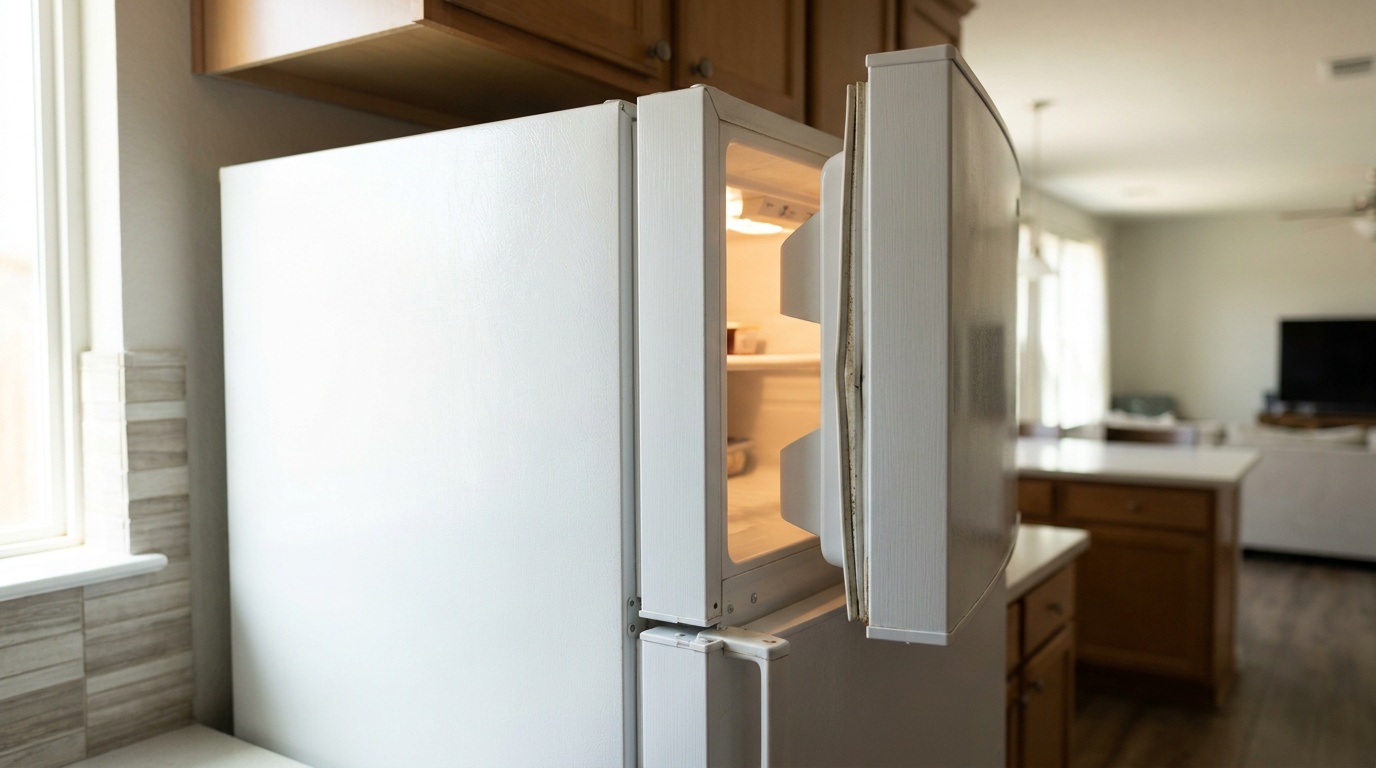
- Gallon jugs or wine bottles in the door bins that might be bumping a shelf.
- A crisper drawer that didn’t get pushed in all the way.
- A plate or container on a main shelf that hangs out just a hair.
- Something that slid around in the back and now blocks the door’s swing.
HVAC · High energy usage
| Project category | HVAC |
|---|---|
| Problem type | High energy usage |
| Trade required | HVAC |
| Urgency | Planned project |
| Safety risk | Low safety risk |
| DIY suitability | DIY for experienced homeowners |
| Cost category | High cost |
| Typical timeline | Assessment within weeks; replacement planned off-season |
| Contractor type | Licensed HVAC technician |
Repair option
Duct sealing, insulation, and a tune-up before touching the equipment.
Replacement option
High-efficiency replacement sized by a load calculation, not a rule of thumb.
Common causes
- Aging, low-efficiency equipment
- Leaking ducts losing conditioned air
- Insufficient attic insulation
- Oversized system short-cycling
Relevant tools:project cost estimatorrepair or replace
Published October 13, 2026Last updated October 13, 2026
Tools & materials you'll need
Affiliate linksAs an Amazon Associate FixlyGuide earns from qualifying purchases — at no extra cost to you. Prices and availability are accurate as of publication and subject to change.
Quick Answer
If your fridge door keeps popping open, the most likely reason is something inside the cabinet or a door bin is blocking it from sealing. Check for bottles, jars, or produce drawers that are out of place. Another usual suspect is a dirty or worn-out door gasket—the rubber seal around the door—which you can clean with soapy water or replace if it's cracked. And don't skip the basics: make sure the refrigerator itself is level. If it leans forward, gravity will literally help the door swing back open.
The Problem
You push the refrigerator door shut, and then a second later it creeps back open. Or you think it's closed, walk away, and come back to find it ajar with the light on and your cold air leaking out. That's no small nuisance. A fridge door that won't stay closed wastes energy, can spoil food, and makes the compressor work overtime to fight warm air sneaking in. I've pulled a water heater in Frisco last month and found the homeowner had the same kind of "it's shut... or is it?" problem with their fridge door—turned out to be one tiny bin out of place. Point is, this isn't something to shrug off. Something's keeping that door from sealing, and you've got to find it.
How It Works
A refrigerator door stays shut because a few simple things are all doing their part. The big one is the flexible magnetic gasket—that soft rubber strip running all the way around the door. There's a magnet inside that gasket, and it's attracted to the steel frame of the fridge cabinet. Shut the door, and that magnetic pull squeezes the gasket tight against the frame so cold air stays put.
Gravity helps too. Most fridges are meant to sit with a slight backward tilt, usually about a quarter-inch from front to back. That little lean nudges the door toward closed instead of letting it drift open. If the unit is perfectly level, or worse, tipped forward, gravity starts working against you. No dice.
Then you've got the hinges. They're the pivot point, plain and simple. Over time, hinges can loosen, wear out, or gum up with grime, and once that happens the door can sag a little and miss the frame. When one of these pieces—the gasket, the level, or the hinges—is off, the door just won't stay shut.
Step-by-Step Fix
Here’s how I’d chase down a refrigerator door that keeps popping open, starting with the easy stuff first.
1. Check for Internal Obstructions
- Tools: None
- Safety: None needed
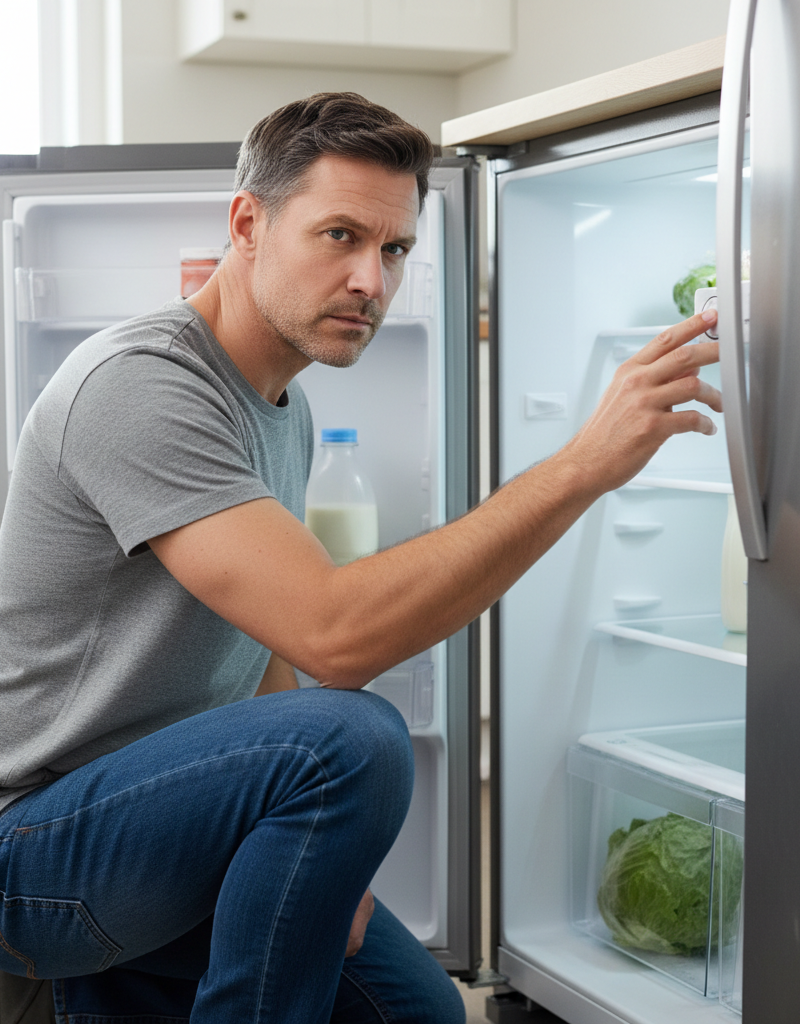
Em-dash—This is the one I check first because it’s the most common and the quickest fix. Take a slow look inside the fridge. You’re hunting for anything that might be stopping the door from closing all the way. Pay special attention to:
- Gallon jugs or wine bottles in the door bins that might be bumping a shelf.
- A crisper drawer that didn’t get pushed in all the way.
- A plate or container on a main shelf that hangs out just a hair.
- Something that slid around in the back and now blocks the door’s swing.
2. Clean the Door Gasket
- Tools: Bowl, warm water, mild dish soap, soft cloth or sponge
Em-dash—Sticky spills, grease, and plain old grime can build up on the gasket and make it stiff. Once that happens, it won't seal like it should. Mix a few drops of dish soap into a bowl of warm water. Dip your cloth in, wring it out, and wipe the whole gasket down, including the folds. Dry it well with a clean cloth. A clean, flexible gasket seals a lot better, and usually right away.
3. Test the Gasket's Seal
- Tools: A dollar bill or a piece of paper
Em-dash—This is an old standby for checking a tired gasket. Shut the door on a dollar bill so half's inside and half's outside. Then pull it out. You ought to feel some real drag. If it slides out like nothing's there, that spot isn't sealing. Check a few places around the door—top, bottom, both sides. If you've got several weak spots, that gasket is probably done.
4. Check the Refrigerator's Level
- Tools: Bubble level (a 2-foot level is ideal, but a smaller torpedo level works too)
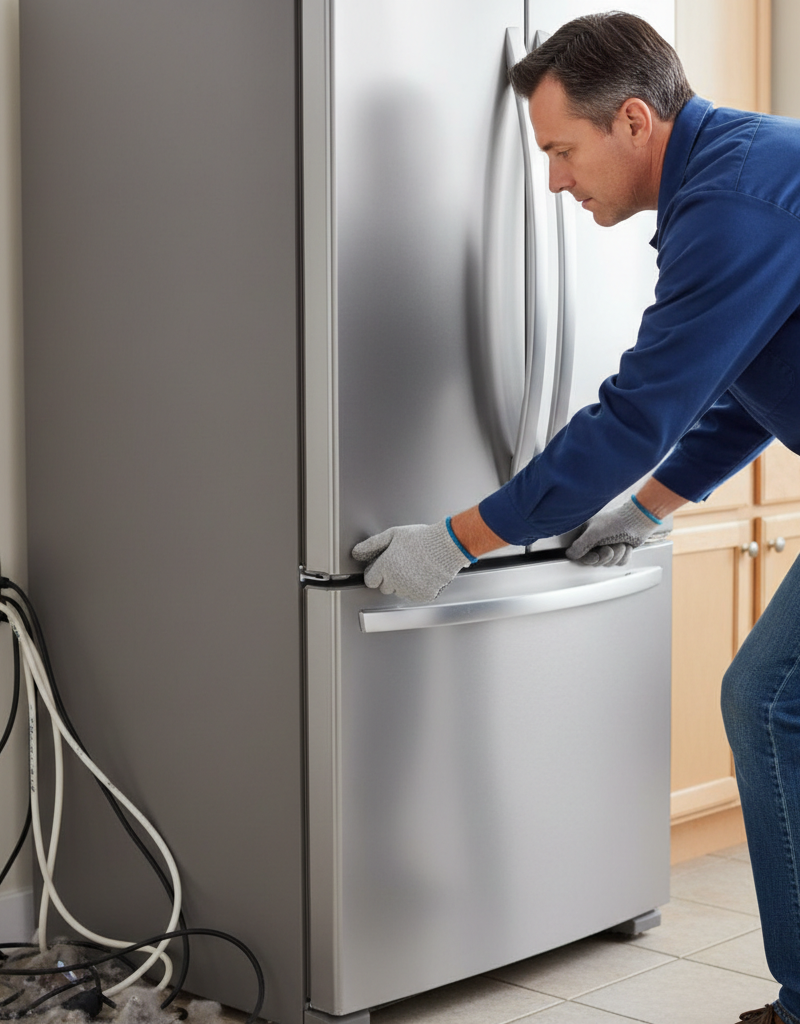
Em-dash—Your fridge needs a slight backward tilt to help the door stay closed. Set your level on top of the refrigerator, front-to-back first, then side-to-side. You want a slight tilt backward, with the front about 1/4 to 1/2 inch higher than the back. Side-to-side should be level. If the front is even a touch low, the door can start drifting open on its own.
5. Adjust the Front Feet or Rollers
- Tools: Flathead screwdriver or an adjustable wrench
Em-dash—If the level check showed the fridge leaning forward, it's time to adjust the front feet. Most refrigerators have adjustable feet or rollers at the front corners. Sometimes you've got to pop off a plastic trim piece—the kickplate—to get to them. Turning the feet or adjustment screws (check your manual, but usually clockwise raises, counter-clockwise lowers) will lift or lower the front corners. Keep checking with the level until you get that slight backward tilt. This solves a lot of doors that swing open too easy.
6. Inspect the Door Hinges
- Tools: Socket wrench or screwdriver (depending on your model)
Em-dash—Open the door and look at the top and bottom hinges. You're checking for the usual suspects. Loose screws? Dirt or debris packed around the hinge? On some models, the hinge bushings—those small plastic or nylon inserts—wear out and let the door sag. If the door drops a bit as you open it, worn bushings are high on my list.
7. Tighten Loose Hinge Screws
- Tools: Socket wrench or screwdriver
Em-dash—If you found loose screws in the last step, tighten them up. Use the right tool and snug the bolts holding the hinges to the cabinet and the door. Don't crank down on them like you're hanging off a lug nut—you can strip the threads that way—but they do need to be firm. A loose hinge throws the door out of alignment, and once that happens the latch and gasket can't do their jobs.
8. Replace a Worn-Out Gasket
- Tools: New gasket (order by model number), 1/4" nut driver or putty knife (depending on model)
- Safety: You may want to unplug the fridge to keep the light off, though it's not strictly necessary.
Em-dash—If the gasket is torn, brittle, or failed the dollar-bill test, it's time for a new one. Let the new gasket sit in a warm room or soak it in warm water so it loosens up a bit. Start at one corner and pull the old gasket out. Most are either pressed into a channel or held by a few screws under a retaining strip. Press the new gasket into place and make sure the corners seat properly. It'll probably look a little wrinkled at first, and that's fine—it'll settle in over a day or two. If you've got stubborn kinks, a hair dryer on low can help smooth them out.
Common Causes
- Overloaded Door Shelves: This is the one I see most. Heavy stuff like gallon jugs of milk or juice can pull the door down and knock it out of alignment.
- Internal Obstructions: A close second. One jar in the wrong spot or a crisper drawer not fully shut is enough to stop the seal.
- Dirty or Sticky Gasket: Food residue, spills, and dust keep the magnetic strip from meeting the fridge frame cleanly.
- Improper Leveling: If the fridge leans forward, gravity turns into the problem and helps the door open.
- Worn or Damaged Gasket: After years of use, the rubber can get brittle, crack, or lose its magnetic pull, and then you've got gaps.
- Loose or Worn Hinges: The hardware holding the door can loosen or wear out, which lets the door sag and messes with the latch.
Common Mistakes
- Slamming the Door: Doing that over and over beats up the hinges and can damage the plastic door liner over time. That leads to alignment trouble.
- Ignoring a Bad Gasket: A torn gasket is an energy vampire. Folks see a small rip and figure they'll deal with it later, but that little gap leaks cold air and costs you on every bill.
- Leveling it "By Eye": You can't eyeball this one. A fridge can look fine and still lean just enough forward to let the door swing open. Use a bubble level.
- Over-tightening Hinge Screws: Snug is the goal. If you overdo it, you can strip the screw holes in the cabinet or the door, and now you've made a bigger mess.
- Buying a Generic "One-Size-Fits-All" Gasket: Don't do that. Gaskets are model-specific, and a generic one usually won't seal right. Order the exact part for your refrigerator's model number.
Cost & Time Breakdown
| Task | DIY Cost | Pro Cost | Time |
|---|---|---|---|
| Clearing Obstructions | $0 | N/A | 2 minutes |
| Cleaning the Gasket | $0 (soap & water) | $75–$125 (as part of a service call) | 5 minutes |
| Adjusting Fridge Level | $0 | $75–$150 | 15–20 minutes |
| Tightening Hinges | $0 | $75–$150 | 10 minutes |
| Replacing Door Gasket | $50–$150 (for the part) | $200–$400 | 30 minutes |
| Replacing Hinges | $40–$100 (for parts) | $250–$450 | 1–2 hours |
Tips & Prevention
- Load Door Bins Wisely: Put heavier items—like gallons of milk—on the main shelves, not in the door. Save the door for lighter stuff like condiments and butter.
- Wipe the Gasket Monthly: I tell people to wipe the door gasket with a damp cloth once a month so sticky buildup doesn't get a foothold.
- Check Your Level Annually: After seasonal floor movement or if you've pulled the fridge out for cleaning, check that slight backward tilt again.
- Close the Door Gently: A gentle push is all it takes. The magnetic gasket should do the rest.
- Listen for the "Whoosh": A healthy fridge seal gives off a soft "whoosh" as the air compresses when the door shuts. If that sound disappears, take a closer look.
When to Call a Professional
Most of the time, a door that opens on its own is a pretty simple DIY fix. Still, there are times to bring in a licensed appliance repair technician. If the door is warped or cracked, or if the threaded holes for the hinge screws are stripped out, that's structural work and not a quick patch. And if you've cleaned the gasket, adjusted the hinges, checked the level, and the door still won't seal, you've probably got a deeper alignment or frame issue that needs a pro's eye.
Related Articles
Keep troubleshooting with these hand-picked guides from FixlyGuide:
- Dishwasher Door Won't Latch? 6 Reasons It's Not Closing Securely—and How to Fix It — If your dishwasher door won't latch or close properly, it won't start. Here are the 6 most common causes and how to fix them, from a misali…
- The Washer Whispers: Why Your Machine Won't Fill (and the $0 Fix) — Frustrated by a washing machine that just won't fill with water? It's a common headache, but often a simple, free fix could be hiding in pl…
- The 30-Minute Fix: Why Your Gas Burner Lights But Won't Stay Lit — Your gas stove burner lights up for a second then quickly extinguishes? It's a common, frustrating issue often due to a dirty or faulty the…
- The #1 Mistake Homeowners Make When Their Ice Maker Stops (And the Easy Fix) — Before you call for service, learn the most common and easily fixable reason your refrigerator's ice maker isn't producing ice.
- The #1 Mistake Homeowners Make When Their Dryer Stops Drying (And How to Fix It Free) — If your dryer is taking too long to dry clothes, the most common culprit is a clogged vent, which can be easily fixed with simple tools.
- Thermostat Won't Connect to Wi-Fi? 9 Reasons and What to Check First — A smart thermostat that can't connect to Wi-Fi is just a thermostat. Here are the 9 most common reasons yours keeps dropping offline and th…
Should you do this yourself?
Answer five quick questions before you start. Safety outranks savings every time.
Your experience with work like this
How high do you have to work?
Does the job involve any of these?
Will it need a permit?
Specialty tools
Free and instant. Educational guidance only — not a quote, inspection, or professional diagnosis.
What should this project cost?
Enter your project details for a realistic cost range before you call anyone.
Cost depends heavily on which system turns out to be the source.
- Regional adjustment
- National average
- Labor share (typical)
- ~$1,620
- Quotes to collect
- 3 written estimates
Educational estimate based on national averages — not a binding quote. Always confirm with written local estimates.
Frequently asked questions
Why does my freezer door pop open when I close the refrigerator door?+
This is usually due to air pressure. When you close the main fridge door, you're pushing a large volume of air into a sealed box. Some of that air can travel through vents into the freezer compartment, creating enough pressure to momentarily push the freezer door open. If it then stays open, it means the freezer door's gasket or alignment needs to be checked using the same steps as for the main door.
How tight should a refrigerator door seal be?+
It should be tight enough to hold a dollar bill firmly. When you close the door on a piece of paper or a dollar bill, you should feel a distinct drag when you try to pull it out. If it slides out with no resistance, the seal is too weak in that spot.
Can I just use magnets to hold my fridge door closed?+
While it might seem like a clever temporary fix, you shouldn't rely on external magnets. A proper seal requires uniform pressure around the entire door perimeter to keep cold air in and moisture out. An external magnet only fixes one spot and doesn't solve the underlying issue, leading to high energy use and potential food spoilage.
How much of a backward tilt does my refrigerator need?+
A slight tilt is all that's required. The front of the refrigerator should be about 1/4 to 1/2 inch higher than the rear. This provides just enough gravitational pull to help the door swing shut and stay sealed without making the unit noticeably un-level.
Is it worth replacing a 15-year-old refrigerator gasket?+
It depends on the overall condition of the fridge. If the compressor and other components are still running well, spending $80 on a new gasket to save $10-20 per month on electricity is a great investment. However, if the fridge is already showing other signs of failure, you might want to put that money towards a new, more energy-efficient appliance.
My new gasket seems wrinkled and isn't sealing right. What should I do?+
This is very common. New gaskets are often folded for shipping. You can gently warm the wrinkled areas with a hair dryer on a low setting. Hold it about 6-8 inches away and move it back and forth until the gasket becomes pliable and lays flat against the frame. The seal will improve over the next 24-48 hours.
The door is heavy and sags. What's the most likely cause?+
For a sagging door, the primary suspects are worn-out hinge bushings or simply storing too much weight in the door shelves. First, try redistributing heavy items like milk and juice to the main shelves. If it still sags, you'll likely need to replace the small plastic or nylon bushings in the hinges.
How do I find the correct model number to order a new gasket?+
Look for a sticker inside the refrigerator compartment, usually on one of the side walls near the top, or sometimes along the frame where the door seals. This sticker will have the manufacturer's name, model number, and serial number. Use that exact model number to order the correct replacement part.
Discussion
Loading comments…