- Tools: None, or a small wrench for some older external filters.
- Materials: New water filter (specific to your fridge model).
- Instruction: Turn the old filter counter-clockwise to remove, snap the new one in, and turn clockwise until it locks. Dispense 2-3 gallons of water to flush out air and carbon dust.
- Numeric Data: Replace every 6 months or 200 gallons, whichever comes first.
HVAC · High energy usage
| Project category | HVAC |
|---|---|
| Problem type | High energy usage |
| Trade required | HVAC |
| Urgency | Planned project |
| Safety risk | Low safety risk |
| DIY suitability | DIY for experienced homeowners |
| Cost category | High cost |
| Typical timeline | Assessment within weeks; replacement planned off-season |
| Contractor type | Licensed HVAC technician |
Repair option
Duct sealing, insulation, and a tune-up before touching the equipment.
Replacement option
High-efficiency replacement sized by a load calculation, not a rule of thumb.
Common causes
- Aging, low-efficiency equipment
- Leaking ducts losing conditioned air
- Insufficient attic insulation
- Oversized system short-cycling
Relevant tools:project cost estimatorrepair or replace
Published September 18, 2026Last updated September 18, 2026
Tools & materials you'll need
Affiliate linksAs an Amazon Associate FixlyGuide earns from qualifying purchases — at no extra cost to you. Prices and availability are accurate as of publication and subject to change.
Quick Answer
When your fridge water dispenser quits, it’s usually one of a few usual suspects: a frozen line, a clogged filter, or a bad water inlet valve. Don’t panic. I’ve seen a pile of these over the years, and for most folks, it’s a pretty straightforward DIY fix. Start with the easy stuff, then work your way toward the parts that take a little more digging. And always unplug the unit before you start poking around with water and electricity — no dice otherwise.
The Problem
You walk up to your fridge, glass in hand, hit the paddle, and... nothing. Maybe you get a sad little dribble, or maybe just the hum of the compressor mocking you. Your refrigerator water dispenser, that handy little luxury, has decided to go on strike. It’s aggravating, especially when you’re used to cold, filtered water right there whenever you want it. The good news? Most of the time, this isn’t a death sentence for the appliance. It’s usually a simple issue you can handle yourself without calling in the cavalry. I’ve had homeowners about ready to lose it over this, only to find a $30 filter was the whole problem.
How It Works
Alright, let’s crack open how that cold water gets from your home’s plumbing to your glass. It’s not rocket science, but once you know the path, you can figure out where things go sideways a lot faster. Your home’s water supply line, usually a small copper or braided stainless steel tube, connects to the back of your refrigerator. That line feeds into a water inlet valve — basically the gatekeeper.
When you press the dispenser paddle, it sends a signal, usually 120V AC, though some models use 24V DC for controls, to that valve and tells it to open. From there, the water often takes a little detour through a water filter. That filter, usually inside the fridge compartment or down in the kick plate at the bottom, catches sediment and other junk. After that, the cleaned-up water moves through a thin plastic tube, sometimes coiled around the refrigerated section to get chilled, then it snakes up into the freezer door.
Inside the door, it runs through another short stretch of tubing, often right next to the ice maker line, and eventually lands at the dispenser nozzle. When you hit the dispenser, a small solenoid in the inlet valve opens, water pressure pushes the filtered water through those tubes, out the nozzle, and into your cup. If any piece of that run — the supply, the valve, the filter, or the line itself — gets blocked, frozen, or just plain fails, you’re standing there with an empty glass. And yeah, a frozen line in the freezer door is common as dirt, because that tubing sits right in the coldest part of the fridge, often hugging the ice chute.
Step-by-Step Fix
Before you touch anything, unplug your refrigerator from the wall outlet. Always. Don’t skip it. You’re dealing with water and electricity, and that’s a bad mix.
-
Check the Water Supply Valve — Make sure the main water shut-off valve behind the fridge (or under your sink) is fully open. Sometimes it gets bumped, or a kid messes with it. A partly closed valve will give you low pressure or no water at all.
- Tools: None needed.
- Safety: Ensure fridge is unplugged before reaching behind it.
- If this doesn't work: Move to the next step.
-
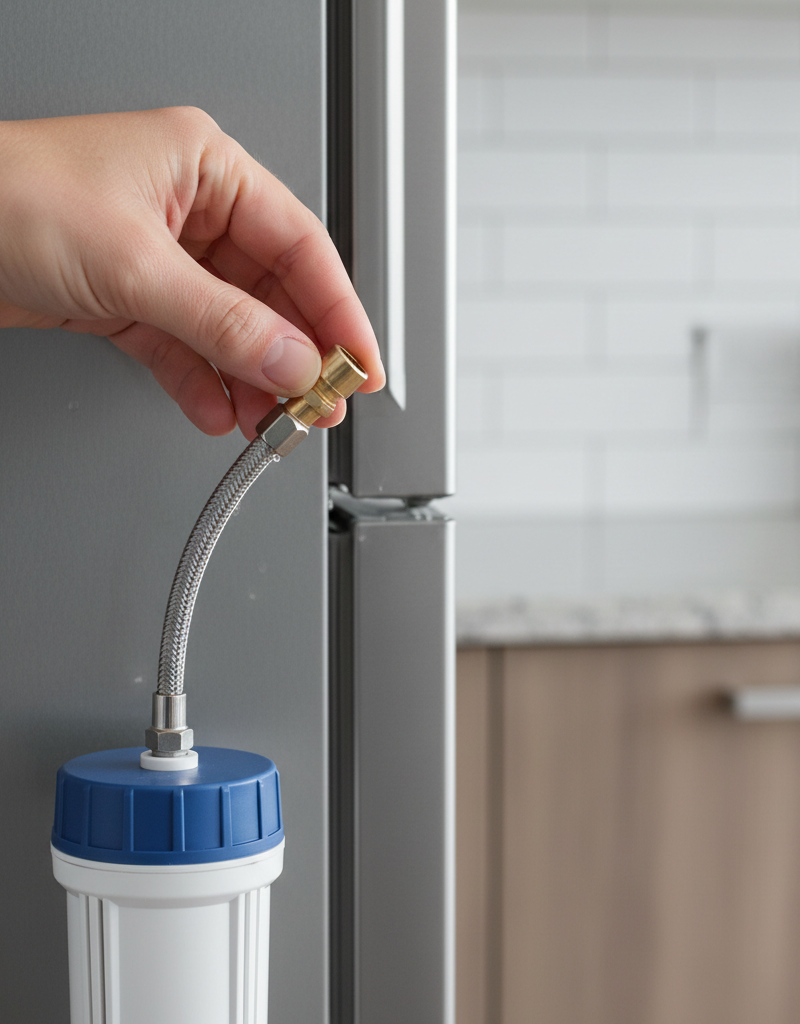
Replace the Water Filter — This is the big one. A clogged filter will choke off water flow in a hurry. Even on a newer fridge, hard water or a lot of sediment can clog it up fast. Most filters should get changed every six months, or sooner if your water’s rough. Check your owner’s manual for the exact filter model.
- Tools: None, or a small wrench for some older external filters.
- Materials: New water filter (specific to your fridge model).
- Instruction: Turn the old filter counter-clockwise to remove, snap the new one in, and turn clockwise until it locks. Dispense 2-3 gallons of water to flush out air and carbon dust.
- Numeric Data: Replace every 6 months or 200 gallons, whichever comes first.
-
Thaw a Frozen Water Line — This usually shows up in the door dispenser line. The line inside the freezer door can freeze solid. If you hear the inlet valve kick on but nothing comes out, this is a strong suspect.
- Tools: Hair dryer, turkey baster, warm water.
- Safety: Keep the hair dryer moving; don’t camp out on one spot too long, or you could melt plastic parts. Keep it away from any standing water.
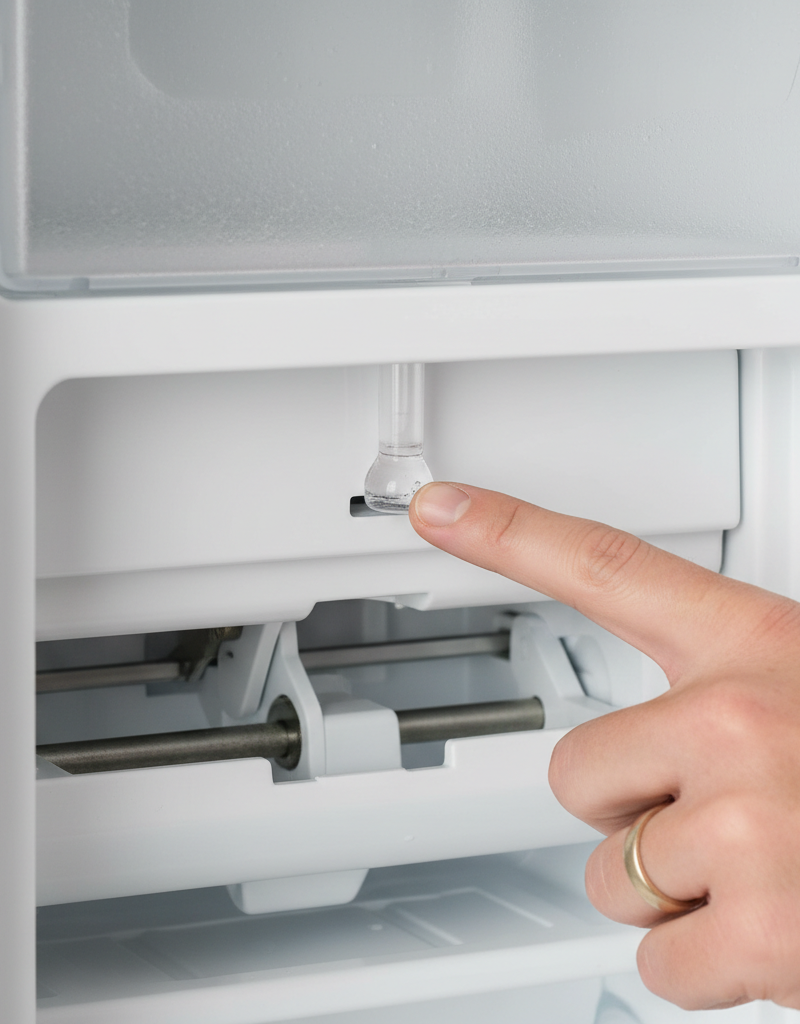
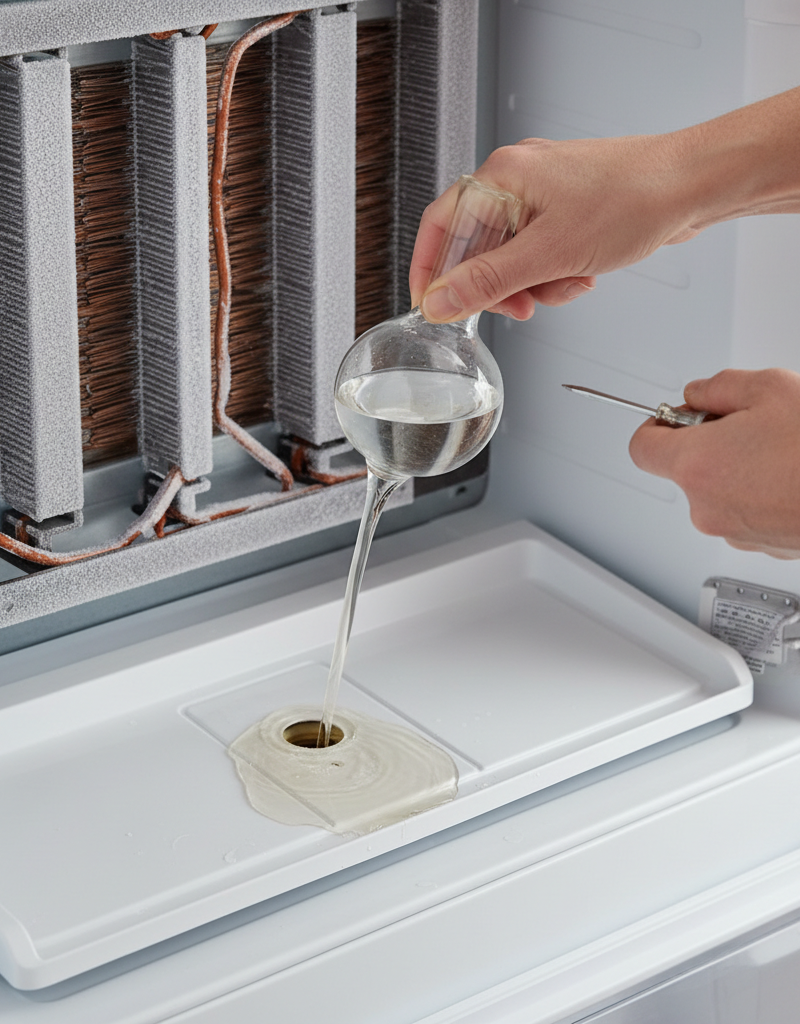
- Instruction: Open the freezer door. Find the small plastic tube that runs into the dispenser mechanism. Using a hair dryer on a low setting, gently warm the spot where the water line enters the door and runs up to the dispenser nozzle. You can also try a little warm, not boiling, water into the dispenser funnel with a turkey baster or syringe. This could take 5-15 minutes. You might hear a “pop” or a gurgle when the ice finally gives way.
- Pro Tip: If your fridge has a door flap that closes over the ice chute, make sure it seals tight. A tiny gap lets in warm, humid air, and that’s how you get condensation freezing up the line.
-
Inspect the Water Inlet Valve — This electromechanical valve on the back of the fridge opens to let water in. If it’s faulty, it won’t open, or it won’t open all the way. You might hear a buzzing sound from the back of the fridge when you try to dispense water, but still get nothing.
- Tools: Screwdriver (Phillips or flathead), pliers, multimeter (optional but helpful).
- Safety: Unplug the fridge! Turn off the water supply before disconnecting lines.
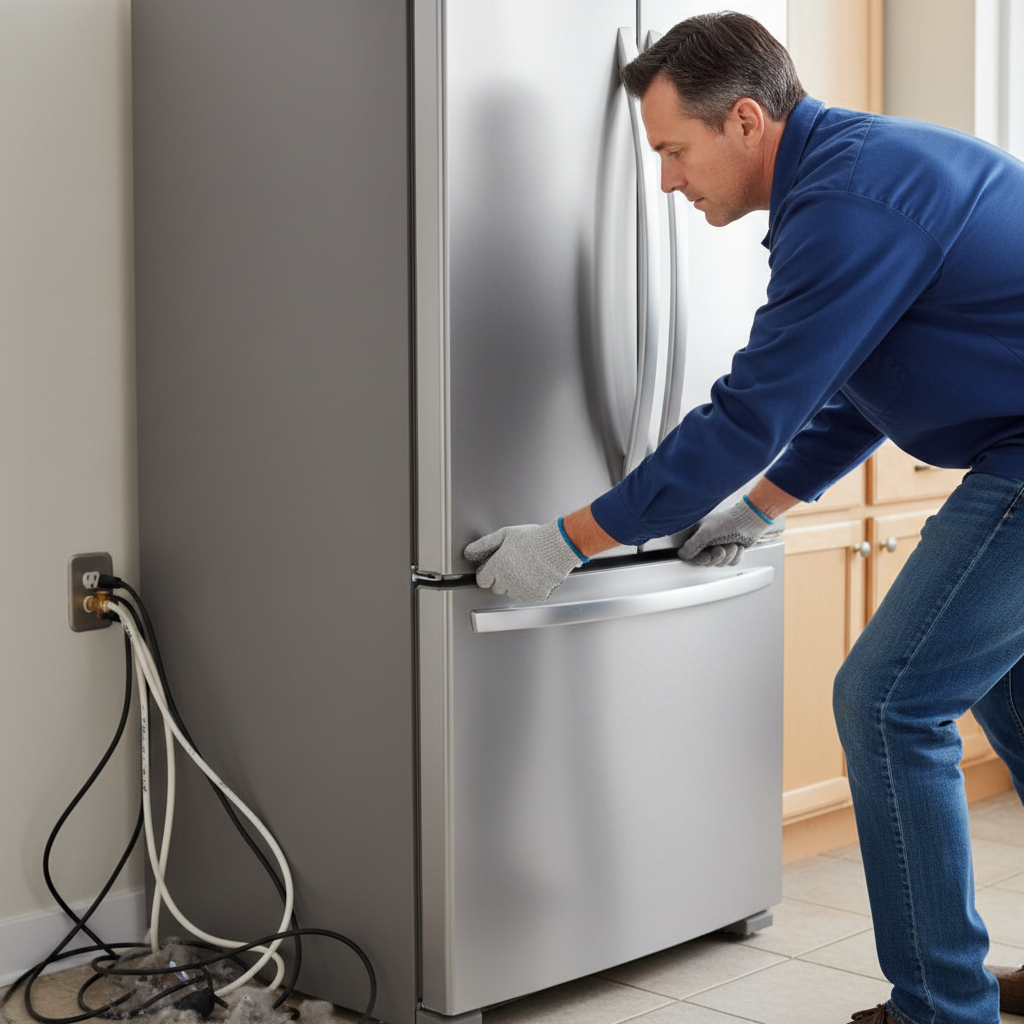
- Instruction: Carefully pull the fridge away from the wall. Find the water inlet valve near where the water supply line connects. Disconnect the electrical connector and the water lines. Look for cracks or mineral buildup. If you’ve got a multimeter, you can test the solenoid for continuity. Most solenoids should read between 200 and 500 ohms. No reading or an open circuit means it’s bad.
-
Check for Kinked Water Lines — Sometimes when you shove the fridge back into place, the plastic water line behind it gets kinked or pinched. That cuts flow just like a clogged filter.
- Tools: None.
- Instruction: Gently pull the fridge forward and look over the full length of the water line from the wall to the fridge for any sharp bends or crimps. Straighten them out. If the line’s permanently creased, you may need to replace that section.
-
Verify Water Pressure — Your fridge needs enough pressure to run the dispenser. Usually, refrigerators want between 20 and 120 PSI (pounds per square inch) of water pressure. If your home’s pressure is too low, the dispenser may just dribble or quit altogether. This can happen if other water-hungry fixtures, like a washing machine or shower, are running at the same time.
- Tools: Water pressure gauge (connects to an outdoor spigot).
- Instruction: Hook a water pressure gauge to a hose bib outside your house and check the static pressure. Then try dispensing water from the fridge while watching the gauge. If the pressure drops well below 20 PSI, you may have a whole-house pressure issue or a very restrictive supply line to the fridge.
-
Test the Dispenser Switch/Paddle — Less common, but the switch or paddle itself can fail. If you press the paddle and don’t hear the water inlet valve kick on — a clear click or hum from the back of the fridge — the switch may be faulty.
- Tools: Screwdriver, multimeter (optional).
- Instruction: This usually means removing the dispenser assembly from the freezer door. Check your owner’s manual for the exact steps. You can use a multimeter to test for continuity across the switch terminals when the paddle’s pressed.
Common Causes
- Clogged Water Filter: The #1 reason, hands down. These things are built to catch junk, and eventually they’re loaded up. If you haven’t changed it in over six months, start there. I pulled a water heater in Frisco last month that had exactly this kind of “mystery no-water” issue on a fridge beside it — turned out the homeowner hadn’t changed the filter in way too long. New filter, problem gone.
- Frozen Water Line in the Door: This shows up a lot, especially if the freezer’s set too cold or the door seals aren’t perfect, letting in warm, moist air that freezes when it hits the tubing. You’ll often see a little water or ice around the dispenser nozzle as a clue.
- Faulty Water Inlet Valve: These valves are solenoid-operated and can fail electrically or mechanically. Mineral buildup from hard water can also keep them from opening fully.
- Kinked or Pinched Water Supply Line: When you push the fridge back after cleaning or moving it, it’s easy to crimp that little plastic line at the back. Simple fix, easy to miss.
- Low Water Pressure: If your home’s overall water pressure is low, or if a couple appliances are pulling water at once, there may not be enough pressure to activate the dispenser valve or push water through the filter.
Common Mistakes
- Ignoring the Filter Change: Seriously, this is like skipping your car’s oil change. The filter’s gotta get replaced on schedule. Don’t bypass it just to “see what happens” — that defeats the whole point of filtered water.
- Over-tightening Water Connections: Those plastic lines and fittings? They’re not built for gorilla strength. Hand-tighten, then give it a quarter turn with a wrench. Crank them down too hard and you can crack them right open.
- Heating a Frozen Line Too Aggressively: Don’t blast a hair dryer on high heat right at the plastic for five minutes straight. You’ll melt the tube, and now you’ve bought yourself a plumbing headache.
- Forgetting to Unplug the Fridge: This isn’t just a suggestion. It’s a must. You’re working around water, and there are exposed electrical terminals on the inlet valve. That combo can bite you.
- Not Flushing the New Filter: Always run several gallons of water through a fresh filter to clear out carbon dust and air. If you don’t, the first few glasses can look cloudy and taste off.
Cost & Time Breakdown
Here’s a rough idea of what you’re looking at for this particular problem:
| Task | DIY Cost | Pro Cost | Time |
|---|---|---|---|
| Check water supply | $0 | $75–$150 (trip charge) | 5–10 minutes |
| Replace water filter | $25–$60 | $120–$250 | 10–15 minutes |
| Thaw frozen line | $0 (hair dryer) | $150–$300 | 15–30 minutes |
| Replace water inlet valve | $40–$100 | $200–$400 | 30–60 minutes |
| Fix kinked line | $0 | $75–$150 (trip charge) | 5–10 minutes |
| Test dispenser switch | $0 | $150–$350 | 30–90 minutes |
Tips & Prevention
- Regular Filter Replacement: Put it on your calendar or set a recurring reminder. Every six months, change that water filter. It’s cheap insurance against lousy flow and bad-tasting water. I tell folks all the time, if you only do one maintenance thing, make it this one.
- Proper Freezer Temperature: Keep your freezer at the recommended 0°F (-18°C) to 5°F (-15°C). Too cold raises the odds of the dispenser line freezing; too warm, and you’ll have other headaches like melting ice cream.
- Maintain Clearances: When you slide your fridge back, make sure there’s enough room for the water line to bend easy, not kink. About 2-3 inches of clearance from the wall is usually fine.
- Check Door Seals: Take a look at your freezer door seals now and then. If they’re torn or don’t seal tight, warm, moist air can sneak in and build frost, which can freeze the dispenser line. You can test it by closing the door on a dollar bill; if it pulls out easy, the seal needs attention.
- Use the Dispenser Regularly: If you hardly ever use the dispenser, water can sit in the lines, which can lead to stagnation or make freezing more likely in the colder sections. A little regular use keeps things moving.
When to Call a Professional
Look, I’m all for DIY, but there are times when you need to set the tools down and call a pro. If you’ve gone through all these steps — changed the filter, thawed the line, checked the valve, and verified your home’s water pressure — and you still aren’t getting water, it might be something bigger like a control board issue, or a deeper frozen line that needs special thawing equipment. If you’re not comfortable around electrical components, or if you think you’ve got a more serious plumbing problem, like a leak from the inlet valve that won’t stop, it’s time to call a qualified appliance technician. Don’t mess with water leaks and electricity if you’re not confident. A pro can sort it out safely and keep you from turning a small repair into a bigger mess.
Related Articles
Keep troubleshooting with these hand-picked guides from FixlyGuide:
- The $5 Part That Stops Your Fridge From Leaking (And Why It Fails) — A leaking refrigerator can lead to serious floor damage and appliance issues. Often, the culprit is a clogged defrost drain, a simple fix m…
- The Mystery of the Warm Fridge: Why Your Food Is Spoiling (and When to Call a Pro) — If your refrigerator isn't keeping food cold, it could be a simple fix or a serious problem requiring a professional. Learn what to check a…
- The Annoying Drip: Why Your Refrigerator's Leaking Water (and the 10-Minute Fix) — Don't let a leaky refrigerator ruin your floor! Discover the common culprits behind water leaks and how you can fix most of them in just 10…
- The Button Blocker: Why Your Microwave Panel Goes Dead (and the Easy Fix) — Don't rush to replace your microwave just because the buttons aren't responding; it's often a simple, DIY-friendly fix.
- The Real Reason Your Dishwasher Leaks (It’s Not Always the Hose) — A leaking dishwasher can be a homeowner's headache, but often the culprit isn't a failed hose, but rather a simple fix around the door or t…
- That Annoying Water Heater Popping Sound? It's Trying to Tell You This One Thing — A popping noise from your water heater is a common sign of sediment buildup, which can reduce efficiency and shorten its lifespan, but it's…
What should this project cost?
Enter your project details for a realistic cost range before you call anyone.
Cost depends heavily on which system turns out to be the source.
- Regional adjustment
- National average
- Labor share (typical)
- ~$1,620
- Quotes to collect
- 3 written estimates
Educational estimate based on national averages — not a binding quote. Always confirm with written local estimates.
Get the print-ready PDF of this guide
A clean, ad-free, printable version you can keep on your phone or pin to the workshop wall. Free with a FixlyGuide account.
- Print-optimized layout
- Tools, materials & every step included
- Saved to your account
Frequently asked questions
Why is my refrigerator water dispenser not working after I changed the filter?+
After changing the filter, you need to flush air out of the system. Dispense several gallons of water continuously until all air is purged and the flow is steady. If it still doesn't work, double-check the filter installation to ensure it's properly seated and locked.
How do I thaw a frozen water line in my refrigerator door?+
Unplug the fridge and use a hair dryer on a low setting to gently warm the dispenser area of the freezer door for 5-15 minutes. Alternatively, you can use a turkey baster to inject warm water directly into the dispenser nozzle to help melt the ice blockage.
What does it mean if my water dispenser is very slow or just dribbles?+
A slow or dribbling dispenser usually indicates restricted water flow. The most common causes are a clogged water filter, a partially kinked water line, or low water pressure in your home. Start by replacing the filter and checking for kinks behind the fridge.
Can low home water pressure affect my refrigerator dispenser?+
Absolutely. Refrigerators typically require 20-120 PSI to operate the dispenser effectively. If your home's water pressure is too low, or if other high-demand appliances are running, it can result in a weak or non-existent water flow from your dispenser.
How often should I replace my refrigerator water filter?+
Most manufacturers recommend replacing your refrigerator water filter every six months or after dispensing about 200 gallons of water, whichever comes first. This ensures optimal water quality and flow.
What is the water inlet valve, and how do I know if it's bad?+
The water inlet valve is an electrical component on the back of your fridge that controls water flow. If it's bad, you might hear a buzzing sound when you try to dispense water but get no flow. A multimeter can confirm if the solenoid has failed by checking its electrical resistance.
Is it safe to bypass the water filter if I can't get a new one?+
While some refrigerators allow you to bypass the filter temporarily (often with a bypass plug), it's not recommended for long-term use. Bypassing means your water won't be filtered, and it can also affect water pressure if the bypass mechanism isn't fully engaging. It's best to replace the filter as soon as possible.
Why does my new water filter make the water cloudy or taste strange?+
New carbon filters often release fine carbon particles initially. This is normal. You need to flush out several gallons of water through the dispenser until the water runs clear and tastes normal. This usually takes 2-3 gallons.
My fridge water dispenser still isn't working, but the ice maker is. What gives?+
If the ice maker works but the water dispenser doesn't, it almost certainly points to an issue with the water line specifically leading to the dispenser, often a frozen line in the door. The ice maker typically has its own separate line or takes water before the dispenser's final route, making a localized blockage more likely.
Discussion
Loading comments…