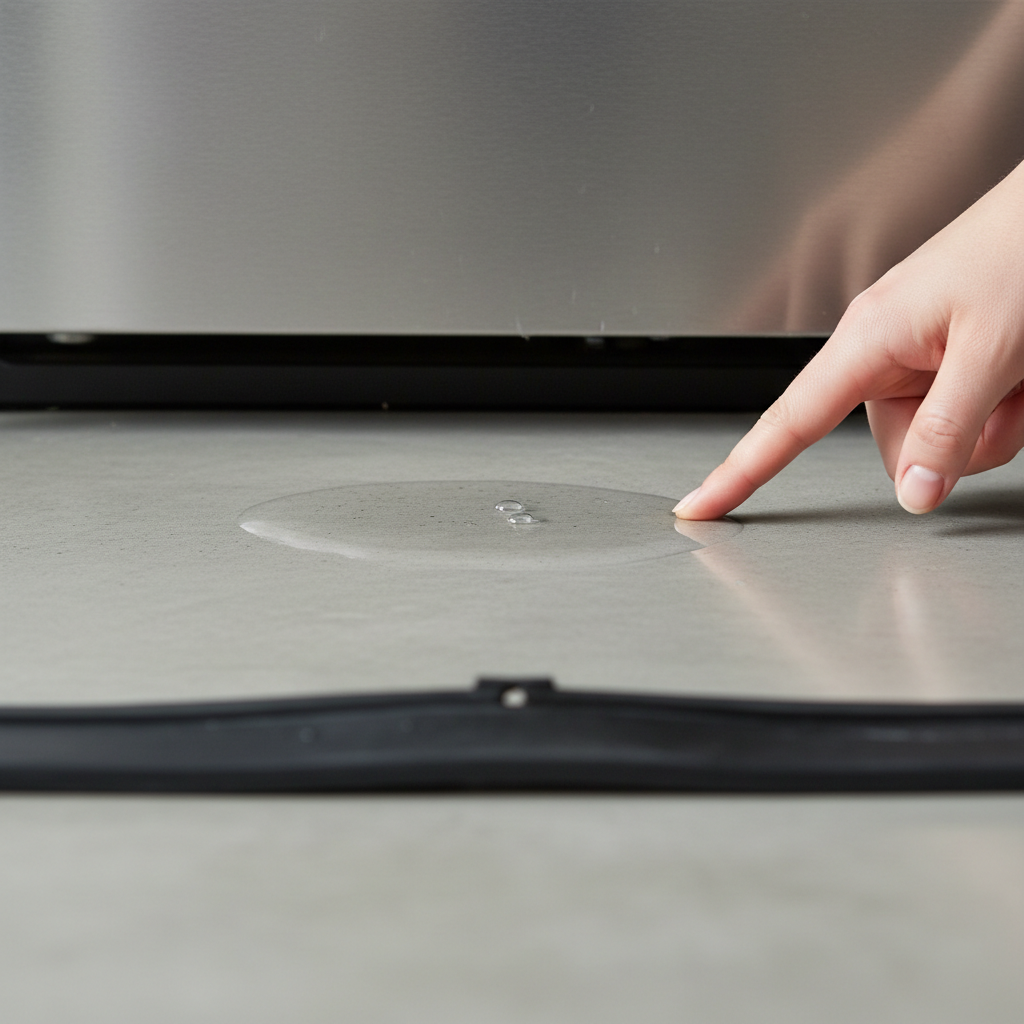
- Damaged or Dirty Door Gasket: The rubber seal around the door gets old, cracks, or collects food debris, and then it stops sealing right. This is probably the number one reason I see door leaks.
- Overfilling: A bad float switch or too much detergent making crazy suds can fill the tub higher than it should go, and then water gets pushed past the door.
- Blocked Spray Arms: If food bits or dishes block the spray arms, water can hit the door or gasket in one hard stream and overwhelm the seal.
- Loose Door Latch: If the latch doesn't close the door tight, the gasket can't compress enough to make a watertight seal.
- Improper Loading: Big dishes can block spray arms or keep the door from closing all the way, and then you've got a leak on your hands.
Plumbing · Leak
| Project category | Plumbing |
|---|---|
| Problem type | Leak |
| Trade required | Plumbing |
| Urgency | Emergency — act now |
| Safety risk | High safety risk |
| DIY suitability | DIY for experienced homeowners |
| Cost category | Low cost |
| Typical timeline | Shut water off now; repair usually same or next day |
| Contractor type | Licensed plumber |
Repair option
Isolate at the shutoff, replace the failed component, and dry the cavity fully.
Replacement option
Repipe the run or the branch when corrosion is widespread.
Common causes
- Failed supply line or shutoff valve
- Worn washers, cartridges, or P-trap connections
- Pinhole corrosion in older copper
Relevant tools:emergency checklistdiy or hire a pro
Published September 6, 2026Last updated September 6, 2026
Tools & materials you'll need
Affiliate linksAs an Amazon Associate FixlyGuide earns from qualifying purchases — at no extra cost to you. Prices and availability are accurate as of publication and subject to change.
Quick Answer
When water starts creeping out from under your dishwasher door, don't panic and assume the worst — like a burst hose. Nine times out of ten, the problem's a lot simpler. I usually find it's something messing with the door seal, an overfill issue, or just the way the dishes are loaded. A few quick checks can usually point you in the right direction and save you a service call.
The Problem
I've seen plenty of dishwashers dribbling water across kitchen floors. It's aggravating, plain and simple. You want clean dishes, and instead you're grabbing towels and mopping up. Most homeowners jump straight to a major plumbing failure or a cracked tub. But in my 25 years on the job, I've rarely seen it go that far. A leak from the bottom of the door usually tells me one of a few things is going on: the water level inside is getting too high, or something's messing with the seal that's supposed to keep all that soapy water inside. It's usually fixable, and honestly, it doesn't look nearly as scary once you crack it open and see what's happening.
How It Works
Think of your dishwasher like a little self-contained wash system. It fills with a set amount of water, heats it up, and then the pump blasts that water through spray arms to clean the dishes. After the wash and rinse cycles, the water drains out, and then a heating element usually kicks in to dry everything.
The whole setup depends on a watertight seal around the door, usually a rubber or silicone gasket. That gasket — the door seal — compresses when the latch closes, and that keeps the water where it belongs. Inside the tub, a float switch is your first defense against overfilling. It's just a floating piece that rises with the water level. If the water gets too high, it trips a switch and tells the dishwasher to stop filling, and often to drain.
If that float gets stuck or fails, the tub can overfill and push water past the door seal. Spray arms can cause trouble too. They're supposed to spin and spread water evenly, but if one gets blocked by food debris or a dish sitting wrong, it can throw a hard stream right at the door or gasket. That'll overwhelm the seal in a hurry. And if the detergent foams up too much, those suds can push past the door and make it look like you've got a leak. It's all connected, and when one part goes sideways, water finds a way out. That's just how it goes.
Step-by-Step Fix
Here's how I usually handle a dishwasher that's leaking from the door. I start with the easy stuff first, then work my way up if I have to.
-
Check for Obstructions — Clear the path for the spray arms. Open the door and pull out the lower rack. Give the bottom spray arm a spin by hand. Does it move easy, or does it catch? Look for a rogue spoon, a piece of plastic, or a big plate sitting below it and blocking the rotation. Sometimes a baking sheet hanging over the edge can throw water straight at the door. If you find something in the way, move it. Then check the spray arm holes — food bits love to clog those up, and once that happens, the spray pattern gets weird fast.
-
Inspect the Door Gasket — Look for cracks, tears, or debris. With the door open, run your hand all the way around the rubber or silicone gasket that lines the dishwasher tub. That's the main seal. Feel for stiff spots, cracks, tears, or places where it's pulling away from the tub. Check for food debris, grease, or mold buildup too — yep, that gunk can absolutely ruin the seal. Clean it off with warm, soapy water and a cloth. If the gasket looks dry, cracked, or warped, replace it. Most of them just pull out of a channel and the new one pushes right in. Grab the owner's manual for the right part number. I've swapped out dozens of these, and on most models it's a twenty-minute job, maybe less if the old one comes out easy.
-
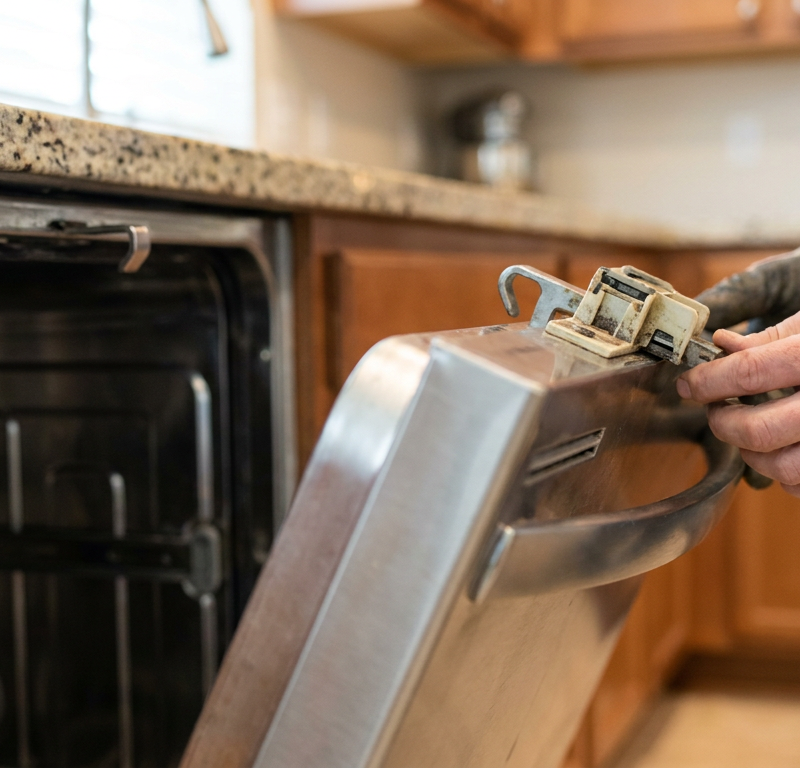
Examine the Door Latch — Ensure it's closing securely. If the latch is loose or worn out, the door won't press tight enough against the gasket. Close the door firmly. Does it feel solid? Any wiggle? Sometimes the latch gets packed with grime, and sometimes it's just worn. If it isn't holding the door tight, water can sneak through. You may be able to snug up the latch screws, or you might need a new latch altogether. Check the strike plate on the tub too — it needs to line up right with the latch on the door. I had a call in Newton once where the homeowner was convinced their brand new dishwasher was junk, and it turned out one loose latch screw was letting the door flex just enough to leak. Easy fix. No drama after that.
-
Test the Float Switch — Check for proper movement and function. The float switch is usually a small plastic cap or cylinder, often red or white, sitting in the bottom of the tub over a stem. Push it down gently and let it go. It should spring back up without sticking. If it's stiff, jammed, or covered in crud, it might not be rising the way it should to tell the dishwasher to stop filling. Clean around it well. If it still won't move freely, or if the leak keeps happening, the float switch may be bad. Replacing it gets a little more involved, and a lot of times you've got to get under the dishwasher to do it. If you're not comfortable around electrical components or crawling under there, that's a good point to call in a pro.
-
Look for Excessive Suds — Too much soap can cause overfoaming. Are you using too much detergent? Or the wrong stuff entirely? Regular hand dish soap will make a ridiculous amount of suds in a dishwasher, and that foam can push water right out the door. Always use automatic dishwasher detergent and stick to the maker's directions — usually 1-2 tablespoons per load. If you think suds are the problem, run an empty cycle with a cup of white vinegar to help cut through the foam and residue. This is a classic first-time homeowner mistake. Happens all the time.
-
Check for Tilted Dishwasher — A leveling issue can cause problems. Believe it or not, if the dishwasher isn't level, water can pool unevenly or run out through the low spot, which is often the bottom of the door. Set a spirit level on the top edge of the open door and on the front of the tub. If it's off, adjust the leveling legs. Most dishwashers have front feet you can turn with a wrench or pliers. Some have a rear leg that adjusts from the front. Get it level side-to-side and front-to-back. That's the goal.
Common Causes
- Damaged or Dirty Door Gasket: The rubber seal around the door gets old, cracks, or collects food debris, and then it stops sealing right. This is probably the number one reason I see door leaks.
- Overfilling: A bad float switch or too much detergent making crazy suds can fill the tub higher than it should go, and then water gets pushed past the door.
- Blocked Spray Arms: If food bits or dishes block the spray arms, water can hit the door or gasket in one hard stream and overwhelm the seal.
- Loose Door Latch: If the latch doesn't close the door tight, the gasket can't compress enough to make a watertight seal.
- Improper Loading: Big dishes can block spray arms or keep the door from closing all the way, and then you've got a leak on your hands.
Common Mistakes
- Using Hand Dish Soap: Big mistake. It makes a mountain of suds, overflows the tub, and can even damage the dishwasher. Stick with detergent made for automatic dishwashers.
- Ignoring the Gasket: A lot of folks clean the racks and the tub but never touch the door gasket. That seal needs a regular wipe-down so grime doesn't build up and wreck it.
- Overloading the Dishwasher: Stuffing in too many dishes can block spray arms, keep the door from closing right, and cause leaks. Give the dishes some room.
- Misplacing Large Items: Tall baking sheets or platters in the lower rack can block the spray arm or smack the door and force water out.
- Skipping the Level Check: Assuming the dishwasher is level just because it was installed that way? That's asking for trouble. Even a slight tilt can cause leaks.
- Over-tightening Latch Screws: If you're adjusting the latch, don't reef down on the screws. You'll strip them or warp the door frame, and then you've made a small problem bigger.
Cost & Time Breakdown
| Task | DIY Cost | Pro Cost | Time |
|---|---|---|---|
| Clear Spray Arms/Obstructions | $0 | $75–$150 (service call) | 5–10 minutes |
| Clean Door Gasket | $0 | Included in service | 5–15 minutes |
| Replace Door Gasket | $20–$60 | $120–$250 | 20–30 minutes |
| Adjust Door Latch | $0 (if simple) | $100–$180 | 10–20 minutes |
| Adjust Leveling Legs | $0 | $100–$180 | 15–30 minutes |
| Replace Float Switch | $15–$40 | $150–$300 | 45–90 minutes |
Tips & Prevention
- Regular Gasket Cleaning: Once a month, wipe the door gasket with a damp cloth and clear off food bits and grime. Keeps it flexible and sealing tight.
- Proper Loading: Don't overcrowd the dishwasher. Make sure the spray arms can spin freely and nothing's leaning against the door. I always tell folks, if it won't fit without touching something, put it somewhere else or wash it by hand.
- Use the Right Detergent: Only use automatic dishwasher detergent and follow the dosing instructions. More isn't better — too much can cause over-sudsing and leaks.
- Check for Leveling: If you move or reinstall the dishwasher, check the level again. An unlevel unit is just asking for trouble.
- Inspect Spray Arms: Every few months, take a quick look at the spray arms for clogged holes. A toothpick works great for clearing them out.
- Don't Ignore Small Drips: A small leak rarely stays small. Handle it early before it turns into a mess that soaks your flooring or cabinets. Water damage is a beast, and I don't care where you live.
When to Call a Professional
You've gone through all these checks, replaced the gasket, and you're still seeing water on the floor? Or maybe you've got a cracked tub, a constant overfill even after cleaning the float, or a leak that looks like it's coming from the motor or pump housing. If the float switch replacement feels out of your lane, or if you're dealing with any electrical parts beyond a simple latch adjustment, that's your cue to bring in a licensed appliance technician.
They've got the tools and the know-how to track down the tougher internal leaks, electrical faults, or pump seal failures without making a mess of things. Don't mess around with electricity and water if you're not 100% sure what you're doing — no dice. A pro can usually sort out the trickier stuff in under an hour.
Related Articles
Keep troubleshooting with these hand-picked guides from FixlyGuide:
- The $5 Part That Stops Your Fridge From Leaking (And Why It Fails) — A leaking refrigerator can lead to serious floor damage and appliance issues. Often, the culprit is a clogged defrost drain, a simple fix m…
- The Mystery of the Warm Fridge: Why Your Food Is Spoiling (and When to Call a Pro) — If your refrigerator isn't keeping food cold, it could be a simple fix or a serious problem requiring a professional. Learn what to check a…
- The #1 Dryer Mistake That Adds Hours to Laundry Day (and Costs You Money) — Discover the most common, overlooked reason your dryer is taking too long to dry clothes and how a simple fix can save you time and energy.
- That Mildew Smell in Your Washer? Here’s the Real Reason — Is a musty odor taking over your laundry room? That mildew smell from your washing machine isn't just unpleasant—it's a sign of a deeper pr…
- Your Oven's 3-Amp Secret: The Real Reason It's So Slow — If your gas oven takes forever to preheat, the culprit is almost certainly a weak igniter that looks fine but fails a critical amperage tes…
- The Real Reason Your Smoke Alarm Chirps Every 30 Seconds (It's Not Always the Battery) — Don't just swap batteries; a smoke detector chirping every 30 seconds can signal various issues, from dust to improper installation, demand…
What should this project cost?
Enter your project details for a realistic cost range before you call anyone.
Cost depends heavily on which system turns out to be the source.
- Regional adjustment
- National average
- Labor share (typical)
- ~$1,620
- Quotes to collect
- 3 written estimates
Educational estimate based on national averages — not a binding quote. Always confirm with written local estimates.
Get the print-ready PDF of this guide
A clean, ad-free, printable version you can keep on your phone or pin to the workshop wall. Free with a FixlyGuide account.
- Print-optimized layout
- Tools, materials & every step included
- Saved to your account
Frequently asked questions
Why is my dishwasher leaking from the bottom of the door?+
Most door leaks are due to a compromised door gasket, improper loading blocking spray arms, excessive suds from too much detergent, or a faulty float switch causing overfilling. It's rarely a major plumbing issue.
How do I check if my dishwasher door gasket is bad?+
Open the door and inspect the rubber or silicone seal around the tub perimeter. Look for cracks, tears, stiff spots, or areas where it's pulling away. Also, check for accumulated food debris or grease that might be preventing a tight seal.
Can too much detergent cause a dishwasher to leak?+
Absolutely. Using too much automatic dishwasher detergent, or worse, using hand dish soap, can create excessive suds that push past the door gasket, mimicking a leak. Always use the recommended amount of proper detergent.
What is the float switch and how does it prevent leaks?+
The float switch is a safety device, usually a small plastic cap in the bottom of your dishwasher tub. It rises with the water level; if water gets too high, it signals the machine to stop filling and often to drain, preventing an overflow and potential leak.
My dishwasher is new, why is it leaking?+
Even new dishwashers can leak due to installation issues like being unlevel, a factory defect in the gasket, or user errors like improper loading or using too much detergent. Always check leveling and loading first.
How much does it cost to replace a dishwasher door gasket myself?+
Replacing a door gasket is typically a DIY-friendly task. The part itself usually costs between $20 to $60, depending on your dishwasher model. It generally takes about 20-30 minutes to do.
Can a clogged spray arm cause a door leak?+
Yes, a clogged or blocked spray arm can direct a concentrated jet of water at the door gasket, overwhelming its seal and causing water to leak out. Always ensure spray arms spin freely and their holes are clear.
When should I call a professional for a dishwasher leak?+
If you've checked all the common culprits like the gasket, float switch, and loading, and the leak persists, or if you suspect a motor, pump, or electrical issue, it's time to call a licensed appliance technician. Don't risk electrical shock or further damage.
Discussion
Loading comments…