
- Check the Wash Arm Impeller — Once the filter is out, you should be able to see the wash pump intake and maybe the impeller itself, depending on the model.
- If you find something: Pull it out carefully. Take your time if it's broken glass.
- If you don't find anything: Sometimes the debris sits deeper, behind the impeller. You may need to remove the lower spray arm (usually it just pulls up or unscrews) to get a better look.
HVAC · Strange noises
| Project category | HVAC |
|---|---|
| Problem type | Strange noises |
| Trade required | HVAC |
| Urgency | Soon — within weeks |
| Safety risk | Moderate safety risk |
| DIY suitability | Pro recommended |
| Cost category | Moderate cost |
| Typical timeline | Schedule within days — noises rarely resolve on their own |
| Contractor type | Licensed HVAC technician |
Repair option
Motor, bearing, or wheel replacement before it takes out other parts.
Replacement option
Replacement when the compressor or heat exchanger is the source.
Common causes
- Failing blower or fan motor bearings
- Loose blower wheel or debris in the cabinet
- Delayed gas ignition causing a boom on startup
Relevant tools:diy or hire a prorepair or replace
Published September 6, 2026Last updated September 6, 2026
Tools & materials you'll need
Affiliate linksAs an Amazon Associate FixlyGuide earns from qualifying purchases — at no extra cost to you. Prices and availability are accurate as of publication and subject to change.
Quick Answer
That awful grinding, humming, or knocking sound coming from your dishwasher usually means one of a few things: either a rogue piece of debris — like a shard of glass or a forgotten bottle cap — is stuck in the wash pump impeller or drain pump, or a critical component like the wash pump motor itself is on its last legs. Don't panic just yet; a lot of times, it's a pretty straightforward fix if you catch it early.
The Problem
You’ve just started a load, hoping for sparkling clean dishes, and instead, your kitchen's got this racket going on. We're talking a nasty grinding, a steady hum, or even a clunking noise that makes you want to hit cancel and walk away. That isn't just a little annoyance. That’s your dishwasher hollering that something’s wrong, and it usually means something’s interfering with the moving parts. Could be something harmless, like a small bone. Could be something uglier, like a bearing going out. Either way, don’t just shrug it off, or you could turn a small repair into a bigger one.
How It Works
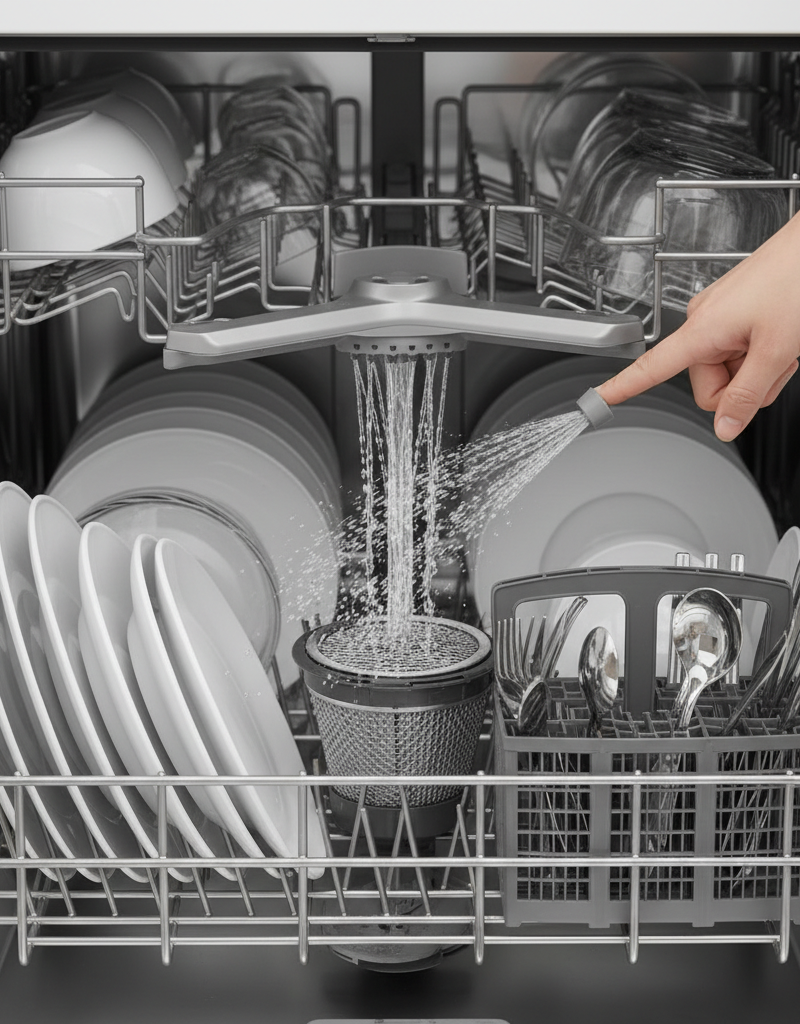
So how does this thing actually clean dishes, and why does it make noise? Your dishwasher isn't just a tub full of water. It's a fairly slick machine. When you hit start, it fills with water first. Then the wash pump kicks in. That's the heart of the whole job. It pulls water from the bottom of the tub and forces it up through the spray arms – those spinning little arms you see – to blast the dishes clean. This pump typically runs at around 3,600 RPM (revolutions per minute) during the wash cycle. After that, the water drains out, usually through a separate drain pump that sends the dirty water to your garbage disposal or straight into the drain line. The whole setup depends on open pathways and motors and impellers that aren't fighting each other. Any foreign object, even something tiny, can get sucked into the wash pump impeller – that little finned wheel that builds water pressure – and start making a grinding noise. If the bearing in the wash pump or drain pump starts wearing out, you'll hear a humming or buzzing sound, especially when it's under load. And if a spray arm hits something because it's loose or bent, you'll get a knocking sound. Simple deal: move water, avoid obstructions.
Step-by-Step Fix
Before you touch anything, cut the power. I’ve seen folks try to poke around in a live dishwasher, and that's a bad bet. Flip the breaker in your electrical panel that feeds the kitchen circuit. Don't trust the control panel alone; that's not enough.
-
Clear the Lower Rack — Pull out the bottom dish rack all the way. You need full access to the tub floor.
- Safety First: Make sure the power is OFF at the breaker. If you’re not 100% sure, use a non-contact voltage tester on the wires, especially in an older house where the wiring might be a little sketchy. Even a small shock can ruin your whole day.
-
Inspect the Drain Area — Look at the drain opening, usually a circular or square grate right in the center at the very bottom.
- Pull out any big food scraps or debris you can reach. Sometimes a rogue cherry pit or a scrap of plastic gets wedged right there and causes all kinds of noise.
-
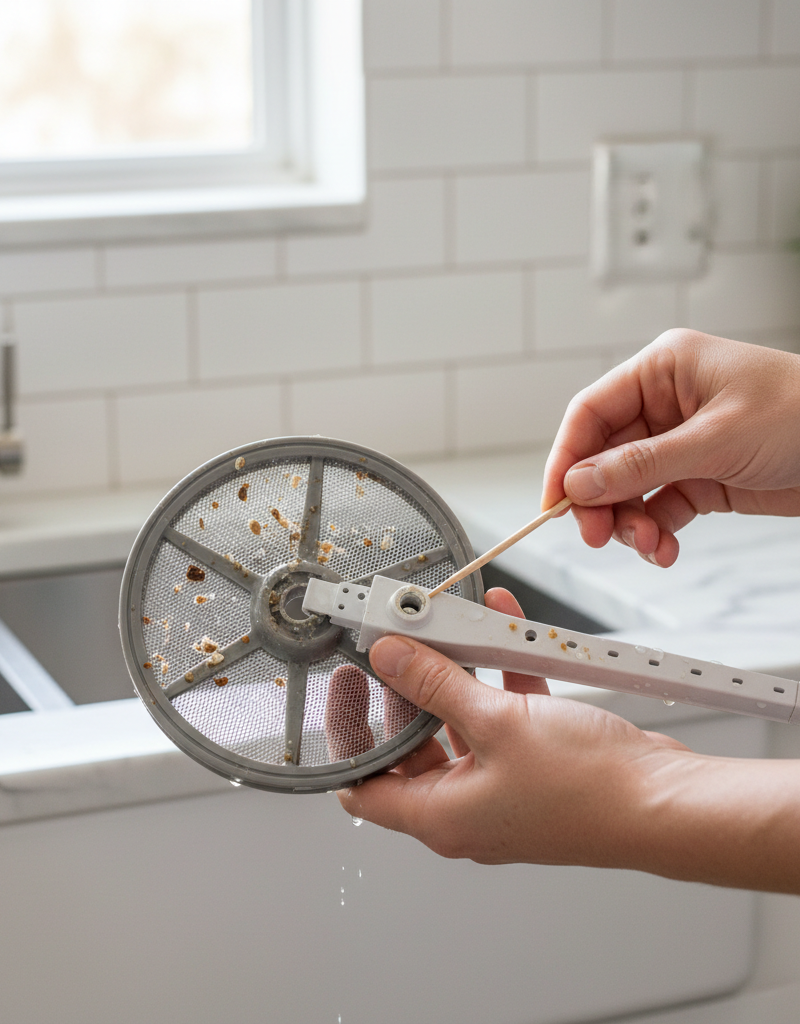
Remove the Filter Assembly — Most modern dishwashers have a removable filter. It's usually a cylindrical or two-piece assembly in the center of the tub floor, near the spray arm base.
- Follow your owner's manual for the exact removal steps – some twist out, others lift up. You might need a quarter-turn counter-clockwise. These filters get gross, believe me. I pulled a water heater in Frisco last month that had exactly this kind of funk on the dishwasher side of the house—different appliance, same kind of “what the heck is that smell?” moment.
- Tools: You might need a flat-head screwdriver or a pair of pliers if it's stuck tight or packed with gunk.
-
Check the Wash Arm Impeller — Once the filter is out, you should be able to see the wash pump intake and maybe the impeller itself, depending on the model.
- Reach in carefully with needle-nose pliers or gloved fingers. Feel around for broken glass, small plastic bits, fruit seeds, or anything else that doesn't belong. These impellers are usually plastic, so foreign objects can chew them up fast.
- If you find something: Pull it out carefully. Take your time if it's broken glass.
- If you don't find anything: Sometimes the debris sits deeper, behind the impeller. You may need to remove the lower spray arm (usually it just pulls up or unscrews) to get a better look.
-
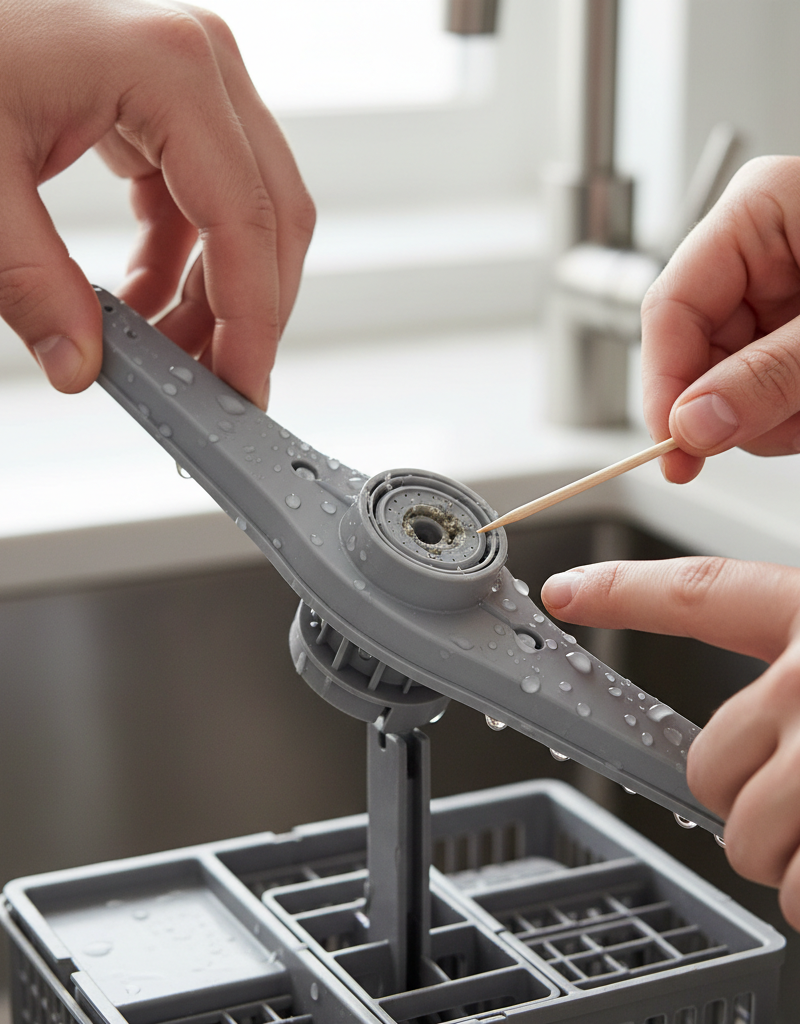
Inspect Spray Arms — Spin each spray arm gently. Do they move freely? Any cracks? Any blocked spray holes?
- Sometimes a spray arm warps and rubs against the rack or another part inside, which makes a knocking noise. You can usually pull them off by unscrewing a cap or lifting them straight up.
- Check for blockages: Use a toothpick or small wire to clear clogged spray holes. That usually won't cause a grinding sound, but it's good upkeep.
-
Tighten Mounting Screws — Believe it or not, sometimes the dishwasher itself isn't fastened tightly enough to the counter or cabinet framing.
- Open the door and look for mounting tabs, usually on the sides or top, where screws fasten the unit to the underside of the counter. Snug them up gently with a Phillips head screwdriver. A loose dishwasher can buzz and rattle like crazy.
-
Test the Drainage — Put everything back together and make sure the filter assembly is seated right.
- Restore power at the breaker. Run a short "rinse only" cycle. Listen close. Did the noise stop? Good. If not, you're probably looking at a motor problem.
-
Consider a Motor Replacement (Advanced DIY) — If the noise keeps going, especially if it's a steady hum or buzz, your wash pump or drain pump motor is probably failing.
- Replacing these can be an advanced DIY job. It often means pulling the dishwasher out, disconnecting water and electrical lines, and tipping it over to get to the pump assembly underneath. That's where you've gotta be honest about your comfort level.
- Tools: You'll likely need adjustable wrenches, screwdrivers, nut drivers, and maybe a shop vac for any spilled water.
- Pro Tip: Take pictures with your phone before you disconnect anything. It'll save you a headache when you're putting it back together. Also, order the exact replacement part number for your specific dishwasher model; close enough isn't good enough here.
Common Causes
- Food Debris: Bits of food, especially harder stuff like small bones, cherry pits, or even corn kernels, can slip past the filter and get into the wash pump impeller. That's probably the most common cause of grinding.
- Foreign Objects: Small non-food items are famous for this. Broken glass, plastic caps from detergent bottles, twist ties, even tiny toys that somehow got into the wash.
- Worn Wash Pump Motor Bearings: Over time, the bearings in the wash pump motor can wear out, and then you're stuck with a loud humming, buzzing, or grinding noise as the motor fights to spin the impeller.
- Failing Drain Pump: The drain pump has its own impeller and motor. If it's going bad, you might hear the racket mostly during the draining part of the cycle.
- Loose Spray Arm: If a spray arm gets loose on its mount or warps, it can smack the dish racks or other parts inside the tub, which makes a knocking sound.
- Improper Installation: A dishwasher that isn't secured well to the countertop or cabinets can shake itself silly, leading to rattling or buzzing noises.
Common Mistakes
- Ignoring the Noise: Thinking it
Related Articles
Keep troubleshooting with these hand-picked guides from FixlyGuide:
- The Oven Door Gap: Why Your Roasts Are Dry & How to Seal the Deal — A leaky oven door isn't just annoying; it can ruin your cooking and spike energy bills. Learn why your oven door isn't sealing tight and ho…
- The #1 Mistake Homeowners Make When Their Dishwasher Stops Cleaning (And the Simple Fix) — Discover the most common reason your dishwasher isn't cleaning dishes and learn a simple, effective fix you can do yourself in minutes.
- My Toaster Only Toasts One Side: The Hidden Thermostat Flaw — If your toaster only toasts one side, the cause is often an imbalanced internal thermostat or misaligned heating element, a specific flaw y…
- That Mildew Smell in Your Washer? Here’s the Real Reason — Is a musty odor taking over your laundry room? That mildew smell from your washing machine isn't just unpleasant—it's a sign of a deeper pr…
- Why Your Dishwasher Leaves Dishes Soaking Wet (And It's Not Your Rinse Aid) — Discover the real reasons your dishwasher isn't drying dishes and how to fix them, from blocked vents to faulty heating elements. Don't let…
- The Secret Culprit Behind Your Dishwasher's Standing Water (It's Not Always a Clog) — Don't assume a clog is the only reason your dishwasher isn't draining; often, the fix is simpler than you think.
What should this project cost?
Enter your project details for a realistic cost range before you call anyone.
Cost depends heavily on which system turns out to be the source.
- Regional adjustment
- National average
- Labor share (typical)
- ~$1,620
- Quotes to collect
- 3 written estimates
Educational estimate based on national averages — not a binding quote. Always confirm with written local estimates.
Get the print-ready PDF of this guide
A clean, ad-free, printable version you can keep on your phone or pin to the workshop wall. Free with a FixlyGuide account.
- Print-optimized layout
- Tools, materials & every step included
- Saved to your account
Frequently asked questions
Why does my dishwasher make a loud humming noise?+
A loud humming noise often points to a failing wash pump motor or drain pump motor. The motor bearings can wear out over time, causing it to struggle and produce this distinct sound. It usually means the motor is working harder than it should.
What if my dishwasher is making a clicking or ticking sound?+
Clicking or ticking sounds are usually less severe. They can be caused by the spray arm hitting something in the rack, or sometimes by the detergent dispenser opening. Check if your dishes are loaded properly and aren't obstructing the spray arms.
Can I prevent debris from causing noises in my dishwasher?+
Absolutely. Scrape plates thoroughly before loading to remove large food particles. Also, check your dishwasher's filter assembly regularly and clean it. This simple maintenance goes a long way in preventing blockages.
Is it safe to run a dishwasher that's making grinding noises?+
It's not recommended to run a dishwasher with a persistent grinding noise. This sound indicates internal friction or damage, which could worsen over time and lead to a more expensive repair or even complete pump failure. Address the issue promptly.
How often should I clean my dishwasher's filter?+
I tell homeowners to clean their dishwasher filter at least once a month, especially if you run it frequently. If you notice a drop in cleaning performance or strange noises, check it immediately. It only takes a few minutes.
My dishwasher is making noise, but it's still cleaning fine. Should I still worry?+
Yes, you should still worry. Even if the dishes are coming out clean, the noise suggests something is stressing a component. Eventually, that stressed part will fail, and it's better to address it before it leads to a complete breakdown. Don't wait for it to stop cleaning entirely.
What if I can't find anything in the pump area?+
If you've thoroughly checked the filter and impeller area and found no debris, the issue is most likely mechanical – a worn motor or pump. At that point, unless you're comfortable with advanced appliance repair, it's time to call in a professional appliance technician.
Can a noisy garbage disposal affect my dishwasher?+
Yes, it can. If your dishwasher drains into a garbage disposal, a clog or issue in the disposal itself can sometimes cause a gurgling or straining noise that you might mistake for a dishwasher problem. Run the disposal before starting the dishwasher to ensure it's clear.
How much does it typically cost to fix a noisy dishwasher?+
DIY fixes for debris can cost you nothing but time. If it's a new wash pump motor, parts alone can run $100-$300. Professional repair, including parts and labor, generally ranges from $200-$500, depending on the part and the technician's rates.
Should I replace the dishwasher or repair it if the motor is bad?+
That's a tough call, depends on the age of your unit. If your dishwasher is more than 8-10 years old and the repair cost is approaching half the price of a new, comparable unit, it's often more economical in the long run to invest in a new one. Newer models are also much more energy efficient.
Discussion
Loading comments…