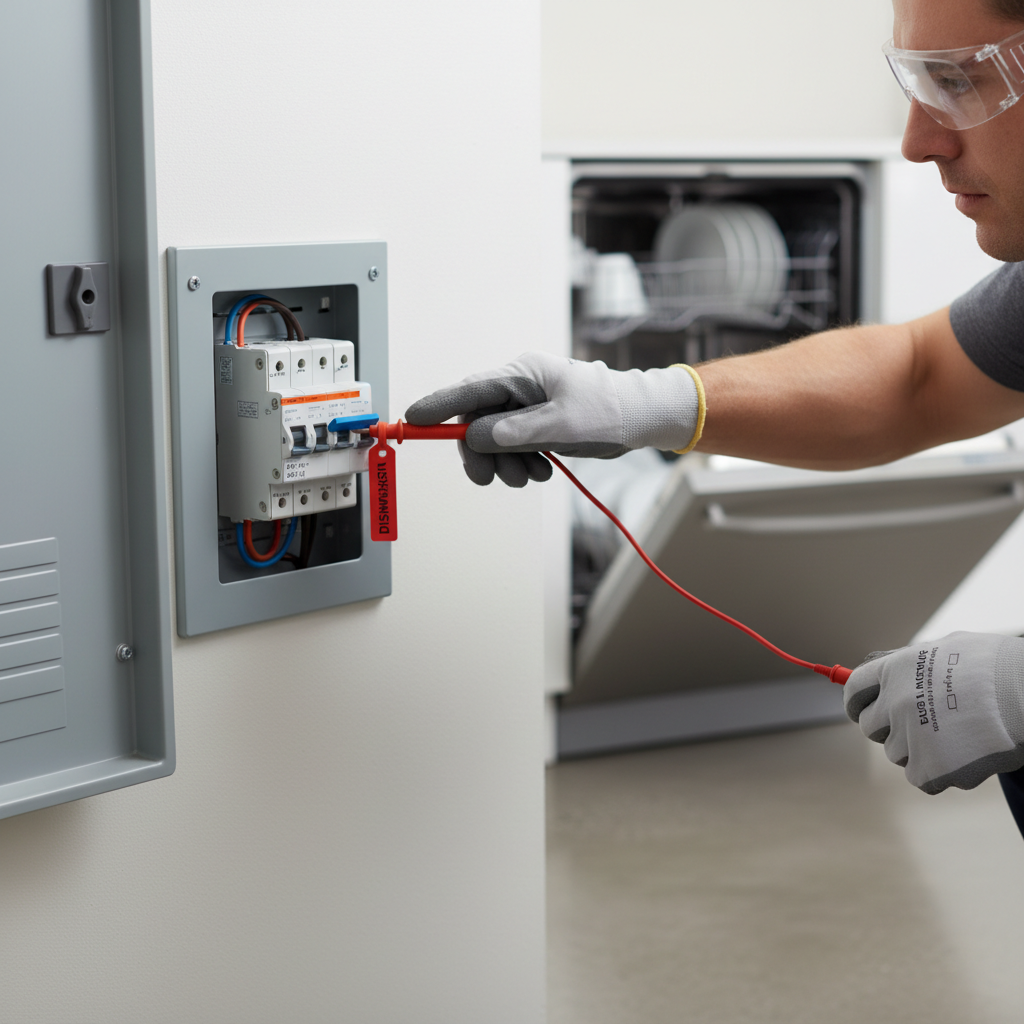
- Electrical Issues: Tripped breakers, dead outlets, loose wiring — all of that shows up a lot. Dishwashers pull a decent load, and sometimes the circuit’s just overloaded or worn out. I always check power first.
- Door Latch Problems: The latch safety switch keeps the machine from running unless the door’s fully shut. If it’s dirty, bent, or broken, the dishwasher won’t get the go-ahead.
- Control Panel Lockout: Modern controls are handy until they’re not. Child locks and delay start settings can make a machine seem dead when it’s really just waiting.
- Thermal Fuse Failure: This safety part blows if the dishwasher overheats. It protects the machine, sure, but once it’s gone, the unit’s not starting until you replace it.
- Water Supply Issues: No water, no start. Plain and simple. A shut valve or bad supply line keeps the cycle from beginning.
HVAC · High energy usage
| Project category | HVAC |
|---|---|
| Problem type | High energy usage |
| Trade required | HVAC |
| Urgency | Planned project |
| Safety risk | Low safety risk |
| DIY suitability | DIY for experienced homeowners |
| Cost category | High cost |
| Typical timeline | Assessment within weeks; replacement planned off-season |
| Contractor type | Licensed HVAC technician |
Repair option
Duct sealing, insulation, and a tune-up before touching the equipment.
Replacement option
High-efficiency replacement sized by a load calculation, not a rule of thumb.
Common causes
- Aging, low-efficiency equipment
- Leaking ducts losing conditioned air
- Insufficient attic insulation
- Oversized system short-cycling
Relevant tools:project cost estimatorrepair or replace
Published September 8, 2026Last updated September 8, 2026
Tools & materials you'll need
Affiliate linksAs an Amazon Associate FixlyGuide earns from qualifying purchases — at no extra cost to you. Prices and availability are accurate as of publication and subject to change.
Quick Answer
I get calls like this all the time. Folks are panicking because the dishwasher won’t kick on, and nine times out of ten it’s not some wallet-draining disaster. Usually it’s something plain and fixable — a tripped breaker, a door latch that’s being stubborn, or a water supply issue. Don’t start pricing out a new machine just yet. You can probably get this thing running again without calling anybody.
The Problem
You load the dishes, add the detergent, hit "start," and... nothing. No lights, no hum, no fill — just dead silence. That’s a lousy feeling, especially when the sink’s already full and you’re staring at a stack of dirty plates. Your dishwasher’s basically gone on strike.
Before you give up and hand-wash the whole mess, we’re gonna walk through the usual suspects. I’ve seen this exact headache a hundred times in my 25 years on the job, and most of the time it’s a simple fix. I pulled a dishwasher in Frisco last month that had the same complaint, and all it needed was a breaker reset and a door latch that wasn’t quite catching. No big drama. No dice, at first — until it was.
How It Works
Alright, here’s what’s supposed to happen when you press that "start" button. It’s not magic. It’s a chain of events, and if one link breaks, the whole thing quits.
First, when you shut the door, the door latch switch tells the control board, "Yep, the door’s secure." If that switch doesn’t close right, the machine thinks the door’s open and won’t do a thing. Safety first.
Then the control board sends power to the water inlet valve, usually tucked at the bottom front of the unit behind the kick plate. That valve opens and lets hot water flow in from your home’s line. Once the tub fills enough, a float switch rises with the water level and tells the board to stop the fill and move on to the wash cycle.
After that, the circulation pump motor kicks in and sprays water through the wash arms. At the same time, a heating element at the bottom of the tub starts bringing the water up to around 140°F to 160°F for cleaning and sanitizing. That latch, the inlet valve, float switch, pump, and heating element — they all matter. If one of ’em fails, or it’s not getting power, the dishwasher won’t start or it’ll quit partway through. I always start with the power stuff, because that’s where the dead machines hide most often.
Step-by-Step Fix
1. Check the Power Source — It’s almost always the first thing I check on any dead appliance.
First thing: is it getting juice? A dishwasher needs a dedicated 120-volt circuit. Head to your electrical panel — basement, garage, wherever they buried the thing — and look for a breaker labeled "Dishwasher" or "Kitchen Appliances." If it’s tripped, it’ll usually be sitting halfway between ON and OFF. Flip it all the way OFF, then firmly back to ON.
If it trips again right away, you’ve got a short somewhere and it’s time to bring in a pro. Also, if your dishwasher plugs in under the sink, test that outlet with a small lamp or something simple. A tripped GFCI outlet can make the whole appliance look dead. If it’s hard-wired, same basic idea — check the breaker first.
2. Inspect the Door Latch — This tiny part causes more headaches than you'd think.
The door latch does more than just keep the door shut. It’s got a safety switch that tells the dishwasher it’s okay to run. Push the door in firmly and make sure it’s fully latched. A spoon handle, a rack tine, or some other junk can stick out just enough to keep it from closing all the way.
Look for debris in the latch area too. Sometimes you’ll hear that nice little "click" when it catches right. If the latch looks bent, cracked, or loose, it probably needs replacing. Usually it’s a couple screws and a part you can order online for about $30-$60, depending on the model.
3. Examine the Control Lockout or Delay Start — A modern nuisance, but an easy fix.
Newer dishwashers come loaded with features people don’t always mean to use. Take a look at the control panel. If you see a "Control Lock" or "Child Lock" light, press and hold that button for 3-5 seconds to unlock it. Every brand does it a little differently, so if the button combo isn’t obvious, crack open the owner’s manual.
Also check for a "Delay Start" setting. If there’s a timer counting down, that’s your culprit. Cancel it and start the cycle fresh. Easy enough, right?
4. Check the Water Supply — It won’t start if it can’t fill.
Even though the complaint is "won’t start," no water can stop the whole cycle from getting off the ground. Under the kitchen sink, you’ll find the shut-off valve for the dishwasher water line. Make sure it’s fully open. If it’s closed or even halfway there, the machine won’t get the water it needs to begin. Some models won’t even hum if they know the fill isn’t happening.
Those valves get stiff over time. If it’s partially open, open it all the way. Don’t leave it half-cranked and hope for the best.
5. Reset the Dishwasher — The classic "turn it off and on again" approach.
Sometimes the control board just gets its wires crossed. Turn off the breaker for 5-10 minutes. That lets any leftover charge drain out and gives the board a clean slate. Then flip the breaker back on and try again.
This clears a lot of weird glitches and error codes. I did that last year for a homeowner in Marietta whose Bosch had gone completely unresponsive. Ten-minute reset, and it lit right up. Simple stuff, but it works more than people think.
6. Inspect the Thermal Fuse — A safety measure that can stop everything.
The thermal fuse is there to protect the dishwasher if it overheats. It’s usually on the control board or near the main power connection. If it blows, the machine gets no power at all. That’s not a guess — it’s done.
This one’s not the friendliest DIY job. You’ve got to pull the dishwasher out and get into the guts of the machine. A multimeter is the tool for the job. Check for continuity. If there isn’t any, the fuse is toast. Replacing it usually means soldering or crimping, and honestly, this is the point where a lot of homeowners call it a day and call me instead. The fuse itself is usually under $20, but labor can run $100-$200.
7. Test the Main Control Board — The brains of the operation.
If everything else checks out, the main control board might be the problem. That board is basically the dishwasher’s brain. If it goes bad, it won’t send the right signals to start the wash cycle. You might still get lights on the panel, but nothing actually happens.
Now we’re deep into advanced territory. Proper testing means a service manual, a multimeter, and checking voltage at different points. Control boards aren’t cheap either — often $150-$300 — and replacing one is no small job. This is usually where I tell folks it’s time for a professional diagnosis, or maybe a replacement if the machine’s already getting long in the tooth.
8. Check the Motor Start Relay/Capacitor — A less common but possible culprit.
Some older dishwashers, especially the ones with a separate motor for the wash pump, use a start relay or capacitor to help the motor get moving. If that part fails, the motor won’t start and the wash cycle won’t begin. You might hear a faint hum, but the water never moves.
Getting to it means pulling the machine, tearing into the motor housing, and testing the part with a multimeter. That’s not really a first-timer job. Better to hand that one to a qualified appliance repair tech.
Common Causes
- Electrical Issues: Tripped breakers, dead outlets, loose wiring — all of that shows up a lot. Dishwashers pull a decent load, and sometimes the circuit’s just overloaded or worn out. I always check power first.
- Door Latch Problems: The latch safety switch keeps the machine from running unless the door’s fully shut. If it’s dirty, bent, or broken, the dishwasher won’t get the go-ahead.
- Control Panel Lockout: Modern controls are handy until they’re not. Child locks and delay start settings can make a machine seem dead when it’s really just waiting.
- Thermal Fuse Failure: This safety part blows if the dishwasher overheats. It protects the machine, sure, but once it’s gone, the unit’s not starting until you replace it.
- Water Supply Issues: No water, no start. Plain and simple. A shut valve or bad supply line keeps the cycle from beginning.
- Faulty Control Board: Not the most common problem, but the main board can fail, especially in older dishwashers or after a power surge.
Common Mistakes
- Ignoring the Breaker: Don’t jump straight to a big repair before checking the panel. It takes 30 seconds and costs nothing.
- Forgetting the Child Lock: I can’t count how many times somebody’s chased a ghost problem for an hour, only to find the child lock was on. Check the icons.
- Not Fully Latching the Door: A door that looks closed isn’t always closed enough. Give it a firm push. I’ve seen a fork sticking up in the top rack block the latch more times than I can count.
- Overlooking the Water Supply Valve: It’s hidden under the sink, so people forget it. Make sure it’s all the way open, not just "mostly."
- Jumping to Complex Repairs: Don’t start tearing into electrical parts until you’ve ruled out the easy stuff. That’s how small problems turn into bigger ones.
- Using Too Much Detergent: This won’t usually stop a dishwasher from starting outright, but too many suds can mess with the float switch or pump and throw a cycle off. Stick to the recommended amount, usually 1 tablespoon for most cycles.
Cost & Time Breakdown
| Task | DIY Cost | Pro Cost | Time |
|---|---|---|---|
| Check Breaker/GFCI | $0 | $0 | 5 minutes |
| Inspect Door Latch | $0 | $0 | 10 minutes |
| Replace Door Latch Assembly | $30-$60 | $100-$200 | 30-60 minutes |
| Check Water Supply Valve | $0 | $0 | 5 minutes |
| Dishwasher Reset | $0 | $0 | 10 minutes |
| Replace Thermal Fuse | $15-$25 | $120-$250 | 1-2 hours |
| Replace Control Board | $150-$300 | $300-$500 | 1-3 hours |
| Replace Motor Start Capacitor | $20-$50 | $150-$300 | 1-2 hours |
Tips & Prevention
- Regularly Check the Latch: Every few months, eyeball the door latch. Make sure there’s no grime, corrosion, or sticky buildup, and that it closes smooth. A little food debris can keep it from catching right.
- Understand Your Controls: Read the owner’s manual. I know, nobody loves doing that, but it’ll save you a pile of frustration. You’ll know how to turn off the control lock or delay start instead of guessing.
- Don't Overload: If you pack the racks too tight, the door might not fully close even if it looks closed from the outside. It also hurts cleaning performance. Give the dishes a little breathing room.
- Gentle Closing: Don’t slam the door. A firm, easy push is better and keeps the latch from getting bent or beat up over time.
- Annual Circuit Breaker Check: Once a year, flip the dishwasher breaker off and back on. Keeps things fresh and can help prevent nuisance trips.
- Check Water Pressure: If your water pressure stays low — below 20 PSI — it can affect how well the inlet valve fills the dishwasher. That can sometimes make the machine act like it won’t start if the fill sensor doesn’t see water fast enough. Worth checking your home’s pressure now and then.
When to Call a Professional
Look, I’m all for DIY. I like saving people money. But there are times when you gotta stop tinkering and call in the cavalry. If you’ve checked the breaker, confirmed the door’s latched, reset the machine, and ruled out child lock or delay start, and it’s still dead as a doornail, it’s probably time for a pro.
Any electrical troubleshooting beyond the breaker — especially if you suspect a short or need to test internal parts with a multimeter — should be left to a licensed appliance technician. Messing around with high-voltage electronics without the right experience can get ugly fast, and you can do real damage to the appliance or yourself. And if you smell burning plastic or see smoke coming from the unit, cut the power at the breaker immediately and call a technician. Don’t get heroic. Safety first, always.
Related Articles
Keep troubleshooting with these hand-picked guides from FixlyGuide:
- The Real Reason Your Dishwasher Leaks (It’s Not Always the Hose) — A leaking dishwasher can be a homeowner's headache, but often the culprit isn't a failed hose, but rather a simple fix around the door or t…
- The $5 Part That Stops Your Fridge From Leaking (And Why It Fails) — A leaking refrigerator can lead to serious floor damage and appliance issues. Often, the culprit is a clogged defrost drain, a simple fix m…
- Why Your Oven's Set Temperature Is a 50-Degree Lie — Your oven is likely off by 25-50°F, ruining your recipes; learn if it's a simple calibration issue you can fix in minutes or a faulty senso…
- Your 'Clean' Dishes Are Still Dirty? The Culprit Is Hiding — Frustrated by gritty, food-flecked dishes after a full wash cycle? The problem isn't your detergent. Your dishwasher is making dishes dirti…
- My Toaster Only Toasts One Side: The Hidden Thermostat Flaw — If your toaster only toasts one side, the cause is often an imbalanced internal thermostat or misaligned heating element, a specific flaw y…
- The Secret Reason Your Dishwasher Won't Drain (And How to Fix It in 20 Minutes) — Before you call a plumber, learn the most common culprit behind a dishwasher that won't drain and how to fix it yourself with simple tools.
Should you do this yourself?
Answer five quick questions before you start. Safety outranks savings every time.
Your experience with work like this
How high do you have to work?
Does the job involve any of these?
Will it need a permit?
Specialty tools
Free and instant. Educational guidance only — not a quote, inspection, or professional diagnosis.
What should this project cost?
Enter your project details for a realistic cost range before you call anyone.
Cost depends heavily on which system turns out to be the source.
- Regional adjustment
- National average
- Labor share (typical)
- ~$1,620
- Quotes to collect
- 3 written estimates
Educational estimate based on national averages — not a binding quote. Always confirm with written local estimates.
Frequently asked questions
Why would my dishwasher suddenly stop starting?+
Most sudden start failures come down to a tripped circuit breaker, a door latch that isn't fully engaged, or an accidental activation of the control lock. Always check these basic issues first before digging deeper into more complex problems.
How do I know if my dishwasher's door latch is the problem?+
If your dishwasher hums or tries to start but then stops, or if you can't hear a clear 'click' when you firmly close the door, the latch might be the issue. Visually inspect it for damage or obstructions that prevent full engagement.
Can a power surge prevent my dishwasher from starting?+
Yes, a power surge can sometimes trip the circuit breaker or even damage the dishwasher's control board or thermal fuse. Resetting the breaker is a good first step after a surge to see if it resolves the issue.
Is it safe to try and fix my dishwasher myself if it's an electrical issue?+
You can safely check the circuit breaker and ensure the dishwasher is plugged in correctly. However, any internal electrical troubleshooting involving wires, components, or testing with a multimeter should be left to a qualified appliance technician to avoid injury or further damage.
What's a thermal fuse, and why would it stop my dishwasher from starting?+
A thermal fuse is a safety device that blows and cuts power to the dishwasher if it detects an overheating condition. If it has blown, your dishwasher won't receive power until the fuse is replaced, often indicating an underlying heating or motor issue.
My dishwasher makes a hum but doesn't fill or start. What could that mean?+
A hum often indicates that the motor is getting power but can't move. This could be due to a faulty motor start capacitor, a seized pump, or sometimes even a completely clogged water inlet valve preventing water flow, which then stops the cycle.
How often should I reset my dishwasher?+
Only reset your dishwasher when it's experiencing a specific problem like not starting or displaying an error code. Regular, unnecessary resets aren't needed, but it's a good first troubleshooting step for many electronic glitches.
What's the typical lifespan of a dishwasher, and when should I consider replacement over repair?+
Most dishwashers last 10-12 years. If your machine is nearing or past this age and requires an expensive repair like a new control board or motor, it's often more cost-effective to invest in a new, more energy-efficient model rather than sinking money into an old one.
Can using too much detergent affect my dishwasher's starting?+
While not a direct cause of a 'no start' situation, excessive suds can sometimes overflow into the float switch area or cause issues with the pump. This can sometimes trick the dishwasher into thinking there's a problem, preventing it from starting or completing a cycle.
My dishwasher won't start after a new installation. What should I check?+
After a new installation, first ensure the power cord is properly plugged in or the hardwiring is secure, and that the circuit breaker is ON. Also, check that the water supply valve under the sink is fully open, as a closed valve will prevent filling and starting.
Discussion
Loading comments…