- Simple Obstruction: The 1 culprit. A utensil, cutting board, or badly loaded rack is physically in the way.
- Loose or Misaligned Strike Plate: Screws on the catch loosen up and let it shift.
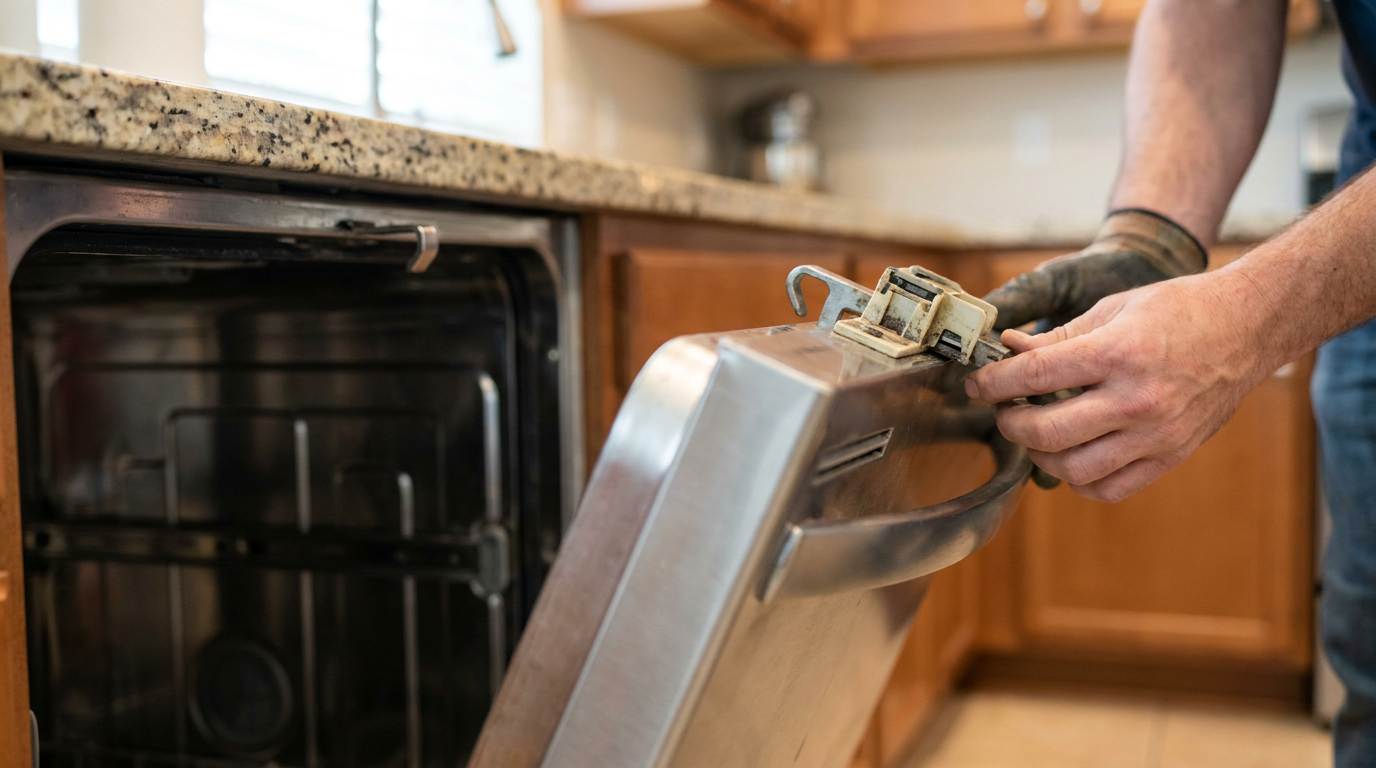
- Damaged Latch Assembly: The hook or pin on the door breaks, or the microswitch inside gives up.
- Dishwasher Not Level: A crooked install twists the frame and throws the door off.
- Bent Hinges: Leaning on the open door can bend the hinges, and then the door sags.
HVAC · High energy usage
| Project category | HVAC |
|---|---|
| Problem type | High energy usage |
| Trade required | HVAC |
| Urgency | Planned project |
| Safety risk | Low safety risk |
| DIY suitability | DIY for experienced homeowners |
| Cost category | High cost |
| Typical timeline | Assessment within weeks; replacement planned off-season |
| Contractor type | Licensed HVAC technician |
Repair option
Duct sealing, insulation, and a tune-up before touching the equipment.
Replacement option
High-efficiency replacement sized by a load calculation, not a rule of thumb.
Common causes
- Aging, low-efficiency equipment
- Leaking ducts losing conditioned air
- Insufficient attic insulation
- Oversized system short-cycling
Relevant tools:project cost estimatorrepair or replace
Published October 7, 2026Last updated October 7, 2026
Tools & materials you'll need
Affiliate linksNo materials required.
As an Amazon Associate FixlyGuide earns from qualifying purchases — at no extra cost to you. Prices and availability are accurate as of publication and subject to change.
Quick Answer
Start with the easy stuff. Check for a stray fork, a pot handle, or a misloaded rack keeping the door from shutting all the way. Then look at the latch itself for debris or damage, and make sure the strike plate on the tub lines up clean. If the latch checks out, you’re probably dealing with bent hinges or a door/tub that’s gone a little out of square. Most times, it’s a quick fix. I’ve had these wrapped up in under 15 minutes plenty of times.
The Problem
You load the dishwasher, push the door shut, and... nothing. It bounces back open, or it feels sprung and won’t catch the lock so the cycle can start. That’s not just irritating — it stops the whole machine cold. The dishwasher won’t run unless that door is sealed tight, because nobody wants a kitchen flood. Usually, though, the issue is mechanical and pretty easy to track down. I’m talking one of a handful of things, and most of them you can handle yourself with basic tools.
How It Works
A dishwasher door looks simple, but there’s a lot going on in there. You’ve got the door, the stout hinges down low, and the latch assembly up top. Close the door, and a hook or pin on the door lines up with the catch on the dishwasher frame — that’s the strike plate. Inside that latch, there’s usually a microswitch. Once everything seats right, it presses the switch and closes the circuit. That tells the control board, “Door’s shut. Go ahead and start.”
If that switch doesn’t get triggered, the board won’t send power to the water inlet valve or the main circulation pump. Good safety feature. Saves you from a mess. The door also seals against a thick rubber gasket around the tub opening. For that seal to work, the door has to press evenly and firmly. If the door’s bent, the hinges are tweaked, or the unit isn’t level, you lose that compression. And once that happens, the latch can miss its target too.
Step-by-Step Fix
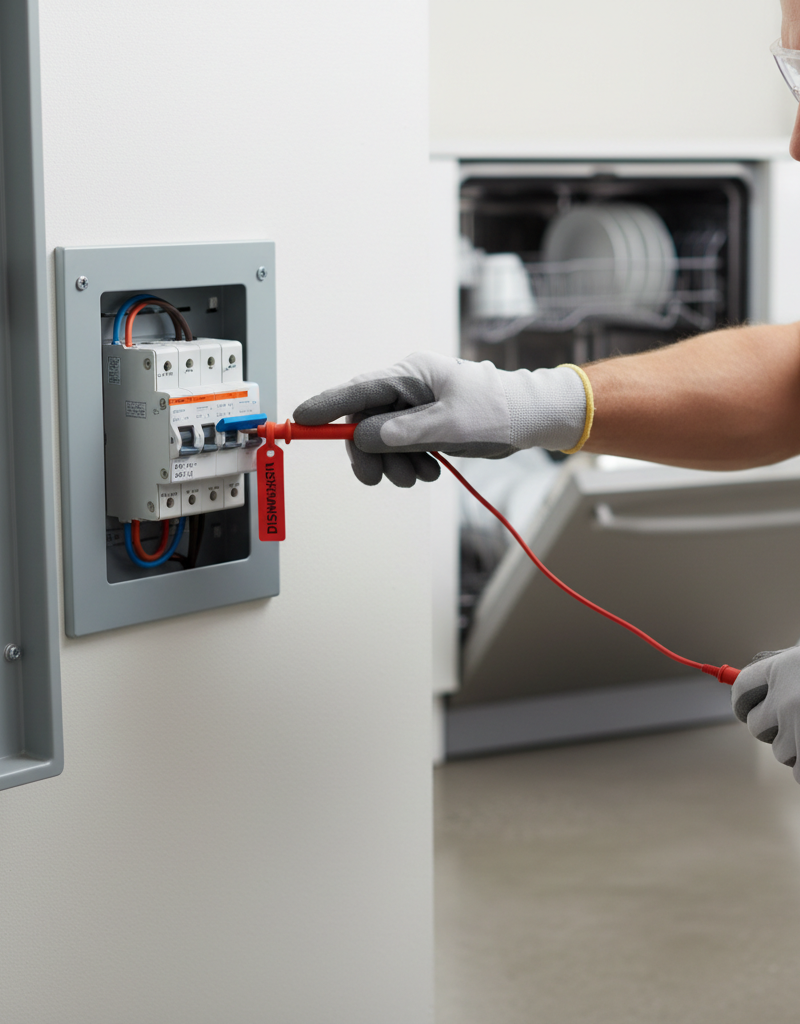
Before you start, shut off power to the dishwasher at the circuit breaker. I know, I know — sounds basic. Still worth doing every time you’re inside an appliance.
1. Check for Obstructions
- Tools: None.
- This is the first thing I check because it’s the most common. Open it up and look hard. Is a cookie sheet, a big spoon, or the edge of the dish rack blocking the door? Sometimes the lower rack jumps its track and sits cockeyed, which throws everything off. Push both racks in and pull them back out to make sure they’re seated right. Check the sides and bottom of the opening for anything hanging up. Sounds too simple, right? Yet I’ve seen it more times than I can count.
2. Inspect the Door Latch Assembly
- Tools: Phillips screwdriver, small cleaning brush or compressed air.
- Open the door and look at the top edge. You’ll see the latch mechanism, usually a hook-style clasp or a pin. Now look at the top of the tub frame where it meets the door. That’s the strike plate. Check both spots for gunk, food crumbs, or busted plastic bits. Clean them out with a brush or a cloth. Then look at the latch hook itself. Bent? Cracked? Loose? Give it a wiggle. If it feels sloppy, the spring inside may be broken, or the mounting screws may’ve backed out.
3. Tighten Hardware and Check Alignment
- Tools: Phillips screwdriver or Torx driver (often T15 or T20 size).
- Those strike plate screws can loosen over time and throw the whole latch off. Snug them up first. Then close the door slowly and watch how the latch enters the strike plate. Is it hitting the top edge or bottom edge instead of sliding in straight? If so, you may be able to loosen the screws a touch, shift the plate up or down, and tighten it back down. A lot of models give you a little wiggle room for exactly this reason.
4. Verify the Dishwasher Is Level
- Tools: Carpenter's level.
- If the dishwasher isn’t sitting level in the cabinet, the frame can twist just enough to mess up the door. Put a level inside the tub on the bottom and check side-to-side. Then set it on the door and check front-to-back. Most units have adjustable feet up front, and sometimes in back too. You can turn those with pliers or a wrench until the machine sits right. This fixes a surprising number of latch issues, especially on newer installs or after flooring work.
5. Examine the Door Hinges
- Tools: Flashlight, possibly a socket wrench.
- Open the door all the way and lift it up and down from the handle. Does it feel loose, droopy, or wobbly with too much play? The hinges tie the door to the tub, and they can bend if somebody leans on the open door or shoves it down. Check the bottom corners with a flashlight. Look for bent metal or loose bolts. It’s not the most common failure, but a bent hinge will absolutely throw the door out of line.
6. Inspect for a Bent Door
- Tools: Straightedge or yardstick.
- This one’s less common, but it happens. Open the door and hold a straightedge vertically and horizontally across the inner panel. Any big gaps? A door can get twisted or bent over time. Check the seams where the inner and outer panels meet. If you can see a warp, that’s no good — the latch may never line up right. Replacing a door panel is a bigger job, and that’s usually where I’d tell a homeowner to weigh the repair cost against just getting a new machine.
Common Causes
- Simple Obstruction: The #1 culprit. A utensil, cutting board, or badly loaded rack is physically in the way.
- Loose or Misaligned Strike Plate: Screws on the catch loosen up and let it shift.
- Damaged Latch Assembly: The hook or pin on the door breaks, or the microswitch inside gives up.
- Dishwasher Not Level: A crooked install twists the frame and throws the door off.
- Bent Hinges: Leaning on the open door can bend the hinges, and then the door sags.
- Detergent Buildup: Hardened powder detergent or food crud can cake up in the latch and keep it from engaging.
Common Mistakes
- Slamming the Door: If you keep forcing it shut, you can bend the latch or hinges little by little. Close it firmly, sure, but don’t whale on it.
- Ignoring a Loose Door: If the door feels wobbly or doesn’t close like it used to, don’t brush it off. That’s usually the early warning sign.
- Using the Wrong Screwdriver: A lot of dishwashers use Torx screws — star-shaped. Stick a Phillips driver on there and you’ll strip the head, and now a 5-minute fix turns into a headache. Check first.
- Overtightening Screws: When you adjust the strike plate, snug is enough. Crank too hard and you can strip the threads or crack the plastic.
- Leaning on the Door: Don’t put your weight on an open dishwasher door. Ever. That’s how hinges get bent and the whole thing goes out of alignment.
Cost & Time Breakdown
| Task | DIY Cost | Pro Cost | Time |
|---|---|---|---|
| Clearing an Obstruction | $0 | $90–$120 (service call) | < 1 minute |
| Cleaning & Tightening Latch | $0 | $90–$120 | 5–10 minutes |
| Leveling the Dishwasher | $0 | $100–$150 | 15–30 minutes |
| Replacing Latch Assembly | $20–$60 (part) | $150–$250 | 30–45 minutes |
| Replacing Door Hinges | $40–$80 (pair) | $200–$350 | 1–2 hours |
Tips & Prevention
- Load Mindfully: Pay attention as you load. Keep pot handles, silverware, and big plates from sticking out into the door path.
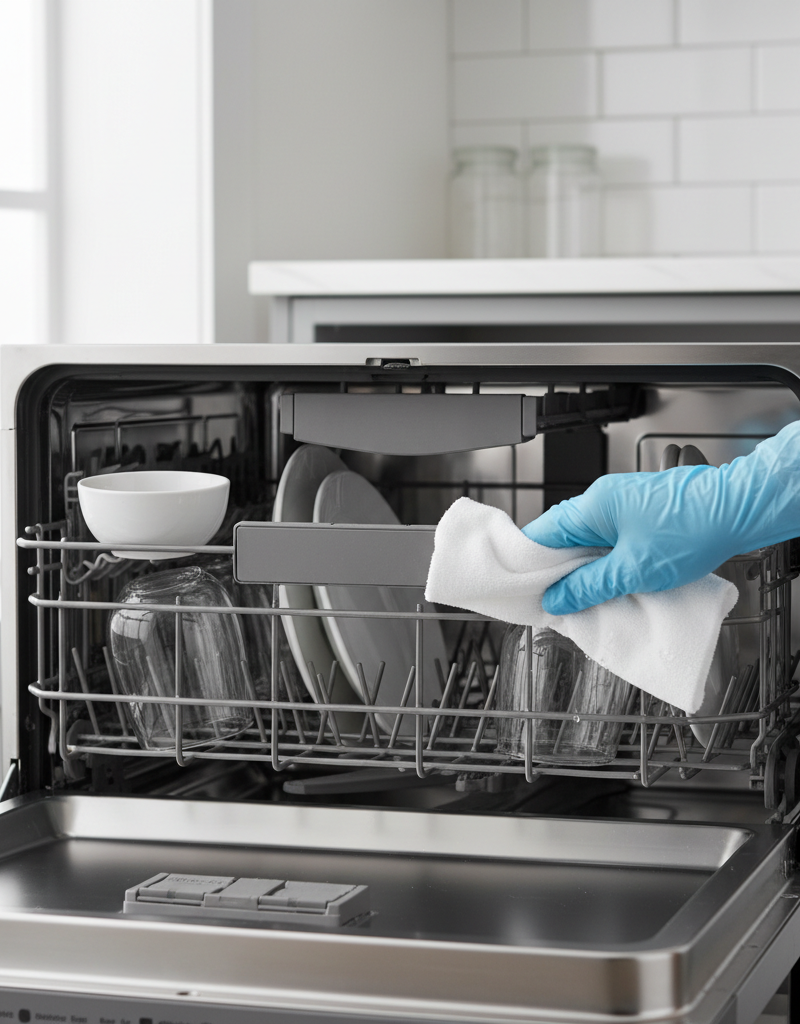
- Wipe Down the Latch: Once a month, give the latch and strike plate a quick wipe with a damp cloth so gunk doesn’t build up.
- Check for Level: If you just had new flooring put in, or the dishwasher’s new, check it again after a few weeks. Things settle.
- Don't Force It: If the door doesn’t want to close, stop and figure out why. Don’t muscle it shut. Force and appliances don’t get along.
- Teach Your Family: Make sure everybody knows not to lean on the open door. It’s not a shelf, and it sure isn’t built like one.
When to Call a Professional
If you’ve checked for obstructions, cleaned the latch, and tightened the screws, but the door still won’t catch, it’s time to bring in a pro. Same goes if you think the door itself is bent, the hinges are damaged, or you swap out the latch assembly and it still won’t work — that can point to a bad control board. A qualified appliance tech’s got the tools and the experience to track it down without making the mess worse. I pulled a water heater in Frisco last month that had exactly this kind of “simple” problem hiding behind a bigger symptom — same story a lot of the time.
Related Articles
Keep troubleshooting with these hand-picked guides from FixlyGuide:
- The Surprising Reason Your Dishwasher Won't Start (It's Not Always the Door) — Don't rush to call a repairman when your dishwasher refuses to start; often, the culprit is a simple, overlooked issue you can fix yourself…
- Why Your Dishwasher Leaves Dishes Soaking Wet (And It's Not Your Rinse Aid) — Discover the real reasons your dishwasher isn't drying dishes and how to fix them, from blocked vents to faulty heating elements. Don't let…
- The #1 Mistake Homeowners Make When Their Ice Maker Stops (And the Easy Fix) — Before you call for service, learn the most common and easily fixable reason your refrigerator's ice maker isn't producing ice.
- The #1 Mistake Homeowners Make When Their Dryer Stops Drying (And How to Fix It Free) — If your dryer is taking too long to dry clothes, the most common culprit is a clogged vent, which can be easily fixed with simple tools.
- The #1 Mistake Homeowners Make When Their Dryer Is Taking Too Long — Before you call a repairman, learn the most common, easily overlooked reason your dryer isn't drying clothes efficiently and how to fix it…
- The Secret Reason Your Furnace Turns On and Off So Much (It's Not What You Think) — Short cycling strains your furnace and wastes energy. Learn the most common surprising causes and how to fix them to restore efficient heat…
Should you do this yourself?
Answer five quick questions before you start. Safety outranks savings every time.
Your experience with work like this
How high do you have to work?
Does the job involve any of these?
Will it need a permit?
Specialty tools
Free and instant. Educational guidance only — not a quote, inspection, or professional diagnosis.
What should this project cost?
Enter your project details for a realistic cost range before you call anyone.
Cost depends heavily on which system turns out to be the source.
- Regional adjustment
- National average
- Labor share (typical)
- ~$1,620
- Quotes to collect
- 3 written estimates
Educational estimate based on national averages — not a binding quote. Always confirm with written local estimates.
Before you start
Check the difficulty, permits, and safety risk — then decide whether to call a pro.
- Estimate this projectGet a cost range for your scope and ZIP before you call anyone.Open
- Get local estimatesSend one request and compare written estimates from vetted pros.Open
Free, no signup required. Estimates are educational guidance, not a quote or an inspection.
Frequently asked questions
Why did my dishwasher door suddenly stop closing?+
Most often, this is caused by a simple obstruction. An item may have shifted during a cycle, or a rack isn't pushed in all the way. Check for anything blocking the door path before looking at mechanical parts.
Can I still run my dishwasher if the door isn't fully latched?+
No. Dishwashers have a safety switch that prevents the machine from starting unless the door is securely closed and latched. This is a critical feature to prevent leaks and flooding.
How do I know if the dishwasher latch is broken?+
Look for visible signs of damage like cracked plastic or a bent metal hook. The latch should feel firm; if it's loose or wobbly, the internal spring may be broken. If the door closes but the 'start' light just blinks, the electronic switch in the latch might have failed.
Is it expensive to replace a dishwasher door latch?+
The part itself is usually not very expensive, typically costing between $20 and $60. If you do it yourself, it's a budget-friendly repair. A professional repair will likely cost between $150 and $250, including the part and labor.
Why does my dishwasher door pop open?+
This usually indicates the latch isn't fully engaging. It could be a simple alignment issue with the strike plate, or it could mean the latch mechanism is worn out and can no longer hold the door under tension from the seal.
Can a bent dishwasher door be fixed?+
It's very difficult to straighten a bent metal door panel correctly. In most cases, the bent panel or the entire door assembly needs to be replaced, which can be a costly repair.
How do I adjust the strike plate on my dishwasher?+
Slightly loosen the two screws holding the strike plate to the dishwasher's frame. This should give you enough play to move it up or down by a few millimeters. Close the door slowly to find the sweet spot where the latch engages smoothly, then retighten the screws.
My dishwasher is new, why won't the door stay closed?+
For new installations, the most common causes are that the unit isn't perfectly level in the cabinet opening, or the door's gasket is still very stiff. The gasket will relax over time, but you should verify the dishwasher is level front-to-back and side-to-side.

Discussion
Loading comments…