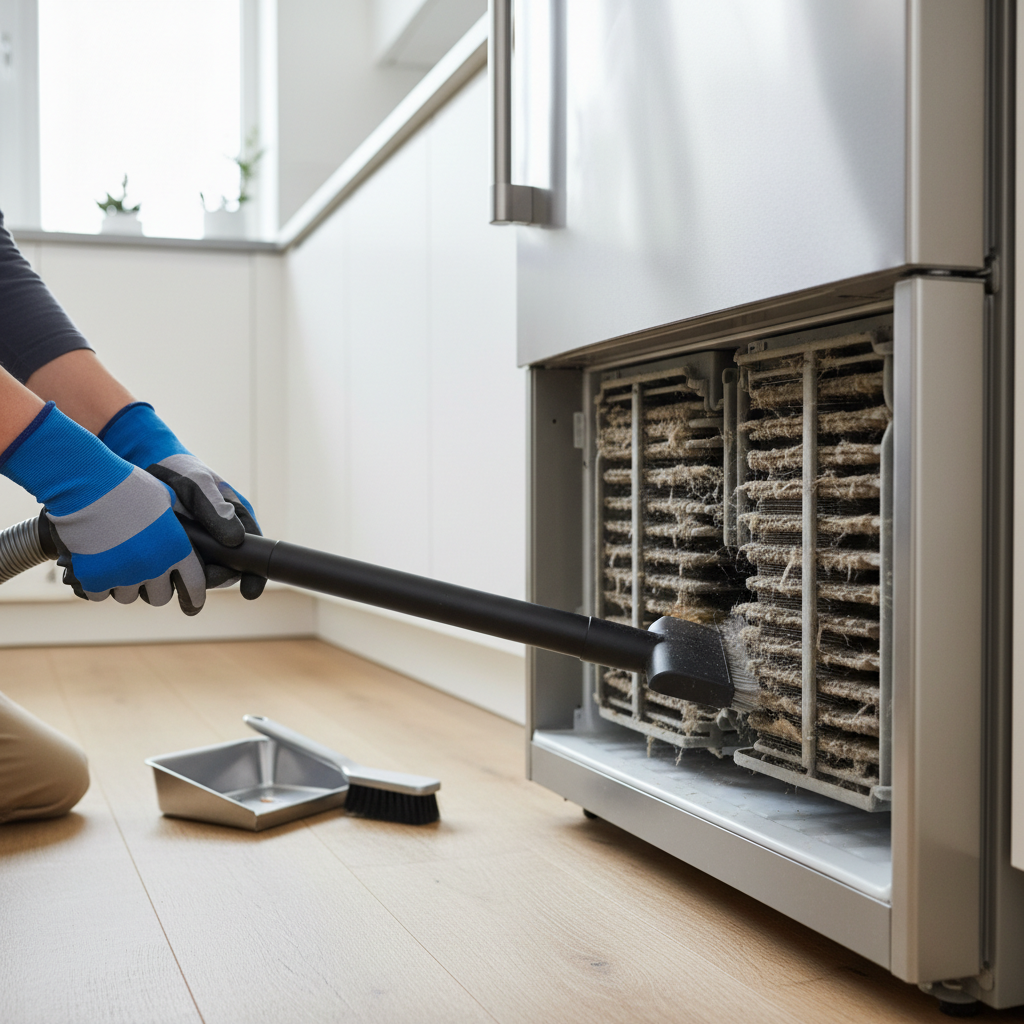
- Dirty Condenser Coils: This is the big one most of the time. Dust and pet hair act like a blanket and trap heat.
- Faulty Door Gaskets: Worn or torn seals let cold air leak out, so the compressor has to keep running.
- Blocked Vents: Overstuffed fridges or freezers stop air from moving like it should.
- Thermostat Malfunction: A bad setting or a failed thermostat can keep the fridge from reaching the right temp.
- Defrost System Issues: If the defrost heater, thermostat, or timer goes bad, the evaporator coils ice over and choke airflow.
HVAC · High energy usage
| Project category | HVAC |
|---|---|
| Problem type | High energy usage |
| Trade required | HVAC |
| Urgency | Planned project |
| Safety risk | Low safety risk |
| DIY suitability | DIY for experienced homeowners |
| Cost category | High cost |
| Typical timeline | Assessment within weeks; replacement planned off-season |
| Contractor type | Licensed HVAC technician |
Repair option
Duct sealing, insulation, and a tune-up before touching the equipment.
Replacement option
High-efficiency replacement sized by a load calculation, not a rule of thumb.
Common causes
- Aging, low-efficiency equipment
- Leaking ducts losing conditioned air
- Insufficient attic insulation
- Oversized system short-cycling
Relevant tools:project cost estimatorrepair or replace
Published August 27, 2026Last updated August 27, 2026
Tools & materials you'll need
Affiliate linksAs an Amazon Associate FixlyGuide earns from qualifying purchases — at no extra cost to you. Prices and availability are accurate as of publication and subject to change.
Quick Answer
If your fridge isn’t cooling the way it should, your food and your budget are both in trouble. Most of the time, it’s something pretty simple: blocked vents, dirty coils, or a door seal that’s worn out and leaking cold air. You can handle those yourself with a little patience. But if you’re hearing weird noises, smelling burnt plastic, or you think the compressor or sealed system is cooked, that’s the point where you call a licensed appliance tech. Don’t fool with refrigerant or electrical parts beyond basic troubleshooting.
The Problem
There’s nothing worse than cracking open the fridge for a cold drink and finding it lukewarm, or worse, realizing the milk went bad a day early. A fridge that isn’t cooling right doesn’t just waste groceries; it can turn into a health issue real quick. Bacteria love temps above 40°F (4°C), so if the food’s sitting above that for long, it’s on borrowed time. You’ll see wilted greens, meat going off fast, ice cream turning soft, or just a fridge full of unhappy groceries. I’ve seen this hundreds of times, and it always needs attention fast if you want to save the food and keep folks safe.
How It Works
Alright, here’s how that big cold box in your kitchen actually does its job. It’s not magic. It’s thermodynamics, plain and simple. Your refrigerator uses a vapor compression cycle to move heat from inside the cabinet to the outside. Here’s the rundown:
First, a compressor (that big, usually noisy, black component at the back or bottom) compresses a refrigerant gas. That bumps up its temperature and pressure. Think of it like a little pump for cold. Next, that hot, high-pressure gas moves through the condenser coils, usually on the back or underneath the fridge. There, it dumps heat into your kitchen air and turns into a high-pressure liquid. You can feel those coils warm sometimes—that’s the heat leaving the system. From there, the liquid refrigerant goes through an expansion valve or capillary tube. That drops the pressure and temperature hard, so now you’ve got a cold, low-pressure liquid. That super-cold liquid heads into the evaporator coils, usually tucked behind a panel in the freezer compartment. As it soaks up heat from the air inside the fridge and freezer, it evaporates back into a low-pressure gas. That’s what actually cools the air moving through the cabinet. Then that gas heads back to the compressor and the whole thing starts over again. A fan, the evaporator fan, pushes that chilled air around both the freezer and the fresh food section. Another fan, the condenser fan, helps the condenser coils shed heat. If any part of that chain—compressor, condenser, evaporator, or the fans—isn’t pulling its weight, your fridge won’t cool worth a darn.
Step-by-Step Fix
Before you panic and call in the cavalry, there are a few things you, the homeowner, can check. I’ve rolled up to plenty of jobs only to find somebody missed a dead-simple fix. Don’t be that guy.
-
Check the Power & Thermostat – Start with the basics Is the fridge plugged in? Is the outlet live? You’d be amazed how often it’s something that basic. Check the breaker too—it may have tripped, especially if the fridge made a funny noise or you had a power surge. Then look at the thermostat inside the fridge and make sure it’s set right, usually between 37-40°F (3-4°C). Somebody might’ve bumped it.
-
Inspect the Door Seals – Seal the deal on cold air Grab a dollar bill and shut it in the fridge door. If it pulls out too easily, that gasket is probably leaking cold air. Do that test all the way around. A bad seal makes the compressor work overtime just to keep up. Clean the gasket with warm, soapy water first; sometimes sticky gunk is the whole problem. If it’s cracked, torn, or brittle, replacement’s the only real fix.
-
Clear Blocked Vents – Let the air flow Inside the fridge and freezer, there are vents that move cold air around. If those vents are packed with food boxes, bags, or ice buildup, the air can’t get where it needs to go. Shuffle things around. On some models, especially side-by-side or top-freezer units, the freezer has to be cold enough for the fridge side to work right. So don’t block the freezer vents either.
-
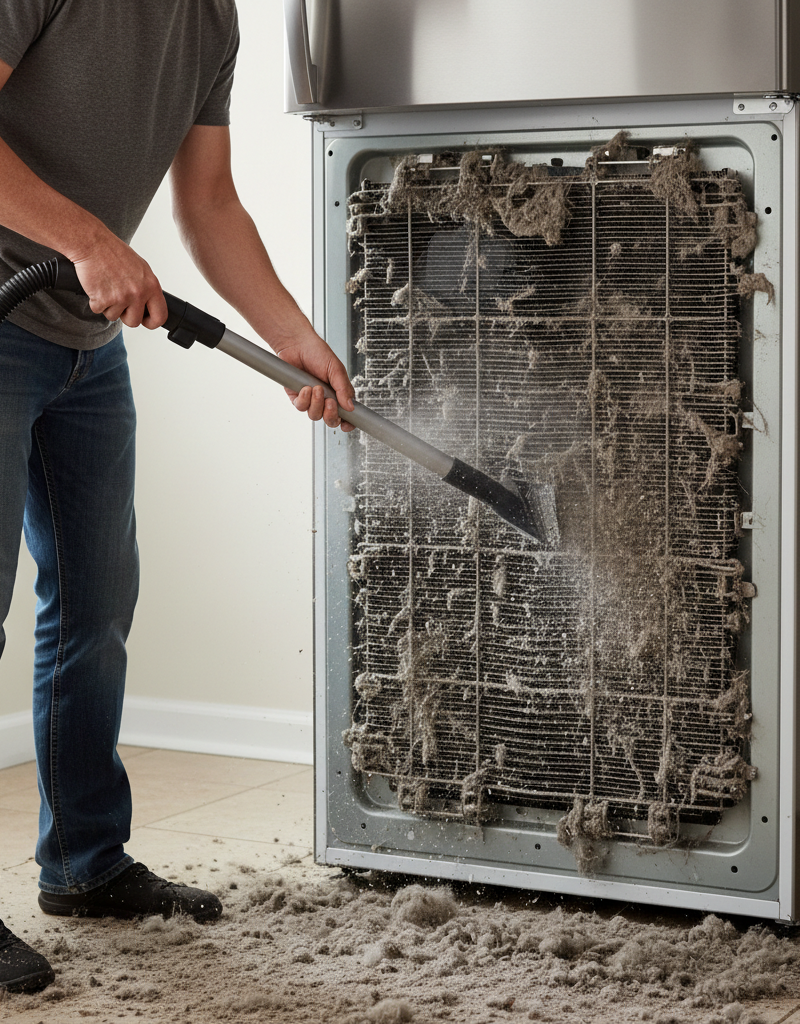
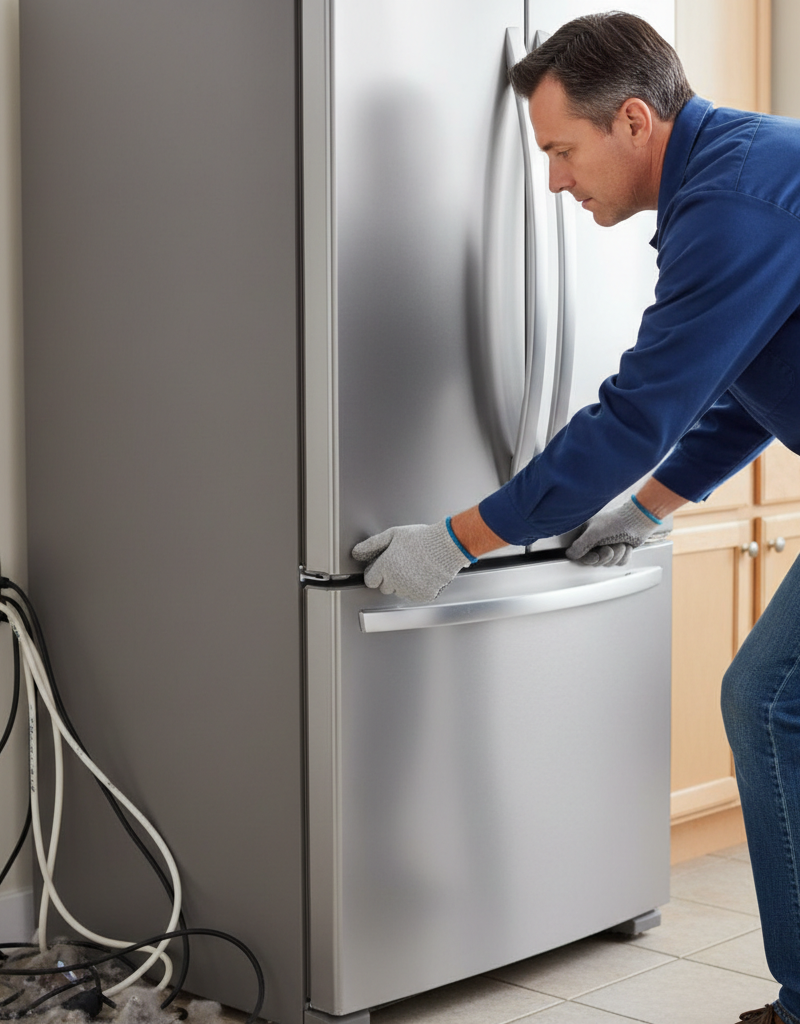
Clean the Condenser Coils – Dust bunnies are fridge killers These are usually at the back or underneath the fridge. Unplug the unit first! Then use a vacuum with a brush attachment or a coil brush to knock off dust, pet hair, and debris. Dirty coils can’t dump heat the way they should, so the compressor runs longer and works harder, and cooling suffers. I pulled a water heater in Frisco last month that had exactly this kind of fuzz-ball mess on the fridge coils next to it—dog hair, drywall dust, all of it packed in there. Cleaned it out and that thing was back in business. Do this every 6-12 months.
- Safety First: Always unplug the refrigerator before accessing any components, especially the condenser coils.
-
Check the Condenser Fan – Is it spinning? While you’re cleaning the coils, and the fridge is unplugged, take a look at the condenser fan, usually right by the compressor. Spin the blades by hand and make sure they move freely. Plug the fridge back in briefly—carefully—and see if the motor starts. If it’s not spinning or it sounds like a grinder, it may be on its way out. Unplug it again before doing any more work.
-
Listen for the Compressor – The heart of the fridge The compressor is that big, usually black, canister-shaped part I mentioned. When the fridge is trying to cool, you should hear a low hum or buzz from it. If you hear nothing, or just a click and then silence, the compressor might be struggling or failing. That’s not a DIY repair.
-
Check the Evaporator Fan – Cold air distribution This fan is usually behind a panel inside the freezer. If it’s not working, cold air won’t move around. You might notice the freezer feels cold but the fridge doesn’t. Usually you can hear that fan running if you open the freezer door and listen close—it may stop with the door open on some models. If there’s ice packed around it, defrost the freezer completely. If it still won’t spin after that, the motor may be bad.
-
Look for Ice Buildup (Evaporator Coils) – A frosty problem If your fridge isn’t cooling but the freezer seems fine, a common cause is heavy ice buildup on the evaporator coils, often from a failed defrost system. That blocks airflow to the fridge section. You’ll need to empty the unit and defrost it for 24-48 hours. If the issue comes right back, you’re probably looking at a bad defrost heater, thermostat, or timer—work for a pro, not a weekend DIY fix.
Common Causes
- Dirty Condenser Coils: This is the big one most of the time. Dust and pet hair act like a blanket and trap heat.
- Faulty Door Gaskets: Worn or torn seals let cold air leak out, so the compressor has to keep running.
- Blocked Vents: Overstuffed fridges or freezers stop air from moving like it should.
- Thermostat Malfunction: A bad setting or a failed thermostat can keep the fridge from reaching the right temp.
- Defrost System Issues: If the defrost heater, thermostat, or timer goes bad, the evaporator coils ice over and choke airflow.
- Fan Motor Failure (Evaporator or Condenser): If either fan quits, heat exchange or cold-air circulation falls apart.
- Compressor Problems: That’s the heart of the system. If it fails, you’re dead in the water.
- Refrigerant Leaks: Less common, but serious. Once the refrigerant escapes, the cooling cycle can’t do its job.
Common Mistakes
- Ignoring Dirty Coils: A little dust doesn’t seem like much, but it absolutely hurts performance and shortens compressor life.
- Overpacking the Fridge: Stuffing every shelf and blocking vents. That chokes airflow and leaves warm spots.
- Not Checking Door Seals: People miss brittle or torn gaskets all the time, and cold air just bleeds out nonstop.
- Adjusting the Thermostat Too Low: Folks crank it to the coldest setting thinking it’ll cool faster. No dice. It just makes the compressor work harder and can cause freezing problems without fixing the real issue.
- Failing to Defrost When Needed: Letting ice build up on the evaporator coils instead of doing a full manual defrost if the automatic system’s shot.
- Attempting Complex Repairs: Trying to fix sealed system parts like compressors or refrigerant leaks. That takes special tools, certifications, and it can be dangerous.
Cost & Time Breakdown
Here’s a rough idea of what you’re looking at for different solutions.
| Task | DIY cost | Pro cost | Time |
|---|---|---|---|
| Clean Condenser Coils | $0–$20 | $75–$150 (as part of service call) | 15–30 min |
| Replace Door Gasket | $50–$200 | $150–$350 | 30 min–1 hour |
| Replace Fan Motor (Evaporator/Condenser) | $50–$150 | $200–$400 | 1–2 hours |
| Replace Defrost Heater/Thermostat | $30–$100 | $180–$380 | 1–2 hours |
| Compressor Replacement | Not DIY | $400–$800+ | 2–4 hours |
| Refrigerant Leak Repair | Not DIY | $300–$700+ | 2–5 hours |
Tips & Prevention
- Regular Coil Cleaning: Clean those condenser coils at least once, and preferably twice, a year. It’s the single best thing you can do for fridge life. Unplug it, pull it out, vacuum off the grime. Fifteen minutes now can save you a pile of money later.
- Check Door Seals: Look over the gaskets now and then for cracks or tears. Keep them clean. A simple dollar-bill test every few months can save energy and keep food colder.
- Don't Overfill: Leave room for air to move inside. A stuffed fridge can’t cool efficiently.
- Set Correct Temperature: Shoot for 37°F (3°C) in the fresh food section and 0°F (-18°C) in the freezer. That’s the sweet spot for food safety and efficiency.
- Keep it Level: A level fridge helps the doors seal right and lets the cooling system do its job.
- Give it Breathing Room: Leave a few inches between the back of the fridge and the wall, plus enough space on the sides for heat to escape.
- Monitor Food: If food’s spoiling faster than normal or the ice cream’s soft, don’t sit on it. Check it out right away.
When to Call a Professional
Alright, here’s the line in the sand: if you’ve cleaned the coils, checked the seals, cleared the vents, and confirmed the thermostat setting, and it still won’t cool, it’s time to call a licensed appliance repair tech. If the compressor keeps clicking on and off fast, or it runs nonstop and still doesn’t cool, that points to a compressor problem—a costly, complicated repair. If you suspect a refrigerant leak, maybe from a faint hiss or bubbling sound, or you spot oily residue, that’s not a DIY job. Refrigerants take special tools and EPA certification. Any electrical trouble beyond a tripped breaker, like burnt smells or sparking, means you need an expert. Don’t gamble with your safety or an expensive appliance. Some jobs are just too big for a homeowner, and this is one of them. One bad DIY move can turn a fixable issue into a full replacement.
Related Articles
Keep troubleshooting with these hand-picked guides from FixlyGuide:
- Your Refrigerator's Loud Hum? The Fix Most People Miss — A constant, loud refrigerator hum is more than annoying—it's a warning sign. Before you call a pro, discover the #1 most overlooked cause a…
- Is Your Refrigerator Buzzing Loudly in the Quiet of Night? — A loud buzzing from your fridge at night often points to the icemaker, a dirty fan, or a vibrating component, many of which are simple home…
- The #1 Dryer Mistake That Adds Hours to Laundry Day (and Costs You Money) — Discover the most common, overlooked reason your dryer is taking too long to dry clothes and how a simple fix can save you time and energy.
- The #1 Mistake Homeowners Make When Their Ice Maker Stops (And the Easy Fix) — Before you call for service, learn the most common and easily fixable reason your refrigerator's ice maker isn't producing ice.
- Why Your Oven's Set Temperature Is a 50-Degree Lie — Your oven is likely off by 25-50°F, ruining your recipes; learn if it's a simple calibration issue you can fix in minutes or a faulty senso…
- The Mystery Smell: Why Your Fridge Stinks (Even After Cleaning It) — That persistent, foul odor in your refrigerator isn't just gross; it's often a sign of hidden issues. Learn the real culprits behind linger…
What should this project cost?
Enter your project details for a realistic cost range before you call anyone.
Cost depends heavily on which system turns out to be the source.
- Regional adjustment
- National average
- Labor share (typical)
- ~$1,620
- Quotes to collect
- 3 written estimates
Educational estimate based on national averages — not a binding quote. Always confirm with written local estimates.
Fixly Project Decision Box
- DIY difficulty
- Advanced
- Estimated time
- Homeowner checks 20–30 minutes
- Cost level
- Moderate
Main tools / materials
- Clean air filter
- Garden hose for condenser coils
- Shop vac for the condensate line
When to stop and call a pro
- Burning smell, smoke, or a tripping breaker
- Refrigerant lines iced over or hissing
- Any work inside the sealed refrigerant circuit (EPA-licensed only)
- Gas smell near a furnace — leave and call the utility
Need professional help?
Find an HVAC Pro Near YouGet the print-ready PDF of this guide
A clean, ad-free, printable version you can keep on your phone or pin to the workshop wall. Free with a FixlyGuide account.
- Print-optimized layout
- Tools, materials & every step included
- Saved to your account
Frequently asked questions
Why is my freezer cold but my refrigerator warm?+
This is often due to an issue with the evaporator fan not circulating cold air from the freezer into the fresh food compartment, or a blockage in the air vents between the two sections. Excessive ice buildup on the evaporator coils can also block airflow.
How cold should my refrigerator be?+
For optimal food safety and freshness, your fresh food compartment should be set between 37-40°F (3-4°C). Your freezer should ideally be at 0°F (-18°C) or lower.
Can a dirty condenser coil really stop my fridge from cooling?+
Absolutely. Dirty condenser coils prevent the refrigerator from releasing heat into the room. This makes the compressor work much harder, leading to inefficient cooling, higher energy bills, and eventually, compressor failure.
My fridge is making a clicking sound but not cooling. What does that mean?+
A clicking sound often indicates a faulty start relay trying to engage a struggling compressor. If the compressor isn't starting, your fridge won't cool. This is a common sign of a failing compressor or an issue with its starting components.
Is it safe to keep food in a refrigerator that isn't cooling properly?+
No, it's not safe. If your refrigerator consistently stays above 40°F (4°C) for more than two hours, harmful bacteria can grow rapidly, making food unsafe to eat. Discard perishable items if you can't restore proper cooling quickly.
How often should I clean my refrigerator's condenser coils?+
You should aim to clean your condenser coils at least once every 6-12 months. If you have pets that shed a lot of hair, or a particularly dusty home, cleaning them more frequently, say every 3-6 months, would be beneficial.
Can I replace the door gasket myself?+
Yes, replacing a door gasket is often a DIY-friendly task. You'll need to purchase the correct replacement gasket for your refrigerator model. It usually involves peeling off the old one and pressing or screwing in the new one.
What's the average lifespan of a refrigerator?+
Most refrigerators last between 10-13 years. With proper maintenance, like regular coil cleaning and prompt attention to minor issues, you can often extend its life closer to the upper end of that range.
My fridge feels warm on the outside. Is that normal?+
It can be normal for the sides or back of your refrigerator to feel warm, especially after the compressor has been running for a while. This is where the condenser coils dissipate heat. However, if it's excessively hot to the touch, it might indicate dirty coils or an overworked compressor.
Should I try to add refrigerant to my refrigerator?+
Absolutely not. Refrigerant is a specialized chemical, and handling it requires EPA certification and specific equipment. A refrigerant leak indicates a more serious sealed system problem that only a professional technician can diagnose and safely repair.

Discussion
Loading comments…