- Examine the Damper Control — The little door that causes big problems
- Tools: Screwdriver set (Phillips and flathead), small flashlight.
- Safety: Always unplug the refrigerator before accessing internal components. Watch out for sharp edges.
HVAC · High energy usage
| Project category | HVAC |
|---|---|
| Problem type | High energy usage |
| Trade required | HVAC |
| Urgency | Planned project |
| Safety risk | Low safety risk |
| DIY suitability | DIY for experienced homeowners |
| Cost category | High cost |
| Typical timeline | Assessment within weeks; replacement planned off-season |
| Contractor type | Licensed HVAC technician |
Repair option
Duct sealing, insulation, and a tune-up before touching the equipment.
Replacement option
High-efficiency replacement sized by a load calculation, not a rule of thumb.
Common causes
- Aging, low-efficiency equipment
- Leaking ducts losing conditioned air
- Insufficient attic insulation
- Oversized system short-cycling
Relevant tools:project cost estimatorrepair or replace
Published September 8, 2026Last updated September 8, 2026
Tools & materials you'll need
Affiliate linksAs an Amazon Associate FixlyGuide earns from qualifying purchases — at no extra cost to you. Prices and availability are accurate as of publication and subject to change.
Quick Answer
If you're pulling frozen produce out of your fresh food compartment, don't panic. Most times, your fridge is freezing food because the thermostat's set too low or a simple airflow issue is at play. It could also be a faulty damper control or a bad thermistor, but you can usually track down the culprit with a little digging and often fix it without calling in a pro.
The Problem
There's nothing worse than reaching into your fridge for a bag of salad and finding a brick of ice, or grabbing a carton of milk that's turned solid. When your refrigerator starts freezing food in the fresh food section, it ain't just annoying — it's wasting money. You're tossing perfectly good groceries, and you're probably wondering if the whole appliance is done for. But before you drop a pile of cash on a new unit or a service call, hear me out: I've seen hundreds of these problems over my 25+ years, and a lot of 'em are surprisingly simple fixes you can handle yourself.
How It Works
Alright, let's talk about how your fridge is supposed to keep things cold without turning them into ice pops. Most modern refrigerators use a single compressor system, even though they have two separate compartments: the freezer and the fresh food section. That compressor cools the refrigerant, and that super-cold refrigerant runs through evaporator coils, usually tucked in the freezer compartment. A fan — the evaporator fan — blows air over those coils and makes the cold air happen.
Here's the part that trips people up: to cool the fresh food compartment, some of that frigid air gets routed through a duct system, usually by way of a damper control. That damper is basically a little door that opens and closes, deciding how much cold air gets into the fresh food section. It's usually controlled by your thermostat setting or a thermistor (that's just a temperature sensor) that tells the main control board when to open or close the damper. When the fresh food compartment gets warm, the damper opens and lets more cold air in. When it hits the target temp, it shuts. Airflow matters here — a lot. If it isn't moving right, or if too much cold air is sneaking through, you'll end up with frozen veggies. It's like trying to heat your house with the windows cracked open in January. No dice.
Step-by-Step Fix
Alright, let's roll up our sleeves and figure out why your fridge is turning into an icebox. We'll start with the easy stuff and work our way up.
-
Check the Thermostat Setting — The obvious first step
- First thing I'd check: what's your fridge set to? I've walked into plenty of kitchens where the kids — or the homeowner, no offense — bumped the dial all the way down to the coldest setting. Ideal fresh food temps are usually between 35°F and 38°F (1.7°C to 3.3°C). Any colder and you're asking for frozen milk. Bump it up a notch or two, wait 24 hours, and see what happens. Half the time, that's all it takes.
-
Inspect Air Vents — Blocked airflow is a big one
- Open the fridge and freezer doors. Look for vents. In the fridge compartment, you'll usually find cold air vents at the back or top. In the freezer, they're often on the back wall. Are any of those blocked? I'm talking about the giant pizza box you shoved in there, or a gallon of milk jammed right up against a vent. When vents are blocked, air can't circulate the way it's supposed to. That can create one super-cold spot, or it can make the compressor run longer and drag the whole fridge colder than it should be. Rearrange things so you've got at least an inch or two of space around the vents.
-
Check Door Seals — Are you letting cold air out, or warm air in?
- Grab a dollar bill. Close it in the fridge door so half is in and half is out. Can you pull it out easily? If you can, that door seal, or gasket, isn't sealing worth a darn. A bad seal lets warm, humid air in, which makes the fridge work harder and can overcool certain spots trying to keep up. It also lets cold air leak out, which gives you weird temperature swings. Try the test in a few spots around the door. If you find weak areas, clean the gasket with warm soapy water first. If it's cracked or torn, replace it. Pretty straightforward DIY if you get the right part for your model.
-
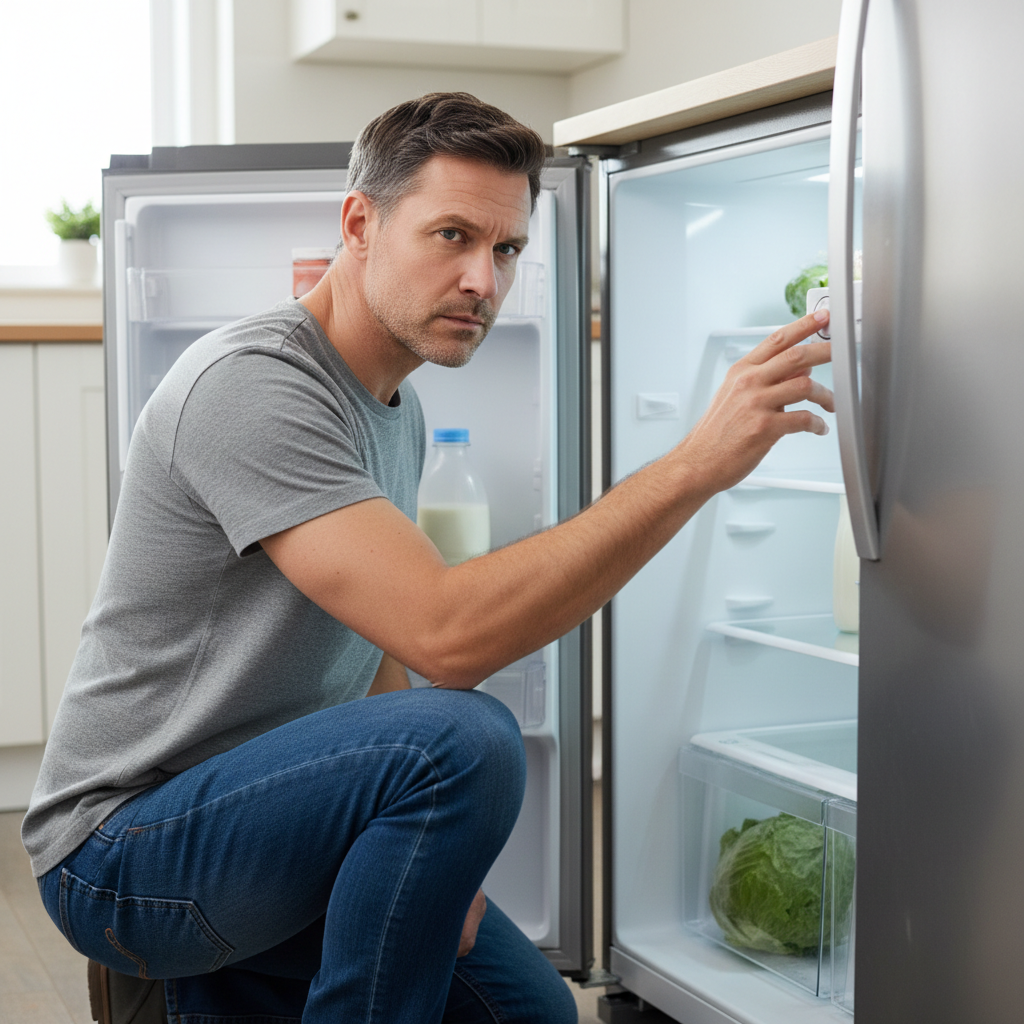
Examine the Damper Control — The little door that causes big problems
- The damper control is often up top or in the back of your fridge, sometimes hiding behind a plastic panel. It's the piece that regulates cold air flow from the freezer to the fridge. If it's stuck open, too much cold air gets dumped into the fresh food section and your lettuce turns into a science project. Unplug the fridge first. You might need a screwdriver to pop off a cover. Check whether the damper blade is physically stuck open or if ice buildup is keeping it from closing. Clear any junk in the way. If it's motorized, try moving it by hand; if it feels sloppy or doesn't react, it might be bad. Replacing one isn't impossible, but I wouldn't call it beginner-easy.
- Tools: Screwdriver set (Phillips and flathead), small flashlight.
- Safety: Always unplug the refrigerator before accessing internal components. Watch out for sharp edges.
-
Test the Thermistor — The fridge's temperature eyes and ears
- The thermistor is the sensor that tells the control board what the temperature is doing. If it's bad, it might tell the fridge the compartment's warm when it's actually cold, which keeps the compressor running too long or leaves the damper open. To test it, you'll need to find it — usually clipped to the evaporator coil or a liner in the fresh food section. Unplug the fridge, pull off any cover panels, and disconnect the thermistor wires. Use a multimeter to check resistance. That resistance changes with temperature; you'll need your fridge's service manual for the right resistance values at different temps. For example, at room temperature (around 70°F), it might read anywhere from 5,000 to 15,000 ohms, dropping as it gets colder. If your reading is way off or you get an open circuit, it's probably toast and needs replacing. This one takes a little more effort, but the part itself is usually cheap.
- Tools: Screwdriver set, multimeter, owner's manual/service manual.
- Safety: Ensure the fridge is unplugged. Handle wiring carefully.
-
Check Evaporator Fan — Is the cold air even moving?
- The evaporator fan is usually in the freezer, behind the back panel. Its job is to pull air over the evaporator coils and move it through the system. If that fan isn't running, or it's struggling, airflow gets messed up fast. You can end up with one section freezing while another one stays warm. Listen for it when the compressor kicks on. If you don't hear it, or you hear grinding or squealing, that's a bad sign. Unplug the fridge, remove the freezer back panel — it might be iced over — and spin the fan blade by hand. If it's stiff or won't spin freely, the motor could be failing. Swapping an evaporator fan motor is a pretty common repair.
-
Inspect Evaporator Coils — Hidden frost buildup
- While you're in the freezer, unplugged of course, check the evaporator coils behind the back panel. They should have a light, even layer of frost. If they're packed in a thick chunk of ice, your defrost system isn't doing its job. Heavy frost can choke off airflow and cause all kinds of temperature problems in the fridge, including frozen spots. You'll need to manually defrost the freezer — unplug it for 24-48 hours with the doors open, throw down towels for the meltwater — and then look at the defrost heater, defrost thermostat, or defrost timer if the issue comes back. That's getting into more advanced territory.
-
Professional Assessment — When you're out of DIY options
- If you've gone through all of this and your fridge is still turning your greens into ice cubes, it might be time to call a pro. You could be dealing with a control board issue, a sealed system problem (and you really don't want to mess with that), or a mix of things. Don't keep throwing money at it if you're not sure what's wrong. Sometimes a second set of eyes is all it takes.
- I pulled a water heater in Frisco last month that had a "mystery" freeze issue nearby in the kitchen — turned out the fridge damper was stuck open the whole time. Simple little part, big headache.
Common Causes
- Thermostat set too low: This is the one I see most. The fridge just thinks it needs to be colder than it really does. A fresh food compartment temperature around 37°F is usually right on the money.
- Blocked vents: Food items, especially bigger containers, shoved right against the cold air vents stop airflow and create those weird freezing pockets.
- Faulty damper control: The damper, which regulates cold air flow from the freezer to the fridge, gets stuck open and keeps blasting freezing air into the fresh food section.
- Defective thermistor: This temperature sensor misreads the compartment's temp and tells the control board to keep cooling when it's already cold enough, or too cold.
- Worn door gaskets: Bad door seals let warm, humid air creep in, forcing the compressor to run more often and harder, which can overcool spots.
- Too much or too little food: An overpacked fridge kills airflow and gives you hot spots and frozen spots. An almost empty fridge can have the same headache because there's not enough thermal mass to steady things out.
Common Mistakes
- Immediately calling a repairman: Don't jump straight to that. A lot of freezing issues are just thermostat tweaks or vent blockages that cost you nothing but a few minutes. Check the easy stuff first.
- Ignoring localized freezing: If only one shelf or one corner is freezing, you're probably looking at a blocked vent or something shoved in the wrong spot. Don't assume the whole fridge is shot.
- Not waiting after adjustments: After you change the thermostat setting, give the fridge at least 12-24 hours to settle down. Temperatures don't swing instantly in a big insulated box.
- Forgetting to unplug: Seriously, don't poke around inside electrical components without pulling the plug. That's a shock hazard, plain and simple. I've seen folks get bit from being careless.
- Overpacking the fridge: Stuffing every inch of space might feel efficient, but it kills airflow. Cold air needs room to move around. Leave a little breathing room.
- Not checking freezer temperature: Sometimes the freezer itself is running too cold, and that spills over into the fridge. Make sure your freezer is around 0°F to 5°F (-18°C to -15°C).
Cost & Time Breakdown
| Task | DIY Cost | Pro Cost | Time |
|---|---|---|---|
| Adjust Thermostat/Clear Vents | $0 | $100–$250 (service call) | 5–15 minutes |
| Replace Door Gasket | $30–$100 | $150–$300 | 30–60 minutes |
| Replace Damper Control | $50–$150 | $200–$450 | 1–2 hours |
| Replace Thermistor | $10–$40 | $150–$350 | 30–90 minutes |
| Replace Evaporator Fan Motor | $50–$100 | $200–$400 | 1–2.5 hours |
| Defrost Coils (Manual) | $0 (electricity) | $200–$500 (defrost repair) | 24–48 hours (unplugged) |
Tips & Prevention
- Regular Temp Checks: Keep a simple thermometer in your fresh food compartment. Check it weekly to make sure it stays between 35°F and 38°F. That's cheap insurance.
- Proper Food Placement: Don't shove food right against the back wall or block any vents. Leave a little room so air can circulate, especially around the cold air returns and vents.
- Don't Overfill: A stuffed fridge can choke airflow and give you warm spots and freezing spots. Aim for about 70-80% full so the air can move.
- Clean Gaskets: Wipe down your door gaskets every few months with warm, soapy water. It keeps them flexible and helps the seal hold tight.
- Check Date Codes: If you notice your food freezing, make a note of what's freezing and where. That can help you narrow down whether it's one area or the whole box. Sometimes that older milk just freezes sooner than the fresh stuff.
- Defrost Annually (if applicable): If you've got an older, manual defrost freezer, fully defrost it at least once a year so ice doesn't build up on the coils and mess with performance.
- Keep the Freezer Full: A full freezer — but not jammed to the gills — helps hold a steadier temperature and uses less energy. Same idea as the fridge. Just don't block the vents.
When to Call a Professional
Look, I get it — you want to fix things yourself. But there are times when it's just smart to bring in a licensed appliance technician. If you've checked the thermostat, cleared the vents, inspected the door seals, and even fiddled with the damper or thermistor, and your fridge is still freezing your grub, it's time. Specifically, if you suspect a problem with the sealed refrigerant system (compressor, condenser, evaporator coils beyond simple frost), or if the main control board seems to be acting up, call a pro. Messing with refrigerant is dangerous and takes specialized tools and licensing. If you're hearing weird noises from the back of the fridge, or if the freezer itself is also way too cold, those can be signs of something bigger. Don't risk more damage or your safety; a professional can sort out those complicated issues safely and effectively.
Related Articles
Keep troubleshooting with these hand-picked guides from FixlyGuide:
- The Mystery of the Warm Fridge: Why Your Food Is Spoiling (and When to Call a Pro) — If your refrigerator isn't keeping food cold, it could be a simple fix or a serious problem requiring a professional. Learn what to check a…
- The Surprising Reason Your Dishwasher Won't Start (It's Not Always the Door) — Don't rush to call a repairman when your dishwasher refuses to start; often, the culprit is a simple, overlooked issue you can fix yourself…
- Is Your Refrigerator Buzzing Loudly in the Quiet of Night? — A loud buzzing from your fridge at night often points to the icemaker, a dirty fan, or a vibrating component, many of which are simple home…
- My Toaster Only Toasts One Side: The Hidden Thermostat Flaw — If your toaster only toasts one side, the cause is often an imbalanced internal thermostat or misaligned heating element, a specific flaw y…
- Your Refrigerator's Loud Hum? The Fix Most People Miss — A constant, loud refrigerator hum is more than annoying—it's a warning sign. Before you call a pro, discover the #1 most overlooked cause a…
- The Surprising Culprit Behind Your Refrigerator's Water Leak (It's Not Always the Ice Maker) — Discover the most common, often overlooked reason your refrigerator is leaking water and how to fix it with simple steps.
What should this project cost?
Enter your project details for a realistic cost range before you call anyone.
Cost depends heavily on which system turns out to be the source.
- Regional adjustment
- National average
- Labor share (typical)
- ~$1,620
- Quotes to collect
- 3 written estimates
Educational estimate based on national averages — not a binding quote. Always confirm with written local estimates.
Fixly Project Decision Box
- DIY difficulty
- Advanced
- Estimated time
- Homeowner checks 20–30 minutes
- Cost level
- Moderate
Main tools / materials
- Clean air filter
- Garden hose for condenser coils
- Shop vac for the condensate line
When to stop and call a pro
- Burning smell, smoke, or a tripping breaker
- Refrigerant lines iced over or hissing
- Any work inside the sealed refrigerant circuit (EPA-licensed only)
- Gas smell near a furnace — leave and call the utility
Need professional help?
Find an HVAC Pro Near YouGet the print-ready PDF of this guide
A clean, ad-free, printable version you can keep on your phone or pin to the workshop wall. Free with a FixlyGuide account.
- Print-optimized layout
- Tools, materials & every step included
- Saved to your account
Frequently asked questions
Why is my new refrigerator freezing food?+
New refrigerators can sometimes freeze food if the initial temperature setting is too low. Manufacturers often set them colder by default. Check your owner's manual for recommended settings, usually between 35°F and 38°F, and adjust accordingly.
Can overfilling a refrigerator cause food to freeze?+
Yes, an overfilled refrigerator can restrict airflow. When cold air can't circulate properly, it can get trapped in certain areas, leading to localized freezing spots, especially near the cold air vents.
How do I test my refrigerator's thermistor?+
To test a thermistor, you'll need a multimeter. Unplug the fridge, locate and disconnect the thermistor, then measure its resistance. Compare the reading to the resistance values provided in your appliance's service manual for various temperatures. A reading far off or an open circuit indicates a faulty thermistor.
What's the ideal temperature for a refrigerator to prevent freezing?+
The ideal temperature for the fresh food compartment of a refrigerator is generally between 35°F and 38°F (1.7°C to 3.3°C). This range keeps food fresh without risking freezing.
How long should I wait after adjusting my refrigerator's thermostat?+
After adjusting your refrigerator's thermostat, you should wait at least 12 to 24 hours for the appliance to stabilize and for the temperature changes to fully take effect. Checking too soon can give you an inaccurate reading.
Where are the cold air vents in my refrigerator?+
Cold air vents are typically located at the back of the fresh food compartment, often near the top, and sometimes along the back wall of the freezer section. Make sure they are not blocked by food items.
Can a bad door seal cause food to freeze?+
Yes, a worn or damaged door gasket can allow warm, humid air into the refrigerator. This makes the compressor work harder to maintain temperature, which can lead to overcooling and freezing in certain areas.
Is it safe to try fixing a freezing refrigerator myself?+
For simple issues like thermostat adjustments, clearing vents, or checking door seals, it's generally safe for DIYers. However, for internal electrical components, always unplug the unit, and for anything involving the sealed refrigerant system, it's best to call a licensed professional.
My freezer is fine, but the fridge is freezing. What gives?+
If your freezer is working normally but the fresh food section is freezing, it often points to an issue with the air distribution or sensing within the fridge compartment itself. Common culprits are a stuck-open damper control or a faulty thermistor in the fridge section, allowing too much cold air in.
Discussion
Loading comments…