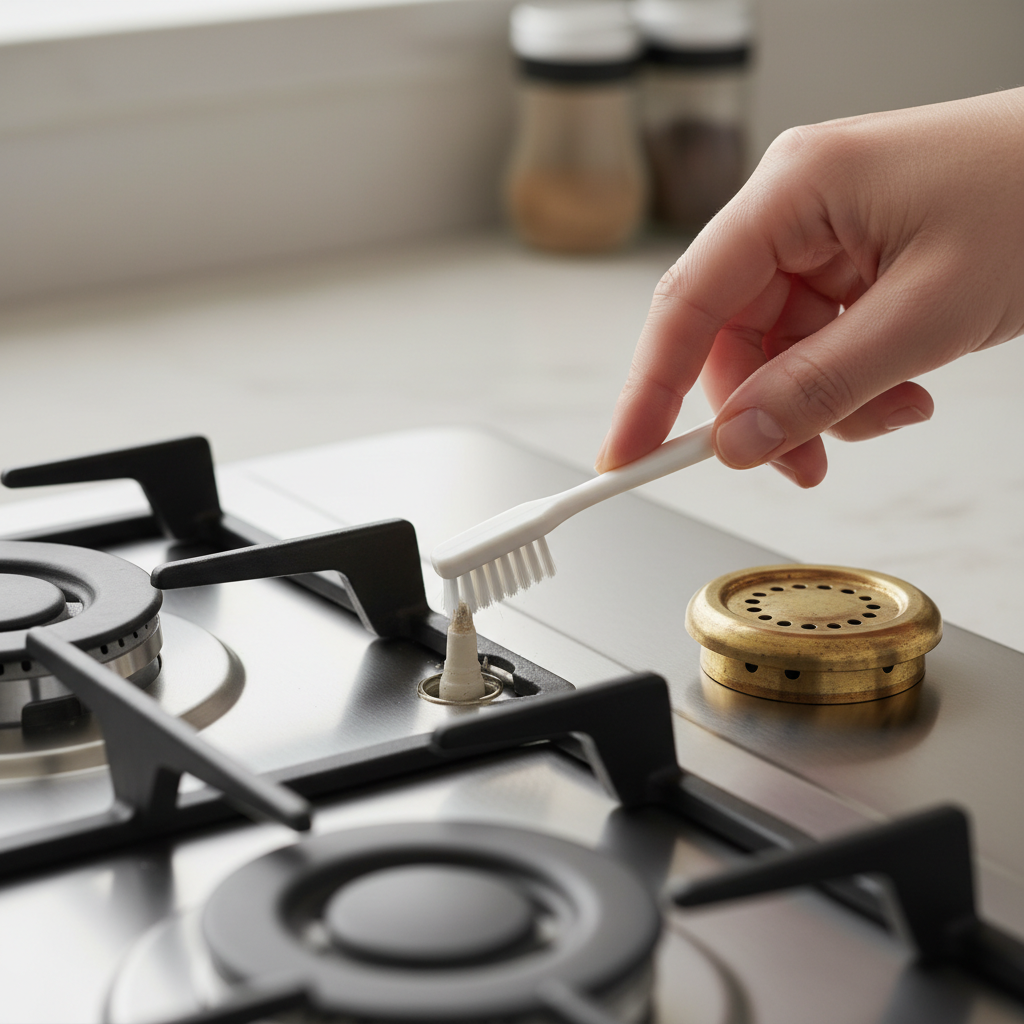
- Food Debris & Boil-Overs: This is the 1 cause. Pasta water, soup, sauces, and greasy spatter are the main culprits. The residue bakes onto the igniter and burner components, acting as an insulator.
- Moisture: Recent cleaning with too much water or a wet sponge can leave moisture in the igniter assembly, temporarily shorting the sensing circuit. The clicking will often stop on its own once it fully dries, which can take several hours.
- Misaligned Burner Cap: If the burner cap is not seated perfectly flat in its designated groove on the base, the flame won't properly contact both the cap and the igniter, leaving the flame-sensing circuit open.
- Damaged or Cracked Igniter: Dropping a heavy pot on the stove or overly aggressive cleaning can crack the ceramic insulator or break the metal tip. A cracked igniter must be replaced.
- Faulty Spark Module: If multiple burners are clicking simultaneously, or if a thorough cleaning of a single burner yields no results, the central spark module that controls all the igniters may be failing.
HVAC · High energy usage
| Project category | HVAC |
|---|---|
| Problem type | High energy usage |
| Trade required | HVAC |
| Urgency | Planned project |
| Safety risk | Low safety risk |
| DIY suitability | DIY for experienced homeowners |
| Cost category | High cost |
| Typical timeline | Assessment within weeks; replacement planned off-season |
| Contractor type | Licensed HVAC technician |
Repair option
Duct sealing, insulation, and a tune-up before touching the equipment.
Replacement option
High-efficiency replacement sized by a load calculation, not a rule of thumb.
Common causes
- Aging, low-efficiency equipment
- Leaking ducts losing conditioned air
- Insufficient attic insulation
- Oversized system short-cycling
Relevant tools:project cost estimatorrepair or replace
Published June 8, 2026Last updated August 17, 2026
Tools & materials you'll need
Affiliate links- AmazonDry Cloth or Paper Towels1-2 · For wiping away loosened debris. Must be completely dry.
As an Amazon Associate FixlyGuide earns from qualifying purchases — at no extra cost to you. Prices and availability are accurate as of publication and subject to change.
'''
Quick Answer
If your gas burner continues to click after the flame is lit, it means the flame sensor integrated into the igniter assembly isn't detecting the fire. This isn't a sign of a gas leak, but rather a communication error in the ignition system. The system thinks the burner has failed to light, so it continues to send a spark. This is almost always caused by a microscopic layer of grease, baked-on sauce, or other dried, boiled-over food residue on the igniter's metal tip or the underside of the burner cap. This grime insulates the components, interrupting the tiny electrical current that the flame is supposed to conduct, which is how the sensor "sees" the flame. A thorough dry-cleaning with an old toothbrush, a thin needle, and a dry cloth is usually all that's needed to remove the blockage and restore normal function.
The Problem
You know the sound. You turn the knob on your gas stove, hear the familiar tick-tick-tick of the igniter, and watch the blue flame spring to life around the burner. But then... the ticking doesn't stop. It persists, an annoying, rhythmic clicking that competes with the gentle hiss of the gas flame. The burner is clearly lit and working, yet the stove seems convinced it isn't. You might try turning the burner off and on again, sometimes to success, other times the clicking just continues. This issue often starts on a single burner, usually the one you use most frequently, and is a classic symptom of a dirty ignition system.
The clicking sound is the spark igniter, or electrode, doing its job—perhaps too well. It's trying to ignite a flame that is already there. This is not only irritating but also a sign that your stove's safety and sensing features aren't working exactly as designed. While not immediately dangerous in most cases (as the flame is lit), it indicates a maintenance issue that is surprisingly easy to solve yourself.
How It Works
To understand why a simple dried spill causes this problem, you need to understand how a modern gas stove igniter works. It's more clever than you might think.
Every burner has a dedicated igniter. This is the small, white ceramic post with a metal tip that pokes up near the edge of the burner base. When you turn the burner knob, two things happen simultaneously: the gas valve for that burner opens to release gas, and a component called a spark module sends a high-voltage, low-amperage electrical pulse to that burner's igniter. This pulse jumps the air gap between the igniter's metal tip and the metal burner base (or cap), creating the spark that ignites the gas.
The clever part is what happens next. The spark module isn't just a spark generator; it's also a flame sensor. The system uses a principle called flame rectification. Fire, specifically the carbon particles within a gas flame, can conduct a very small amount of electricity. Once the flame is established, it physically touches both the metal igniter tip and the grounded metal burner cap/base, completing a tiny electrical circuit. The spark module sends a minuscule electrical signal through the igniter, across the flame, to the burner base, and back to the module.
When the spark module detects the return of this weak, rectified electrical signal, it confirms that a flame is present. Once confirmed, it immediately stops sending the high-voltage pulses to the igniter. The clicking stops.
Here's the weak link: that sensing circuit is incredibly low-power and sensitive. If anything interrupts that path, the module won't get its confirmation signal. The most common culprit is a nearly invisible layer of residue from a boil-over, a grease spatter, or even aggressive cleaning chemicals. This residue coats either the igniter's metal tip or, more often, the underside of the burner cap where the flame makes contact. This coating acts as an insulator, breaking the circuit. The spark module, receiving no signal, assumes the burner failed to light and continues to send sparks—tick, tick, tick—in a futile attempt to start a fire that's already burning.
Step-by-Step Fix
This procedure requires no special skills and uses common household items. The key is to be gentle and to keep everything completely dry.
SAFETY FIRST: Your safety is non-negotiable. Before you begin, find your home's electrical panel and flip the circuit breaker that controls your stove to the "OFF" position. For an extra layer of safety, unplug the stove from the wall if you can easily access the plug. If you have a professional-style range with a dedicated gas shut-off valve, it's a good practice to turn that off as well.
-
Let It Cool Down: Never work on a hot stove. Ensure the cooktop and all burner components are completely cool to the touch. This can take at least 30-45 minutes after use.
-
Remove the Grate: Lift the heavy cast iron or steel grate off the problematic burner and set it aside.
-
Remove the Burner Cap: The cap is the flat, removable disc that sits on top of the burner base. It should lift right off. It can only sit one way due to a notch or pin on the underside.
-
Remove the Burner Base (Optional but Recommended): The burner base is the heavier aluminum or brass piece that the cap sits on. On many stoves, this piece simply lifts off its pedestal. It might be a little snug, but it should come up without force. Removing it gives you better access for cleaning.
-
Inspect the Igniter: Now, look at the white ceramic igniter. Check it for any visible cracks in the ceramic body or obvious breakage of the metal tip. If you see a crack, the igniter needs to be replaced. This is a job for a professional or a very confident DIYer. If it looks intact, proceed with cleaning.
-
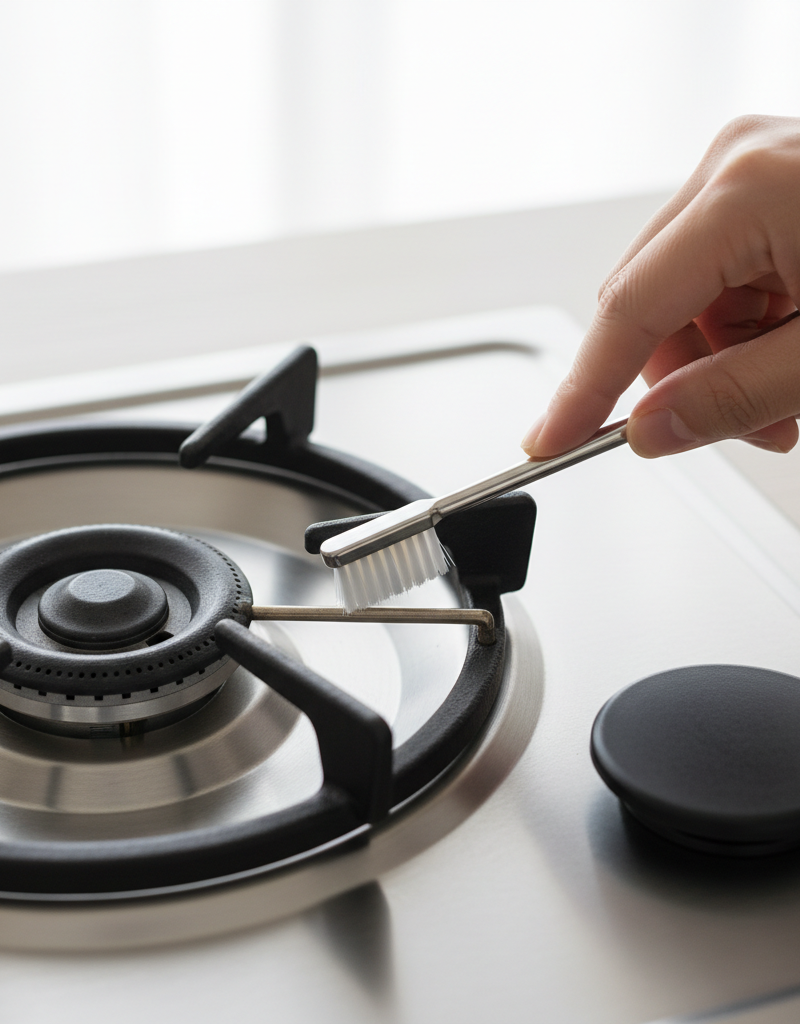
The Core Fix: Dry-Scrub the Igniter: Take a completely dry toothbrush (an old one is perfect) with firm bristles. Gently but thoroughly scrub the metal tip of the igniter from all angles. Also, scrub the white ceramic body to remove any unseen grease. Don't use any water, soap, or cleaning sprays.
-
Clean the Burner Ports: Look at the small holes (ports) in the burner base where the flame comes out. Sometimes a single port right next to the igniter gets clogged. Straighten a paper clip or use a sewing needle to gently poke into any ports that look blocked. Do not use a wooden toothpick, as it can break off inside.
-
Clean the Burner Cap and Base: This is a crucial step often missed. Flip the burner cap over. Use your dry toothbrush to vigorously scrub the entire underside surface. Pay special attention to the rim and the central area. This surface is part of the electrical circuit. Do the same for the burner base, scrubbing both the top and bottom surfaces.
-
Wipe Away Debris: Use a clean, dry cloth or paper towel to wipe away any dust or debris you loosened with the toothbrush from the igniter, cap, and base. Ensure no bristles or lint are left behind.
-
Reassemble The Burner: Place the burner base back onto its mount, ensuring it sits perfectly flat and stable. Then, place the burner cap on top. Wiggle it slightly; it should lock into place and not rock or spin. A misaligned cap is a common reason for the clicking to persist even after cleaning.
-
Restore Power: Put the grate back in place. Go to your electrical panel and flip the breaker back to the "ON" position (or plug the stove back in). Turn the gas back on if you shut it off.
-
Test the Burner: Turn the knob for the burner you just cleaned. It should tick a few times and ignite, and then the clicking should stop within 1-2 seconds. If it does, you’ve fixed it!
Common Causes
- Food Debris & Boil-Overs: This is the #1 cause. Pasta water, soup, sauces, and greasy spatter are the main culprits. The residue bakes onto the igniter and burner components, acting as an insulator.
- Moisture: Recent cleaning with too much water or a wet sponge can leave moisture in the igniter assembly, temporarily shorting the sensing circuit. The clicking will often stop on its own once it fully dries, which can take several hours.
- Misaligned Burner Cap: If the burner cap is not seated perfectly flat in its designated groove on the base, the flame won't properly contact both the cap and the igniter, leaving the flame-sensing circuit open.
- Damaged or Cracked Igniter: Dropping a heavy pot on the stove or overly aggressive cleaning can crack the ceramic insulator or break the metal tip. A cracked igniter must be replaced.
- Faulty Spark Module: If multiple burners are clicking simultaneously, or if a thorough cleaning of a single burner yields no results, the central spark module that controls all the igniters may be failing.
Common Mistakes
- Using Water or Liquid Cleaners: Never spray cleaner or use a wet cloth directly on the igniter or burner base. This moisture can short out the ignition system and, if it gets into the spark module, cause a much more expensive failure. Cleaning must be done dry.
- Using Abrasives: Do not use a wire brush, steel wool, or scouring pads on the igniter. These are too aggressive and will damage the metal tip and ceramic body, leading to permanent failure.
- Not Letting Parts Dry: If you wash your grates and burner caps in the sink, you MUST ensure they are 100% bone-dry before putting them back on the stove. This means drying them with a towel and then letting them air-dry for at least an hour.
- Prying or Bending the Igniter: The ceramic body is brittle and will snap under pressure. Clean gently.
- Incorrect Reassembly: Forgetting to put the burner cap back on or putting it on crooked is a common oversight that will guarantee the clicking continues.
Cost & Time Breakdown
| Item / Service | DIY Cost | Professional Cost | Notes |
|---|---|---|---|
| Diagnosis & Cleaning | $0 | $100 - $175 | This is the typical service call fee for a technician to come out and perform the same cleaning steps. |
| Toothbrush / Paperclip | $0 - $5 | (Included) | You likely already have these items. |
| New Igniter/Electrode | $15 - $40 | $150 - $225 | The pro cost includes the part and the labor to install it. |
| New Spark Module | $50 - $150 | $250 - $400+ | This is a more involved repair. The pro cost reflects the higher part cost and increased labor time. |
| TOTALS | $0 - $5 | $150 - $400 | The DIY cost is effectively zero if you have a spare toothbrush. |
Tips & Prevention
- Clean Spills Immediately: The moment a pot boils over, turn off the heat and, once it's safe to do so, wipe up the liquid. Preventing the spill from drying and baking on is the best defense.
- Use a Boil-Over Shield: For frequent pasta or soup makers, silicone "boil-over" lids can be a great investment to prevent messes in the first place.
- Perform Regular Dry-Cleans: Once a month, take 10 minutes to lift the caps off your most-used burners and give the igniters and cap undersides a quick scrub with your dedicated stove toothbrush. This preventative maintenance can stop the problem before it starts.
- Mindful Cleaning: When you wash your stove top, remove the burner caps and bases. Clean them separately and ensure they are completely dry before reassembling. Avoid spraying cleaner directly into the burner area.
When to Call a Professional
While the toothbrush fix is highly effective, there are times when you should put down the tools and call an appliance repair technician.
- If the Igniter is Visibly Cracked or Broken: A damaged igniter cannot be repaired; it must be replaced. This involves disconnecting wires beneath the cooktop and is best left to a pro unless you are experienced with appliance repair.
- If Cleaning Does Nothing: If you have meticulously cleaned the igniter, burner base, and cap according to the steps above and the clicking persists, the problem likely lies deeper in the system, probably with the spark module or the wiring harness.
- If Multiple Burners Start Clicking at Once: A single burner clicking is usually a cleaning issue. When two or more start clicking simultaneously (especially when you only turn one on), it's a very strong indicator that the central spark module has failed.
- If You Smell Gas: This is the most important rule. If at any point during or after your repair you smell even a faint odor of natural gas, stop everything immediately. Do not operate any electrical switches. Leave the house and call your gas company's emergency line or 911 from a safe distance. Then, call a qualified appliance technician to find and fix the leak.
- If You Lack Confidence: If you are not comfortable with any of these steps, there is no shame in calling a professional. A simple service call is a small price to pay for peace of mind. '''
What should this project cost?
Enter your project details for a realistic cost range before you call anyone.
Cost depends heavily on which system turns out to be the source.
- Regional adjustment
- National average
- Labor share (typical)
- ~$1,620
- Quotes to collect
- 3 written estimates
Educational estimate based on national averages — not a binding quote. Always confirm with written local estimates.
Get the print-ready PDF of this guide
A clean, ad-free, printable version you can keep on your phone or pin to the workshop wall. Free with a FixlyGuide account.
- Print-optimized layout
- Tools, materials & every step included
- Saved to your account
Frequently asked questions
Can I use a wire brush or steel wool to clean the igniter?+
No, you should never use a wire brush, steel wool, or any other abrasive material. These are too aggressive and will scrape off the conductive metal coating on the igniter tip and can scratch or crack the ceramic insulator, causing permanent damage that requires replacement.
Why are all of my burners clicking at the same time, even if only one is turned on?+
This is a classic symptom of a failed spark module. The module controls all the igniters, and when it malfunctions, it often sends a spark signal to all burners instead of just the one you selected. A widespread spill that allows moisture to seep into the internal components can also cause this, but if it persists after a day of drying, the module is the likely culprit.
Is a continuously clicking igniter dangerous?+
The clicking itself is not dangerous, as it's just a small electrical spark. However, it indicates a malfunction in the stove's flame detection system. If you ever smell gas while the igniter is clicking (or at any other time), it becomes an extremely dangerous situation. Shut off the gas supply immediately and call your gas company's emergency line.
I cleaned everything, but the clicking is now worse. What happened?+
This almost always means the burner cap is not seated correctly. Remove the cap and look at the top of the burner base. You will see small indentations or posts. Now look at the underside of the cap; you'll see corresponding features. The cap must sit perfectly flat and 'locked' into the base. If it can rock or spin, it's not aligned properly.

Discussion
Loading comments…