
- Foundation and visible structural components
- Built-in or installed components within the inspection's scope
- Drainage conditions visible around the property
- Other accessible components
Foundation · Cracks or settlement
| Project category | Foundation |
|---|---|
| Problem type | Cracks or settlement |
| Trade required | Foundation repair |
| Urgency | Soon — within weeks |
| Safety risk | High safety risk |
| DIY suitability | Licensed pro only |
| Cost category | Major investment |
| Typical timeline | Engineer report first; work typically several days |
| Contractor type | Foundation repair company with a structural engineer report |
Repair option
Drainage correction and targeted pier installation where movement is measured.
Replacement option
Full underpinning when settlement is widespread.
Common causes
- Expansive clay soil cycling wet and dry
- Poor drainage or downspouts dumping at the slab
- Plumbing leak washing out soil under the foundation
Relevant tools:compare quotesproject cost estimator
Published August 30, 2026Last updated August 30, 2026
Tools & materials you'll need
Affiliate linksNo materials required.
As an Amazon Associate FixlyGuide earns from qualifying purchases — at no extra cost to you. Prices and availability are accurate as of publication and subject to change.
Quick Answer
A home inspection is a professional evaluation of the visible and accessible components and systems of a house — roof, exterior, foundation, electrical, plumbing, HVAC, attic, interior, windows and doors. It isn't a pass-or-fail test or a warranty; it gives you a better understanding of the house you're about to buy. Expect the inspector to find problems (every house has them), attend if you can, ask what isn't included, and prioritize findings by safety and consequence — not by how scary a long report looks.
Buying a House Is Exciting. Then Comes the Inspection.
Buying a house is exciting.
Then someone spends several hours walking through the house you're about to buy, looking for everything that's wrong with it.
Suddenly, buying a house feels a little less exciting.
The home inspection is one of the most misunderstood parts of buying a home. First-time buyers especially tend to fall into one of two camps:
"The inspector will find every problem with the house."
or:
"If the inspector finds anything wrong, I shouldn't buy it."
Neither is a good way to think about it.
A home inspection isn't a pass-or-fail test. It isn't a warranty. And an inspector generally isn't there to tell you whether you should buy the house.
The inspection gives you something much more useful: a better understanding of the house you're considering buying.
Let's walk through what actually happens.
What Is a Home Inspection?
At its simplest, a home inspection is a professional evaluation of the visible and accessible components and systems of a house.
The exact scope depends on the inspector, applicable standards, property and location. But a typical general home inspection may evaluate areas such as:
- Roof
- Exterior
- Foundation and visible structural components
- Electrical system
- Plumbing
- Heating and cooling
- Attic and insulation
- Interior
- Windows and doors
- Built-in or installed components within the inspection's scope
- Stairs and railings
- Drainage conditions visible around the property
- Other accessible components
The inspector observes conditions and documents findings.
That last word matters: visible.
Inspectors aren't usually tearing open walls to see what's behind them. They're not ripping up flooring. They're not excavating the foundation. They're evaluating what can reasonably be observed within the scope of the inspection.
That's one reason no home inspection can guarantee that every hidden problem will be discovered.
Should You Attend the Home Inspection?
If you're permitted to attend and your inspector welcomes buyer participation, there's tremendous value in being there — particularly near the end when findings can be discussed.
Why?
Because there's a big difference between reading:
"Evidence of moisture deterioration observed at exterior trim."
and standing next to the inspector while they point at it and explain:
"See this area? Water appears to have been reaching this wood. I'd want to understand where that moisture is coming from."
Now it makes sense.
You can see:
- Where the main water shutoff is.
- Where the electrical panel is.
- Where the HVAC filter goes.
- What that strange pipe does.
- Why one crack concerns the inspector more than another.
- How water drains around the property.
You aren't simply learning what's wrong. You're learning about the house.
How Long Does a Home Inspection Take?
There isn't one universal answer. Inspection time can vary based on:
- House size
- Age
- Property condition
- Number of systems/components
- Accessibility
- Additional inspection services
- Inspector's process
- Property type
A small newer home may be very different from a large older property with multiple HVAC systems, additions and outbuildings.
Don't choose an inspector simply because: "He can do it really fast."
You're paying for careful professional observation — not a race through the house.
What Does a Home Inspector Actually Check?
Let's walk through a typical house.
1. The Roof
Depending on access, conditions and the inspector's methods, the roof evaluation may include things such as:
- Roof-covering condition
- Visible damage
- Flashing
- Penetrations
- Drainage components
- Gutters and downspouts
- Signs of previous repairs
- Visible deterioration
Whether an inspector physically walks the roof depends on safety, accessibility, roof type, weather and inspection practices.
Don't assume: "The inspector didn't walk on it, so he didn't inspect it." Ask how the roof will be evaluated.
2. The Exterior
The inspector may evaluate visible components such as siding, trim, doors, windows, decks, porches, steps, railings, exterior penetrations, drainage-related conditions, and areas where water may be affecting the building.
This is where an experienced set of eyes can be extremely valuable.
You might see: "Cute backyard."
The inspector might see: "Water appears to be draining toward the house."
Different priorities.
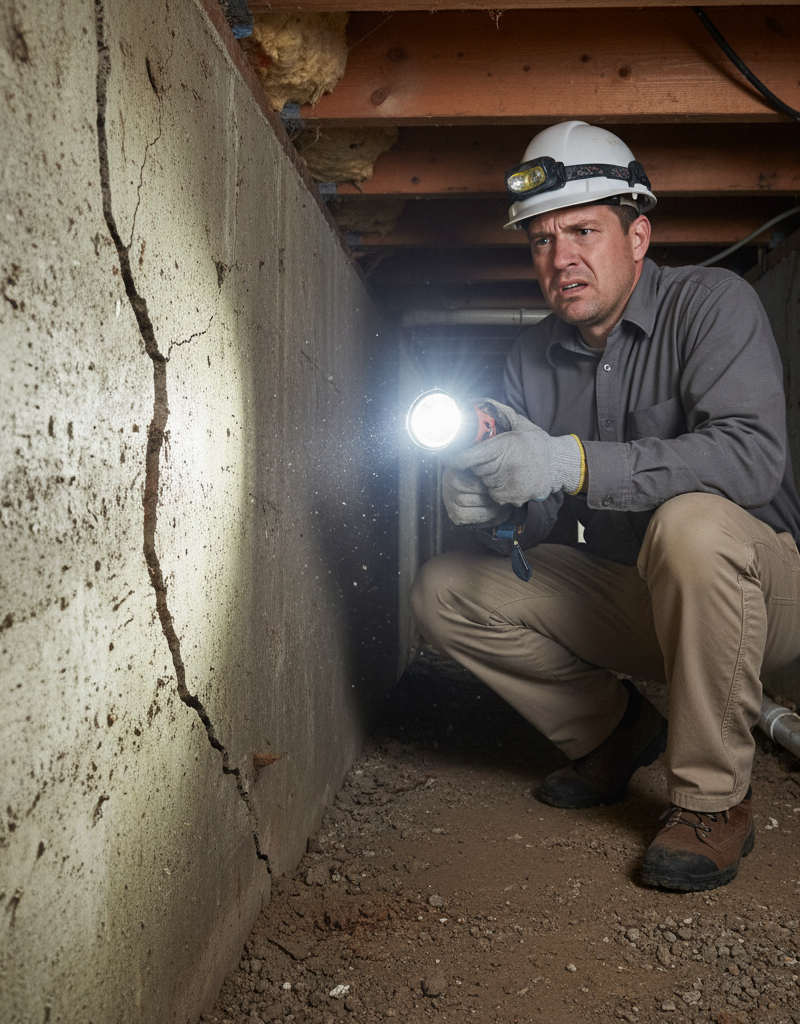
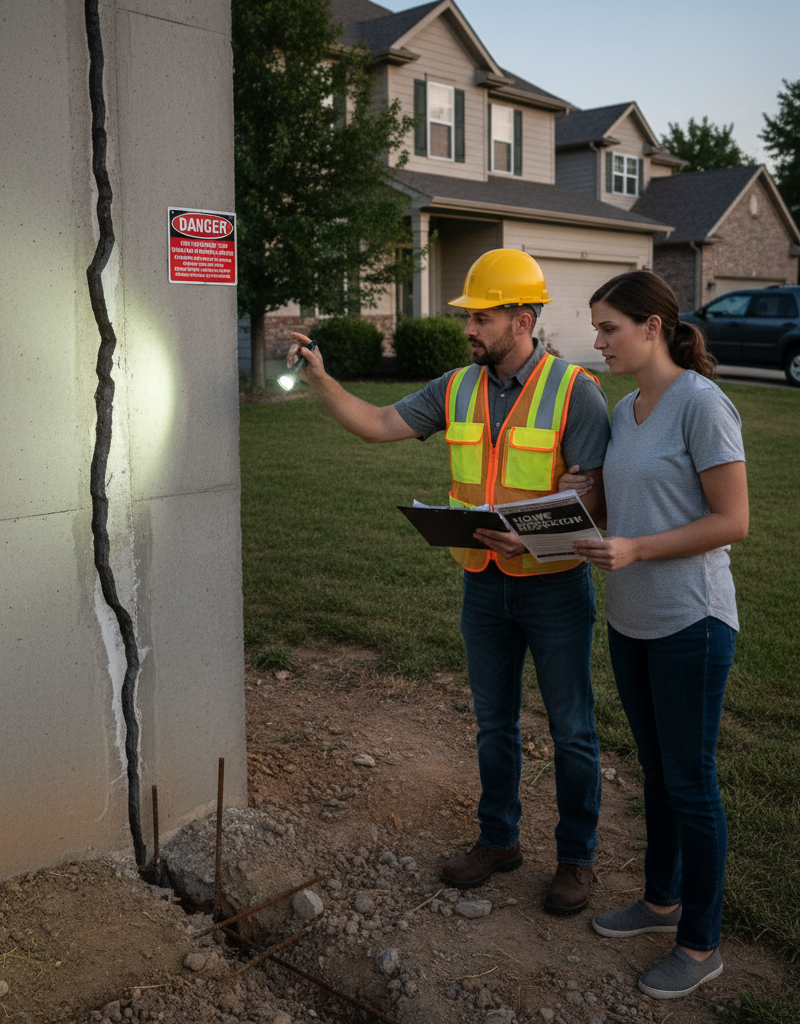
3. The Foundation and Structure
This is the part that scares buyers.
Inspector sees a crack. Buyer immediately thinks: $40,000 FOUNDATION REPAIR!
Don't do that to yourself. Cracks and movement need context.
An inspector may look for observable signs such as cracking, movement, deterioration, sagging, deflection, moisture-related concerns, and other structural indicators.
If something requires expertise beyond the general inspection's scope, the inspector may recommend further evaluation by an appropriate specialist.
A recommendation for further evaluation is not automatically a diagnosis of catastrophic failure. Remember that.
4. Electrical System
Depending on the inspection scope, an inspector may evaluate accessible electrical components such as:
- Service equipment
- Electrical panel
- Branch circuits
- Accessible receptacles
- Switches and fixtures
- Grounding/bonding observations within scope
- GFCI/AFCI-related components where applicable
- Visible wiring
- Obvious safety concerns
Electrical findings can sound intimidating in a report. Don't start opening electrical panels yourself after the inspection to "double-check." If the inspector identifies a concern requiring professional evaluation, use an appropriately qualified electrician.
5. Plumbing
The inspector may operate plumbing fixtures and look at accessible components. That may include faucets, sinks, toilets, showers, tubs, visible supply piping, visible drain piping, the water heater, drainage behavior, and signs of leakage.
One thing inspectors often find? Evidence that water has been somewhere it shouldn't be. And that's worth paying attention to.
6. Heating and Air Conditioning
The HVAC system is another major buyer concern because replacement can be expensive.
An inspector may evaluate accessible components and operation within the inspection scope and appropriate conditions. That doesn't necessarily mean the inspector can tell you: "This unit has exactly 2 years and 4 months left."
Mechanical equipment doesn't come with an expiration countdown. Age matters. Condition matters. Maintenance matters. Performance matters. But nobody can perfectly predict the exact day equipment will fail.
7. The Attic
Don't skip over the attic section of your report. The attic can tell a story.
Depending on accessibility, an inspector may look for things such as the visible roof structure, evidence of moisture intrusion, insulation, ventilation, visible electrical conditions, exhaust venting, signs of deterioration, and other observable concerns.
Sometimes the problem you see inside the bedroom actually started above it.
8. Walls, Ceilings and Floors
The inspector isn't there to complain about ugly paint. They're looking for conditions that may indicate a larger issue. For example: staining, damage, unusual movement, moisture evidence, significant cracking, soft areas, and other visible defects.
A stain on the ceiling isn't automatically "roof replacement required." It means: "Why is there a stain?"
That's the better question.
9. Windows and Doors
Inspectors may operate a representative number or otherwise evaluate accessible windows and doors according to their inspection standards. They may notice damage, difficult operation, broken components, failed seals or glazing concerns, safety-related conditions, water-related deterioration, and doors that don't operate as expected.
One sticky door isn't necessarily a structural disaster. Multiple changes combined with other signs? Now context becomes important.
10. Stairs, Decks and Railings
These deserve more attention than homeowners sometimes give them. Why? Because they're safety items.
An inspector may identify loose rails, damaged steps, deteriorated deck components, unsafe spacing or configurations, poor connections, and other visible concerns.
A beautiful deck isn't much of an amenity if people can't safely use it.
11. Kitchen Components
The inspection may include accessible kitchen components within its scope, such as plumbing fixtures, electrical components, installed appliances, cabinets or countertops where relevant, ventilation, and other visible conditions.
But understand what is and isn't included in your particular inspection. Ask beforehand.
12. Bathrooms
Bathrooms combine several things houses don't always handle gracefully: water + electricity + humidity.
Inspectors may evaluate plumbing fixtures, drainage, visible leakage, ventilation, electrical safety components within scope, toilets, showers, tubs, and visible deterioration.
Bathrooms are excellent places to pay attention to signs of repeated moisture.
What DOESN'T a Standard Home Inspection Necessarily Cover?
This is where buyers can get caught off guard. A general inspection doesn't automatically mean every possible inspection service is included.
Depending on the property and location, separate or additional evaluation may be appropriate for things such as:
- Termites or other wood-destroying organisms
- Sewer line/scoping
- Septic systems
- Wells
- Pools and spas
- Chimneys
- Mold
- Radon
- Lead-based paint
- Asbestos
- Specialized structural evaluation
- Certain environmental concerns
- Specialized roof evaluation
- Other systems outside a general inspector's scope
Availability and requirements vary.
Ask your inspector: "What is NOT included in this inspection?" That's one of the smartest questions you can ask before hiring them.
What Happens When the Inspector Finds Problems?
They will.
Read that again. They will find problems.
I've never met a house that couldn't produce a list of things needing attention. Brand-new homes can have inspection findings. Older homes definitely can.
The existence of problems doesn't automatically mean: DON'T BUY THE HOUSE.
What matters is:
- What is the problem?
- How serious is it?
- Is it a safety issue?
- Is it actively causing damage?
- Does it require further evaluation?
- What could it cost to address?
- What does your purchase contract allow you to do?
That's where inspection findings become decision-making information.
Don't Treat a 60-Page Inspection Report Like a 60-Page Disaster
This is one of the biggest mistakes first-time buyers make.
Inspector emails report. 73 pages. Buyer sees red, yellow, photos, arrows, warnings, recommendations.
Suddenly: "THIS HOUSE IS FALLING APART!"
Maybe. But probably not just because the report is long. Inspection reports often document many small items: loose doorknob, missing cover, minor caulking issue, damaged screen, dripping faucet, loose toilet, electrical concern, roof concern, possible structural concern.
Those things don't all belong in the same mental category.
Use the Fixly Guide 3-Bucket Method
After receiving the report, separate findings into three buckets.
🔴 Bucket 1 — Safety / Major Concerns
Potential examples: significant electrical hazards, structural concerns, active major water intrusion, gas/fuel concerns, serious deck/stair hazards, and other potentially dangerous conditions.
These deserve priority.
🟡 Bucket 2 — Repair / Maintenance
Examples might include minor plumbing leaks, damaged exterior trim, gutter problems, small areas of deterioration, HVAC maintenance, and door/window repairs.
These still matter. But they're not automatically reasons to abandon a house.
🟢 Bucket 3 — Cosmetic / Lower Priority
Examples: paint, minor finish damage, small cosmetic imperfections, outdated fixtures that still function safely, things you simply don't like.
Don't let a $150 cosmetic issue distract you from a potentially $10,000 system problem. Prioritize by consequence — not by how ugly something looks.
The Question Buyers Should Ask About Every Major Finding
Don't simply ask: "How much will this cost?"
First ask: "What happens if this isn't repaired?"
That tells you a lot.
Maybe: "Nothing serious. It's mostly cosmetic." Fine.
Or: "Water can continue damaging the surrounding materials." Different conversation.
Then ask about appropriate repair options and costs.
Should You Ask the Seller to Fix Everything?
That's a transaction and negotiation question — not something a generic checklist can decide. Your rights and options depend on the contract, local law, negotiated terms, inspection contingency (if applicable), the property, market conditions, the type of defect, and other circumstances.
Work with your real-estate professional or attorney as appropriate.
But here's a practical thought: a long inspection report doesn't mean every item carries equal importance. Focus on what actually matters.
Seller Repair vs. Credit: Think About WHO Controls the Work
Suppose an important repair needs to be completed. Buyers sometimes assume: "Just have the seller fix it."
But think carefully. Who chooses the contractor, repair method, materials, quality level, timeline, and documentation?
Depending on your contract and circumstances, there may be different ways to negotiate inspection concerns. Discuss the options with your real-estate professional or attorney.
The cheapest repair isn't always the repair you would have chosen after owning the house.
Should You Get Repair Estimates Before Closing?
For significant findings, understanding potential cost can be valuable.
Suppose an inspector says: "Recommend further evaluation of the HVAC system."
Don't automatically Google "how much does a new AC cost" and assume you need one. Get the appropriate evaluation first. Maybe the system needs a repair, maintenance, a component — or replacement.
Diagnosis before price. That's a principle homeowners should remember long after buying the house.
Questions to Ask Your Home Inspector
Save these.
- What are the three biggest concerns you found? This forces prioritization.
- Is this a safety issue, maintenance issue or cosmetic issue? Huge difference.
- Does this need immediate attention? Useful for planning.
- Should another specialist evaluate this? Know when the general inspection has reached its limits.
- What happens if I wait? One of the best homeowner questions.
- Can you show me where the main water shutoff is? You will eventually need to know.
- Where is the HVAC filter? Another useful one.
- Is there anything you couldn't inspect? Very important.
- Is this condition typical for a home of this age? Context matters.
- What should I keep an eye on after moving in? Now you're thinking like an owner.
Home Inspection Red Flags That Deserve Extra Attention
Don't panic over one item on this list, but significant findings involving these areas deserve careful consideration:
- 🚩 Active water intrusion
- 🚩 Significant electrical safety concerns
- 🚩 Major structural concerns
- 🚩 Extensive moisture-related deterioration
- 🚩 Significant roof problems
- 🚩 Sewer or drainage concerns
- 🚩 Unsafe decks/stairs
- 🚩 Major HVAC problems
- 🚩 Evidence suggesting unresolved plumbing issues
- 🚩 Conditions requiring specialized evaluation
Again: red flag doesn't automatically mean walk away. It means understand the problem before making the decision.
What Buyers Should Bring to the Inspection
Keep it simple. Bring:
- 📱 Phone
- 📝 Notes/questions
- 📄 Seller disclosures if available and appropriate
- 📄 Relevant property information
- 👟 Comfortable shoes
And most importantly: curiosity. Ask questions. You're not annoying the inspector by wanting to understand the house — as long as you're not preventing them from doing their job.
What NOT to Do During the Inspection
Don't:
- ❌ Follow six inches behind the inspector everywhere.
- ❌ Distract them constantly while they're concentrating.
- ❌ Climb somewhere they tell you isn't safe.
- ❌ Touch electrical components you don't understand.
- ❌ Assume every defect is catastrophic.
- ❌ Assume every defect is insignificant.
- ❌ Start negotiating with the seller in the middle of the inspection.
- ❌ Ask the inspector to guarantee how long every component will last.
And don't ask: "Would YOU buy this house?" That's your decision.
Instead ask: "What concerns you most about this house?" Much better question.
After the Inspection: Don't Just Read the Summary
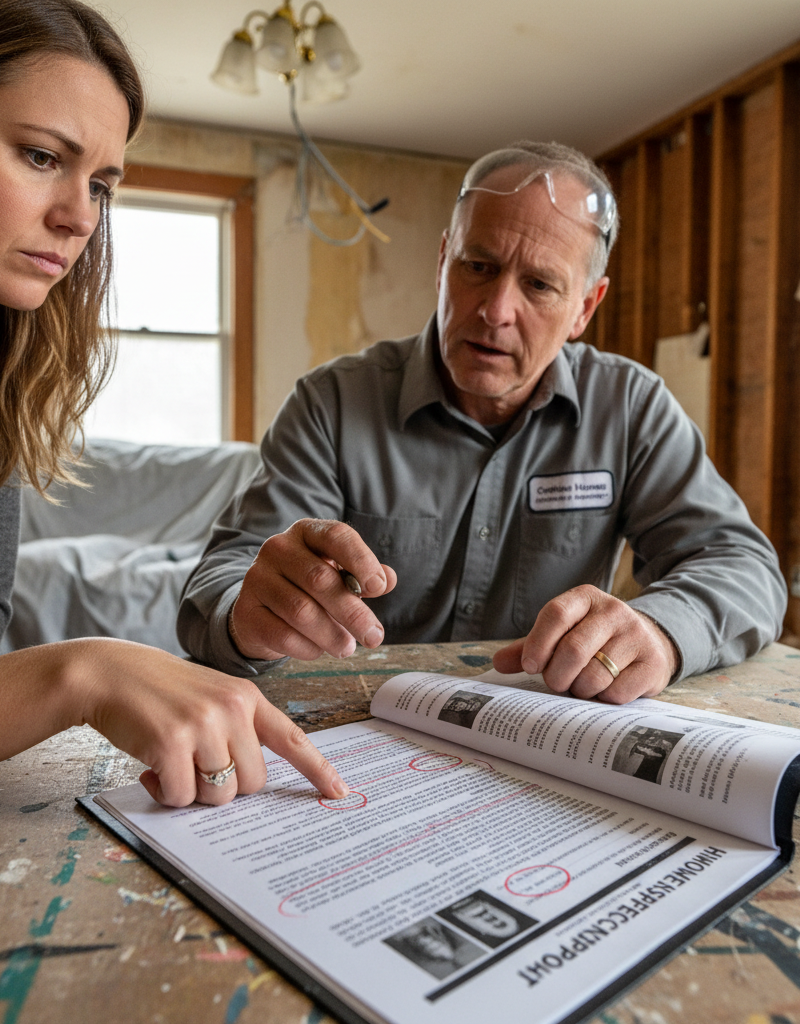
Read the report. The entire thing.
The summary is useful. But context may be in the individual sections. Look at photos, descriptions, recommendations, limitations, areas not inspected, and suggested further evaluations.
Then make a separate list of the issues that actually require decisions before closing.
Get Specialists When the Situation Calls for It
A good general home inspector knows a lot. But they aren't necessarily a structural engineer, licensed electrician, HVAC contractor, plumber, roofer, sewer specialist, chimney professional, pest specialist, or pool professional.
When an inspector identifies something outside their scope or recommends specialized evaluation: that's not the inspector failing. That's the inspection doing its job. It identified something worth understanding better.
What About New Construction?
Yes. Even a brand-new house can benefit from independent inspection where permitted and appropriate.
"New" doesn't mean "impossible to build incorrectly." Construction involves hundreds of components, multiple trades, thousands of fasteners, plumbing, electrical, HVAC, roofing, windows, doors, insulation, drainage and finishes. Human beings install all of it. Mistakes happen.
The Fixly Guide Home Inspection Checklist
Before hiring:
- ☐ Verify inspector qualifications required in your jurisdiction
- ☐ Ask what's included
- ☐ Ask what's excluded
- ☐ Ask about additional services
- ☐ Understand the fee
- ☐ Understand report delivery timing
During/after inspection:
- ☐ Attend when appropriate
- ☐ Ask questions
- ☐ Learn water shutoff location
- ☐ Learn electrical panel location
- ☐ Learn HVAC filter location
- ☐ Ask about inaccessible areas
- ☐ Identify top three concerns
- ☐ Separate safety from maintenance
- ☐ Separate repairs from cosmetics
- ☐ Review recommended specialists
- ☐ Read the entire report
- ☐ Obtain appropriate further evaluations
- ☐ Understand significant repair costs
- ☐ Review transaction options with the appropriate professional
- ☐ Keep the inspection report after closing
Keep Your Inspection Report After You Buy the House
Don't close on the house and throw the inspection into a forgotten email folder. Your report can become your first home-maintenance plan.
Remember those smaller items that weren't worth fighting over? Fix them gradually:
- Month 1: Repair plumbing leak.
- Month 2: Correct gutter issue.
- Month 3: Repair damaged trim.
- Month 4: Service HVAC.
- Month 5: Improve drainage.
Suddenly the giant inspection report becomes manageable.
Final Thought
Here's what every first-time homebuyer should understand: your inspector isn't there to ruin your dream house. They're there to help you see it more clearly.
Every house has problems. The goal isn't to find a perfect house. The goal is to understand the house you're actually buying.
What's working? What's aging? What's damaged? What's unsafe? What needs maintenance? What deserves another professional opinion? And what can wait?
Don't be scared by a thick inspection report. Be scared of spending hundreds of thousands of dollars on a house without understanding what you're buying.
Ask questions. Take notes. Get additional evaluations when appropriate. Understand the major issues. And keep that inspection report after you move in.
Because the day you close, that document stops being "the list of problems with the seller's house." It becomes your first maintenance checklist for your new home.
🏠 Buying a Home?
Save this guide before your inspection. Fixly Guide helps homeowners understand what they're looking at before they hire, repair, replace or remodel. And when an inspection uncovers a problem that needs professional attention, Fixly Guide can help you find the right type of contractor for the job.
Know someone buying their first house? Send this to them before inspection day.
What should this project cost?
Enter your project details for a realistic cost range before you call anyone.
Cost depends heavily on which system turns out to be the source.
- Regional adjustment
- National average
- Labor share (typical)
- ~$1,620
- Quotes to collect
- 3 written estimates
Educational estimate based on national averages — not a binding quote. Always confirm with written local estimates.
Frequently asked questions
What does a home inspector check?+
A general home inspection typically covers visible and accessible components of major home systems and structural elements according to the inspector's standards and local requirements. Exact scope varies, so ask what's included before hiring.
How long does a home inspection take?+
It varies depending on the home's size, age, condition, complexity and inspection services being performed. A small newer home may take a couple of hours; a large older property can take much longer.
Should the buyer attend the inspection?+
When permitted, attending at least part of the inspection or discussing findings onsite can help buyers better understand the house and ask questions.
Does a home inspection tell you everything wrong with a house?+
No. Inspections have limitations, and hidden or inaccessible defects may not be discovered. Specialized inspections (sewer scope, termite, radon, mold) may also be needed.
What happens if the inspector finds a major problem?+
The next step depends on the problem and the buyer's contract. Further professional evaluation may be appropriate before making decisions about repairs, negotiations or proceeding with the transaction.
Does a house pass or fail inspection?+
A typical home inspection is an evaluation of condition rather than a pass/fail test. The buyer uses the findings along with professional advice and the purchase agreement to make decisions.
Discussion
Loading comments…