- When did you first notice it?
- Does it happen constantly or occasionally?
- Has anything changed recently?
- Has someone already attempted a repair?
Published October 17, 2026Last updated October 17, 2026
You look at the bathroom, the worn fence, or the kitchen that no longer works for your family and finally decide: it’s time.
You find a contractor and send a message:
“How much would you charge to fix this?”
It’s a reasonable question. But without more information, the contractor may have to ask several follow-up questions before giving you even a useful starting range.
You don’t need construction experience or a professionally prepared project brief. You just need to explain what you’re seeing, what you want to change, and what matters most to you.
These seven details can help you start a more productive conversation—and make the estimates you receive easier to understand.
1. Explain the Problem Before Describing the Solution
Start with what is happening or what isn’t working for you.
Instead of:
“I need a new shower.”
Try:
“Our shower is difficult to step into, and we’d like something easier to access. We’re also interested in replacing the dated tile.”
That explanation gives the contractor more useful context. Your goal might involve accessibility, appearance, maintenance, or several concerns at once.
For a repair, describe what you have observed without trying to diagnose it:
- Where is the problem?
- When did you first notice it?
- Does it happen constantly or occasionally?
- Has anything changed recently?
- Has someone already attempted a repair?
For example:
“The cabinet under our kitchen sink gets damp after we use the sink. We first noticed it last week. We don’t know where the water is coming from.”
You don’t have to identify the cause. Clear observations give the professional a better starting point.
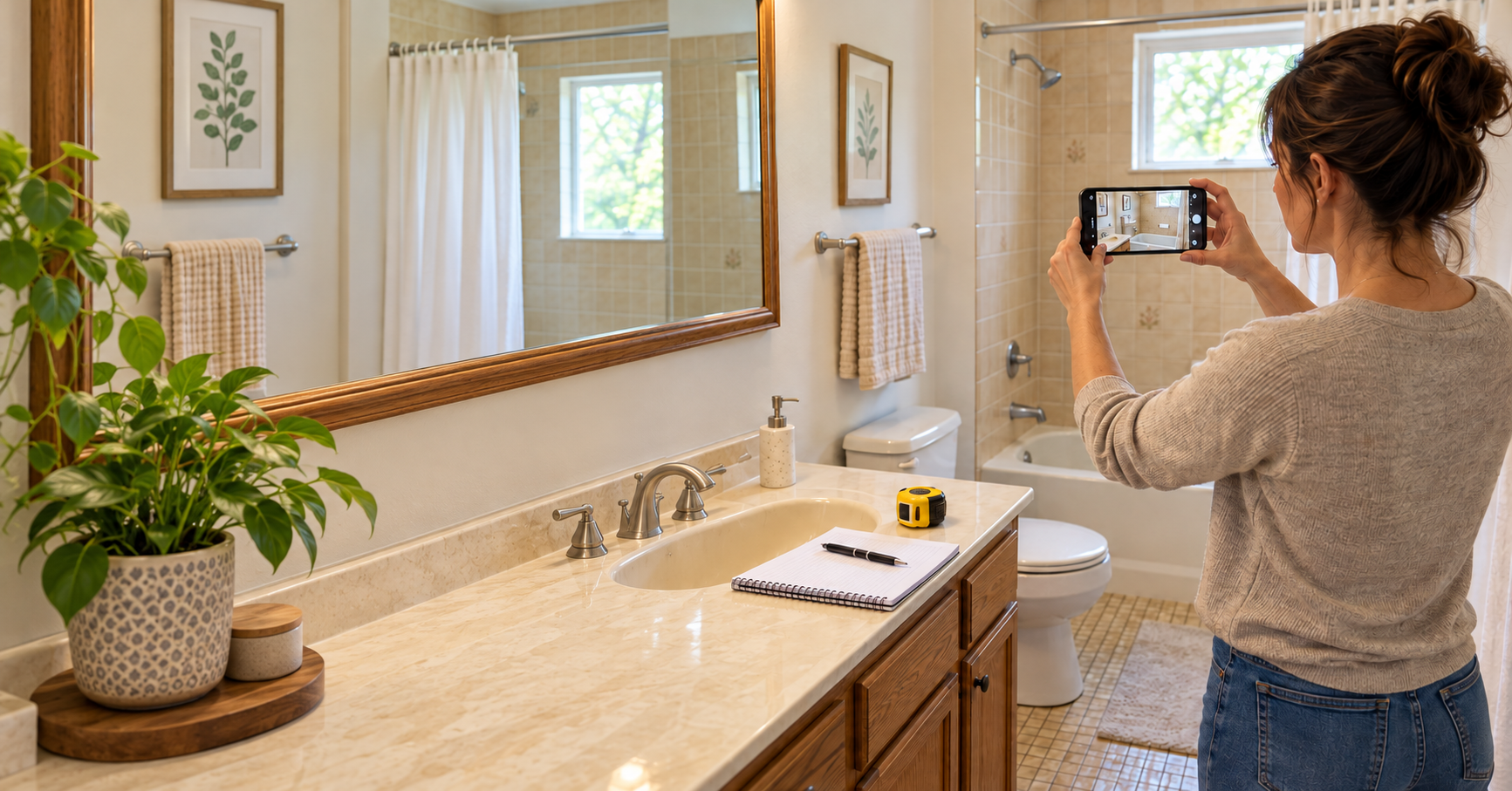
2. Take Photos That Show the Whole Area
A close-up can show a crack, a stain, or a damaged board. It may not show enough of the surrounding area to explain the job.
Send a small, organized set of photos:
- A wide view showing the entire room or project area.
- A medium view showing where the problem sits within that space.
- A close-up showing the specific damage or detail.
- An access photo, if getting to the area could be difficult.
For a fence project, include the fence line, gates, and nearby obstacles. For a bathroom project, show the existing layout as well as the features you want to replace.
Use good light and avoid filters that change the appearance of surfaces.
Only photograph areas you can access safely. You don’t need to climb onto a roof, open equipment, or disturb damaged materials to request an estimate.
Photos help start the conversation. They may not reveal the cause of a problem or everything required to complete the work.
3. Include Approximate Measurements
Basic dimensions help explain the size of a project.
Depending on the work, useful measurements might include:
- The length and width of a room.
- The approximate length of a fence.
- The size of a patio.
- The number of doors or windows involved.
- The number of rooms you want painted.
Label your measurements as approximate unless they have been professionally verified.
For example:
“The room is approximately 12 by 14 feet. We’d like the walls and ceiling painted, plus the baseboards.”
That is more useful than simply asking for a price to paint a bedroom.
You don’t need to calculate materials or decide what quantities to order. The contractor should confirm any measurements needed for the work.
4. Separate Must-Haves From Nice-to-Haves
A project becomes easier to discuss when you distinguish the essential work from optional improvements.
For a kitchen update, your list might look like this:
| Must-have | Nice-to-have |
|---|---|
| Replace damaged cabinets | Add under-cabinet lighting |
| Improve usable storage | Install a decorative backsplash |
| Keep existing appliance locations | Replace the sink and faucet |
This gives the contractor a clearer picture of your priorities.
It also helps when the initial scope is more than you want to spend. You can discuss optional items without losing sight of the main reason for the project.
Be specific about what you want to keep. Existing flooring, appliances, fixtures, and cabinetry can affect how the work is planned.
If you’re undecided, say so. “We’re considering both options” is more useful than presenting a choice as final and changing it later.
5. Share Your Budget Expectations
You may not know what your project should cost yet. That’s okay.
If you have a spending range or a firm limit, explain it along with what that amount needs to cover.
For example:
“We’re hoping to keep the overall project within our budget, including materials and installation. We’re open to simpler finishes if that helps.”
Or:
“We’re still researching costs. Could you explain which choices would have the biggest effect on the price?”
A budget conversation can help identify whether your expectations and proposed scope fit together.
Ask the contractor to explain what is included, what remains undecided, and which items are allowances rather than fixed selections.
Sharing a budget doesn’t replace reviewing the estimate. You still need to understand the work, materials, exclusions, and payment terms being proposed.
6. Explain Your Timing and Access Needs
“I’d like it done soon” can mean very different things to different people.
Tell the contractor whether you have:
- A preferred start date.
- A completion deadline tied to a specific event.
- Flexibility to wait for an opening.
- Limits on when someone can visit.
- A household need that affects scheduling.
For example:
“This is our only bathroom, so we need to understand when it would be unusable.”
Or:
“We work from home and would like to discuss how the loudest parts of the project are scheduled.”
Mention practical access details, too: stairs, narrow gates, limited parking, pets, or occupied rooms near the work area.
These details don’t automatically make a project difficult. They help everyone plan realistically.
7. Identify Inspiration Photos and Your Actual Home
Inspiration photos are useful for explaining a style. They become confusing when the contractor cannot tell which images show your property.
Label them clearly:
- Our current bathroom
- Tile style we like
- Storage idea
- Preferred cabinet color
Then explain what you like about each reference.
“We like the wood tone and simple cabinet doors” is much more specific than “We want this kitchen.”
A reference image may show a larger room, a different layout, or materials outside your intended budget. Use it to communicate preferences, then ask what makes sense for your space.
Copy This Contractor Estimate Request
Use this message as a starting point:
Hi, I’m looking for help with [project type] at my home in [city or general area].
The main issue or goal is [brief description].
We’d like to include [must-have work] and may also consider [optional items]. We plan to keep [existing features].
The area is approximately [measurements, if available]. I’ve attached photos of the current space and labeled any inspiration images.
Our preferred timing is [time frame], and our budget expectations are [range, limit, or still researching].
One scheduling or access detail to know is [relevant detail].
Is this the type of project you handle, and what would you need next to prepare an estimate? Please also let me know whether an initial visit or estimate has a fee.
Start with your city or general area. Share the full address privately when arranging a visit with the contractor you’ve chosen to contact.
Know the Difference Between a Starting Range and a Detailed Proposal
A contractor may be able to discuss a preliminary range from your description and photos. Other projects require a visit, measurements, testing, or further investigation.
Ask what the number represents:
“Is this an initial budget range, or a written proposal for a defined scope?”
Then ask what could change it.
For example, an estimate may depend on final material selections or conditions that cannot be seen before work begins.
A useful written proposal should make the scope understandable. Look for clear descriptions of the work, material selections or allowances, exclusions, and how changes will be addressed.
Your initial message helps begin that process. It does not replace a careful review of the proposal.
Send the Same Core Information to Each Contractor
If you’re comparing contractors, give each one the same project description, photos, priorities, and known constraints.
Otherwise, you may receive different prices because they are pricing different work.
One painter might include ceilings and trim. Another might include walls only. One fence proposal might include removal and cleanup, while another leaves those items out.
Before comparing totals, compare what each contractor has included.
If one contractor suggests a useful change, ask the others how that change would affect their proposed scope. Keep track of revisions so you know which version you’re reviewing.
A Few Minutes of Preparation Can Make the Conversation Clearer
You don’t need a perfect plan before contacting a contractor.
Start with an honest description, useful photos, approximate measurements, and your priorities. Be clear about what you know and what you need help figuring out.
That preparation gives the contractor a stronger starting point—and gives you better questions to ask before deciding how to proceed.
Related Guides
- How to Compare Contractor Estimates
- Contractor Estimate Checklist: 21 Things to Check Before You Sign
- 20 Questions to Ask a Contractor Before Hiring
- How to Avoid Remodeling Budget Overruns
Planning a home project? Find a local DFW contractor when you're ready to send your request.
Questions to ask before you sign
Ask every contractor the same questions and the cheapest bid stops looking cheapest. Check them off as you go — your progress is saved on this device.
Free, no signup. Bring this to every walkthrough so you compare bids on the same terms.
What should this project cost?
Enter your project details for a realistic cost range before you call anyone.
Cost depends heavily on which system turns out to be the source.
- Regional adjustment
- National average
- Labor share (typical)
- ~$1,620
- Quotes to collect
- 3 written estimates
Educational estimate based on national averages — not a binding quote. Always confirm with written local estimates.
Check these numbers against your project
National averages are a starting point. These tools narrow it to your scope and ZIP.
- Estimate this projectGet a cost range for your scope and ZIP before you call anyone.Open
- Get local estimatesSend one request and compare written estimates from vetted pros.Open
Free, no signup required. Estimates are educational guidance, not a quote or an inspection.


Discussion
Loading comments…