- Wrong Anchor Type: Using a friction anchor for anything heavier than a few pounds.
- Overloading: Exceeding the specified weight limit, even for the correct anchor type.
- Incorrect Pilot Hole: A hole that is too large provides no friction for an expansion anchor; a hole that is too tight can fracture the drywall upon insertion.
- Dynamic vs. Static Loads: A 20-pound mirror (static load) puts less stress on an anchor than a 20-pound coat rack where coats are frequently added and removed (dynamic load).
- Poor Wall Condition: Old, brittle, or previously water-damaged drywall has significantly less structural integrity.
General remodeling · Renovation planning
| Project category | General remodeling |
|---|---|
| Problem type | Renovation planning |
| Trade required | General contracting |
| Urgency | Planned project |
| Safety risk | Low safety risk |
| DIY suitability | Pro recommended |
| Cost category | Major investment |
| Typical timeline | Design and permitting often 2–4 months before work starts |
| Contractor type | General contractor |
Repair option
Phase the work and fix the building envelope first.
Replacement option
Full renovation with permits, design, and a general contractor.
Common causes
- Space no longer fits how the household lives
- Resale preparation
- Deferred maintenance stacking up
Relevant tools:project cost estimatorcompare quoteshome improvement material prices
Published June 8, 2026Last updated August 17, 2026
Tools & materials you'll need
Affiliate links- AmazonToggle Bolt Assortment Kit1 · Get a kit with 1/8", 3/16", and 1/4" sizes.
As an Amazon Associate FixlyGuide earns from qualifying purchases — at no extra cost to you. Prices and availability are accurate as of publication and subject to change.
'''
Quick Answer
Drywall anchors typically fail because they are the wrong type for the load. Standard plastic expansion anchors rely on friction within soft gypsum, which easily crumbles and fails under weight (a "shear load"). They are only suitable for very light items. For anything with significant weight—shelves, mirrors, coat racks—you must use a toggle bolt. A toggle bolt has wings that open behind the drywall, distributing the load over a much larger surface area and bracing against the solid back of the wallboard, preventing it from ripping out.
The Problem
You found the perfect spot. You measured, marked, and drilled. You confidently tapped in that little plastic anchor, drove the screw, and hung your new shelf. It looked perfect. For a day. Maybe a week. Then, you heard it: a sickening rip, a crash, and a thud. Now, there’s a crater in your wall, a dusting of white powder on the floor, and your beautiful shelf is in a heap. The culprit? A failed drywall anchor.
This scenario is infuriatingly common. The failure leaves behind a hole far bigger than the original one, with torn paper and a crumbled gypsum core. It feels like the wall itself is weak, but the truth is that the wrong hardware was used for the job. Those small, ribbed plastic anchors included with many consumer products are often doomed to fail from the moment they are installed. They create a fundamental misunderstanding of drywall's limitations, leading homeowners to believe their walls just can't hold anything heavy. The problem isn’t the wall; it’s the anchor.
How It Works
To understand why anchors rip out, you first need to understand the material you're working with. Drywall is essentially a sandwich: a core of compressed gypsum plaster between two thick sheets of paper. It has excellent compressive strength (you can push on it), but very poor tensile and shear strength. Imagine trying to hang a bowling ball from a single staple in a piece of cardboard—the staple will just rip right through. This is what you're asking a standard anchor to do.
The Failing Friction Anchor
Most common conical or ribbed plastic anchors are "expansion" or "friction" anchors. The idea is that as you drive a screw into them, they expand, pressing against the inside of the hole you drilled. They attempt to hold your object by creating friction against the soft, crumbly gypsum core of the drywall.
This method has three critical flaws:
- Crumbling Core: The expansion force itself can weaken and fracture the very gypsum it’s trying to grip.
- Minimal Surface Area: The friction is only applied to the sides of a small 1/4" or 3/16" hole. This is not enough surface area to support much weight.
- Shear Force: When you hang something like a shelf, the weight pulls downwards, creating a "shear" force that tries to slice the anchor right through the wall. The soft gypsum offers almost no resistance to this, and the anchor eventually rips a V-shaped chunk out of the wall.
The Superior Toggle Bolt Solution
A toggle bolt works on a completely different, far superior principle: mechanical bracing. It doesn’t rely on flimsy friction inside the hole. Instead, it uses the entire backside of the drywall panel for support.
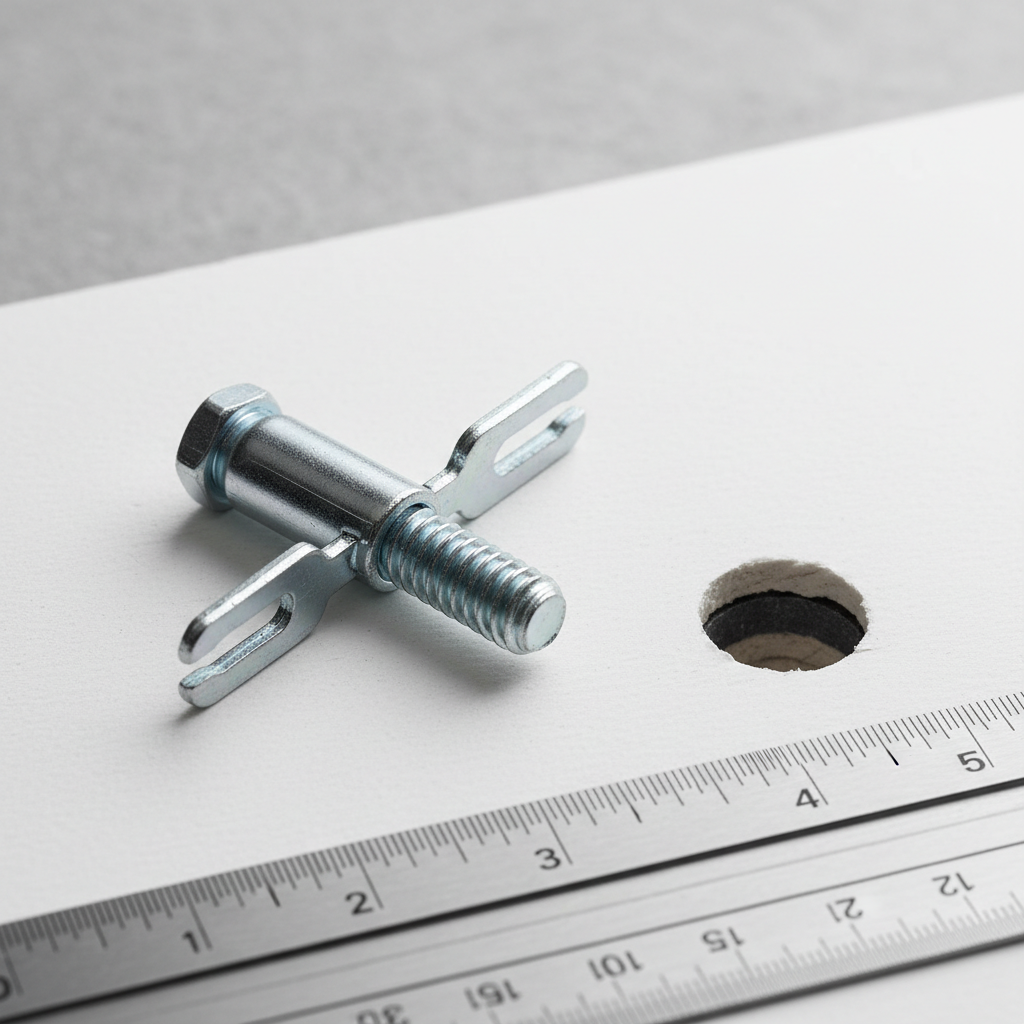
A toggle bolt consists of two parts: a screw and a spring-loaded, foldable wing nut (the "toggle"). You drill a hole large enough for the folded toggle to pass through. As it emerges into the hollow space behind the drywall, the wings snap open. When you tighten the screw, these wings pull tight against the back of the drywall.
Now, the weight of your object isn't pulling on a tiny, crumbly hole. It's distributed across the entire surface area of the metal wings, which are in turn braced against the strong, solid paper backing of the drywall. It can’t rip through because the wings are wider than the hole. It transforms a weak point into a strong, reliable anchor.
Step-by-Step Fix: Replacing a Failed Anchor with a Toggle Bolt
Let's walk through the process of fixing that ugly hole and hanging your item securely once and for all.
1. Safety First
Your first priority is safety. If the location is anywhere near a light switch or electrical outlet, turn off the corresponding breaker at your main electrical panel. Use a voltage tester to confirm the power is off. Put on your safety glasses to protect your eyes from drywall dust.
2. Assess the Existing Damage
Look at the hole left by the failed anchor. Is it a massive, torn crater? Or a slightly enlarged hole? Your strategy depends on this. Often, the hole required for the new, larger toggle bolt will completely eclipse the old damage. If not, you may need to patch the wall later.
3. Choose the Right Toggle Bolt (The Sizing Chart)
This is the most critical step. Do not guess. The size of the toggle bolt determines its holding power. The size is determined by the diameter and length of the screw. Use this chart to make your decision. Note: These are safe load estimates for shear (downward) force in standard 1/2" or 5/8" drywall. Always check the manufacturer's packaging for specific ratings.
| Bolt Diameter | Drill Bit Size | Avg. Safe Load (1/2" Drywall) | Common Uses |
|---|---|---|---|
| 1/8" | 3/8" | 25 lbs | Small pictures, smoke detectors, light decor |
| 3/16" | 1/2" | 50 lbs | Medium mirrors, small shelves, coat hooks |
| 1/4" | 3/4" | 75 lbs | Large shelves, curtain rods, small cabinets |
| 5/16" | 7/8" | 90 lbs | Heavy mirrors, medium cabinets, grab bars |
| 3/8" | 1" | 120 lbs+ | Very heavy applications, wall-mounted desks |
When in doubt, always choose the next size up. The extra holding power is worth the slightly larger hole.
4. Drill the Pilot Hole
Select the drill bit size that corresponds to your chosen toggle bolt from the chart. If the old hole is small, use your new, larger bit to drill it out. A clean, round hole is essential. If the old hole is a ragged mess, you may have to drill a fresh hole an inch or so above or below it.
5. Prepare the Bolt Assembly
This is the step that trips up most first-timers. You must assemble the parts in the correct order. Take the screw and pass it through the mounting hole on the object you intend to hang (e.g., the bracket for your shelf). After it’s through the object’s bracket, thread the toggle wings onto the end of the screw by just a few turns. The wings should be able to fold flat along the screw shaft.
6. Insert the Toggle into the Wall
Pinch the spring-loaded wings together so they are flat. Push the entire assembly through the hole you drilled in the drywall. You should feel and hear a distinct "pop" or "snap" as the wings clear the back of the wall and spring open.
7. Pull to Set the Wings
Gently pull the screw (and the object you're hanging) outward, away from the wall. This tension ensures the wings are seated flat against the interior surface of the drywall. You should feel it become taut. Do not skip this step! If the wings aren’t flat, they won’t hold any weight.
8. Tighten the Screw Securely
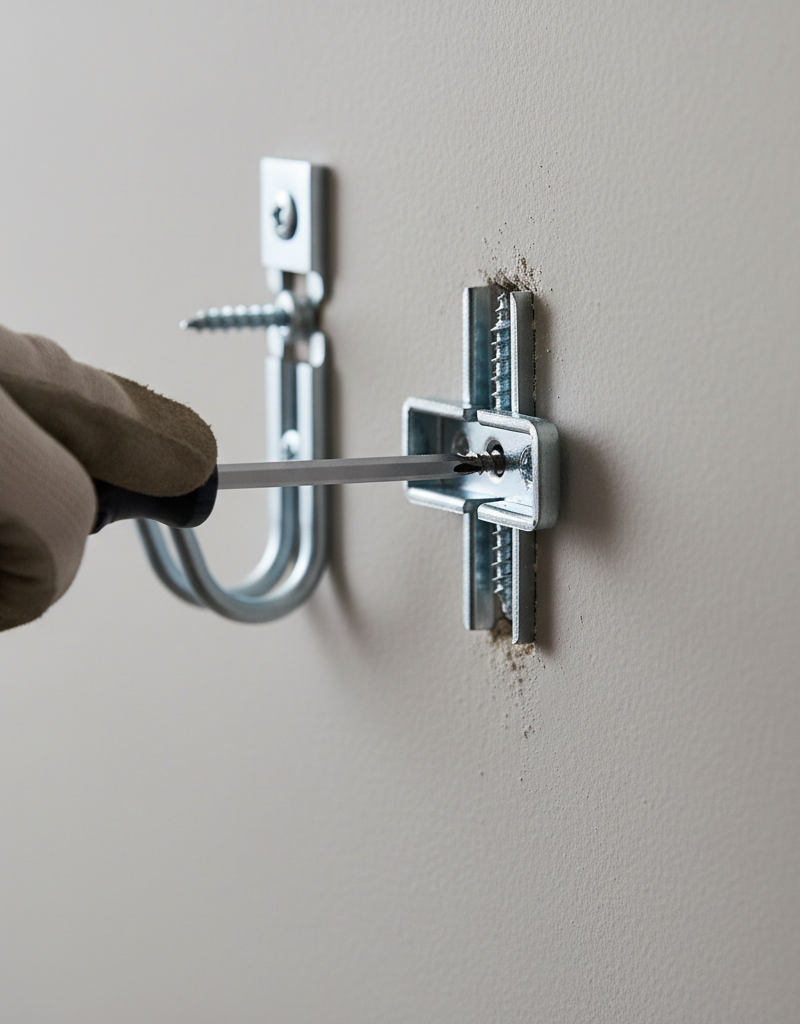
While maintaining that outward tension with one hand, use a screwdriver to tighten the screw with your other hand. Continue tightening until the head of the screw is snug against the bracket of your item. You’ll feel the resistance increase sharply when it’s secure. Do NOT over-tighten, as you can crush the drywall from the back, compromising the hold.
9. Finishing Touches
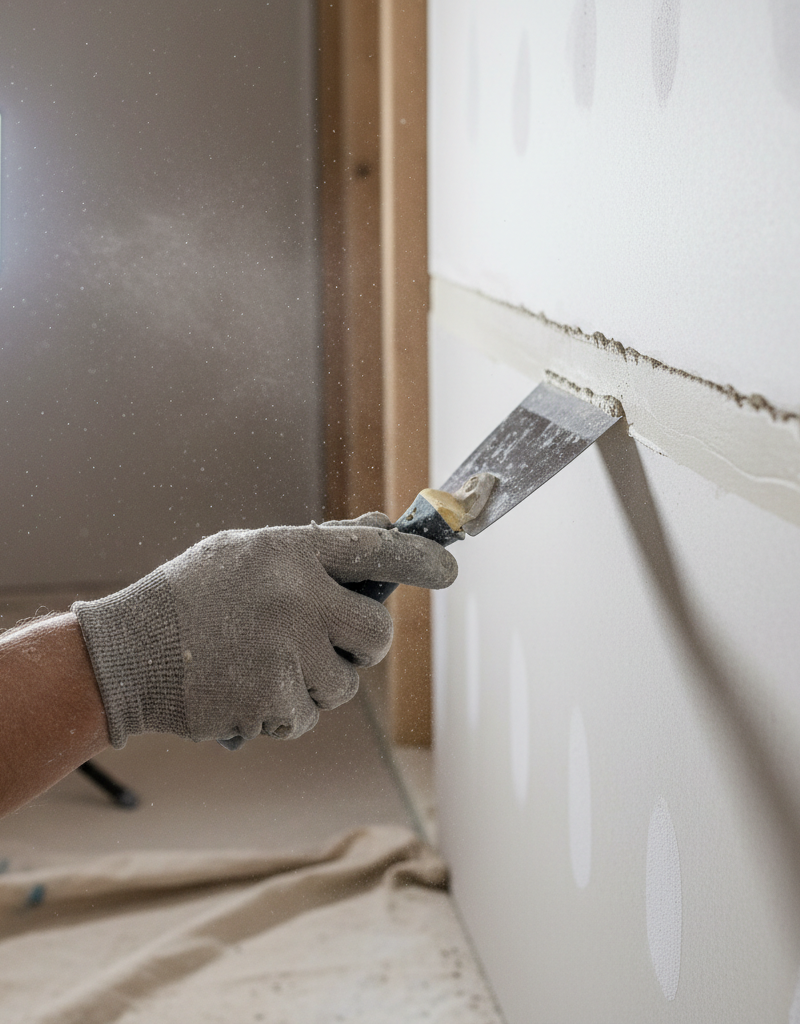
If your new, secure fixture doesn't cover the old damage completely, you'll need to patch it. For small holes, a bit of spackling compound applied with a putty knife will do. For larger holes, you may need a self-adhesive drywall patch before spackling. Sand smooth and touch up with paint.
Common Causes of Anchor Failure
- Wrong Anchor Type: Using a friction anchor for anything heavier than a few pounds.
- Overloading: Exceeding the specified weight limit, even for the correct anchor type.
- Incorrect Pilot Hole: A hole that is too large provides no friction for an expansion anchor; a hole that is too tight can fracture the drywall upon insertion.
- Dynamic vs. Static Loads: A 20-pound mirror (static load) puts less stress on an anchor than a 20-pound coat rack where coats are frequently added and removed (dynamic load).
- Poor Wall Condition: Old, brittle, or previously water-damaged drywall has significantly less structural integrity.
- Reusing Old Holes: An old anchor hole is already compromised and cannot be reliably reused.
Common Mistakes to Avoid
- Forgetting to feed the screw through your object first. If you put the toggle in the wall first, you can't hang anything with it. You will lose the toggle inside the wall when you unscrew it.
- Not pulling the screw to set the wings. This can lead to the toggle spinning freely in the wall cavity as you try to tighten it.
- Over-tightening. This crushes the drywall and negates the strength of the toggle. Tighten until it feels snug, and then stop.
- Guessing the weight. Use a bathroom scale to weigh the item you intend to hang so you can confidently choose the right hardware.
Cost & Time Breakdown
| Item | DIY Cost | Pro Cost | DIY Time | Pro Time |
|---|---|---|---|---|
| Hanging one heavy item with toggle bolts | $5 - $15 (for a pack of toggle bolts) | $100 - $250 (Handyman minimum service call) | 20-30 minutes | 15-20 minutes |
| Repairing old hole (patch & paint) | $15 - $30 (for patch kit, spackle, putty knife) | Included in service or +$50-$100 | 1-2 hours (including dry time) | 30-60 minutes |
Tips & Prevention
- Always search for a stud first. A wood stud is always the most secure anchoring point. Use a quality electronic stud finder. A screw driven directly into a stud can hold over 100 pounds.
- When in doubt, use a toggle bolt. If you can't hit a stud, a toggle bolt is the next best thing and is vastly superior to any plastic anchor.
- Keep an assortment kit. Buy a kit with various sizes of toggle bolts. It will cost around $20 and will save you countless trips to the hardware store.
- For extremely heavy items like large-screen TVs, kitchen cabinets, or freestanding sinks, use lag bolts into studs, or use a mounting rail (like a French cleat) that spans across multiple studs to distribute the weight.
When to Call a Professional
While using toggle bolts is a straightforward DIY task, there are times when calling a handyman or contractor is the safer, smarter choice:
- You are mounting something exceptionally heavy or valuable, like a 75-inch TV, a granite shelf, or a large antique mirror.
- Your walls are plaster and lath, not drywall. These require different techniques and fasteners.
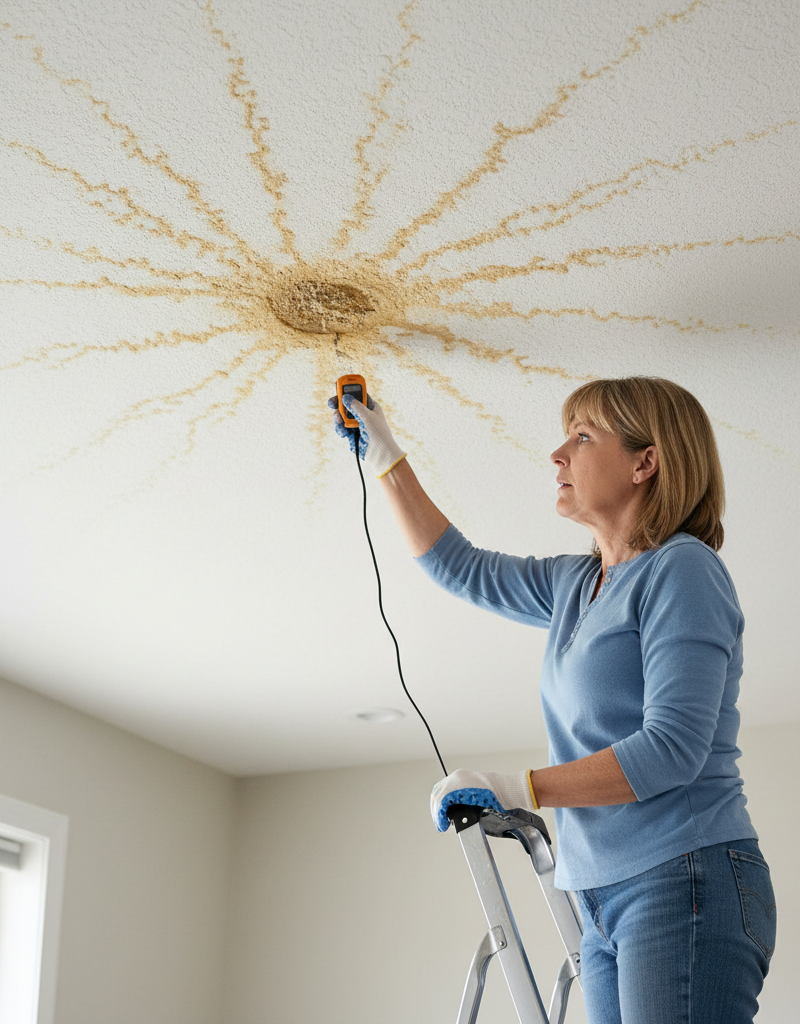
- The wall feels soft, shows signs of moisture, or the drywall crumbles easily, indicating a larger problem.
- You need to mount a safety device like a grab bar for a person with mobility issues, which requires extremely secure blocking or mounting.
- You are simply not comfortable with the task or don't own the necessary tools.
By understanding the materials and using the right hardware, you can end the cycle of falling shelves and broken drywall for good. That little metal wing is the key to a secure, damage-free, and confident installation. '''
Should you do this yourself?
Answer five quick questions before you start. Safety outranks savings every time.
Your experience with work like this
How high do you have to work?
Does the job involve any of these?
Will it need a permit?
Specialty tools
Free and instant. Educational guidance only — not a quote, inspection, or professional diagnosis.
What should this project cost?
Enter your project details for a realistic cost range before you call anyone.
Cost depends heavily on which system turns out to be the source.
- Regional adjustment
- National average
- Labor share (typical)
- ~$1,620
- Quotes to collect
- 3 written estimates
Educational estimate based on national averages — not a binding quote. Always confirm with written local estimates.
Recommended for DIYers & woodworkers
Sponsored
The Top 20 Tools for Workshops of Any Budget
No stationary machines or power tools required — plus 3 fundamental tools that can't be bought at any price.
Get the free guide
Ted's Woodworking — The #1 Woodworking Resource
Detailed instructions, dimensioned drawings, materials & cutting lists, and 3D schematics for every skill level.
See the plansSponsored: links above are affiliate links. FixlyGuide may earn a commission on qualifying purchases — at no extra cost to you.
Frequently asked questions
Can I reuse a hole from a failed drywall anchor?+
No. The drywall around the old hole is compromised, crumbled, and weak. You should always drill a new, clean hole for the new anchor. Often, the larger hole required for a properly-sized toggle bolt will completely remove the old, damaged material anyway.
What's the difference between a toggle bolt and a molly bolt?+
A toggle bolt has spring-loaded wings that open inside the wall cavity. A molly bolt (or sleeve-type anchor) has a metal sleeve that expands and grips the back of the drywall as you tighten the screw. While molly bolts are stronger than plastic anchors, toggle bolts distribute weight over a wider area and generally have higher load ratings, making them superior for heavy applications.
How much weight can a toggle bolt actually hold?+
It depends entirely on the bolt's diameter and the drywall's thickness and condition. A common 3/16-inch toggle bolt can reliably hold around 50 pounds in standard 1/2-inch drywall. A larger 3/8-inch toggle can hold over 120 pounds. Always refer to our sizing chart and the manufacturer's packaging for specific weight ratings.
What if I put the toggle bolt in the wall before the screw?+
A toggle bolt only works as a complete assembly. If you push the toggle wings through the hole without the screw, they will open and immediately fall to the bottom of your wall cavity, lost forever. The screw must be passed through your item's bracket first, then threaded into the wings before anything goes into the wall.
Discussion
Loading comments…