- Thermal Expansion and Contraction: All building materials expand when heated and contract when cooled. Wood and drywall do this at different rates, creating stress at the seams.
- Foundation and Framing Settling: All houses settle over time. This can cause framing members to shift slightly, creating or widening gaps in trim work. Severe, recurring cracks can be an early warning of foundation issues.
- Improper Fastening: If trim is not securely nailed to the wall studs, it can move more freely, exacerbating gaps.
- Using the Wrong Filler: The central theme—using rigid spackle or joint compound in a dynamic, moving joint is a guaranteed failure.
General remodeling · Renovation planning
| Project category | General remodeling |
|---|---|
| Problem type | Renovation planning |
| Trade required | General contracting |
| Urgency | Planned project |
| Safety risk | Low safety risk |
| DIY suitability | Pro recommended |
| Cost category | Major investment |
| Typical timeline | Design and permitting often 2–4 months before work starts |
| Contractor type | General contractor |
Repair option
Phase the work and fix the building envelope first.
Replacement option
Full renovation with permits, design, and a general contractor.
Common causes
- Space no longer fits how the household lives
- Resale preparation
- Deferred maintenance stacking up
Relevant tools:project cost estimatorcompare quoteshome improvement material prices
Published June 4, 2026Last updated August 17, 2026
Tools & materials you'll need
Affiliate links- AmazonDripless Caulk Gun1 · A "dripless" model retracts the pressure rod automatically to prevent messes.
- AmazonUtility Knife1 · For cutting the caulk nozzle and removing old material.
- AmazonPainter's 5-in-1 Tool1 · Excellent for scraping out old, stubborn caulk or spackle.
- AmazonFlexible Putty Knife1 · For applying spackle to nail holes.
- Amazon220-Grit Sanding Sponge1 · For smoothing dried spackle.
- AmazonShop Vacuum with Crevice Tool1 · Essential for cleaning all dust and debris from the joint before caulking.
- AmazonSafety Glasses1 · Protect your eyes from flying debris when scraping.
As an Amazon Associate FixlyGuide earns from qualifying purchases — at no extra cost to you. Prices and availability are accurate as of publication and subject to change.
That hairline crack at the top of your baseboard is back. You filled it last year, sanded it smooth, and painted it perfectly. Yet, like a bad weed, it has returned. This frustrating cycle isn't a reflection of your painting skills or the quality of your home. It’s the direct result of a fundamental misunderstanding between two common household repair products: caulk and spackle. Choosing the right one is the single most important factor in achieving a permanent, invisible repair on and around your trim. One is designed to flex, the other to be rigid, and using the wrong one in the wrong place guarantees failure.
This isn't just about aesthetics. Those persistent gaps can be conduits for drafts, insects, and moisture. Understanding the material science behind the caulk vs spackle debate is the key to elevating your repair work from a temporary patch to a professional-grade, long-lasting solution. This guide will walk you through the diagnosis, the science, and the exact steps to finally fix those cracks for good.
Quick Answer
Use flexible, paintable acrylic latex caulk for gaps and seams between trim (baseboards, window casings, crown molding) and the adjacent wall. These are moving joints that expand and contract, and caulk is designed to stretch and compress with them. Use a hard-drying, sandable spackle or wood filler only for filling imperfections on the surface of the wood trim or drywall itself, such as nail holes, dents, or gouges. Spackle hardens rigidly and will crack immediately if used in a moving joint.
The Problem
The visual evidence of the problem is a fine, dark line that appears where two surfaces meet. Most commonly, it’s the horizontal line between the top of a baseboard and the drywall, or the vertical line where a window casing meets the wall. You might also see it as a separation in the mitered corners of your crown molding or door frames.
Initially, you might ignore it. Then, you decide to fix it. You grab a small tub of spackle, a putty knife, and meticulously fill the gap. It sands down beautifully and, after a coat of trim paint, the line vanishes. The satisfaction is immense. But weeks or months later, with the changing of a season, the crack returns with a vengeance. Sometimes it looks identical; other times, the spackle has crumbled, leaving a more jagged, obvious fissure.
This failure occurs because the two materials—the wood or MDF trim and the gypsum drywall—are expanding and contracting at different rates. This movement, called thermal expansion and contraction, is driven by fluctuations in temperature and humidity. Wood swells as it absorbs moisture from the air in the humid summer months and shrinks as the air dries out in the winter. While drywall also moves, its rate is different. This differential movement, even if only by a fraction of a millimeter, places immense stress on the seam between the two materials. A rigid filler like spackle has zero ability to stretch; it simply cracks under the strain. The "repair" was doomed from the start.
How It Works
The choice between caulk and spackle is a decision between flexibility and rigidity. They are not interchangeable and are engineered for fundamentally different tasks based on their material properties.
Caulk: The Flexible Bridge Caulk is a sealant, and its primary job is to create a flexible, waterproof, and airtight seal between two or more distinct surfaces. Think of it as a durable, elastic bridge. For interior trim, the product of choice is a paintable acrylic latex caulk, sometimes with added silicone for enhanced flexibility and durability (often labeled "siliconized acrylic").
- Composition: Primarily made of acrylic resins and latex suspended in water. As the water evaporates, the resins coalesce into a flexible, rubbery film.
- Mechanism: Its elastomeric properties allow it to stretch and compress without breaking. A quality caulk might be rated for "Class 25," meaning it can stretch and compress up to 25% of the joint width. When your wood trim shrinks in the winter, the caulk stretches to maintain the seal. When it expands in the summer, the caulk compresses.
- Application: It is applied into a seam or joint, not onto a flat surface. It is smoothed (tooled) to create a concave bead but is not sandable. Trying to sand caulk results in a gummy, torn mess.
Spackle: The Rigid Filler Spackle is a patching compound, and its primary job is to fill holes and imperfections on a single, static surface to create a perfectly flat, smooth plane for painting. Think of it as a powdered rock that you mix with a binder and apply as a paste.
- Composition: Typically made from gypsum powder (calcium sulfate), limestone, and binders. Lightweight spackle often includes silica and other agents to create a less dense, faster-drying product.
- Mechanism: Spackle works by drying to a hard, rigid state. It has minimal elasticity and is designed to mimic the hardness of the surrounding drywall or wood. Its key feature is its sandability. After it dries, it can be sanded perfectly flush with the surrounding surface, making the original imperfection disappear under a coat of paint.
- Application: It is applied onto a surface to fill a void like a nail hole, dent, or scratch. It should never be used to bridge a gap between two separate, moving components.
Step-by-Step Fix: Sealing a Baseboard-to-Wall Gap
Here’s how to correctly fix that recurring crack between your baseboard and the wall using the right material—caulk.
-
Safety First & Assessment: Wear safety glasses to protect your eyes from debris. Look closely at the gap. If it's a consistent line between the trim and wall, it needs caulk. If you also see nail holes on the face of the trim, you'll need spackle for those later.
-
Dig Out the Old Filler: This is the most crucial step. Using a sharp utility knife or a painter’s 5-in-1 tool, carefully cut along both edges of the old, cracked filler (whether it's old caulk or mistaken spackle). Pry and scrape it all out. New caulk will not adhere properly to old, unstable material.
-
Clean and Prep the Joint: Once the old material is removed, use a shop vacuum with a crevice tool to suck out all the dust and debris. Then, wipe the joint with a damp cloth to remove any remaining fine dust. Allow the area to dry completely, typically 15-30 minutes.
-
Select the Right Caulk: Purchase a high-quality "Paintable Siliconized Acrylic Latex Caulk." Look for products advertising a "50-year" or "lifetime" guarantee—they have better flexibility. Don't use 100% silicone caulk, as paint will not adhere to it.
-
Prepare the Caulk Gun: Using a utility knife, cut the tip of the caulk tube nozzle at a 45-degree angle. Start with a very small opening, about 1/8-inch. You can always make it bigger, but you can't make it smaller. Break the inner foil seal by inserting a long nail or the stiff wire attached to most caulk guns.
-
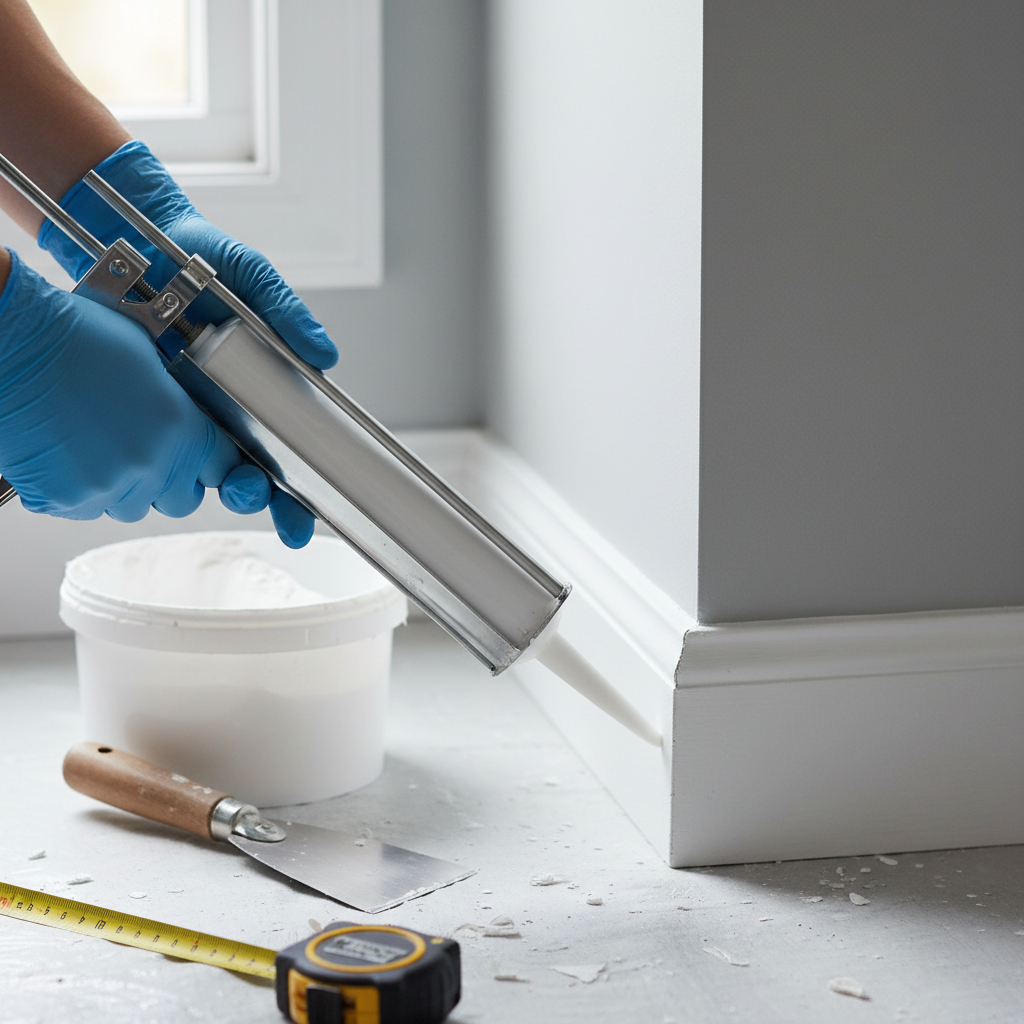
Apply a Consistent Bead: Place the nozzle into the corner, maintaining a 45-degree angle relative to both the wall and the trim. Squeeze the trigger with steady pressure and move the gun smoothly along the joint. Your goal is a continuous bead that just fills the gap. Don't over-apply.
-
Tool the Caulk Bead: This step smooths the bead for a professional look. You can use a caulk finishing tool, but a wet finger works perfectly. Dip your finger in a cup of water and run it along the bead, applying light pressure. This presses the caulk firmly into the joint and removes the excess, creating a clean, concave seam.
-
Immediate Cleanup: Use a damp rag or paper towel to immediately wipe away any excess caulk that has smeared onto the wall or the top of the baseboard. Cured caulk is much harder to remove.
-
Let It Cure: Check the manufacturer’s instructions for cure time. This can range from 1 to 24 hours depending on the formula, temperature, and humidity. Do not paint until it is fully cured. Painting too soon can cause the paint to crack as the caulk finishes shrinking.
-
Fill Nail Holes (with Spackle): While the caulk cures, use a putty knife to apply a small amount of spackle to any nail holes on the face of the trim. Overfill slightly. Once dry (30-60 minutes), sand it perfectly smooth with a 220-grit sanding sponge.
-
Prime and Paint: Once the caulk is cured and any spackle is sanded, you’re ready for the final step. Prime the sanded spackle spots, then apply a fresh coat of trim paint over the trim, the new caulk bead, and any spackled areas for a flawless, monolithic finish.
Common Causes
Understanding why the gaps form helps in prevention and diagnosis.
- Humidity-Induced Wood Movement: This is the primary culprit in most homes. Wood is hygroscopic, meaning it absorbs and releases moisture from the air. In summer, high humidity causes it to swell. In winter, dry furnace air causes it to shrink, opening up gaps.
- Thermal Expansion and Contraction: All building materials expand when heated and contract when cooled. Wood and drywall do this at different rates, creating stress at the seams.
- Foundation and Framing Settling: All houses settle over time. This can cause framing members to shift slightly, creating or widening gaps in trim work. Severe, recurring cracks can be an early warning of foundation issues.
- Improper Fastening: If trim is not securely nailed to the wall studs, it can move more freely, exacerbating gaps.
- Using the Wrong Filler: The central theme—using rigid spackle or joint compound in a dynamic, moving joint is a guaranteed failure.
Common Mistakes
Avoid these frequent errors to get your repair right the first time.
- The Spackle Sin: The number one mistake is using spackle in a seam between two different materials. It will always crack.
- Painting Unpaintable Caulk: Using 100% silicone caulk for this job. While it's incredibly flexible and waterproof, paint will not stick to it, leaving you with a shiny, permanent rubber strip.
- Caulking Over Old Caulk: Applying a new bead over old, cracked, or peeling caulk. The new bead will fail as soon as the old layer underneath lets go.
- Cutting the Nozzle Too Big: This forces out a huge, messy bead of caulk that is difficult to tool and wastes material. Start with a 1/8" hole and only go bigger if necessary.
- Skipping the Tooling Step: Leaving the raw, lumpy bead as it comes out of the gun. This looks amateurish and doesn't properly force the sealant into the joint.
- Painting Too Soon: Impatience leads to failure. If you paint over uncured caulk, the paint film will crack as the moisture continues to evaporate from the caulk beneath it.
Cost & Time Breakdown
This table outlines the typical costs and time commitment for DIY vs. hiring a professional painter for a standard 12x12 foot room (approx. 48 linear feet of baseboard).
| Task | DIY Cost | Pro Cost | Time Commitment |
|---|---|---|---|
| Materials (Caulk, Spackle) | $15 - $25 | Included in labor | N/A |
| Tools (if not owned) | $20 - $40 | Included in labor | N/A |
| Remove Old Caulk & Prep | $0 | $75 - $125 | 1 - 1.5 hours |
| Apply New Caulk Bead | $0 | $75 - $125 | 1 hour |
| Fill Nail Holes & Sand | $0 | $40 - $60 | 30 minutes |
| Touch-up Painting & Cleanup | $15 (sample pot) | $80 - $150 | 1 - 2 hours |
| TOTALS | $30 - $80 | $270 - $460 | 3-5 hours (plus dry time) |
Tips & Prevention
- Invest in Quality Caulk: Don't just grab the cheapest tube. Spend the extra $2-$3 on a premium "siliconized" acrylic latex caulk with a 50-year or lifetime warranty. It will have superior flexibility and longevity.
- Control Your Humidity: If you experience dramatic seasonal gapping, use a humidifier in the dry winter months and a dehumidifier in the humid summer months. Keeping indoor humidity between 35%-55% will minimize wood movement.
- Use Backer Rod for Large Gaps: For gaps wider than 1/4 inch, first press a foam backer rod (a flexible foam rope) into the gap before caulking. This fills the void, saves caulk, and creates the ideal "hourglass" shape for the caulk bead to maximize flexibility.
- Work in Sections: Don't try to caulk an entire room in one go. Apply a bead about 8-10 feet long, then tool it and clean it up before moving on. This prevents the caulk from skinning over before you can smooth it.
- Push, Don't Pull: When applying the bead, professionals often "push" the caulk gun away from them. This forces the caulk into the joint more effectively than pulling it, which can just lay the bead on the surface.
When to Call a Professional
While repairing trim gaps is an excellent DIY project, there are scenarios where calling a pro is the smarter choice. If you see very large gaps (over 3/8 inch) or cracks that aggressively reappear along with other signs like sticking doors or drywall cracks elsewhere, this could indicate a structural or foundation issue. A foundation specialist or structural engineer should be your first call, not a painter.
For homeowners with very high ceilings, extensive and intricate crown molding, or hundreds of feet of trim to repair, a professional painter is invaluable. They have the equipment (scaffolding, commercial caulk guns), the muscle memory for a perfect bead, and the efficiency to complete the job in a fraction of the time. If the job involves more than just filling gaps—like significant drywall damage, skim coating, or full room repainting—a pro will deliver a far superior and more cohesive result. Finally, if you simply don't have a steady hand or the patience for meticulous prep work, hiring a painter ensures the job is done right once.
Repair or replace your exterior paint?
Plug in four numbers and see which choice holds up financially.
Free and instant. Educational guidance only — not a quote, inspection, or professional diagnosis.
Estimate your own project cost
National averages are a starting point. Enter your details for a range that fits your house.
Interior paint estimator
- Paint$96
- Supplies (tape, rollers, drop cloth)$35
- Estimated total (DIY)$131
Hiring a pro? Add roughly $1.50–$4.00/sq ft for labor depending on prep work and trim detail.
Educational estimate only — always confirm with written local bids.
What should this project cost?
Enter your project details for a realistic cost range before you call anyone.
Cost depends heavily on which system turns out to be the source.
- Regional adjustment
- National average
- Labor share (typical)
- ~$1,620
- Quotes to collect
- 3 written estimates
Educational estimate based on national averages — not a binding quote. Always confirm with written local estimates.
Fixly Project Decision Box
- DIY difficulty
- Professional Recommended
- Estimated time
- Monitoring over 60–90 days · engineer visit 1–2 hours
- Cost level
- Major Project
Main tools / materials
- Crack monitor or pencil marks with dates
- Tape measure
- Marble or level for floor slope
When to stop and call a pro
- A crack wider than 1/4 inch or growing month over month
- Doors and windows that suddenly stick or will not latch
- Stair-step cracks in brick or block
- Separation between walls and ceilings or floors
Need professional help?
Get a Foundation EvaluationRepair or replace?
Run the age, cost ratio, and repair history through the calculator before you commit.
Free, no signup required. Estimates are educational guidance, not a quote or an inspection.
Get the print-ready PDF of this guide
A clean, ad-free, printable version you can keep on your phone or pin to the workshop wall. Free with a FixlyGuide account.
- Print-optimized layout
- Tools, materials & every step included
- Saved to your account
Recommended for DIYers & woodworkers
Sponsored
The Top 20 Tools for Workshops of Any Budget
No stationary machines or power tools required — plus 3 fundamental tools that can't be bought at any price.
Get the free guide
Ted's Woodworking — The #1 Woodworking Resource
Detailed instructions, dimensioned drawings, materials & cutting lists, and 3D schematics for every skill level.
See the plansSponsored: links above are affiliate links. FixlyGuide may earn a commission on qualifying purchases — at no extra cost to you.
Frequently asked questions
Can I use wood filler instead of spackle or caulk?+
Wood filler is similar to spackle but is formulated to better mimic wood. Use it to fill holes and gouges in bare wood trim *before* priming and painting. Like spackle, it dries hard and is not flexible, so it should never be used in moving joints between the trim and wall—that is a job for caulk.
What's the difference between acrylic latex and siliconized acrylic latex caulk?+
Standard acrylic latex caulk is paintable and offers moderate flexibility. Siliconized acrylic latex caulk has silicone polymers added to the formula, which increases its flexibility, adhesion, and crack-proof capabilities. For a few dollars more, it's almost always the better choice for trim-to-wall joints.
My caulk cracked. Did I do something wrong?+
It's possible. The most common reasons for new caulk cracking are: 1) You painted it before it was fully cured. 2) The gap was too wide for the caulk alone (should have used foam backer rod first). 3) You used a low-quality, less flexible caulk. 4) The movement in the joint exceeded the caulk's flexibility rating.
Can you put caulk on top of spackle?+
You can, but you shouldn't if the spackle is in a moving joint. If spackle was mistakenly used in the seam between trim and drywall and has cracked, the correct repair is to completely remove the rigid spackle first, then apply flexible caulk. Simply caulking over the cracked spackle is a temporary fix, as the broken pieces underneath will continue to shift.

Discussion
Loading comments…