- Clogged Vent Ducts: If the duct gets jammed with lint, dust, insulation, or a pest nest, air can’t get out right. Then you’ve got stale, humid air hanging around and the smell gets blown back into the room.
- Dead Pests: Mice, birds, insects—they all find their way into ductwork if there isn’t a proper vent screen. If one dies in there, well, you won’t forget it. Ever.
- Smoking or Strong Odors Trapped: If somebody smokes in the bathroom or uses harsh chemicals a lot, those odors soak into the dust and grime in the fan. They can hang around for ages, even after the source is gone.
- Poorly Sealed Ducts or Housing: Gaps where the ductwork or housing meets the ceiling can pull attic air into the bathroom and vent it out. Attic air can be dusty, moldy, or full of insulation fibers, so it brings its own stink with it.
Bathroom · Bathroom remodel
| Project category | Bathroom |
|---|---|
| Problem type | Bathroom remodel |
| Trade required | General contracting |
| Urgency | Planned project |
| Safety risk | Low safety risk |
| DIY suitability | Pro recommended |
| Cost category | High cost |
| Typical timeline | Typically 2–4 weeks on site |
| Contractor type | Bathroom remodeler or licensed plumber |
Repair option
Refresh fixtures, grout, and vanity without moving plumbing.
Replacement option
Gut remodel when the pan leaks or the layout changes.
Common causes
- Dated finishes
- Failing tile or pan
- Accessibility needs
Relevant tools:project cost estimatorcompare quotes
Published August 12, 2026Last updated August 17, 2026
Tools & materials you'll need
Affiliate linksAs an Amazon Associate FixlyGuide earns from qualifying purchases — at no extra cost to you. Prices and availability are accurate as of publication and subject to change.
Quick Answer
Man, there’s nothing worse than flipping on your bathroom fan, expecting a fresh breeze, and getting smacked with a blast of something foul instead. Most of the time, that funky smell isn’t coming from the fan motor itself. It’s coming from what the fan’s pulling in—or what’s been growing inside the housing. Moisture. Dust. Mold. Mildew. Sometimes even a critter that made itself at home. Getting rid of it usually takes a proper deep clean, and sometimes you’ve gotta fix a venting problem too, but it’s a job most DIYers can handle if they take it slow and do it right.
The Problem
You hit that switch after a hot shower, and BAM! Instead of the steady hum you want, you get a whiff that smells like a wet dog, old gym socks, or maybe even sewer gas. Not exactly spa treatment, right? That smell’s usually a sign your ventilation system isn’t doing its job—or worse, it’s got some unwelcome guests hiding in there. I’ve seen homeowners shrug this off for months, calling it “just bathroom smell,” but nine times out of ten there’s a real cause behind it. Like finding a weird stain on drywall—you don’t need a detective to know something leaked.
How It Works
Your bathroom exhaust fan is pretty simple. It’s an electric motor spinning a fan blade, usually a centrifugal type, built to pull humid, stale air out of the bathroom and send it outside through a duct. That little setup matters more than folks think. Moisture is the enemy in a bathroom. No joke. If you don’t vent it out, it condenses on cold surfaces—walls, ceilings, windows—and gives mold and mildew a nice place to get started.
Air comes in through the grille, moves through the fan assembly, then gets pushed into a duct, usually flexible or rigid aluminum pipe. That duct ought to end outside your house, often through a roof vent, soffit vent, or wall cap. For an average 50-square-foot bathroom, you want about 50 cubic feet per minute (CFM) of airflow. Bigger bathrooms, or ones with separate toilet rooms, may need 80-100 CFM. If the fan’s undersized, or the duct’s blocked or disconnected, you’re just stirring humid air around inside the house. That’s how odors hang around and moisture gets trapped where you don’t want it.
There’s also a backdraft damper, which is just a little flap that keeps outside air—and critters—from coming back in. If that thing sticks open or closed, you’ll get drafts, weak exhaust, or no exhaust at all. I had a job out in Evergreen Hills last year where a homeowner kept complaining about a damp smell. Turned out a bird had built a nest right in the roof vent and shut the whole system down. Fan was running, sure. It just wasn’t moving squat.
Step-by-Step Fix
Here’s how I’d handle a stinky bathroom fan in the field. Not glamorous. But it works.
-
Safety First — Kill the Power! — Before you touch anything, always, always shut off power to the fan at the electrical panel. Don’t skip this. A 120-volt shock isn’t just a nasty surprise; it can kill you. Flip the breaker, then test the wall switch to make sure the fan won’t start. If it stays dead, you’re in business.
-
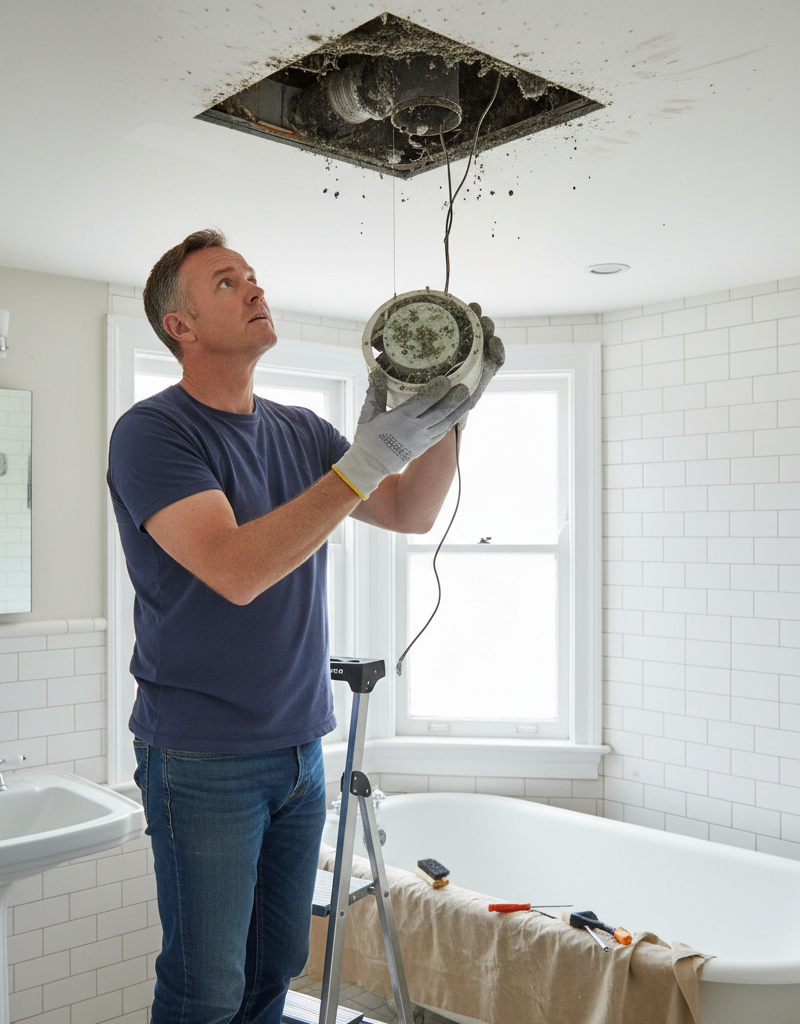
Remove the Grille and Light Cover — Most fan grilles are held in by spring clips. Pull down gently until you feel resistance, then pinch the clips together and work them through the housing slots. If there’s a light fixture, you’ll usually need to remove a finial or a couple small nuts to drop the lens and pull the bulb. That opens up the whole assembly.
-
Vacuum the Obvious Gunk — Once the grille’s off, you’ll probably see a depressing amount of dust, lint, and maybe some early mold. Grab a shop vac, or a regular vacuum with a brush attachment, and clean the grille, fan blades, and inside the housing. Don’t baby it. A thick layer of dust chokes airflow fast.
-
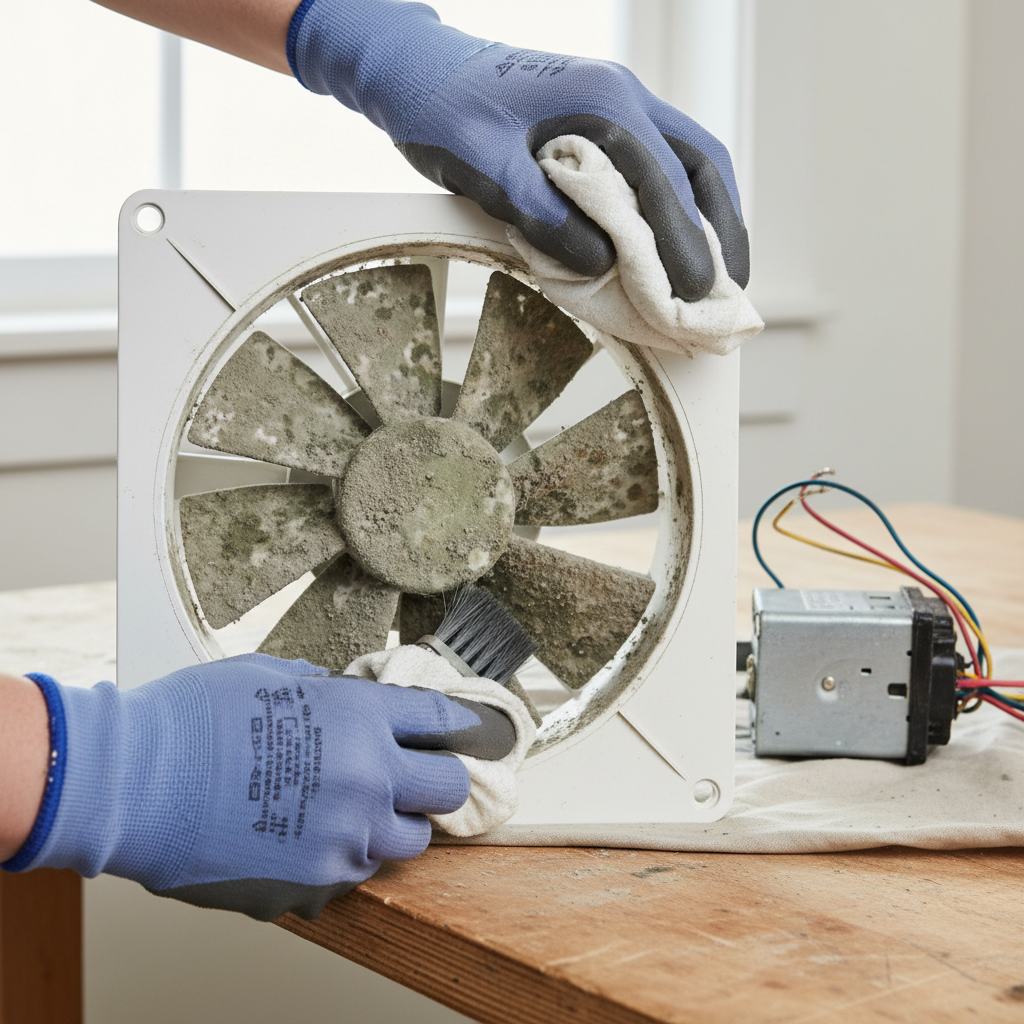
Deep Clean the Fan Blades and Housing — If the grime’s stuck on, you’ll need to get a little more hands-on. Sometimes you can remove the motor and fan assembly by backing out a few screws or popping a clip. Wipe the blades and housing with a damp cloth and a mild all-purpose cleaner, or use a 50/50 white vinegar and water mix. For mold spots, a bleach solution (1 part bleach to 10 parts water) can do the trick, but wear gloves and eye protection and keep the room ventilated. Let everything dry all the way before you put it back together.
- Tools: Phillips head screwdriver, utility knife (if cutting caulk), cleaning rags, scrub brush.
- Safety: Wear gloves and eye protection with chemicals. Make sure the motor’s completely disconnected from power.
-
Check the Ductwork and Damper — This is where things can get fiddly. Look up into the housing where the duct hooks on. Is it tight? Any sagging? Any damage? You might need to reach in and check the backdraft damper—that little flap should open when the fan’s on and close when it’s off. If it’s stuck open, outside air and critters can get in. Stuck closed, and the fan’s basically useless. Clear out any debris around it. If you’ve got flex duct, feel along it for kinks or crushed sections, especially where it passes through framing or into the attic.
-
Inspect the Exterior Vent Cap — Head outside and find where the bathroom fan dumps out. Roof, wall, soffit—wherever it ends. Look for bird nests, insect screens packed with lint, or paint that’s sealed things shut. Make sure the damper flap on the outside cap, if there is one, swings freely. Clear the blockage. You can add a critter guard later if you want, but don’t choke off the airflow just to keep squirrels honest.
-
Consider an Air Freshener or Deodorizer — If you’ve cleaned the whole setup and there’s still a faint smell hanging around, try a moisture-absorbing deodorizer packet or a charcoal air purifier near the grille. That won’t fix the source—let’s be clear about that—but it can help while you make sure the fan’s actually moving air like it should.
-
Reassemble and Test — Once everything’s clean and bone dry, put the fan, light fixture, and grille back together. Go to the panel, flip the breaker on, and test the fan. Listen for weird noises. Feel for airflow at the grille. If you did it right, your bathroom should smell a whole lot better.
Common Causes
I’ve seen all kinds of reasons for a stinky fan over the years. These are the usual suspects:
- Mold and Mildew Buildup: This is the big one. Bathrooms stay damp. If the fan isn’t pulling enough moisture out, or dust mixes with that moisture, mold and mildew will start growing inside the housing and ductwork. That usually smells musty, like damp earth or old cheese.
- Clogged Vent Ducts: If the duct gets jammed with lint, dust, insulation, or a pest nest, air can’t get out right. Then you’ve got stale, humid air hanging around and the smell gets blown back into the room.
- Sewer Gas Backdraft: Not as common, but it’s serious. If the fan duct has a big break, terminates too close to a plumbing vent stack on the roof, or if your P-traps dry out, sewer gas can get pulled into the system and end up in the bathroom. That one smells like rotten eggs or straight-up sewage.
- Dead Pests: Mice, birds, insects—they all find their way into ductwork if there isn’t a proper vent screen. If one dies in there, well, you won’t forget it. Ever.
- Smoking or Strong Odors Trapped: If somebody smokes in the bathroom or uses harsh chemicals a lot, those odors soak into the dust and grime in the fan. They can hang around for ages, even after the source is gone.
- Poorly Sealed Ducts or Housing: Gaps where the ductwork or housing meets the ceiling can pull attic air into the bathroom and vent it out. Attic air can be dusty, moldy, or full of insulation fibers, so it brings its own stink with it.
Common Mistakes
Homeowners, bless ’em, make a few predictable mistakes that turn a simple cleanup into a headache. Don’t be that guy.
- Ignoring the Smell: “Oh, it’s just a little musty.” Nope. A small smell is a small problem. A big smell is a bigger problem. Deal with it early, before it turns into a mold farm.
- Not Disconnecting Power: You’d be surprised how many folks skip this. Working on electrical parts with the power on is a shortcut to a shock. Kill the breaker first.
- Only Cleaning the Grille: The grille may look nasty, but the real junk is usually deeper in the fan blades and housing. A quick wipe won’t fix odors.
- Forgetting to Check the Ductwork: The fan can be spotless and still stink if the duct is full of lint, critters, or mold. You’ve gotta follow that air path all the way out.
- Using Too Much Water/Cleaning Solution: Soaking the motor or electrical parts can wreck them or create a shock hazard. Use damp cloths, not dripping-wet ones, and let everything dry completely.
- Blocking the Vent Cap: Some people install critter guards or screens that are way too fine, and then airflow drops off hard. I generally like a 1/4-inch hardware cloth. It’s stout enough to keep squirrels out, but it won’t clog up easy with lint.
Cost & Time Breakdown
Here’s a rough idea of what you’re looking at, depending on how far you have to go.
| Task | DIY Cost | Pro Cost | Time |
|---|---|---|---|
| Basic Fan & Grille Cleaning | $5–$15 | $75–$150 | 30–60 min |
| Deep Fan & Duct Cleaning | $15–$30 | $150–$300 | 1–2 hours |
| Replacing Damaged Ductwork | $30–$75 | $200–$400 | 2–4 hours |
| New Fan Installation | $50–$250 | $300–$600 | 2–5 hours |
| Mold Remediation (if extensive) | N/A | $500+ | Varies |
Tips & Prevention
Keep the bathroom air fresh and healthy with these pointers. A little prevention beats a big mold cleanup any day.
- Run the Fan Long Enough: Don’t shut it off the second you step out of the shower. Let it run for at least 15-20 minutes after you’re done so it can pull that humid air out. A timer switch makes life easier.
- Clean Regularly: Every six months, pull the grille down and vacuum the fan. Once a year, do a deeper cleanup and wipe the blades. That keeps dust and lint from trapping moisture and odors.
- Check for Leaks: Take a look at the ceiling around the fan now and then. Water stains can point to a roof leak or a bad duct connection. Even a small leak can feed mold.
- Ensure Proper Venting: Make sure the fan isn’t dumping air into the attic. The duct needs to end outside, preferably through a dedicated roof or wall vent, not just into a soffit or attic space. Blow warm, wet air into the attic and you’re asking for condensation and mold up there.
- Keep the Bathroom Door Ajar (or use a gap): Leave a little gap under the bathroom door, or crack it open some during and after a shower. That helps air move and gives the fan the make-up air it needs.
- Install a Humidistat Fan: If you want better moisture control, upgrade to a fan with a humidistat. It kicks on when humidity climbs and shuts off when things dry out, so you’re not relying on memory.
When to Call a Professional
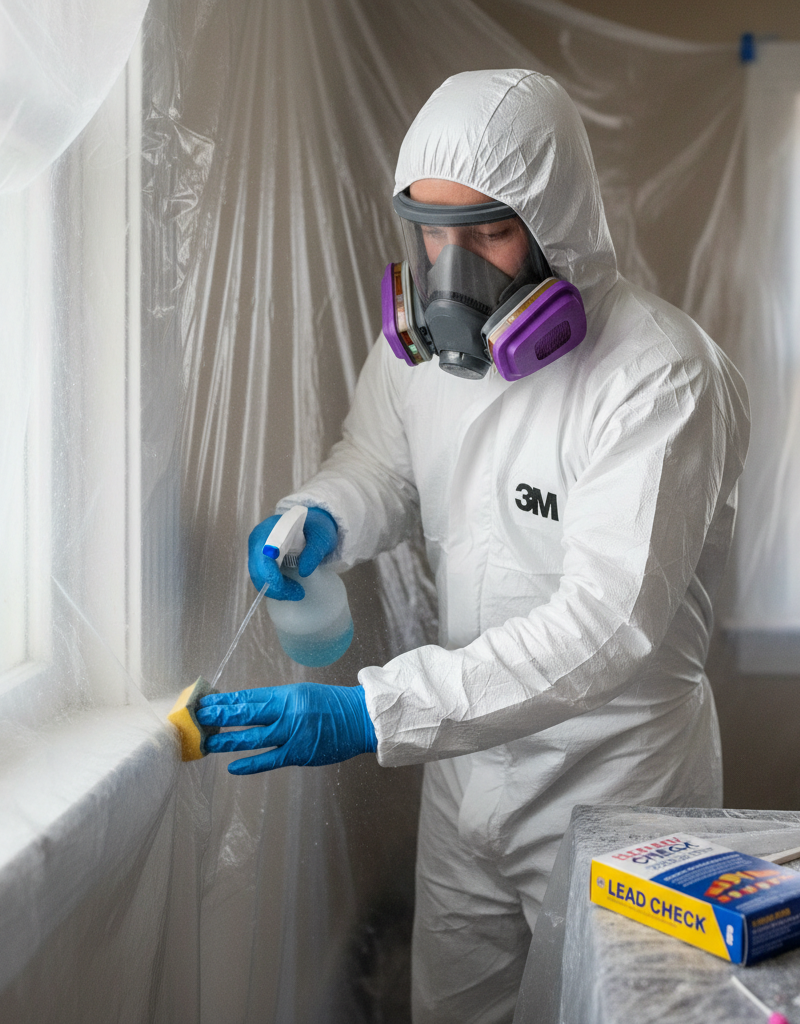
Look, I’m all for DIY, but there are times you need to bring in the cavalry. If you’ve cleaned everything you can reach, checked the ductwork, and the smell still hangs on—especially if it smells like sewer gas—you may have a deeper plumbing or venting issue. If you suspect heavy mold growth beyond a few surface spots, like fuzzy patches spreading across drywall or insulation, it’s time for a mold remediation specialist. If the fan motor’s grinding, smoking, or not spinning at all, and you’re not comfortable working around wiring, call an electrician. Don’t go messing with high voltage or big mold problems yourself. It’s not worth the risk to your health or your house.
Related Articles
Keep troubleshooting with these hand-picked guides from FixlyGuide:
- The Hidden Culprit Behind Your AC Not Cooling (and How to Find It) — If your central AC isn't cooling your home, the issue often stems from a surprisingly simple problem that's easy to overlook. Learn how to…
- The Secret Weapon Against Gaming Clutter: A $25 Custom Controller Stand You Can Build — Discover how a simple, custom-built stand using common materials can transform your gaming space, eliminating clutter and protecting your e…
- The Secret Power Tool Hiding in Your Garage for a Speedier Clean — Unlock the hidden potential of your cordless drill to tackle stubborn household grime, soap scum, and dirt with specialized cleaning attach…
- The Single Cedar Board Secret to Attracting Bluebirds to Your Yard — Discover how to construct an ideal bluebird nesting box using just one cedar board, providing a safe and inviting habitat for these cherish…
- The Single Cedar Board Secret to Attracting Bluebirds This Spring — Discover how a single cedar board can be transformed into a welcoming home for bluebirds, enriching your yard with their vibrant presence a…
- Bathroom fan smell? 3 hidden culprits for mold & moisture — A musty smell from your bathroom fan often signals trapped moisture and mold growth in the fan housing or ductwork, a fixable issue that ha…
Should you do this yourself?
Answer five quick questions before you start. Safety outranks savings every time.
Your experience with work like this
How high do you have to work?
Does the job involve any of these?
Will it need a permit?
Specialty tools
Free and instant. Educational guidance only — not a quote, inspection, or professional diagnosis.
What should this project cost?
Enter your project details for a realistic cost range before you call anyone.
Mid-range remodels commonly $12,000–$22,000; small repairs often under $600.
- Regional adjustment
- National average
- Labor share (typical)
- ~$5,603
- Quotes to collect
- 3 written estimates
Educational estimate based on national averages — not a binding quote. Always confirm with written local estimates.
Get the print-ready PDF of this guide
A clean, ad-free, printable version you can keep on your phone or pin to the workshop wall. Free with a FixlyGuide account.
- Print-optimized layout
- Tools, materials & every step included
- Saved to your account
This article was independently written by FixlyGuide based on the source topic.
Frequently asked questions
Why does my bathroom fan smell musty?+
A musty smell is almost always a sign of mold or mildew growth. This happens when moisture gets trapped in the fan housing or ductwork, often due to inadequate ventilation or a clogged system, creating a perfect environment for spores to thrive.
Can a dead animal cause my bathroom fan to stink?+
Absolutely. Small critters like mice, birds, or insects can sometimes get into the ductwork from the exterior vent. If they die inside, the decomposing animal will create a horrific odor that the fan will distribute throughout your bathroom.
How often should I clean my bathroom exhaust fan?+
For basic cleaning (grille and visible fan blades), aim for every 6 months. A more thorough deep clean, including wiping down the interior of the housing and checking the duct connection, should be done at least once a year.
Why does my fan sometimes smell like sewer gas?+
If you're smelling sewer gas (often like rotten eggs), it could indicate a serious problem. It might be a disconnected duct drawing air from a plumbing vent, a dried-out P-trap in your plumbing, or a broken sewer line near the fan's exhaust. This needs professional attention quickly.
Can I use bleach to clean mold in my bathroom fan?+
Yes, a diluted bleach solution (1 part bleach to 10 parts water) can be effective for killing mold on non-porous surfaces within the fan. Always wear gloves and eye protection, ensure good ventilation, and make sure the power is off before cleaning.
What if my fan isn't moving any air, but the motor is running?+
If the motor is running but no air is moving, check for obstructions in the ductwork or a stuck backdraft damper. The fan blades might also be severely caked with debris or the duct could be disconnected from the fan housing, blowing air into your attic instead of outside.
Will a new fan fix a smelly bathroom?+
A new fan might help if your old one was underpowered or inefficient. However, if the root cause of the smell is a clogged duct, mold in the attic, or a plumbing issue, simply replacing the fan won't solve the problem. You need to address the underlying issue first.
How long should I run my bathroom fan after a shower?+
You should run your bathroom fan for at least 15-20 minutes after taking a shower or bath. This ensures that most of the humid air is effectively removed from the room, preventing condensation and mold growth.
Discussion
Loading comments…