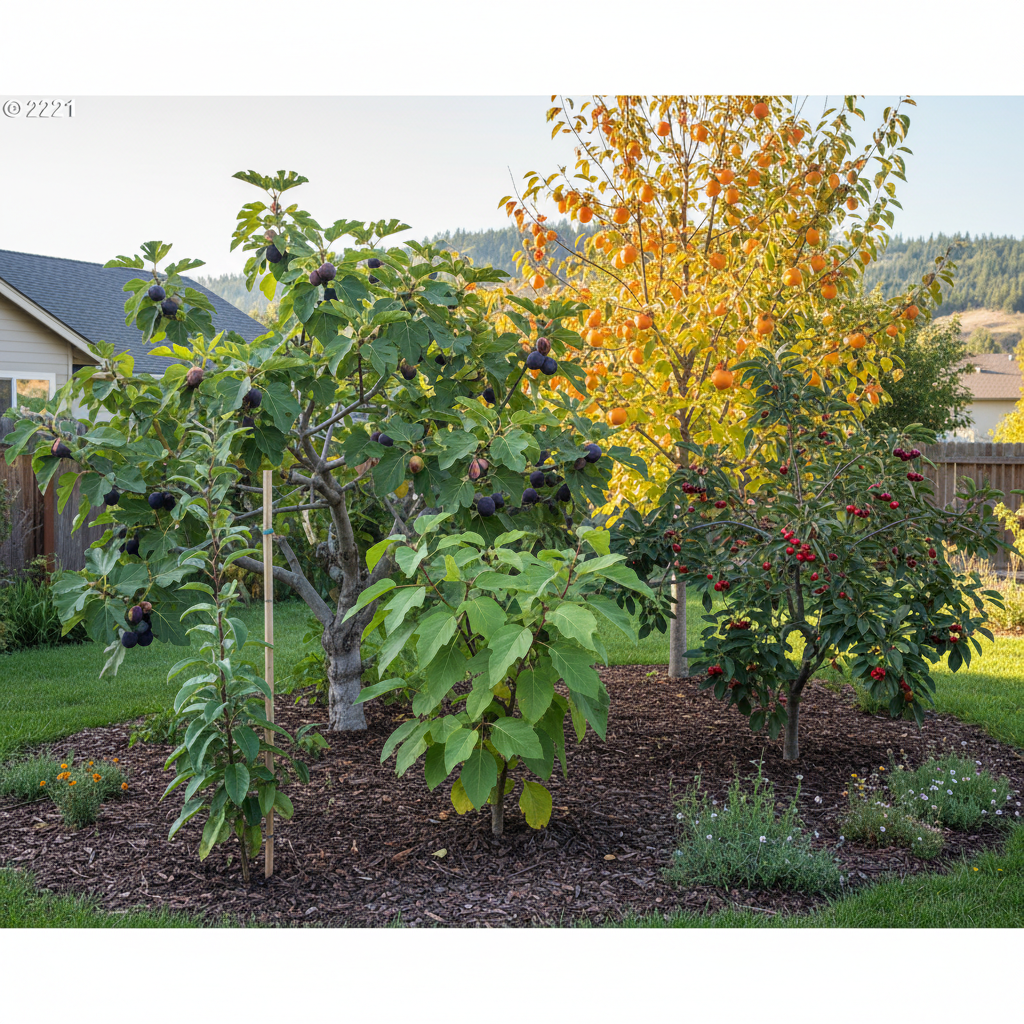
- Choose the Right Location — Select a site that receives at least 6-8 hours of direct sunlight daily and has good drainage. Avoid frost pockets where cold air collects.
- If your soil holds water: Consider planting on a slight mound or amending with compost and perlite to improve drainage.
- Prepare the Soil — Dig a hole two to three times wider than the root ball and just as deep. Break up any compacted soil around the edges. Amend with a generous amount of compost to improve soil structure and nutrient content.
- Tools: Shovel, garden fork, wheelbarrow, compost.
- Safety: Wear gloves to protect your hands.
Published June 14, 2026Last updated August 17, 2026
Tools & materials you'll need
Affiliate linksAs an Amazon Associate FixlyGuide earns from qualifying purchases — at no extra cost to you. Prices and availability are accurate as of publication and subject to change.
Quick Answer
Starting your own orchard doesn't have to be a full-time job. Many homeowners shy away from fruit tree cultivation due to perceived complexities and high maintenance. However, several incredibly resilient fruit tree varieties shrug off common problems like pests, diseases, and demanding soil conditions. Focusing on varieties like figs, persimmons, sour cherries, pawpaws, and Asian pears can transform your yard into a fruitful paradise with surprisingly little effort, making fresh, homegrown fruit a realistic goal for even the busiest individual.
The Problem
Many homeowners dream of fresh, homegrown fruit but are intimidated by the perceived demands of fruit tree cultivation. They envision constant pruning, spraying, and battling an endless array of pests and diseases. Traditional orchard fruits like apples, peaches, and plums, while delicious, often require significant input in terms of care, disease prevention, and pest management. This high-maintenance reputation leads many to abandon the idea of planting fruit trees altogether, missing out on the joy and rewards of harvesting their own produce. The problem isn't that growing fruit trees is inherently difficult, but rather that many popular choices are simply not suited for a low-input, homeowner-friendly approach.
How It Works
Understanding why certain fruit trees are "low maintenance" comes down to a few key biological and horticultural factors. First, many resilient trees have evolved robust natural defenses against common local pests and diseases, reducing or eliminating the need for chemical sprays. This often includes thicker bark, specific leaf compounds, or a natural resistance to fungal and bacterial pathogens prevalent in temperate climates. Second, some trees are exceptionally tolerant of a wide range of soil conditions, from heavy clay to sandy loam, and varying pH levels, unlike picky varieties that demand perfectly balanced soil. Third, self-pollinating varieties eliminate the need for planting multiple trees to ensure fruit set, simplifying orchard planning for homeowners with limited space. Finally, delayed fruiting and slower growth rates in some species can reduce the frequency of demanding tasks like heavy pruning in the early years. Trees like figs and pawpaws, for instance, are relatively uncommon targets for many common garden pests and exhibit strong disease resistance. Sour cherries are typically less susceptible to the complex fungal issues that plague sweet cherries. Asian pears can withstand more neglect than their European counterparts, and persimmons are remarkably tough once established, shrugging off drought and poor soil that would doom other fruit trees. These combined characteristics create a "set it and forget it" planting scenario, or as close to it as possible in the world of fruit production.
Step-by-Step Fix
- Choose the Right Location — Select a site that receives at least 6-8 hours of direct sunlight daily and has good drainage. Avoid frost pockets where cold air collects.
- If your soil holds water: Consider planting on a slight mound or amending with compost and perlite to improve drainage.
- Prepare the Soil — Dig a hole two to three times wider than the root ball and just as deep. Break up any compacted soil around the edges. Amend with a generous amount of compost to improve soil structure and nutrient content.
- Tools: Shovel, garden fork, wheelbarrow, compost.
- Planting the Tree — Carefully remove the tree from its container, gently tease apart any circling roots. Place the tree in the center of the hole, ensuring the root collar (where the roots meet the trunk) is level with or slightly above the surrounding soil line. Backfill with amended soil, tamping gently to remove air pockets.
- Safety: Wear gloves to protect your hands.
- Water Thoroughly — After planting, give the tree a deep watering to settle the soil around the roots. For the first year, aim for 1 inch of water per week from rain or irrigation, especially during dry spells.
- Tip: A soaker hose or drip irrigation system can provide slow, deep watering efficiently.
- Apply Mulch — Spread a 2-4 inch layer of organic mulch (wood chips, shredded bark) in a 3-foot radius around the base of the tree, keeping it a few inches away from the trunk. This conserves moisture, suppresses weeds, and moderates soil temperature.
- Initial Pruning (if necessary) — For most young, low-maintenance fruit trees, minimal pruning is needed initially. Remove any broken, diseased, or crossing branches. Aim to establish a strong central leader or open vase shape depending on the variety.
- Tools: Pruning shears, loppers.
- Pest and Disease Monitoring — While these trees are resilient, occasional checks are still beneficial. Look for unusual leaf discoloration, wilting, or signs of insect activity. Address minor issues early with organic solutions like neem oil or insecticidal soap.
- If you see widespread issues: Consult a local arborist or agricultural extension office to identify and treat the problem effectively.
- Fertilization (Minimal) — Most low-maintenance fruit trees do not require heavy fertilization. A light application of a balanced slow-release fertilizer in early spring, once the tree is established (after the first year), is usually sufficient.
Common Causes
Homeowners choose popular, high-maintenance fruit trees without realizing the significant ongoing effort required. The "common causes" for failure or frustration aren't usually the trees themselves, but rather:
- Lack of Site-Specific Research: Planting a tree ill-suited for the local climate, soil type, or available sunlight is a primary culprit. Many homeowners select trees based on fruit preference rather than horticultural suitability.
- Inadequate Soil Preparation: Rushing the planting process and failing to amend compacted or nutrient-poor soil severely limits a tree's ability to establish a strong root system and thrive.
- Negligent Early Care: Even "low-maintenance" trees need consistent watering in their first year to get established. Skipping this critical phase can lead to stunted growth or death.
- Poor Pruning Practices: Incorrect pruning, or a complete lack thereof, can lead to poor fruit production, disease spread, and weak branch structure, making the tree more susceptible to damage.
- Ignoring Pest/Disease Prevention: While some trees are resistant, no tree is completely immune. A reactive rather than proactive approach to common issues can quickly escalate minor problems into major challenges.
- Over-Fertilization: Believing "more is better" with fertilizer can damage roots and promote excessive leafy growth at the expense of fruit production, especially in varieties that don't need much feeding.
Common Mistakes
- Planting too Deep: The root collar should always be at or slightly above the soil line. Planting too deep can lead to root rot and suffocation.
- Not Watering Consistently in the First Year: Young trees need regular, deep watering to establish. Skipping this is the single biggest reason for failure, even with resilient varieties.
- Amending the Hole, Not the Area: Only amending the planting hole creates a "bathtub effect," where water doesn't drain out into the surrounding native soil, causing root rot.
- Using Too Much Fertilizer: Excessive fertilizer can "burn" roots or promote vegetative growth over fruit production. A good rule of thumb is "less is more" for vigorous trees.
- Ignoring Mulch: Skipping mulch means more weeding, more watering, and greater temperature fluctuations in the soil, all of which stress the tree.
- Choosing Disease-Prone Cultivars: Even within "low-maintenance" species, some cultivars are more susceptible to certain issues. Always research specific varieties for local resilience.
Cost & Time Breakdown
| Task | DIY cost | Pro cost | Time |
|---|---|---|---|
| Tree purchase | $30–$80 | $30–$80 (material) | N/A |
| Soil amendments (compost) | $10–$30 | $10–$30 (material) | N/A |
| Planting one tree | 1–2 hours | $150–$300 | 1–2 hours |
| Mulch application | 30 mins–1 hour | $50–$100 | 30 mins–1 hour |
| First-year watering | Ongoing (minutes) | N/A | Ongoing |
| Annual pruning (after Y1) | 1–2 hours | $75–$150 | 1–2 hours |
Tips & Prevention
- Research Cultivar Specifics: Even within a resilient species, specific cultivars may offer even greater disease resistance or adapt better to your local climate. Check with your local university extension office for recommendations.
- Conduct a Soil Test: Before planting, a simple soil test can inform you of nutrient deficiencies or pH imbalances, allowing you to make targeted amendments beyond just compost.
- Protect from Critters: Young trees can be vulnerable to deer, rabbits, and voles. Use tree guards or fencing to protect the trunk and roots, especially in their first few years.
- Learn Basic Pruning: While these trees are forgiving, understanding basic structural pruning will improve fruit production, air circulation, and overall tree health.
- Water Deeply, Less Frequently: Encourage deep root growth by watering thoroughly and allowing the topsoil to dry out slightly between waterings, rather than frequent, shallow applications.
- Harvest Promptly: For many of these fruits, harvesting as they ripen prevents them from falling to the ground and attracting unwanted pests or harboring diseases.
When to Call a Professional
While the fruit trees discussed are chosen for their resilience, certain situations warrant professional intervention. If you notice extensive disease symptoms that persist despite home remedies, such as widespread cankers, rapid dieback of large branches, or unusual fungal growths, an arborist can provide an accurate diagnosis and treatment plan. Similarly, if your tree is not thriving after several years, exhibiting stunted growth, or consistently failing to produce fruit, a professional can assess soil conditions, nutrient deficiencies, or root problems that might be beyond a homeowner's diagnostic capabilities. For very large or mature trees requiring significant structural pruning, especially near power lines or structures, hiring a certified arborist is crucial for safety and the tree's long-term health. Don't hesitate to call a pro if you suspect a serious, rapidly spreading disease or if a tree becomes a safety hazard due to weak limbs or instability.
Related Articles
Keep troubleshooting with these hand-picked guides from FixlyGuide:
- Is a Wall-Mounted Pressure Washer Right for Your Garage? The Unvarnished Truth — Discover if a wall-mounted pressure washer is the right cleaning solution for your home, offering a powerful and space-saving alternative t…
- The Secret Weapon Against Gaming Clutter: A $25 Custom Controller Stand You Can Build — Discover how a simple, custom-built stand using common materials can transform your gaming space, eliminating clutter and protecting your e…
- 7 Hidden Equity Drains Costing You Thousands Annually — Your home is an asset, but silent problems like minor leaks, poor insulation, and deferred maintenance can drain its value. Discover the se…
- The Single Cedar Board Secret to Attracting Bluebirds to Your Yard — Discover how to construct an ideal bluebird nesting box using just one cedar board, providing a safe and inviting habitat for these cherish…
- The 4 Critical Dimensions of a Bluebird House (Most DIY Plans Miss One) — Discover the precise measurements and often-overlooked design elements essential for building a bluebird house that truly attracts nesting…
- That 'Stud-Only' Belief? A Myth for Heavy Shelves — Tired of shelves ripping out of your drywall? The common advice to 'only use studs' is incomplete. Discover the modern anchoring techniques…
What should this project cost?
Enter your project details for a realistic cost range before you call anyone.
Cost depends heavily on which system turns out to be the source.
- Regional adjustment
- National average
- Labor share (typical)
- ~$1,620
- Quotes to collect
- 3 written estimates
Educational estimate based on national averages — not a binding quote. Always confirm with written local estimates.
This article was independently written by FixlyGuide based on the source topic.
Frequently asked questions
What is the easiest fruit tree for a beginner to grow?+
The fig tree is often considered one of the easiest for beginners due to its drought tolerance, pest resistance, and ability to thrive in various soil types, producing abundant fruit with minimal fuss.
How long does it take for these low-maintenance fruit trees to produce fruit?+
The time to fruit varies by species. Sour cherry trees can produce in 3-5 years, Asian pears in 3-7 years, and figs can often produce a small crop within 1-2 years of planting. Pawpaws typically take 5-7 years, and persimmons 3-6 years.
Do I need to spray these fruit trees for pests or diseases?+
One of the main benefits of these trees is their natural resistance. While no tree is entirely immune, they generally require far less, if any, chemical spraying compared to more susceptible varieties like apples or peaches. Regular monitoring and good cultural practices are usually sufficient.
Can I grow these fruit trees in containers?+
Many of these varieties, especially figs and some sour cherry dwarf cultivars, can be successfully grown in large containers. Ensure the container has excellent drainage and the tree receives adequate water and sunlight.
What is the best time of year to plant low-maintenance fruit trees?+
The ideal time to plant most fruit trees is in the dormant season, either in early spring before bud break or in late fall after leaf drop. This minimizes transplant shock and allows the roots to establish before extreme weather conditions.

Discussion
Loading comments…