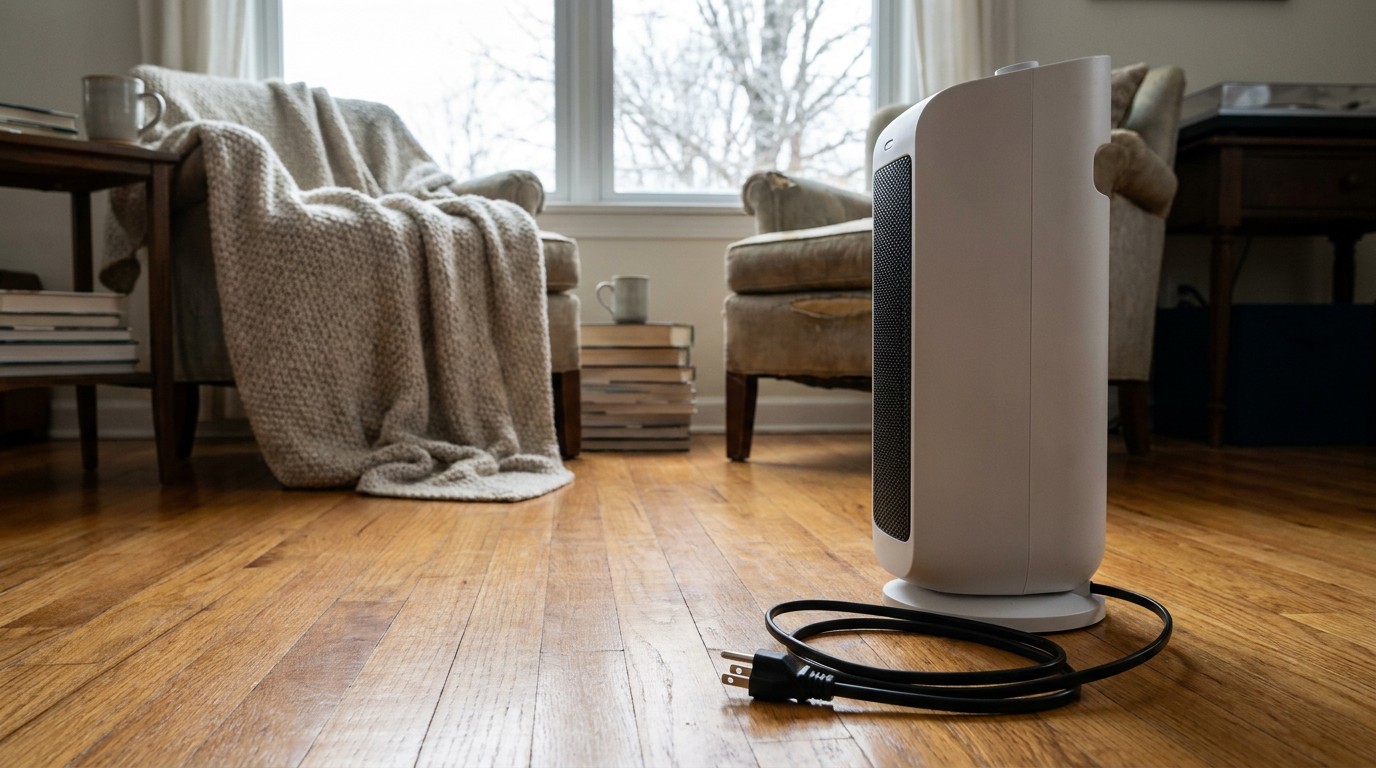
- Tripped Safety Switch: The internal tip-over switch or overheat sensor is, hands down, the most common reason a modern heater stops working. It’s doing its job, but it can be touchy.
- Overloaded Circuit: Running a 1,500W heater on the same 15-amp circuit as your TV, computer, and lights is a good way to trip a breaker.
- Dust and Debris: Dust acts like insulation. Once it cakes onto the heating element and internal parts, it traps heat and kicks off the safety cutoff.
- Faulty Power Cord or Plug: Cords get stepped on, bent, and shoved into storage the wrong way, which can break the wiring inside. A loose plug in a worn-out outlet can cause trouble too.
- Stuck Thermostat: Not as common, but mechanical dial thermostats can get stuck in the "off" position, especially on older heaters.
Published October 6, 2026Last updated October 6, 2026
Tools & materials you'll need
Affiliate linksNo materials required.
As an Amazon Associate FixlyGuide earns from qualifying purchases — at no extra cost to you. Prices and availability are accurate as of publication and subject to change.
Quick Answer
If your space heater isn't working, start with the basics: check for a tripped circuit breaker or a blown fuse. Then make sure the plug’s pushed all the way into a dedicated outlet, and look over the cord and plug for damage. A lot of newer heaters also have safety gadgets like a tip-over switch or an overheat sensor that’ll shut the thing down, and those may need a reset.
The Problem
You drag your trusty space heater out of the closet on the first chilly North Texas evening, plug it in, and... nothing. No power light. No fan. No warm air blowing on your feet. Or maybe it runs for a few minutes and then quits like it’s done with the whole job. That’s a cold punch to the gut when you need heat right now.
Could be something simple, like a breaker that popped. Could also mean a safety part has done its job, or the heater’s just plain worn out. Portable heaters take a beating. They get hauled around, stuffed in closets, and plugged into all sorts of outlets, so they see more wear than folks think. Cords get bent. Switches get sticky. Dust builds up inside and chokes the works. Before you write it off and go buy a new one, there are a handful of things you can check yourself. Most of the time, you can pin down the problem in minutes.
How It Works
Once you know how the thing works, the failure makes a lot more sense. At the core, a portable electric heater is a pretty simple appliance. It turns electricity into heat. That’s the whole trick. The rest is just how it does it without turning into a fire hazard.
Power comes out of your wall outlet, runs through the cord, and hits the heater’s main switch. Flip it on, and you complete the circuit. That sends current to the heating element. That’s the business end of the unit. Depending on the model, it might be coiled resistance wire, a ceramic plate, or a quartz tube. Electricity fights its way through that material and turns into heat. On a typical 1,500-watt heater, that element can hit temperatures between 500°F and 900°F.
Now that heat has to get into the room. Most heaters use a small fan to blow air across the hot element and spread warmth by convection. Others, like radiant or infrared heaters, throw heat outward and warm people and objects directly. Oil-filled radiator-style heaters skip the fan altogether; they heat the oil inside, and the metal fins radiate that warmth out into the room.
And then there are the safety devices. They’re the little guardians standing watch. The thermostat checks room temperature and cuts power to the heating element once the set temp is reached, then brings it back on when the room cools off. An overheat sensor (or thermal cutoff) shuts the unit down if things get too hot inside. Most modern heaters also have a tip-over switch on the base—a simple mechanical switch that breaks the circuit the second the heater gets knocked over. If any one of those parts quits, the heater may stop working cold.
Step-by-Step Fix
Before you start, unplug the space heater from the wall. Don’t mess with an electrical appliance while it’s live. If it was running recently, let it cool down for at least 30 minutes.
-
Check the Power Source — Don’t skip the easy stuff. Head to your electrical panel and look for a tripped breaker or blown fuse. Space heaters pull a lot of juice—usually around 12.5 amps—so it doesn’t take much to overload a circuit that’s already feeding a TV, computer, or a couple lamps. If a breaker’s tripped, reset it once. If it trips again right away, that’s your warning flag; stop using that circuit and call an electrician.
-
Inspect the Plug and Outlet — Take a good look at the heater’s plug. Bent prongs, black marks, looseness, or melted plastic are all bad news. A scorched plug usually means electrical arcing, and that thing’s toast. Test the outlet with another small appliance, like a lamp, just to make sure the outlet itself is alive. Don’t use extension cords or power strips with a space heater; they’re not built for that kind of load.
-
Reset the Tip-Over Switch — This one gets a lot of heaters blamed for no reason. The tip-over switch is usually a small spring-loaded button or plunger on the bottom. It has to be fully depressed for the heater to run. Set the unit on a flat, hard, level surface—thick carpet can keep that switch from engaging. Give it a gentle shake; sometimes you’ll hear the switch rattling around inside, and that’s normal. If it feels hung up, a firm tap on the base can sometimes free it up.
-
Engage the Overheat Protection Reset — If the heater ran for a while and then shut off, the internal overheat sensor probably tripped. Usually that means airflow got blocked, or something got set too close to it. Unplug it and let it cool for 30-60 minutes. On a lot of models, the “reset” is just waiting and plugging it back in. Some units have a tiny recessed reset button, and you might need a paperclip to press it.
-
Clean the Air Intake and Grilles — A dirty heater is a hot heater, and not in a good way. Dust, pet hair, and all the usual junk get sucked into the intake vents and can coat the fan blades or heating element. That chokes off airflow and makes the heater overheat and shut down. Use the brush attachment on your vacuum to clean every exterior vent you can reach. If you want to go a little deeper, blow compressed air through it—do that outside unless you like dust clouds in your face. I pulled a little ceramic heater apart in Frisco last month that had a felt blanket of dog hair wrapped around the intake; no wonder it kept quitting.
-
Verify the Thermostat Setting — Sounds obvious, but I’ve seen this one more times than I can count. Make sure the thermostat is set above the room temperature. If it’s set to 68°F and the room’s already 70°F, the heater isn’t going to kick on. Turn the dial all the way up or set the digital control to its highest temperature and see what happens. If it starts up, the thermostat’s probably doing its job.
-
Inspect the Power Cord — Run your hand along the whole cord, from the plug to the heater body. Feel for lumps, kinks, frayed spots, or sections that feel stiff and brittle. A damaged cord is a real fire hazard, and it can’t be safely patched up. If you find damage, replace the heater. Don’t tape it and call it a day.
-
Listen for the Fan — If your heater has a fan, switch it to a "fan-only" or "low heat" setting. If you hear humming or buzzing but the blades don’t move, the fan motor may be stuck or jammed. Unplug it right away. Sometimes compressed air can shake loose a stuck fan, but if the motor’s seized, you’re usually looking at a replacement.
Common Causes
- Tripped Safety Switch: The internal tip-over switch or overheat sensor is, hands down, the most common reason a modern heater stops working. It’s doing its job, but it can be touchy.
- Overloaded Circuit: Running a 1,500W heater on the same 15-amp circuit as your TV, computer, and lights is a good way to trip a breaker.
- Dust and Debris: Dust acts like insulation. Once it cakes onto the heating element and internal parts, it traps heat and kicks off the safety cutoff.
- Faulty Power Cord or Plug: Cords get stepped on, bent, and shoved into storage the wrong way, which can break the wiring inside. A loose plug in a worn-out outlet can cause trouble too.
- Stuck Thermostat: Not as common, but mechanical dial thermostats can get stuck in the "off" position, especially on older heaters.
- End of Life: Space heaters don’t last forever. Heating elements burn out, fan motors fail, and switches wear down after a few seasons of hard use. A typical lifespan is around 3-5 years for a frequently used unit.
Common Mistakes
- Plugging it into a Power Strip. This is the big one. Regular power strips and extension cords aren’t rated for the 12+ amps a heater draws nonstop. That can cook the cord, the strip, or the outlet—bad scene. Plug it straight into a wall outlet.
- Ignoring a Tripped Breaker. If you reset a breaker and it pops again the second you turn on the heater, stop right there. That points to a short in the heater or a serious wiring issue in the house. Don’t keep resetting it.
- Placing it on Flammable or Uneven Surfaces. Setting a heater on thick shag rug, bedding, or a wobbly table is asking for trouble. It can block airflow and overheat, or it can tip over easy.
- Attempting Internal Repairs. Unless you know electronics pretty well, don’t crack open the casing. You can damage parts or put it back together wrong and disable a safety feature. And yes, you’ll void the warranty.
- Storing it Improperly. Tossing the heater in a dusty garage or damp basement all summer is a bad move. Dust settles inside, and moisture can corrode the electronics. Put it in its original box or a plastic bag and store it in a clean, dry closet.
Cost & Time Breakdown
Diagnosing a bad space heater is usually free and pretty quick. Whether you fix it or replace it depends on what’s actually wrong.
| Task | DIY Cost | Pro Cost | Time |
|---|---|---|---|
| Checking Breaker & Outlet | $0 | N/A | 5 minutes |
| Cleaning Vents & Sensors | $0–$10 (for compressed air) | N/A | 15–20 minutes |
| Resetting Safety Switches | $0 | N/A | 10 minutes |
| Replacing the entire unit | $30–$300 | N/A | 30 minutes (shopping) |
| Hiring an electrician (for outlet/wiring issue) | N/A | $100–$250 | 1–2 hours |
Tips & Prevention
- The 3-Foot Rule: Keep at least 36 inches of open space around the front, top, and sides of the heater. Furniture, curtains, bedding, paper—anything that can burn—needs to stay out of that zone.
- Clean it Seasonally: Before you put it away for summer and before you fire it up for the first time in fall, give it a real cleaning. Vacuum the grilles and blow out the inside with compressed air.
- Test the Safety Features: When you first plug it in for the season, check the tip-over switch. Turn the heater on and gently tilt it; it should shut off right away. If it doesn
Related Articles
Keep troubleshooting with these hand-picked guides from FixlyGuide:
- Electric Heater Smells Like Burning? 6 Common Odors Explained — An electric heater that smells like burning plastic, dust, or chemicals can be alarming, but it's often a fixable problem. Here's what's ca…
- The Hidden Reason Your GFCI Trips — And Why Most Homeowners Get It Wrong — A continuously tripping GFCI outlet is a safety warning, often indicating a problem like moisture, a faulty appliance, or a wiring issue th…
- The Hidden Culprit Behind Your AC Not Cooling (and How to Find It) — If your central AC isn't cooling your home, the issue often stems from a surprisingly simple problem that's easy to overlook. Learn how to…
- The Secret Weapon Against Gaming Clutter: A $25 Custom Controller Stand You Can Build — Discover how a simple, custom-built stand using common materials can transform your gaming space, eliminating clutter and protecting your e…
- 7 Hidden Equity Drains Costing You Thousands Annually — Your home is an asset, but silent problems like minor leaks, poor insulation, and deferred maintenance can drain its value. Discover the se…
- Keypad Lock Not Working? 10 Reasons It Won't Open—and the Fix — Is your electronic keypad deadbolt suddenly refusing to open? From dead batteries to a jammed bolt, here are the most common causes and wha…
Should you do this yourself?
Answer five quick questions before you start. Safety outranks savings every time.
Your experience with work like this
How high do you have to work?
Does the job involve any of these?
Will it need a permit?
Specialty tools
Free and instant. Educational guidance only — not a quote, inspection, or professional diagnosis.
What should this project cost?
Enter your project details for a realistic cost range before you call anyone.
Cost depends heavily on which system turns out to be the source.
- Regional adjustment
- National average
- Labor share (typical)
- ~$1,620
- Quotes to collect
- 3 written estimates
Educational estimate based on national averages — not a binding quote. Always confirm with written local estimates.
Fixly Project Decision Box
- DIY difficulty
- Advanced
- Estimated time
- Homeowner checks 20–30 minutes
- Cost level
- Moderate
Main tools / materials
- Clean air filter
- Garden hose for condenser coils
- Shop vac for the condensate line
When to stop and call a pro
- Burning smell, smoke, or a tripping breaker
- Refrigerant lines iced over or hissing
- Any work inside the sealed refrigerant circuit (EPA-licensed only)
- Gas smell near a furnace — leave and call the utility
Need professional help?
Find an HVAC Pro Near YouBefore you start
Check the difficulty, permits, and safety risk — then decide whether to call a pro.
- Estimate this projectGet a cost range for your scope and ZIP before you call anyone.Open
- Get local estimatesSend one request and compare written estimates from vetted pros.Open
Free, no signup required. Estimates are educational guidance, not a quote or an inspection.
Get the print-ready PDF of this guide
A clean, ad-free, printable version you can keep on your phone or pin to the workshop wall. Free with a FixlyGuide account.
- Print-optimized layout
- Tools, materials & every step included
- Saved to your account
This article was independently written by FixlyGuide based on the source topic.
Frequently asked questions
Why does my space heater turn on and off?+
This is usually normal operation. The heater's thermostat turns the unit off when the room reaches the set temperature and back on when it gets cooler. If it's happening every few seconds, however, the unit might be overheating from a clogged filter or blocked airflow.
Is it safe to leave a space heater on overnight?+
No, you should never leave a space heater running unattended or while you are sleeping. Even with modern safety features, the risk of fire is too great. Turn it off before you leave the room or go to bed.
Why does my space heater smell like it's burning?+
A burning smell, especially when you first turn on a heater for the season, is often just dust burning off the heating element. This smell should go away within 10-15 minutes. If you see smoke or the smell is plasticky or electrical, unplug it immediately as that indicates a dangerous malfunction.
Can I plug my 1500W space heater into any outlet?+
You should plug it directly into a wall outlet on a circuit that is not heavily loaded. A 1500W heater uses about 12.5 amps, and a standard home circuit is 15 amps. Never use an extension cord or power strip, as they are not rated for that sustained load and can overheat.
How often should I replace my space heater?+
There's no set rule, but with regular use, a good quality space heater typically lasts 3 to 5 years. If the cord is damaged, it repeatedly overheats, or the safety features no longer work, you must replace it immediately regardless of its age.
Is it cheaper to run a space heater than central heat?+
It can be, but only if you use it correctly. Using a space heater to warm just the room you're in while turning down the thermostat for the whole house is efficient. However, trying to heat your whole home with multiple space heaters is much more expensive than using a central furnace.
What's the difference between a radiant and a convection heater?+
A convection heater warms the air in the room, often using a fan to circulate it. A radiant (or infrared) heater emits infrared radiation that directly warms the objects and people in its path, like feeling the sun's warmth. Radiant heaters are faster for personal heating, while convection heaters are better for raising the overall temperature of a room.
Why does my breaker trip when I use my space heater?+
This almost always means the circuit is overloaded. Your space heater is drawing more power than the circuit can safely provide, often because other devices are running on the same circuit. Try plugging the heater into an outlet on a different circuit, ideally one with very few other things on it.

Discussion
Loading comments…