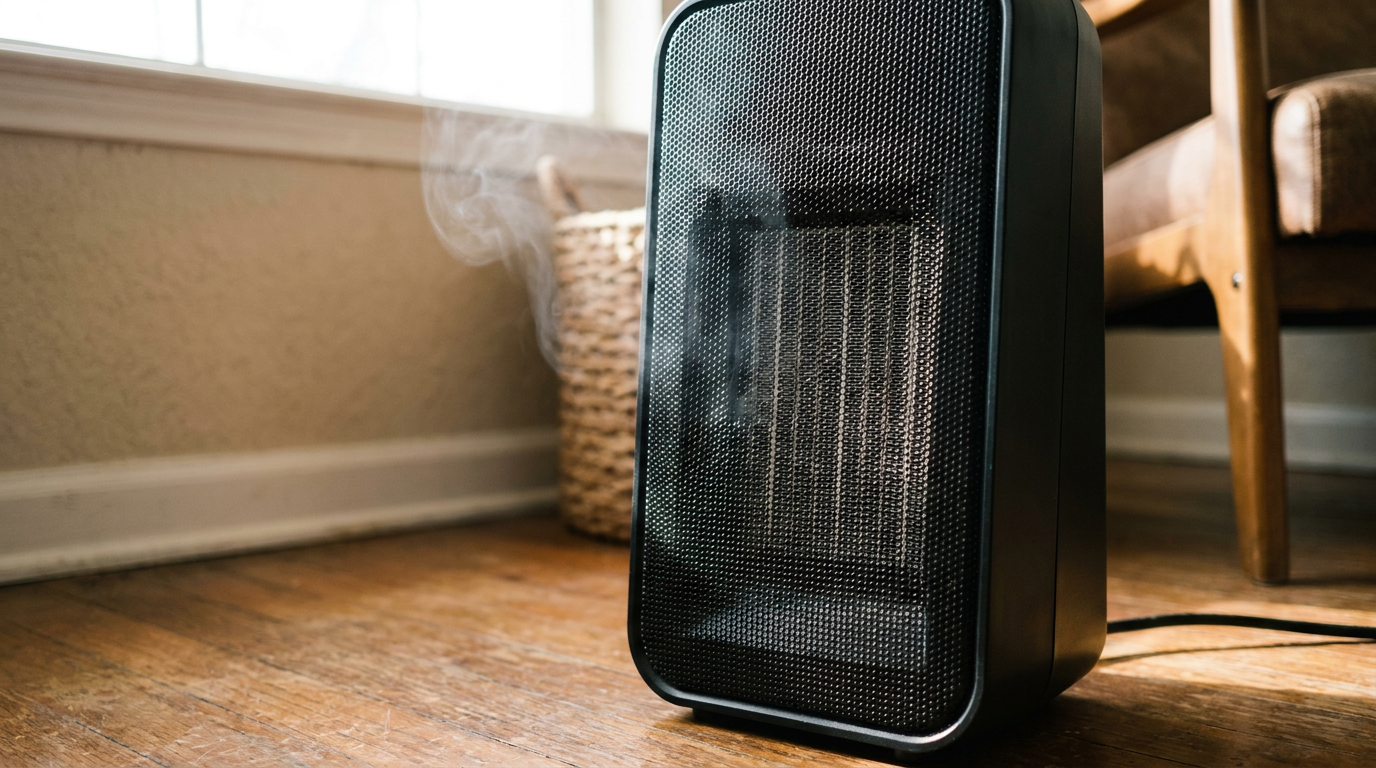
- Perform a Thorough Cleaning — For dusty smells, cleaning usually fixes it.
- Tools: Can of compressed air, a soft brush (like a paintbrush), and a vacuum with a brush attachment.
- Set the heater on a solid surface in a well-ventilated area or outdoors.
- Blow dust out of the intake and output grills with compressed air. Follow the manufacturer’s instructions for your specific model, since some units have removable filters.
- Use the vacuum’s brush attachment to gently pull away the loosened dust from the outside vents. A soft brush helps with the stubborn stuff.
Published October 4, 2026Last updated October 4, 2026
Tools & materials you'll need
Affiliate linksNo materials required.
As an Amazon Associate FixlyGuide earns from qualifying purchases — at no extra cost to you. Prices and availability are accurate as of publication and subject to change.
Quick Answer
A burning smell from your electric heater is usually dust and dirt burning off the heating elements, a new heater’s factory coating curing, or an electrical issue. Start by turning off and unplugging the heater. Nine times out of ten, a good cleaning takes care of it — but if you smell burning plastic or you see smoke, that thing’s toast and should be replaced.
The Problem
You kick on your portable electric heater to knock the chill out of a room, and then you get hit with that nasty smell — something’s burning. Maybe it’s dusty and acrid, or maybe it smells like melting plastic or hot chemicals. Is it dangerous? Is the heater about to light off? For most portable electric heaters, that burning smell is common and usually temporary, but you shouldn’t shrug it off. The smell is telling you something’s off, and it can be anything from plain old dust to a serious electrical failure.
How It Works
Portable electric heaters turn electricity into heat using a part called a heating element. Most of the time, that’s a wire made from a material with high electrical resistance, like nichrome. When current runs through it, the resistance makes it get hot fast. A fan then blows air across the hot element in convection or fan heaters, or the element throws heat straight into the room in radiant or infrared heaters. Oil-filled radiator-style heaters work a little differently; their element heats oil sealed inside metal fins, and those fins radiate warmth.
Here’s the part folks don’t always think about: that heating element gets really hot — often exceeding 400°F. Any dust, pet hair, or other debris sitting on it will literally cook off the first time you fire the heater up for the season. Same deal with internal parts and housings made of plastic and metal with different coatings. A brand-new heater might stink a bit as those coatings cure, while an overheating connection can melt plastic parts and give off a much uglier smell. I pulled a little space heater in Frisco last month that had exactly this issue — dust on the element and a plug that was just starting to discolor. Nasty combo.
Step-by-Step Fix
Here’s how I’d track down and, in most cases, fix the burning smell coming from your heater. Safety first: Always unplug the heater and let it cool completely before you do any cleaning or inspection.
-
Unplug and Cool Down — The second you smell something burning, shut the heater off and pull the plug from the wall. Don’t just hit the switch on the unit. Let it sit for at least 30–60 minutes so it cools all the way down.
-
Inspect the Cord and Outlet — Check the plug, the cord, and the wall outlet. Does the plug look discolored, melted, or charred? Is the cord frayed or damaged? If the smell seems strongest right there, you’re looking at a dangerous electrical fault. If you see any of this, do not use the heater again. It's a fire hazard and should be replaced. If the outlet itself looks scorched, you’ll need an electrician.
-
Perform a Thorough Cleaning — For dusty smells, cleaning usually fixes it.
- Tools: Can of compressed air, a soft brush (like a paintbrush), and a vacuum with a brush attachment.
- Set the heater on a solid surface in a well-ventilated area or outdoors.
- Blow dust out of the intake and output grills with compressed air. Follow the manufacturer’s instructions for your specific model, since some units have removable filters.
- Use the vacuum’s brush attachment to gently pull away the loosened dust from the outside vents. A soft brush helps with the stubborn stuff.
-
Check for Foreign Objects — Shine a flashlight into the vents and look around. It’s not unusual for a kid’s toy, a scrap of paper, or a bit of fabric to fall in there and land on or near the heating element. If you find something, carefully remove it with tweezers or needle-nose pliers — only when the unit is cold and unplugged.
-
Address a "New Heater" Smell — If the heater’s brand new, the burning or chemical smell is probably the factory-applied protective coating curing on the heating elements. That’s normal. Run the heater in a well-ventilated area — like a garage or a room with every window open — on its highest setting for 30–60 minutes. That should burn off the leftover coating, and the smell shouldn’t come back.
-
Test the Heater Safely — After cleaning, plug the heater straight into a wall outlet. No extension cord. No power strip. Turn it on and watch it closely for the first 10-15 minutes. A faint dusty smell might show up for a minute, but it should clear out fast. If you keep smelling burning plastic, rubber, or a strong electrical odor, shut it down right away.
-
Identify an Overheating Motor — If you hear humming or buzzing along with a hot metallic smell, the fan motor might be failing. The motor can overheat if the bearings are shot or if it’s packed with dirt. That usually isn’t something worth fixing on a portable unit, and it’s a good sign you need a new heater.
-
Know When It's Toast — If you’ve cleaned the unit and the smell still hangs around, especially if it’s plastic or electrical, the heater isn’t safe anymore. Internal wiring could be failing, a part could be melting, or the thermostat could be letting the unit run too hot. Keep using it and you’re rolling the dice with a fire. Best move? Recycle it and replace it.
Common Causes
Here are the most common culprits behind that alarming burning smell, from harmless enough to straight-up dangerous.
- Dust on Heating Elements: This is the #1 cause. Heaters sit in storage for months and collect household dust, pet dander, and other little airborne bits. When you turn it on, that layer of grime gets superheated and burns off, making that sharp, dusty smell. It’s most common the first time you use it each season.
- New Heater "Burn-Off": Manufacturers often put a thin coating on the heating elements and internal parts to help prevent corrosion during shipping and storage. When you run the heater for the first time, that coating heats up and burns off, giving off a chemical or oily odor. Temporary. Usually no big deal.
- Electrical Fault: This is the one that gets serious fast. It could be a loose wire, a failing internal part, or a bad plug or cord. The hot connection melts the plastic insulation around the wires, which makes that sharp, acrid burning-plastic smell. That’s a fire hazard.
- Overheating Motor: In fan-assisted heaters, the small motor that spins the fan can overheat from age, poor lubrication, or being clogged with dust and hair. That can make a hot, metallic, or electrical smell.
- Foreign Object: A piece of paper, fabric, or a small plastic toy can fall into the heater vents and touch the hot element.
- Proximity to Other Items: Set a heater too close to curtains, bedding, furniture, or a plastic garbage can and those items can overheat and off-gas. Then it smells like the heater’s the problem, even if it isn’t.
Common Mistakes
DIYers make these mistakes all the time with a smelly heater. Skip them and you’ll stay safer.
- Using an Extension Cord: Don’t ever plug an electric heater into an extension cord or power strip. They pull a lot of current — typically 12.5 amps for a 1,500-watt heater — and standard cords just aren’t built for that load. The cord can overheat, melt, and start a fire. Plug it straight into the wall.
- Ignoring a Plastic Smell: A dusty smell is often harmless. Plastic or electrical smell? That’s a big red flag. People sometimes figure it’ll just clear up on its own. No dice. That usually means a component is melting and failing. Unplug it and quit using it.
- Cleaning with Water or Liquids: Never use water or liquid cleaners on an electric heater. You can damage the electrical parts and create a shock hazard. Stick to dry cleaning with compressed air and a vacuum.
- Placing it on Carpet: Deep-pile carpet can block the air intake vents on the bottom or sides of a heater and make it overheat. Put heaters on a hard, level, non-flammable surface.
- Leaving it Unattended: Modern heaters have safety features like tip-over switches and overheat sensors, but those can fail too. Don’t leave an electric heater running when you’re not home or while you’re asleep.
Cost & Time Breakdown
Here’s what it usually costs to fix a smelly heater versus just replacing the thing.
| Task | DIY Cost | Pro Cost | Time |
|---|---|---|---|
| Basic Cleaning (Dust) | $5–$10 for compressed air | N/A | 20–30 minutes |
| New Heater Burn-Off | $0 | N/A | 30–60 minutes |
| Replacing a Faulty Wall Outlet | $5–$15 (parts only) | $125–$250 | 30 minutes (DIY), 1 hour (Pro) |
| Replacing a Damaged Heater Cord | Not Recommended | Not Recommended | N/A |
| Replacing the Heater | $30–$150 | N/A | 5 minutes to shop |
Tips & Prevention
- Clean Before Storing: Before you tuck the heater away for summer, give it a solid cleaning with compressed air and a vacuum. That gets rid of the dust that’d otherwise settle in over the off-season.
- Store It Covered: Keep it in the original box or cover it with a plastic bag so dust doesn’t work its way into the vents.
- Inspect at the Start of Each Season: Before you plug it in for the first time, give the cord and plug a quick look for damage. Takes a minute.
- Maintain a 3-Foot Clearance: The 3-foot rule matters. Keep curtains, rugs, bedding, paper, furniture — anything that’ll burn — at least 36 inches away from the front, sides, and top of the heater.
- Test Your Smoke Alarms: Electric heaters are a common cause of house fires. Make sure you’ve got working smoke alarms on every level of the home and inside each bedroom. Test them monthly.
When to Call a Professional
Most heater problems get solved with a cleaning or a replacement, but you should call a licensed electrician if you notice any of these: the wall outlet is loose, discolored, or scorched; the breaker for that circuit keeps tripping when the heater’s on; or you see sparks or smell ozone from the outlet when you plug the heater in. Those are signs the trouble’s in your home’s wiring, not the appliance, and that’s not something to fool around with if you’re trying to avoid a house fire.
Related Articles
Keep troubleshooting with these hand-picked guides from FixlyGuide:
- The Surprising Yard Tool That Vaporizes Weeds (No Chemicals Needed) — A weed torch offers an efficient, chemical-free method for removing unwanted plants from hardscaped areas like driveways, patios, and grave…
- The Secret to Endless Hot Showers? It's Not Your Water Heater's Age — Inconsistent hot water or no hot water at all often points to a single, often overlooked culprit: the thermostat. Understanding its role is…
- The Hidden Culprit Behind Your AC Not Cooling (and How to Find It) — If your central AC isn't cooling your home, the issue often stems from a surprisingly simple problem that's easy to overlook. Learn how to…
- 7 Hidden Equity Drains Costing You Thousands Annually — Your home is an asset, but silent problems like minor leaks, poor insulation, and deferred maintenance can drain its value. Discover the se…
- The Hidden Reason Your AC Isn't Cooling (And 7 Fixes Homeowners Miss) — If your central AC isn't cooling your home, the culprit often lies in an overlooked issue that's simple to fix, preventing costly professio…
- The Fiery Light Show: Why Your Microwave Is Sparking Inside — Microwave sparking is alarming, but often fixable with some DIY know-how, usually pointing to issues with the waveguide cover, metal object…
Should you do this yourself?
Answer five quick questions before you start. Safety outranks savings every time.
Your experience with work like this
How high do you have to work?
Does the job involve any of these?
Will it need a permit?
Specialty tools
Free and instant. Educational guidance only — not a quote, inspection, or professional diagnosis.
What should this project cost?
Enter your project details for a realistic cost range before you call anyone.
Cost depends heavily on which system turns out to be the source.
- Regional adjustment
- National average
- Labor share (typical)
- ~$1,620
- Quotes to collect
- 3 written estimates
Educational estimate based on national averages — not a binding quote. Always confirm with written local estimates.
Before you start
Check the difficulty, permits, and safety risk — then decide whether to call a pro.
- Estimate this projectGet a cost range for your scope and ZIP before you call anyone.Open
- Get local estimatesSend one request and compare written estimates from vetted pros.Open
Free, no signup required. Estimates are educational guidance, not a quote or an inspection.
Get the print-ready PDF of this guide
A clean, ad-free, printable version you can keep on your phone or pin to the workshop wall. Free with a FixlyGuide account.
- Print-optimized layout
- Tools, materials & every step included
- Saved to your account
This article was independently written by FixlyGuide based on the source topic.
Frequently asked questions
Why does my electric heater smell like burning plastic?+
A burning plastic smell is a serious warning sign. It almost always means an internal electrical component, wire, or the plug itself is overheating and melting. Turn off and unplug the heater immediately and do not use it again. It is a fire hazard and needs to be replaced.
Is the smell from a new electric heater toxic?+
The chemical smell from a new heater is from factory coatings burning off and is generally not toxic, but it can be irritating. It's best to run the new heater in a well-ventilated space like an open garage or a room with open windows for about an hour to let the smell dissipate completely.
How do I get the dust out of my electric heater?+
Unplug the heater and let it cool. Use a can of compressed air to blow dust out through the vents from the inside out. Then, use a vacuum cleaner with a brush attachment on the outside to suck up the dislodged debris.
Why does my heater smell like it's burning every time I turn it on?+
If it's a brief dusty smell that lasts only a minute or two, it's just burning off small amounts of dust that have recently settled. If the smell is constant, strong, or smells like plastic, your heater may have a failing motor or an electrical issue that requires it to be replaced.
Can I spray Febreze or other air fresheners on my heater?+
No, absolutely not. Air fresheners are flammable and contain chemicals that are not meant to be heated. Spraying them on or into a hot heater could cause a fire or release harmful fumes.
My ceramic heater has a burning smell. Is it different from other heaters?+
No, the causes are the same. Ceramic heaters use ceramic plates and aluminum baffles, but dust can still collect on these hot surfaces and burn off. They also have the same risks of electrical faults or overheating motors as other electric heater types.
Why does my electric heater smell like rotten eggs?+
A rotten egg or sulfur smell is not related to the heater itself. This is almost always the odorant added to natural gas to signal a leak. You could have a gas leak in your home. Leave the house immediately, don't use any electronics, and call your gas company from a safe distance.
Is it safe to leave an electric heater on all night?+
It is not recommended. Even modern heaters with safety features can fail. It's much safer to use warm bedding and turn the heater off when you go to sleep. If you must use it, ensure it's on a hard surface and far from any bedding.
Discussion
Loading comments…