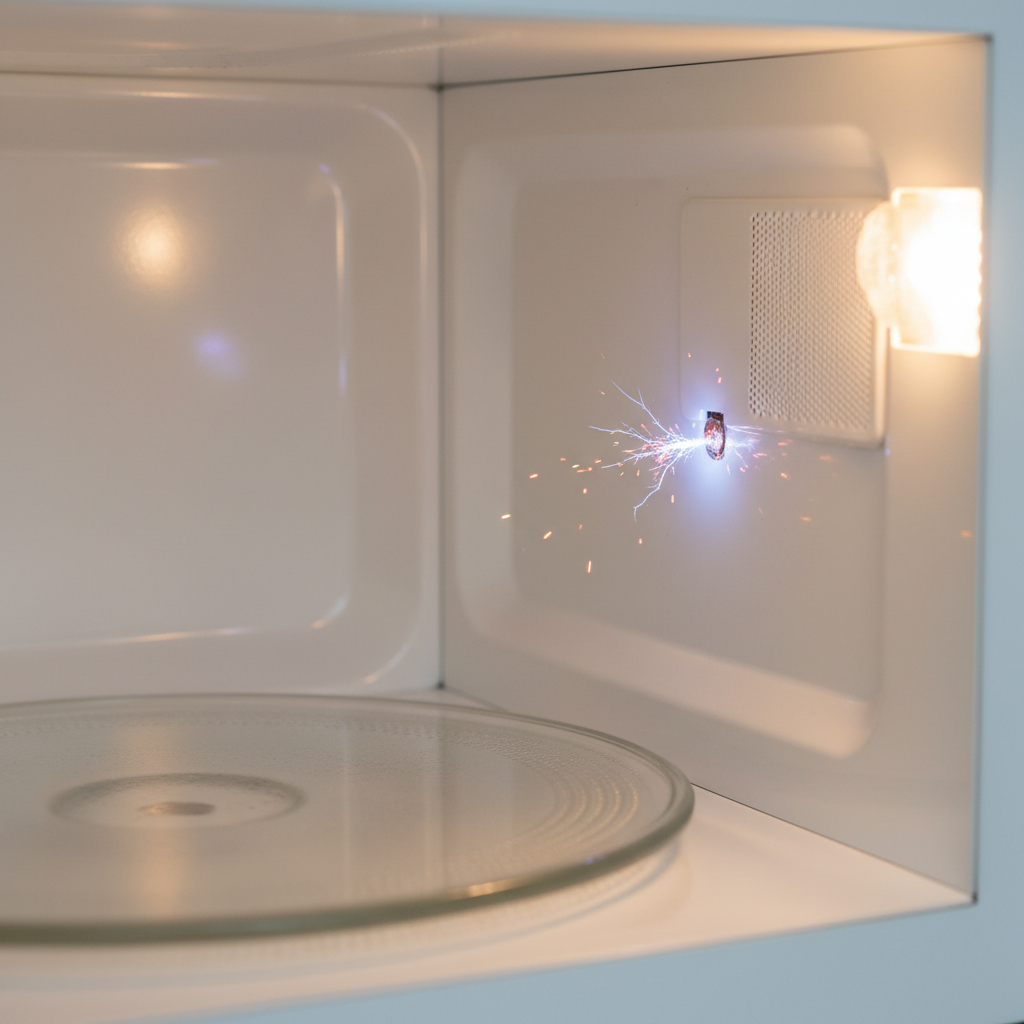
- Inspect and Clean the Waveguide Cover — Often the real problem.
- Tool: Microfiber cloth or paper towel.
- Material: Mild dish soap and water, or a non-abrasive household cleaner.
- Safety: Always unplug the microwave first. Wear gloves if you’re sensitive to cleaners.
Electrical · Burning smell or sparking
| Project category | Electrical |
|---|---|
| Problem type | Burning smell or sparking |
| Trade required | Electrical |
| Urgency | Emergency — act now |
| Safety risk | High safety risk |
| DIY suitability | Licensed pro only |
| Cost category | Moderate cost |
| Typical timeline | Same-day emergency call |
| Contractor type | Licensed electrician |
Repair option
Kill the circuit at the panel and have the connection repaired immediately.
Replacement option
Circuit or panel replacement when damage extends beyond one device.
Common causes
- Loose connection arcing inside a box
- Overloaded circuit or undersized wiring
- Failed backstab connections in older receptacles
Relevant tools:emergency checklistdiy or hire a pro
Published September 22, 2026Last updated September 22, 2026
Tools & materials you'll need
Affiliate linksAs an Amazon Associate FixlyGuide earns from qualifying purchases — at no extra cost to you. Prices and availability are accurate as of publication and subject to change.
Quick Answer
When your microwave starts throwing sparks like a Fourth of July display, you’re usually looking at trouble right inside the cooking cavity. Most of the time, it’s cooked-on food grime or a beat-up waveguide cover. Sometimes it’s metal where it doesn’t belong. And yeah, sometimes a part’s starting to bite the dust. The faster you track it down, the better chance you’ve got of keeping your microwave — and your kitchen — safe.
The Problem
I’ve seen it a hundred times: a customer calls me up, practically shouting, “My microwave’s sparking! It looks like a lightning storm in there!” That crackle and flash can be flat-out alarming, and for good reason. It’s called arcing, and it happens when electricity jumps across a gap and dumps a concentrated burst of energy. In a microwave, that’s not a cute little light show. It’s a warning sign, and it needs attention now. Leave it alone, and you can wreck the appliance or, worse, start a fire. That’s not a small hiccup. That’s a safety problem.
How It Works
To get why your microwave is arcing, you need a basic feel for how these things cook food. Pretty clever setup, honestly. Inside that metal box, there’s a part called a magnetron. That’s the little monster making the microwaves — same family as radio waves, just cranked way up in frequency. Those waves get pushed into the cooking cavity through a special opening, usually covered by a flat waveguide cover, often mica or ceramic.
From there, the microwaves bounce off the metal walls and smack into your food. Water molecules soak up that energy, start vibrating like crazy, and that friction turns into heat. Food cooks from the inside out. The metal walls and door screen act like a Faraday cage, which keeps the waves trapped where they belong. The turntable helps, too. It moves the food through the standing wave patterns so you don’t end up with one cold side and one nuclear-hot side.
Here’s the catch: microwaves need something they can actually be absorbed by — like the water in food. Metal doesn’t absorb them. It reflects them. Put metal in there, and the waves bounce around, pile up, and concentrate into a charge. Once that charge gets high enough in one spot, it jumps to a nearby metal surface or a carbonized food particle. That’s the arc — the spark you see.
The waveguide cover matters a lot. It lets the microwaves pass through, but it keeps grease and food bits out of the waveguide itself, where they’d cause trouble. Once that cover gets filthy or damaged, it’s basically asking for sparks.
Step-by-Step Fix
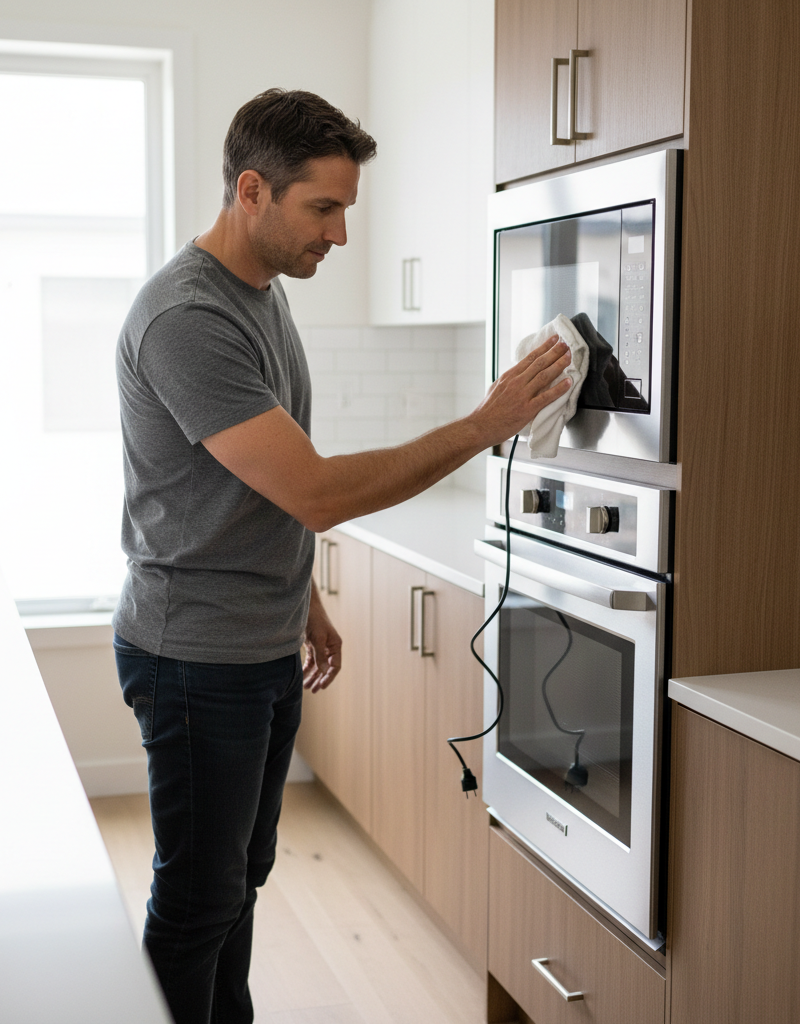
Before you do anything else, unplug that microwave. Seriously. Don’t even crack the door until it’s fully disconnected from power. These units carry high voltage even when they’re off. Safety comes first. Every time.
-
Check the Cavity for Metal Objects — The obvious culprit. Start with a good visual check. Did somebody leave a fork in there? Aluminum foil? A take-out container with a metal strip? Even a tiny scrap of foil from a wrapper can light things up in a hurry. Pull out any metal you find. If that was it, great — problem solved. Just don’t repeat the mistake.
-
Inspect and Clean the Waveguide Cover — Often the real problem. The waveguide cover is usually a small rectangular or square piece of beige or grey material, often mica, sometimes plastic or ceramic, sitting on one side wall inside the microwave cavity. Its job is to protect the waveguide from splatter.
- Tool: Microfiber cloth or paper towel.
- Material: Mild dish soap and water, or a non-abrasive household cleaner.
- Safety: Always unplug the microwave first. Wear gloves if you’re sensitive to cleaners.
- Action: Look for burnt-on food, grease, or black marks on the cover. Carbonized food particles can soak up microwave energy, get overheated, and start arcing. Clean it with a damp cloth and mild soap. For stubborn crud, a gentle scrubber might help, but don’t gouge or scratch the mica. If it’s discolored or burned and won’t clean up, you’ll probably need a replacement.
-
Examine the Waveguide Cover for Damage — Cracks or holes are a no-go. After cleaning, look at it again and check for physical damage. Cracks, holes, or a crumbly surface mean it’s done. A damaged cover lets microwaves get into the waveguide, and that’s spark city. You can usually buy replacements online or at appliance parts stores. Just make sure you get the right one for your microwave’s make and model. They’re usually held in with tabs, screws, or adhesive.
-
Inspect the Cavity Walls and Turntable — Don't overlook the obvious. While you’re in there, check the painted interior surfaces and the underside of the turntable. Scratches, chipped paint, or burn marks on the metal can become hot spots for arcing. That exposed metal reflects microwaves the wrong way, and sparks can fly. If the paint’s peeling or the cavity’s damaged, you may be looking at a pro repair or a new microwave. Repainting the inside isn’t some quick weekend fix.
-
Test with a Cup of Water — The safe re-test. Once you’ve cleaned or replaced the waveguide cover and confirmed there’s no metal inside, put a cup of water in the microwave. That gives the microwaves something to work on and helps protect the magnetron from running empty. Run it for 30 seconds to a minute. If the sparking stops, good. If not, you’ve got a deeper issue on your hands.
-
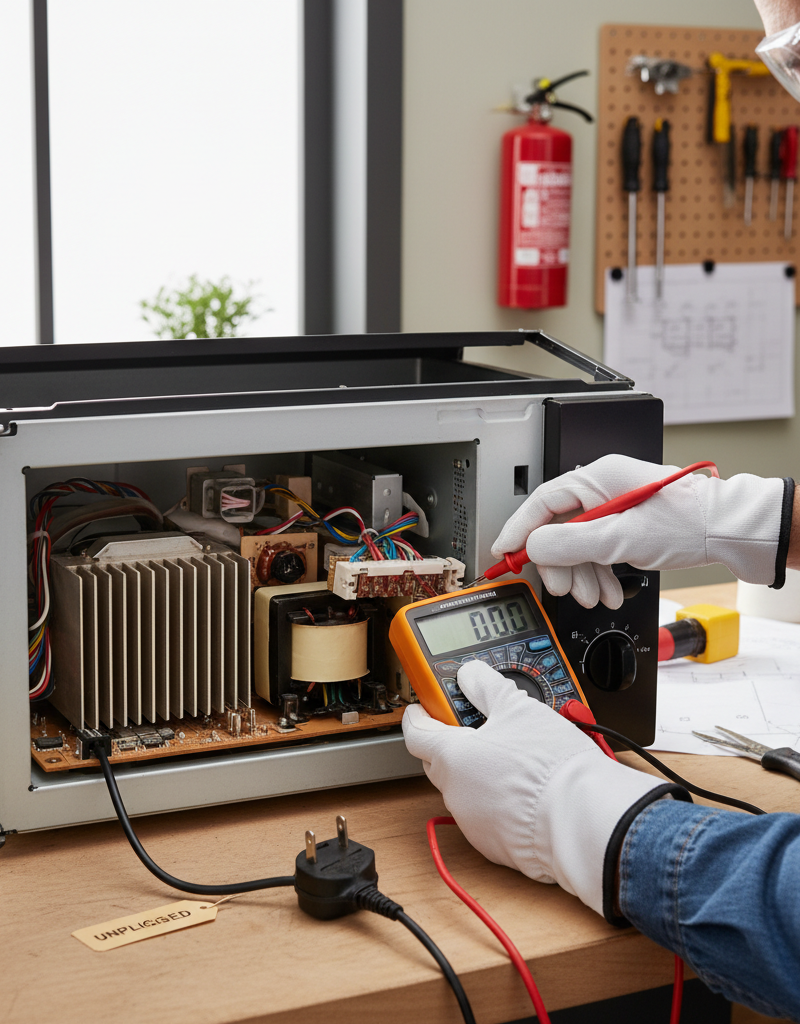
Consider a Faulty Diode (Advanced) — When it's not the simple stuff. If you’ve checked everything above and it’s still arcing, you might be dealing with a bad high-voltage diode. That part lives in the high-voltage circuit that feeds the magnetron. A shorted or failing diode can cause weird power delivery and lead to arcing, sometimes even from the magnetron itself or around the capacitor. This is where you need to be extremely careful. The capacitor in a microwave can hold a lethal charge for a long time, even after you unplug the unit.
- Safety: Do NOT attempt this unless you are highly experienced with electronics and know how to safely discharge a high-voltage capacitor. I mean it. This isn’t for the nervous or inexperienced DIYer. If you’re not one hundred percent sure, call a pro. I’ve seen guys get knocked across a room by one of these, and it ain’t pretty.
- Action (for experienced pros only): Unplug the unit. Pull the outer shell. Find the high-voltage capacitor — it’s usually big, cylindrical, and easy to spot near the transformer. Safely discharge it with a properly insulated screwdriver or a high-voltage probe. Then use a multimeter to test the diode for continuity in one direction only. If it shows continuity both ways, or not at all, it’s bad and needs replacing. Again, this isn’t a beginner job.
-
Check for Magnetron Damage (Pro Only) — The worst-case scenario. If the diode checks out and the arcing keeps going, the magnetron itself may be failing or damaged. A magnetron with internal damage or a cracked antenna — that’s the part sticking into the waveguide — can cause arcing. It’s an expensive repair, and a lot of times it gets close to the cost of a new microwave. This is absolutely a job for a qualified appliance tech. No DIY fix here without specialized tools and know-how.
Common Causes
- Food Debris: Dried, burnt-on food particles, especially on the waveguide cover, soak up microwave energy and carbonize, which makes them conductive and sparks start flying.
- Metal Objects: Dropping metal in there — foil, utensils, some dishes with metallic trim — reflects microwaves and creates concentrated electrical charges that arc.
- Damaged Waveguide Cover: Cracks, holes, or a worn-out mica or ceramic cover let microwaves escape or let food get into the waveguide, and that leads straight to arcing.
- Chipped/Peeled Interior Paint: Once the metal under the cavity walls is exposed, it can reflect microwaves unevenly and create localized hot spots and arcing.
- Faulty High-Voltage Diode: A failing diode in the microwave's high-voltage circuit can cause irregular power delivery, which can trigger arcing from internal components.
- Magnetron Antenna Damage: The antenna inside the magnetron can crack or get damaged, and then it can arc internally or into the waveguide.
Common Mistakes
- Ignoring the problem: Thinking a little spark is no big deal. It is. It’s a fire hazard, plain and simple. Don’t shrug it off.
- Putting metal in: Even a scrap of foil can cause a mess. Always look twice at your dishes and containers.
- Using abrasive cleaners: Scrubbing the waveguide cover like you’re cleaning a grill can scratch or damage the mica and make things worse.
- Leaving food splatter: Grease and food bits baked onto the cover are just waiting to cause trouble later. Clean spills right away.
- Attempting DIY high-voltage repair without experience: The high-voltage capacitor can deliver a fatal shock. This isn’t the place to wing it.
- Not replacing a damaged waveguide cover: A cracked or burned cover will keep causing problems and can eventually damage other parts if you leave it in.
Cost & Time Breakdown
| Task | DIY Cost | Pro Cost | Time |
|---|---|---|---|
| Clean Waveguide Cover | $0–$5 | N/A | 5–10 min |
| Replace Waveguide Cover | $10–$30 | $100–$200 | 15–30 min |
| Inspect & Clean Cavity | $0 | N/A | 5 min |
| Diode Replacement (parts only) | $15–$40 | N/A | N/A |
| Diode Replacement (pro service) | N/A | $150–$300 | 30–60 min |
| Magnetron Replacement (pro service) | N/A | $200–$450 | 45–90 min |
Tips & Prevention
- Keep it clean: Wipe out the inside of the microwave, especially the waveguide cover, after every use. A little upkeep saves a lot of grief. Use a damp cloth and mild soap to get rid of splatter and grease before it bakes on.
- Use microwave-safe dishes: Stick with containers marked "microwave-safe." Skip anything with metallic trim, gold leaf, or mystery glaze.
- Check for foil/metal: Before you hit start, take a quick look inside for forgotten foil, twist ties, or shiny packaging.
- Replace damaged covers promptly: If you spot cracks, holes, or heavy burn marks on the waveguide cover, order a replacement right away. They’re cheap and easy.
- Avoid running it empty: Always put food or at least a cup of water inside when you run it. An empty microwave can hurt the magnetron.
- Understand power levels: Some foods do better on lower power settings so they don’t overheat and splatter all over the place, which can gunk up the waveguide cover.
When to Call a Professional
Look, I’ve been doing this a long time, and I know when to tell a homeowner to call it a day. If you’ve cleaned the waveguide cover, replaced it, and checked for metal, and that microwave is still sparking, it’s time to bring in a pro. You’re probably dealing with a bad high-voltage diode, a failing magnetron, or some other internal electrical issue that needs special tools and real diagnostic experience. Don’t play around with the high-voltage parts in these units — a microwave capacitor can hold a lethal charge even when unplugged. If you’re not comfortable discharging a capacitor or testing high-voltage components, call a licensed appliance repair technician. They’ve got the training and the safety gear to handle it without getting themselves — or you — hurt.
FAQ
Can I still use my microwave if it sparks a little?
Absolutely not. Any sparking inside your microwave means there’s a problem and a potential fire hazard. Unplug it right away and don’t use it until it’s fixed.
Is it safe to replace the mica waveguide cover myself?
Yes, for most homeowners, replacing the mica waveguide cover is a safe and straightforward DIY job. Just unplug the microwave first, and buy a replacement that matches your exact model.
Why did my brand-new microwave start sparking?
Even new microwaves can spark if metal got inside by accident, or if there’s a manufacturing defect in the waveguide cover. Check for metal and inspect the cover before you start thinking warranty.
What if the interior paint is peeling or chipped?
Chipped or peeling paint exposes the metal underneath, and that can cause arcing. Small chips might be okay, but bigger damage usually means the microwave needs professional repair or replacement, because repainting isn’t a quick fix.
Can cleaning products cause sparking?
If you use abrasive cleaners or leave residue behind, yes. Chemical residue can carbonize under microwave energy and lead to arcing. Stick with mild soap and water, and wipe it down well.
How often should I clean the inside of my microwave?
You should wipe down the interior, especially around the waveguide cover, after every use to keep buildup from forming. A deeper cleaning should happen at least once a month, or more often if you use it a lot.
My microwave smells burnt after it sparked. Is that normal?
A burnt smell after sparking is common and usually means food particles or even the waveguide cover got overheated. If the smell hangs around after you fix the problem, you might be looking at internal damage.
What does a failing high-voltage diode look like?
A failing diode doesn’t usually show obvious outside signs, but it can cause intermittent sparking, weak heating, or a loud buzzing noise. Testing it takes a multimeter and safe access to the high-voltage parts.
Can dirty magnetron cause sparking?
A magnetron usually doesn’t get "dirty" the way a waveguide cover does, but internal damage or wear on the magnetron's antenna can absolutely cause arcing. That’s a serious internal failure and needs a pro.
My microwave always sparks when I heat popcorn. Why?
Popcorn bags often have a "susceptor" — a metallic lining that helps the kernels pop more evenly. If that lining’s exposed or sitting too close to the microwave walls, it can arc. Usually that’s the bag, not the microwave, but it can also mean the bag’s positioned wrong or the lining’s torn.
Related Articles
Keep troubleshooting with these hand-picked guides from FixlyGuide:
- The $5 Part That Stops Your Fridge From Leaking (And Why It Fails) — A leaking refrigerator can lead to serious floor damage and appliance issues. Often, the culprit is a clogged defrost drain, a simple fix m…
- The Buzzing Microwave: Is It a Symptom or a Fire Hazard? — A buzzing microwave can be more than just annoying; it might signal a serious issue that needs immediate attention, from a faulty magnetron…
- The #1 Mistake Homeowners Make When Their Ice Maker Stops (And the Easy Fix) — Is your refrigerator ice maker on strike? Often, a simple oversight or minor clog is the culprit, easily fixable with basic tools.
- The Button Blocker: Why Your Microwave Panel Goes Dead (and the Easy Fix) — Don't rush to replace your microwave just because the buttons aren't responding; it's often a simple, DIY-friendly fix.
- The 30-Minute Fix: Why Your Gas Burner Lights But Won't Stay Lit — Your gas stove burner lights up for a second then quickly extinguishes? It's a common, frustrating issue often due to a dirty or faulty the…
- The Secret Hairball Fix Plumbers Don't Want You to Know — Tired of standing in ankle-deep water? Most shower clogs are a gnarly mix of hair and soap scum, and you can clear them yourself without ha…
Should you do this yourself?
Answer five quick questions before you start. Safety outranks savings every time.
Your experience with work like this
How high do you have to work?
Does the job involve any of these?
Will it need a permit?
Specialty tools
Free and instant. Educational guidance only — not a quote, inspection, or professional diagnosis.
Questions to ask before you sign
Ask every contractor the same questions and the cheapest bid stops looking cheapest. Check them off as you go — your progress is saved on this device.
Free, no signup. Bring this to every walkthrough so you compare bids on the same terms.
What should this project cost?
Enter your project details for a realistic cost range before you call anyone.
Cost depends heavily on which system turns out to be the source.
- Regional adjustment
- National average
- Labor share (typical)
- ~$1,620
- Quotes to collect
- 3 written estimates
Educational estimate based on national averages — not a binding quote. Always confirm with written local estimates.
Before you start
Check the difficulty, permits, and safety risk — then decide whether to call a pro.
- Estimate this projectGet a cost range for your scope and ZIP before you call anyone.Open
- Get local estimatesSend one request and compare written estimates from vetted pros.Open
Free, no signup required. Estimates are educational guidance, not a quote or an inspection.
Get the print-ready PDF of this guide
A clean, ad-free, printable version you can keep on your phone or pin to the workshop wall. Free with a FixlyGuide account.
- Print-optimized layout
- Tools, materials & every step included
- Saved to your account
Frequently asked questions
Can I still use my microwave if it sparks a little?+
Absolutely not. Any sparking inside your microwave is a sign of a problem and a potential fire hazard. Unplug it immediately and don't use it until the issue is resolved.
Is it safe to replace the mica waveguide cover myself?+
Yes, for most homeowners, replacing the mica waveguide cover is a safe and straightforward DIY task. Just make sure the microwave is unplugged, and purchase a replacement cover that matches your specific microwave model.
Why did my brand-new microwave start sparking?+
Even new microwaves can spark if metal was accidentally introduced, or if there's a manufacturing defect in the waveguide cover. Always double-check for metal and inspect the cover before calling for warranty service.
What if the interior paint is peeling or chipped?+
Chipped or peeling paint exposes the metal beneath, which can cause arcing. While some minor chips might be okay, extensive damage usually means the microwave needs professional repair or replacement, as repainting isn't a simple fix.
Can cleaning products cause sparking?+
If you use abrasive cleaners or leave residue behind, yes. Chemical residues can sometimes carbonize under microwave energy, leading to arcing. Always use mild soap and water and wipe thoroughly.
How often should I clean the inside of my microwave?+
You should wipe down the interior, especially around the waveguide cover, after every use to prevent food buildup. A deeper clean should happen at least once a month, or more often depending on usage.
My microwave smells burnt after it sparked. Is that normal?+
A burnt smell after sparking is common and indicates that food particles or even the waveguide cover itself may have been superheated. If the smell persists after fixing the issue, it could point to internal component damage.
What does a failing high-voltage diode look like?+
A failing diode doesn't typically show external signs, but it can cause intermittent sparking, poor heating, or a loud buzzing noise. Diagnosing it requires a multimeter and safely accessing the internal high-voltage components.
Can dirty magnetron cause sparking?+
While a magnetron itself isn't typically 'dirty' in the same way a waveguide cover gets, internal damage or deterioration of the magnetron's antenna can indeed cause arcing. This is a severe internal failure requiring professional attention.
My microwave always sparks when I heat popcorn. Why?+
Popcorn bags often contain a "susceptor" – a metallic lining that helps with even popping. If this lining is exposed or too close to the microwave walls, it can cause arcing. It's usually a feature of the bag, not the microwave's fault, but can indicate the bag is positioned incorrectly or the lining is torn.

Discussion
Loading comments…