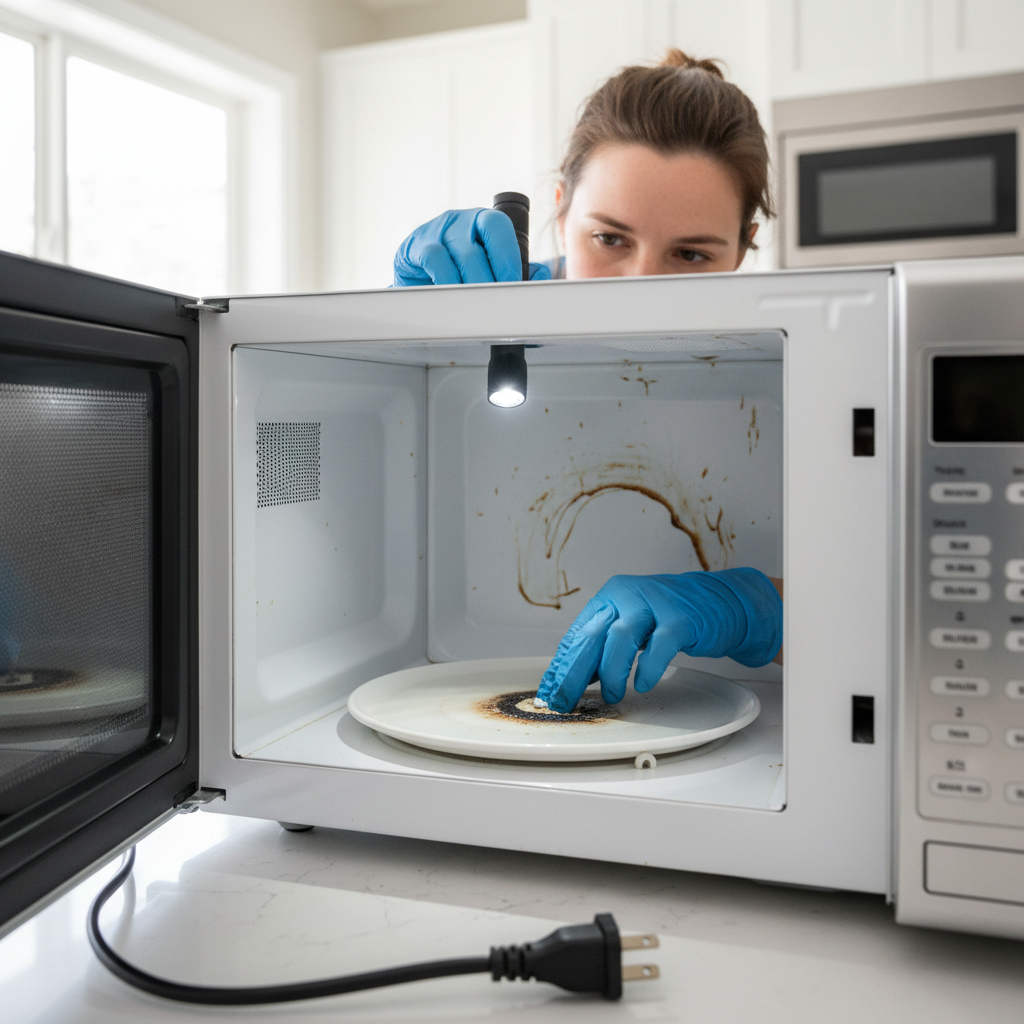
- Melted Plastic or Charred Food: This is the big one. Somebody puts a non-microwave-safe container, plastic wrap, or even a piece of aluminum foil in there. Or they overcook food until it chars and splatters all over the inside.
- Grease Buildup: Especially in over-the-range models, grease and food particles can build up on the vent filters, the fan motor, or the waveguide cover. Once the microwave heats up, that mess can smoke and smell like burning plastic.
- Damaged Waveguide Cover: If the mica or plastic waveguide cover gets damaged — maybe from arcing caused by metal or food splatter — microwaves can hit it and burn the cover itself, which brings on that sharp smell.
- Fan Motor Issues: The cooling fan or exhaust fan motor may be going bad, which makes it overheat. Or if it's fighting through blockages, the motor windings can get too hot.
HVAC · High energy usage
| Project category | HVAC |
|---|---|
| Problem type | High energy usage |
| Trade required | HVAC |
| Urgency | Planned project |
| Safety risk | Low safety risk |
| DIY suitability | DIY for experienced homeowners |
| Cost category | High cost |
| Typical timeline | Assessment within weeks; replacement planned off-season |
| Contractor type | Licensed HVAC technician |
Repair option
Duct sealing, insulation, and a tune-up before touching the equipment.
Replacement option
High-efficiency replacement sized by a load calculation, not a rule of thumb.
Common causes
- Aging, low-efficiency equipment
- Leaking ducts losing conditioned air
- Insufficient attic insulation
- Oversized system short-cycling
Relevant tools:project cost estimatorrepair or replace
Published September 9, 2026Last updated September 9, 2026
Tools & materials you'll need
Affiliate linksAs an Amazon Associate FixlyGuide earns from qualifying purchases — at no extra cost to you. Prices and availability are accurate as of publication and subject to change.
Quick Answer
Alright, so your microwave's got that nasty burnt plastic smell? Don't just air out the kitchen and hope it disappears. That odor's a warning sign, plain and simple. It could be something harmless like a forgotten plastic wrapper or food splatter burning onto the cavity, or it could be a real electrical part overheating. First move: unplug that thing right now. Then you've gotta do a little detective work, figure out where it's coming from, and fix it before it turns into a bigger mess — or a fire hazard. Safety first, always.
The Problem
I've walked into more kitchens than I can count where a homeowner's standing there, nose wrinkled, asking, "Why does my microwave smell like burnt plastic?" It's a common problem, and honestly, it never smells good enough to ignore. That acrid, chemical smell isn't just annoying; it's a red flag waving right in your face. Most folks jump straight to melted plastic containers, and sure, that's one possibility. But it could also be grease buildup cooking onto a hot spot, a bad electrical part sparking, or even a small piece of insulation melting down.
The bottom line is you've got heat where it shouldn't be, or something flammable burning, and ignoring it is asking for trouble. I always tell my clients, if it smells like something's burning, it probably is. Microwaves pack high voltage and a lot of heat into a small box, so you can't just shrug it off and call it a day.
How It Works
Let's peel this thing open a little and look at how these countertop boxes actually work, because once you get that, the burnt plastic smell makes a lot more sense. A microwave oven uses a magnetron tube to convert electricity into high-frequency radio waves — specifically, microwaves. Those waves bounce around inside the metal cooking cavity and agitate the water molecules in your food, which creates friction and, yep, heat. That's why food cooks from the inside out, basically. The microwaves stay trapped by the metal walls and the mesh screen in the door, which is there to keep them from escaping.
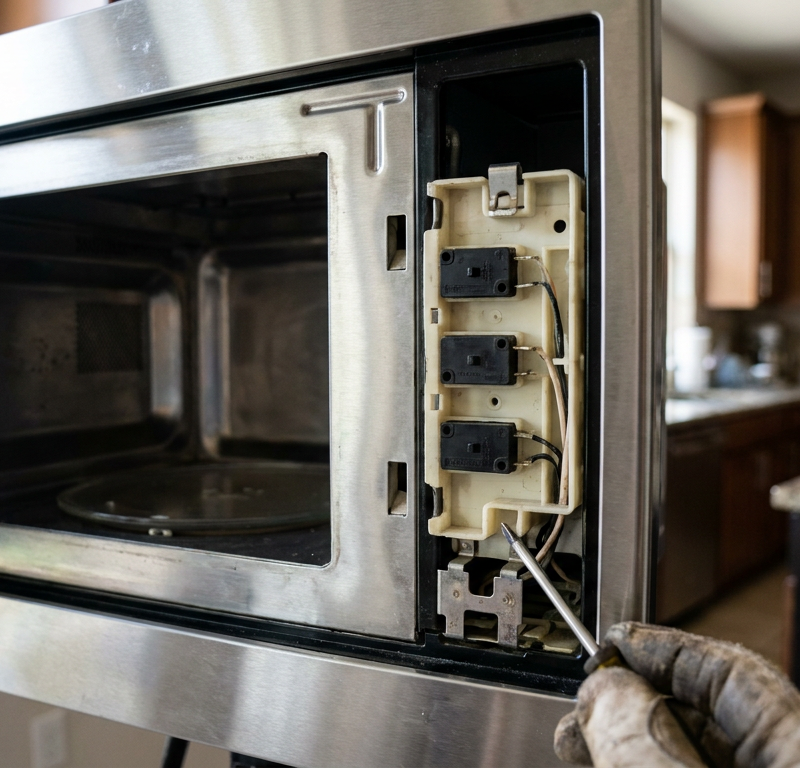
Now for the smell. You've got several parts making and handling power: the high-voltage transformer, the capacitor, the diode, and the magnetron itself. They're all tucked behind metal shielding, usually with cooling fans to keep things from cooking themselves. If one of those parts starts failing, it can overheat, melt its own plastic insulation, or scorch nearby wiring — and that's your burnt plastic smell right there.
Then there's the food side of it. Splatter, forgotten bits of foil, even some plastic containers that aren't microwave-safe can melt or burn when they get hit with those waves. The vent fan, which is supposed to push steam and odors out, can also run too hot if it's clogged with grease. So when you catch that tell-tale odor, something's getting hotter than it should, and it's time to figure out what.
Step-by-Step Fix
Here's how I handle these smelly jobs. Safety's the name of the game. Unplug first, every time.
-
Unplug It, ASAP – No debate here. Don't touch a thing until the power's cut.
- Safety First: Microwaves can hold a high-voltage charge even when they're unplugged. Don't go poking around inside unless you're a qualified technician. This is for outside cleaning and basic inspection only.
-
Visual Inspection: The Easy Stuff – Crack that door open and really look inside.
- What to Look For: Check the ceiling, floor, and walls of the microwave cavity. Did a plastic lid melt? Is there a piece of plastic wrap stuck where it shouldn't be? Sometimes it's something dumb like an old popcorn bag getting too hot. Look at the turntable plate and roller ring too — are they scorched?
- My Anecdote: I had a call in Frisco last month where the homeowner was convinced the microwave was dying. Nope. His kid had reheated leftovers in a takeout box with a plastic lid still on it. The lid warped, stank up the place, and made the whole kitchen smell like a tire fire. Cleaned it up, and that was that.
-
Clean the Cavity Thoroughly – Even old, baked-on food can smell like it's burning.
- How To: Mix equal parts white vinegar and water in a microwave-safe bowl. Set it inside and heat on high for 5-7 minutes until it boils and makes steam. Let it sit for 5 minutes, then carefully pull the bowl out. That steam loosens the grime. Wipe down the inside with a damp cloth.
- Stubborn Spots: For stubborn burnt-on gunk, a non-abrasive microwave cleaner or a paste of baking soda and a little water can do the trick. Let it sit for 10-15 minutes before you scrub it gently.
-
Inspect the Vent and Air Vents – If air can't move, things run hot.
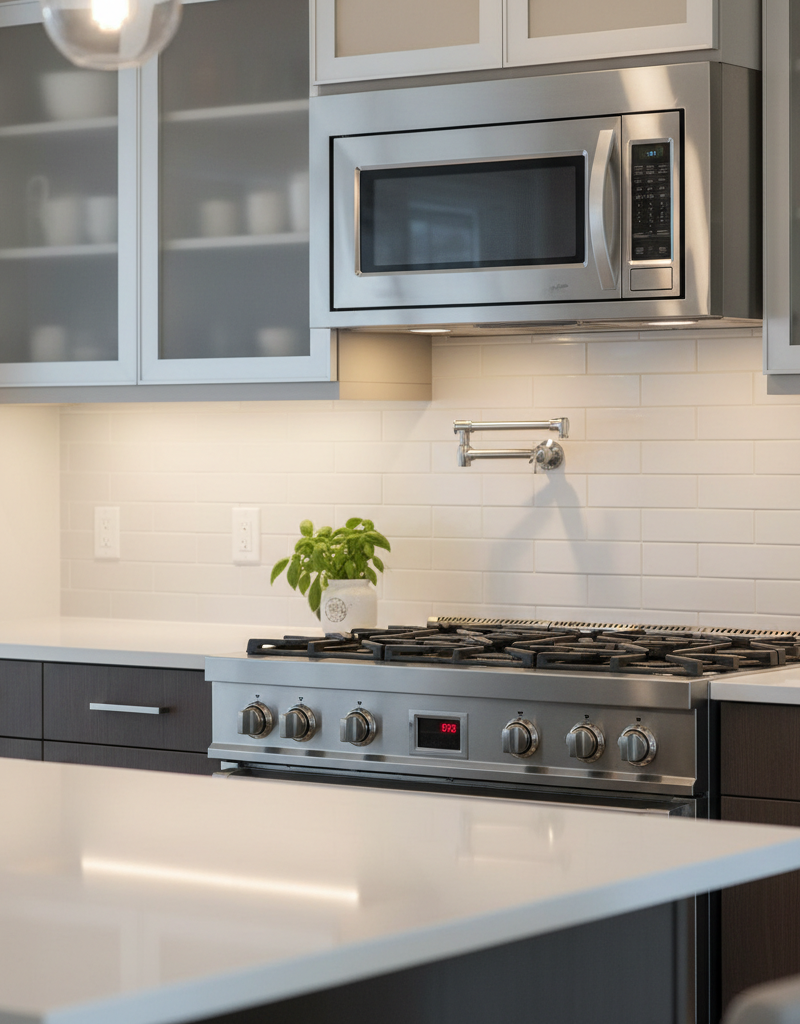
- For Over-the-Range Microwaves: Check the vent filters, usually on the bottom of the microwave or behind the top grille. They catch grease and dust. Pull them out and wash them in hot, soapy water, or replace them if they're disposable and packed with crud.
- For Countertop Microwaves: Look at the air vents on the back and sides. Make sure they're not blocked by towels, cabinets, or a pile of dust. Good airflow matters. A lot.
-
Examine the Waveguide Cover – This one's a frequent trouble spot.
- What It Is: It's a small rectangular or square plate, usually mica or plastic, inside the microwave, often on the right side wall. It protects the magnetron from food splatter. If it's scorched, discolored, or punched through, food bits may have burned on it, or the magnetron could be arcing.
- The Fix: If it's just dirty, clean it gently. If it's burned or damaged, replace it. They're usually held in by small screws or clips, and they're pretty cheap — often under $20 — and easy to swap out.
-
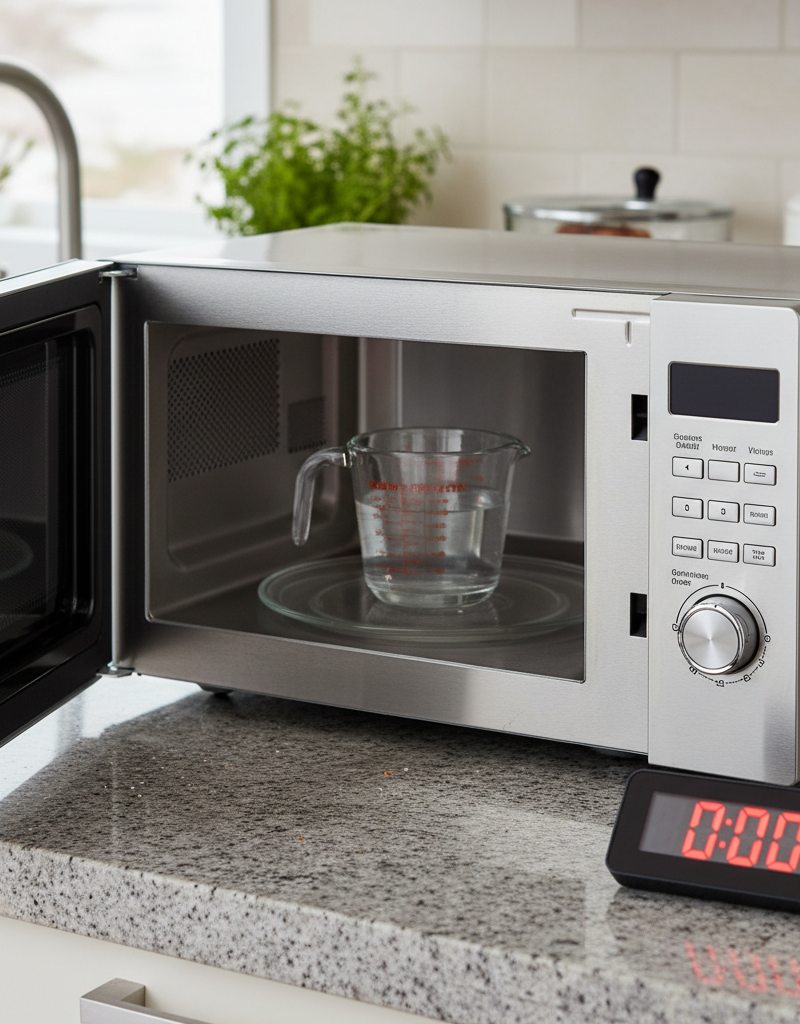
Test the Microwave – If the cleaning and inspection seem to have done the job.
- Procedure: Plug it back in. Put a cup of water inside. Run it for 30 seconds. Listen for weird noises — arcing, humming, grinding — and carefully sniff for the burnt smell. If it comes back, unplug it immediately.
-
Consider the Source (Electrical) – If the smell's still there after all that, you're probably looking at an internal problem.
- What It Means: This is where I tell the DIY crowd to stop. A burnt plastic smell that hangs around after a good cleaning and inspection almost always points to an electrical component: the magnetron, transformer, capacitor, or wiring insulation. Those parts make a ton of heat and run on high voltage. Do not attempt to open the main casing or discharge the capacitor yourself. That capacitor can hold a lethal charge for days, even weeks, after being unplugged.
Common Causes
Believe it or not, a lot of these burnt plastic smells come from the same handful of troublemakers:
- Melted Plastic or Charred Food: This is the big one. Somebody puts a non-microwave-safe container, plastic wrap, or even a piece of aluminum foil in there. Or they overcook food until it chars and splatters all over the inside.
- Grease Buildup: Especially in over-the-range models, grease and food particles can build up on the vent filters, the fan motor, or the waveguide cover. Once the microwave heats up, that mess can smoke and smell like burning plastic.
- Overheating Electrical Components: This is the serious one. The magnetron, high-voltage transformer, capacitor, or diode can fail or overheat. When that happens, their insulation or nearby wiring can melt and give off that burnt plastic odor.
- Damaged Waveguide Cover: If the mica or plastic waveguide cover gets damaged — maybe from arcing caused by metal or food splatter — microwaves can hit it and burn the cover itself, which brings on that sharp smell.
- Fan Motor Issues: The cooling fan or exhaust fan motor may be going bad, which makes it overheat. Or if it's fighting through blockages, the motor windings can get too hot.
Common Mistakes
I've seen homeowners make these blunders a hundred times, so don't be one of 'em:
- Ignoring the Smell: Thinking it'll just go away on its own. No dice. If it smells burnt, something's wrong.
- Using the Microwave Again Immediately: Running it over and over to "see if it clears up" can make a small problem worse fast.
- Cleaning While It's Plugged In: That's a bad habit. Unplug it first. Always.
- Opening the Case Yourself: This isn't a cabinet door. There's dangerous stored voltage in there, and I wouldn't tell anybody to mess with it unless they know exactly what they're doing.
- Skipping the Vent Check: A clogged filter or blocked vent can make the whole unit run hot, and people miss that all the time.
When to Replace It
Sometimes the honest answer is that thing's toast. If the smell keeps coming back after a thorough cleaning, if you see scorch marks inside the cavity, or if the microwave is making weird noises along with the odor, you're probably past the quick fix stage.
If the unit's older, repair parts can cost more than it's worth. I've told plenty of folks to stop throwing money at a tired microwave and just replace the whole unit. If it's a countertop model and the repair's looking expensive, I'd usually call it a day and buy a new one. If it's an over-the-range unit and the cabinet setup matters, you may still want a pro to look at it first.
Prevention
You don't need much fancy upkeep to keep this from happening again. Just stay on top of the basics:
- Wipe spills as soon as the unit cools down.
- Use microwave-safe containers. Always.
- Keep the vents clear so the thing can breathe.
- Clean the filters if you've got an over-the-range model.
- Don't run it empty. That's hard on the magnetron.
- Check the waveguide cover now and then for scorch marks.
Little stuff, sure. But little stuff keeps big problems from showing up.
FAQ
Can a burnt plastic smell from a microwave be dangerous?
Yeah, it can be. Sometimes it's just melted food or plastic, but it can also mean an electrical part is overheating. If the smell is strong or keeps coming back, unplug it and figure out why.
Is it safe to keep using the microwave if it smells burnt?
I wouldn't. Not until you've checked it over and cleaned it. If the smell returns after that, stop using it and get it looked at.
What if I smell burnt plastic only when the microwave runs?
That usually points to something heating up inside the unit — food residue, a bad vent, or an electrical component. That's the clue you need to chase.
Do I need a repair tech for this?
If cleaning doesn't fix it, yes. Especially if you suspect anything electrical. That's not the place to improvise.
Final Word
A burnt plastic smell from your microwave isn't something to shrug off. Most of the time, it's either a mess that needs cleaning or a part that's overheating. Start simple: unplug it, inspect it, clean it, and test it. If that odor sticks around, stop there and bring in a pro. Better to spend a little now than end up replacing the whole kitchen later.
Related Articles
Keep troubleshooting with these hand-picked guides from FixlyGuide:
- The $5 Part That Stops Your Fridge From Leaking (And Why It Fails) — A leaking refrigerator can lead to serious floor damage and appliance issues. Often, the culprit is a clogged defrost drain, a simple fix m…
- The Mystery of the Warm Fridge: Why Your Food Is Spoiling (and When to Call a Pro) — If your refrigerator isn't keeping food cold, it could be a simple fix or a serious problem requiring a professional. Learn what to check a…
- The Buzzing Microwave: Is It a Symptom or a Fire Hazard? — A buzzing microwave can be more than just annoying; it might signal a serious issue that needs immediate attention, from a faulty magnetron…
- The Surprising Reason Your Dishwasher Won't Start (It's Not Always the Door) — Don't rush to call a repairman when your dishwasher refuses to start; often, the culprit is a simple, overlooked issue you can fix yourself…
- That Mildew Smell in Your Washer? Here’s the Real Reason — Is a musty odor taking over your laundry room? That mildew smell from your washing machine isn't just unpleasant—it's a sign of a deeper pr…
- The 3 Hidden Reasons Your Sprinkler Head Won't Pop Up (And How to Fix It FAST) — Discover the most common reasons your sprinkler head isn't popping up and follow our step-by-step guide to quickly diagnose and fix the iss…
Should you do this yourself?
Answer five quick questions before you start. Safety outranks savings every time.
Your experience with work like this
How high do you have to work?
Does the job involve any of these?
Will it need a permit?
Specialty tools
Free and instant. Educational guidance only — not a quote, inspection, or professional diagnosis.
What should this project cost?
Enter your project details for a realistic cost range before you call anyone.
Outlet and switch work usually $150–$400; panel upgrades commonly $1,800–$4,200.
- Regional adjustment
- National average
- Labor share (typical)
- ~$709
- Quotes to collect
- 3 written estimates
Educational estimate based on national averages — not a binding quote. Always confirm with written local estimates.
Fixly Project Decision Box
- DIY difficulty
- Professional Recommended
- Estimated time
- Diagnosis 1–2 hours
- Cost level
- Moderate
Main tools / materials
- Non-contact voltage tester
- Outlet tester
- Flashlight
When to stop and call a pro
- Burning smell, scorch marks, or a warm outlet or switch plate
- A breaker that trips again right after being reset
- Any work inside the service panel
- Aluminum wiring or cloth-insulated wiring
Need professional help?
Talk to a Licensed ElectricianBefore you start
Check the difficulty, permits, and safety risk — then decide whether to call a pro.
- Estimate this projectGet a cost range for your scope and ZIP before you call anyone.Open
- Get local estimatesSend one request and compare written estimates from vetted pros.Open
Free, no signup required. Estimates are educational guidance, not a quote or an inspection.
Get the print-ready PDF of this guide
A clean, ad-free, printable version you can keep on your phone or pin to the workshop wall. Free with a FixlyGuide account.
- Print-optimized layout
- Tools, materials & every step included
- Saved to your account
Frequently asked questions
Is a burnt plastic smell from a microwave dangerous?+
Yes, absolutely. A burnt plastic smell can indicate an electrical fault, overheating components, or fire hazards. You should unplug the microwave immediately and investigate the source of the smell to prevent potential fire or further damage.
What if I can't find anything melted inside the microwave?+
If there's no visible melted plastic or burnt food, the smell likely originates from an internal electrical component, like the magnetron, transformer, or capacitor, overheating. In this case, it's best to call a qualified appliance technician.
Can cleaning fix a burnt plastic smell?+
Sometimes! If the smell is from old, baked-on food splatters or grease buildup, a thorough cleaning of the interior cavity, turntable, and vent filters can often eliminate the odor. Focus on the waveguide cover as well.
How do I know if my microwave is arcing?+
Arcing usually looks like sparks, flashes of light, or a crackling sound, often accompanied by a burning smell. It typically happens around metal objects, damaged waveguide covers, or areas with food buildup. Unplug immediately if you see arcing.
Can I replace the waveguide cover myself?+
Yes, replacing a waveguide cover is one of the simpler DIY repairs. They are usually held in by small screws or clips and are inexpensive to buy. Just ensure the new cover matches the old one in size and material.
Why does my microwave fan keep running after it smells burnt?+
If the fan continues to run, it could be trying to cool down an overheating component. This indicates a deeper electrical issue, and the microwave should remain unplugged until a professional can diagnose and repair it.
What's the difference between a burnt plastic smell and a burning food smell?+
A burnt plastic smell is typically more acrid, chemical-like, and sharper than a burning food smell. Burning food usually has a more organic, smoky odor. However, any burning smell from an appliance should be treated as a potential hazard.
Should I throw away my microwave if it smells like burnt plastic?+
Not necessarily. If the issue is minor, like a melted plastic container or a dirty waveguide cover, it can often be fixed. However, if the smell points to a serious electrical component failure, a professional might deem it unrepairable or too costly to fix, suggesting replacement.
Can I use an air freshener to get rid of the smell?+
No, using an air freshener only masks the symptom and does not address the underlying problem. If the source is an electrical fault, masking the smell could lead to continued use and a greater risk of fire or damage. Always fix the cause, don't just cover it up.
Discussion
Loading comments…