
- Create Zones: Group similar items together. Create a gardening zone, an automotive zone, a sports equipment zone, and a workshop area. This makes it intuitive to find things and, more importantly, to put them away.
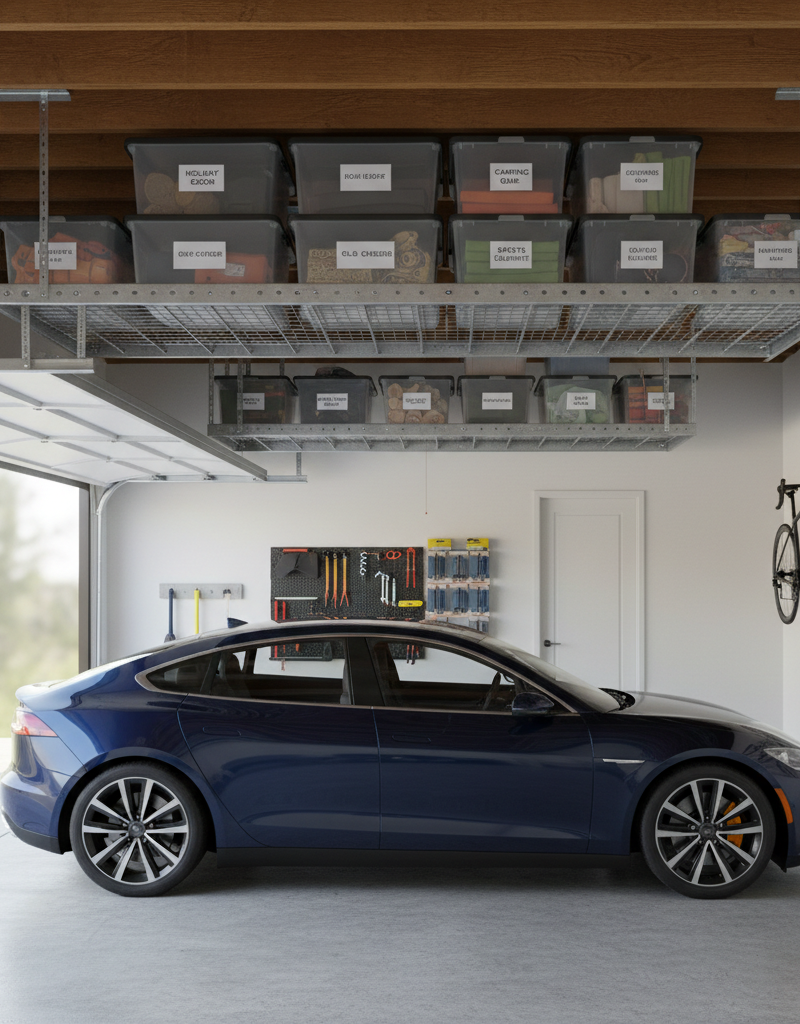
- Label Everything: Use clear storage totes instead of opaque ones. For the totes on high overhead racks, use large, bold labels that are visible from the ground so you know what's inside without having to take them down.
- Schedule an Annual Purge: Make it a yearly ritual to spend a few hours in the garage sorting and decluttering. This prevents the slow creep of clutter from taking over again.
- Think Accessibility: Store your most frequently used items in the most accessible locations—on shelves between waist and shoulder height. Reserve overhead racks and high shelves for long-term, seasonal storage.
- Don't Forget Lighting: A well-lit garage is a more usable garage. When planning your storage layout, consider how it will affect your lighting. You may need to add shop lights to illuminate areas now shadowed by cabinets or racks.
General remodeling · Renovation planning
| Project category | General remodeling |
|---|---|
| Problem type | Renovation planning |
| Trade required | General contracting |
| Urgency | Planned project |
| Safety risk | Low safety risk |
| DIY suitability | Pro recommended |
| Cost category | Major investment |
| Typical timeline | Design and permitting often 2–4 months before work starts |
| Contractor type | General contractor |
Repair option
Phase the work and fix the building envelope first.
Replacement option
Full renovation with permits, design, and a general contractor.
Common causes
- Space no longer fits how the household lives
- Resale preparation
- Deferred maintenance stacking up
Relevant tools:project cost estimatorcompare quoteshome improvement material prices
Published June 20, 2026Last updated August 17, 2026
Tools & materials you'll need
Affiliate linksAs an Amazon Associate FixlyGuide earns from qualifying purchases — at no extra cost to you. Prices and availability are accurate as of publication and subject to change.
'''
The Problem
For many homeowners, the garage is less a place to park vehicles and more a black hole of domestic clutter. It starts with a single lawnmower, a few stray shovels, and a box of holiday decorations. Soon, it’s a graveyard for half-finished projects, outgrown sports equipment, and items that have no other home. The car gets relegated to the driveway, exposed to the elements, because the garage is simply too full to function. You can’t find the tool you need, you trip over a stray skateboard, and the sheer volume of "stuff" becomes a source of constant, low-grade stress. This isn't just a mess; it's a fundamental waste of one of your home’s largest and most potentially useful spaces. The core issue is a reliance on floor space, which is the most limited and valuable area in the garage.
How It Works
The fundamental principle behind successful garage organization is leveraging the vast, untapped real estate on your walls and ceiling. Think of your garage as a cube; most people only use the floor, leaving 80% of the volume empty. Effective garage storage ideas treat the walls and ceiling as primary storage surfaces, moving items up and out of the way. This is achieved through systems engineered to safely bear significant weight by anchoring directly into the structural elements of your home—the wall studs and ceiling joists.
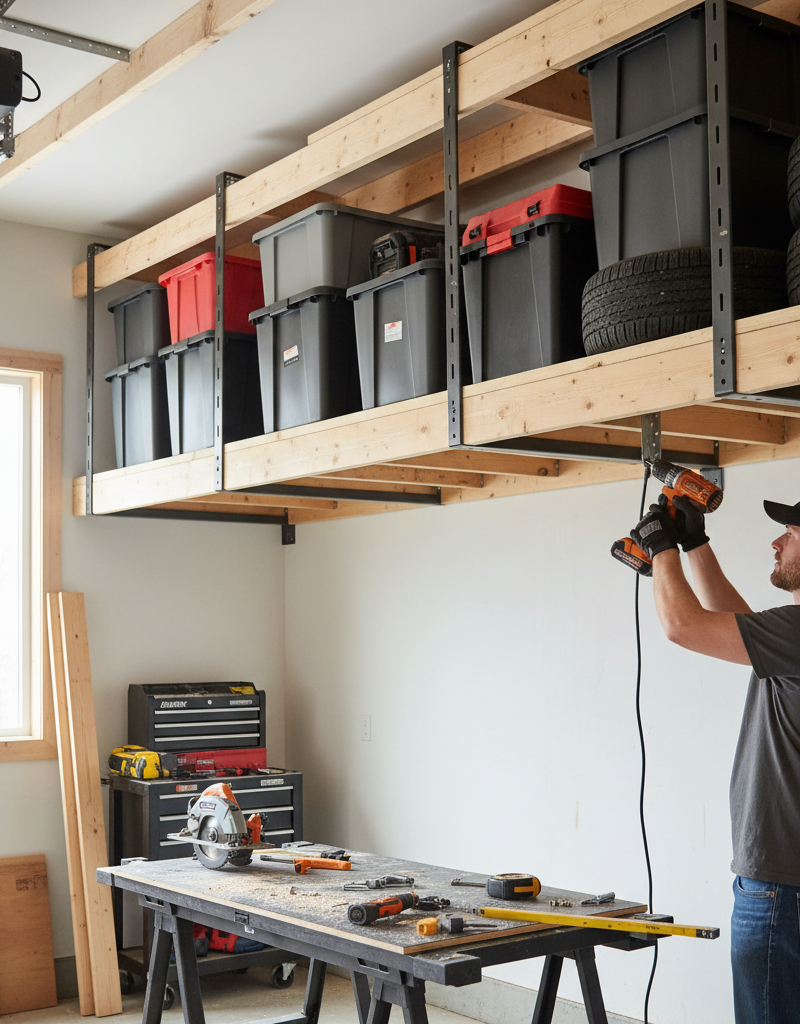
When you mount a heavy-duty rack, the fasteners (typically lag bolts) transfer the load from the rack into the dense wood of the framing. Wall-mounted systems like slatwall or pegboard distribute weight across multiple anchor points, while ceiling-mounted racks use the incredible tensile strength of the ceiling joists, which are designed to support the weight of the roof and attic. The physics involves a combination of shear strength (for the bolts) and tension/compression forces within the wood joists. By properly identifying and utilizing these structural members with a stud finder, you can safely suspend hundreds, or even thousands, of pounds of gear, transforming your garage from a horizontal dumping ground into a vertically optimized and highly efficient storage space.
12 Space-Saving Garage Storage Ideas
Here are twelve expert-approved methods for organizing your garage, complete with real-world capacity and cost information.
-
Overhead Ceiling Racks. — These are the heavy lifters of garage storage. Typically made of powder-coated steel in a grid pattern, these racks bolt directly into your ceiling joists. A standard 4x8-foot rack can typically hold between 500 and 600 pounds when properly installed. They are ideal for long-term storage items you don’t need daily access to, such as seasonal decorations, camping gear, large coolers, and storage totes. Look for models with adjustable heights to customize the clearance for your vehicle's roof.
-
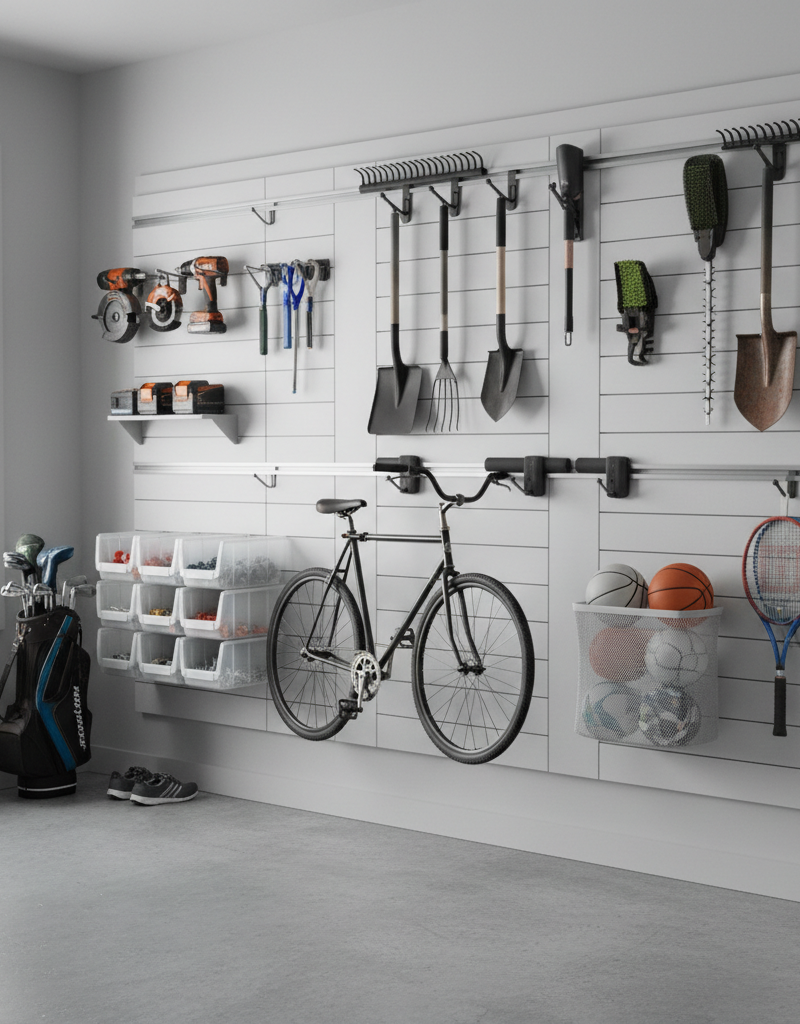
Slatwall Panel Systems. — For ultimate versatility, nothing beats a slatwall system. These PVC or MDF panels are covered in horizontal grooves that accept a wide array of hooks, shelves, baskets, and specialty hangers. You can reconfigure them in seconds without any tools. A typical 4-inch slatwall hook can hold 25-50 pounds, while heavier-duty accessories can support well over 100 pounds. While more expensive than pegboard, their durability and flexibility make them a worthwhile investment for storing everything from power tools to bicycles.
-
Wall-Mounted Tool Boards. — The classic pegboard has evolved. While traditional 1/4-inch hardboard pegboard is a budget-friendly option for hanging small hand tools, it can warp under heavy load or in humid conditions. For a more robust solution, consider steel pegboard systems. These metal panels accept standard peg hooks but can support significantly more weight and are impervious to moisture. They provide a clean, at-a-glance layout for frequently used tools like wrenches, screwdrivers, and drills.
-
Bike Pulleys or Hoists. — Bicycles have a large, awkward footprint, making them a prime candidate for vertical storage. A bike pulley system uses a simple rope-and-pulley mechanism with a locking brake to lift the bike effortlessly to the ceiling. Most systems are designed to hold a single bike up to 50 pounds, with heavy-duty versions available that can handle up to 100 pounds for e-bikes or tandems. By hoisting your bikes, you free up valuable floor space and protect them from accidental knocks and falls.
-
Heavy-Duty Wall Shelving. — Simple, strong, and cost-effective, bracketed wall shelving is a garage staple. Forget flimsy wire shelves from a closet. For a garage, you need heavy-duty steel brackets screwed directly into wall studs with lag bolts. When combined with a solid shelf material like 3/4-inch plywood or 2x10 lumber, a single pair of brackets can support 200-400 pounds. This is the perfect solution for storing heavy paint cans, automotive supplies, and bulky tool cases.
-
French Cleat System. — A favorite of woodworkers, a French cleat system is a highly customizable and incredibly strong way to hang tools and cabinets. It consists of a wall-mounted board cut lengthwise at a 45-degree angle, and a corresponding cleat on the item you want to hang. The weight of the item locks the two cleats together. You can build custom holders for every tool in your collection and rearrange them easily. The weight capacity is immense and distributed across the length of the wall-mounted cleat.
-
Magnetic Tool Bars. — One of the simplest and most satisfying storage solutions, a powerful magnetic bar mounted above your workbench keeps metal tools organized and within easy reach. They are perfect for wrenches, screwdrivers, pliers, and even drill bits. Look for the "pull force" rating to determine their strength. A 24-inch bar can often hold 20-30 pounds of tools. Just ensure it's mounted high enough to prevent accidentally bumping into sharp objects.
-
Targeted Corner Shelving. — Corners are often dead space, but they can be converted into valuable storage. You can buy purpose-built corner shelving units (freestanding or wall-mounted) or create your own "floating" corner shelves. Because they are supported on two walls, they can be exceptionally sturdy. They are a great spot for storing smaller, less-frequently accessed items like cleaners, waxes, and fluids.
-
Wall-Mounted Cabinets. — If you prefer to keep your items concealed and protected from dust, wall-mounted cabinets are the answer. Raising cabinets off the floor not only creates a less cluttered look but also protects your belongings from any potential water damage from melting snow or spills. Steel cabinets are the most durable and secure option, while molded resin cabinets are a rust-proof and more budget-friendly alternative.
-
Garden Tool Rack. — Stop the pile of long-handled tools from falling over every time you grab one. A dedicated garden tool rack mounts to the wall and provides specific slots or clips for rakes, shovels, brooms, and weed whackers. Some designs hold tools by the handle, while others allow them to rest on their heads. This simple organizer can reclaim a significant amount of floor space for just a small investment in time and money.
-
Sports Equipment Organizers. — From basketballs to hockey sticks, sports gear is notoriously difficult to store. Invest in a specialized ball rack or "ball claw" to get basketballs and soccer balls off the floor. Vertical racks with bins and hooks can create a designated drop-zone for kids' equipment, including helmets, bats, and gloves. This contains the clutter and makes it easier for everyone to find their gear on the way out the door.
-
Fold-Down Workbench. — If you need a functional workspace but don't have the floor space for a permanent bench, a wall-mounted fold-down workbench is an ingenious solution. These are hinged at the wall and supported by sturdy brackets that lock into place. When you’re done, the bench folds down flat against the wall, often with a profile of only a few inches. A well-built version anchored to studs can easily support several hundred pounds.
Safety Note: Always wear eye protection when drilling or hammering. Before installing any wall or ceiling-mounted storage, use a high-quality electronic stud finder to locate the center of wall studs or ceiling joists. Never mount heavy items to drywall alone. For ceiling work, de-energize any circuits in the area at the breaker panel to avoid accidental contact with electrical wiring.
Common Mistakes to Avoid
- Missing the Studs: Attaching heavy shelves or racks to drywall with simple anchors is a recipe for disaster. Drywall is not structural. You must locate and drive your mounting hardware into the center of the wooden studs or joists for a safe installation.
- Ignoring Weight Ratings: Every storage product has a specified weight capacity. Exceeding it can lead to catastrophic failure, damaging your belongings, your vehicle, and potentially causing injury. Distribute weight evenly and keep the heaviest items closer to the mounting points.
- Poor Layout & Workflow: Don’t install storage that blocks access to your car doors, electrical panel, or main entryways. Place your most frequently used tools and items in the most accessible locations.
- Using the Wrong Organizer: Don't try to force a pegboard hook to hold a heavy power tool, or place leaky containers on a wood or particleboard shelf. Use the right product for the item to ensure safety and longevity.
- Forgetting to Declutter First: The best storage system in the world can’t fix a clutter problem. Before you buy a single hook or rack, purge your garage of items you no longer need or use. You’ll have a much clearer idea of your actual storage needs.
Cost & Time Breakdown
This table shows estimated costs and installation times for a few popular garage storage projects. "Pro Cost" includes labor.
| Task | DIY Cost | Pro Cost | Time |
|---|---|---|---|
| Installing a 4x8 ft Overhead Ceiling Rack | $150 - $400 | $400 - $700 | 4-6 hours |
| Installing an 8x4 ft Slatwall System | $200 - $500 | $500 - $900 | 3-5 hours |
| Installing a Bike Pulley System (per bike) | $25 - $70 | $100 - $200 | 1-2 hours |
| Installing Heavy-Duty Wall Shelves (three 4-ft shelves) | $100 - $250 | $250 - $500 | 2-4 hours |
| Building a DIY French Cleat System (8x4 ft) | $80 - $200 | $400 - $800 | 6-10 hours |
Tips & Prevention
- Create Zones: Group similar items together. Create a gardening zone, an automotive zone, a sports equipment zone, and a workshop area. This makes it intuitive to find things and, more importantly, to put them away.
- Label Everything: Use clear storage totes instead of opaque ones. For the totes on high overhead racks, use large, bold labels that are visible from the ground so you know what's inside without having to take them down.
- Schedule an Annual Purge: Make it a yearly ritual to spend a few hours in the garage sorting and decluttering. This prevents the slow creep of clutter from taking over again.
- Think Accessibility: Store your most frequently used items in the most accessible locations—on shelves between waist and shoulder height. Reserve overhead racks and high shelves for long-term, seasonal storage.
- Don't Forget Lighting: A well-lit garage is a more usable garage. When planning your storage layout, consider how it will affect your lighting. You may need to add shop lights to illuminate areas now shadowed by cabinets or racks.
When to Call a Professional
While many of these garage storage ideas are achievable for a DIYer with basic tools, there are times when calling a professional is the smart move. If you are at all uncertain about locating ceiling joists or wall studs, or if you're uncomfortable working on a ladder, hire a handyman. For installing heavy overhead racks, a pro can ensure they are anchored safely and can handle the rated load; the cost is minimal compared to the potential damage from a failed rack. If you plan to install a large, comprehensive system of cabinets and slatwall, a professional garage organization company can design and install a layout that perfectly matches your space and needs, handling all the heavy lifting and precision work. Finally, any related electrical work, such as adding outlets or new lighting, should always be performed by a licensed electrician to ensure it’s done safely and to code. '''
What should this project cost?
Enter your project details for a realistic cost range before you call anyone.
Cost depends heavily on which system turns out to be the source.
- Regional adjustment
- National average
- Labor share (typical)
- ~$1,620
- Quotes to collect
- 3 written estimates
Educational estimate based on national averages — not a binding quote. Always confirm with written local estimates.
Recommended for DIYers & woodworkers
Sponsored
The Top 20 Tools for Workshops of Any Budget
No stationary machines or power tools required — plus 3 fundamental tools that can't be bought at any price.
Get the free guide
Ted's Woodworking — The #1 Woodworking Resource
Detailed instructions, dimensioned drawings, materials & cutting lists, and 3D schematics for every skill level.
See the plansSponsored: links above are affiliate links. FixlyGuide may earn a commission on qualifying purchases — at no extra cost to you.
Frequently asked questions
How much weight can garage ceiling storage hold?+
A professionally installed 4x8-foot steel overhead rack can typically hold 500 to 600 pounds, provided it is bolted directly into the center of multiple ceiling joists. The load capacity depends on the rack's construction and proper anchoring. Always check the manufacturer's specifications and never exceed the stated limit.
Is slatwall better than pegboard for a garage?+
For most garage applications, slatwall is superior. It's made from more durable materials (like PVC), holds significantly more weight, is more resistant to moisture, and offers greater versatility with a wider range of hooks, shelves, and baskets. While traditional pegboard is cheaper, it's best suited for lighter-duty organization of small hand tools.
What's the cheapest way to organize a garage?+
The cheapest method is to first ruthlessly declutter what you don't need. After that, building your own simple and strong wooden shelves from 2x4s and plywood, anchored directly to wall studs, is often the most cost-effective way to get heavy items off the floor. A DIY French cleat system is another low-cost, high-capacity option if you have the tools.
How high should I mount storage racks in my garage?+
For overhead racks, you need to measure the height of your vehicle's roof with the rear hatch open, then add at least 6-12 inches of clearance. Wall shelving for frequently accessed items is best placed between your waist and shoulder height. High wall shelves for long-term storage should be placed above head height, typically around the 7-foot mark.
Discussion
Loading comments…