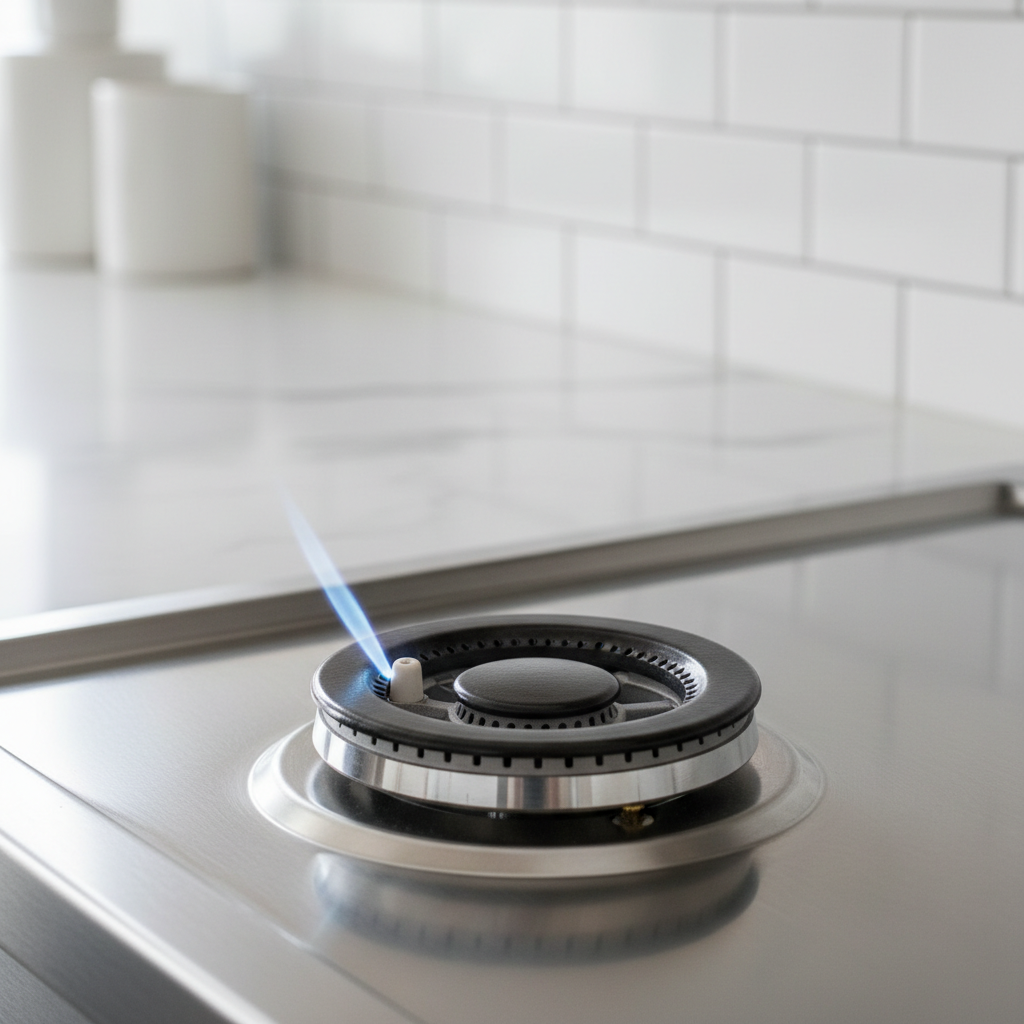
- Food Spills and Grease Buildup: The most frequent culprit. Spills can clog burner ports or coat the igniter, preventing a clean spark or proper gas flow.
- Moisture: Water from cleaning or condensation can temporarily short out the igniter, preventing a spark until it dries.
- Misaligned Burner Components: If the burner cap or head isn't seated correctly, gas dispersal will be uneven, and the igniter may not be able to ignite the gas effectively.
- Worn or Faulty Igniter: Over time, the ceramic igniter can get chipped, cracked, or simply wear out, leading to a weak or absent spark.
- Clogged Orifice: The tiny hole where gas emerges can become blocked, restricting the fuel supply to the burner.
Electrical · Panel or service upgrade
| Project category | Electrical |
|---|---|
| Problem type | Panel or service upgrade |
| Trade required | Electrical |
| Urgency | Planned project |
| Safety risk | High safety risk |
| DIY suitability | Licensed pro only |
| Cost category | High cost |
| Typical timeline | Permit plus utility scheduling, commonly 2–6 weeks |
| Contractor type | Licensed electrician |
Repair option
Add a subpanel when the main service is adequate.
Replacement option
Full service upgrade with utility coordination and permits.
Common causes
- Obsolete or recalled panel brands
- Service capacity too small for added loads
- No room for required AFCI/GFCI breakers
Relevant tools:project cost estimatorcompare quotes
Published May 30, 2026Last updated August 17, 2026
Tools & materials you'll need
Affiliate linksAs an Amazon Associate FixlyGuide earns from qualifying purchases — at no extra cost to you. Prices and availability are accurate as of publication and subject to change.
Quick Answer
If your gas stove burner fails to ignite, the most frequent causes stem from a dirty or obstructed igniter, clogged burner ports, or issues with gas reaching the burner. Simple troubleshooting steps, such as cleaning and drying the igniter, clearing burner port blockages, and ensuring proper burner cap and head alignment, can often restore ignition. Always verify the stove has power and that the gas supply valve is open.
The Problem
There's nothing more frustrating than a gas stove burner that refuses to light, especially when you've got a meal to cook. You turn the knob, hear the faint click-click-click of the igniter, but the flame never materializes. This common household problem can range from a minor annoyance to a major disruption, preventing you from using your appliance effectively. While it might seem like a complex issue, many of the underlying causes are surprisingly simple and can be resolved with basic tools and a bit of homeowner know-how. The key is to systematically diagnose the problem, starting with the most common and easiest fixes before moving on to more involved solutions.
How It Works
Understanding how a gas stove burner ignites is crucial for effective troubleshooting. When you turn a burner knob, two things happen simultaneously. First, the gas valve opens, allowing natural gas or propane to flow from your home's gas line, through a manifold, and up to the burner head. Second, an electrical circuit engages the igniter. Most modern gas stoves use a 'spark igniter' system. This system consists of a small ceramic igniter electrode, typically located next to the burner cap, and an ignition control module. When activated, the control module sends a high-voltage electrical pulse to the igniter. This pulse creates a spark that jumps a small gap from the igniter tip to the metal burner base or ground. As gas flows out of the burner ports, this spark ignites the gas, creating a flame. The igniter continues to spark for a few seconds until the flame is stable, at which point a flame sensor (sometimes integrated with the igniter) signals the control module to stop sparking. If any part of this sequence — gas flow, electrical spark, or environmental conditions like moisture — is interrupted or faulty, the burner simply won't light.
Step-by-Step Fix
1. Check for Power and Gas Supply — Ensure the stove has power and gas is flowing.
- Safety First: Before starting, verify the stove is plugged in and the circuit breaker hasn't tripped. For gas, check that the main gas supply valve to the stove (usually a yellow-handled lever behind the appliance) is in the 'open' position (parallel to the gas line). If other burners are working, gas supply to the appliance is likely fine.
- If gas is off: Slowly open the valve. Wait a few minutes for gas to reach the burners before attempting to light.
2. Clean the Igniter — Remove food debris or grease blocking the spark.
- Safety First: Unplug the stove or turn off power at the circuit breaker before cleaning. Allow burners to cool completely.
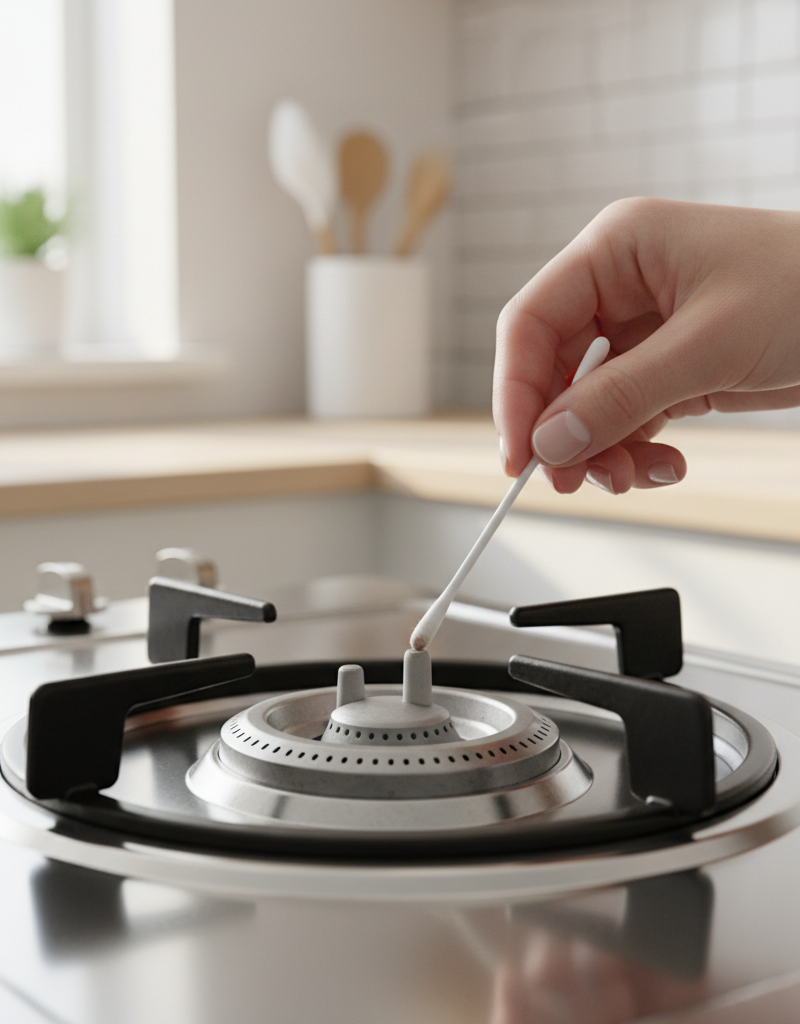
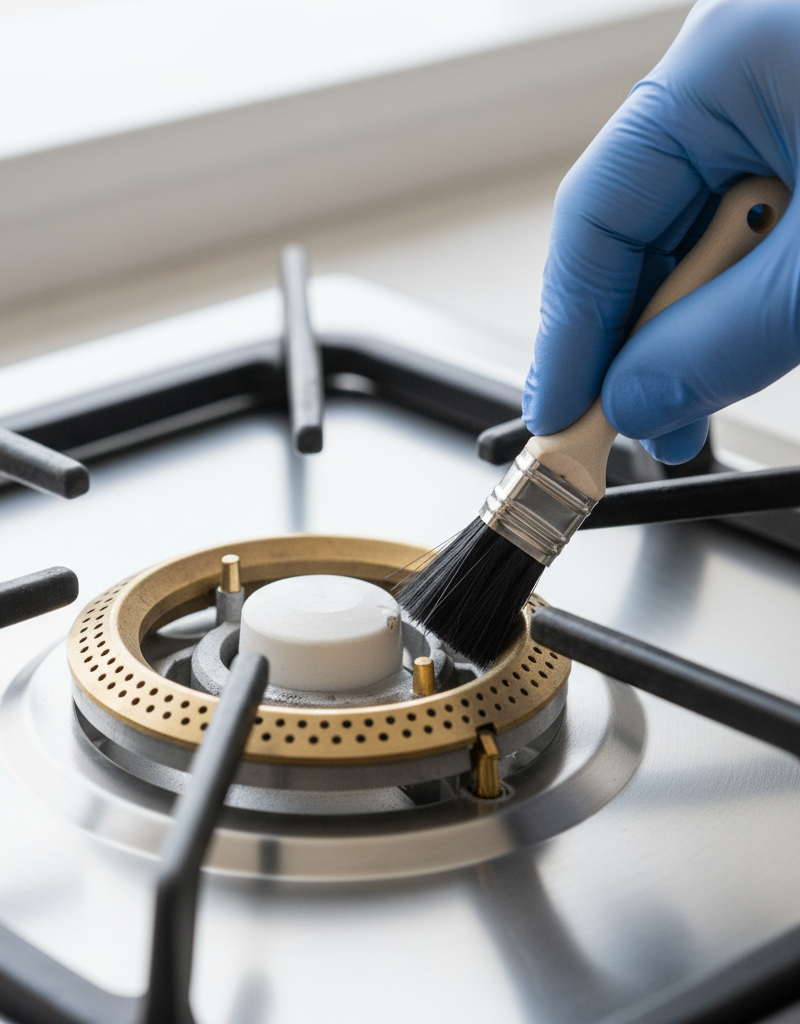
- Carefully remove the grates and burner caps. Use a soft-bristled brush (like an old toothbrush) or a cotton swab dipped in rubbing alcohol to gently clean the ceramic igniter electrode. Pay close attention to the small metal tip where the spark originates. Wipe away any accumulated grease, food particles, or moisture. Ensure the igniter is completely dry before proceeding.
- If igniter is wet: Allow it to air dry for several hours, or use a hairdryer on a low, cool setting to speed up the process.
3. Clear Clogged Burner Ports — Ensure gas can flow freely through the burner head.
- Safety First: Unplug the stove or turn off power at the circuit breaker. Burners must be cool.
- Lift off the burner head (the metal piece with small holes around the edge). Inspect the small holes, known as burner ports, for any clogs from spilled food or debris. Use a straightened paperclip, a sewing needle, or a specialized burner port clearing tool to gently poke through each hole, ensuring they are clear. Do not use a wooden toothpick, as it can break off and worsen the clog. Use compressed air if available to blow out any remaining debris.
- If ports are heavily corroded: Consider replacing the burner head. They are relatively inexpensive and can significantly improve flame performance.
4. Check Burner Cap and Head Alignment — Incorrect placement can prevent proper ignition and flame distribution.
- The burner cap (the smooth, round piece that sits on top of the burner head) and the burner head itself must be correctly seated and aligned. If they are even slightly askew, gas may not flow correctly, or the spark may not be able to reach the gas mixture.
- Place the burner head back onto its base, ensuring it sits flat and level. Then, place the burner cap firmly on top of the burner head, making sure it's centered and doesn't wobble. Some burner caps have a small pin or notch that aligns with a corresponding hole on the burner head – ensure these are correctly engaged.
- Test: Restore power and attempt to light the burner. If it still doesn't light, try swapping the unlit burner's cap and head with a known working burner's components to isolate the issue.
5. Assess Igniter Spark Strength — A weak or inconsistent spark indicates a failing component.
- Safety First: Be extremely cautious. Ensure no gas is flowing before testing the spark strength. Do this briefly.
- With the grates and burner cap removed, turn the burner knob to the 'light' position. Observe the igniter. You should see a consistent, strong blue-white spark jumping from the igniter tip. If the spark is orange, weak, or intermittent, the igniter itself might be faulty, or there could be an issue with the ignition control module.
- If spark is weak: Before replacing the igniter, check all wiring connections to the igniter and module for looseness or corrosion. If still weak, replace the igniter.
6. Look for Loose Wires — A disconnected wire can cut off power to the igniter.
- Safety First: Unplug the stove or turn off power at the circuit breaker. Burners must be cool.
- Carefully lift the stovetop surface (consult your stove's manual for specific instructions on how to access the wiring beneath the cooktop). Inspect the wiring leading to the igniter. Look for any loose, disconnected, or singed wires. Reconnect any loose wires firmly. If you see signs of burning or damage, the wire may need to be replaced. This step is more advanced and may require some comfort with basic electrical connections.
7. Inspect the Gas Orifice — A clogged orifice can restrict gas flow.
- Safety First: Unplug the stove and turn off the main gas supply valve to the appliance. Burners must be cool.
- Beneath the burner head (after removing it), you'll find a small brass fitting with a tiny hole – this is the gas orifice. Over time, grease or debris can accumulate and partially clog this critical component, restricting gas flow. Use a thin wire or the tip of a sewing needle to gently clear the orifice. Be extremely careful not to enlarge or damage the hole, as this can affect flame calibration.
- If orifice is damaged: Replace the orifice. Do not attempt to drill it out or alter its size.
Common Causes
- Food Spills and Grease Buildup: The most frequent culprit. Spills can clog burner ports or coat the igniter, preventing a clean spark or proper gas flow.
- Moisture: Water from cleaning or condensation can temporarily short out the igniter, preventing a spark until it dries.
- Misaligned Burner Components: If the burner cap or head isn't seated correctly, gas dispersal will be uneven, and the igniter may not be able to ignite the gas effectively.
- Worn or Faulty Igniter: Over time, the ceramic igniter can get chipped, cracked, or simply wear out, leading to a weak or absent spark.
- Clogged Orifice: The tiny hole where gas emerges can become blocked, restricting the fuel supply to the burner.
- Loose Electrical Connections: Wiring to the igniter or ignition module can come loose, interrupting the electrical path needed for sparking.
Common Mistakes
- Ignoring the easy fixes: Many homeowners immediately assume a major problem when a simple cleaning or relignment would solve it. Always start with the basics.
- Using harsh chemicals or metal scourers on igniters: This can damage the ceramic or metal tip, making the problem worse. Stick to gentle brushes and rubbing alcohol.
- Enlarging burner ports or orifices: Poking too aggressively or using an incorrect tool can permanently damage these components, leading to uneven flames or gas leaks. Use only appropriate-sized tools gently.
- Not disconnecting power/gas: Forgetting to unplug the stove or turn off the gas before working can lead to electrical shock or gas leaks, which are highly dangerous.
- Forcing components: If a burner head or cap doesn't fit easily, don't force it. There's likely an obstruction or an incorrect alignment. Forcing can cause damage.
- Overlooking surrounding burners: If only one burner is affected, it helps narrow down the problem. If all burners are out, it points to a more general issue like gas supply or power.
Cost & Time Breakdown
| Task | DIY Cost | Pro Cost | Time |
|---|---|---|---|
| Cleaning Igniter/Ports | $0–$5 | N/A | 15–30 minutes |
| Replacing Igniter | $20–$50 | $150–$250 | 30–60 minutes |
| Replacing Burner Head/Cap | $30–$80 | $120–$200 | 20–40 minutes |
| Assessing Gas Orifice | $0 | N/A | 15–30 minutes |
| Professional Diagnosis/Repair | N/A | $100–$400 (plus parts) | 1–2 hours (service call) |
Tips & Prevention
- Regular Cleaning: Make it a habit to wipe down your stovetop and beneath the burner caps after each use or at least weekly to prevent food buildup. This is the single best preventative measure.
- Immediate Spill Cleanup: Clean up spills as soon as they cool to prevent them from hardening and clogging ports or coating igniters.
- Proper Burner Assembly: Always ensure burner caps and heads are correctly seated after cleaning to avoid misalignment issues.
- Check Igniter Annually: Briefly inspect the igniters for any visual damage or excessive carbon buildup during a deeper cleaning session once a year.
- Avoid Submerging Burners: When cleaning burner heads and caps, avoid submerging the igniter electrodes in water. If they get wet, ensure they are completely dry before reassembly.
- Monitor Flame Color: A healthy gas flame is primarily blue with a faint yellow tip. If your flame is mostly yellow or orange, it could indicate incomplete combustion, possibly due to clogged ports or incorrect air-to-gas mixture, which might lead to ignition issues later.
When to Call a Professional
While many gas stove ignition issues are homeowner-fixable, there are clear instances when professional help is necessary. Immediately call a licensed gas appliance technician if you smell gas at any point, even faintly, without a flame present. This indicates a gas leak, which is extremely dangerous. You should also contact a professional if, after performing all the troubleshooting steps, the burner still refuses to light, especially if multiple burners are affected, or if you suspect a problem with the internal gas lines, gas valve, or electrical control module. Issues involving inconsistent gas flow, persistent clicking without ignition, or a burner that lights but produces an abnormal flame (e.g., very weak, sputtering, or mostly yellow) after deep cleaning should also be handled by an expert to ensure safety and proper appliance function.
Related Articles
Keep troubleshooting with these hand-picked guides from FixlyGuide:
- The #1 Mistake Homeowners Make When a Gas Burner Won't Light (And the Easy Fix) — A gas stove burner that won't light is a common issue, often due to a clogged igniter or burner port, which homeowners frequently misdiagno…
- The 5-Minute Trick When Your Range Hood Fan Suddenly Dies (It's Not Always the Motor) — Before you panic about a broken motor, learn the quick diagnostic steps to revive a dead range hood fan and restore proper kitchen ventilat…
- Why Your Outlet Died (Even If the Breaker's On) — Discover the hidden reasons an electrical outlet stops working, even when the circuit breaker appears to be on, and learn simple diagnostic…
- Why is Your Light Switch Hot? (The Hidden Danger Most Homeowners Miss) — A hot light switch isn't just uncomfortable; it's a critical warning sign of electrical issues that should never be ignored due to fire ris…
- Why Does Only One Room Have Flickering Lights? The Real Culprit — Flickering lights in a single room often point to a loose connection, a faulty bulb, or an overloaded circuit, rather than a whole-house el…
- Is Your Gutter Sagging After Every Storm? The Hidden Flaw Most Homeowners Miss — Discover the overlooked reason your gutters sag after every storm and learn the lasting fix that most homeowners miss.
Should you do this yourself?
Answer five quick questions before you start. Safety outranks savings every time.
Your experience with work like this
How high do you have to work?
Does the job involve any of these?
Will it need a permit?
Specialty tools
Free and instant. Educational guidance only — not a quote, inspection, or professional diagnosis.
What should this project cost?
Enter your project details for a realistic cost range before you call anyone.
Outlet and switch work usually $150–$400; panel upgrades commonly $1,800–$4,200.
- Regional adjustment
- National average
- Labor share (typical)
- ~$709
- Quotes to collect
- 3 written estimates
Educational estimate based on national averages — not a binding quote. Always confirm with written local estimates.
Before you start
Check the difficulty, permits, and safety risk — then decide whether to call a pro.
- Estimate this projectGet a cost range for your scope and ZIP before you call anyone.Open
- Get local estimatesSend one request and compare written estimates from vetted pros.Open
Free, no signup required. Estimates are educational guidance, not a quote or an inspection.
Frequently asked questions
Why is my gas burner clicking but not lighting?+
If your gas burner is clicking but not lighting, it typically means the igniter is sparking, but the gas isn't igniting. This is often caused by clogged burner ports preventing gas flow, an igniter that's too dirty or wet to create a strong enough spark, or a misaligned burner cap that obstructs gas release to the spark.
Can a wet igniter cause a gas burner not to light?+
Yes, a wet igniter is a very common reason a gas burner won't light. Moisture can short-circuit the electrical current, preventing a strong spark from forming. Ensure the igniter is completely dry after cleaning or spills before attempting to light the burner.
How do I know if my gas stove igniter is bad?+
You can suspect a bad igniter if it produces no spark at all, or if the spark is very weak, inconsistent, or orange instead of a strong blue-white. Before replacing, ensure the igniter is clean and dry, and all electrical connections are secure. If the issue persists, replacement may be necessary.
What if only one gas burner is not lighting?+
If only one burner is not lighting, the problem is usually isolated to that specific burner. Focus your troubleshooting on cleaning its igniter, clearing its burner ports, checking for proper alignment of its burner cap and head, and inspecting its specific gas orifice.
Is it dangerous if my gas burner won't light?+
It can be. If you smell gas when the burner fails to light, it indicates gas is escaping unburnt, which is a fire and explosion hazard. In such cases, turn off the gas supply and call a professional immediately. If there's no gas smell and only the igniter isn't working, it's generally not dangerous, but should still be addressed quickly.
Discussion
Loading comments…