- Ground Faults (GFCI trips):
- Water hitting electrical devices or outlets.
- Damaged insulation on cords or wiring.
- Bad appliances or power tools leaking current.
- Touching a live wire while grounded — this is exactly what the GFCI’s there to prevent.
Electrical · Panel or service upgrade
| Project category | Electrical |
|---|---|
| Problem type | Panel or service upgrade |
| Trade required | Electrical |
| Urgency | Planned project |
| Safety risk | High safety risk |
| DIY suitability | Licensed pro only |
| Cost category | High cost |
| Typical timeline | Permit plus utility scheduling, commonly 2–6 weeks |
| Contractor type | Licensed electrician |
Repair option
Add a subpanel when the main service is adequate.
Replacement option
Full service upgrade with utility coordination and permits.
Common causes
- Obsolete or recalled panel brands
- Service capacity too small for added loads
- No room for required AFCI/GFCI breakers
Relevant tools:project cost estimatorcompare quotes
Published August 20, 2026Last updated August 20, 2026
Tools & materials you'll need
Affiliate linksAs an Amazon Associate FixlyGuide earns from qualifying purchases — at no extra cost to you. Prices and availability are accurate as of publication and subject to change.
Quick Answer
Alright, let’s cut to the chase: GFCIs and AFCIs both protect your family, but they’re doing two different jobs. A GFCI—that’s a Ground Fault Circuit Interrupter—is looking out for people. It trips when it senses electricity going somewhere it shouldn’t, like through you, and that can keep a nasty shock from turning into something worse. An AFCI—that’s an Arc Fault Circuit Interrupter—is protecting the house. It spots those sneaky electrical arcs that can kick off a fire. In a modern home, you really want both.
The Problem
I’ve seen plenty of homeowners get tangled up on GFCIs and AFCIs. They know they matter, they see ’em in code books or when an inspector rolls through, but the “why” and “what’s the difference?” gets fuzzy fast. Some folks figure if they’ve got one, they don’t need the other. Others swap in a standard breaker when an AFCI trips, thinking it’s just being fussy. No dice. These aren’t interchangeable, and mixing them up can leave you open to a shock or, worse, a house fire. You’ve got to know what each one does if you want real safety and code compliance.
How It Works
Let’s talk electricity for a second. Power comes into your home through the main panel, then it branches out through circuits to your outlets, lights, and appliances. Everything’s happy when the current flows the way it should: out on the “hot” wire and back on the “neutral” wire. That’s the normal path. But every so often, things go sideways, and that’s where GFCIs and AFCIs come in.
A Ground Fault Circuit Interrupter (GFCI) is basically a super-sensitive current monitor. It watches the electricity going out on the hot wire and back on the neutral wire. If there’s even a tiny mismatch—say, 4 or 5 milliamps (that’s 0.004 or 0.005 amps)—it means some current is leaking out of the circuit, usually through a ground fault. That could be a wet hand on an appliance, a frayed cord, or water splashing into an outlet. When that imbalance shows up, the GFCI trips in a fraction of a second—we’re talking 1/40th of a second, sometimes even faster—shutting the power off before your body can take a fatal hit. It’s a lifesaver. Plain and simple.
Arc Fault Circuit Interrupters (AFCIs) are a different animal. They’re not hunting ground faults. They’re listening, in a way, for electrical arcing. Arcs happen when electricity jumps through the air between two conductors. Think tiny lightning bolt. That spark throws off a lot of heat, and it can light up insulation, wood, or anything else nearby. AFCIs use electronics to read the electrical waveform on the circuit. They’re looking for the pattern of a dangerous arc—like a loose wire in an outlet, a damaged appliance cord, or a nail punched through a cable. When they catch that pattern, they trip the circuit and kill the power before a little arc turns into a big fire. They’ll ignore the normal little arcs you get in a switch, but they’re sharp enough to catch the bad ones. I pulled a water heater in Frisco last month that had exactly this kind of hidden damage on the branch circuit, and the AFCI had been doing its job long before the wall showed anything obvious.
These two devices work together. One’s watching out for you. The other’s watching out for the structure.
Step-by-Step Fix
It’s less about “fixing” and more about “resetting” or “installing” these devices. If something tripped, always figure out why before you just slap it back on. Don’t reset and wander off, especially with GFCIs or AFCIs.
-
Identify the Tripped Device — Look for the button or handle
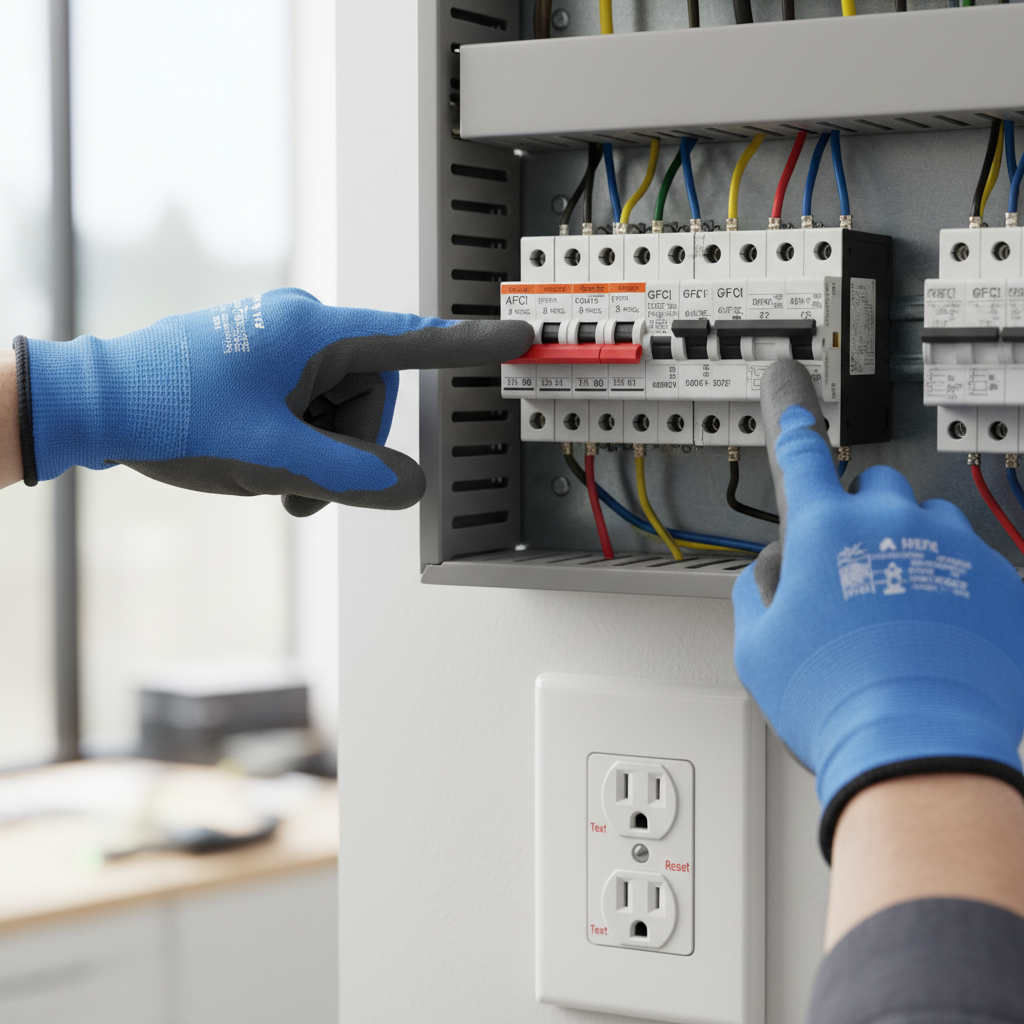
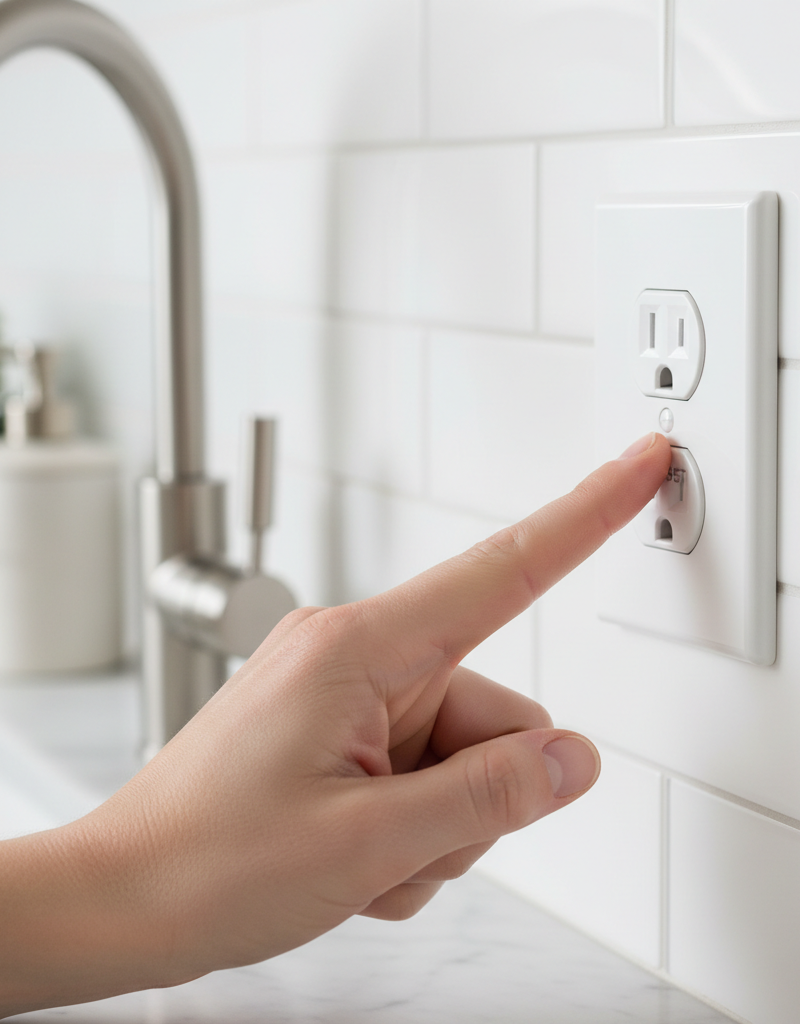
Head to the electrical panel or the outlet in question. On a GFCI, you’ll see “Test” and “Reset” right on the receptacle. On an AFCI breaker, it usually looks like a regular breaker, but it may have a test button or a different-colored handle than the others. The handle is often sitting in that middle, tripped position. -
Unplug or Disconnect Everything — Clear the circuit
Before you even think about resetting it, unplug every lamp, appliance, charger, and gadget on that circuit. Yep, all of it. This matters. You don’t want to reset the thing only to have it trip again instantly, and you sure don’t want to miss a bigger problem hiding in plain sight. -
Reset the GFCI Outlet — Press the reset button
If it’s a GFCI outlet, push the “Reset” button firmly. You should hear a click, and the power ought to come back on. If it trips right away or won’t reset, there’s still a fault somewhere on that line. Call an electrician if it won’t stay reset after everything’s unplugged. -
Reset the AFCI Breaker — Full off, then full on
For an AFCI breaker in the service panel, you can’t just flick it back from the tripped position. You’ve got to push the handle firmly all the way to the OFF position first, then push it all the way to the ON position. If it trips again right away, you’ve got an arc fault somewhere in that circuit. Don’t sit there playing whack-a-mole with it; that’s how you get into real trouble. -
Test the Device — Verify its function
After resetting, you should always test the device. For a GFCI, plug in a small lamp, then press the “Test” button. The GFCI should trip and cut power to the lamp. Hit “Reset” again to restore it. For an AFCI breaker, press the “Test” button on the breaker itself. It should trip. Flip it fully OFF, then ON again to reset. If either one won’t trip during testing, it’s bad and needs to be replaced right away. I’d test GFCIs monthly and AFCIs every few months at least—call it a habit. -
Reconnect Devices One by One — Isolate the problem
If the GFCI or AFCI tripped and reset fine, start plugging things back in one at a time. That’s how you find the troublemaker. If it trips again the moment you connect a certain appliance or tool, there’s your culprit. That item needs repair or replacement. -
Inspect Wiring and Outlets — Look for visible damage
If it still trips after everything’s unplugged, or if there’s no single appliance causing it, the problem’s probably in the wiring or the outlet itself. Look for loose connections, frayed wires, burn marks, or damaged receptacles. This is where you might need a pro. Back in ’08, I was working a renovation in the Highlands neighborhood, near Cherokee Park. Lady kept losing a brand-new AFCI in the kitchen. We unplugged everything, and it still tripped. Turns out a drywall nail had barely nicked the Romex behind an outlet, causing a tiny arc every time the house settled or somebody walked across the floor. Took us a couple hours to trace it, but that’s exactly the kind of invisible junk an AFCI is built to catch. -
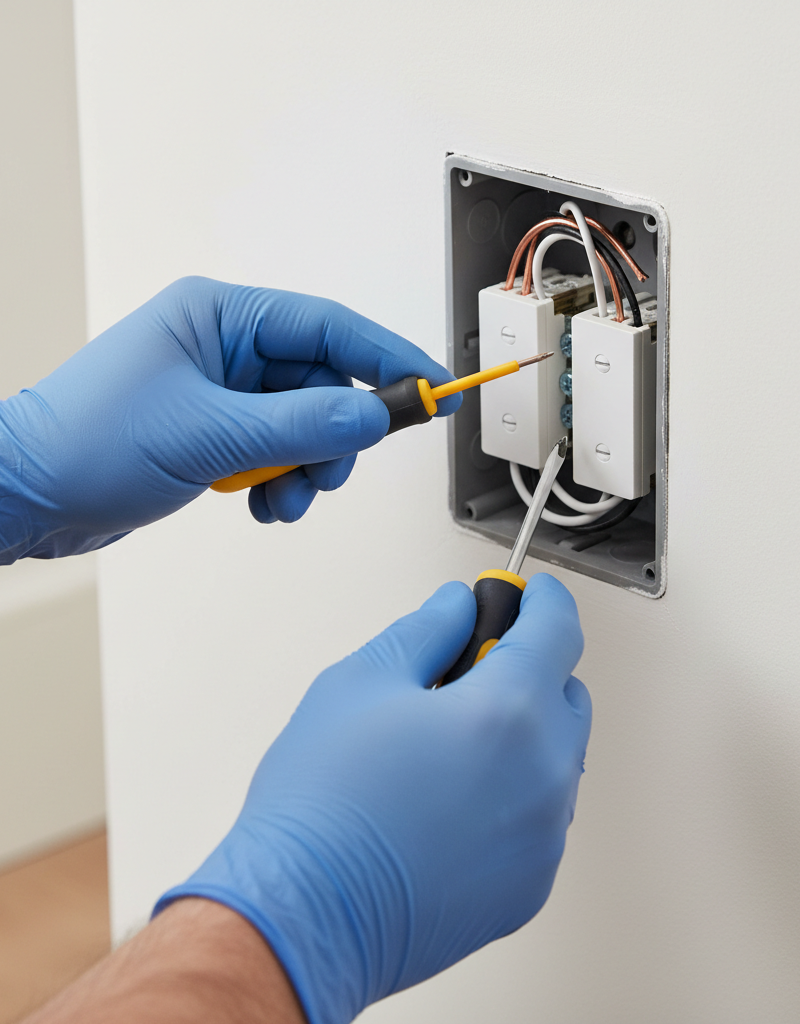
Replace Faulty Device — Only if you're comfortable with electrical work
If testing shows the GFCI or AFCI itself is bad, it needs to be replaced. If it’s an outlet, you can usually swap it yourself if you’re comfortable working with electricity—just turn off the power at the main breaker first. If it’s a breaker in the panel and you’re not experienced, please call an electrician. Messing around in a live panel isn’t for the faint of heart, or the untrained.
Common Causes
-
Ground Faults (GFCI trips):
- Water hitting electrical devices or outlets.
- Damaged insulation on cords or wiring.
- Bad appliances or power tools leaking current.
- Touching a live wire while grounded — this is exactly what the GFCI’s there to prevent.
- Overloaded circuits (less common for GFCIs specifically, more of a standard breaker issue).
-
Arc Faults (AFCI trips):
- Damaged cords — frayed, pinched, or cut.
- Loose connections at outlets, switches, or light fixtures.
- Nails or screws hitting electrical cables inside the wall.
- Overheated or damaged wiring in walls or ceilings.
- Damaged appliance plugs.
- Rodent damage to wire insulation.
Common Mistakes
- Ignoring Persistent Trips: Don’t keep resetting a GFCI or AFCI that won’t stay on. It’s trying to warn you about a problem that could shock you or burn your house down. Find the cause. Don’t bypass the warning.
- Installing the Wrong Device: Thinking a GFCI covers arc faults or an AFCI covers shock protection. They do different work. You need the right tool for the right job, and in a lot of modern homes, you need both.
- Not Testing Regularly: GFCIs and AFCIs can wear out or go bad. Testing them monthly for GFCIs and every few months for AFCIs helps make sure they’re still doing their job. Same idea as checking smoke detector batteries.
- Overlooking Downstream Protection: One GFCI or AFCI can protect multiple outlets downstream. Putting in too many isn’t necessarily harmful, but knowing what’s already covered can save you time and money. And if an AFCI-protected circuit feeds a GFCI outlet, that AFCI protects that GFCI outlet too.
- DIY Installation Without Caution: Electrical work isn’t a game. If you’re not 100% sure what you’re doing, you can hurt yourself or start a fire. Turn off the power at the main breaker before touching any circuit.
Cost & Time Breakdown
Here’s a rough idea of what you’re looking at if you’re installing or replacing these safety devices.
| Task | DIY Cost | Pro Cost | Time (DIY) |
|---|---|---|---|
| GFCI Outlet (single) | $15-$30 | $100-$150 | 15-30 minutes |
| AFCI Breaker (single) | $30-$60 | $150-$250 | 30-60 minutes |
| GFCI Breaker (single) | $30-$60 | $150-$250 | 30-60 minutes |
| Combination AFCI/GFCI Breaker | $45-$80 | $180-$300 | 30-60 minutes |
| Troubleshooting (Pro) | $0 (your time) | $100-$200/hr (min) | Varies, 1-2+ hours |
Keep in mind, those numbers are just for parts and install. If there’s a deeper wiring issue causing the trips, that’s extra troubleshooting and repair time. A lot of folks forget a pro’s time isn’t just “installing,” it’s diagnosing. When that AFCI breaker starts acting up, it can take some real hunting to find the loose connection or bad wire hiding behind drywall. That’s where the hourly rate starts climbing.
Tips & Prevention
- Monthly GFCI Tests: Make it a habit to press the “Test” button on all your GFCI outlets once a month. Takes a second, and it tells you the protection’s still there.
- Annual AFCI Tests: Hit the test button on AFCI breakers once a year. Good reminder. Quick check.
- Inspect Cords Regularly: Look over appliance cords and extension cords now and then. Frays, cuts, pinches — if you see damage, replace the cord. Those things are fire hazards waiting to happen.
- Don't Overload Outlets: Daisy-chaining power strips or loading one outlet with a bunch of high-draw appliances is asking for trouble. It can overheat wiring and cause arc faults, even on AFCI circuits. Keep the load reasonable.
- Mind Your DIY Projects: Be careful hanging pictures, mounting TVs, or driving fasteners into walls. Know what’s behind the drywall or plaster before you drill or nail. A decent stud finder with electrical detection can save you a headache.
- Professional Electrical Inspections: If you’ve got an older home, or you’re buying one, a periodic inspection from a licensed electrician can catch trouble before it turns into an emergency. They can spot worn wiring or bad installs that could lead to ground or arc faults.
- Understand Code Requirements: During renovations or new construction, make sure your contractor is putting GFCIs and AFCIs where current code calls for them. Those rules get updated for a reason — safety.
When to Call a Professional
Look, I’m all for homeowners handling DIY projects, but there’s a line. If your GFCIs or AFCIs keep tripping and you can’t pin down why after unplugging everything, it’s time to bring in a licensed electrician. Don’t keep resetting a breaker that trips again right away; that’s how you cook wires and start a fire. If you see burn marks around an outlet, hear buzzing or sizzling from the panel, or smell burning plastic, shut off the main power and call an electrician immediately. You should also call a pro if you need to install new breakers in your main service panel, especially if you’re not comfortable working around high voltage or don’t understand the panel layout. This isn’t the kind of work you figure out by trial and error. The stakes are way too high.
FAQ
Q: Where are GFCIs typically required? A: GFCIs are usually required in spots where water’s around, like bathrooms, kitchens, laundry rooms, garages, unfinished basements, and outdoor outlets. Basically, anywhere the shock risk jumps because water’s in the mix.
Q: Where are AFCIs typically required? A: AFCI protection is generally required for most circuits feeding outlets in living rooms, bedrooms, dining rooms, hallways, dens, and similar rooms where folks actually live. The point is to protect against fire hazards in the spaces where people spend time.
Q: Can I replace a regular outlet with a GFCI outlet myself? A: If you’re comfortable with basic electrical work, know how to shut off power safely, and can follow a wiring diagram, yes. If you’re not sure, hire a licensed electrician and call it a day. That’s cheaper than a mistake.
Q: My AFCI breaker keeps tripping, but I can't find anything wrong. What should I do? A: That usually points to an intermittent arc fault, and those can be maddening to track down. After you unplug everything on the circuit, if it still trips, odds are the problem’s in the wiring inside the walls. That’s a job for a qualified electrician with the right diagnostic gear.
Q: Is there such a thing as a combination GFCI/AFCI device? A: Absolutely. They’re called Combination Arc Fault Circuit Interrupters (CAFCI) or Dual Function Circuit Interrupters (DFCI). They give you both arc fault and ground fault protection for the whole circuit, and they’re becoming standard in a lot of newer installs, often because code requires them.
Q: How can I tell if an outlet is GFCI protected if it doesn't have the test/reset buttons? A: If that outlet is downstream from a GFCI outlet or a GFCI breaker, it’s protected. Sometimes there’s a little sticker on the cover plate. You can test it by plugging in a lamp, then pressing the “Test” button on a GFCI outlet farther up the line. If the lamp shuts off, that outlet’s protected.
Q: Do older homes need GFCIs and AFCIs? A: Code usually applies to new construction or major remodels, but adding GFCI and AFCI protection to an older home is a smart upgrade. It might not be required until you renovate, but it can cut the risk of shock and fire way down.
Q: Can a surge protector replace GFCI or AFCI protection? A: No. Not even close. Surge protectors guard your electronics from voltage spikes. They don’t do a thing for ground faults or arc faults. Different problems, different protection. You need all three if you want solid coverage. And a surge protector won’t trip a breaker; it just absorbs the surge or burns itself out. Different beast entirely.
Q: My dryer/oven circuit is tripping an AFCI. What gives? A: Big appliance circuits, especially 240V loads like electric ranges or dryers, often have different requirements and sometimes use dedicated breakers without AFCI protection, depending on code and the appliance. But if an AFCI is on that circuit and it’s tripping, there’s still an arc fault in the mix. Check the cord, the outlet, and the appliance connections for damage. If it’s a dedicated circuit without an AFCI that’s tripping, you’re likely dealing with an overload or short, not an arc fault.
Q: What's the lifespan of a GFCI or AFCI device? A: They don’t have a hard expiration date, but GFCIs are generally expected to last about 10-15 years, and AFCIs usually fall in the same range. Regular testing is how you know they’re still working. If they fail the test or start tripping for no clear reason, it’s time to replace them.
Related Articles
Keep troubleshooting with these hand-picked guides from FixlyGuide:
- The Invisible Dust: Why Your Renovation Could Be Poisoning Your Family — Renovating an older home can stir up a hidden danger: lead-based paint dust. Understanding the risks and taking proper precautions is cruci…
- The Invisible Dust: Why Your Renovation Could Be Poisoning Your Family — Renovating a pre-1978 home can unknowingly expose your family to lead dust. Learn how to identify, contain, and safely manage lead-based pa…
- 7 Hidden Equity Drains Costing You Thousands Annually — Your home is an asset, but silent problems like minor leaks, poor insulation, and deferred maintenance can drain its value. Discover the se…
- The 12 Checks That Prevent 80% of Costly Home Repairs — Don't wait for a disaster. Our comprehensive monthly home maintenance checklist reveals the surprising, simple tasks that catch small issue…
- Is a Wall-Mounted Pressure Washer Right for Your Garage? The Unvarnished Truth — Discover if a wall-mounted pressure washer is the right cleaning solution for your home, offering a powerful and space-saving alternative t…
- The Nasty Truth About Your Bathroom Sink Smell (And the $10 Fix) — Uncover the real culprit behind that foul odor from your bathroom sink drain and learn a simple, effective, and cheap DIY fix to eliminate…
Repair or replace this system?
Plug in four numbers and see which choice holds up financially.
Free and instant. Educational guidance only — not a quote, inspection, or professional diagnosis.
Questions to ask before you sign
Ask every contractor the same questions and the cheapest bid stops looking cheapest. Check them off as you go — your progress is saved on this device.
Free, no signup. Bring this to every walkthrough so you compare bids on the same terms.
What should this project cost?
Enter your project details for a realistic cost range before you call anyone.
Outlet and switch work usually $150–$400; panel upgrades commonly $1,800–$4,200.
- Regional adjustment
- National average
- Labor share (typical)
- ~$709
- Quotes to collect
- 3 written estimates
Educational estimate based on national averages — not a binding quote. Always confirm with written local estimates.
Repair or replace?
Run the age, cost ratio, and repair history through the calculator before you commit.
- Estimate this projectGet a cost range for your scope and ZIP before you call anyone.Open
- Get local estimatesSend one request and compare written estimates from vetted pros.Open
Free, no signup required. Estimates are educational guidance, not a quote or an inspection.
Get the print-ready PDF of this guide
A clean, ad-free, printable version you can keep on your phone or pin to the workshop wall. Free with a FixlyGuide account.
- Print-optimized layout
- Tools, materials & every step included
- Saved to your account
This article was independently written by FixlyGuide based on the source topic.
Frequently asked questions
Where are GFCIs typically required?+
GFCIs are usually required in areas where water is present, like bathrooms, kitchens, laundry rooms, garages, unfinished basements, and outdoor outlets. Basically, anywhere there's a higher risk of electrocution from a ground fault.
Where are AFCIs typically required?+
AFCI protection is generally required for most circuits feeding outlets in living rooms, bedrooms, dining rooms, hallways, dens, and similar habitable rooms. The idea is to protect against fire hazards in areas where people live and sleep.
Can I replace a regular outlet with a GFCI outlet myself?+
If you're comfortable with basic electrical work, understand how to safely shut off power, and can follow wiring diagrams, yes. However, if you're unsure, it's always best to hire a licensed electrician to ensure proper installation and safety.
My AFCI breaker keeps tripping, but I can't find anything wrong. What should I do?+
This is a classic symptom of an intermittent arc fault, which can be tough to trace. After unplugging everything on the circuit, if it still trips, it's likely a wiring issue within the walls. This is definitely a job for a qualified electrician with diagnostic tools.
Is there such a thing as a combination GFCI/AFCI device?+
Absolutely! They're called Combination Arc Fault Circuit Interrupters (CAFCI) or Dual Function Circuit Interrupters (DFCI). These breakers provide both arc fault and ground fault protection for the entire circuit and are becoming standard in many newer installations, often required by code.
How can I tell if an outlet is GFCI protected if it doesn't have the test/reset buttons?+
If an outlet is downstream from a GFCI outlet or a GFCI breaker, it will be protected. Sometimes, these "protected" outlets are labeled with a small sticker. You can test it by plugging in a lamp, then pressing the "Test" button on a GFCI outlet further up the circuit. If the lamp goes out, it's protected.
Do older homes need GFCIs and AFCIs?+
While codes typically apply to new construction or major renovations, adding GFCI and AFCI protection to older homes is a smart safety upgrade. It might not be legally required until you renovate, but it significantly reduces the risk of shock and fire.
Can a surge protector replace GFCI or AFCI protection?+
No, absolutely not. Surge protectors shield your electronics from voltage spikes. They do nothing to protect against ground faults (shock) or arc faults (fire). They address entirely different electrical issues. You need all three for comprehensive protection. Plus, a surge protector won't trip a breaker; it just absorbs the surge or sacrifices itself. It's a different beast entirely.
My dryer/oven circuit is tripping an AFCI. What gives?+
Large appliance circuits, especially for 240V appliances like electric ranges or dryers, often have different requirements and sometimes use dedicated breakers without AFCI protection, depending on code and appliance type. However, if an AFCI *is* on such a circuit and tripping, it still indicates an arc fault. Check the appliance cord, the outlet, and the connections inside the appliance itself for damage. If it's a dedicated circuit without an AFCI that's tripping, it's likely an overload or short, not an arc fault.
What's the lifespan of a GFCI or AFCI device?+
While they don't have a strict expiration date, GFCIs are generally expected to last about 10-15 years, and AFCIs typically have a similar lifespan. Regular testing helps confirm they're still working. If they fail the test or trip frequently without an apparent cause, it's time for a replacement.

Discussion
Loading comments…