- The Secret to Scoring Deep Grill Discounts (Before Everyone Else Does) — Unlock massive savings on top-brand grills and outdoor cooking essentials by understanding the overlooked retail inventory cycles before Me…
- Is That Sweet Car Smell a Secret Killer? (& 6 Other Odors to Watch For) — Unusual odors in your car aren't just unpleasant; they're often critical warnings of underlying mechanical issues that could compromise saf…
- The 4 Common Hummingbird Food Mistakes (And How to Make Nectar They'll Love) — Avoid common pitfalls when making hummingbird food to ensure a healthy and attractive treat for your backyard visitors.
- The Sneaky Way a Gas Tax Freeze Could Raise Your Property Bill — A gas tax freeze promises immediate relief at the pump, but for homeowners, it can trigger hidden costs, from deteriorating roads to potent…
- The 6 Cleaning Secrets Hiding in Your Power Drill (Plus Attachments to Master) — Your power drill isn't just for DIY projects; with the right attachments, it's a powerful and efficient cleaning tool for tackling tough gr…
Published July 27, 2026Last updated August 17, 2026
Tools & materials you'll need
Affiliate linksAs an Amazon Associate FixlyGuide earns from qualifying purchases — at no extra cost to you. Prices and availability are accurate as of publication and subject to change.
Quick Answer
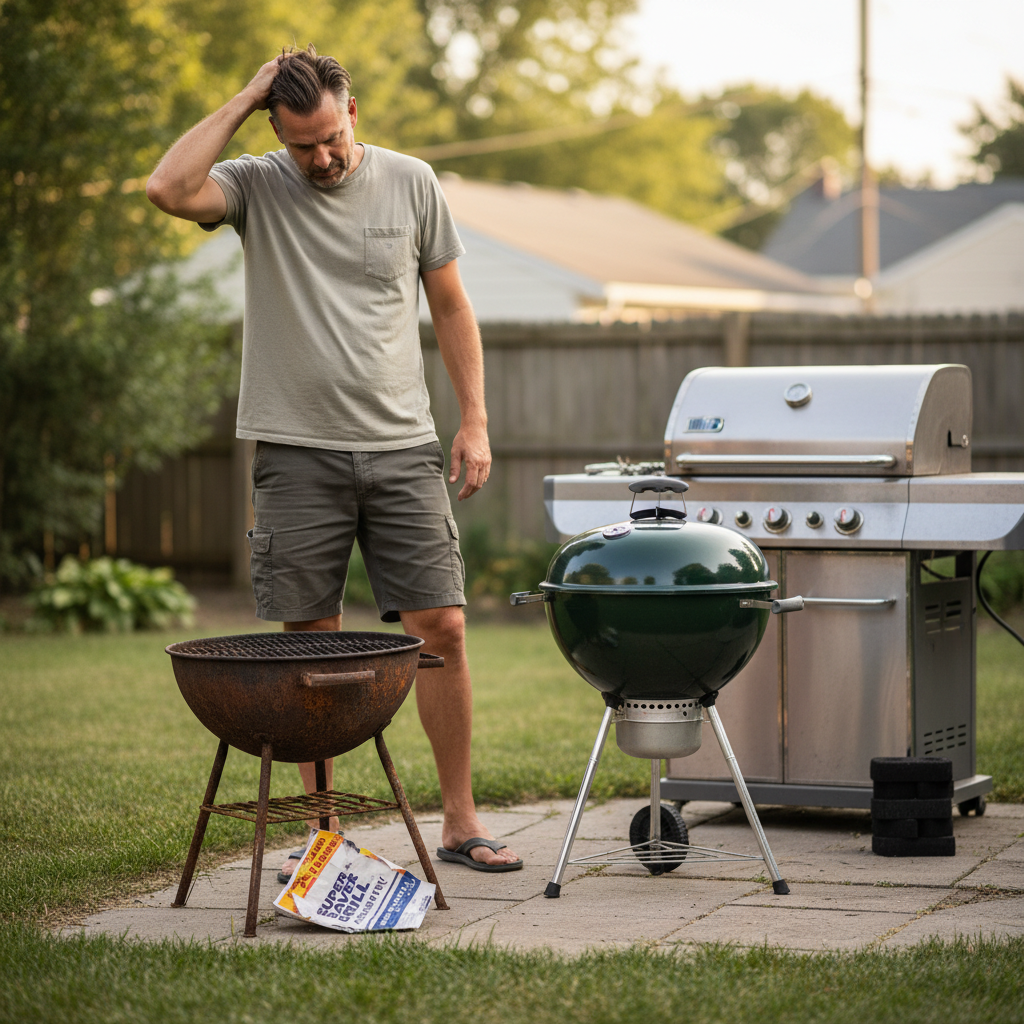
Don’t let a big discount sign fool ya. That shiny new grill on sale might look like a steal, but if it doesn’t fit how you actually cook, the space you’ve got, or if it’s just plain cheaply built, you’re not saving money — you’re tossing it out the window. I’ve seen homeowners in North Ridgeville blow through three cheap grills in five years, while their neighbor’s 15-year-old Weber just keeps on chugging. It’s all about matching the grill to your lifestyle, not just chasing the sticker price.
The Problem
Every summer, I get calls from folks fed up with their grill. It’s either rusting out after a year, struggling to hold a steady temperature, or just flat-out falling apart. And almost every time, it started with a “deal.” They saw a big percentage off and figured they’d hit the jackpot. What they didn’t realize is a lot of those deeply discounted grills are entry-level models built with thinner metal, cheaper parts, or they’re a clearance item for a reason. You end up buying a new one every few years, and that adds up fast — way more than if you’d just spent a little more on a quality grill in the first place. Classic buy cheap, buy twice. Not exactly the dream when you’re trying to enjoy a backyard cookout.
How It Works
Grills, at their core, are pretty simple: you’ve got a heat source, a cooking surface, and a way to hold that heat in. But the devil’s in the details.
Fuel Types:
-
Propane Grills: These are the most common. They run off liquid propane from a tank hooked up through a regulator to the burners. Those burners, usually stainless steel or cast iron, light the gas and heat the diffusers — flavorizer bars or heat tents — which spread heat out to the cooking grates. Good propane grills use heavy-gauge burners that give you even heat and hold up for the long haul. The cheap ones? Their burners rust out quick, and then you’re fighting uneven heat and flare-ups all summer long. You’ll usually see 2-6 main burners putting out anywhere from 10,000 to 15,000 BTUs each.
-
Charcoal Grills: Old-school, and I mean that in a good way. You light charcoal briquettes or lump charcoal, and once they’re going, they put out intense heat and that smoky flavor everybody talks about. Air vents on the bottom and lid let you control temperature by managing oxygen. More air means a hotter fire. Better charcoal grills use thicker steel, tight-fitting lids, and vent controls that actually do what they’re supposed to do, which matters if you’re trying to run low-and-slow for 8-12 hours on one load of fuel. My dad’s old kettle grill is pushing 40 years old — now that’s quality.
-
Pellet Grills/Smokers: These are a nice mix of convenience and flavor. Hardwood pellets get fed from a hopper into a fire pot by an auger, where an ignition rod lights them up. A fan moves the smoke and heat around the cooking chamber. A digital controller handles the auger speed and fan, keeping the temp right where you set it, often within 5°F of the target. They can run from under 200°F for smoking all the way up to 500°F for searing, though some models go higher. The electronics are a big chunk of the cost and the complexity here, no question.
-
Natural Gas Grills: Pretty similar to propane, but they hook straight to your home’s natural gas line. No more propane tank refills, which is nice, but you do need a permanent gas line connection. That can get pricey if you don’t already have one. These usually run a little lower in BTUs than propane versions because natural gas has less energy per cubic foot. Same burner setup, same heat dispersal idea.
Construction and Heat Retention:
Beyond the fuel, a grill’s ability to hold and spread heat is huge. It comes down to the materials:
-
Grates: Cast iron — enameled or bare — holds heat like a champ, which is how you get those nice sear marks. Stainless steel is easier to clean, but it usually doesn’t hold heat as well. Porcelain-coated steel is common and more affordable, but it can chip if you’re rough with it.
-
Lid and Firebox: Thicker steel or cast aluminum means better insulation, and that gives you steadier temps, especially when it’s windy or cold out. Cheap grills use thin sheet metal that leaks heat like crazy. I’ve got one client who bought a big-box special; on a mild 50°F day in the fall, he can barely get it over 300°F. No good if you’re trying to sear a steak.
-
Burners and Igniters: Good stainless steel burners (304 grade or higher) last a long time. Brass or cast iron burners are solid too. Cheap aluminum burners corrode fast — that thing’s toast before you know it. Igniters should be dependable, whether it’s a push-button piezoelectric setup or a battery-powered electronic ignition. Just make sure they’re protected from grease and debris.
Once you understand those basic pieces, it gets a lot easier to see past the shiny outside and figure out what a grill’s really worth, especially when it’s on sale. You want one built for consistency and longevity, not just a quick price tag drop.
Step-by-Step Fix (for assessing grill deals)
Alright, so you’ve got your eye on a screaming deal. Don’t grab the wallet just yet. Here’s how I’d size it up before I’d call it a buy.
-
Define Your Needs — Before you even start shopping, figure out what you actually need.
- Consider: How many people do you usually cook for? Small family (2-4 people) or big backyard parties (8+)? What kind of food do you make most often — burgers and hot dogs, or roasts and smoked briskets? Do you’ve got room for a monster grill, or do you need something compact? Sorting that out first keeps you from overbuying or coming up short.
-
Research Fuel Types — Propane, charcoal, pellets, natural gas... they all’ve got their ups and downs.
- Pros & Cons: Propane heats up fast and is easy to use. Charcoal gives you that classic smoky flavor, but it takes longer. Pellet grills are great if you want precision smoking. Natural gas means you never mess with a tank refill. Think about what fits your routine and what you want to spend on fuel. [Link to article: /article/propane-vs-charcoal-grill-deep-dive]
-
Inspect Construction Quality — This is where most
Related Articles
Keep troubleshooting with these hand-picked guides from FixlyGuide:
- The Secret to Scoring Deep Grill Discounts (Before Everyone Else Does) — Unlock massive savings on top-brand grills and outdoor cooking essentials by understanding the overlooked retail inventory cycles before Me…
- Is That Sweet Car Smell a Secret Killer? (& 6 Other Odors to Watch For) — Unusual odors in your car aren't just unpleasant; they're often critical warnings of underlying mechanical issues that could compromise saf…
- The 4 Common Hummingbird Food Mistakes (And How to Make Nectar They'll Love) — Avoid common pitfalls when making hummingbird food to ensure a healthy and attractive treat for your backyard visitors.
- The Sneaky Way a Gas Tax Freeze Could Raise Your Property Bill — A gas tax freeze promises immediate relief at the pump, but for homeowners, it can trigger hidden costs, from deteriorating roads to potent…
- The 6 Cleaning Secrets Hiding in Your Power Drill (Plus Attachments to Master) — Your power drill isn't just for DIY projects; with the right attachments, it's a powerful and efficient cleaning tool for tackling tough gr…
- The 3 Permanent Weed Killers No One Talks About (And How to Use Them Safely) — Discover three overlooked, highly effective methods for permanently eliminating weeds from your yard, moving beyond temporary fixes to long…
What should this project cost?
Enter your project details for a realistic cost range before you call anyone.
Cost depends heavily on which system turns out to be the source.
- Regional adjustment
- National average
- Labor share (typical)
- ~$1,620
- Quotes to collect
- 3 written estimates
Educational estimate based on national averages — not a binding quote. Always confirm with written local estimates.
Get the print-ready PDF of this guide
A clean, ad-free, printable version you can keep on your phone or pin to the workshop wall. Free with a FixlyGuide account.
- Print-optimized layout
- Tools, materials & every step included
- Saved to your account
This article was independently written by FixlyGuide based on the source topic.
Frequently asked questions
How long should a good grill last?+
A well-maintained, quality grill should last anywhere from 10 to 15 years, sometimes even longer for high-end models. Cheaper grills often only last 2-5 years before major components fail or rust sets in.
What's the most common mistake homeowners make when buying a grill?+
The biggest mistake I see is focusing solely on the price or discount percentage. Homeowners often overlook construction quality, warranty, and whether the grill actually meets their specific cooking needs, leading to quick regrets.
Are cheap stainless steel grills a good deal?+
Often, no. If a price seems too good to be true for a 'stainless steel' grill, it's likely made with a lower grade, thinner stainless steel (like 430 series) that will pit, rust, and discolor quickly. Look for 304-grade stainless steel for better durability.
How important is BTU output on a gas grill?+
BTUs (British Thermal Units) are a measure of heat output, but they're not the only factor. A grill with lower BTUs but excellent construction and heat retention (thick hood, heavy grates) can cook better than a high-BTU grill with poor insulation that lets all the heat escape.
Should I buy a grill with a side burner?+
Only if you genuinely intend to use it. Side burners are great for sauces, warming sides, or boiling corn without going back inside. But if it's just going to sit there unused, it's a feature you're paying for that adds unnecessary complexity and another potential point of failure.
What's a good warranty to look for on a grill?+
Aim for a minimum of 5-10 years on the main burners and firebox. A 1-2 year warranty on everything else is typical. Excellent brands often offer lifetime warranties on major components, which is a big sign of confidence in their product.
Is it worth paying more for cast iron grates?+
Absolutely, in my opinion. Cast iron grates hold and transfer heat exceptionally well, giving you superior sear marks and more even cooking. They require a bit more maintenance (seasoning) but are incredibly durable if cared for properly.
When is the best time to buy a grill?+
Generally, late summer and early fall (August-October) are when retailers start clearing out inventory to make room for holiday items. You can often find significant discounts on models from the current year, but beware of clearance models that are discontinued for a reason.
What's the deal with rotisserie burners?+
If you love roasted chickens, turkeys, or large roasts, a dedicated infrared rotisserie burner is fantastic. It provides even, intense heat for crispy skin and juicy interiors. If you rarely cook anything large on a spit, it might be an unnecessary upgrade.
How do I know if a grill is well-built?+
Look for heavy-gauge metal in the lid and firebox – no flimsy, thin sheet metal. Check for solid, tight welds, not just spot welds. The grates should feel substantial. Knobs should turn smoothly and feel robust, not cheap and wobbly. Open and close the lid – it should feel solid and balanced.

Discussion
Loading comments…