
- Accumulated Leaves and Twigs: The most obvious culprit. Deciduous trees shed leaves directly into gutters, particularly in fall. Coniferous trees drop needles year-round.
- Shingle Grit: Asphalt shingles naturally shed granules over time due to weathering. This grit accumulates in gutters and downspouts, forming a sludgy, concrete-like blockage, especially when mixed with water and finer organic debris.
- Nesting Animals and Pests: Birds, squirrels, and other small animals often build nests in downspouts or gutter corners, creating significant blockages surprisingly quickly.
- Improper Gutter Pitch: If gutters aren't installed with the correct slope towards the downspouts, water will sit and stagnant, allowing debris to settle and compact, leading to faster and more severe clogs.
- Lack of Regular Maintenance: Infrequent cleaning allows debris to build up over months or years, compacting into dense, difficult-to-remove clogs.
HVAC · High energy usage
| Project category | HVAC |
|---|---|
| Problem type | High energy usage |
| Trade required | HVAC |
| Urgency | Planned project |
| Safety risk | Low safety risk |
| DIY suitability | DIY for experienced homeowners |
| Cost category | High cost |
| Typical timeline | Assessment within weeks; replacement planned off-season |
| Contractor type | Licensed HVAC technician |
Repair option
Duct sealing, insulation, and a tune-up before touching the equipment.
Replacement option
High-efficiency replacement sized by a load calculation, not a rule of thumb.
Common causes
- Aging, low-efficiency equipment
- Leaking ducts losing conditioned air
- Insufficient attic insulation
- Oversized system short-cycling
Relevant tools:project cost estimatorrepair or replace
Published May 12, 2026Last updated September 4, 2026
Tools & materials you'll need
Affiliate links- AmazonSturdy Extension LadderEnsure it's rated for your weight and height requirements
- AmazonSafety GlassesTo protect eyes from falling debris
- AmazonGarden Hose with Spray NozzleFor flushing gutters and downspouts
- AmazonBucket with HookTo collect debris, hangs on ladder
- AmazonPlumber's Snake or Downspout AugerFor stubborn downspout clogs, 25-50 ft
- AmazonGutter Scoop (optional)Can make debris removal easier
As an Amazon Associate FixlyGuide earns from qualifying purchases — at no extra cost to you. Prices and availability are accurate as of publication and subject to change.
Quick Answer
Many homeowners believe a quick scoop of leaves from their gutters is enough, but the number one mistake is failing to ensure the entire system, especially downspouts, is free-flowing and correctly pitched. Neglecting to flush downspouts or check for proper slope can lead to insidious clogs and water pooling, silently eroding your roof's integrity, damaging fascia, and even threatening your home's foundation. A comprehensive approach, including debris removal, downspout flushing, and a final water test, is crucial to genuinely protect your roof.
The Problem
Blocked or poorly maintained gutters are silent assassins for your home. When gutters can't effectively channel rainwater away from your roof and foundation, that water has to go somewhere. Often, it overflows, seeping under shingles, rotting fascia boards, and causing extensive wood damage to the eaves. Over time, this constant moisture can lead to mold and mildew growth in your attic, compromise your roof's decking, and even cause structural issues. Ice dams in colder climates are another critical symptom of neglected gutters, forcing melting ice and water back under your shingles, leading to significant interior water damage. The insidious nature of this problem means that by the time you notice the signs – a leaky ceiling, peeling paint on your fascia, or water stains on your exterior walls – considerable damage may have already occurred.
How It Works
Your home's gutter system is a deceptively simple yet critical component of its weatherproofing. It begins with the gutters themselves, typically U-shaped channels installed along the perimeter of your roofline, designed to catch rainwater as it flows off the roof. These gutters are installed with a slight pitch, or slope, usually about 1/4 inch for every 10 feet, directing water towards the downspouts. This seemingly minor detail is crucial; without proper pitch, water will pool in the gutters, leading to stagnant water, mosquito breeding grounds, and debris buildup that accelerates rust and corrosion.
Downspouts are vertical pipes connected to the gutters that carry the collected water down to the ground and ideally, away from your foundation. They typically terminate with an elbow or an extender that directs water several feet away from the house. When leaves, twigs, shingle grit, and other debris accumulate in the gutters, they block the flow of water. This blockage can occur anywhere along the gutter run, but it's particularly problematic where the gutter meets the downspout, or within the downspout itself. A clogged downspout effectively turns your entire gutter section into a dam, trapping water. As water accumulates, it backs up, overflowing the gutter. This overflow often doesn't just spill harmlessly to the ground; instead, it can cascade directly onto your fascia boards, siding, and foundation, or worse, wick back up under your roof shingles. The repeated cycle of wetting and drying, especially with standing moisture, accelerates wood rot, paint degradation, and creates pathways for water intrusion into your attic or walls, leading to significant and costly repairs.
Step-by-Step Fix
1. Prioritize Safety – Always use appropriate safety gear.
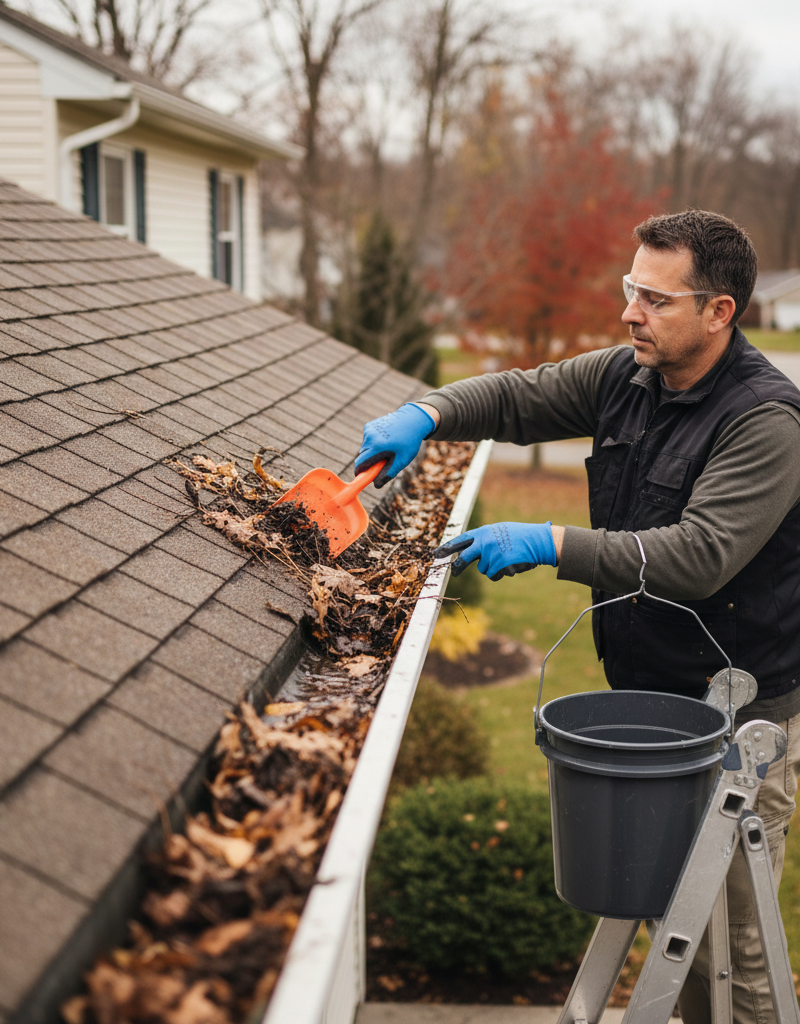
Before climbing any ladder, ensure it's stable on firm, level ground. Have a spotter if possible. Wear sturdy work gloves to protect your hands from sharp debris, splinters, or hidden nails. Safety glasses are crucial to prevent debris from falling into your eyes. Never overreach on a ladder; move it frequently to stay directly in front of your work area. If your roof is steep or you're uncomfortable with heights, consider hiring a professional.
2. Clear Large Debris from Gutters – Remove visible obstructions by hand.
Start at one end of a gutter run. Reach in with your gloved hands and pull out large clumps of leaves, twigs, shingle grit, and caked-on mud. Place the debris in a bucket attached to your ladder or toss it onto a tarp laid on the ground below for easy cleanup. Pay special attention to areas around downspout openings, which are common choke points.
3. Flush the Gutters Thoroughly – Use a garden hose to clear remaining sludge.
Once the major debris is removed, use a garden hose with a strong nozzle. Starting from the opposite end of the downspout, spray water through the gutter, pushing any remaining smaller debris and sludge towards the downspout opening. Observe the water flow. It should move swiftly without pooling. If water pools, check for a section of the gutter that has lost its proper pitch. Gently pry up sagged sections and reset hangers if needed.
4. Clear Downspout Clogs – Address blockages in the vertical pipes.
If water isn't flowing freely from the bottom of the downspout, it's clogged. First, try flushing from the top with the garden hose at full pressure. If this doesn't work, use a plumber's snake or a specialized downspout auger. Feed the auger from the top or remove the downspout section and work from the bottom. Sometimes, completely detaching the bottom elbow allows for easier access to a clog. For stubborn clogs, a wet/dry shop vacuum can be effective at suctioning out debris from the bottom of the downspout.
5. Check Downspout Extenders – Ensure unrestricted flow away from the foundation.
Verify that any downspout extenders or splash blocks are clear of debris and positioned to direct water at least 5-10 feet away from your home's foundation. Ensure they aren't directing water into flowerbeds right next to the house, which can still lead to foundation issues.
6. Inspect for Leaks and Damage – Look for cracks, rust, and loose fasteners.
After cleaning and flushing, carefully inspect the entire gutter system. Look for small holes, cracks, or rust spots. These can be sealed with gutter sealant. Check for loose hangers or fasteners; re-secure them with appropriate screws or replace damaged ones. Pay attention to seams, which are common leak points. Apply gutter sealant to internal seams both inside and outside the gutter.
7. Evaluate Gutter Pitch – Ensure a consistent slope for drainage.
As you flush the gutters, visually confirm a consistent slope towards the downspouts. If water pools in certain sections, it indicates a lack of proper pitch. This can often be corrected by adjusting the hangers. For every 10-foot section of gutter, there should be a 1/4 inch drop towards the nearest downspout. Use a level if necessary to confirm.
8. Consider Gutter Guards (Optional) – Minimize future debris buildup.
While not a fix for existing clogs, installing gutter guards can significantly reduce the frequency of future cleanings. Various types exist, from screens and meshes to solid covers. Choose a type suitable for your specific tree types and debris. Remember, even with guards, occasional inspection and cleaning might still be necessary.
Common Causes
- Accumulated Leaves and Twigs: The most obvious culprit. Deciduous trees shed leaves directly into gutters, particularly in fall. Coniferous trees drop needles year-round.
- Shingle Grit: Asphalt shingles naturally shed granules over time due to weathering. This grit accumulates in gutters and downspouts, forming a sludgy, concrete-like blockage, especially when mixed with water and finer organic debris.
- Nesting Animals and Pests: Birds, squirrels, and other small animals often build nests in downspouts or gutter corners, creating significant blockages surprisingly quickly.
- Improper Gutter Pitch: If gutters aren't installed with the correct slope towards the downspouts, water will sit and stagnant, allowing debris to settle and compact, leading to faster and more severe clogs.
- Lack of Regular Maintenance: Infrequent cleaning allows debris to build up over months or years, compacting into dense, difficult-to-remove clogs.
- Damaged or Sagging Gutters: Gutters that are pulled away from the fascia or have sections that have sagged create low spots where water and debris collect, leading to blockages and overflow.
Common Mistakes
- Ignoring Downspouts: Many homeowners clean out the visible gutter troughs but completely neglect to check and flush the downspouts, leaving critical blockages in place. Always ensure water flows freely from the downspout exit.
- Cleaning Only When Visibly Full: Waiting until gutters are overflowing means significant damage might already be occurring. Regular, proactive cleaning (at least twice a year) prevents most issues.
- Using Too Much Pressure: While a garden hose is good, using a high-pressure washer too close can damage gutters, loosen seams, or even force water up under shingles, creating new problems.
- Overreaching on a Ladder: Attempting to clean too large an area from one ladder position is a common cause of falls. Move the ladder frequently to maintain a safe, centered working position.
- Forgetting to Check Pitch: If water pools after cleaning, the gutter's slope is off. Simply clearing debris won't fix ongoing drainage problems caused by improper pitch.
- Ignoring Minor Leaks: Small drips from seams or pinholes can escalate into major problems, rotting fascia and leading to structural damage if not addressed promptly with sealant or a patch.
Cost & Time Breakdown
| Task | DIY Cost | Pro Cost | Time |
|---|---|---|---|
| Basic Gutter Cleaning | $0–$25 (tools) | $150–$300 | 1–3 hours |
| Downspout Unclogging | $0–$50 (auger) | $50–$100 (add-on) | 30–60 minutes |
| Gutter Sealing/Minor Repair | $10–$30 (sealant) | $50–$150 (small jobs) | 30–60 minutes |
| Gutter Pitch Adjustment | $0 (tools) | $75–$150 | 1–2 hours |
| Gutter Guard Installation | $100–$500 | $500–$1,500 | 2–6 hours |
Tips & Prevention
- Clean Regularly: Aim for at least twice a year: once in late fall after most leaves have dropped, and again in late spring after tree pollen and other debris have settled. In heavily treed areas, more frequent cleaning might be necessary.
- Install Gutter Guards: While not entirely maintenance-free, quality gutter guards significantly reduce the amount of debris entering your gutters, extending the time between cleanings. Consider professional installation for optimal performance.
- Trim Overhanging Branches: Pruning trees and shrubs that hang directly over your roofline can drastically reduce the amount of leaves, twigs, and other organic matter falling into your gutters.
- Extend Downspouts: Ensure all downspouts extend at least 5 to 10 feet away from your home's foundation to prevent water from pooling and causing basement or foundation issues.
- Inspect Often: During heavy rain, step outside and observe your gutters. Are they overflowing? Is water spilling over edges instead of flowing into downspouts? Are there visible leaks? Visual checks can catch problems early.
- Watch for Warning Signs: Be alert to water stains on your fascia or siding, peeling paint under the eaves, mildew growth, or water pooling around your foundation. These are clear indicators of gutter problems.
When to Call a Professional
While basic gutter cleaning is a very accessible DIY task, there are specific situations where calling a licensed professional is the safest and most effective course of action. If your home has multiple stories or a particularly steep roof pitch, the risks associated with ladder work increase significantly; professionals have the right safety gear and experience for these challenging jobs. If you notice signs of extensive fascia board rot, prolonged water intrusion into your attic, or significant sagging across long gutter sections, these could indicate structural issues beyond a simple cleaning or reseal. Similarly, if your gutters are old, heavily rusted, or show widespread damage, a professional can assess whether repairs are cost-effective or if replacement is the better option. For persistent downspout clogs that resist snaking or flushing, especially if they are deep within underground drainage systems, a professional roofer or gutter specialist has advanced tools and expertise to diagnose and resolve the issue without causing further damage.
Related Articles
Keep troubleshooting with these hand-picked guides from FixlyGuide:
- The #1 Reason Your AC Blows Warm Air (And It's Not What You Think) — A dirty air filter is often the overlooked culprit behind an air conditioner blowing warm air, hindering its ability to cool your home effi…
- The #1 Gutter Mistake That Leads to $10,000 Roof Damage — Learn the most common gutter-cleaning mistake homeowners make and how to properly maintain your gutters to prevent expensive roof damage.
- The #1 Mistake Homeowners Make When Heat Pumps Stop Heating in Winter — Discover the crucial mistake most homeowners make when their heat pump struggles in cold weather and how to fix it, potentially saving hund…
- The Secret Culprit Behind Your Humid House (Even with the AC On) — If your house feels sticky and damp despite the AC running, a common and often overlooked issue is an oversized air conditioner.
- The $5 Trick to Fix a Frozen AC Fan (and Why It Stops Spinning) — A non-spinning AC condenser fan can lead to system overheating and no cold air. Often, a simple, inexpensive fix can restore function.
- The 3 Hidden Reasons Your Gutters Fail in Heavy Rain (It’s Not Just Leaves) — Overflowing gutters during heavy rain often stem from a few common, yet overlooked, issues beyond simple leaf clogs, leading to potential s…
Should you do this yourself?
Answer five quick questions before you start. Safety outranks savings every time.
Your experience with work like this
How high do you have to work?
Does the job involve any of these?
Will it need a permit?
Specialty tools
Free and instant. Educational guidance only — not a quote, inspection, or professional diagnosis.
Questions to ask before you sign
Ask every contractor the same questions and the cheapest bid stops looking cheapest. Check them off as you go — your progress is saved on this device.
Free, no signup. Bring this to every walkthrough so you compare bids on the same terms.
What should this project cost?
Enter your project details for a realistic cost range before you call anyone.
Service calls and common repairs run $150–$900; full system replacement typically $6,000–$12,000.
- Regional adjustment
- National average
- Labor share (typical)
- ~$1,935
- Quotes to collect
- 3 written estimates
Educational estimate based on national averages — not a binding quote. Always confirm with written local estimates.
Fixly Project Decision Box
- DIY difficulty
- Professional Recommended
- Estimated time
- Inspection 1–2 hours · repairs 1–3 days
- Cost level
- High
Main tools / materials
- Binoculars for a ground-level look
- Flashlight for attic checks
- Moisture meter
- Roofing cement (temporary patch only)
When to stop and call a pro
- Active leak near lights, fans, or any wiring
- Sagging, bulging, or water-filled ceiling
- Steep, wet, or two-story roof — do not climb it
- Storm or hail damage you plan to claim on insurance
Need professional help?
Free roof assessment first — no phone calls until you ask for them.
Get Local Roofing HelpGet help with your roof now
Stay off the roof. These free tools help you protect the house and reach the right professional fast.
- Emergency repair checklistThe first steps that limit damage before a pro arrives.Open
- Repair or replace your roof?Answer 10 questions about age, leaks, and damage to get a clear next step.Open
- Get local estimatesSend one request and compare written estimates from vetted pros.Open
Free, no signup required. Estimates are educational guidance, not a quote or an inspection.
Frequently asked questions
How often should I clean my gutters?+
Most homes need gutters cleaned at least twice a year: once in late fall after most leaves have dropped, and again in late spring. Homes in heavily treed areas may require more frequent cleanings, sometimes quarterly.
What happens if I don't clean my gutters?+
Neglecting gutter cleaning leads to water overflowing and seeping under roof shingles, rotting fascia boards, causing damage to eaves, and creating ice dams in winter. It can also lead to foundation problems, basement flooding, and encourage mold and mildew growth.
Can I use a pressure washer to clean gutters?+
It's generally not recommended to use a high-pressure washer directly inside gutters, as the intense force can damage the gutters themselves, loosen seams, or even force water up under your roof shingles. A standard garden hose with a strong nozzle is usually sufficient and safer.
How do I know if my downspouts are clogged?+
Signs of a clogged downspout include water overflowing from the gutter trough during rain, water not flowing out the bottom of the downspout, or water staining on your home's foundation directly below a downspout. You can also try flushing with a hose; if water backs up, it's clogged.
Are gutter guards worth it?+
Gutter guards can significantly reduce the amount of debris entering your gutters, thereby reducing the frequency of cleanings. While no system is 100% maintenance-free, quality gutter guards can be a worthwhile investment, especially in areas with many trees, to protect your roof and foundation from water damage.


Discussion
Loading comments…