- Tools: Dryer vent cleaning brush kit, shop vacuum.
- Safety Note: Unplug the dryer before starting. Lint is highly flammable; frequent cleaning is crucial.
- If vent is crushed or kinked: Replace the flexible dryer duct with a rigid or semi-rigid metal duct for optimal airflow and fire safety.
General remodeling · Renovation planning
| Project category | General remodeling |
|---|---|
| Problem type | Renovation planning |
| Trade required | General contracting |
| Urgency | Planned project |
| Safety risk | Low safety risk |
| DIY suitability | Pro recommended |
| Cost category | Major investment |
| Typical timeline | Design and permitting often 2–4 months before work starts |
| Contractor type | General contractor |
Repair option
Phase the work and fix the building envelope first.
Replacement option
Full renovation with permits, design, and a general contractor.
Common causes
- Space no longer fits how the household lives
- Resale preparation
- Deferred maintenance stacking up
Relevant tools:project cost estimatorcompare quoteshome improvement material prices
Published May 21, 2026Last updated August 17, 2026
Tools & materials you'll need
Affiliate linksAs an Amazon Associate FixlyGuide earns from qualifying purchases — at no extra cost to you. Prices and availability are accurate as of publication and subject to change.
Quick Answer
An annual home inspection checklist for homeowners often overlooks critical areas that, if neglected, can lead to significant and costly repairs. Specifically, homeowners frequently miss inspecting their attic for ventilation and pests, their crawl space for moisture and foundation issues, and their exterior grading for proper water drainage. Proactively addressing these often-forgotten spots—along with checking appliance hoses, dryer vents, HVAC filters, and smoke/CO detectors—can prevent major headaches and save thousands in the long run.
The Problem
Many homeowners believe they're doing a thorough job with their annual maintenance, but they often focus only on the most visible aspects of their home. This leaves crucial, out-of-sight areas vulnerable to deterioration and damage. The true problem isn't just neglecting an inspection, but neglecting the right inspection points. Issues like inadequate attic ventilation, unchecked crawl space moisture, or improper exterior grading can slowly but surely undermine your home's structural integrity, foster mold growth, attract pests, and lead to expensive water damage. Ignoring these spots means small, easily fixable problems can fester into major, budget-busting disasters. For instance, a clogged dryer vent isn't just an efficiency issue; it's a significant fire hazard. A leaky appliance hose, if unnoticed, can cause extensive water damage to flooring, cabinets, and subflooring over time. The goal of an effective annual inspection is to identify these hidden threats before they become emergencies.
How It Works
Understanding why these neglected areas are so important helps homeowners grasp the mechanics of preventing common home failures. Take attic ventilation, for example. Your attic needs to breathe. A well-ventilated attic allows hot, moist air to escape in the summer, preventing heat buildup that can prematurely age your roof and increase AC costs. In winter, it prevents condensation from forming on the underside of your roof sheathing, which can lead to mold, mildew, and rot. Proper ventilation relies on a balanced system of soffit vents (intakes) and ridge or gable vents (exhausts), creating a continuous airflow. If these are blocked by insulation or debris, the system fails.
Similarly, a crawl space is essentially the lungs of your home's foundation. It needs to be dry and well-ventilated to prevent moisture buildup. Moisture in a crawl space can cause wood rot, attract termites and other pests, and even lead to mold and mildew that impact indoor air quality. Vapor barriers, proper grading around the foundation, and functional foundation vents all work together to keep this area dry. When these systems are compromised—perhaps a vent is blocked, or the vapor barrier is torn—moisture can infiltrate.
Exterior grading dictates how water flows away from your home. Rain and melting snow must be directed at least 6 inches away from the foundation for the first 10 feet. If the ground slopes towards your house, water will inevitably pool against the foundation, leading to cracks, leaks in the basement or crawl space, and potentially structural damage. This isn't just about a one-time fix; it's about maintaining that slope over time as soil settles or landscaping changes. Each of these critical inspection points operates as part of an interconnected system designed to protect your home from the elements and internal wear and tear.
Step-by-Step Fix
Here's how to tackle those often-missed inspection points and address common issues.
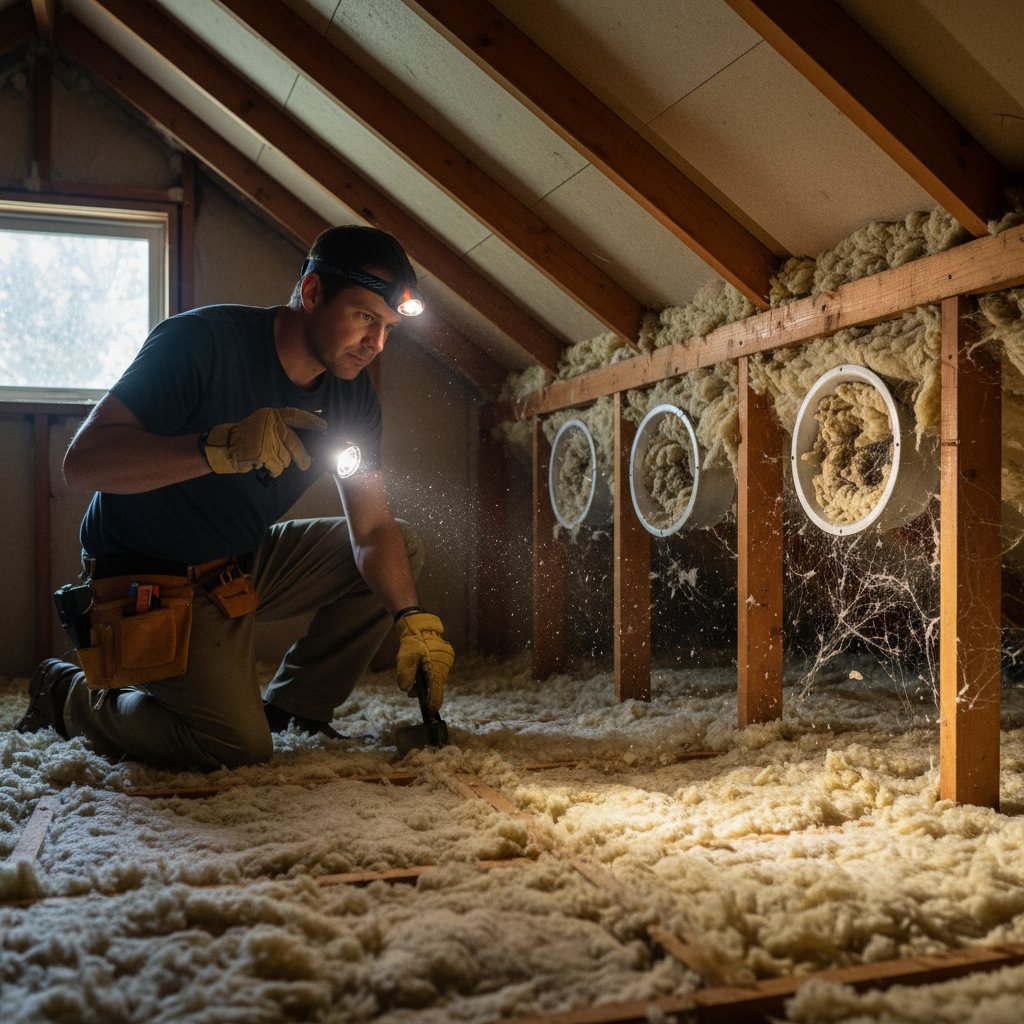
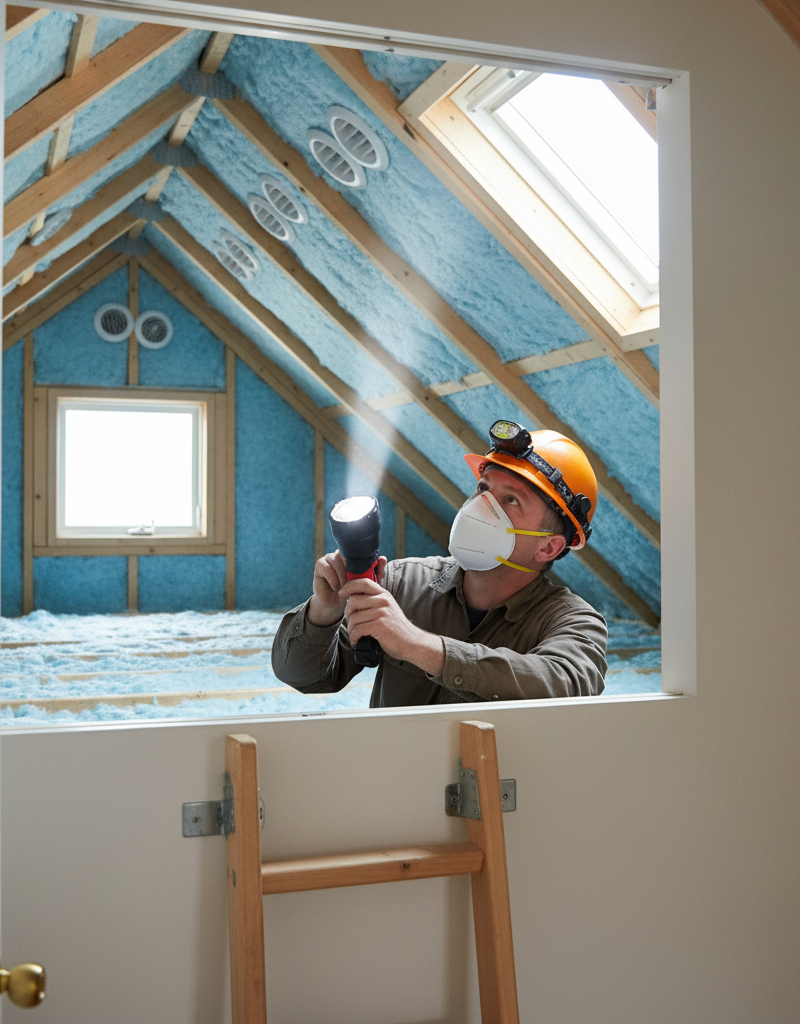
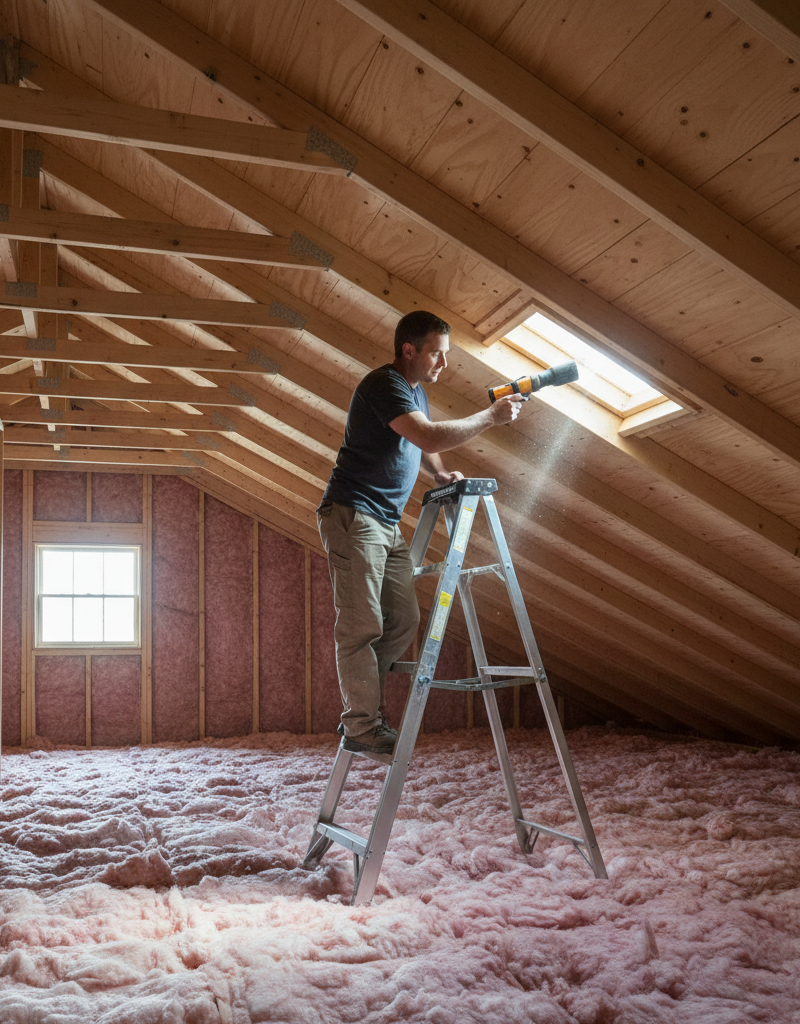
1. Clear the Attic — Restore Airflow and Check for Pests — Climb into your attic with a sturdy flashlight and ensure proper ventilation. Look for blocked soffit vents (often by insulation) and ensure ridge or gable vents are clear. Check for signs of pests like rodent droppings, chewed wires, or nests.
- Safety Note: Wear a dust mask, gloves, and long sleeves. Watch your footing carefully and step only on joists to avoid falling through the ceiling. Be wary of exposed nails. If you see signs of active electrical issues (scorched wires, buzzing sounds), stop and call an electrician.
- If you find pests: Identify the entry point and seal it after ensuring the pests have left or been removed. Consider pest control services for infestations.
2. Descend into the Crawl Space — Monitor Moisture Levels — Carefully enter your crawl space. Check for standing water, excessive dampness, or condensation on pipes. Look for torn vapor barriers, mold growth on wood, or visible foundation cracks. Ensure foundation vents are open and clear of obstructions.
- Safety Note: Always wear a dust mask, gloves, and protective eyewear. Bring a flashlight. Be aware of potential hazards like sharp objects, pests, or unstable ground. If you find significant standing water or suspect mold, avoid disturbing it and consider calling an inspector or remediation specialist.
- If you find moisture: Ensure exterior grading slopes away from the foundation. Repair any torn vapor barriers with heavy-duty polyethylene sheeting and construction adhesive. If dampness persists, consider a dehumidifier or professional encapsulation.
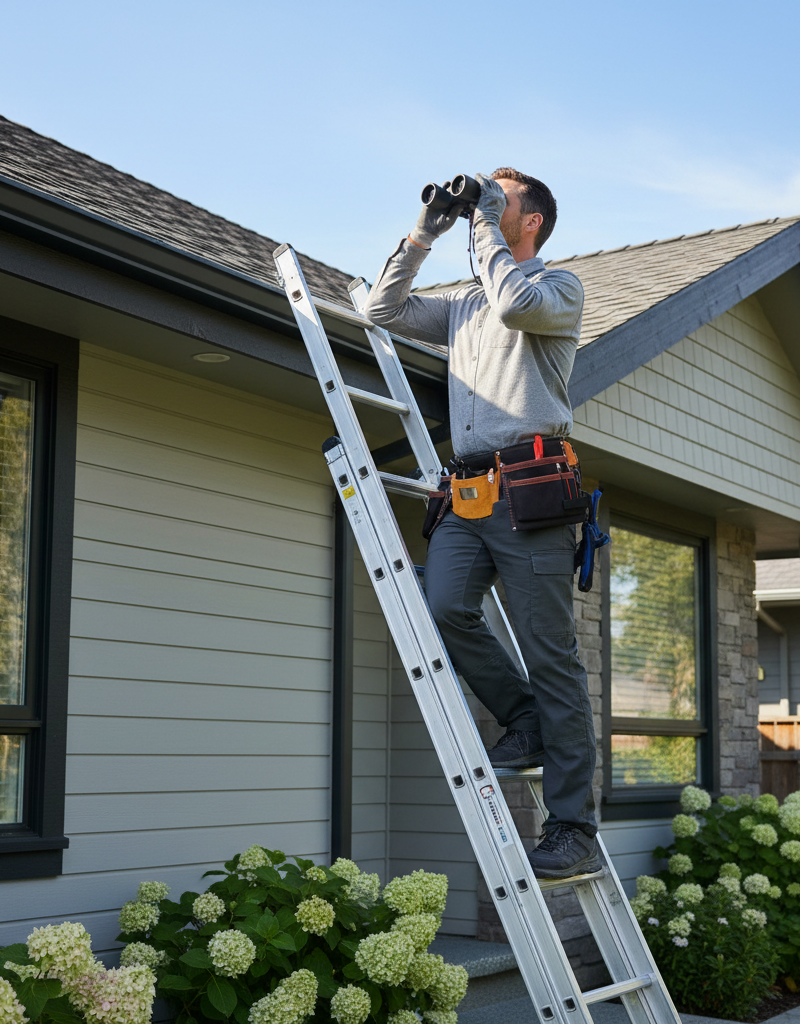
3. Re-grade the Exterior — Direct Water Away from Your Home — Walk around your home's perimeter. Examine the soil slope immediately adjacent to your foundation. It should slope away from the house at least 6 inches for the first 10 feet. Look for areas where water might pool after rain.
- Materials: Shovel, topsoil or fill dirt, landscape fabric (optional).
- If grading is insufficient: Add compacted soil (topsoil or fill dirt) to build up the grade, ensuring it slopes demonstrably away from the foundation. Ensure no mulch beds or landscaping materials hold moisture against the siding.
4. Pressure Test Appliance Hoses — Prevent Catastrophic Leaks — Inspect the rubber supply hoses for your washing machine, dishwasher, and refrigerator ice maker. Look for cracks, bulges, leaks, or signs of wear. Replace rubber hoses with braided stainless steel hoses every 5-7 years, regardless of appearance.
- Tools: Adjustable wrench, pliers.
- To replace: Turn off the water supply to the appliance before disconnecting old hoses. Hand-tighten new hoses, then give a quarter-turn with a wrench. Test for leaks immediately.
5. Clean the Dryer Vent — Reduce Fire Risk and Improve Efficiency — Disconnect your dryer from the exhaust vent. Use a dryer vent cleaning brush and a powerful vacuum to remove lint buildup from the vent hose and the wall duct. Ensure the exterior vent flap opens and closes freely.
- Tools: Dryer vent cleaning brush kit, shop vacuum.
- Safety Note: Unplug the dryer before starting. Lint is highly flammable; frequent cleaning is crucial.
- If vent is crushed or kinked: Replace the flexible dryer duct with a rigid or semi-rigid metal duct for optimal airflow and fire safety.
6. Replace HVAC Filters — Improve Air Quality and System Lifespan — Locate your HVAC system's air filter. Note the size (e.g., 20x25x1). Replace it with a new filter, ensuring the airflow arrow points in the direction of the air handler.
- Materials: New HVAC filter (match size and MERV rating).
- Frequency: Replace every 1-3 months, more often if you have pets, allergies, or during heavy use seasons.
7. Test Smoke and CO Detectors — Ensure Life-Saving Functionality — Press and hold the test button on each smoke and carbon monoxide detector in your home. Replace batteries annually (even if hardwired with a battery backup) and replace units entirely every 7-10 years (smoke detectors) or 5-7 years (CO detectors). Clean them by gently vacuuming dust from the vents.
- Materials: 9V batteries or AA batteries (check your unit's requirements).
- Placement: Ensure detectors are on every level of your home, inside and outside sleeping areas. Consider interconnected alarms so if one goes off, they all do.
Common Causes
- Homeowner Overconfidence: Believing you've covered everything by checking visible areas only.
- Lack of Knowledge: Unawareness of critical, less-obvious inspection points like attic ventilation or crawl space moisture.
- Time Constraints: Not dedicating enough time to a thorough, unhurried inspection.
- Accessibility Issues: Difficulty accessing tight spaces like attics or crawl spaces, leading to avoidance.
- Ignoring Subtle Signs: Missing early warning signs like a faint musty smell, a small water spot, or sluggish appliance performance.
- Seasonal Fluctuations: Failing to understand how weather (heavy rain, extreme heat/cold) impacts different parts of the home and requires specific attention.
Common Mistakes
- Ignoring Your Gut: If something feels off—a strange smell, a new creak—investigate it immediately instead of dismissing it.
- **Believing
Related Articles
Keep troubleshooting with these hand-picked guides from FixlyGuide:
- The 7 Overlooked Home Inspection Items That Cost Homeowners Thousands Annually — Discover the seven most commonly missed home inspection items that lead to costly repairs for homeowners every year and learn how to perfor…
- The 7 Critical Home Inspection Checks Most Homeowners Miss (and How to Do Them Yourself) — Discover the essential annual home inspection checks many homeowners overlook and learn how to perform them yourself to prevent costly repa…
- The 7 Critical Home Inspection Mistakes Most Homeowners Make (and How to Spot Them) — Discover the crucial home inspection mistakes homeowners commonly overlook and learn how to identify potential problems before they become…
- The 7 Critical Home Inspection Checks Most Homeowners Miss (And How to Spot Them) — Discover the crucial annual home inspection checks often overlooked by homeowners, and learn how to identify potential issues before they b…
- The #1 Mistake Homeowners Make When Spotting Soffit Damage — Ignoring early soffit and fascia damage can lead to costly structural repairs, but many homeowners misdiagnose the problem, compounding the…
- 7 Inspection Red Flags That Secretly Signal a $20,000 Bill — Don't let your dream home become a money pit. Many buyers and even some inspectors overlook subtle home inspection red flags that lead to f…
Your seasonal maintenance checklist
The small jobs that prevent the expensive repairs. Tick them off — progress saves on this device.
Free, no signup. Skip anything that requires roof access or working near live electrical.
What should this project cost?
Enter your project details for a realistic cost range before you call anyone.
Cost depends heavily on which system turns out to be the source.
- Regional adjustment
- National average
- Labor share (typical)
- ~$1,620
- Quotes to collect
- 3 written estimates
Educational estimate based on national averages — not a binding quote. Always confirm with written local estimates.
Decide what your roof needs
Two minutes of questions turns "something is wrong up there" into a clear next step.
- Repair or replace your roof?Answer 10 questions about age, leaks, and damage to get a clear next step.Open
- Compare contractor quotesScore up to four bids on price, warranty, licensing, and timeline.Open
- Get local estimatesSend one request and compare written estimates from vetted pros.Open
Free, no signup required. Estimates are educational guidance, not a quote or an inspection.
Recommended for DIYers & woodworkers
Sponsored
The Top 20 Tools for Workshops of Any Budget
No stationary machines or power tools required — plus 3 fundamental tools that can't be bought at any price.
Get the free guide
Ted's Woodworking — The #1 Woodworking Resource
Detailed instructions, dimensioned drawings, materials & cutting lists, and 3D schematics for every skill level.
See the plansSponsored: links above are affiliate links. FixlyGuide may earn a commission on qualifying purchases — at no extra cost to you.
Frequently asked questions
How often should I inspect my house?+
You should conduct a thorough annual inspection of your home, ideally in spring or fall, to identify and address problems proactively. Some tasks, like HVAC filter changes and smoke detector tests, require more frequent attention.
What are the most common overlooked inspection areas?+
The most commonly overlooked areas include attic ventilation, crawl space moisture, exterior grading around the foundation, appliance hoses, dryer vents, and the age/functionality of smoke and carbon monoxide detectors.
Can I do a home inspection myself, or do I need a professional?+
Many aspects of a basic home inspection can be done by a homeowner with a good checklist and attention to detail. However, for a comprehensive structural, electrical, or plumbing assessment, especially if you suspect major issues, it's best to hire a licensed professional home inspector.
What should I do if I find mold in my crawl space or attic?+
Small areas of surface mold can often be cleaned with a bleach and water solution. However, if you find extensive mold (larger than 10 square feet) or suspect it's impacting your health, it's crucial to consult a professional mold remediation specialist to ensure safe and thorough removal and address the underlying moisture source.
Discussion
Loading comments…