
- Freeze-thaw cycles: The primary culprit. Water seeps into cracks, freezes, expands (by about 9%), and widens those cracks. When it thaws, more water enters, repeating the destructive cycle.
- Heavy snow and ice loads: Can strain roofs, gutters, and tree branches, leading to structural damage or breakage.
- Ice dams: Created by poor attic insulation and ventilation, forcing meltwater under shingles and into wall cavities.
- High winds: Especially common in winter storms, can loosen shingles, siding, and outdoor fixtures.
- Poor drainage/grading: Allows melting snow and ice to pool near the foundation, increasing the risk of water intrusion and foundation damage.
General remodeling · Renovation planning
| Project category | General remodeling |
|---|---|
| Problem type | Renovation planning |
| Trade required | General contracting |
| Urgency | Planned project |
| Safety risk | Low safety risk |
| DIY suitability | Pro recommended |
| Cost category | Major investment |
| Typical timeline | Design and permitting often 2–4 months before work starts |
| Contractor type | General contractor |
Repair option
Phase the work and fix the building envelope first.
Replacement option
Full renovation with permits, design, and a general contractor.
Common causes
- Space no longer fits how the household lives
- Resale preparation
- Deferred maintenance stacking up
Relevant tools:project cost estimatorcompare quoteshome improvement material prices
Published May 14, 2026Last updated August 17, 2026
Tools & materials you'll need
Affiliate links- AmazonStep ladder or extension ladder1 · tall enough to reach gutters and comfortably inspect the roof eaves
- AmazonSafety glasses1 pair
- AmazonTrowel or scoop1 · for cleaning gutters
- AmazonGarden hose with spray nozzle1
- AmazonExterior caulk gun1
- AmazonUtility knife or caulk tool1 · for removing old caulk
As an Amazon Associate FixlyGuide earns from qualifying purchases — at no extra cost to you. Prices and availability are accurate as of publication and subject to change.
Quick Answer
Winter's harsh conditions can leave a trail of hidden damage, from ice-laden gutters to foundation-threatening freeze-thaw cycles. Proactive spring maintenance, focusing on critical areas like your roof, gutters, exterior envelope, foundation, and HVAC, is essential to catch and rectify these issues before they escalate into expensive repairs or energy inefficiencies. A thorough inspection and timely repairs protect your home's structural integrity and ensure its systems are ready for warmer weather.
The Problem
The quiet retreat of winter often leaves homeowners with a sense of relief, but beneath the thawing snow and warming ground lies a collection of potential problems. Freezing temperatures, heavy snow loads, ice dams, and strong winds all conspire to stress your home's various components. Many of these issues begin subtly—a loosened shingle, a tiny crack in the caulk, a clogged drain—and can go unnoticed for weeks or months. However, if left unaddressed, these minor damages can compound. A small roof leak can become a major ceiling collapse, a compromised gutter can lead to foundation erosion, and a stressed HVAC system can fail when you need it most. The core problem is that winter damage is often cumulative and insidious, making a systematic spring inspection not just good practice, but a critical defense against future home repair emergencies.
How It Works
To understand why spring maintenance is so vital, let's consider how winter impacts key parts of your home.
Roof and Gutters: Ice dams form when heat escapes through the roof, melting snow which then refreezes at the colder eaves. This ice buildup can force melting water under shingles, leading to leaks, rot, and damaged insulation. Heavy snow and ice also put immense stress on gutters and downspouts, causing them to pull away from the fascia, sag, or even detach. Clogged gutters, often from autumn leaves, exacerbate the problem by preventing proper drainage, leading to overflowing water that can erode landscaping and foundation soil.
Exterior Envelope (Siding, Windows, Doors, Caulk): The constant expansion and contraction from freeze-thaw cycles challenge the seals around windows and doors, and the integrity of siding. Old caulk becomes brittle and cracks, creating pathways for water intrusion. Wind-driven snow and ice can chip paint, crack stucco, and loosen siding panels. Even small openings can allow moisture into wall cavities, leading to mold, wood rot, or compromised insulation.
Foundation and Grading: Water is the foundation's greatest enemy. When snow melts or ice thaws, prodigious amounts of water are released. If your home's grading slopes towards the foundation, or if downspouts are not extended far enough, this water will pool around the foundation. In freezing temperatures, this pooled water can freeze and expand, exerting immense pressure (hydrostatic pressure and frost heave) on concrete and masonry, leading to cracks. These cracks then allow more water to enter, causing further damage in subsequent freeze-thaw cycles.
HVAC System: Your furnace works overtime during winter, accumulating dust and debris in filters and sometimes stressing components. Outdoor AC units endure exposure to snow, ice, and cold which can damage coils, fins, and electrical connections. Debris from winter storms can also clog condensate drains or damage outdoor unit fans.
Decking and Paving: Wood decks absorb moisture, which then freezes and expands, causing wood fibers to separate, leading to cracks, splinters, and loosened fasteners. Concrete driveways and patios are susceptible to spalling (surface flaking) and cracking from freeze-thaw cycles, particularly if water penetrates small surface pores or existing cracks.
Step-by-Step Fix
1. Roof and Gutter Inspection — Check for damage and clear obstructions
Safety Note: Never get on a ladder in wet or windy conditions. If you're uncomfortable on a ladder, use binoculars from the ground or hire a professional.
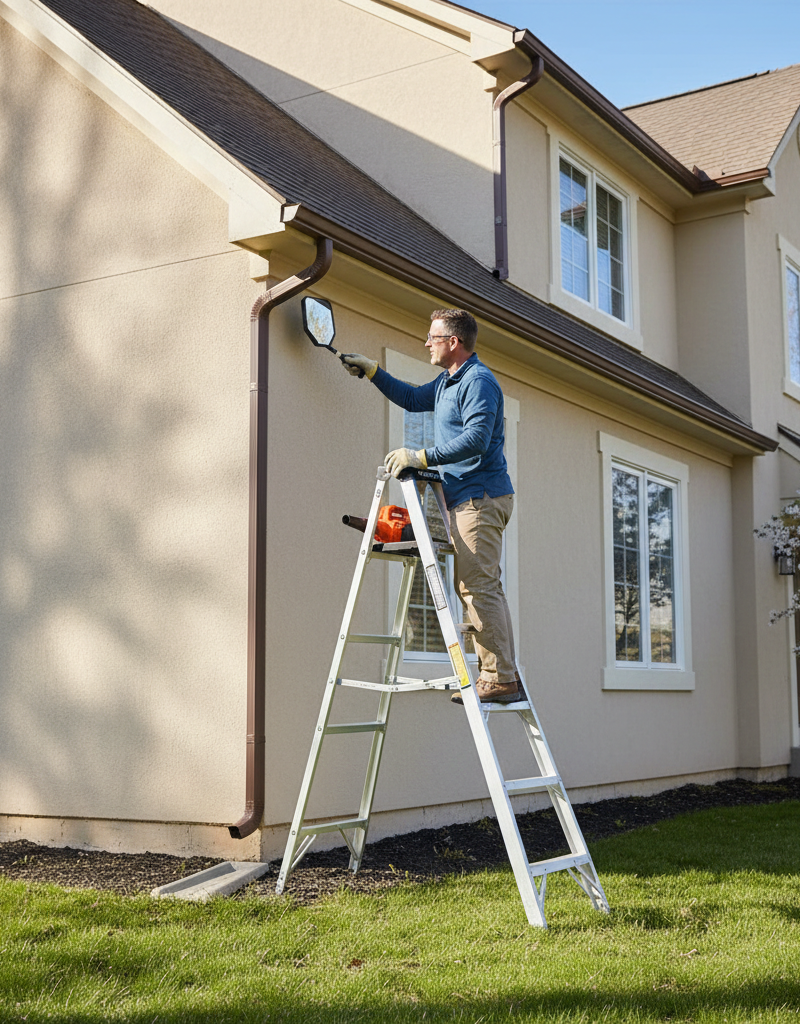
Starting with your roof, locate any missing, cracked, or curled shingles. Look for granules in your gutters, which indicate shingle wear. Check flashing around chimneys, vents, and skylights for signs of lifting or damage. Next, inspect gutters for sagging, loose hangers, or rust. Remove any remaining leaves, twigs, or debris. Flush downspouts with a hose to ensure they are clear and direct water away from the foundation. Ensure downspout extensions are properly attached and positioned at least 5-10 feet away from the foundation.
2. Exterior Siding, Paint, and Trim Check — Seal the envelope against water
Walk around your home, closely examining all exterior surfaces. Look for cracked, chipped, or peeling paint on siding and trim. Check for loose or damaged siding panels, especially after strong winter winds. Inspect all caulking around windows, doors, and utility penetrations (e.g., pipes, vents). Any gaps, cracks, or missing caulk should be addressed. If you find small gaps, clean the area and recaulk with an exterior-grade sealant. For larger damage like significant siding cracks or holes, consider a patch repair or replacement.
3. Foundation and Drainage Assessment — Protect against water intrusion
Inspect your foundation walls for any new cracks, crumbling mortar, or signs of water staining. Pay close attention to corners and areas directly below downspouts. Also, assess the grading around your home. The soil should slope away from the foundation at a rate of approximately six inches over the first ten feet. If you notice areas where water might pool or where the ground slopes towards the house, plan to add soil or regrade those sections. Ensure window wells are clear of debris and have proper drainage.
4. Window and Door Seal Evaluation — Prevent drafts and moisture
Inside your home, check windows and doors for drafts. You can do this by holding a lit candle or an incense stick near the seams; if the flame flickers or smoke wavers, you have a leak. On the exterior, re-examine the caulk and weatherstripping. Replace any worn or missing weatherstripping. For minor drafts, consider adding a foam gasket or self-adhesive weatherstrip. If windows or doors are old or severely compromised, professional replacement might be necessary.
5. HVAC System Filter and Unit Inspection — Prepare for warmer temps
Replace your furnace filter – it's likely clogged from heavy winter use. This simple step improves airflow and efficiency. For your outdoor AC unit, clear away any accumulated leaves, twigs, or debris from around and on top of the unit. Gently straighten any bent fins with a fin comb. Check the refrigerant lines for any visible damage or leaks (indicated by oily residue). If you're comfortable, briefly turn on your AC for a few minutes to ensure it powers on. For a more comprehensive check, schedule a professional HVAC tune-up.
6. Decking and Paving Repair — Address winter's wear and tear
Examine your wood deck for loose boards, protruding nails, splinters, or signs of rot. Replace or secure loose boards. Hammer down or replace problematic nails with deck screws. Clean the deck thoroughly, especially if mildew or algae are present. For concrete driveways and patios, look for new cracks, spalling (flaking/chipping of the surface), or uneven sections. Small cracks can be filled with concrete crack filler. For widespread spalling or large, structural cracks, consult a concrete professional.
7. Landscape and Irrigation System Check — Revive your yard
Clean up fallen branches, leaves, and other debris from flower beds and lawns. Inspect trees and shrubs for winter damage, pruning away dead or broken branches (make proper cuts to avoid harming the plant). Check your irrigation system for any leaks, broken sprinkler heads, or misaligned spray patterns caused by winter settling or freeze damage. Run each zone briefly to identify issues and make necessary repairs before the spring growing season begins in earnest. Ensure your outdoor spigots are fully functional and free of leaks.
Common Causes
- Freeze-thaw cycles: The primary culprit. Water seeps into cracks, freezes, expands (by about 9%), and widens those cracks. When it thaws, more water enters, repeating the destructive cycle.
- Heavy snow and ice loads: Can strain roofs, gutters, and tree branches, leading to structural damage or breakage.
- Ice dams: Created by poor attic insulation and ventilation, forcing meltwater under shingles and into wall cavities.
- High winds: Especially common in winter storms, can loosen shingles, siding, and outdoor fixtures.
- Poor drainage/grading: Allows melting snow and ice to pool near the foundation, increasing the risk of water intrusion and foundation damage.
- Neglected autumn maintenance: Clogged gutters or unsealed cracks going into winter significantly amplify damage potential.
- Rodent and pest activity: Seeking warmth, pests can gain entry through small gaps exacerbated by winter conditions, causing damage to wires, insulation, and wood.
Common Mistakes
- Ignoring the roof: Many homeowners don't inspect their roof from the ground, missing early signs of shingle damage or compromised flashing. Instead: Use binoculars or a drone, or hire a pro for a thorough roof inspection annually.
- Delaying gutter cleaning: Waiting until spring to clear gutters allows debris to accumulate and freeze, causing clogs and potential damage to the gutter system. Instead: Clean gutters in late fall after leaves have fallen and again in early spring.
- Overlooking caulk and weatherstripping: Small gaps seem minor but are significant entry points for moisture and drafts. Instead: Make an annual walk-around of your home, specifically checking all sealed areas and refreshing as needed.
- Not addressing grading issues: A negative slope around your foundation is a ticking time bomb for water damage, regardless of how good your foundation is. Instead: Spend a few hours in spring assessing and correcting any areas where water doesn't drain away from the house.
- Forgetting to inspect the HVAC unit: A neglected AC unit will struggle when summer arrives, leading to higher energy bills or untimely breakdowns. Instead: Clear outdoor AC unit debris and replace furnace filters religiously, even if you plan a professional tune-up.
- Improper deck winterization: Not cleaning and sealing a deck before winter can lead to severe wood degradation. Instead: Clean and potentially re-seal your deck every 1-3 years in the fall or spring, depending on exposure and product used.
Cost & Time Breakdown
| Task | DIY Cost | Pro Cost | Time |
|---|---|---|---|
| Roof Inspection (visual) | $0 | $150–$300 | 30 min–1 hour |
| Gutter Cleaning & Repair | $10–$50 | $100–$250 | 1–2 hours |
| Exterior Caulk/Sealant Repl. | $20–$100 | $200–$500 | 2–4 hours |
| Foundation Crack Sealing | $30–$150 | $300–$800 | 1–3 hours |
| Grading Adjustment (minor) | $50–$200 | $500–$1,500 | 4–8 hours |
| HVAC Filter Replacement | $10–$30 | Included in tune | 5 minutes |
| Deck Repair (minor boards) | $50–$200 | $300–$700 | 2–4 hours |
| Irrigation Check | $0 (DIY) | $100–$250 | 30 min–1 hour |
Tips & Prevention
- Seal in the Fall: Proactively inspect and seal any cracks or gaps in your home's exterior caulk and weatherstripping before winter sets in. This is your first line of defense against moisture intrusion.
- Gutter Guards: Consider installing gutter guards to minimize debris buildup, reducing the frequency of cleaning and preventing blockages that lead to ice dams and overflows. Still check them occasionally for smaller debris.
- Improve Attic Ventilation: Ensure your attic is properly insulated and ventilated, which helps prevent heat buildup that contributes to ice dam formation. A professional energy audit can assess this.
- Extend Downspouts: Always ensure downspouts extend at least 5 to 10 feet away from your foundation to direct water effectively away from your home's base.
- Trim Trees: Before winter, trim any tree branches that are dead or overhanging your roof or power lines to prevent damage from ice, snow, or wind.
- Annual HVAC Tune-up: Schedule a professional inspection and tune-up for your HVAC system every spring (for AC) and fall (for furnace) to ensure peak efficiency and catch potential issues early.
- Walk-around Checks: Make it a habit to walk around your home's exterior monthly, especially after severe weather, to catch small issues before they become big problems.
When to Call a Professional
You should call a professional if you notice significant roof damage, such as large sections of missing shingles, widespread granule loss, or visible sagging sections of the roofline; these may indicate structural issues or extensive water damage requiring an experienced roofer. Any foundation cracks that are larger than 1/4 inch, expanding rapidly, showing stair-step patterns in masonry, or accompanied by water in your basement or crawl space, warrant immediate evaluation by a structural engineer or foundation repair specialist. Issues with your HVAC system that go beyond a simple filter change—such as strange noises, refrigerant leaks, or the unit not turning on—should be handled by a licensed HVAC technician. If you suspect gas line damage or have extensive electrical concerns, always defer to a licensed professional for safety.
Related Articles
Keep troubleshooting with these hand-picked guides from FixlyGuide:
- The 3 Critical Mistakes Homeowners Make Inspecting Their Roof (From the Ground) — Learn how to spot damaging roof problems safely from the ground, avoiding common pitfalls and knowing exactly what to look for.
- The 7 Critical Home Inspection Checks Most Homeowners Miss (and How to Do Them Yourself) — Discover the essential annual home inspection checks many homeowners overlook and learn how to perform them yourself to prevent costly repa…
- Is Your Roofline Hiding a $10,000 Secret? 7 Soffit & Fascia Warning Signs — Discover the critical warning signs of soffit and fascia damage, why these often-overlooked components are crucial, and how to tackle commo…
- The #1 Mistake Homeowners Make with Ice Dams (and How to Fix It SAFELY) — Most homeowners approach ice dam removal incorrectly, creating more damage or safety risks. Learn the right, safe methods to protect your r…
- The 4 Hidden Signs Your Soffit & Fascia Are Failing (And What To Do) — Spotting early signs of soffit and fascia damage can prevent costly repairs and protect your home's structure from water and pest intrusion.
- The #1 Mistake Homeowners Make After Finding Missing Shingles (And How to Fix It Right) — Discover the crucial steps to take after a storm rips shingles from your roof, ensuring a proper, lasting repair and preventing costly futu…
Should you do this yourself?
Answer five quick questions before you start. Safety outranks savings every time.
Your experience with work like this
How high do you have to work?
Does the job involve any of these?
Will it need a permit?
Specialty tools
Free and instant. Educational guidance only — not a quote, inspection, or professional diagnosis.
Questions to ask before you sign
Ask every contractor the same questions and the cheapest bid stops looking cheapest. Check them off as you go — your progress is saved on this device.
Free, no signup. Bring this to every walkthrough so you compare bids on the same terms.
What should this project cost?
Enter your project details for a realistic cost range before you call anyone.
Service calls and common repairs run $150–$900; full system replacement typically $6,000–$12,000.
- Regional adjustment
- National average
- Labor share (typical)
- ~$1,935
- Quotes to collect
- 3 written estimates
Educational estimate based on national averages — not a binding quote. Always confirm with written local estimates.
Fixly Project Decision Box
- DIY difficulty
- Professional Recommended
- Estimated time
- Inspection 1–2 hours · repairs 1–3 days
- Cost level
- High
Main tools / materials
- Binoculars for a ground-level look
- Flashlight for attic checks
- Moisture meter
- Roofing cement (temporary patch only)
When to stop and call a pro
- Active leak near lights, fans, or any wiring
- Sagging, bulging, or water-filled ceiling
- Steep, wet, or two-story roof — do not climb it
- Storm or hail damage you plan to claim on insurance
Need professional help?
Free roof assessment first — no phone calls until you ask for them.
Get Local Roofing HelpGet help with your roof now
Stay off the roof. These free tools help you protect the house and reach the right professional fast.
- Emergency repair checklistThe first steps that limit damage before a pro arrives.Open
- Repair or replace your roof?Answer 10 questions about age, leaks, and damage to get a clear next step.Open
- Get local estimatesSend one request and compare written estimates from vetted pros.Open
Free, no signup required. Estimates are educational guidance, not a quote or an inspection.
Recommended for DIYers & woodworkers
Sponsored
The Top 20 Tools for Workshops of Any Budget
No stationary machines or power tools required — plus 3 fundamental tools that can't be bought at any price.
Get the free guide
Ted's Woodworking — The #1 Woodworking Resource
Detailed instructions, dimensioned drawings, materials & cutting lists, and 3D schematics for every skill level.
See the plansSponsored: links above are affiliate links. FixlyGuide may earn a commission on qualifying purchases — at no extra cost to you.
Frequently asked questions
How do I know if I have ice dam damage?+
Look for water stains on your interior ceilings and walls near the eaves, or visible damage to gutters and fascia boards from the weight of ice. On the roof exterior, you might see lifted shingles or signs of water penetration beneath the shingle layers after an ice dam. If a professional performs a roof inspection, they can look for rotted wood or delaminated roof decking in the attic space, which are clear indicators of past ice dam issues.
Can I prevent foundation cracks from winter?+
While minor hairline cracks can develop naturally, most serious foundation cracks from winter are preventable. The key is proper water management: ensure your home's grading slopes away from the foundation, extend downspouts at least 5-10 feet, and keep gutters clean. Sealing existing small cracks before winter also helps prevent water intrusion that leads to freeze-thaw damage. Addressing these now can save you major costs later.
How often should I clean my gutters?+
Generally, gutters should be cleaned at least twice a year: once in late autumn after all leaves have fallen, and again in early spring to clear any debris accumulated over winter. If you have many trees specifically near your house, you might need to clean them more frequently, especially after strong storms. Gutter guards can reduce the frequency but don't eliminate the need for occasional checks.
What's the most critical spring maintenance task?+
The most critical task is a thorough `roof and gutter inspection`. These systems are your home's first line of defense against water. Damaged shingles or clogged gutters can lead to cascading problems, from leaks and rot to foundation damage, making them a top priority for early identification and repair in the spring. Neglecting them often leads to the most expensive repairs.
When should I consider professional help instead of DIY?+
You should call a professional for any tasks involving heights you're uncomfortable with (like extensive roof work), significant structural concerns (large foundation cracks, sagging rooflines), major electrical or HVAC system repairs, or if you encounter any issues that make you feel unsafe. If a repair exceeds your skill level or poses a risk to your home's integrity, it's always best to consult a licensed and insured professional.


Discussion
Loading comments…