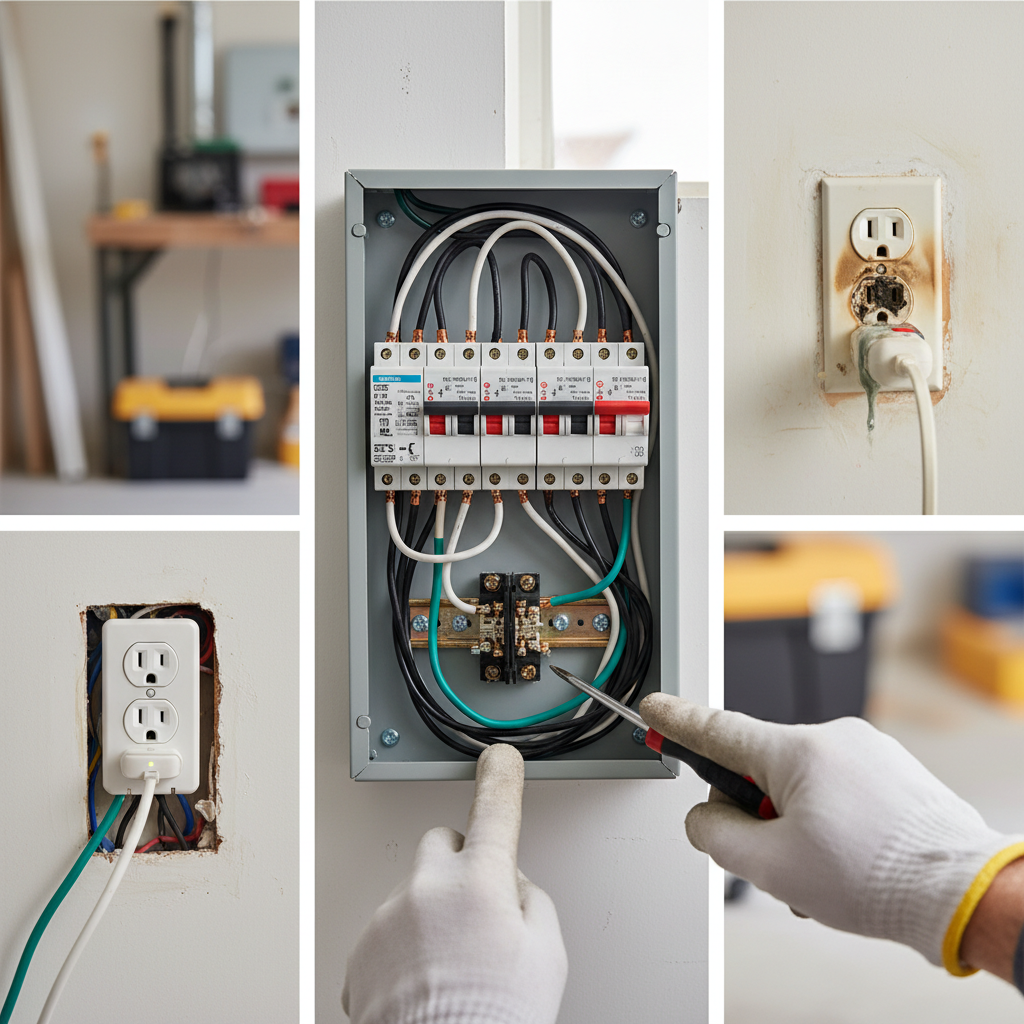
- Main breaker — shuts off the whole house. Know where it is.
- Branch breakers — one per circuit, sized to the wire behind it.
- GFCI protection — required near water; trips on tiny current leaks to ground to prevent shock.
- AFCI protection — detects arcing faults that can start fires, common on newer bedroom and living-area circuits.
Electrical · Panel or service upgrade
| Project category | Electrical |
|---|---|
| Problem type | Panel or service upgrade |
| Trade required | Electrical |
| Urgency | Planned project |
| Safety risk | High safety risk |
| DIY suitability | Licensed pro only |
| Cost category | High cost |
| Typical timeline | Permit plus utility scheduling, commonly 2–6 weeks |
| Contractor type | Licensed electrician |
Repair option
Add a subpanel when the main service is adequate.
Replacement option
Full service upgrade with utility coordination and permits.
Common causes
- Obsolete or recalled panel brands
- Service capacity too small for added loads
- No room for required AFCI/GFCI breakers
Relevant tools:project cost estimatorcompare quotes
Published September 4, 2026Last updated September 4, 2026
Tools & materials you'll need
Affiliate linksNo materials required.
As an Amazon Associate FixlyGuide earns from qualifying purchases — at no extra cost to you. Prices and availability are accurate as of publication and subject to change.
Quick Answer
Your panel divides the incoming power into circuits, and every breaker is a deliberate weak point that fails before the wire does. That's why a tripping breaker is information, not a nuisance. The danger isn't the trip — it's the homeowner who keeps resetting it without asking why.
What's in the Panel
- Main breaker — shuts off the whole house. Know where it is.
- Branch breakers — one per circuit, sized to the wire behind it.
- GFCI protection — required near water; trips on tiny current leaks to ground to prevent shock.
- AFCI protection — detects arcing faults that can start fires, common on newer bedroom and living-area circuits.
Never replace a breaker with a larger one to stop nuisance trips. The breaker is sized to the wire, not to your appliance.
Why Breakers Trip
- Overload — too much load on one circuit. Space heaters, hair dryers, and window units are the usual culprits.
- Short circuit — hot touching neutral or ground. Usually trips instantly and hard.
- Ground fault — current leaking to ground, typically on a GFCI near water.
- Arc fault — damaged cord or connection arcing, caught by an AFCI breaker.
- A failing breaker — they wear out too.
Diagnose by pattern: does it trip when a specific device runs, at a specific time, or randomly with nothing on? Random trips with no load are the ones to escalate.
Warning Signs You Should Never Normalize
| Sign | What it can mean | Action |
|---|---|---|
| Burning or fishy plastic smell | Overheating wiring or device | Turn off the circuit, call now |
| Warm outlet or cover plate | Loose connection or overload | Stop using it, call |
| Buzzing or crackling from a switch or panel | Arcing | Call now |
| Scorch marks or discoloration | Past overheating | Call now |
| Lights dim when an appliance starts | Circuit or service capacity issue | Have it evaluated |
| Frequent trips on one circuit | Overload or fault | Diagnose, don't reset repeatedly |
| Two-prong outlets throughout | No equipment ground | Have it evaluated |
| A GFCI that won't reset | It is detecting a fault | Call |
Things You Can Safely Do
- Reset a breaker once and note what was running.
- Test and reset GFCI outlets monthly using the buttons.
- Replace lamp cords and plug strips that are damaged.
- Redistribute high-draw appliances across circuits.
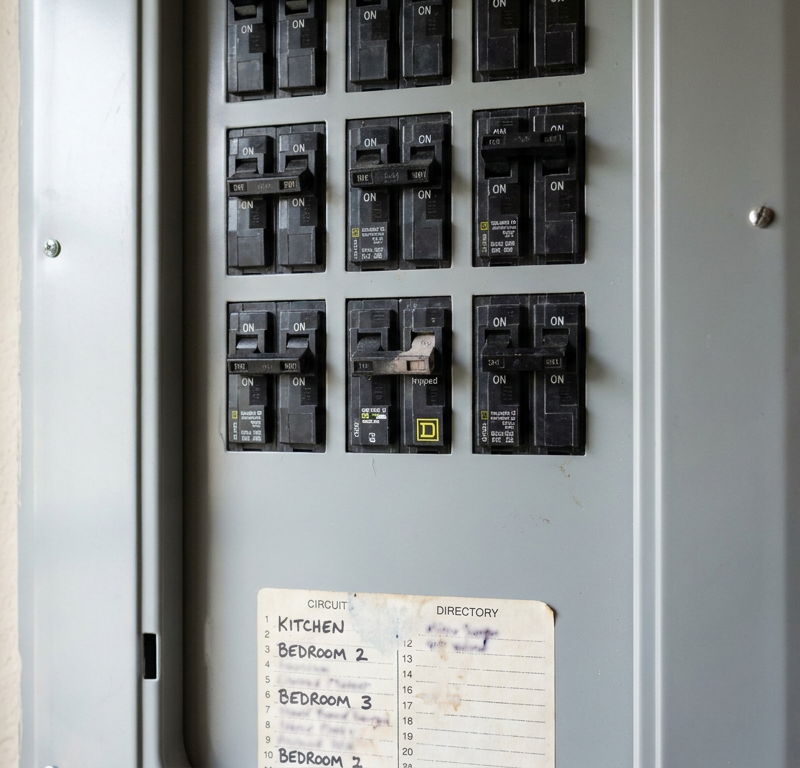
- Label your panel so the next emergency is faster.
Where the DIY Line Is
Anything inside the panel, anything involving service entrance conductors, new circuits, aluminum branch wiring, or old ungrounded systems is licensed work. The failure mode isn't a bad result — it's a fire or a fatality. Permits and inspection exist for exactly this category.
Find a Pro Through Fixly Guide
If the next step is a professional, don't start with a phone book. Start with a diagnosis and a short list.
- Find a local pro — pick your trade and ZIP code to see vetted contractors serving your area.
- DIY or hire a pro? — a two-minute check that tells you which jobs are safe to handle yourself.
- Repair or replace? 12 expensive home decisions — how to judge a big-ticket quote.
- Home problem guides — start with the symptom, get likely causes and safety guidance.
- 15 house problems you shouldn't ignore — warning signs homeowners get used to.
Fixly Guide provides educational guidance only. Nothing here is a professional diagnosis or an inspection.
What should this project cost?
Enter your project details for a realistic cost range before you call anyone.
Outlet and switch work usually $150–$400; panel upgrades commonly $1,800–$4,200.
- Regional adjustment
- National average
- Labor share (typical)
- ~$709
- Quotes to collect
- 3 written estimates
Educational estimate based on national averages — not a binding quote. Always confirm with written local estimates.
Fixly Project Decision Box
- DIY difficulty
- Professional Recommended
- Estimated time
- Diagnosis 1–2 hours
- Cost level
- Moderate
Main tools / materials
- Non-contact voltage tester
- Outlet tester
- Flashlight
When to stop and call a pro
- Burning smell, scorch marks, or a warm outlet or switch plate
- A breaker that trips again right after being reset
- Any work inside the service panel
- Aluminum wiring or cloth-insulated wiring
Need professional help?
Talk to a Licensed ElectricianFrequently asked questions
Why does my circuit breaker keep tripping?+
Most often an overload from too many high-draw devices on one circuit, but it can also be a short circuit, a ground fault, an arc fault, or a worn breaker. Repeated trips need diagnosis rather than repeated resets.
Is it safe to keep resetting a breaker?+
Resetting once to identify the load is reasonable. Resetting repeatedly on a circuit that keeps tripping is not — the breaker is reporting a condition that needs to be found.
Which outlets need GFCI protection?+
Generally outlets near water and in wet or damp locations: kitchens, bathrooms, laundry, garages, unfinished basements, and outdoors. Requirements vary by local code and the age of the home.
What are the signs I need an electrician immediately?+
Burning smells, warm or discolored outlets and cover plates, buzzing from switches or the panel, scorch marks, sparks, or a GFCI that will not reset.
Discussion
Loading comments…